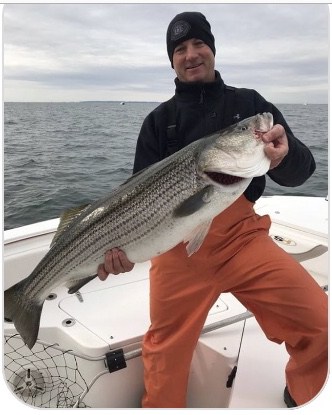
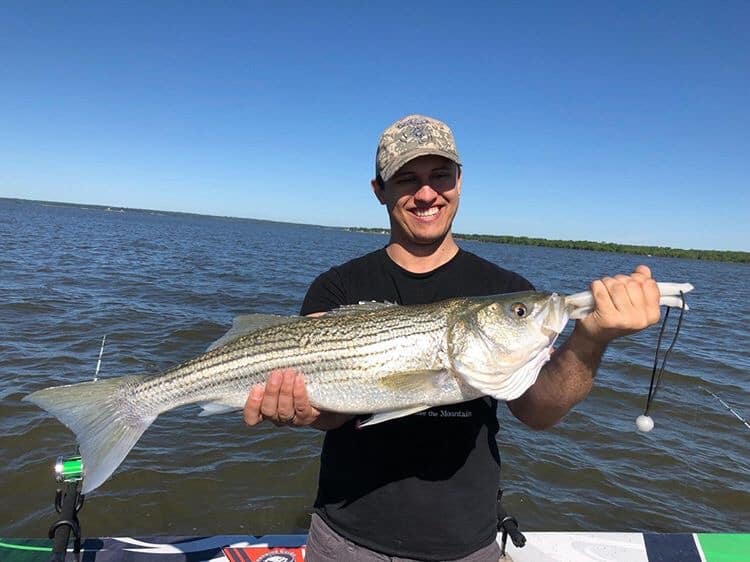
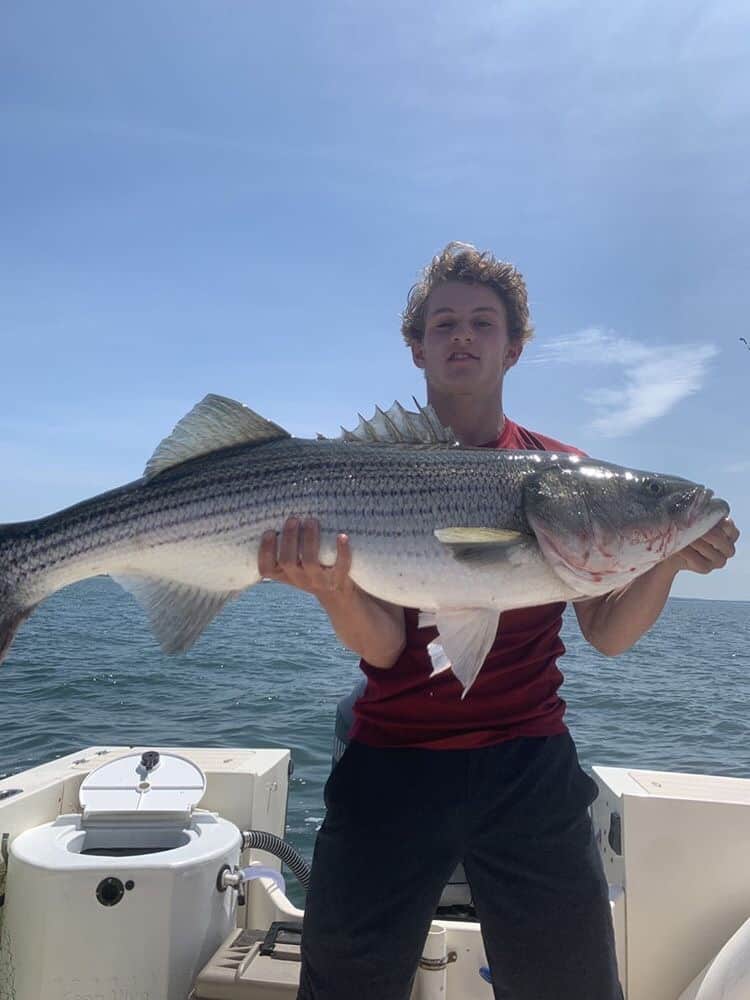
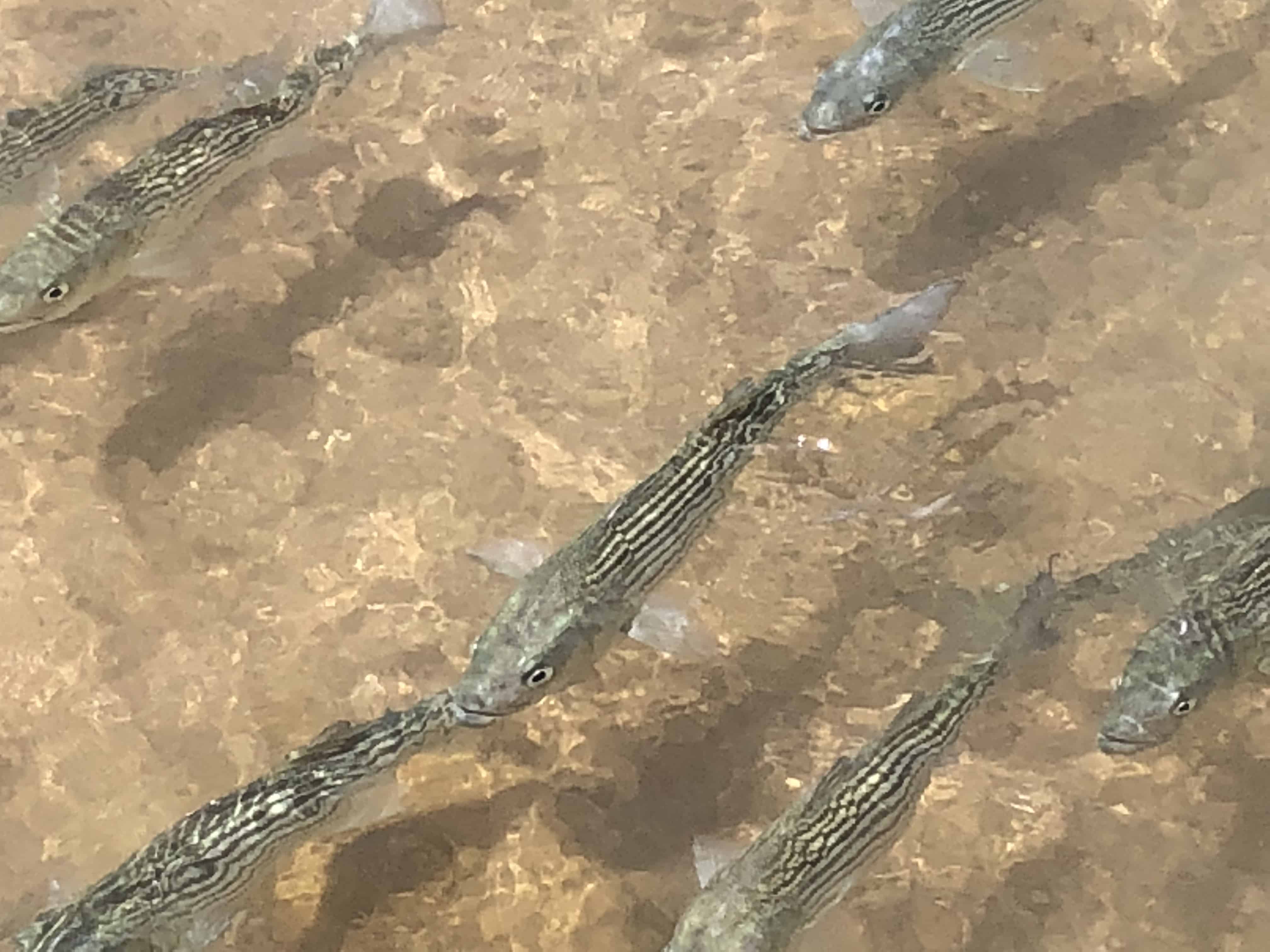
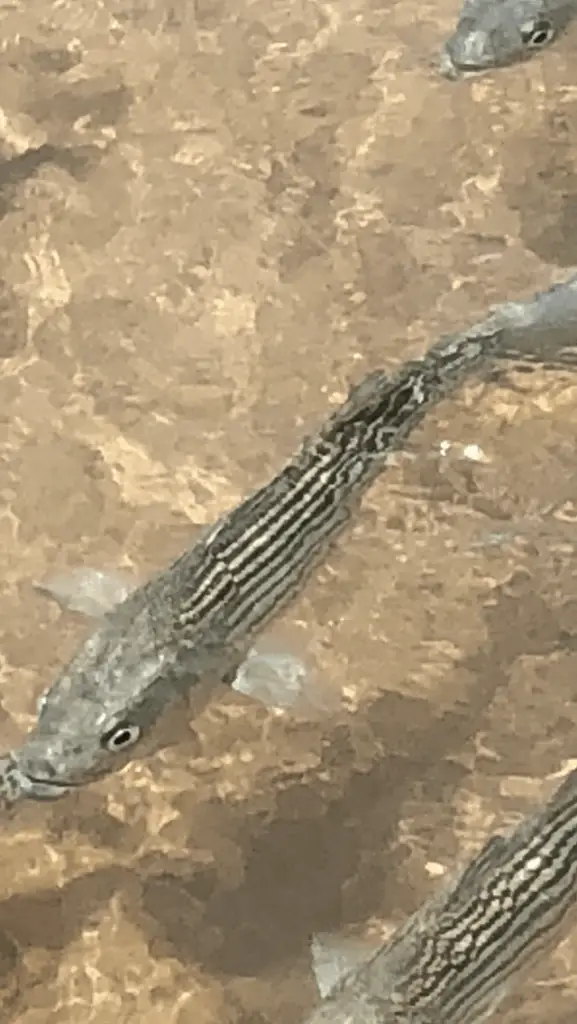
It’s no surprise that anglers across the world are in search of the biggest, toughest fish they can, one that will truly give them the fight of their life. There’s nothing quite like the euphoric feeling of pulling the biggest catch of the day out of the water and either showing it to your fishing buddies or just enjoying the self-pride of landing a monster. One of the most sought after fish in the fishing community is the striped bass. Commonly known as the Striper.
While states like either of the Carolinas, Arkansas, and Kentucky are well-known for Striper fishing, you can actually find them swimming in bodies of water all over the United States.
On the West Coast, they are known as transplant fish. In 1878, 137 Striper fry were released in San Francisco Bay, which spurred the beginning of Striped Bass transplants across the West.
The Oregon Fish and Wildlife website state that “the fish’s migratory urges brought them to Oregon’s Coos River system by the late 1800s.”
Since then, Fishermen and women have made it a goal to chase and catch the fish of their dreams. For some, that dream lies in Oregon, but where is the best place to fish for Stripers in Oregon?
The Coos River/ Coos Bay In no particular order, the Coos River /Coos Bay takes the number five spot. While the Coos River is surprisingly only five miles long, it is formed by the confluence of its major tributaries.” The South Fork Coos River, and the Millicom River. A confluence is where two rivers meet and is clearly separated into two separate tributaries. The river flows into Coos Bay, which is Oregon’s largest bay. It is on the Pacific coast of Southwest Oregon. Interested in making a living by writing about the outdoors? The Stripers and other species like to hang out on the confluence line to spot out smaller game fish for feeding. When the two waters meet, in some cases you can see the line that forms the confluence. This makes for an ideal location to bait your hook and drop a line. Fishing in the Coos River is particularly an interesting experience due to this phenomenon. Stripers like to hang out in rivers because the higher volume of the conjoining rivers puts more oxygen in the water. In today’s day and age, the Coos River and Coos Bay are abundant with Chinook Salmon, Rockfish, crabs, and clams, and 2 perch, but you can occasionally still catch Striper, and that’s why it takes the number 5 spot.
The Coquille River At number four we have the Coquille River. The Coquille River stretches 36 miles and is located in Southwest Oregon. The 1,059-square-mile mountainous area of the southern Oregon coastal range drains into the Pacific Ocean. The river flows through the towns of Myrtle Pointe and the town of Coquille and runs into the ocean at Bandon. Striped bass like to inhabit areas with lots of structure to swim through and explore for food and the Coquille River has plenty of that. There is no shortage of trees and brush that line the walls of the River, and if you can get your boat into one of these areas with lots of brush and cast in the right spot, there is no doubt you’ll be leaving with plenty of stories to talk about. Just don’t get your line caught, because we all know that feeling. The Coquille River has a Steelhead hatchery, and while Steelhead fishing is great there, most areas enforce strict catch and release policies due to fishermen catching and keeping them before they reach maturity. Unlike the Coquille River’s Stripers that can get larger than 24 inches in length, true keepers became harder to come by before these policies were set into place. Near the town of Coquille, you can occasionally get on a school of Shad to help you catch striper, however, if this method doesn’t seem to work, crank baits are also reliable lures that can help on tougher days out on the water. This river takes the number four spot due to the slowing demand for Striper fishing in the area in recent years, but if you’re a seasoned fisherman or one confident son-of-a-gun, and you play your cards right, the Coquille River still has a lot to offer.
The Columbia River The Columbia River is the largest river in the Pacific Northwest, beginning in British Columbia, Canada, and flowing down throughout the state of Washington. The waterway turns west through Oregon on its way to empty into the Pacific Ocean. The river, a whopping 1232 miles long, has been crucial to the economy and history of the Northwest region of the United States. Despite having been used for travel between the Northwests many cultural groups, before 2013 stripers were rarely ever found in the 3 river, especially up North throughout regions of Washington and Canada. That all changed in 2013 as stripers started showing up in the lower Columbia River. That year, a 52-pound striper was actually caught in the river by accident. Upon closer inspection, the fish was found to be carrying 10 pounds of roe, eggs that would have hatched had the mother not been accidentally taken from the water. Despite this incident, stripers have been more and more abundant in recent years. This goes to show how far this species can spread throughout an entire ecosystem. It’s a rarity to see the stripers that travel that far north, especially in Washington. They are very few in numbers and far between, however you can still find some in the lower Columbia River in Oregon.
The Smith River The Smith River runs 90 miles and is a main tributary of the Umpqua River. The Smith River was named after Jedediah Smith, the leader of a group of explorers traveling from Utah to Northern California and Oregon. They discovered the Smith River and camped along the Umpqua River near the Smith River’s mouth. The company was attacked by a group of natives, leaving 15 of the explorers dead and many more wounded. Like the Umpqua River, the Smith River tributary is a great place to fish for Striped Bass in Oregon, but only under certain circumstances. The fishing is hit-or-miss in this area. Stripers aren’t native to these waters, and most come in from the Pacific ocean. This explains why stripers, although rare to find, are typically very large for this waterway. They have plenty of time to grow up and mature, making their way up these rivers, and since not many people are fishing for them, it’s a true wonder when such a large bass takes the bait. It sure is a niche area to catch Stripers, but as I said, these things get huge.
Umpqua River Arguably the top place to fish for Striped Bass in Oregon, the Umpqua River is located along the Pacific coast of Oregon. The Umpqua River, originally inhabited by the Coquille tribe of Native Americans in the early 19th Century, was named after a band of the tribe called the Umpqua. The river stretches 111 miles through Douglas county and has recently become a legendary fishing spot thanks to one lone fisherman: Beryl Bliss. 4 In 1973, Beryl reeled in a 68-pound monster, marking his spot as the Oregon record holder for the heaviest Striped Bass in the state. Not much information is known about this record considering it was set in 1973 before the age of modern technology, but I bet, to this day, Beryl is proud of setting a record and taking his place as the angler that caught the biggest Striper in Oregon. The Umpqua River continues to thrive with Stripers and other species of fish. It is still a sought-after river to fish in Oregon, and won’t disappoint as a great place for family and friends alike to search for the next record-setting Striper. Maybe if you’re lucky enough, and are as good of an angler as you brag you are to your buddies, you may even break Beryl’s record. When one considers the history behind these truly incredible fish and how one implantation started a frenzy of expansion and growth, it becomes clear that this was no mistake. It’s fascinating to hear the stories and pass on the legends of days gone by, stories of how the Striped Bass got there, and where they are now. The trek from the San Francisco Bay to the rivers of Oregon, from tiny fry to a 68-pound monster, was a long but rewarding one for this species. The history behind these five rivers alone validates their spots on the list. They show that Oregon is truly the home to some of the most complex ecosystems in the world, let alone the United States. Next time you’re fishing the rivers of Oregon, stop and think about where these fish came from, and how far it traveled to get there. When someone catches a striper in Oregon, it’s a story that is passed around for years, especially when they are larger than ever expected. Oregon remains a coveted location that everyone should try to fish at least once. If you get the chance, the Coos River, Coquille River, the Columbia River, the Smith River, and lastly the Umpqua Rivers are your best bet. Good luck, and good fishing.
The Lone Star State of Texas is the second-largest state in the United States, cradling the Gulf of Mexico along the southern border of North America. Ranches and farmland make up the majority of its nearly two hundred and seventy thousand square mile area. Approximately seven thousand square miles of this great state is made up of water; lakes and streams teeming with wildlife can be found scattered throughout.
Surrounding the shores of these bodies of water are forests and grasslands. Pay a visit to Texas’ streams and you’ll most likely see many whitetail deer, as Texas has the largest population in the United States.
However today, we will be focusing on the fishing aspects of Texas’ gorgeous landscape: Striped Bass to be exact. Although Striped Bass are not indigenous to Texas, many of its lakes and water bodies have been stocked aplenty, giving the opportunity to angle many of these beauties to Texas natives and visitors alike.
Let’s move on to discuss different areas where Stripers can be found in the Lone Star State.
The list of places to catch striped bass in Texas is long but here are four of our favorites.
Amistad Reservoir
Buffalo Springs Lake
Toledo Bend Reservoir
Possum Kingdom Reservoir
Lake Texoma Striper :Photo Used with permission of Insta @lultschik
Texas is filled with various bodies of water, as we have mentioned briefly before. Nearly two hundred of these are man-made lakes and reservoirs.
Where you find water, you’ll most likely find fish, and this saying holds true. Various species of fish can be found throughout Texas, including Walleye, Largemouth, and Smallmouth Bass, Crappie, Sunfish, and of course Striped Bass.
Amistad Reservoir
Along the Rio Grande in southern Texas, you’ll find Amistad Reservoir, a sixty-five thousand-acre man-made reservoir that divides Texas and Mexico.
Amistad has a very healthy amount of Striped Bass within its waters, which allows for topwater fishing along with trolling and deepwater fishing at around two hundred and fifteen feet.
In just the last two years alone, wildlife services in Texas have kindly stocked Amistad with nearly four hundred and fifty thousand Striped Bass.
As this species of fish hails from saltwater coasts and requires special breeding environments, lakes and reservoirs are stocked heavily from time to time.
As Amistad is a very large reservoir, the trick to finding the best fishing spots in the lake is to find where the stripers like to hang out and feed.
Hydrilla clusters tend to hold plenty of these swimmers because of the amount of oxygen that the plant gives off. Find yourself some channel Hydrilla and maybe some fallen trees that have adapted to covering the underwater wildlife.
The more cover and oxygenation the water has, the more likely you’ll find good-sized stripers. Another trick is to know where to fish during the right time of the year.
These stripers want colder water, which gives us a fairly good idea of when and where to fish. Higher temperature waters will drive the fish deeper into the water, or towards the areas with more cover, (i.e. the Hydrilla in the channels and coves.)
This means that during summer months, those places will be the hot spots. In the winter, the water surface temperature will drop to around 55 degrees. This allows for more topwater fishing as the cold water is all around and not just found deep.
As for lures and baits in the Amistad, many tournaments have shown stats that say red is a favorable color to use if you’re fishing with a plastic worm or lizard.
Jigs and cranks don’t matter much in color and are found to be quite useful when fishing in the covered areas previously mentioned.
Buffalo Springs Lake
Located just a few miles east of Lubbock, Buffalo Springs is a smaller two hundred acre lake with plenty of grassy cover in the water.
It’s a perfect “fishin’ hole” for a variety of fish including some nice sized stripers. Perfect for family fishing, there are also some secluded spots for anglers to get out there and test the waters, so to speak.
There are fishing spots at the docks, one named Paul’s Pond in particular, that boast a lot of bites throughout the seasons.
Another more secluded area would be near the spillway of Buffalo Springs where the water continues its journey south towards Ransom Canyon.
Towards the southeast end of the lake is McMillan Dam, a great post for catfish and stripers alike. With the grassy waters found here, jugs and cranks are again suggested, however many stripers have been snagged with anchovies and shad.
Like a lake with plenty of other activity, the wake and constant current dispel much of the fish to the outer shores, making shore fishing the perfect way to angle at Buffalo Springs.
Toledo Bend Reservoir
Towards the eastern edge of the state, hugging the state line between Texas and Louisiana lies Toledo Bend Reservoir. Located on the Sabine River, this one hundred eighty-two thousand acre lake is chock full of largemouth and striped bass.
While the striper catches are slow during the summer months, fall and winter months tend to bounce those numbers back up, according to local anglers in the area.
Eelgrass and Pondweed surround the embankments, as well as Hydrilla clusters and fallen trees. This cover is excellent for striped bass to live in/around and will feed not far from their potential areas.
As for bait, plastic worms, lizards, and jigs are said to be the best to use during daylight hours in the Hydrilla cover, as the bass will congregate there to maintain a cooler temperature in the more shallow areas of the lake.
If you’re going to fish at night, be sure to use propellers or flukes as they are great for low-light topwater fishing.
Those of you looking to catch some large stripers will want to check the flats and channels during the late summer and early fall. Stripers will school together during this time as they make their way upstream to spawn.
Possum Kingdom Reservoir
Spanning nearly sixteen thousand acres, Possum Kingdom Reservoir holds some of the best striped bass fishing west of Dallas. The reservoir was created in 1941 and is located on the Brazos River.
This body of water is rockier than the others mentioned, but towards the south shore, there is more vegetation.
According to locals, the docks make a convenient and great fishing spot, as most species of fish in the lake tend to enjoy its cover and shade. Aquatic vegetation can, again, be located towards the south end of the reservoir, and many stripers and white bass have been known to congregate there for the shade and cooler water temps.
It is recommended to use live bait such as live shad or anchovies for the bass located in this area.
To find the perfect spot for these stripers, just take a lookup. Birds will circle above and wait for leftovers to float up to the surface from the feeding bass below. Once a bird dives down for its meal, you’ll know just where to cast for some large stripers. If you’re not having any luck on live bait, it is recommended to use worms or spoons.
Record holders
We all enjoy a good fishing story (whether or not it’s actually true is always the big question) but these anglers soon to be mentioned have spent years hunting down and catching the largest striped bass in the state of Texas.
-Ron Venerable
On May twenty seventh, nineteen ninety nine, Mr. Ron Venerable was fishing on the great Brazos River. Unaware of what was about to happen, he caught a bite, set the hook, and fought to reel in this behemoth. Weighing in at fifty three pounds and measuring forty eight inches long, Ron’s catch was, and still is, the biggest striped bass caught in the state of Texas. He holds the record to this day!
-Tom J. Reavis
Remember when we talked about the Amistad Reservoir? Well on May fourteenth, nineteen ninety, Mr. Tom J. Reavis pulled in a forty five pound, forty four inch long big boy. Definitely a striped bass for the books! This catch is currently the record for Amistad, and has been for over twenty nine years!
Rules and Regulations
As always there are rules that fishermen must follow when fishing in Texas. First off, it is important to know what you’re fishing for, and what each species looks like. There are different bag limits for different types and following those rules is a must.
For instance, the bag limit for stripers in Texas is 5 daily, but the bag limit for White Bass — a similar looking fish — is 25 a day. Keep in mind that following these regulations allows for other anglers to have their chance at the daily limit, and we all deserve the right to fish just as much as any other angler.
Conclusion
In closing, it’s easy to see that there are many great fishing spots in Texas. With such a large area, the state truly is a remarkable place to visit for some great sights and fishing holes.
We’ve only covered a few, but there are hundreds! Always remember to be safe and adhere to the states fishing laws when out angling, and with dedication and time, you might be the next to catch a state record. Happy fishing!
If you are an avid angler, you probably already know where some of the prime fishing places are for striped bass. Depending on where you live, it may be in the heart of one of the most popular hot spots. Today we are going to let you know the top 5 states that have impeccable striped bass fishing. We will also cover some of the hot spots in each state. Some may argue the order that they are in, and that is fine. Everyone has their own opinions on the best places, the best lures, and the best time of day. There is really no right or wrong. There are many places all over the United States that have prime striper fishing spots. Striped bass is the leading game fish, being one of the most popular and sought after because of their hard fighting, and aggressive nature. They can reside in water as deep as 500 feet or as shallow as 1 foot.
To start off our 5 state exploration, we are going to start with South Carolina. Notorious for excellent striped bass fishing, this is #1. on the list. Many large stripers are caught out of some of the major lakes; Lake Murray, Lake Marion, Lake Russell, and Parr Reservoir. Those are only a handful in South Carolina for striped bass excitement. In 1972 the striped bass was declared the official fish of South Carolina (and is also the state fish of 7 other states). To start our exploration of this area, we are going to head over to Lake Murray and take a peek.
Foreelsportfishing
Lake Murray: 41 miles long and about 50,000 acres, boasting 500 miles of shoreline. The most popular forage in the area is threadfin shad and gizzard shad, though many anglers prefer blueback herring. You want to fish topwater baits in the early morning, cloudy days, and later in the evening from late May to early June. Regulations for Lake Murray are as follows;
1. 5 striped basses per day, per person
2. from October to May your striper may not be under 21 inches in length
3. June to September there is no minimum length for keepers
It is recommended by some of the fishing guides to have a 7 1/2 foot pole with a casting reel and 12-pound test line. Starting in June the striped bass will start moving to deeper water. The key to catching a striper is the color of the water, temperature, and what the forage fish are up to.
Lake Russell: this lake fishes differently than any of the other lakes in South Carolina. Different tactics must be used to catch a trophy-sized striped bass. The first and most important tactic is a necessity: you need to use rainbow trout as bait! The striped bass feeds on them almost as quickly as they are stocked. Guides suggest fishing both ends of the lake and using a minimum 30-pound tackle because the striped bass is big and strong. Regulations for Lake Russell; no more than 2 striped bass per day and only 1 can be longer than 34 inches.
Lake Marion: as the temperature begins to cool down and the stripers start swimming in schools, they migrate to this area. Stripers tend to spend the warmer months deep in Lake Moultrie. The best fishing for this area normally being in last February to early March. There is one guide, who has been fishing the area for over 40 years and says that December and January are prime fishing months.
During this time the forage fish like to move to the dams and the stripers follow. Suggested bait; a variety of deep diving lures. The mid-morning and mid-day fishing is perfect for the Lake Marion area in December through February. 3 fish per day per person between 23″ and 25″. ONLY 1 can be over 26″ in length. The time period is from October 1st through June 15th. Make sure to check regulations before you begin, as South Carolina is very strict on their striped bass limits and lengths for keepers.
Moving from South Carolina, we are going to explore Arkansas. The 2nd best state on our list for the great striped bass. Beaver Lake and Bull Shoals Lake are just 2 of the striper spots in the state. If you are vacationing here, there are a ton of other things to do, besides fish, on Beaver Lake. Let’s go and take a look around.
Beaver Lake: with 487 miles of shoreline, it is a man-made reservoir in the Ozark Mountains. This 28,370-acre lake has given up quite a few 40+ pound striped bass over the years. The early spring and winter is the best time to striper fish because they are easier to find in the cooler waters. If you are going to fish Beaver Lake in the summertime and the heat, night fishing is highly recommended and suggested. Topwater fishing is best in May, with trolling and live bait is your best option during the other prime months. Along with the vast amounts of striped bass that are available for the catching on Beaver Lake, you can also swim, ski, tube or just relax at one of the many campgrounds.
Bull Shoals Lake: located in the north center of the state, it has over 1,000 miles of shoreline and 71,000 acres of a reservoir to catch striped bass. Concentrate on the deeper waters and be on the look-out for schools of shad. When trolling, use bigger, flashy lures. For the ultimate challenge, use large topwater baits if you spot a surface feeding frenzy. Bull Shoals is on the border of Arkansas and Missouri, so please make sure that you check out the rules and regulations in both states before launching your boat or your rod and reel into the water.
Norfork Lake: known to many as 1 of the top 3 lakes in the country to catch the unpredictable and feisty striped bass. Norfork is located in Northcentral Arkansas and has 550 miles of shoreline, extending into Southcentral Missouri. Stripers are in the area all year long, but they say that early March to the end of May is prime time. Although June through October, you will no problems catching your limit every day. There is no bad time to fish for striped bass on Norfork Lake. Contact bait & tackle shops, restaurants, and resorts for all the hot tips, tricks, lures, and other equipment you may need.
Moving from Arkansas to Kentucky, coming in at the number 3 spot on the list. Lake Cumberland is the best spot for striped bass and the Ohio River isn’t going to treat you badly either. So how about we jump into it!
Lake Cumberland: a reservoir that covers 6 counties in Kentucky, it is 102 miles and 197 feet deep. A general rule: if you find a school of shad, stripers are normally not far behind. If you want a thrilling striped bass experience and catch, look for baitfish on the surface and cast your topwater plug right in the middle. Reel it in slowly, mimicking an injured baitfish and you could very well see a huge striped bass explode out of the water and take off with your lure, line, and if you don’t hold on tight, even your pole. Striper fishing can be very rewarding, no matter what area you choose to fish, but it takes great knowledge of the striped bass’ habitat and patience. When the heat of the summer sets in, use live bait or troll beneath the surface where the water is cooler. Use live shad as bait at depths of 20-30 feet to catch the trophy striper.
Ohio River: with countless ramps & access points, the river runs from the southwest to northwest corners of Commonwealth. According to a fishing guide in the area, the 2 hot spots along the Ohio River are; the mouth of Cabin Creek and along the mouth of White Oak Creek. Fishing from barges is the best option, but also extremely tricky because you have to try to cast your lure under the barge where the striped bass are hiding out. Striped bass is also typically found 2-3 feet deep in the Ohio River. So, take your pick, the trickier method of fishing underneath a barge or the easier but still thrilling catch just below the surface.
Traveling now from Kentucky to New York, the hottest and most fished by professional anglers, to catch stripers is in Montauk. Some will argue that New York, more specifically Montauk, should have been number 1 on our list. But many have different opinions and research shows that South Carolina is the more prominent state for the striped bass.
Montauk: according to the Montauk fishing calendar, June-October is the best time to fish for striped bass. If you want to fish when it is less chaotic and crowded, try May or November when the fishing is still good in this area. If you are new to striped bass fishing or have never been to Montauk, your best bet is going to be to hire a fishing guide. The area is enormous and boasts so many different fishing spots, that your brain will be on overload and you will not know where to even begin to find some of the hot spots. A fishing guide can take you out, deep water fishing, easing the frustration of trying to find a prime spot, dealing with the crowds of other tourists and all of the locals. As an added bonus, you are guaranteed to catch large striped bass if you have a guide and you are out on a boat. If you prefer to do it all on your own, it is recommended that you stick to the sandy beaches as they are best for beginners and safer for the newbies to the area. Be sure to ask around at local bait & tackle shops for advice on the best lures, spots, and time of day to catch the striped bass. They always have the inside scoop on what is happening in the area and definitely out on the water.
Our last destination and state on top 5 lists of best states for striped bass fishing; Rhode Island. East Bay, Newport, and Warwick are the top striper spots in this area. Rumor has it that East Bay is an experienced anglers paradise. So, let’s go and find out why East Bay striped bass is the favorite among the locals.
East Bay: the best months in the area; April through October, at daybreak, dusk, and after dark. The best methods are live or chunk bait, darting or popping plugs, jigs, and plastic baits. There are many areas that are recommended for beginners at East Bay. A couple of them are as follows; Colt State Park, Fort Adams Seawall, and Warren River. If you are an experienced angler; Ocean Drive, Beavertail State Park; and Sakonnet Point are a few of the prime spots. By mid-May, the bigger striped bass begins to make an appearance. Check out the local bait and tackle shops for all of your baits, lures, rods, reels, and advice on catching striped bass on East Bay.
Newport: 1 fish per day, 28 inches in length (minimum) and any striped bass over 34 inches must have the right pectoral fin removed. This rule/regulation covers all of Rhode Island. Sachuest Point is one of the main striped bass spots in the Newport area. Though this spot isn’t for the faint of heart. It is a very long walk, to the point, and despite your efforts; most local regulars will be you there, every time. But maybe if you sit next to them, they can give you some good advice and suggestions on catching a striper. There are also a couple of other striped bass spots along the Sachuest Point; the opening of the Sakonnet River & Third Beach. Both of which give you beautiful scenery and nice sized striped bass.
There you have it, the top 5 states for striped bass fishing. I am sure there are many others out there that people think should be on the list, and maybe someday they will come out with a top 10 list, that we can all disagree on. But until then, remember, no matter where you fish it should be fun, thrilling, exciting, and maybe even a little competitive. Don’t forget to check rules and regulations when planning your trip and once you arrive, hit up the local bait & tackle shops for the latest news on the striped bass in the area. Happy Fishing!
Who wants to go on a tour with me? Today, we are going to explore the land of Cape Cod and the best fishing spots to catch a striped bass. For newcomers to striped bass fishing in Cape Cod be sure to check out the Army Corps of Engineers Cape Cod Canal Tide Chart, so you can be thoroughly prepared for the weather in the area. There are BIG fish, BIG tides, and BIG crowds in this area and a lot of the locals like to keep the prime fishing spots a secret, and do not like when ‘tourists’ come around and try to figure out where the best places are. Here, we are going to give you the top 4 striped bass fishing spots, along with a lot of information on Cape Cod Canal.
Cape Cod Canal is a man-made short cut for baitfish, that is 7 miles long in between Buzzards Bay and Cape Cod Bay. The baitfish try to use this short-cut in order to avoid the striped bass fish that are usually hot on their tails. You, as an angler, have to be prepared to use heavy jigs and large plugs to get the attention of the stripers. The Cape Cod Canal rivals Montauk Point as one of the best places, on the East coast, for catching striped bass. The top 4 spots to fish for striped bass in the Cape Cod area are:
Barnstable Harbor
Wellfleet
Billingsgate Shoal
Race Point
1. Barnstable Harbor: if you are not picky as far as the size of the striper that you catch, then check out the harbor towards the end of May. In the spring, striped bass will feed on mackerel and live eel in this area, but they are only schoolie sized. The preferred bait is small sliders, poppers, or soft baits. Once the mackerel start getting bigger, in mid-June, you will want to opt for a little bit bigger bait as that is when the bigger striper will start showing up as well.
2. Wellfleet: with schools of herring swimming around in later May to mid-June, look to the seagulls for confirmation that the striped bass is close. If the seagulls confirm that the bass is close by, then it is the perfect time to get out your equipment and catch that striped bass. One angler, native to the area, recommends a 6.5″, 3 oz bone-colored Hogy Pro Paddle Tail. These lures closely resemble the herring that are lurking around in the water. The lures can be cast or jigged and offer maximum versatility and casting ability. Topwater fishing in this area is also amazing.
3. Billingsgate Shoal: in this area the spring is amazing, but usually starts off with smaller fish. The best fishing tide in this area is the outgoing tide. Make sure, especially if you are new, to experiment with your lures. Try fishing both slow and fast retrieval with soft baits and metal lures. The Billingsgate area is a popular trolling spot, but some anglers prefer to accept the challenge of hands-on action using casting and jigging to catch the feisty, evasive striped bass.
4. Race Point: usually an overabundance of sand eels are in this area. The fishing is amazing in the springtime and the striped bass tends to hold a little deeper here, which means they are going to be bigger and maybe more of a challenge to get reeled in. Softbaits and jigs work well when fished on the bottom, slowly. Trolling for stripers is popular in this area with the bass staying in the deeper water.
There are other spots in Cape Cod and along the Cape Cod Canal to find the striped bass; Truro & Nauset Beach, Chatam Inlet, and Cape Cod National Seashore. When you arrive at the Cape Cod area, ask around at the local bait and tackle shops, local restaurants and resorts, the employees/owners should be able to give you more places where the striped bass are going to be hanging out. You can also check and/or get a pamphlet when you go and get your Massachusettes fishing license. These pamphlets show you where all the fishing hot spots are, they give you the rules, regulations and catch limits for the different species in the different areas. It is a must-have if you are new to any area.
Scattered along the Canal shoreline are multiple resting and feeding places for the striped bass. Fish the low-tide with darter or bottle plugs, this will allow your lure to swim the surface and into the slower water where the striper love to wait for their prey to swim by. In the Cape Cod area, there are 3 main fishing techniques that the majority of the anglers use; jigging, plugging, and bait fishing. To reach the bottom during heavy currents requires using jigs as heavy as 5 ounces. Some of the anglers in the area prefer to use Cotton Cordell Pencil Poppers that they fill with birdshot.
When jigging, make sure to target areas with drop-offs. These are the perfect little hiding spots for striped bass to lye and wait for their prey. Plugging is for that striped bass that is chasing their meal across the surface of the water. A popular time to use the plugs is at sunrise when you can visibly see the stripers on the surface. Bait fishing is very popular on the Cape Cod Canal, after dark, during the slow stages of the tide. Live eels are the #1 bait at this time, though mackerel and bunker will also work.
Because of the fast current, large tides and bigger lures, you need to have stout tackle when fishing Cape Cod. One of the secrets of the canal is to use topwater lures and fish 30 minutes before the first light. Numerous 70-pound striped bass has been caught in the Cape Cod area, mainly around the canal. The best fishing times in the Cape Cod area are right after the Labor Day holiday and through the month of October. At night, in this area, it is when you are going to find more and catch the bigger striped bass because they come closer to the beaches/shores to feed.
Cap Code is a beautiful place any time of the year to vacation or visit, but if you are an avid angler and you are looking for your next big catch, then you need to head to Massachusettes. There are many places along the canal to catch that trophy striped bass. You will be the envy of all of your fishing buddies when they find out where you are going and when you show them pictures of the ‘big one’.
Whether you are a beginner, intermediate, or advanced in catching striped bass there is always something new to learn. So what are the best striped bass lures?
Depending on the area that you are fishing in factors such as weather, rod/reel, boat or no boat, live bait, or lures can determine whether or not you catch the big striped bass that you are longing to add to your list of trophy fish. As an opportunistic fish, the striped bass can be caught with just about any bait.
If you choose to use a lure, there is an abundance out there that will work. If you are fishing in a new area make sure to visit the local bait and tackle shops. They are usually willing to give you advice and share what lures work best for their area.
I am going to help you out here, by covering the all-time best fishing lures used for many many years to catch striped bass. Some of the lures date clear back to the 1930s and ’40s.
To start off, I’m going to cover the categories of the best striped bass lures and then we will move into the top 25 that professional anglers swear by.
Whether you are fishing in saltwater or freshwater, most of the lures will work for either area. Striped bass can grow to weigh 50+ pounds in freshwater and up to 120+ pounds in saltwater.
Topwater Fishing Lures
These can be used anywhere that you see striped bass on the surface. Use the bigger, noisier lures in low-light; after dark, at dawn or dusk, when the water is choppy, or on rainy days.
Best bright and early in the morning, they attract that striped bass that isn’t quite awake yet. Also a good bait for rainy and overcast days. They are very easy to use; cast and retrieve at a steady pace.
These are extremely effective in low light and work like magic on schools of striped bass. Poppers are also effective in choppy water because they are noisy, imitating an injured baitfish.
One of the most popular of the variety of landlocked lures to catch the striped bass.
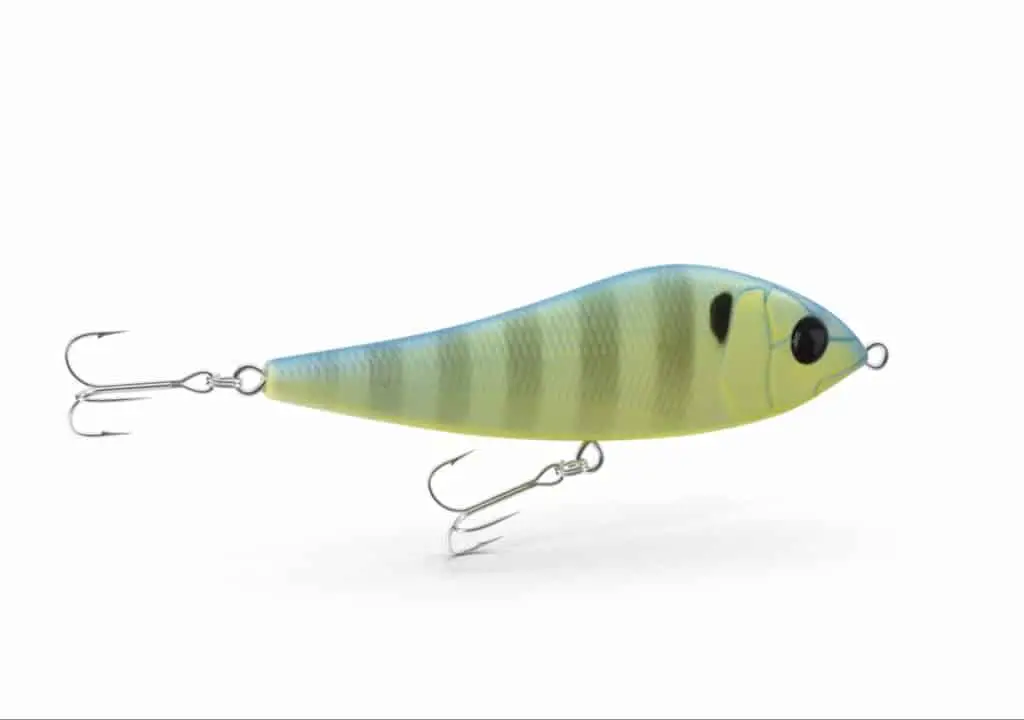
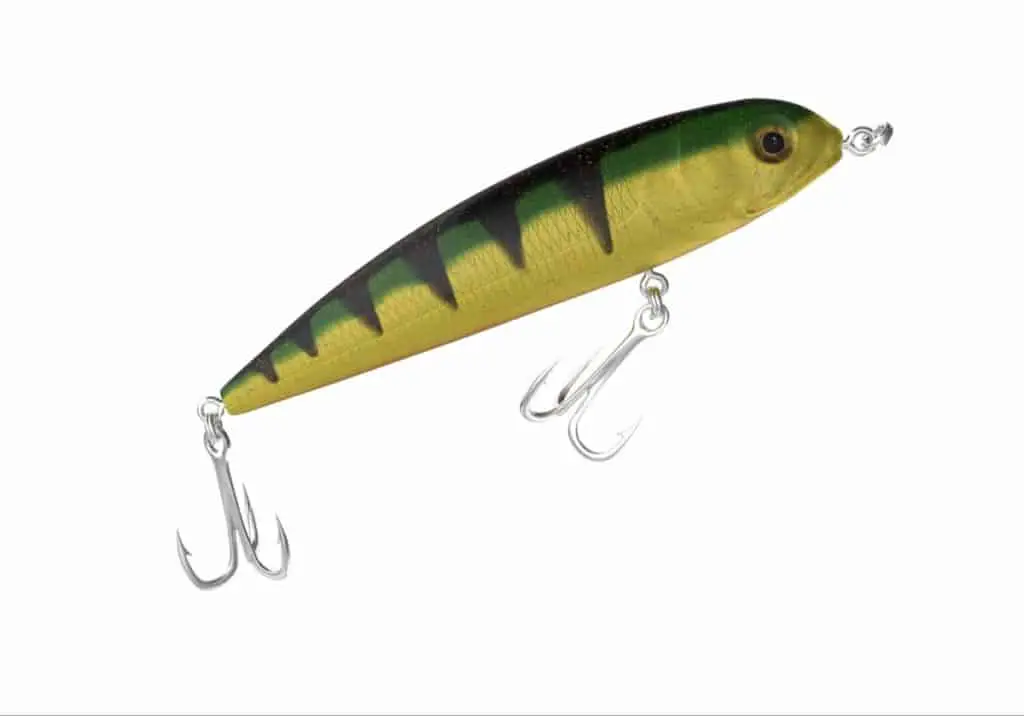
The best time is either early or late in the day, but will also work in the bright sunlight. Keep the top of your rod high in the air and use a slower retrieve. A good tip for using surface minnows; bone-white is deadly to the striped bass, so remove the hooks and buff off the paint on the body of the lure. Replace the back hook with one size bigger and put the two front hooks back in place. Striped bass can not resist the bone-white color. One of the most recommended is this one.
These are best used on tailwaters or reservoirs as the morning fog is dissipating. It is recommended to use a shorter pole, 6 feet in length, and to keep the tip of the pole pointed to the surface of the water.
Stick Bait:
Tip: use bass sized stick bait on bright days. Remove the screws holding the hook hangers and dip them into an epoxy cement and immediately put them back in. This will keep that big striped bass from pulling the hooks out of your lure. Try the Dr.Fish Big Minnow Stick Bait.
Soft Plastic Fishing Lures
Produced in a large array of colors, sizes, and shapes. This is the most versatile category of bait to catch the striped bass. They can be used anytime, anywhere, and in any condition.
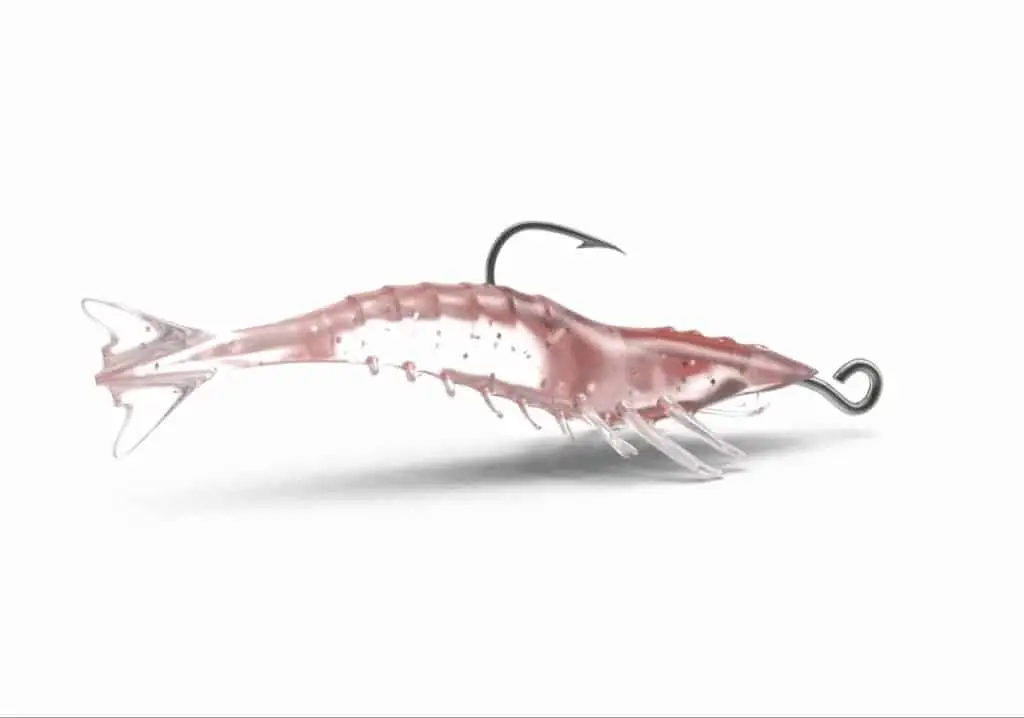
Some of the soft plastic lures mimic lizards, shad, worms, craw, minnows, and grubs just to name a few. To make the lure more attractive to the striped bass, choose lures that have a special “scent” that will pique the stripers’ interest. You can also spray the scent, or soak your lure in a scent that the fish will love. Berkely Gulp offers exceptionally scented lures. For example the Berkley Gulp Eel. There are many other varieties as well.
Soft Jerkbaits:
Amazingly realistic, these types of lures will catch stripers from daybreak until dark. Extremely useful in shallow water, where other bait may be ignored by the striped bass. Most anglers use this bait slowly, but for clear water, stripers try retrieving faster than normal.
This makes the bait skip, jump, and jerk just under the surface of the water. Go shallow in the springtime with the soft jerk bait. They shine around flats or in shallow cover when the striped bass is cruising. Do not pack up the soft jerk baits when the temperatures drop. They still work, you just have to go deeper and retrieve slower. Here’s a fine example.
Leadhead Trailers:
You can use these on a regular lead-head or on bucktails. Early in the spring, in shallow water try using the bucktail in coves or reservoir points. Shadtail or eel trailers can easily be substituted for twisters. Striped bass often uses submerged trees to hide and ambush their prey in rivers.
Lead-headis a soft lure with hook sinking swimbaits for salt or freshwater. You can dress them with grub, feathers, hair, or pork rinds to add to the appeal of the lure, making the striped bass want to attack.
Another bait that is very life-like and dangerous to the striped bass. These are best used when the bite is slow. Try using a big tube with a heavy sinker, down to 35 feet around ledges and reservoir points.
You can also bump them across the bottom by using a salt-water lead-head. If you fill a big tube with the styrofoam packing peanuts, and place on a stout hook, it will float. Enticing the striped bass that is just under the surface of the water.
Spoons & Blade Lures
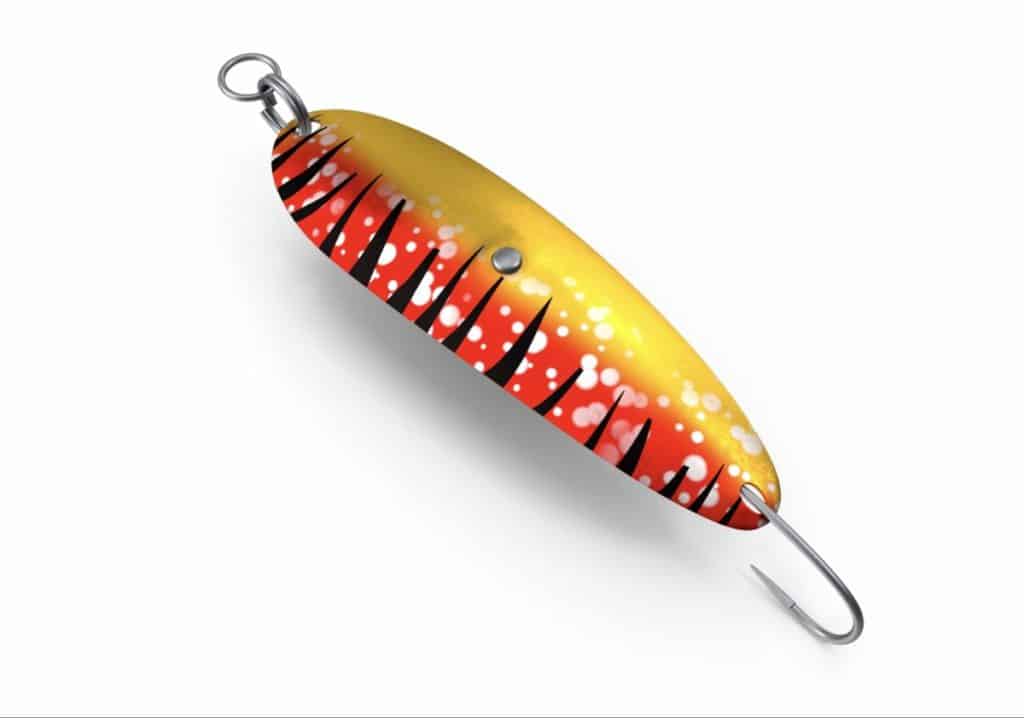
These are able to be fished in a variety of ways and are made of bright flashy metal. You can use them straight through a school of striped bass, jigging them up and down. They are also great trolling lures or under the lights during night fishing.
With these lures, you want to go for the bigger fish if the schools of striped bass are on the surface of the water. Reel in quickly while holding your rod high.
Depending on wind conditions, depth, and current it is recommended to use 3/4 to 3 oz spoon. These particular ones are best used around 15-foot deep water and are best using a boat with a fish finder to get the perfect depth and locate the perfect striped bass.
Avoid trolling with a constant speed when using this type of lure on striped bass. The striper will respond better when you change the pace of the lure. The trolling spoon is intended for downrigger use only. These lures can hook a big striped bass as well as a trout or a walleye.
Blade Baits:
With this type of bait, it is cast like a bullet, so if the wind picks up switch to one of your blades to get the extra distance on the cast. 1/2 -3/4 ounce tail-spinner is going to work best in fall and early winter.
The blade baits are more effective than a stick bait because it can go down as deep as 30-40 feet. Allow your bait to sink, after a long cast and reel in at a steady pace all the way back to the boat (or shore).
Crankbaits
Crankbaits use in fall and spring when the striped bass are shallow but not quite on the surface. The lures bill is what determines whether it is deep water, medium, or shallow water plug. Coming in a wide variety of widths, shapes, and colors they allow you to explore various depths of water.
Lipless Rattlers:
These are preferred on a high-speed reel, but it is a bad idea for a striper. The best reel is a wide-spoon with a standard retrieve. As it moves through the water it sends out a vibration because of the built-in rattle.
Cast and reel right down the middle of a school of baitfish and make sure to reel them quickly, staying just below the surface. Where there is a school of baitfish, there are going to be striped bass. Some of the color choices that you have with this lure; bone-white, black back chrome, and blue-back chrome.
Medium Divers:
Striped bass often feeds on flats and shallow bars at night and will hit this without hesitation. These baitfish imitating divers are slender and long lures.
Choose ones that can get you up to 15 feet down. Your best bet with this type of lure is to fish around standing timber, probing points, and humps. The primary colors are; bone, rainbow trout, and shad.
Deep Divers:
Just as their name suggests, these lures can go between 20 and 30 feet deep if trolling on a long line, which is ideal. Look for open water, humps, and of course deep points to troll. White, fire tiger, shad, and rainbow trout are your go-to colors. One of the most popular and best examples of a deep diver is Mann’s Stretch Series.
They are durable and strong, withstanding the fighting from the large saltwater game fish. You can get them in a large range of sizes; the Stretch 15 goes down to fifteen feet, the Stretch 25 will go down to 25 feet, etc…
Diving plugs work great in salt and freshwater. Professional anglers advise you to try and match your lure color to the color of what the fish are dining on at that particular time. It will make it more irresistible to the striped bass. If the colors contrast too much, they will move away from your lure and go elsewhere to feed.
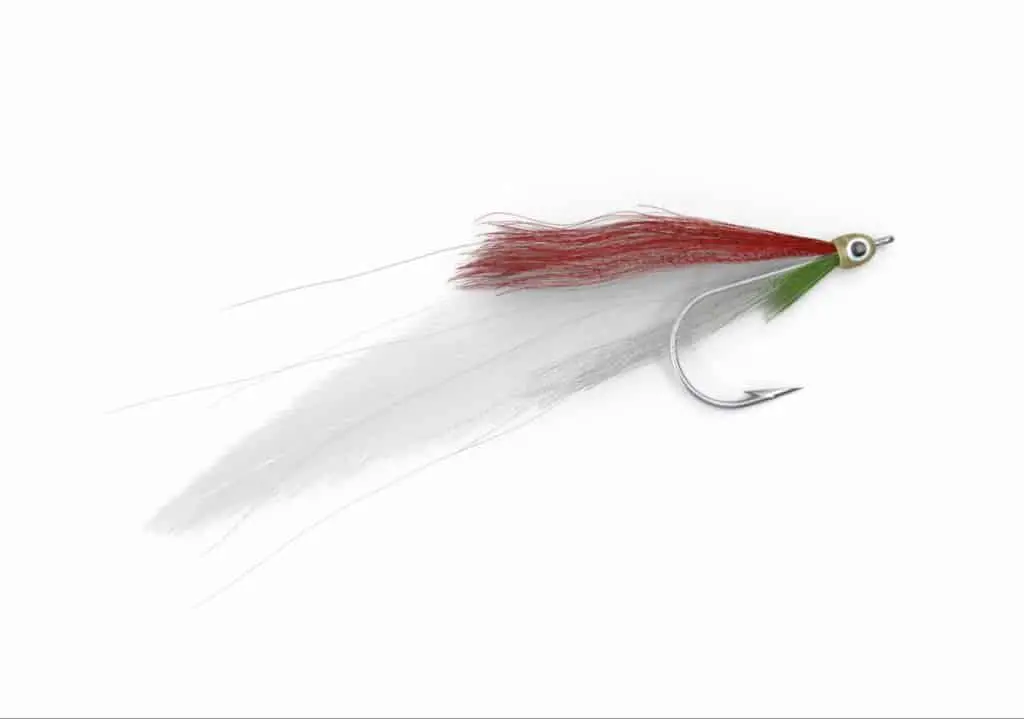
A very simple lure with a weighted head and a single hook. Lined with feathers, they work well in both fresh and saltwater.
Bucktails
They come in a wide variety of sizes and colors that are sure to attract that big striped bass. By varying your retrieval speed you can control the depth of the bucktail. To make the bucktails look more like a striped bass meal, try adding a grub tail to your hook. This will add a little extra action to your hook during retrieval.
Striped bass are considered marine fish. They migrate from the ocean to the coastal rivers each spring to spawn. So, these elusive fish can be found in fresh, brackish, or saltwater.
Constantly on the move and somewhat unpredictable, the striped bass can be tricky to catch. Because of this, there are many proven lures and techniques that work to snag that feisty striper. But, depending on daily factors; such as weather, the area being fished, live bait used, trolling, or shore fishing some of the techniques may not work.
Some of the best lures are the ones that resemble the forage in the area and they can be made out of metal, plastic, resins, wood, or rubber. We have covered the categories of lures that can be used to catch striped bass.
The top 25 lures of all time
In part 2 we are going to explore what some anglers swear by, as the top 25 lures of all time. This list has been researched from many different places all over the internet. Just remember, you can ask 10 different professional anglers the best lure to catch striped bass and guaranteed they are all going to have a different answer and it, as stated above, will have a lot to do with many different factors for the area.
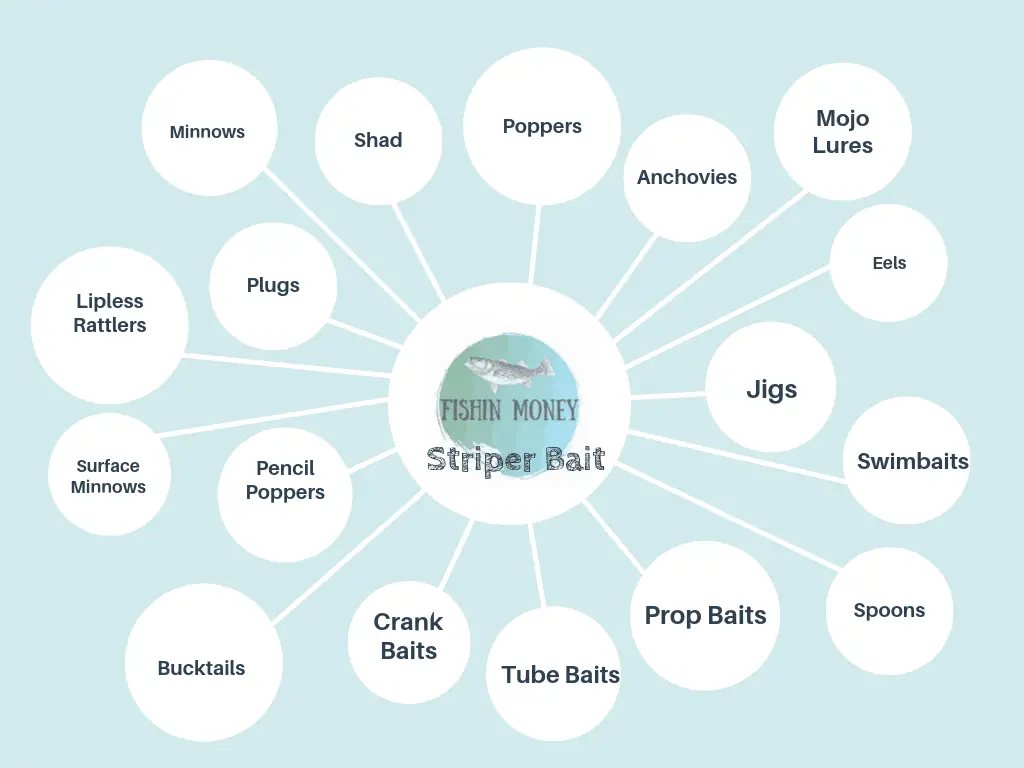
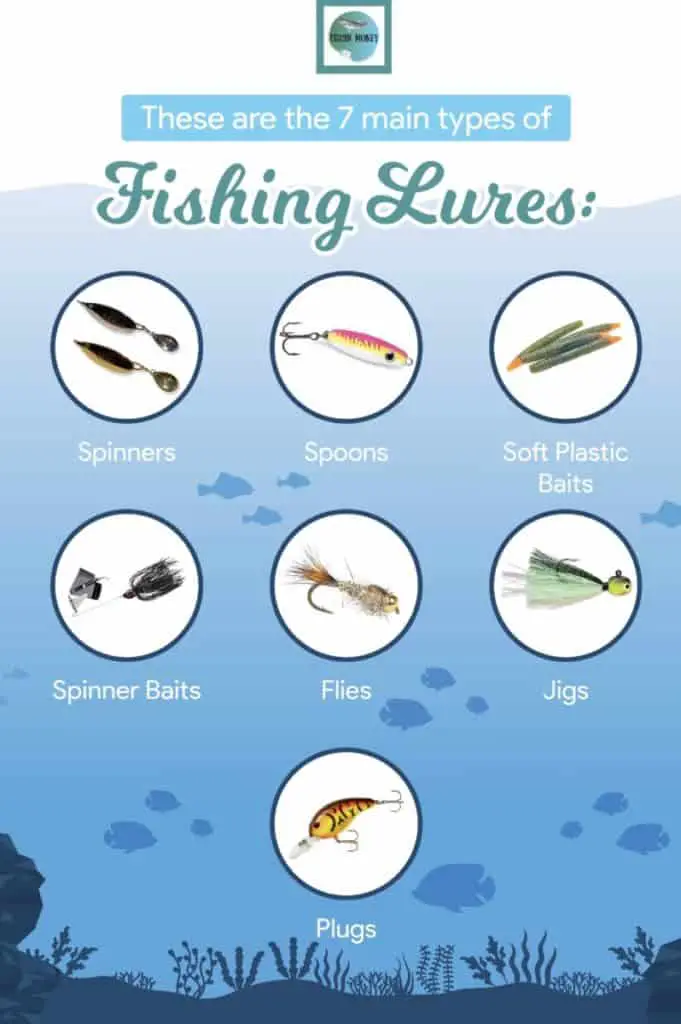
7 Main Types of fishing Lures Darren Enns FishinMoney.com
This is part 2 of our ‘top lures for striped bass fishing’‘. In the 1st section, we covered all of the different categories of lures; poppers, crankbait, stick bait, topwater, prop baits and many more. In part 2, we are going to go in-depth and cover the top 25 striped bass lures of all time.
These were found by researching many different sites all over the internet. Some of this dates back to being first produced in the 1930s and ’40s. So let’s get strapped in and explore!
Designed in 1920, intended on catching pike, surf casters soon realized that bigger versions attracted the striped bass. Creek Chub produced a striper pikie. it was a heavier duty replica of the original, able to withstand the strength and pull of stripers.
Before being used in saltwater, this lure was produced in 1970 for walleye. Anglers love this lure for striped bass because of its affordability. You want to reel quick enough for the diving lip to dig but don’t reel too fast.
November 5, 2012, the Bomber Long A landed a gentleman a 58-pound striped bass in Rhode Island.
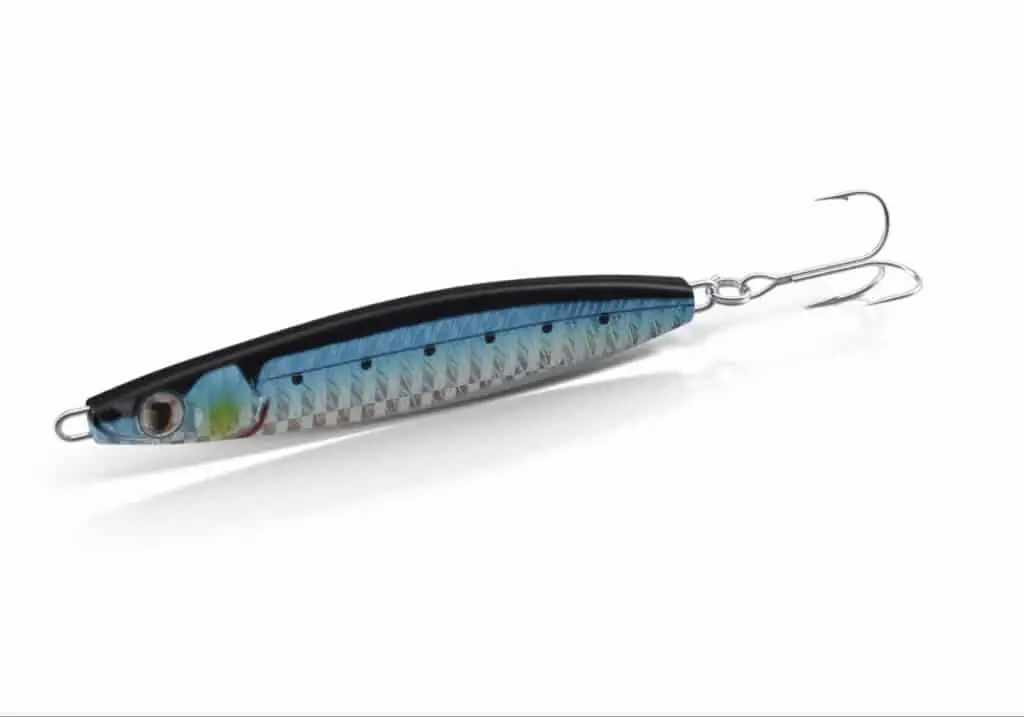
This is an affordable jig that gives great results in snagging a variety of “bottom fish”. Available in 8 sizes its colorful finishes attract the bone-jarring strikes of the striped bass. You can also choose a classic wood Needlefish by Boone that allows slow sinking action. These lures closely resemble a slender baitfish, such as a sand eel, which is popular with striper anglers. Boone Needlefish
Has a tapered design that simulates many forage fish. They come in a variety of sizes from 1/2 oz to 3 1/2 oz. The most successful retrieve with this lure is to point the tip of the rod down, towards the lure, and create a steady up and down action.
Many of these plugs have been tested on the waters of the Cape Cod Canal, before being sold. The pencil popper attracts big striped bass when you use it to fish around schools of mackerel, bunker, and mullet.
Anglers vote this as one of the best wake baits ever created. You will receive unpredictable, vicious bites from striped bass if you retrieve it slowly. To get the best casting out of this light-weight lure, add about 10cc’s of water to the hollow body. In 1984 a huge 61-pound striper was caught with the redfin lure. Although it swims closer to the surface, this lure mimics other minnow type lures.
One of the most lifelike sinking lures in the water. This series of lure is a must-have in your striped bass arsenal, as it is virtually indestructible. Tapered at both ends, they were designed to match closely to sand eels.
On a 6 3/8 inch Super ‘N’ Fish lure, a 64-pound striped bass was snagged in the Long Island surf. They have been very successful in striped bass fishing both on the East and West coast.
This series boasts a “magnetic weight transfer system” enabling anglers to cast farther and cover more water than other lures. These are more productive if you retrieve them slowly. Customer reviews show great quality, superb action, and excellent at catching striped bass. Available in a wide variety of colors, mainly holographic. The depth is 3-feet and they weigh 1 ounce and boast 3D eyes to attract the predatory striped bass. This series is favored by anglers in Cape Cod, New Jersey, and Montauk.
These are bucktails that are optimal for fishing over rocks or in the surf. The extra hair allows for longer float time and increased action. The jigs range in size from 3/4 oz to 3 oz and come in a variety of colors. Widely popular and heavily used at the Montauk Lighthouse in October.
Specifically made to catch the striped bass, which is prominent in Montauk. If you add a pork rind strip to this lure, as a trailer, be prepared for a vicious striper hit on your line.
Spectacular saltwater surface plugs. Early on, they were mimicked after the Creek Chub Pikie, only heavier and better suited for saltwater. First sold out of the trunk of a car on the Cape Cod Canal. The original Striper Atom was available in 3 colors; whiting gold, herring blue, and blue & silver. Due to the heavy through-wire that ran the length of the lure, these could withstand the bold unpredictable strikes by the striped bass.
A very large variety of colors, these lures are one of the favorites of the fishermen in Montauk. Swimming 2-3 feet deep, digging into rips with fierce darting patterns especially successful during a strong current. The weight on these is 2 3/8 oz and 6 5/8 inches long. These lures also work great in calmer conditions. Anglers suggest using this plug after dark, slowly reeling in against a moving tide.
Reverse Atom:
A simple, backward, Atom 40. It was stumbled across by a surf caster who removed the hooks from the Atom 40 and tied it on backward. Striped bass went nuts for this lure. He went to the creator and asked him to produce lures in the backward style and so the Reverse Atom was born! Amber-colored, it was made to look like a squid.
The Reverse Atom is also known as the Whistling Plug because of the 2 holes that are drilled in it. They make a unique whistling sound when cast.
Used to catch striped bass in big surf and calm backwaters. Also successful close to the shore and after dark. The plugs are made to swim on the surface. A lot of Danny Plugs roll side to side while you reel in. For that reason, anglers prefer the plugs to not have eyes, because of concerns that the striped bass will be tipped off to the fact that the lure if fake.
This series of lure will not corrode, bend, or break; and is precision machined. Excellent in fresh or saltwater, the aerodynamics make it the “master distance catcher”. The 1/2 oz to 1 oz sizes is ideal for catching striped bass. There are 47 colors available and the price is very easy on the wallet. If you are battling windy conditions, these are the perfect lures; made to cast like a rocket. The shape of the Kastmasters resembles herring, juvenile bunkers, and other forage bait; attracting all sizes of striped bass.
A little bit on the more expensive side, there are 3 sizes available; 1, 2, and 3 ounces. All of them are also referred to as the “bottle plug”. Without the metal lip, these lures can maintain their aerodynamics, allowing these lures to reach the ‘off beach’ rips. All sizes are available in 6 colors and were made specifically for the most turbulent water and longer casts.
Available in 20 colors and 6 sizes for depth variation, you can’t go wrong with this series of the lure. With a realistic scale pattern and its 3D eyes, they are very life-like.
These lures produce a longer cast and boast heavy saltwater hooks making the catching of a striper a blast and a challenge. The Salt Pro Minnows are popular in the Cape Cod Canal, Rhode Island, and Long Island with catches up to 40+ pounds.
This lure is extremely versatile and can be used in many different ways. Available in 21 enticing colors to attract striped bass. If you are fishing on open beach water it is recommended to use a slow and steady retrieve. These lures can swim across the surface on nice calm nights. While this lure was being tested in 2009, before being put on shelves, it snagged a 60-pound striped bass.
These have been designed to replicate realistic movement, perfectly weighted to help with casting. These poppers sink slowly which allows you to retrieve at a slow pace. Available in 17 colors and 3 sizes, these lures boast heavy split rings and hooks, giving them the ability to withstand the tough bite and yank of striped bass.
With an extra-wide wobble and metal lip these lures blend in with squid, bunker, herring, and mackerel; the 2oz size is the most popular. Depending on your rod height and your retrieval speed you can swim these on the surface or you can retrieve quicker and it will dive down, mixing in with the other swimming baitfish. Available in many color combinations, this series is a little more costly than others.
Ranging from 3 inches to a whopping 12 inches in length, this was one of the first super-soft stick baits on the market. This series draws very instinctive strikes from all predatory fish including the striped bass. It imitates an injured prey action and is erratic on the retrieval. Available in 12 colors and 3 inches, 4.5 inches, and 6-inch length depending on the color you choose. These are the perfect lures for beginners because they do not get snagged on anything and you can cast and reel at a steady pace, while still catching a decent sized striped bass.
Covering almost all fishing situations, it was designed to be controlled, 100%, by the angler. With this particular lure, there is no “wrong way” to fish. Ranging from 2 3/8 inches to 8 1/4 inches and 1/8 oz up to 7 3/8 oz.
Unique to this lure, when you order them you get 5 different buoyancy choices as well. The Stick Shadd lures are stable in all water conditions, great for long-distance casts, and erratic swim action.
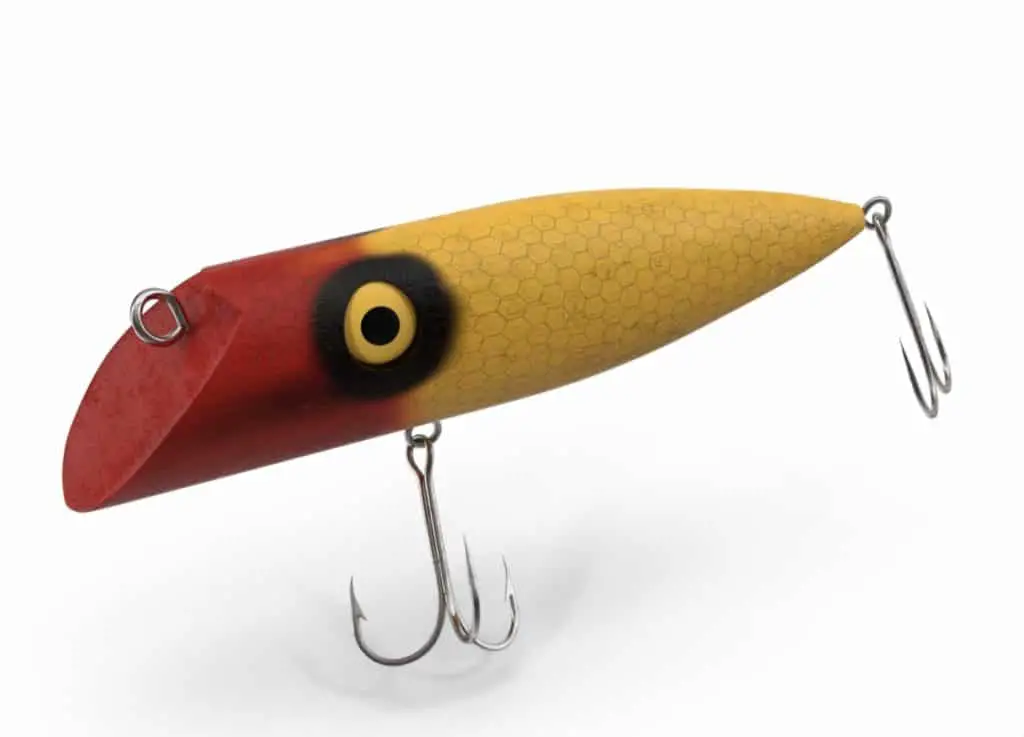
Produced in 1956, the tail is weighted to improve your casting distance. Even in rough or windy conditions, this holds a steady position in the water. Available in 5 sizes and 4 colors, these lures are deadly on all species of fish, including the striped bass. Made of a cylindrical hard plastic, with no eyes, this lure has a cupped slanted face that enables it to float to the surface, even with a very slow retrieve.
This lure is a must-have on the sandy beaches from Jersey to Cape Cod, where the sand eels thrive. The Red Gill is best used as a rig teaser in front of your plug, and they will attract a 30+ pound striped bass. Make sure you rig them with a very strong, heavy-duty hook to ensure you don’t lose the HUGE striped bass that hooks your bait. 2 sizes are available; the 4 1/2 inch and the 7-inch. YES! The 4 1/2 inch lure can snag a striped bass that is 50+ pounds.
These lures have a soft body that mimics a baitfish and offers a 3D life-like meal to the striped bass. Boasting a tumble free casting and weight balancing design. Swim Shad are available in 4″ to 9″ length and 6 different colors with a Mustad Ultra-Point hook.
Tsunami Swim Shad were made so anglers could control the sink rating, positioning it perfectly for those striper strikes at feeding time. You can also do a simple lift and drop retrieval, which will attract striped bass.
offering a bright nickel finish, heavy-duty hardware, and hand-tied bucktail hooks that are saltwater tough. You can sue these successfully off the rocky coast of Rhode Island, the beaches of Cape Cod, and the jetties of New Jersey. Point Jude Tins were produced in 1946 and made to mimic sand eels, peanut bunker, mackerel, and butterfish.
Perfectly weighted for long-distance casting, you can use a skipping action or “walk the dog” style retrieval to entice a striped bass. Available in 11 colors and 4 sizes these lures may make your wallet wince just a little bit, as they are one of the more expensive lures out there. Unfortunately, these did not hold popularity for very long and have been discontinued. So if you should happen to come across one of these at a yard sale or thrift store; GRAB IT!
Now that your brain is on overload from all of the information that we have provided you on the best lures to use when you are chasing striped bass, it is time to pick which one/ones you think are going to work best for you. Remember to take the normal factors into consideration; your area, weather, river/ocean, dawn, dusk, night fishing, trolling or beach/sand fishing. Grab the wallet and the gear and let us get to the water!!
Grab All my Fishing tips in my valuable monthly newsletter!
Any avid fisherman knows that you definitely need a good pair of needle nose pliers. They come in handy when stubborn hooks refuse to come out of the fishes lip. They can also save you from being stabbed by your own hook if you try to get it out without pliers.
The best fishing pliers have a long needle nose and are resistant to rust. They should have a ring on the end so you are able to tie a string to them to keep them from falling and a really good pair will have a spring to open the pliers automatically when the tension is let off of the handle.
These are some of the good features to have although any pair of needle nose pliers is better than nothing so go ahead and throw them in your tacklebox.
Next you’re going to need some extra line. There may come a time where you need to re-string your fishing reel and in case that happens you’re going to need the right test line for the job at hand.
It’s always good to have some extra fishing line in your tacklebox but don’t forget that you will need leader as well. Sometimes anglers like to use a lighter line for the leader so we are including them separately here.
Pre-tying your fishing rigs before you go on the water is a super idea. You want to keep those pre-tied rigs in your tackle-box and safe from getting tangled or lost. If you break off your line and you need to tie a rig up real quick to get yourself back in the water that’s when these will come in handy. They’re already tied and ready to go.
You may need to bring with you a hook sharpening stone. Not much to say here except that you should sharpen your hooks every once in a while. If it’s been a while since you have sharpened your hook or the hooks on your fishing lures, you will have a stone available to do so if you put it in your tacklebox now.
While we are on the subject don’t forget to put extra hooks in your tacklebox. It might be a good idea to have some of the different sizes in case you get into bigger or smaller fish than you expected.
Of course you will need swivels and snap swivels as well. Your swivels can be used to create your rigs. When fishing for striped bass, you may want sliding snap swivels as well so that you can adjust the weights that you put on.
If you are using live bait you may need a small net to help you retrieve them from the bait tank. Don’t forget to throw one in your tacklebox so you are ready to go when the time calls. You may decide to switch up and use a different type of live bait so have a net ready in case you need it.
Have a wire cutter handy especially if you or someone else nearby is accidentally stuck with a hook. You may need to cut the tip of that hook off in order to back the hook out of them. Hopefully that doesn’t happen and you only need wire cutters for other purposes. If you got a good pair of needle nose pliers you may also have some side cutters on there. If so you are set to go if not put a small pair of wirecutters in your tacklebox as well.
Of course you are going to need a tape measure or some way to measure those lunkers that you pulled out. Or you could just lie and overexaggerate what size the fish was.
You are going to need a stringer if you catch a few fish so don’t forget that. Depending on the size of fish that you are going to catch, plan the type of stringer that you bring accordingly.
A scale is a good thing to have handy especially if you catch your personal best and you want to document it on Film. ODon’t forget to set your scale at 5 pounds before you start weighing anything.
An old fisherman trick is to bring a pair of nail clippers on a string tied to your vest so that you can easily clip that fishing string or those tags whenever necessary. Make sure you have one in the tacklebox.
You are going to need a knife for sure. You can plan on what type of knife to put in your tacklebox but a fillet knife is a good idea because it can be used for many purposes including to fillet your catches.
You may need a hook retriever tool. Sometimes those fish swallowed the hook and it’s a little hard to get out without some help so a hook retriever is a great idea to have with you in your tacklebox. If you do not have one you can consider bringing a Flatnose screwdriver with a V cut into the tip of it. This may work as well to get those hooks out from deep down in the fish.
There is a type of float called a PALSA. They pinch on where your hook is and help it to float up off of the bottom. This keeps it out of the reach of crabs and other crustaceans that want to eat your bait before the fish get to it.
Bring some jigs and a rubber eel or worm. You never know when you’re going to need some jigs and some plastic baits. It’s a good idea to keep many sizes and flavors in your tacklebox.
If you are fishing for striped bass, you’re going to need some poppers or top water lures. Especially if you’re fishing for bass when they are feeding off of the top in boils. Keep several top water baits handy especially ones that mimic the feeder fish that your stripers are feeding on. In my state they feed off of shad so gold or silver colored top waters are a good idea.
If you are fishing fast-moving water or deep water you will want to bring with you some pyramid stinkers. Somewhere between 1 ounce to 3 ounces is best. This is where you’re snap swivels come in handy. If you are using a 1 ounce sinker and it is not enough to keep your bait in one spot you may need to switch up to a heavier sinker and having a snap swivel makes it easy to switch them out. But you need to have them in your tacklebox in the first place for that to work so we put them on The list.
Spider stinkers are another trick if you are in fast-moving water. They are like a pyramid sinker only they have legs made of wire that stick out and help to hold them down by them getting stuck in the rocks and sand as they hit the bottom. In fast-moving water they really do a nice job. Put some of these in your tackle box because if you don’t need them now you may need them in the future.
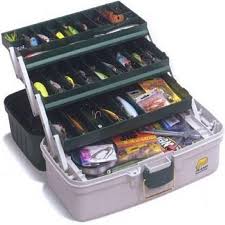
Of course a tackle box would not be complete without artificial bait and lures. There are so many kinds we will not get into them so much here however, many of our articles on this blog cover them in depth you can do a search at the top of the blog and find which articles talk about different kinds of lures but for now let’s just say that you need some in your tacklebox.
Put some bobbers in your tackle box as well in case the fish are feeding from the top you can use them to keep your bait up high. A little trick that we use in the west are the sliding clear bobbers that hold water. You can fill them mostly full of water and they will have a lot of weight for your cast but they will have enough air in them to float. If you don’t want them to float you can fill them completely with water and they will sink like a sinker, taking your bait down with them.
I always like to carry some cramp on weights or some split shot with me in case I need to add weight on the fly. The needle nose pliers will come in handy here as well to pinch on those split shot and save your teeth.
A portable depth finder is a handy thing to have. Now days they make them to fit on the end of your spare fishing pole. You can cast them out to where your bait is and find out what’s going on down there below. Kind of high tech and nice?
Don’t forget to bring a Compass. If you are out on foot hiking those inlets and you get lost a compass may come in handy to help you find your way back. It’s always a good idea to know which direction you’re going especially when you’re lost.
Now we’re getting into the really important things. Bring sunblock. If you are the only one that remembered you may be the savior of many other people on the fishing trip. The water can be brutal reflecting the suns rays up at you again after they have already hit you once. Putting on sunblock will keep you much happier than going home looking like a lobster believe me.
Bring a hat, keeping the sun off of your head especially in the summertime and blocking some of the suns rays off of your face will keep you a much happier fisherman.
While you’re at it put some sunglasses in your tacklebox. It’s always nice to have an extra pair in case someone else needs them. Having an extra pair in your tacklebox can save your eyes from Strain that is unnecessary in case you forget to bring your good ones at least you’ll have a back up pair and if you do bring your own you will have a back up pair for somebody else
Insect repellent is a good idea to have with you because when those mosquitoes come out it can be brutal. Keeping most of them away from you will make for a much nicer trip so put some in your tacklebox.
Some fish attractant sent maybe the one thing that makes your trip a lot more fun. We once fished on the lake where nobody was catching anything until we started using the scent and then we all cought fish. Everyone else on the lake was looking at us like what in the heck are you doing? They never did figure it out and we looked like geniuses.
Bring a small flashlight in your tacklebox in case you end up staying out late. It definitely could mean the difference between a good time and a more difficult time.
Take a Ziploc bag with some toilet paper in it in your taco 🌮box. I’m telling you, it could save your whole trip.
Bring some superglue. If you break a part of your real or your fishing pole or one of your lures you could be back in action quickly with some good superglue. It’s small but it works great. Here’s a tip, if you get a cut squeeze it together with some superglue and you are back in action.
While we’re on that topic, you might as well put some duct tape in your tackle box as well. I don’t think I need to go into depth on why. It fixes everything.
Here’s a pro tip for you, bring a hot glue stick and an extra rod tip. How many times has somebody broken off the tip of the road with no way to fix it?
Bring a facemask for mosquitoes. We buy the paint strainers at Lowe’s and they work great.
You can get a thin rain poncho at the dollar store and put it in your tacklebox. There are times when the rain starts and you have no way to get out of it unless you stop fishing. If you have one or two of these in your tacklebox it may save the day.
Put a lighter in your tacklebox.
You can get some bells to clip on the end of your fishing pole if you are fishing from the shore. This makes it nice because you do not have to stare at the end of your fishing pole all the time. There are bells with an led light as well for night fishing.
And last but not least, a multi tool. This kind of covers everything just in case. Some multi tools have needle nose on them, there is a knife there, screwdrivers in case you need them to tighten some up on your fishing rod for real. Etc.
So there you go this is the list that I came up with. If there is something that has been left off please let me know and I can add it to the list. As you will note our list has a few empty spaces at the end for just such an occasion because I’m sure there is something that’s missing. Happy trails and tight lines
Maine is known for its many lighthouses, majestic mountains, Acadia National Park, and much more. But today, we are going to focus on striped bass fishing in Maine. We will review some hot spots, rules and regulations, and best lures/bait to us in this area. If you are ready, then let us take a trip through Maine.
There are many great locations to fish for striped bass in Maine, Here are some recommended places.
Parsons Beach – Kennebunk
Colony Beach – Kennebunkport
Little River – Biddeford
Hills Beach – Biddeford
Pine Point Beach – Scarborough
Clay Pits Road Boat Launch – Scarborough
Eastern Trail – Scarborough
Higgins Beach – Scarborough
Spring Point Ledge Lighthouse – South Portland
Mackworth Island – Falmouth
Cousins Island – Yarmouth
Mason Marshall and his Catch (Striped Bass)
Fishing Regulations for Maine
Why don’t we go ahead and the rules and regulations out of the way first? Then we can focus on the fun part of our trip.
1. fishing for striped bass is open all year round in Maine. From January 1st until December 31st (though there are PRIME fishing months in between)
2. catch and keep – 1 fish per day, per person at a minimum of 28 inches in length
3. sale is prohibited and fish must remain fully intact and whole
5. fishing licenses are required for anyone 16 and older to fish or to transport fish from inland waters
What Bait to use fishing in Maine
As in a lot of places, stripers will bite on many types of live bait and lures. Herring, eels and marine worms are widely used live bait, but the best is mackerel. Lead headed jigs, spoons, and deep-diving plugs are the most recommended lures, but as always, it depends on the area and time of day that you are hunting down the striped bass. In Maine, the stripers like to hang out around rocky shores, shallow bays, surf line of beaches, and coastal rivers.
When should I fish for striped bass in maine?
The optimum time frame for striped bass in Maine is from mid-May to early October. We are going to review the top 5 places to catch the striped bass during this time period. Parking and access along the coast can be a bear, so we have a couple of tips for that as well. But before you go, do check and see what the parking is. Some are free, some are limited and some will charge a small fee for parking. These spots are perfect for those of you who are new to Maine or new to the sport of striper fishing.
Places to fish for striped bass in Maine
Parsons Beach located in Kennebunk:
This is a private beach but allows public access. Parking is free but very limited, so get there early. In this area, you have Mousam River, Back Creek, Little River, and a couple of other prime spots for fishing. Offering great fishing along the beach, there are 2 jetties that are very popular. One is along the west side of the river, near Gooch’s Beach and the other is on the side. This is a gorgeous place to fish with plenty of room for a large number of fishermen. In this particular area, live mackerel work the best especially if you are out on a boat.
Also called Arundel Beach at the mouth of Kennebunk River. The best target zone is the outgoing tide at the mouth of the river. Where there are sand and rocks, you will generally find striped bass. Even in June, the temperatures are still in the low 50’s, making the striper less active and hanging out on the bottom of the ocean/river. The early morning or when the sun is setting with an outgoing tide is prime time in this area. Live bait is your best bet during the daytime hours, lures are prime for early mornings and at sunset. If you are new to the sport or new to the area, you may want to consider a fishing guide in the Kennebunkport area. They can and will teach you everything you need to know about striped bass fishing and the best spots to catch the big one.
Little River in Biddeford:
Overflowing with fish at the mouth of this river at the turning tide, more so if it hits at sunset or sunrise. Unfortunately, the one downside of this area is resident parking permits. Just do a little checking around, the bait and tackle shops can lead you in the right direction for parking and access to the river. One of the ways is via the river at Timber Point. Included in the Biddeford area is the also popular Saco River. This area provides a lot of shore access, 2 boat ramps, and tons of parking. With this area being as large as it is, fishing tours/guides are also recommended if you are new. Otherwise, grab your pole and your bait and pick a spot, any spot.
Hills Beach also located in the Biddeford area:
Your best bet for parking is to arrive early in the morning. Search along Hills Beach Road and look for parking signs. There is a college right up the road, but please do not try to park in their lot! Try your luck where the rocks meet the sand.
July is when the striped bass tend to move towards the beaches in this area. Smaller stripers will be around rivers and of course, the bigger striped bass will be in the deeper water (so you will need a boat). One thing to remember in most areas in Biddeford; locals do not like to share the ‘gems’. They searched long and hard for these prime spots and do not take kindly to them being over-ran with newcomers or tourists.
Pine Point Beach in Scarborough:
in this area, you will have a few different platforms to choose from;
1. the mouth of Nonesuch
2. sandbar below the tide
3. the stone jetty at the turning tide
The mouth of Nonesuch runs through the 3,000 acres of Scarborough Marsh. The baitfish are abundant in this area as well as the birds. So, catch that live bait before the birds eat it all for breakfast! If you have a boat, head out early (5 a.m.) to catch plenty of live bait such as mackerels, so you can be back at Prouts Neck for high tide around 8:30 a.m… Stripers love to follow mackerel schools, so if you see large schools you are bound to see and even catch some striped bass.
Before we end our striped bass fishing trip in Maine, I am going to leave you with a few other hot spots to chase down and catch the elusive stripers.
1. Clay Pits Road Boat Launch – Scarborough
2. Eastern Trail – Scarborough
3. Higgins Beach – Scarborough
4. Spring Point Lodge Lighthouse – South Portland
5. Mackworth Island – Falmouth
6. Cousins Island – Yarmouth
Make sure to do a little research on parking in each area and ease of access. These 11 spots are just a handful of areas for striped bass in Maine. If you are new to the sport, to the Maine area (or any other state for that matter), check into hiring a fishing guide. Yes, it is going to cost a little more during your vacation or weekend get-a-way, but it is well worth the money. You will learn a tone of information, tips, and tricks. The bonus to a fishing guide; you are almost guaranteed to catch at least 1 fish per person that is on the tour with you. Most of these guys are natives and grew up in the areas that they are guiding, so it is a no brainer to have one of them teach you and show you around. Happy Fishing!!!!
Montauk Point: whether you are in a boat or fishing from the large rocks on the shore, there is an abundance of striped bass to wrangle. Using large live eel or big soft lures doesn’t seem to matter. Watch for flocks of birds as they will tip you off to where there is a large school of stripers. Striped bass also feeds on herring, squid, and mackerel. The optimum water temperature for catching a striper in Montauk is 55-65 degrees. If it is any colder than that, you are only going to find them on the bottom of the water and not very active or hungry. Prime months for the striped bass in this area is September and October. This is when New York has the elite striped bass and bluefish blitz. You can also catch the stripers between April and June, before the scorching summer heat hits.
In Montauk, you can reel in a striped bass between 10 to over 50 pounds with the average size being 15-30 pounds. Rules and regulations state that you can only keep 1 striped bass per day at a minimum of 28 inches long. Some of the recommended techniques according to a professional charter service:
1. trolling, using Powershot jigs, snakes or umbrella rigs will get you a trophy catch
2. live eels are a regular and preferred way, especially at sunset or at night, but you can use them during the day as well
3. live bait fishing for porgies. After you catch the limit of porgies, you use the porgie to catch the monster stripers in this area
David Law Big Striper
Avid fishermen and locals say that the lighthouse is a very popular fishing spot. The parking lot becomes a fish camp in the fall. The lighthouse is at the extreme tip of South Fork. This is where the striper spill from the waterways. You have to be extremely careful and cautious in this area as the rocks are slick and the current can get very strong. it will knock you down and pull you under before you know what happened. If you want to get your picture in the local bait and tackle shops, then you need to hunt down and catch a striper that is at least 40 pounds. Most anglers use a 10-foot rod, which allows them to send a lure way out into the surf.
Most fishermen in this area also choose to use a 20-pound test line. Because of the rough current and all of the rocks, most surf casters opt to wear chest waders. Some other gear that you may consider, for your safety; creepers (sandals with metal studs, for gripping the slippery rocks), wet suits, and helmets. Helmets protect you so that if you get pulled under the water your head is protected should you hit a rock. You can ask around at the tackle shops and get any more advice on the gear to wear or to have handy when you fish in this area.
Some of the most crucial lures to use at Montauk Point; pencil poppers, bucktails, standard poppers, and metal lures. Light-colored lures work best during the day and the dark-colored lures work best at night. Sounds strange, I know, but that is what locals and professionals say works best. Most of the bait and tackle shops in the area can give you tips, tricks, advice, and up to the minute fishing reports at any time of the day. If you are a beginner, the locals suggest keeping the bait simple and starting out slowly.
Regulations are as follows:
1. on the Hudson River, 1 striped bass per day at a minimum of 18-28 inches long
2. in marine waters, south of George Washington Bridge, 1 striper a day at a minimum 28 inches long.
3. don’t forget the fishing license. Your annual license for residents, age 16-69, is going to cost $25. If you are a non-resident, the annual license will be $50. You can also choose to have a license for just 7 days, which is going to be $12 for a resident and $28 if you are a non-resident. A 1-day fishing license will be a respective $5 or $10.
Now that we have covered the legal aspect of fishing in New York, let’s pick up where we left off with the tips, tricks, and excitement of catching the striped bass at Montauk. A couple of exciting places along Montauk to go striper fishing is Turtle Cove, which is located on the north side of the lighthouse. On the southside, we have the popular spot of False Bar. Both places offer an abundance of striped bass (and bluefish). As long as it is not midday and overly hot, they will feed continually, day and night. So, if you are up for it, be prepared to fish 24/7 because the fish don’t wait for you to finish your meal before they start theirs.
Some of the other popular places around Montauk for striper fishing:
1. North Bar
2. Evan’s Rock
3. Browns
4. Jones Reef
5. Caswells
Inlets are a good target in these areas for anglers. Whether there are jetties or not, these are major thoroughfares for a lot of bait and fish that are moving between the bays, ocean, and harbor.
A few, last-minute tips for fishing in Montauk and then an event that we have saved for last. Local and professional anglers recommend the northside of the lighthouse and Ditch Plains for beginners or first-timers to this area. Anglers native to the area can not stress enough; “never go out on the rocks without “creepers” or Korkers. Korkers are spiked rubber soles that are attached to the bottom of the boots. If you do not have them, please stay on the sandy beaches as the rocks are very slippery. As mentioned before, it is also advised to have waders and maybe even a helmet, for the first-timers.
For 10 weeks, from September through the end of October, Montauk hosts an invitation-only striped bass tournament. This tournament has been running for 30 years. It was originally named Montauk Locals Tournament. The name was changed to Montauk Surfmasters in 2010. For the best and savviest fishermen, this is one of the most elusive tournaments.
The divisions for this tournament are as follows:
1. Waders
2. Women
3. Wet Suit
4. kids/youth
In addition, there is a catch and release division for kids. This allows kids who want to participate but are new to the sport, to catch a striper, take a picture and then release the fish. Basically, this is a photo contest for the kids, while still allowing them to have fun and participate.
So, now that you have all of the ins and outs of Montauk and where the best places are to catch the striped bass, along with rules and regulations, safety, and best lures. Let’s get our bags packed and get out there for one heck of a good time!
We are going to take a trip to Massachusetts, to discover the best places to catch the striped bass. We will look at the fishing rules and regulations as well. You will know everything you need to, to snag a striper, once you reach the end of our trip.
2. the permit fee is $10 whether you are a resident or non-resident
3. there is no charge for a license if you are 60+ years old
4. Massachusetts residents can fish in New Hampshire, Rhode Island, and Connecticut with their fishing license
5. the limit is 1 fish per day at a minimum of 28 inches long
6. it is illegal to keep a striper on a line or chain in the water to keep it alive. You are also not allowed to keep it in a holding car or live well.
7. the striper MUST be whole (body, head, and tail kept intact) with only evisceration allowed.
Jay Mayo What a nice Striper
Some of the fishing Hot Spots in Massachusetts
Now that we have covered all of the rules and regulations for the striped bass in Massachusetts, we are going to move on to the fun part, where to catch the striper. There are many hot spots on both the North and South shores, and also along the Connecticut River. We will explore a little later, but on the North shore, a couple of the best spots are Boston Harbor, Governors Flats, and Deer Island. On the South shore, Martha’s Vineyard, South Cape Beach, and Sandy Neck.
In Massachusettes many anglers fish from shore using baitfish. Some fishermen will use soft plastic lures or baitfish-imitating crankbaits. Of course, trolling in open water is a quicker way to find the striped bass, but it isn’t always about quick and easy. Some anglers love the challenge of locating and catching from the shoreline. The striper is normally found in shallow bays, along the rocky shoreline, and river mouths. Striped bass is prevalent in Massachusettes from May through November. Many anglers in the area consider the striper the best game fish.
Best time to fish in Massachusetts
As it is everywhere, the best times to snag the elusive striper is before dusk and dawn. If you are going to fish from shore with lures or bait, make sure to choose an area with a good current. Some anglers prefer a medium to a heavy pole using a 12-20 pound test line. While others swear by a 10-12 foot pole (surf rod & reel) using 30-40 pound test line. It is all in what you are comfortable using and what you can afford. There is no right or wrong pole, reel or test line. It is more about the time of day, the location, and the lure/bait that is being used.
So, lets now begin our tour around Massachusetts and give you a little bit more information on some of the hotspots for catching the elusive and feisty striped bass.
Boston Harbor
Boston Harbor: this is a natural estuary of Massachusetts Bay. Estuaries are the perfect hiding spot for the striper. Porgies are in abundance and they are great to use as bait to catch the prized trophy striped bass. They are found in the inner harbor area. You can also use live bait or use lures, especially for trolling. Striper seems to like the large soft plastic lures the best in this area. The water is clean and clear with a ton of small places to catch striped bass, such as Deer Island. A little more challenging than other areas because of all of the boat traffic in the Harbor. Be prepared to snag fish as big as 30-35 pounds and 42 inches long. Reel in slow, let the striper wear itself out, and be patient. There is a lot of action and challenge fishing on the Boston Harbor.
Deer Island
Deer Island: located in Winthrop, on the Northern edge of Boston Harbor. The best spot for striper is Great Faun Bar. If you are on a boat, locate the deeper areas, often found in the middle of the bar. You can also fish for the striped bass on the Deer Island Fish Pier. It is 210 feet long and 12 feet wide. Besides porgies, other live bait that is successful: mackerel, pollock, eels, and seaworms. One other spot to catch the striper in this area is on the shore of Merrimack River, which is on Deer Island. The best time to catch the striped bass in this area is late May to early June. A very popular spot, when the stripers are running is the Rocks Village Bridge.
Governors Flats
Governors Flats: also part of the Boston Harbor, in Suffolk County this is a spectacular Island of 105 acres, but they say that the island disappeared under Logan Aire port in 1946. On a map, Governors Island Flats, Governors Island, and Apple Island are all within a mile or 2 of each other. Make sure, that no matter where you to choose to fish on the North Shore, the school of porgies can lead to your striped bass catch of the day.
We are going to now move our tour to South shores and delve a little deeper into a couple of amazing hotspots for the striped bass.
Martha’s Vinard
Martha’s Vineyard: home to the Martha’s Vineyard striped bass and bluefish derby, off of the Massachusetts coast. It is 100 square miles off of the coast of Cape Cod. Stripers like to hang out at the Squibnocket and Aquinnah. You do need to use caution, as there are treacherous shallows in this area. Striped bass also likes to stick together along Devils Bridge. For bait in this area; live eels, flies, and plugs cast among the stones can draw generous strikes from the stripers. You can also try drifting or deep-jigging using bucktails or diamond jigs.
South Cape Beach
South Cape Beach: this area is best for bottom fishing and cast fishing. Depending on how far you want to walk, you have a lot of options to fish. You can park at Mashpee Town Beach and cast right off of the lot on the beach. If you head east, from the parking lot, along the beach there is another area called State Beach. Further east, behind the golf course, you will find many small rips that attract the striper. If you choose to go South from the parking lot, you will see the entrance to Waquat Bay. This is a good-sized harbor and bay that boaters love for catching striped bass.
Sandy Neck
Sandy Neck: located in the town of Barnstable, this is a great swimming spot during those hot summer months. But if you walk, in either direction, you will find prime fishing spots just a few hundred feet away. Fishing at Sandy Neck Beach is best done after dark in the summer, or in the fall during daylight with a northeast breeze. If you do not mind the walk, at the end of Sandy Neck is a spot called Beach Point, but the jaunt is about 7 miles. You will have prime striped bass fishing in this area if you fish from the darker water with gravel and weed patches.
This ends our tour of hot spots in Massachusetts, to catch the striped bass. I hope we have given you enough valuable information to get started on your weekend getaway or your summer vacation. Now, go grab your gear, your friends, your family and head out for some trophy striped bass fishing in Massachusetts. Remember if you have never been there, don’t forget to grab a map so you can find all of the wonderful tourist attractions and make sure when you get your fishing permit, grab a rules and regulations booklet as well. This will give you all of the information that you need to fish legally in Massachusetts and it will also give you some insight on some of the other hot spots to fish.
Striped bass are one of the most popular game species in the United States. Striped bass, also known locally as linesiders or “stripers” have become a staple in the fishing world for their jumping habits, contributing to the popular tactic of “jump fishing.”
This type of angling is where a fisherman will sight fish for schools of them breaking in certain areas of their lake or reservoir. In the low light of the late evening or the early hours of the morning, stripers are known to boil to the top of the water. But why do Striped bass jump in the first place?
Striped Bass, are known to jump out of the water while hunting their prey. If their next meal is swimming in schools near the surface of the water, they will swim up and launch themselves toward it, even breaking and jumping over the surface of the water.
Since the 19th century, Striped bass fishing has been both a freshwater and saltwater favorite for a number of fishermen across the United States, including both the East and West coasts, larger reservoirs and lakes, and in river systems spanning throughout the country.
Once mature, these fish average out between 20 and 40lbs, with some weighing in the triple digits. The largest striped bass ever recorded, caught in a fisherman’s net 1896, weighed in at 124lbs. The largest striper ever landed by an angler, however, was caught in 2011. The 81.88lb monster was successfully landed by Greg Myerson, who currently still holds the World Record to this day. The fish measured 54in in length when Myerson pulled it from the waters of Westbrook, Connecticut nearly eight years ago.
But he didn’t catch this trophy by jump fishing, because as most people could recon, world-record sized trophy fish don’t just jump out of the water, unlike their smaller counterparts.
When feeding, striped bass are known to choose one desired food and stick with it. Based on the conditions of the water and the time of year, these selective fish will search for specific prey on which to feed. For example, they’ll communicate to one another what looks good to eat and they have been known to reject anything else, making the search for stripers even more difficult.
Stripers, however, are also known to jump out of the water while hunting their prey. If their next meal is swimming in schools near the surface of the water, they will swim up and launch themselves toward it, even breaking and jumping over the surface of the water. This has proven true for topwater fishing, as Striped bass can locate their prey (namely Shad, Anchovies, etc) on the surface of the water, and launching themselves toward the surface to take it is an instinctual to them.
Schools of striper will do this from time to time, depending on the location of the feeding area and what the temperature is like outside. In the summer months, the area nearest the dam of a lake or reservoir can be a great area to watch for jump fishing, while the estuaries and smaller offshoot branches of the lake can be better for the winter and fall months. When in doubt, ask the locals where the water is breaking and what kind of bait has been working in their area.
For many fishermen, the question of whether or not striped bass even jump in the first place is still up in the air (no pun intended but always appreciated.)
Zooplankton: What are they, and how do stripers feed on them?
Zooplankton, a word derived from ancient Greek meaning “animal” and “wanderer,” are microscopic organisms found throughout most bodies of water, both freshwater and saltwater, around the globe. These bodies contain many different species of Zooplankton and other smaller prey, which are consumed by Shad and other bait species and are then, in turn, consumed by striped bass. Notable fishermen have discovered a tactic for striper fishing playing on that same food chain, however it also greatly improves the success of fishing for stripers at night.
Zooplankton and smaller bait fish are known to be attracted to bright lights, leading anglers to develop waterproof LED systems which, when dropped below the surface, lure the bait fish toward the light.
Once schools of these fish start gathering around the lights, stripers come up from the depths of the cool water below and feed on their prey. This method of striper fishing has been largely effective since it first became popular in the late 90s and early 2000s, and can be used when fishing from a boat or from the shore. The general consensus of the striper fishing community is that green LEDs are most effective in attracting bait and plankton, while other types of underwater lights can be used for a variety of species. Simple Crappie lights can be made with everyday items such as car headlights and Styrofoam, and can be quite effective depending on the weather conditions and the species population in your area.
Hydro Glow is a reputable brand for deepwater stripers, however it’s a safe bet to compare brands and see what works best for yourself. Just to name a few:
For first-timers, the TIMMRAIN 1200 LM fishing light is critically-acclaimed and relatively inexpensive. At $17.99 on Amazon, it’s a great buy for those new to the striper game or who just want to test the waters without breaking the bank. This item currently has the highest rating among 17 reviews on Amazon, and has been given four and a half stars.
Amazon’s choice, however, takes second place in the ratings, also with four and a half stars between 102 reviewers. The Linkstyle 12V 1000 LM bait finder light is also an LED light, which can be effective down to about 20 feet below the surface. This item is equipped with an eye ring at the bottom in order to connect a weight when submerging. Although it’s equipped with 200 less lumens than the TIMMRAIN, this light makes up for it in depth capabilities, which beat out the TIMMRAIN by a hair.
As stated before, the Hydro Glow GreenHydro is a high-output LED light that has gained attention for its effectiveness in attracting hordes of baitfish in the path of its green glow. The Hydro Glow radiates 4000 LM beneath the surface, making it an effective tool for charter captains and average Joes alike.
Aside from using the glow of the light to attract prey at night, striper fishing during the day is a whole different can of worms. You may be asking “Hey man, what good is it to have glow lights if I’m fishing for stripers during the day?” Well, whether you’re searching for jumping striped bass for looking for an early 4:30p.m. dinner buffet, always follow the birds (maybe they’re serving striper.)
I digress. During the day, when using your glow lights is pointless, the seagulls and birds dive-bombing the surface are also great indicators for schools of baitfish and where they like to hang out.
Whether fishing from a boat or from the shore, the direction in which the birds are circling and touching down will give you a good idea of where to drop your hook. This method of fishing has been used for thousands of years, and it still remains tried and true to this day. Watching the wildlife around you helps to develop a keen sense of what to expect, and will allow any great outdoorsman or woman to pinpoint just what they’re looking for.
Stripers are evasive, smart creatures and should be treated with respect. Using these tips and suggestions can help you in your own adventures in the outdoors.