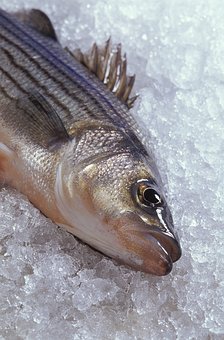
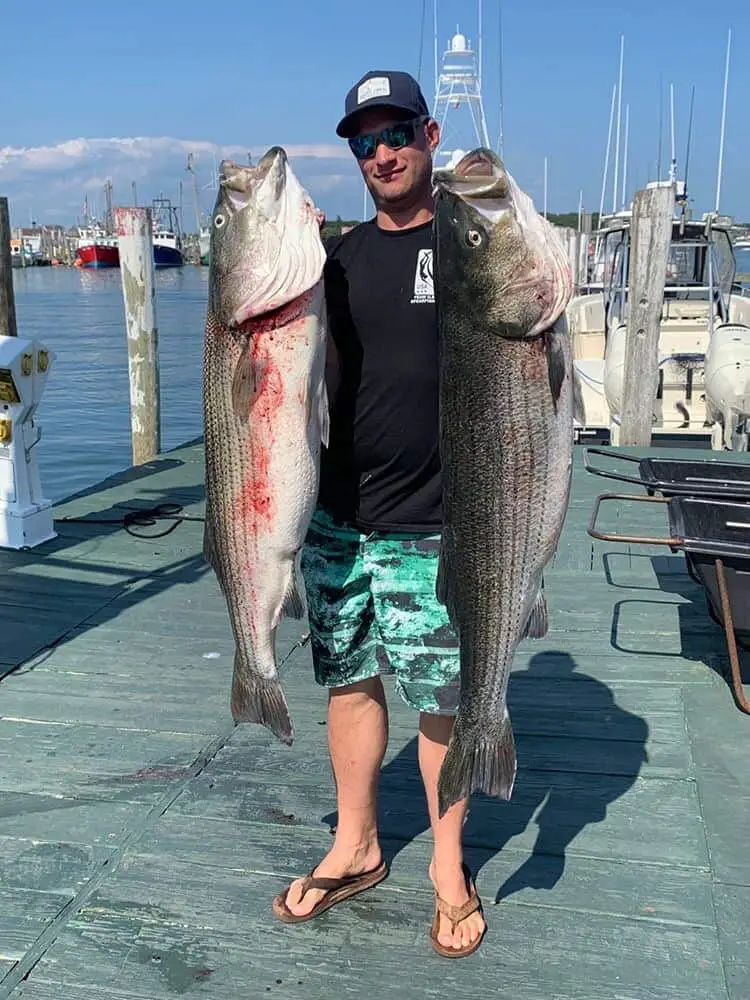
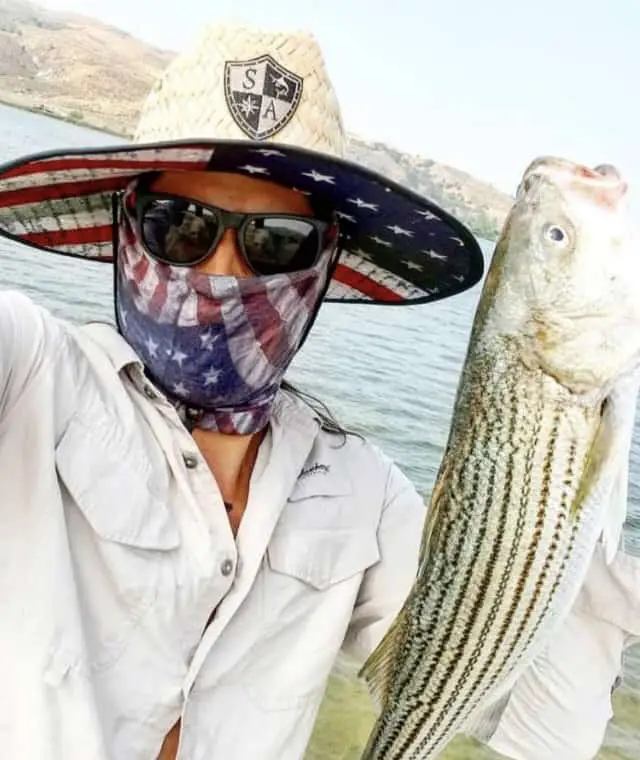
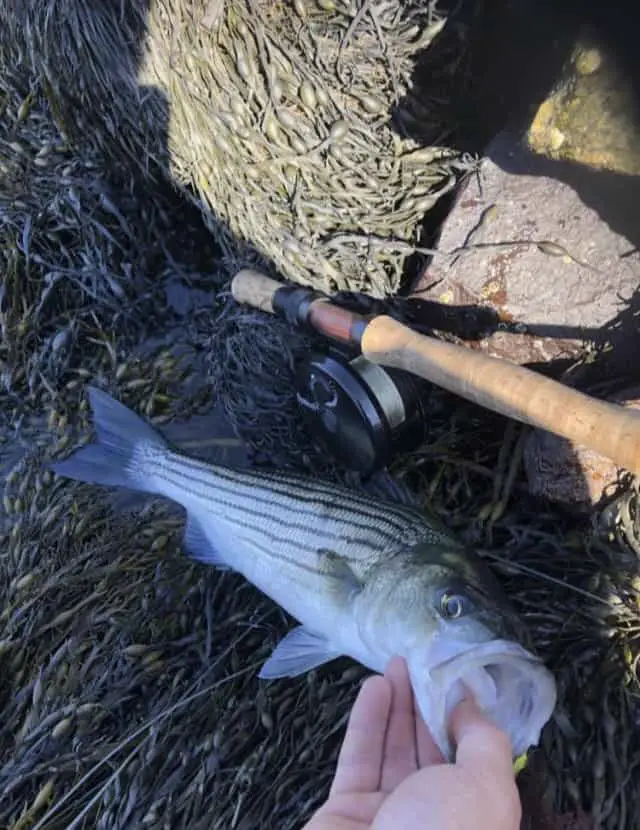
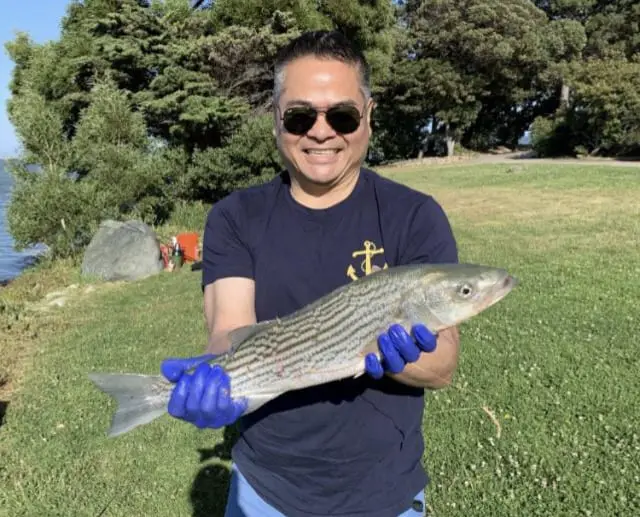
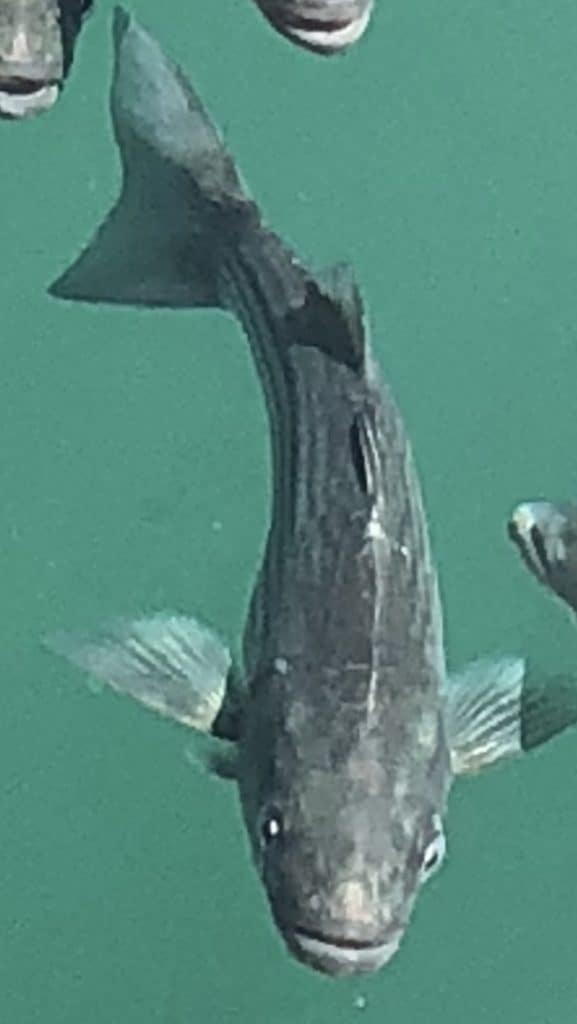
Hybrid striped bass is a stunning fish that is created by crossing male white bass with a female striped bass. They are mostly found in midwestern rivers, lakes and have been stocked into reservoirs too, in the Southern and Midwest United States. Also, they do well in ponds, slow-moving streams, and shallow areas. Hybrids have lateral stripes along the sides which are broken, with some even extending to the tail.
Some tips on fishing for striped bass are:
Locate Hybrid Striped Bass with a fish finder or watch for diving birds. Also try places where they can find cover.
Study where Hybrid Striped Bass are stocked. This is essential as Hybrids cannot procreate, so if your lake hasn’t been stocked lately it might diminish your chances of catching any.
Fish Near Current because this species loves strong currents that kick up food particles that the bait fish are after and the stripers are after the baitfish,
Fish near structure – Hybrid Stripers love to hang around rock cliffs, Bridges and pylons and deep dams.
Fish from points that stick out into the lake.
Interestingly enough, stripers tend to grow considerably well in freshwater. One characteristic about these fish is that they can reach massive size. These fish have two dorsal fins that are unconnected by tissue. In fact, one dorsal fin is spined. It’s rare to catch them unless they’re targeted. Let’s look at tips on how to catch hybrid striped bass.
Locate Hybrid Stripers
Before planning on how to catch stripers, make sure you locate them. You can either locate them in lakes, reservoirs or even rivers. During the summer, look for unique and raised humps found in shallow water and which are surrounded by deep water. This only applies when you’re fishing in lakes and large reservoirs. Also, listen to the special sound of explosive feeding action because the probability is that these fish are around there. However, these will occur on defined points, usually fairly deep water.
During spring, you can easily find stripers up in tributaries and inlets. You’d be surprised to find large fish in very small water areas. Another great location to find hybrids is in rivers. You’ll find these hybrids patrolling from medium to deep water. Be sure to get them along the edge of bends and channels. They also follow bait schools and hide in shallow water. Locate schools of bait and get yourself some stripers.
Ensure You’re Fishing in an Established Hybrid Stocking Program Reservoir
First, ensure you’re fishing in a water reservoir that has a well-established hybrid stocking program. Most of the time, you’ll find these fish in a lake. At present, hybrids are stocked in Greers Ferry, Lake DeGray, Lake Hamilton, Little River, and DeQueen. Remember that it’s tougher to locate this shoal of fish in bigger water bodies. One thing I know is those big lakes are a favorite food source. The advantage with these hybrids is that they’re aggressive and usually bigger.
During summer, you’ll see these hybrids along the shallow ends as they break the surface of the water. You only need to apply long casts into schools of feeding hybrid stripers. Note, don’t talk or shout at them. They are sensitive just like other fish such as catfish and salmon.
Look for Current
It is fascinating that anglers catch hybrids while fishing largemouth bass, catfish and white bass. Nonetheless, if you want to increase your probabilities of hooking a hybrid striper, try by specifically targeting them. Noticeably, hybrids are highly attracted to flowing water. That’s why tail-water areas below dams are suitable fishing locations. It’s recommendable to fish them when water is flowing through the turbines of the dam or the spillway gates. Additionally, areas like natural springs can attract hybrids after heavy rains.
Note that the fish will rarely be found in the fast-moving water. Instead, you’ll find off to the side as they wait to ambush their prey. Areas with currents are known to be productive and amazing throughout the year. Moreover, hybrid striped bass are found in reservoir tributary and streams where we have high currents especially during the month of April and May.
Use Angler Techniques Using Artificial Baits
Anglers can catch hybrids easily than anybody else. As we know, striper hybrids like to feed close to shore, hence they can attack their bait. These fish are active predators and that’s why you can catch them on artificial or cut baits. For instance, in Arkansas, striper’s main food is shad, therefore, they any artificial bait that resembles a shad will work perfectly.
The most popular artificial baits include crank baits, soft plastic jerk baits, spinner baits and casting spoons. Large shad or shiners are also common baits. On the contrary, if there are no fish, the chicken liver can act as an effective bait. Just suspend the so-called cut baits over the side of your boat or under a bobber. In tailwaters of large dams, you’re required to use strong cut baits so as to withstand the currents. Chicken Livers are a good choice.
Fish From Lake Points
Stay alert during the summer months! This is the best time to visit those reservoirs. Indeed, you can yield quite a number of hybrid stripers. It’s simple as that. Troll your deep-diving crank baits near the edge of the channel or over main lake points. The most productive hours are low light periods especially during the dawn and dusk and overcast days. Here you can catch fish amazingly. Furthermore, you can drop your Gizzard Shad and let it bounce and sag inside the water. To make it sink well, add weight to your bait. Also, you can use a small diameter/low stretch line.
These fish occupy distinct spots in the water, so if your passes and trolling need to be exact. As smart anglers, you should keenly line up shoreline objects, then troll between them. Since hybrids like to hold the sides that experience strong currents, most strikes will be heard on these sides.
Catch Hybrids on Various Artificial Baits
You can also catch hybrids in fast water situations. Such situations are encountered below dams and the popular baits to use are jigs and heavy spoons. For areas that experience less current, crank baits and other imitation minnow baits are effective. When fishing hybrid striped bass, remember to leave the bluegill and crappie rods at home. As said, hybrids are not only strong but also hard-hitting fish.
You could try your skill with a Rapala x-rap Jerkbait. They are a very good choice and the Hybrid Striped Bass love them.
You might give a Super Spook Jr a try. They tend to work for some anglers as well.
To wrap it up, catching hybrid striped bass is not a joke. You need to prepare yourself fully. With the above tips, you’re now set to fish hybrids using your bait of choice. To me, there is nothing more exciting than fishing hybrid stripers.
Grab more tips and be informed about new posts in my monthly letter. Enter Below.
[wpforms id=”408″ title=”false” description=”false”]
The great state of Alabama! 3.2% of 52,419 sqare miles is WATER. We are 23rd in the United States for the amount of surface water we boast. There is also 1,500 miles of inland waterways; body of water that is navigable if it is deep, wide and slow enough for a vessel to pass, which is 2nd largest in the United States. Our average temperatures in January is between 32-40 degress.
Darren and son Ethan Enns admiring some stripers from the boat dock.
Now, that sounded more like the beginning to a history ‘article’, but I wanted to make sure that you knew about the water in Alabama. How much there is and what the ranking is, in terms of all 50 states. Because you have to have water to fish, no matter what type of fish you are going after. So, now that our history is done for the day; lets move on to the real reason why I am spending my afternoon with you all. Striped bass fishing in the great state of Alabama.
Alabama is one of the top states for striped bass fishing. There are numerous lakes and rivers where you can locate the feisty, elusive species. Whether fishing is a hobby, a profession, or something in between you will have a great time tracking and catching the trophy sized stripers on the Lakes of Alabama.
Some of the lakes boast about the number of striped bass that are available in their lakes, while other places boast (and brag) about having the biggest striped bass living in their lakes. So, if you are wanting to catch your creel limit each day that you are spending in Alabama, then search for the lakes that have the keeper sized fish, and fish your heart out. If you are here on vacation to land that HUGE striper for your trophy wall, then make sure you seek out the lakes that have the biggest sized (length and weight) stripers.
Valid from Sept first to October 31 of the following year, the cost for an annual residents license is $13.85. You can also just purchase a 7-day trip license if you are from Alabama and just on vacation in a certain area, this is good for 168 consecutive hours and is $10.95. For non-residents, unfortunately, you are going to pay quite a bit more; but it is definitely worth every single penny.
Annual fishing license is $53.30. A 7-day fishing license for 168 consecutive hours, in fresh water, is $29.95 and in salt water it is $28.95. Be sure to check all rules and regulations and license requirements before taking your trip to Alabama has pricing can change.
Top Three Lakes To Catch Striped Bass In Alabama
I am going to give you information on the top 3 recommended lakes in Alabama to lure and catch the striped bass of your dreams. So grab those poles, lures, and lets get to fishing!
Weiss Lake
Smith Lake
Martin Lake
Weiss Lake Striped Bass
Weiss Lake: (pronounced “Wice”) is one of the more popular areas in Alabama for striped bass fishing. This lake is owned by the power company and boasts 30,200 acres that come down from Little River, Cossa River, and Chattooga River. There is over 447 miles of coves, drop-offs, shoreline, flats, and deep channels where the striped bass can be located. You can catch the striper year round at Weiss Lake, but you may want to avoid the month of July. Temperatures can reach 110 degrees, with no wind or shade and the fish will be deep deep in the lake seeking cooler areas with better oxygen. If you want to cool off yjough you could try one of these. The ideal time to catch the striped bass is when the water is a little choppy. Weiss Lake is known as the crappie capital of the world, but there are plenty of striped bass to be found and caught as well. With 37, privately run, marinas along with rental cabins, campgrounds and motels spread along the shoreline, you are sure to find the perfect spot to rest your head, buy your tackle and even rent a boat. The best months to fish for striper on Weiss Lake; February through May and then again in October and November. Your ideal bait for the unpredictable species; plastic baits, spinners, and crank baits. But, don’t forget the live shad, that is striped bass’ one true weakness.
Lake Weiss/Weiss Reservoir is located on the Alabama/Georgia border. In Cherokee County it is the major economic influence, so locals are very welcoming to any vacationers and visiting anglers. They will treat you exceptionally; giving you any tips, tricks, or advice on catching striped bass in the area.
A bonus to Weiss Lake; the creel limit is 30 per day!! So you can have a fun filled, challenging day of striper fishing and come away with 2-4 meals depending on how many people are fishing with you. That gives you enough to stock your freezer, and maybe have some left when the following fishing season rolls around. But, with a bonus also comes a few exceptions to rules and regulations on the Reservoir. You may not fish with more than 3 rods/reel or poles in the water at any one time as long as you are on the Neely Henry Lake or Weiss Reservoir. You also may not fillet your fish on the boat, or be in possession of fillets on public waters unless they are being prepared for IMMEDIATE cooking and consumption.
Weiss Reservoir/Lake is a camping and fishing paradise for all ages. There are a few public launch ramps available for you to load and unload your preferred water-craft. Lake Weiss offers boat rentals, convenient stores, restaurants, bait stores and more very close by. Enabling you to have everything you need at your fingertips, whether it is a weekend get-a-way or a week long family vacation.
Smith Lake Striped Bass
Smith Lake: located about 90 miles Northwest of Huntsville, is about 22,000 acres in size. From mid-June to November it is a deep water fishery and the striped bass are found on the lake points via depth finders and can be snagged using live gizzard shad. In the fall and early winter, top water bait is preferred. Smith Lake is 35 miles long with 500 miles of shoreline, so if you do not own a boat, you still have prime areas where you will be able to catch a striper. The maximum depth of Smith Lake is 265 feet. If you are going to be on a boat, make your sure have plenty of line on your reel.
Part of the Black Warrior River, Smith Lake has an abundance of striped bass for your fishing pleasure. Though they say that some of the other lakes have the bigger striper, in 2013 a huge 70 pound striped bass was caught on the Black Warrior River. So, you can find the “big one” in/around Smith Lake, but it will take some hunting and researching to find them.
As the weather gets cooler, the striped bass get hotter. They thrive in the cooler waters partly because of better oxygen supply. So, from mid-September to early December, you will want to stick close to Smith Lake. Make sure you have a good selection of top water lures, as you can spend hours out here following them and catching them. Spend an afternoon of fun and challenging fishing on the cool waters. Watching them swim in school just below or on the surface. But remember, the limit is 15 per day, per person.
From late December to early March the striped bass are still active on Smith Lake. Moving to spawn, their location will change frequently. IF you can handle the cold temperatures, trolling will be extremely effective at this time because all of the stripers are hanging closer to mid/bottom range. Not many people will go out at this time of the year, because of the weather. But you do have a handful that prefer this time of year, because the lake is empty, giving them more opportunity and chances to locate and hook a striped bass.
In early March to mid-June top-water action is going to be incredible on Smith Lake. For hours at a time you can see giant schools of striped bass very close to the tope of the lake. If you are looking to catch “the BIG one”, spring is the prime time to do just that. It will be challenging, but you need to focus on a depth of 4-8 feet to land a big striper. But boy it is going to be a wild ride, so make sure you hold on tight.
Martin Lake Striped Bass
Martin Lake: one of the largest man-made lakes in the United States. Located within Tallapoosa River, Martin Lake is 880 miles in length. The surface area is 41,500 acres with an average depth of 41 feet and 31 miles in length. Martin Lake hosts many events throughout the year including multiple fishing tournaments.
Martin Lake is said to be one of the only lakes in Alabama to house trophy sized striped bass. There are a few HUGE ones in the other lakes we have mentioned, but they typically have higher numbers of stripers where Martin Lake has the bigger striped bass. So, if you are in search of a heart stopping challenge, possibly the fight of your life then this is going to be the perfect spot for you.
One fishing guide states that on average he has snagged 25+ fish per trip with one trip giving up 54 striped bass. This was during the winter months! So, can you imagine how many you could catch during the cooler spring months? In 1 year, 145 stripers there were hooked, weighed between 25-40 pounds each. Now that is the kind of striped bass fishing that avid anglers LOVE to hear about and be a part of.
From mid-December through late February is going to be a profitable tie for striped bass on Lake Martin. At times you can see 2-3 acres of wall to wall stripers swimming on top of the water. Now that is what I would tag as a HUGE school of stripers. Drop your lure in the middle of that, and get ready for the fight of a lifetime! You can locate 10-14 pound striped bass, also known as schoolies, by watching the seagulls or using your sonar.
Winter is 1 of 2 seasons when fishing with an artificial lure works very well. It is recommended that you land your lure in the middle of one of those huge school, let it sink for about 5 seconds and then reel in slowly. But hold on tight, because when stripers hook your lure it is like nothing you have ever felt or experienced before.
Catching a trophy sized striper on Martin Lake is more than likely to happen in the springtime; from the end of February to the end of April. There are really no specifics on finding the striped bass. You have to hunt them down. Rely on weather and water conditions, time of year, clarity of water and knowledge of habitat to lead you in the proper direction. If you have a boat, your fish finder is going to be your best friend.
In the summer months, you may have to go as deep as 80 feet to find the striped bass. The heat of the summer drives them down to cooler water with better oxygenation. Down lines with live bait is the recommended and preferred way to catch striped bass way down deep; but artificial lures will produce results too.
Conclusion
Now that you have the top 3 lakes and their information at your fingertips, what are you waiting for? Call and make those reservations, whether it is a weekend trip or a full weeks vacation, and get out there and catch striped bass until you just can not catch no more!
Striped Bass Story:
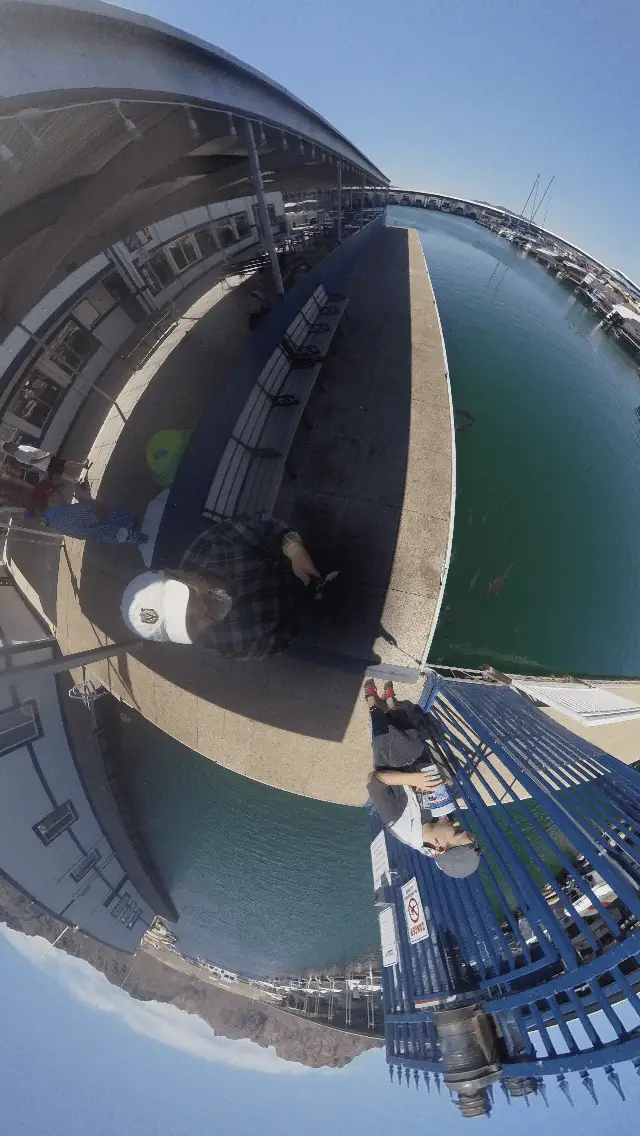
My son And I went fishing at Lake Mead Nevada in our new little 10 foot boat. It was evening time and it looked like it would be a good fishing trip for catching stripers. As the night went on, we realized that it was not going to be as good as we had hoped it would be and we went home that night skunked- having caught no Striper or any other kind of fish. A week or two later we took the same boat to the same lake and went fishing again in the evening. We were able to catch many fish even though it was freezing cold outside because it was winter. Both times we had a good time though. I’m not sure what that says exactly except that fishing is fun weather you catch fish or not but it’s always good when you can say you’ve caught some fish.
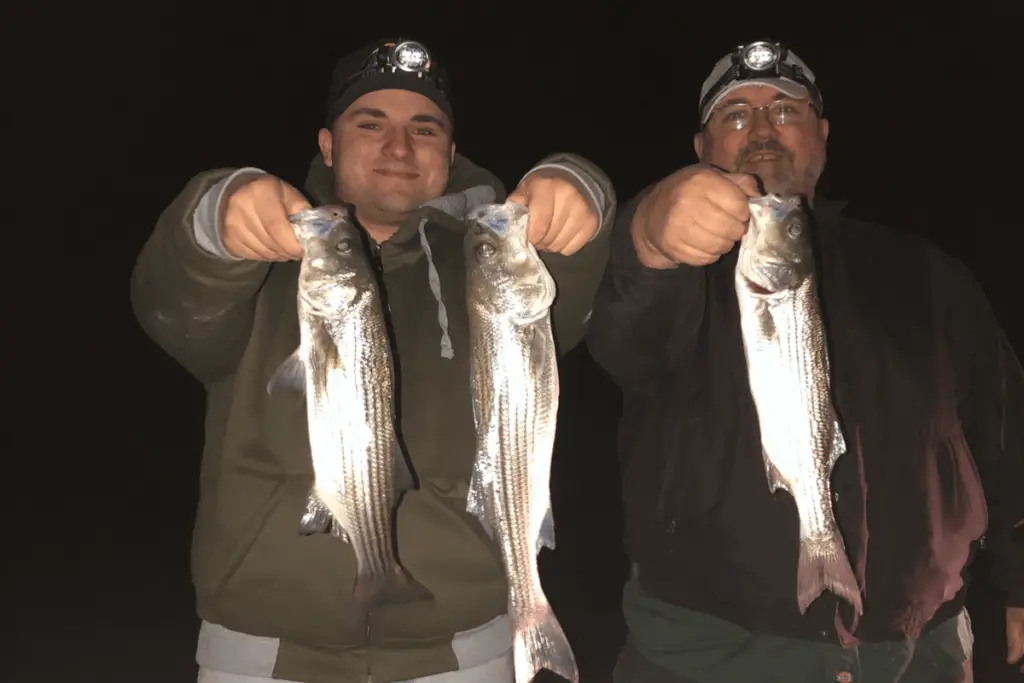
Darren and Sheldon Enns caught some Striped Bass at Lake Mead Nevada (Heminway Harbour)
Grab more tips and be informed about new posts in my monthly letter. Enter Below.
[wpforms id=”408″ title=”false” description=”false”]
Striped bass are migratory fish. The weather and the season determine how they travel and feed. It is well known that the stripers seek out cooler waters, so it is wise to check the water conditions and temperatures before you head out.
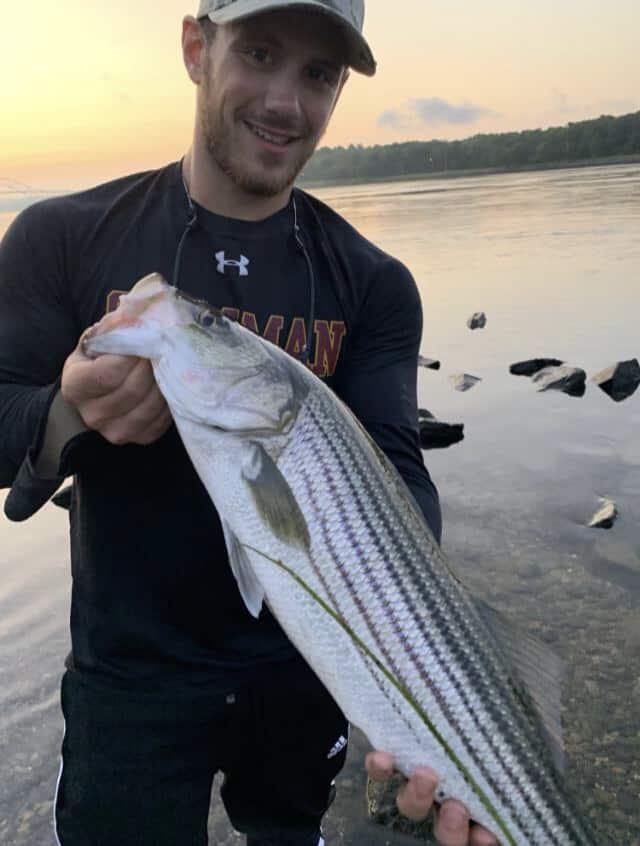
Mason Marshall Striper
There is, however, more than just the water temperature and conditions to consider when you are looking to fish for striped bass. You also need to be cautious of the time of day you go out and also the tide.
All areas where striped bass are most sought after will have a tide report that you can check. The recommended tide time is 2-3 hours before high tide and 2-3 hours after low tide. But we are going to delve a little deeper into tide times and what tide is best.
It may sound contradictory, but the two best times to catch striped bass is when the tide comes in and the current is at its strongest. But, when there is no current at all, is prime time as well.
During peak tide, the current is stronger. This will stir up the sediment near the shoreline. Baitfish feed on the sediment and stripers feed on the baitfish. BINGO! Well, not quite.
When the current is weak, during slack tide, the stripers hunker down. Trolling with live bait at this time will provide a great opportunity to catch some stripers.
Fishing after a storm, on a cool day, or at peak tides will boost your chances of catching striped bass, but one must also consider the location and the season. Feeding habitats change depending on the season and the location of where you are fishing.
One thing you will need to do is understand the tide in your area or the area where you plan to fish for the stripers. Remember, a current moves the water side to side, while a tide moves the water up and down.
Believe it or not, the position of the sun and the moon affects the tide! Tides are large waves that move through the ocean. High tide is when the tide comes in and raises the water level. In turn, low tide is when the tide is moving out and the water levels start to lower.
It isn’t always easy to detect when a tide will occur. Due to the length of the day, the majority of areas will experience two low tides and two high tides every 24.5 to 25 hours.
Making it so that the tides do not come in at the same time every day. One of the easiest and best ways to detect tides is to keep a close eye on the weather. Most weather channels, websites, and local game and fish departments will post tide tables, for public research and knowledge.
Two of the best tides to catch striped bass
It may sound contradictory, but the two best times to catch striped bass is when the tide comes in and the current is at its strongest. But, when there is no current at all, is prime time as well.
Stripers will stop feeding, in some areas, when the tide moves out and the current stops. When the current is strong, it brings the baitfish right to the striped bass, so they can feed without a lot of effort.
Every fish area and every fisherman will have a difference of opinion as to which tide is best to catch stripers. One guide from Montauk states that 3 hours before and after the tide, while another angler from the area states the top of the outgoing tide is the best time.
Allot of being a great striped bass angler, is going to be experienced. Knowledge of the area, habitat, tide schedule, best time of day, season, and preferred bait are things that will make you an experienced angler.
But, it is all going to take time and patience to figure out. Even then, you are going to have differences in opinion from one angler to another, based on the experiences and years of fishing the area for striper.
Tides run in 12 hour cycles
Tides run in approximately 12-hour cycles, starting with the outgoing tide which lasts about 6 hours. In between incoming and outgoing tides, you will have about 45 minutes to one hour of slack water before the next tide starts to roll in.
Even if fishing guides do not announce it, advertise it or talk about it, they live by the tide schedules every single day. They know when and where every single tide in the area comes in and goes out. That is why hiring a fishing guide is recommended if you are taking a trip to somewhere you have never fished before.
It is their passion and their jobs to know everything that they can and need to for that particular area, and most of them have spent the majority of their lives on the water figuring all of this out. They live to fish and to teach others the things they have learned.
They love to share their tips, tricks, and to teach others. If you are going to go at it on your own, it will take a lot of time, patience, and log keeping to figure out what works best for you in your area.
Three foolproof ways to tell which tide fishes best.
One professional fishing guide offers 3 simple steps to tell which tide fishes best, in the Cape Cod area.
His first tip is to observe the slope of the beach. Fishing during the low stages of the tide can be more beneficial on a gradually sloped beach because you can walk out into the water and onto flats or sandbars and cast your line.
At a vertically sloped beach, he suggests fishing at high tide. Striped bass will often cruise extremely close to the shoreline during high tide.
The second tip is being able to identify the stage of the tide and figure out where most stripers are during each stage. One spot in the Cape Cod area, the stripers will linger outside the inlets, waiting for the high tide to rush them through the estuary.
In another spot, the striped bass prefers the low tide because the baitfish get trapped in holes and troughs. If you are fishing from the shore, this would be a perfect time to look for those areas where there are sand bars just off the shore. when the baitfish get caught up in these trough made by the sand bars.
That’s a great time to cast out from shore. you can see the troughs from shore by watching for lines of white water made up from the waves crashing over the sand bars but before they hit the beaches. there will be white bubbles and a dark-colored area to each side.
you can try the shore side of the sand bar first and if you have no luck then give the other side a try. A lot of times the stripers will pile bait fish up against these sandbars and you will have your chance to attract one of them to your tasty offering as well.
His third and final tip, do as much research as possible for the area you are going to fish at. Talk to anyone you can, study the tide table/charts for the area. No one wants to spend hours getting to a fishing spot and then having to wait hours for the next tide cycle to hit.
As mentioned before, hire a professional fishing guide if you will be in an unfamiliar area. They will be your best bet on having a memorable and productive fishing trip.
Tide heights are going to differ withing a 10-15 miles range. Tide tables and charts will provide you with the date, time, and height of the low tide and high tide in feet or meters. It is widely suggested that you thoroughly study the tide chart for the area you plan on going to.
If you are not prepared or you are inexperienced, some high tide areas can be very dangerous because of the strong current. You can check out the “real-time” data on currents and tides for the dates that you plan on fishing.
They post them about a week in advance, but I would focus on a day or 2 before you are going to be there. This will give you a better idea because it is in real-time, so any updates will happen immediately.
Tides Website
Tides4fishing.com provides daily and up to date tide charts for all locations. The site offers the following information:
weather
water temperature
swell
high and low tides; with the times they have or will occur and a countdown to the next tide
rising and setting of the moon
so-lunar activity
moon phase
locations
fishing forecast
weekly forecast
There are charts, graphs, and in-depth explanations of what you are looking at. The site offers information for North and South America, Europe, Africa, Asia, and Oceania. You will have to find someone to explain everything to you and decipher what you are seeing and reading.
There is a lot of in-depth information on this site, but if you do not understand everything you are reading, it is not going to help you when you get out on the water or shoreline.
So, my suggestion to you is; Do not skip any sections, thinking it is not important. It ALL ties together and needs to be understood that way. You can not just look at the tide schedule and nothing else.
The wind will play a factor, as will the temperatures and the conditions of the water. So please, make sure you fully understand the charts before you head out.
With all of the information here, we still have no precise or concrete answer on which tide is the best for catching the striped bass. Every angler has their own experiences, opinions, and suggestions.
Some say that high tide is the best, because of the fast-moving current and the fact that it stirs up the bait fish which attracts the stripers. Some say that the low tide is the best because of their love for trolling with live bait.
Then you also have the ones that say that in the middle of the tides is the better time to cast for a striper.
Conclusion
So, my conclusion? There is no perfect tide to catch striped bass. Just as there is no perfect lure, location, weather forecast, or water temperature.
All anyone can say for sure is that no matter where you go, there are a ton of factors that you have to take into consideration and every single angler is going to have their own opinions concerning those factors, because not all techniques, tips, or tricks work for everyone.
What works for an angler on Cape Cod is not going to work for another angler in the area, and will most definitely not work for someone who is fishing on Montauk.
What works for an angler in Alabama may not work for an angler in South Carolina. Even professional fishing guides fishing the same general area are going to have a difference in opinion on what works and what doesn’t. Which tide is best, which lure is better, what time a day is perfect, and so on.
So, my suggestion to you is; learn how to read the tide charts (every single aspect) thoroughly and once you get to your destination, ask for any clarification or tips from the other anglers in the area.
The opinions and suggestions will differ from angler to angler, but the more information you have and the more research you do, the more successful you will be.
Or, to save time and not take away from your fishing experience and time, you can also hire a professional fishing guide. They are experts in their areas, know the hot spots, the best tide that works for them and their job is to teach you those things.
Most professional fishing guides have been on the water since they were 3 or 4 years old and it has become their passion, their life, their job to know everything there is to know about the striped bass, and all the fishing tricks for their area.
The best part of hiring a professional fishing guide, besides gaining all the knowledge without missing the actual fishing; you are guaranteed to catch fish that you can take home from your vacation or weekend getaway. So, a fishing guide is a win-win for everyone involved to find what tide to fish for striped bass
So, now it is all up to you. It is time to plan that weekend fishing trip or a week-long vacation. Where are you going to go, what lake(s) are you going to fish at, what equipment are you going to take, where are you staying, what are the rules and regulations, what are the requirements as far as a fishing license or permit?
There are so many other questions that you are going to need to ask yourself as you plan your trip. But the biggest one; do you want to spend weeks before your trip deciphering tide reports and trying to figure out the best time of day, best weather, best lure, best area(s) along that lake, best water temperature and conditions?
Or, would you rather go relaxed, stress-free, and ready to catch that trophy-sized striped bass? If your answer is the latter, then all you have to do is a quick research on the professional guides in the area of your destination, and pick one!
Unless you are an avid or professional fisherman or you have never heard of NASCAR, that should be the first thing that comes to your mind when someone mentions North Carolina. NASCAR racing! But today, we are not going to discuss racing, we are going to discuss the elusive, feisty and challenging catch known as the striped bass. Taking a short tour of North Carolina will give us a few of the best hot spots to catch striper.
In North Carolina there are 17 major river basins. 5 of them flow to the Gulf of Mexico and all the others go to the Atlantic Ocean. We all know, where there is water, there are fish! Both saltwater and freshwater fishing is available in North Carolina. So, let’s go and take our tour; locate the hot spots, best lures, rules and regulations, and recommended fishing techniques.
According to NC Wildlife website “the daily creel limit within the Roanoke River Management Area is two striped bass per angler. The minimum length limit is 18 inches, and no striped bass between 22 and 27 inches can be possessed at any time. Only one striped bass larger than 27 inches can be included in the daily creel limit”. Please go to their website for more information on the rules for catching striped bass.
There are a whopping 20 lakes in North Carolina that offer great striped bass fishing (among other fish). The state record for a striped bass was retrieved out of Hiwassee Reservoir. Some of the other popular places are; Badin Lake, Lake Hickory, Lake Norman, High Rock Lake, Mountain Island Lake, and Moss Lake. That is not even half of them in the state. You can check North Carolina fishing reports for the latest striper information, before you book your vacation.
Striped bass anglers yearn for the cooler weather in North Carolina, where other fishermen take the cooler months off to re-group. In the cooler months the striper anglers have the reservoirs all to themselves, making it easier to locate the tightly packed bait fish, when in turn will get them to those evasive striped bass. Bait fish are always going to be the most popular to catch striped bass, though other baits do/will work.
With 32,000 acres of water and 520 miles of shoreline, Lake Norman is one of he largest lakes and best areas to catch striped bass. It is easier to fish Lake Norman during he cooler months because there are a lot less boats on the lake. Boats that are out there for leisure only and tend to clog the areas and hinder the fishing process and progress.
As with a lot of the other places around the United States, early morning hours or later at night, is the best time to land a striped bass. They spend the majority of their time, during the spring, along the shoreline. that is why Lake Norman is one of the most popular. During the heat of the summer, they hang out in the deep water of Cowans Ford Dam. The best live bait for the area; gizzard shad, threadfin shad, and herring. If you are going to use herring, they are best kept and used in 70 degree water. Gizzard and threadfin are for warmer temperatures.
Your best tactics/techniques on Lake Norman, besides shore fishing (in the spring), are going to be trolling with live bait and free-lining. Free-lining is the simplest way to fish; hook and bait only. No floats, sinkers, etc. The guides in the area recommend that you thoroughly research the area(s) that you want to fish. Find out the best method, best time of year for the spot, best live bait or lure, etc. so that way you can enjoy your vacation and fishing trip instead of coming home empty handed.
Badin Lake
One of the other hot spots in North Carolina that you may want to try catching a striper at is Badin Lake. This lake is an impoundment of the Yadkin River, and is 5,350 acres. Recommended bait is 5-6 inch gizzard shad. A lot of anglers in this area will watch for feeding birds after they have caught all of their live bait. If you are in a boat you will not want to troll any faster than 1.0 mph, and you should have your line at a 20-25 degree angle and about 20 feet deep.
It is said that Badin Lake is very fertile and has a great forage base for the striped bass to feed on. You are probably not going to catch a huge trophy striper, but you will catch an abundance of them in this area. You will need/want to have a good fish finder or sonar system and be able to read it very well to fish at Badin. If you can read it very well and are very confident about that ability then you are going to have no problems finding and catching striped bass, otherwise, you could troll over a school of them and have no idea that they are even there. The most effective technique on Badin Lake is going to be slow trolling live bait, whether it is before or after spawning season. Live gizzard shad, as stated above is your go-to for this spot. Make sure you keep your trolling speed at 1.5 mph or lower.
There is one advantage when fishing at Badin Lake, that most of the other lakes in North Carolina doesn’t have. The water temperature here stays cooler in the summer, than the other hot spots. There are depth up to 180 feet and over 100 miles of shoreline, which means fishing from shore, boat, canoe, or kayak is going to be successful. There are reefs, ledges, humps and points where the fish will try to hide as they go deeper into the water in the middle of the day, to get to cooler water.
Nearby at Badin Lake you have a bait and tackle shop and a convenience store. Both of which can offer advice on fishing in the area. You will also have amenities such as a marina, boat rental, boat dock, lodging and much more.
An impoundment of the Catawba River, Northwest of Lake Norman, you will find Lake Hickory. At 4,100 acres is smaller than Norman and Badin, but is much more likely to produce a trophy sized striped bass, for the avid anglers in the area. Gunpowder Creek, in the winter months, is prime for striper at Lake Hickory.
There are an abundance of 6-7 inch gizzard shad in this creek. If you go 3 miles in either direction from the mouth of the creek, you will be fishing the Catawba River Channel. It is recommended in this area in late fall and early winter to use 10 pound test line. This will make the live bait more appealing to the striped bass. Averaging 8-12 pounds on Lake Hickory, the striped bass can easily be brought to the boat if you have a quality rod and reel. With some of the striper weighing between 14-16 pounds, it may be a wise idea to bump it up to 15 or even 20 pound test line. When spring and summer roll around at Lake Hickory, you have a good chance of landing a 30+ pound striper.
If you prefer using lures verses live bait, one angler preferred choice is a roadrunner with a white body in 1/4-3/8-ounce size. The preferred time on Lake Hickory is in the afternoon. Sometimes anglers will slow troll live bait from the rear of the boat, while using a lure and slow retrieve from the bow.
There is 115 miles of shoreline on Lake Hickory with 4 access ramps for loading and unloading a boat. Lake Hickory also hosts numerous bass fishing tournaments, normally with good results. There are also boat rentals, camping, and lodging options near the lake. Spend a week or a weekend and come to Lake Hickory and enjoy some striped bass fishing.
Surrounded by Nantahala National Forest, Hiwassee Lake is 6,000 acres with 180 miles of shoreline and is well known for trophy sized striped bass. In this area we have endless rocky bank lines and points, which are perfect for striper habitat. Jigs, tubes, top water, and drop shot lures are some of the ideal tackle box supplies for this area.
September is just one of the perfect months for catching the striped bass at Hiwassee Lake. The air is beginning to cool down, the striper are feeding in large schools on enormous bait fish schools and on average the fish are going to be 8-15 pounds. As the temperature cools, focus on the creek mouths and points. Any place where they can “hide” and prey on their meals.
My is also a great month on Hiwassee Lake, to catch striped bass. It is the start of summer, so the weather and water temperature are not too warm yet. A lot of the striper are still in their spring spawning areas, which is a plus for the anglers that are looking to get their season started early. Late afternoon or early mornings will produce the best bites this time of the year. Free-lining herring, down-lining blue back, or using a red fin lure in May is going to be your best bet to snag a striped bass. If you are going to use a lure, make sure you are around the banks of Hiwassee Lake.
Speaking of the trophy sized striped bass that have been landed on Hiwassee Lake; in 1991 a 54-pound 2 ounce striper was caught. Then, not quite a decade later, a lucky 17 year old high school student who went out fishing with some buddies, landed a HUGE striper. At first he thought it was a catfish, because he didn’t get a good look at the fish when it snagged his bait. In the end, when the official results came in the striped bass that he bagged was a whopping 66 pounder and measured 47 1/2 inches in length. So, there definitely is potential to catch the next record breaking striped bass on Hiwassee Lake, that all of you anglers have been dreaming about.
Keep an eye on the North Carolina fishing reports when scheduling your weekend trip or your vacation, as winter fades and spring begins. This is where you will get the best tips on where the striped bass are biting. Remember, you have 20 lakes to choose from in North Carolina and many professional fishing guides that contribute to the fishing reports. They are going to be the ones who know exactly where the striped bass are located and what they are feeding on at any given time of the year.
Also remember to check all of the rules and regulations for the lake that you choose, as some lakes have their own rules and regulations on top of the states rules. Most states require you to be 16 years old for a fishing license. But be sure that you know for sure just how many fish you can keep, the size that they have to be and what licenses or permits that you need for that particular area. You can also rely on most of the bait and tackle shops and a lot of the locals to provide you with the best advise and tips on where to catch the stripers, what lures to use, the best time of day and how to read the water/weather for the perfect time.
Striped bass fishing is a huge ‘sport’ in a lot of states, including North Carolina. Whether you are a beginner, intermediate or a professional angler, the striper is definitely going to give you the challenge that you are seeking. Once you conquer that challenge, it is going to be something that you are going to want to do over and over again. It is a huge thrill, fun, exciting and sometimes frustrating. So, get your pole and your bait load up your boat and lets go catch the next trophy sized striped bass in one of the many lakes of North Carolina!
There are many different methods of fishing or just ways to fish. There is baitfishing, spooning or jigging, and trolling and also drift fishing. Is there a difference between drifting for striped bass and trolling? To a point, yes. You can use your boat to help you drift fish, or you can anchor your boat to drift fish. You can also stand on the shore and drift fish, down the current of the river.
Photo by Ralphie Grillone
Drifting is defined as; to be carried along by currents, air, or water and to proceed or move unhurriedily and smoothly.
Trolling on the other hand is defined as; to fish for by trailing a baited line from behind a slow moving boat.
Therefore; trolling vs. drifting equals; when you are trolling you control and can manipulate the presentation of the bait. You are also moving faster, with the bait trailing behind the boat, normally using an umbrella rig. If you are drifting, your line is straight down the side of the boat, with the boat guiding your line through the current. With drifting, the environment is, more or less, in control because it depends on the speed of the current and the wind. Drifting bait through a current, to catch a striped bass, is a productive method and quite easy to do. But, just because it is easy to do, doesn’t mean you are always going to catch the striper. You need to know where they are feeding at, and adjust your equipment and your cast depending on how fast the current is.
Many fisherman use salted herring to drift for striped bass. The herring is oily, so it leaves a scent trail as it drifts through the water. Frozen bait will work but of course, live bait is better. Sometimes the weight of the bait is enough to carry the hook down to the feeding stripers, and sometimes you will need to add a little weight to your line. You want to cast slightly upstream, leaving the bail open and allowing the bait to drift down through the current. You don’t want your bait dragging the bottom, but you also do not want it right on the surface.
The best places to drift for striped bass is on a shoreline or dock. You can also drift from an anchored boat. This will allow you better access to rocky points and piers where stripers hang out. Your goal is to use as little weight as possible, so your bait will drift freely down the current. Try to match the weight of the bait and tackle to the speed of the current and the depth of the water. The more life like the bait is, the better it will look like food to the striper as it cruises down through the current.
Some other natural baits that will leave a scent trail to entice the striped bass; squid, clams, and sand worms. A basic drift rig setup consists of; a three way swivel, 2-3 foot leader, bait sinker, and your live bait on a 2/0-3/0 wide gap hook. A shallow water rig is almost the same; rubber core sinker, barrell swivel, 3 foot leader, and 1/0-3/0 baitholder dressed with the live bait of your choice. If you have to drift with a weight you want to keep the bait near the bottom, but not dragging the bottom. You can also suspend the bait beneath a popping cork or bobber.
If you are out on a boat, doing a little drift fishing for striped bass, you want to move upwind of other boats as you don’t want to block the rhythm of boat. Determine your direction, where the current is flowing the best, and go slightly above that area. As your boat drifts with the current or the wind, it will help you in fishing right over a striper habitat that may be swimming through the current in search of lunch. You can also anchor your boat, instead of letting it drift with the current. This keeps youi in one spot, out of the path of other boats, but being upstream your line will still drift down the current into the striped bass habitat.
Th perfect cast is approximately 10-15 degrees up stream from where you are standing, so that the lure is just above the bottom when it reaches straight out in front of you. Follow the drift all the way through, and then reel in; not quickly but not too slowly either. Once you master the art of drift fishing, you can fish on ponds, lakes, rivers, and in streams at any time of the year for most species of fish. Of course, the striped bass are a special character, and there are better times than others to catch a striper. So you need to do your research on the area that you will be going to. Weather, water conditions, time of year, and tide times. Find the best current locations, and ask around. Where do the striper normally hang out and feed?
Anglers say that live bait is best for drift fishing, but you can also use a diving plug or a soft plastic lure to catch a striper while drifting. They will dig in and maintain a good wobble in the current, making them look life like and attracting the stripers. It is suggested, by experienced drifters, that you use a 12-foot surf rod, 20lb test line, and a spinning reel to catch the unpredictible striped bass. If you are going to use a large spoon lure, you will want to attach a ball-bearing swivel to avoid the line twisting. Strikes from a striper are difficult to detect if you are fishing in a fast current. There are times when you are unsure if it is an actual snag of the hook, or the strength of the current. The striped bass will allow the lure to into its mouth, as directed by the current.
As an opportunistic fish, the striped bass can be caught with just about any bait. If you choose to use a lure, there are certain factors to consider. If you are fishing in a new area you can ask local bait and tackle shops for tips, and what bait that they recommend for drift fishing for the striper in the area. Some lures that work best are the ones that resemble the forage in the area and can be made out of metal, plastic, resins, wood or rubber. But remember, for drifting it is best to use the plastics (soft) or diving plugs.
On the Sacramento River, one of the renowned fishing guides states that drifting with live bait, during the day is going to be more effective than the other methods. Your fish may not be quite as big with drifting, as they are with baitfishing or cast and retrieve, but you will catch fish. 6 1/2 foot to 8 foot fishing pole is what he uses with a medium action (bends in the middle), 30-50 pound braided line (but you could get away with 20 pound), and a big casting reel. 18-28 inch striped bass are the best ones to keep and eat. The bigger the fish, the tougher the meat is going to be.
As with any other types of fishing, a lot of your success is going to depend on the weather, water conditions, time of day, and bait used. Drift fishing for striper is a critter all its own, kind of like trolling. It is going to take patience. Letting your line follow the current all the way down, reeling in the line, and casting again. You have to have patience and you need to locate the most prime spot for drift fishing in the area. Trolling is a little easier, but still requires patience, because you don’t always catch striper immediately. With drifting or trolling, it could take a few hours to catch a striped bass, depending on all the factors involved.
If you are going to drift deep for striped bass, the mojo rig will work, but you will have to keep it very close to the bottom (but NOT touching the bottom). As with trolling, you can also use a deep water rig and do your drifting around sandy beaches. Of course, things are going to vary slightly by area. Drifting for striped bass will be a little bit of trial and error at first, unless you really know the area and the striper habitat extremely well. A lot of anglers use a simple bass rig for drifting for striper. You don’t have to have anything fancy or super special. Just a different set-up than other methods.
If you are going to drift from a boat, it may not be a bad idea to invest in a fish finder. Fish finders provide you with a lot of information about where the fish are, the water temp and many other things. Most avid anglers, who are out to make sure they catch something everytime they are in their boat, have a fish finder of some kind. Some are simple and inexpensive and some are top of the line and expensive. Research the different brands, features, and costs to make sure you get something that is within your means but will do the job that you want it to.
On Cape Cod you have a few areas with fast currents, perfect for drift fishing. Large live bait, such as eels, mackerel, or bunker will work perfectly for drifting for striper around the Cape Cod Canal.
Drifting for striped bass, as stated earlier, is similar to trolling. You can either anchor the boat or you can allow the boat to drift with the current. Every angler has their preferred method, favorite spot and special lure or combination of. Wheather you are in New York, South Carolina, Lake Texoma, or another popular striped bass area; talk to local anglers, bait & tackle shops, restaurant, and resort employees/owners. Most of them have lived in the area for a number of years and can give you some good tips, great fishing spots and suggested lures.
If you are new to the area, or are on vacation; hire a fishing guide. They can teach you anything and everything there is to know about drift fishing for striped bass and they are willing to teach you. That is their job. They know all of the perfect areas to drift fish, they know the perfect live bait for each specific area, they know the time of day that is best to drift fish for striper and anything else you need or want to know. You are almost always guaranteed to catch at least one fish, if you hire a guide to take you out on the waters.
Study, study, and research before you go out drifting. The more you know the better your chances of snagging a striper. You can also find a river with a steady current, study that river to see if striped bass are ever in the area and when. Take your pole, your bait, and a notebook. Jot down notes on the weather, current speed, lure, depth of lure and anything else that may help you drift fish in that area again. There are challenges to every method of fishing and there are always ways to learn the tricks to catching a striped bass.
So; get that pole, your live eels, your notebook and go out and try your hand at drift fishing for the elusive striped bass. Even if you catch something besides a striped bass, you succeeded.
( in the spring of 2019, Virginia canceled striped bass fishing because they were concerned about the low population of striped bass over the last few years. Hopefully this will help in the restoration of the population of striped bass so that these fisheries will become busy and bustling with That sounds of game fisherman again soon. There are many other species to catching these rivers and tributaries but for now the striped bass are having a break. Spring 2019).
There are many lakes and rivers in the state of Virginia where striped bass can be found and cought. In this article we are going to delve into many places where you can find and catch stripers either personally getting away by yourself or together with friends or family, striper fishing has taken over our nation as one of the Premier sport fishing activities. So if you are in Virginia let’s take a look at some places where you can go to catch them. First off we have Smith Mountain Lake. Smith Mountain Lake is a large lake with a shoreline of over 500 miles. It is south west of Washington DC in central Virginia it is a man-made lake with around 50 foot depth. all sizes of striped bass can be found here from Schoolies all the way to cows .
Just north of Richmond you will find Lake Anna, This lake is one of the largest freshwater lakes in Virginia. It boasts over 13,000 acres and over 251 miles of shoreline. In this lake you will find many species including largemouth bass, striped bass, Catfish, crappy, bluegill, perch, saugeyes, and wiper which is a cross between a white bass and striped bass.
Claytor Lake, VA is the next stop on our list. It posts many vacation rentals in as a second home destination for many.
Cities that are worth visiting while there are Blacksburg, fancy gap, Meadows of Dan. This lake is home to several species of fish including black bass, largemouth, smallmouth, car as well as striped bass. Well there are many species in the lake about 20% of anglers are after the striped bass or hybrid striped bass found there. Gizzard shad and alewife are popular baits to use there.
Lake Gaston is a 20,300 acre reservoir that is 34 miles long. Striper bass can be caught here using top water baits in the morning, Crank baits off of the points in the mid day.
Leesville lake- now this is where you want to go if you want to up your chances of breaking a state record because of the state record for Virginia for striped bass west part here. You should have a good chance of catching 20 to 25 inch fish with a good chance of catching even larger striped bass.
Roanoke river is located in southern Virginia and divides Virginia from North Carolina. This is a great place to go striper fishing however you must check out the regulations before doing so because there are limits on size and number. There are many 18 to 22 inch fish in this river occasionally they reach up to about 27 inches.
Pamunkey River- this river in Virginia is created from the confluence of the north and a river and salve in a river. It is the paint and will give you a nice angling experience for striped bass. There are other species that are found here including Black crappy blue and chill catfish perch red breasts and fish hickory shad striped bass black bass largemouth and smallmouth and spotted bass in river herring. You will find striper season in spring brings striped bass all throughout the river but in the fall stay toward lower river and don’t forget to check the regulations before you go.
Mattaponi River- this river starts out as a small stream but downstream from resource state forest it changes and becomes a tidal river and this is where you can find striped bass.
There are other species here as well such as black Croppie bluegill chain pickerel pumpkinseed and redbreast sunfish also yellow perch white perch striped bass largemouth bass in blue catfish. Remember that it is illegal to have or use herring to fish in these title rivers. Make sure you check the regulations here before you go.
Chickahominy river – this 1230 acre lake was created in 1943 to be used as drinking water for local cities. It is lined by cypress trees and half of the lake has many stumps in it but it is habitat for the feeder fish that feed our striped bass. The lake also posts pay fish ladder that allows the fish to enter the lake.
Biggs island lake – is 48,900 acre lake contains many species as well including flat head and blue catfish as well as childcare but the striped bass population is there as well. During summer at the lower end of the lake is the best place to be and during the winter and fall try the north end of the lake. This is due to oxygenation levels and water temperature. Currently the limit is for striped bass per day. One question that might come up is due to the fact that part of the lake is in North Carolina but if you have a Virginia fishing license it is legal on the whole lake.
Piankatank river – if you are after striped bass as we are, you will want to stay below route 17 in the lower parts of the dragon. This is because as striped bass are migratory they cannot reach it much further above this point so stay below route 17 and you should be in the stripers.
Appomattox River – this river is a tributary to the James river where most people fish for stripers but they can be found in the Appomattox as well.
James river- if you are fishing on the shore a good place to go is Mari Street Up to the waterfalls by I95.
If you happen to have a boat or kayak you can throw a shad swim bait. During the spring time the striped bass make their run up the river starting around March. This is a great time and a great place to fish.
Aquia creek is a 27 mile long tributary off of the Potomac River and it is a great place for striper fishing. It is located 45 miles south of Washington DC. Rockfish abound in these waters.
Great Wicomico river – this title tributary contains stripers or rockfish, trout, as well as other fish. Many people like the Damron Marsh area for fishing. Captain johns marina area is also popular.
Pagan River- This river is a 12 mile long tributary of the James River rockfish/striper are found here some people like to fish around Smithfield. Popular fishing spots in the area are Wolfsnare Creek, stumpy lake, eastern branch Lynnhaven river, Sandy Bay, Matthews lake, little creek reservoir, Back Bay.
The Coan river is 7 1/2 mile long river that comes off of the Potomac.
Popular places are Lake, popes point, Highland point. Remember your fish must be 20 inches to keep them. Luckily this place does have its share of large rockfish/striped bass. Some popular spots seem to be noon Cove Madison Bay and broad Creek as well.
The Nancemond river. If you are in Suffolk you can fish behind the McDonald’s on Main Street across the street from the Hilton hotel. You may be able to catch striped bass there. You may also be able to catch catfish there or you could use shrimp for bait and catch croakers
Little Wicomico river – this is a great place to go straight bass fishing. This season opens May 16 through June 15 for spring and October 4 through December 31 for fall you can keep two fish per season and they have to be between 20 and 28 inches.Common fish found in the Wicomico are the American shad, Atlantic croaker, the black drum, flounder, red drum, spot, spotted sea trout, bluefish, channel catfish, blue catfish, white catfish, the striped bass, bluegill, American eel, smallmouth bass, white perch, chain pickerel, Yellow perch, and river herring. A super place to catch striped bass is about 6 miles east of the great Wicomico river light.
This river was home to native Americans and was a first settling place for European Americans.
Eastern Branch Corrotoman River is a good Striper fishing spot. 3AM and 6PM seem to be the best time for fish biting. Immediately before and after those times are good as well.
When it comes to fishing striped bass, people take the subject pretty seriously. From the East Coast to the west, striped bass can be discovered in lakes and reservoirs in which they are stocked, As they are indigenous to saltwater coasts and Only swim up freshwater streams and rivers to lay their eggs.
Known to put up a good fight, they provide a great time for both experienced and novice fishermen looking to advance their fishing knowledge and skills. Because of this, striper fishing is some of the most sought after fishing in the United States. Luckily, many of the United States water bodies have a healthy amount of striped bass to fish for. However, today we are going to discuss striped bass fishing in the state of New Mexico.
Photo By Danny from SO. Cal.
Location
New Mexico, sometimes called “The Land Of Enchantment,” is a one hundred twenty-two thousand square mile state in the southern United States. The northern and eastern parts of the state are colder and covered with scattered vegetation, while the southern and western parts are more flat and dry. Due to its varying climate, many various activities take place in the state, including oil drilling, farming, and lumber work.
Located along the border of Mexico, Texas, and Arizona, New Mexico is said to have some of the best striper fishing in the southwest United States. Some states don’t warm up enough for Striped Bass to survive year-round. Fortunately, New Mexico stays warm throughout the majority of the year, bearing a fantastic few months from winter to spring for angling.
Not to say that summer and fall fishing in the state is bad, however statistically, reported catches are happening in the colder seasons. Let’s continue on and go over a few of the best places to fish for striped bass in New Mexico.
Elephant Butte Reservoir
Caballo Lake
Elephant Butte Reservoir
Let’s begin discussing some of the various areas in New Mexico that would be hot spots to check out if you are a striped bass enthusiast. As previously mentioned, striped bass are not necessarily a beginner fisherman‘s best friend. It does take a bit of skill to search for and successfully snag stripers.
The good thing is that developing these skills in the state of New Mexico proves to be easier than other states with less striped bass population. Elephant Butte Reservoir Is not only a great place to start, because of its wide variety of fish species, but because it has a superb Striped Bass count. Since 2015, the reservoir has been stocked with over 20,000 striped bass, and the number grows each year.
The reservoir itself has lowered quite a bit since the 90s, however, it is still one of the most highly acclaimed fishing spots in the state. Located in southwestern New Mexico on the Rio Grande, the man-made reservoir spans about 36,000 acres.
There is plenty of shorelines that allows access for fishing in the embankments. There is water deep enough for striped bass to hang around comfortably while nibbling on bait.
Lots of grassy covers and natural rock formations in the water allow for some great fishing with no boat required. Similar to most other striped bass fishing areas, these guys tend to buy on anchovies and Shad, along with crank baits and topwater baits in shady areas with grass. Don’t forget that where there is one striper, there are bound to be many more. Fishing is about patience!
Caballo Lake
Caballo Reservoir is named after the hills and mountains located to its east. Wild horses used to roam around and visit the lake often, however they do not roam around nearly as much nowadays as the lake has become more of a popular recreational use body of water.
Caballo lake lies just miles south of elephant butte reservoir, downstream of it. It is about half the size of Elephant Butte reservoir and proves to be nearly just as good of a place to snag a few striped bass. Because of this, many visitors and locals in It is about half the size of Elephant Butte reservoir and proves to be nearly just as good of a place to snag a few striped bass.
Because of this, many visitors and locals alike Will visit both reservoirs to catch striped bass as they are virtually only a short drive from each other. Caballo is around 75 feet deep at its lowest point, more shallow than that of the Elephant Butte Reservoir, which declines to around 157 feet or so at its deepest point.
Because of its more shallow depth, topwater fishing has become even more sought after in the fall and winter months, as the surface is perfect in temperature for striped bass with the depths being almost too cold for comfort.
In the many sandy areas, Crappie and bluegill tend to congregate, So fishing there might not reap many striped bass, compared to the fishing in the rockier areas towards the south of the lake.
Officials have warned against fishing near the whirlpool at the damn, as it is hazardous and not safe for anglers to attempt fishing near it. Stick to the rocky shores if you intend to fish without a boat.
The rocky areas have plenty of grassy cover and plant life which can house feeder fish for the stripers along with the cool shaded water that attracts them in the summer. Shad, anchovies, even plastic baits have been reported to be exceptional in luring stripers at Caballo.
Record Catches
It’s every fisherman’s dream to make the catch of a lifetime. Being able to go home and tell your fishing story— without having to make anything up— is sought after by every fisherman.
There have been records of anglers catching 100 pound plus stripers throughout the United States, which is crazy to think about in the first place. Imagine having a set up with around 30-pound test just to be safe and winding up catching something heavier than a small child! In the state of New Mexico, one lucky gentleman fulfilled that dream in 1992.
On April 1 of 1992, Mr. Jim Secour was fishing at Elephant Butte when he hooked and reeled in a 54 1/2 pound striper. It put up a fight but was eventually dragged in. Another lucky man caught New Mexico’s second-largest striper, also caught at Elephant Butte.
Eighty-year-old Joe Ford pulled in a behemoth weighing 54 pounds even, just half a pound shy of Secour’s trophy catch. Joe and his family revived and released the monster, saying there were a few reasons he’d let something like that go. First off, he mentioned that when some fish grow to that size, their meat isn’t much good. Also, the fish was a female carrying tons of eggs around inside her, so they released her back as not to disrupt the life cycle of Elephant Butte and the lakes downstream.
Although this article is meant to discuss striped bass, there are some other noteworthy catches straight out of New Mexico’s waters. The New Mexico largemouth bass record is held by Steve Estrada who made the catch at Bill Evans lake in March 1995. The record northern pike is still set at 36 pounds since the year 1974.
This pike was caught by Samuel Roy in Miami Lake. The most recent record set Was the record for the biggest Kokanee salmon caught anywhere in New Mexico, which is set at 4 pounds. This was set by Brad Williams at Navajo lake in October of the year 2000. We are all here to find the biggest striped bass in the United States, but records for other species are interesting to see as well!
Abide by the Law
When it comes to dealing with wildlife, nature, and the well-being of any state’s environment, abiding by the laws that are set by officials is very important in keeping up the cleanliness and organization of wildlife in general.
Without the cooperation of the park and lake goers, Our lakes and wildlife will decline drastically and we will no longer be able to enjoy the outdoors that we are provided. Here are some of New Mexico‘s fishing laws that should be taken into account before going out on a fishing trip.
If you are looking to fish in Black Canyon, mineral Creek, Sapillo Creek, or Gilita Creek, you will need a Gila Trout fishing permit. It is free of charge and can be found online. It is also available at all license vendors.
Warm water and bass species all have a limit for daily bagging. There is only one striped bass allowed per day, with the exception of the Animas and San Juan Rivers. 5 Largemouth or Spotted bass are allowed per day. Twelve inch minimum
In conclusion, the thrill of bass fishing in New Mexico is definitely something you want to experience in your lifetime. Head on over to Elephant Butte and you might snag the next state record.
Or fish the rocky shoals and shaded grassy areas of Caballo, and you might reel in a striper to feed the whole family. And always remember to enjoy the nature and beauty of our earth’s fishing waters. Happy fishing!
The state of California is the third-largest state in the United States, lying on the west end in bordering the United States with the Pacific ocean. It is also the third most populous state.
When we think of California, we think of deserts And beaches with cities and towns intermingled between. However, that is mainly just the southern portion, as Northern California is filled with forests and rivers. Although Southern California does not have What seems like many water bodies or rivers, It is actually quite full of many fishing spots.
The Pacific coast of California is a very popular area for striper fishing as well as a few lakes and rivers around the south end of the state. As Striped bass are indigenous to salt waters, Southern California is a very sought after area to fish for them, and there have been many caught over time.
The Shores provide miles and miles of possibilities for fishing posts, especially on sandbars and drop-offs. We will go over a few saltwater locations to fish for stripers in Southern California, followed by some spectacular freshwater spots to check out. Let’s get started!
Photo by Ralphie Grillone
The Southern California coastline
Lake Havasu
Pyramid Lake
Silverwood Lake
California Aqueducts
Lets read on about these magnificent striper fishing spots.
Location (Coastal)
The most obvious place to look for striped bass in Southern California would be the coastline, as you will be fishing in this species‘ indigenous waters. As previously mentioned, sandbars and drop-offs in the water of the coastal beaches provide a better area for finding them schooling or transiting from freshwater streams and rivers that they lay their eggs in during migration to the ocean itself. Small feeder fish can be found in these areas to provide food for the hungry stripers after their journey back to the ocean.
Other common places anglers enjoy fishing on the cost would be at wharves and piers along the coastline. Travel a bit more north on the coastline to central California and you’ll find the San Pablo and San Francisco Bays.
These areas are very popular for coastal fishing, as the Sacramento River and the San Joaquin River flow into them, bringing down striped bass after they have already spawned in the rivers in the fall and winter. The best time of the year to fish in these waters would be during the spring and summer when the water is a bit warmer and the bass are trying to reach colder water at the coast.
Various areas have been reported to be great spots for finding these fish around the San Pablo and San Francisco Bay. Some of these include the Capitola wharf, the Marin Rod Pier, and the Berkeley Pier.
Some sandy beaches nearby allow for anglers to wear wading boots or overalls to get a bit deeper into the water to reach drop-offs and sand bars.
The general recommendation for your fishing set up would be something approximate to a 200-yard reel with 30-pound test. Spinners along with a bit of weight, perhaps an egg sinker, are recommended alongside feeder bait such as shad, minnow, or even crabs. One trick would be to look for feeding marine birds, as they will be searching for feeder fish just as the stripers would.
Location (Freshwater)
While it may be a thrill to fish on the coastlines of Southern California and central California, there are also some great freshwater lakes and rivers that have made the list.
One benefit of fishing in freshwater lakes for striped bass as the area is more serene and quiet as opposed to the noisy wharves and piers. On top of that, The freshwater stripers tend to grow larger as they are not all fished out of the bays right after spawning season.
We are quite fortunate to have such an amazing species that we can snag in both saltwater and freshwater bodies. There are some really great locations in Southern California that allow fishermen from all over to catch plenty of striped bass. And although we know the bag limit and size limit differs from place to place, just the sport alone is a fantastic way to spend free time.
Freshwater dwelling stripers differ from saltwater ones mainly in their activity as a whole. Sea bass will congregate in large groups, while lake-dwelling stripers group in smaller groups on the move.
Shad and feeders are the main diet of freshwater stripers, so that is a great way of locating small schools of them as they search for nourishment. You will tend to see them more during cold months fishing off topwater.
It’s a well-known fact that they will feed in shaded and grassy areas of cover such as Hydrilla and lumber in the water. We will focus our attention on the freshwater bodies of southern California and where to fish for striped bass.
Lake Havasu
The Colorado River is a long and my body of water, stretching 1450 miles are in the nine states in the southwest region. Beginning in Colorado in the great Rocky Mountains, this river flows through Miles and miles of mountainous regions.
At the tail end of its journey, The Colorado River flows past Southern Nevada and into Southern California, bordering California and Arizona. In this border area, you will find a great body of water in the form of a reservoir held by Parker dam. This is known as Lake Havasu and is one of the best-known lakes in the southwest United States.
Spanning 19,300 acres, this lake is home to many species of fish. It is named after the Mohave word for the color blue. There are frequently fishing tournaments held on Havasu, as the lake is prime for bass fishing.
Largemouth and smallmouth bass, catfish, crappie, and sunfish can be found alongside our favorite fish here: stripers! Whether you were going to fish off a boat or off the shore, Lake Havasu provides great chances for bites and catches when seeking Striped Bass.
The lake has a few key spots to hit when striper fishing. (Keep in mind these locations are on the Arizona side of the lake.) First off is the infamous Site Six. This site was previously used as an emergency landing strip during World War II and then converted into an R&R base for soldiers during the war.
The soldiers could hike and swim and go fishing during their breaks before being deployed back to their bases. Since then it’s been purchased and renovated into a small “township” with a restaurant and a store, and now is the boating facility we know it to be today.
Site Six has excellent striper fishing from the fishing pier as well as the shores surrounding the site. The pier provides fishing in the near 25 foot deep waters and has excellent topwater activity almost all year round. Another location at Lake Havasu that is worth mentioning is Windsor Beach.
This gorgeous landscape proves to be an excellent spot for snagging stripers. The rocky terrain on the peninsula near the lighthouse creates perfectly shaded and lightly mossy areas for stripers to stay cool during the summer and then will most likely feed further away from shore during the winter.
In October and November, Striped Bass in Havasu will almost always have a “feeding frenzy season” where they will frantically eat multiple times a day to prepare for the colder season that they will face just months ahead of time. This allows for lots of action!
Sometimes fishermen will go at night or before sunrise when stripers are most active to snag them as they are looking for feeder fish. One way to attract feeder fish–and in turn attract the hungry stripers—Is to fish at night and bring a waterproof underwater light to attract them.
The feeder fish will enjoy the calm light And swim now, bringing many stripers that are looking for a meal. Another popular place to fish for stripers would be Havasu Springs. This area of the lake is on the southern end near the Parker Dam. There is even a handicapped-accessible fishing dock available for public use.
Kudos to the state for building something like this for the fellow fishermen that need better accessibility!
Because of its deeper waters and the current through the dam, stripers love to congregate at Havasu Springs in schools to feed, swimming for hours to find the perfect feeder fish. At their most active times, they will mostly bite on anything if they are desperate enough, however, there is a key list of setups to use in these waters.
Spoons and shad have been said to be the most helpful during these times to provide a bountiful harvest of bass. Sometimes anglers will troll with shad to attract schools of stripers before using spoons or other live bait. This will work on the water and on the shores as well, but if on the shore, chum the water first to attract the schools towards the rocks.
Always keep in mind it’s important to be careful when treading around The rocky terrain of Havasu, as falling would not be a fun way to end a fishing trip!
Pyramid Lake
Pyramid lake is a 222,000 acre-ft reservoir located a few miles from Castaic, California. It lies at the foot of the gorgeous San Emigdio mountains and provides a stunning landscape amongst the desert landscape of Southern California.
With cool water flowing from the California aqueducts, this water body is known for lots of recreational water activities such as boating, water skiing, and of course, fishing! Along with the striped bass in these waters are large and smallmouth bass, crappy, bluegill, sunfish, and trout.
Every point on the lake is legal for fishing, however, it is important to avoid the week zones and watch out for other people who are using watercraft.
Shoreline fishing at pyramid lake is sometimes just as exceptional as on-water fishing and is very popular for those who do not have a boat.
Following the guidelines previously mentioned about other Lakes will provide the best possible outcome for snagging some big stripers. Things to watch out for such as the time of day and the season all impact the results of fishing anywhere, but for the most part, people have had success year-round.
Trout are most commonly stocked in this lake, but striped bass are stocked in large amounts to provide successful and enjoyable striped bass fishing. Spoons, shad, anchovies, and spinners have reported being successful baits and lures.
The trick is to chum the waters a bit before trying any spinner or spoon bait do you attract the schools. At some times of the day using live bait on top water will be so successful that you’ll get stripers jumping over and over to catch your line. Pay attention to those hook-setting opportunities!
Silverwood Lake
Located within the gorgeous San Bernardino Mountains, Silverwood lake is a large reservoir that is fed water from the California aqueduct that flows from northern to southern California.
At 73,000 acre-feet, this reservoir house has many types of fish and plant life. Many striped bass Have relocated here from Northern California by taking a long trip down the California aqueduct and resting here after a 444-mile journey.
The west fork Mojave River flows out of this reservoir to the south. It is the Highest reservoir along the state water project consisting of the aqueduct and the three main branches that flow off of it. Because of the fish variety and the availability of watercraft recreation, Silverwood lake has become one of the most popular lakes in Southern California.
The fishing here is reported to be fairly successful year-round as the temperatures of the water do not drastically change due to its vicinity between the ocean and desert. There are many places to fish, however, there are A few key places to check out.
First in for most would be the marina dock, A great spot to fish for nearly any of the water’s species. The best time to do this would be early morning before the boaters show up for the day. Keep in mind there is a three-dollar fee to fish off the marina dock.
Another location that is great for fishing at this lake Is the coves that allow boats at 5 mph maximum. Quiet Cove, Chamise Cove, And Quarry cove all have excellent fishing opportunities and allow watercraft for deeper water fishing. There are a few more curves to the south end of the lake, however, these do not allow motorboats of any kind.
While this may be a hassle for those fishing with boats, the shore fishing—should you be able to get there after a small hike— is exceptional as the cove receives turbulence from the outer watercraft but does not create enough to scare away the fish.
When fishing for bass in Silverwood, Many baits and lures have been said to work. Even crickets and hotdogs have been successful in catching striped bass here! Other baits include Spoons, jigs, plastics, and live bait such as shad and anchovies. Keep in mind, the daily limit here for striped bass is set at 10, with no size limit.
One of the most interesting water bodies on our list is the California aqueduct. Spanning 444 miles from the Sacramento River delta to three separate areas in Southern California, this long water duct carries many catfish and striped bass from the north to the south of the state.
There are five different locations to fish on the aqueduct in southernmost California: Munz Ranch Road Site, 70th Street West Site, Avenue S Site, 77th Street East Site, and Longview Road Site.
When fishing in the open water, use the current as a tool to “troll” by casting out a shad or anchovy and letting the current pull it downstream a bit, then reeling it in slowly to attract passing stripers looking for a meal.
The check gates are also a great place to cast out since they control water flow, and when the water flow is disturbed, schools of stripers like to use this opportunity to feed.
It’s almost a competition for them to find the easiest bait to eat. Bridges along the aqueduct also provide some cover, schooling together feeder fish, and allowing plenty of striped bass to find food.
Casting a line out in those areas will prove successful the majority of the time. Another successful area to check out would be the greats and cut-outs along the embankments of the aqueduct.
The greats act as a filter between the vegetation that grows and the flow of the water. It is often found that feeder fish will use this grate as a barrier to hide from hungry stripers.
The stripers have caught onto this and will feed in those areas a lot of the time, providing the perfect opportunity to cast a line And snag a hungry bass.
One last location that is popular along this water body is The irrigation piping along the sides of the water that pump water into the aqueduct. This pumping of water creates turbulence which in turn attracts curious bass, looking for a possible meal.
Using live bait or even spoons or plastics here will prove to be successful, as the stripers swimming downstream are almost always feeding throughout the day.
When fishing the aqueduct, it is imperative to use caution and practice safety techniques. One danger of the aqueduct is that the water flow is fairly strong and can easily sweep you away at its deeper areas, sometimes Reaching 30 feet in depth.
It is suggested that if you fish here to fish with another person, sort of using a buddy system. That way if anything were to go wrong, you would have backup to help you.
There are ladders and safety ropes along the aqueduct to grab onto should anything go wrong. While it is a fantastic place to snag stripers, please be safe and cautious.
Photo By JF California Striped Bass
Record catches
In Southern California, fishing is split between inland and ocean coast fishing. When fishing in the ocean, it is not uncommon to find monster size fish. Their habitat is natural and undisturbed with the exception of fishermen and Other fish higher than them on the food chain.
There are some crazy records that have been set in California over time. In the previously mentioned Silverwood Lake, located at the bottom of the east end of the California aqueduct, the record striped bass weighed in at fifty-five and a half pounds.
The largest striped bass ever caught in Southern California was I whopping 67 1/2 pounds. Compare that to the record for the largest giant sea bass, which was caught in 1968.
This Behemoth Took a while to wrestle in, but once caught was measured at 563 pounds. Imagine fighting a fish that weighs as much as three or four grown adults!
Rules and Regulations
Any state has its own set amount of fish that are allowed to be kept during fishing excursions. They differ from state to state and from species to species.
In the state of California, fishing from the beach or shores for striped bass has a certain limit of two fish per day at 18 inches minimum in length. This also accounts for the bag limit for fishing in the aqueduct as it is an extension of the Sacramento bay and river.
The bag limit differs from saltwater to freshwater as well. When fishing in Lake Havasu, the daily bag limit for striped bass is six maximum, was a 13 inch minimum in length. When fishing in Silverwood lake, the bag limit for striped bass is 10 fish per day with no limit on the length of the fish.
Conclusion
In conclusion, fishing for stripers in Southern California proves to be an exciting sport. And with plenty of coastlines combined with the great inland Fishing opportunities at California’s lakes and rivers, angling striped bass here proves to be worthwhile.
Always remember to follow safety precautions in those aqueducts, and to always have the proper licensing in any area you plan to fish. Keep all these things in mind and you will have a very exciting story to tell everyone when you catch some stunning stripers in Southern California. As always, happy fishing!
When fishing for striped bass, have you ever wondered if there were tricks or tips you were missing or unaware of?
Maybe something that local anglers didn’t tell you about. Well, grab some scissors, pliers, files, and your tackle box. We are going to let you in on a couple of lure hacks, used by professional Elite series anglers, to catch trophy-sized striped bass.
Photo By – Ralphie Grillone Massachusetts
List Of Fishing Hacks
If fish are just playing with the long strands trailing from your Jig, trim off the strands closer to the hook…that’ll get em.
on a prop bait, try removing the extra prop, and one of the hooks for a more streamlined bait and a further cast.
On soft baits, you can remove parts, add parts or mix colors in order to find out what the fish are biting on.
File the bottom of the bill on your crankbaits allowing them to dive deeper and smoother.
On a boat, when you get strikes, make sure you visually mark where you are with points onshore, so you can get right back easily if you drift.
What’s in your tackle box?
First, we are going to take a look at the jigs in your tackle box. Jigs are one of the most versatile baits used to catch the striped bass. They can be used in shallow water or down deep. Y
ou can use a jig in open water or you can use them in heavily covered water. Drag them, swim them, or hop them just under or on the surface. All professional anglers swear by having at least one pole outfitted with a jig when they are at a tournament.
This hack is super simple, but probably not thought of often. You want your jig compact so that the striped bass focuses more on the hook and not nibbling on the long strands trailing behind. Take a pair of scissors and trim the strands so that the longest ones are flush with the bend in the hook.
You also want to trim the shorter strands so that they are closer to the head. Make sure you keep the multiple strand lengths or they will stick together in the water, and the striped bass will snub the jig.
Keeping the ‘layered’ strands will help to keep the action/movement of the lure in turn attracting and hooking a fish instead of having one nibbling at your jig.
Heres another striped bass fishing hack
The second striped bass hack; whether it is a hollow body, popper, or a walking bait, there is a hack for topwater lures. With a prop bait like this one, which usually has 3 treble hooks and 2 props, you want to take the front prop completely off.
With just the back prop you still get plenty of movement and a bubble trail. Taking off the front prop gives you less wind resistance on the cast, which means you will be able to cast out farther.
Without the front prop, the lure is more streamlined and catches on less grass and other vegetation in the water as you are retrieving. You can also remove the center hook for a similar effect.
How about all of those soft plastic baits that you have in your tackle box? The different sizes and shapes that you are hoping one day will be the perfect one to hook a striped bass.
Take the Biffle Bug, for example. ( Here’s a Link )This plastic bait was designed and created by pro angler Tommy Biffle. In tougher fishing conditions, he will modify the lure that he designed, to help with the chances of landing a trophy striper.
To give the bait a more slender look and so it is more productive in clear water or post-frontal conditions, simply remove the front legs.
You can either cut them off with scissors or just pull them off with your fingers. You can also ass a rattle or fill the slot with scent, to make it more appealing to the striped bass.
Here’s how to tweak soft baits and plastics
There are many ways that you can tweak most soft plastic baits. You can add things, remove pieces, or even add a splash of color.
Don’t forget about the crankbaits! Crankbaits are designed to go deep. Depending on the area and the weather, sometimes the deeper the better. This is how one pro angler gets his crankbaits to go deeper, where striped bass like to hide when the temperatures are high.
Simply take a metal or cheap wood file and file off some of the plastic on the bottom of the bill. Be cautious, removing material in small portions and making sure it is even.
This will give the bill a thinner, sharper look and it will dive deeper than a normal crankbait. A better hack is to do this with the smaller crankbaits, then they will dive just as deep as the bigger ones.
But they will also not get ignored by the striped bass as the bigger crankbaits sometimes do.
Give those 4 fishing lure hacks a try next time you go out to catch a trophy-sized striper. But remember, some of it also depends on weather, temperature, and time of year.
Just as with the secrets we have discovered, to catching striped bass. Everything depends on multiple factors, but it never hurts to try something new. So, here are a couple of secrets from pro anglers that love the thrill of catching stripers.
The secret of trolling
The first secret we are going to dive into deals with trolling for striped bass. Trolling is not as simple as some think it is. Most anglers who have a boat and love to troll, have fish finders on board.
These will tell you where the fish are ‘hiding’ out if you can not visually see them feeding. So, what happens when you are out trolling and your fish finder leads you to a HUGE school of giant striped bass??
You get excited, you anticipate the fight and the victory of catching a big striper. But what happens when you troll right through the middle of them and get no action, no movement?
Your heart sinks, and after an hour or so of casting and retrieving or trolling slowly around the school, you begin to get frustrated. You rack your brain, trying to figure out why they not hooking the bait, or even attempting to nibble.
Anglers have come to the conclusion that the striped bass is in lockjaw mode (sleeping). After all, fish need to sleep too. Yes, striped bass has their feeding frenzies at certain times of the day, but after that, they need rest, just like anyone/anything else.
How to wake up the lazy bass
The secret to catching these ‘lazy’ stripers, a simple tube and worm. The lure may be easy, but the catch may still be a little difficult, depending on how lethargic the fish are.
Try using different depths to catch their eye. Going down an extra 2 feet could make a big difference, just as coming directly above them a foot or two could.
Also, pay very close attention to the action/movement of the tube when you do hook a striped bass. This will give you an idea of what they are looking for, even while they are resting.
One of the biggest secrets, or should I say ‘tips’ to catching striped bass is to learn everything you can about them and their habits and habitat in the area you are going to fish.
Sometimes it can be time-consuming, but in the end, if it makes your trip more productive and satisfying, then it was worth it. When you go out fishing, take a notebook or journal.
Moon phase and tide hold many secrets too
You need to log the date, time, wind direction and speed, moon phase, tide, clarity, and temperature of the water, recent fishing reports, and whether or not the baitfish are present.
Don’t be afraid to exchange tips with other anglers in the area while you are fishing. The better you know the striped bass habits the better chance you are going to have in hooking one.
Striped bass fishing has become a big thing in the United States. Stripers are one of the biggest fish that people like to challenge themselves to catch.
They are feisty, unpredictable, and extremely fun to hook and reel in. Try these hacks, secrets, and use the tips on your next fishing trip, you may get a HUGE surprise on the end of your pole.
The definition of fly fishing: an angling method that uses a light-weight lure, an artificial fly, to catch fish. The fly is cast using a fly rod, reel, and specialized weighted line. The light-weight requires casting techniques that are significantly different than other forms of casting.
Photo by Scott Carpenter – Maine
Some anglers prefer to fly fish over anything else, and it takes a skilled angler to manipulate a fly rod, however, having great equipment always helps as well. We are going to take a look at the most popular fly fishing rods used to catch striped bass. You may be wondering if this is even possible, with how vicious and aggressive they can be when they attack your lure, but I can assure you it is.
Hundreds and hundreds of times, large predatory fish such as the striper have been caught this way. We are going to take a look at fly rods that are perfect for beginners or someone who is on a budget and we are going to take a look at a couple of pretty pricey rods for those guys that spend every waking moment fishing whether recreationally or professionally.
Incase you are impatient, the best of the three different price categories are the ones listed below. The following are the best fly rods available for Striped Bass and other large game fishing species.
Echo Ion XL 990 Fly Rod
Sage Motive 1090-4 fly rod
Scott Tidal 909/4 9 foot
Orvis Helios 3D 910-4 fly rod
G Loomis Asquith 990-4 Global All Water Fly Rod
Fly fishing rods can get fairly expensive. The ones we are taking a look at today range in price from about $170 to $1,100. We are going to take a peek 5 poles today, a couple of brands from each price bracket; low cost, average cost, and expensive. A great brand on the more affordable end of the spectrum, that would also be great for beginners is the Echo Series.
Echo Ion XL 990 Fly Rod: this 9-foot fly rod is perfect for windy conditions. It excels at casting so you can reach that striped bass that are far out in the water. The 990XL is designed for tight loops and bigger, bulkier flies in high wind situations. When you are fighting the big stripers you need a fly rod with a little bit of a backbone, because striped bass can be very feisty and a challenge to get onshore. The 990XL has the perfect blend of power and action and can handle anything that grabs your fly and runs. Here are just a few of the features of the Ion;
1. oversized stripper guides
2. 30″ fish hero measuring marks
3. anodized aluminum reel seat
4. hard chrome single foot snake guides
5. 4 piece travel design
They also have a 9 foot, 10wt fly rod for the same price as the 9wt. Echo also offers fly rods that are in the $400 to $450 range as well.
In the mid-range price category, $400-$600, we have a few different brands and options; Scott, Sage or as mentioned above, the Echo series. We are going to focus on Scott and the Sage in this price range. Also fairly affordable, for some. You definitely won’t have to dig into your savings or 401k for one of these poles.
Sage Motive 1090-4 fly rod; 9 foot, 10wt: This one comes in at about $500 and is well worth the extra money. These were designed specifically for saltwater anglers. The Sage Motive is hand-crafted with the latest graphite technology and new tapered design, allowing for a fast-acting power fly rod that loads quickly. Delivering the big saltwater flies to the large striped bass in one easy cast. You will be able to cast at a farther distance, because of the tight loops. Features on the Motive are;
1. premium full-wells cork grip
2. lifetime warranty
3. anodized reel seat with components for saltwater use
4. bluefin blue color blank
Scott Tidal 909/4 9 foot fly rod:
1. hand-crafted in Colorado from top to bottom
2. lifetime warranty
3. advanced reinforced carbon
The Tidal is the perfect fly rod when the wind is blowing on general saltwater. It slices through the wind so you can get your fly in the perfect spot to hook a striper. If you love going after the BIG predators, like the striped bass, this fly rod is perfect to have in your arsenal of fishing gear. Priced around $450, it won’t break the bank as it breaks through the wind.
For the professionals who have made fishing their full-time job or who take their tournaments extremely seriously, this category of fly fishing rods is specifically for you. Orvis, G Loomis, and Sage have some of the most expensive fly rods on the market. Not all weekend or occasional fisherman can afford the rods in this price range, but if you can, then you have a great chance of landing a trophy striper. The two rods we are going to take a closer look at the range between $950 to $1,100.
Orvis Helios 3D 910-4 fly rod: According to reviews, this fly rod is one of the most accurate and powerful rods ever made. The 10wt is perfect for that huge striped bass. At long distances, the Helio is designed to accurately land your fly just where you want it, no matter what is going on around you or behind you, this rod as spectacular accuracy on the cast. Some of the amazing features of this fly rod include;
1. REC recoil snake guides
2. SiC/titanium stripping guides
3. 25-year guarantee
4. aluminum rod tube, to protect your expensive rod when not in use.
The top of the line, $1,100 fly rod for striped bass fishing is;
G Loomis Asquith 990-4 Global All Water Fly Rod: This rod is more than a perfect balance between power and feel, and is the lightest and most advanced fly rod on the market. This is not recommended for a beginning fly fisherman. Especially if you are new to angling for huge predatory fish. The Asquith excels in windy conditions or when an extra-long cast is needed. This particular series of fly rods were designed by a world-class casting champion. So you know they are the best of the best. Features of this top of the line fly rod;
1. fighting butt for added leverage
2. premium aluminum rod tube
3. lifetime warranty
4. top of the line titanium snake guides
Whether you are a beginner, a weekender, an enthusiast, or a professional; we just covered the top fly rod fishing poles that will help you hook a striped bass. The budget friendly poles will work just as good as the more expensive ones, depending on your fly fishing experience and know-how. So, no matter what your budget, there are excellent options out there for you without having to break open the piggy bank. So, let’s grab those fly rods, reels, big juicy flies, and go land us a trophy-sized striped bass.