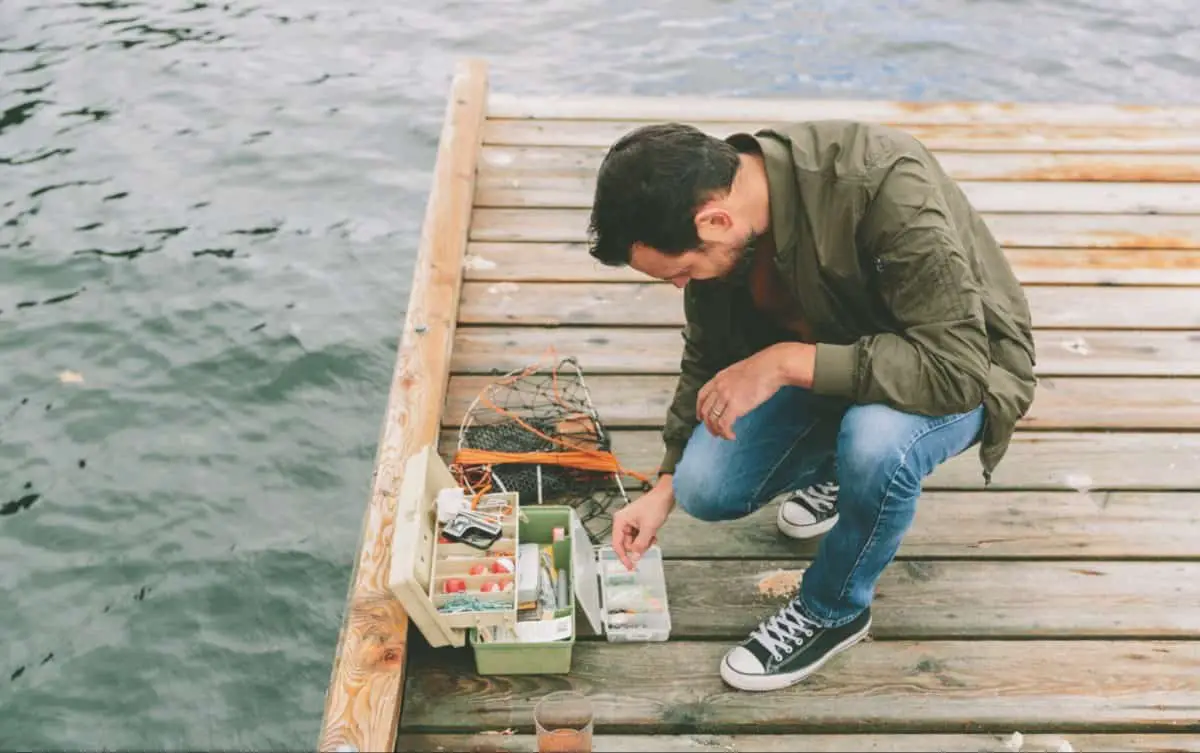
Category: Fishing

  • Alabama Fishing Hot Spots – Where to fish in Alabama.

    Alabama Fishing Hot Spots – Where to fish in Alabama.

    In the Southeastern part of the United States, there is a highly underrated and special place. The state of Alabama is an area that has something for everyone. Alabama is a very neighborly place, and it’s also wonderful for the avid outdoorsman. Indeed, fishing spots in this area are almost boundless. All you have to do is obtain your Alabama fishing license, and then you will quickly learn just how many angling hotspots there truly are in this state. Consider some of the following options:
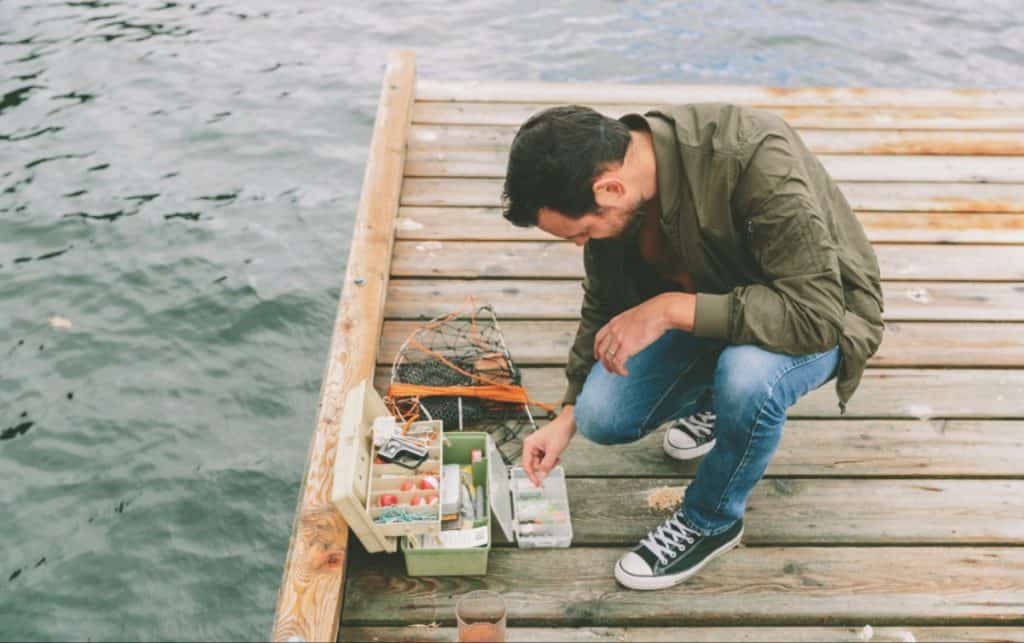
    Fishing Dock

    Pickwick Lake

    Pickwick Lake is a reservoir that is shared with part of Tennessee as it runs 50 miles across from the Pickwick Land Dam to the Shoals region in Alabama just below Wilson Dam. With this fishing spot reaching full pool, it has an acreage of at least 47,500. McFarland Park in Florence has become well-known for their fishing tournaments.

    Pickwick Reservoir has ranked high in many state designated categories, including being ranked #3 the reservoirs hosting at least five or more tournaments; among the top four for “Bass Weight Average”; and among the top five in areas such as “Pounds Per Angling Day” and “Hours For Bass Larger Than Five Pounds.” Alabama Anglers are always looking for that elusive “triple crown” of bass fishing. That is, they want to catch a combination of a largemouth bass, a smallmouth bass, and a spotted bass. They are able to do that at Pickwick Reservoir due in part to the fact that this fishing spot is literally world-renowned for its fabulous stock of smallmouth bass.

    Pickwick lake is divided into several sections, and the best part of the lake to fish at would be the Shoals section. It’s just on the opposite end of Seven Mile Island, and the smallmouth bass there are truly incredible! Indeed, the Smallmouth habitat is so good at this lake that several records have been set as noted by the International Game Fish Association.

    Even if bass fishing isn’t your thing, there are plenty of other fish species to choose from at Pickwick. Crappie, blue catfish and channel catfish are all in high supply at this lake. Sauger are also in high supply during the winter months because that’s their spawning season. You can easily access the Pickwick Reservoir on the south side by going through the Sheffield community; Muscle Shoals, Florence, and Waterloo well all provide you access on the north side.

    Pickwick Lake has always yielded good electrofishing samples throughout the years. For example, in 2012 the electrofishing test showed that there was the highest percentage of largemouth bass over 15 inches in at least a decade.

    Of course, if this is your first time fishing on Pickwick Lake there are certain guidelines you should follow.

    First of all, the best places to fish for the larger examples would be in the deeper parts of the reservoir. If you are using a deep hump strategy or an aquatic weed margin then chances are you will catch as much fish as you want all the way up to your limit. Traditional baits remain a good strategy but other Anglers have been known to use fish head spin rigs, spoons, and 5-inch spin rigs as bait with considerable success.

    Lake Eufaula

    Lake Eufaula is definitely a special place for anglers for sure. Located on the Chattahoochee River, this lake boasts over 45,000 acres with a broad spectrum of different fish species available for you to catch. Formed by the Walter F. George Dam and owned by the US Army Corps of Engineers, Eufaula Lake only requires you to have either a Georgia or Alabama fishing license if you are between the ages of 16 to 65.

    Lake Eufaula has an impressive population of many different species of fish. Their populations have a proven track record of remaining strong and consistent. They have gone through a few difficult years, but anglers continue to be able to catch largemouth bass that are top of the line. In a nutshell, for those that are able to land a largemouth, they can rest assured that they will find specimens that are large, fat, plump and healthy. Spotted bass continue to increase in population throughout the waters of Lake Eufaula. Many anglers looking for black crappie have been impressed as well. They have noticed that they continue to increase in population throughout the recent years.

    The northern part of Lake Eufaula is a bit more undeveloped than the rest of it, but it has the advantage of being just 10 miles away from Eufaula. Another way that the lake makes up for these shortcomings would be being a part of the Eufaula National Wildlife Refuge. Besides fishing, there is hiking, hunting, and observing wildlife at this wildlife refuge.

    Finally, at all parts of the lake, boat access is easily obtained. It doesn’t matter whether you are on the Alabama side with the Georgia side. Additionally, you can easily gauge the current bass population simply by looking at the latest bass tournament results.

    Country singer Duane Propes from the band Little Texas tells fishing stories

    Joe Wheeler State Park

    Joe Wheeler State park is a part of Wheeler Lake, and it encompasses a gorgeous 2,550 acre state park. This area boasts a waterfront lodge, convention facilities, a restaurant, an 18-hole golf course, a full service marina with several docking stations, camping opportunities, a group of community lodges, and several lakeside cabins. bank fishing, pier fishing, and boat fishing are all good options at Joe Wheeler State Park. If you don’t have your own boat, no problem. Joe Wheeler has several rental organizations located right there on the lake banks.

    If you’re a real heavy-duty fisherman, you would do well to have plenty of equipment. It can get fairly deep in certain areas, so you will need the right tools to measure the depths.

    Either way, if you’re an angler, you can rest assured that Joe Wheeler State Park is the place for you! Joe Wheeler is a state park and lake that was formed by the Tennessee River, so it definitely has a lot of fish opportunities. Specimens such as largemouth bass, smallmouth bass, hybrid striped bass, white bass, bream and crappie. The fact that Wheeler State Park is formed by the tremendous Tennessee River makes it very versatile. It truly has something for everyone, including professional anglers or folks who simply want to just fish directly from the bank.

    If catfish is more your thing, then there is no point in neglecting this life. You will still be in luck, because there are many testimonials of those who have landed catfish of even a hundred pounds or more. A good rule of thumb would be to fish with a rod of at least 7 inches with a minimum of a medium action on the rod.

    Another thing that some anglers on Wheeler Lake swear by would be fishing near one of the power lines. This is because it changes the terrain of the bottom of the lake, making it more amenable to catfish because the water will have a “bubbling” effect.

    The beauty of Wheeler Lake is that there are many professional guides out there that will do everything in their power to enhance your experience. They will also be able to tell you everything there is to know about that particular species of fish you are looking to land. For example, they can tell you about catfish, which will usually begin betting around May and will be ready for catching in June.

    Whether you go with a guide or not, you are sure to have a very enjoyable and pleasant fishing experience on Wheeler Lake!


    Lay Lake

    Lay lake is a reservoir that is 12000 glorious Acres devoted to your fishing pass time. This lake is not only popular with tournament fishing, but also with recreational boating as well. The lake offers at least seven public access areas with boat and bank access to a lake included. The Alabama Power Company first impounded this Lake in 1914. Additionally, this lake became very well known for their fishing prowess within that very first decade.

    Located 65 miles south of Birmingham, Lay Lake has a species of fish for everyone. Diverse examples such as largemouth bass, smallmouth bass, crappie, catfish, white bass, striped bass, and hybrid striped bass are all present in Lay Lake.

    If you decide to visit the lake in the summer months, you should head down to the lower end of the water in order to find the best specimens of largemouth bass. Moreover, you will find that using a wireless frog and swim jig is more than sufficient in order to land a largemouth that is especially large. You should always vary your fishing practices accordingly based on whatever type of fish you desire to catch. For example, you should consider wading in the water in depths of at least 18 to 25 feet of water if you want the best opportunity to catch some schooling shad bass instead of the fully grown types. Additionally, another great idea for catching bass would be to venture to Logan Marin Dam. You need to study the current carefully and determine if it is flowing. If this is the case, your best option for catching as much bass as possible would be to use a jig-and-pig. They are available at all bait shops and quite a few hardware stores, and they have developed a solid track record of success for anglers who want to catch a bass of at least five pounds or more. If the Logan Marin Dam has a slower water current, then that is the time where you should strongly consider using a topwater or crankbait lure. These should always be standard in every angler’s tackle box.


    Gulf State Park Pier

    Gulf State Park Pier is truly a sight to behold. Located on the Alabama coastline, this is a great place for you to try your luck at fishing off of the Alabama coastline. It is a wonderful spot for catching King Mackerel and Tarpon, among other things. If you are going to look for King Mackerel in this spot, you should have at least three different rods and reels. You will need such things as live baits (preferably pilchards), blue runners, mullets, and frozen cigar minnows. These are all lures that are perfectly acceptable for landing a King Mackerel.

    Of course, if you are only looking for King Mackerel, the only rod that you should be concerned with would be the 9-foot medium spinning rod with a 10-pound mono line or a 20-pound braided line. It is great for large lures, plugs, and live baits. This spinning rod also can be used to catch cobia and tuna, which are other well-known pelagic species. A pelagic fish is defined as a fish that can inhabit the upper layers of the main open sea. These fish may think they are safe, but they definitely aren’t when you have this type of equipment.

    Another type of rod you can use to fish off the Gulf State Pier would be the seven-foot rod for catching such things as pompano, span fish, whiting fish and other types of small game fish. Moreover, if saltwater fishing is your thing, you are definitely in luck at this location. Not only are cobias, king mackerel, and tarpon available, but also speckled trout and flounder.

    Beginners will find this a great place to do saltwater fishing simply because it is right off of a pier. They will enjoy the fact that you can kill two birds with one stone: you can relax with your friends and family and you can catch fish at the same time. Of course, even with an excellent fishing spot such as Gulf State Park Pier, there are some things to consider. Take a look at the following:

    Solid fishing rod

    There is no question that pier fishing is a huge challenge. However, if you have a fishing rod that has been tested for at least 12-50 pounds, then you are in solid shape for catching some heavy-duty fish!


    Lewis Smith Lake 

    Located about an hour north of Birmingham, if there is one thing that Lewis Smith Lake has going for it, it would be tranquility. Unlike some of these other listings, this Alabama fishing spot seems to have just the right balance. It is not so bland that it doesn’t have good fish, but at the same time it’s not so popular that you would have to share the lake with too many people. 

    One of the most unique things about Lewis Smith Lake is that it is surrounded by natural woodlands, limestone outcrops, and a rocky landscape all enmeshed in a picturesque environment. Lewis Smith Lake is also blessed with crystal clear waters that are naturally self-cleaning. However, this also can be a bit of a curse as well, simply because it can make it more of a challenge to catch finicky fish species such as bass or trout. However, it is well-worth the battle, and your personal satisfaction will definitely be improved if you are able to land one of these specimens. Just imagine the large smile on your face as you hold up your latest trophy in your hands!

    An added benefit to this lake would have to be the fact that there are many different species of fish for you to choose from. First of all, there are many different varieties of bass. Options such as largemouth bass, smallmouth bass, striped bass, spotted bass, and speckled trout abound throughout the waters of Lewis Smith. 

    Of course, your strategy will vary depending on what type of fish you are on the lookout for. For bass, you probably should have some lures that carry a minimum of an 8-pound test in your tackle box. You also should have lures that blend in with the surroundings since this water is going to be more transparent than other lakes. 

    Of course, there are times where you just might have a bad day on this lake. It is a challenging spot, especially for beginners. However, there is at least one backup plan that you can utilize if you are on the lookout for the bass and they aren’t biting. In that case, one of the things that you can do would be to head to the tailrace that is just down from the dam and try your luck with trout fishing. This runs all year-round, and it is based on the Sipsey fork side of the lake and fed by the Warrior River. Additionally, this trout fishery is home to many different species of trout. Whether you are fishing for bass or trout, it is definitely important to have the right bait. One of the things you should look for in this case would be redworms. There have many testimonials of fishermen in this area landing trout as high as 18 to 20 inches simply using this bait!

    Mobile-Tensaw Delta 

    The Mobile-Tensaw Delta is literally known by locals as a vast underwater jungle wilderness. This delta is home to numerous river channels, and they all converge to form into a cluster of hundreds of small islands. This area is known for great fishing, but do be careful. The natural habitat is full of not only bears, alligators, bull sharks, and bobcats, but venomous snakes as well. The Mobile-Tensaw Delta is also prone to about ten feet of flood waters in the fall.

    The Mobile-Tensaw Delta is a region that is appealing to many people because it possesses some truly unique characteristics. Designations such as the flooding make this somewhat primeval location have an earlier fishing season than other Alabama locations. Moreover, there are certain species of fish that are much easier to catch in this area than other Alabama fishing spots. Indeed, if you are a bream fishing enthusiast, you will be in luck here.

    Either way, don’t think for a minute that the Mobile-Tensaw Delta is all about just bream fishing. They also have species such as shellcrackers, blue gills, speckled trout, redfish and even flounder all have immense populations within this area. Indeed, if you are looking for some unique types of fish to catch, this is definitely the place to be! 

    Like other places, knowing the right bait to use is essential for the Mobile Delta, and of course it depends on what type of fish you are after. For redfish, you should consider going for live shrimp. However, be aware that they will go for plastic grubs or crankbaits. Sportsmen have been known to catch redfish of up to 55 pounds.

    Of course, if you have never been to the Mobile Delta before, there are a few things you should keep in mind. First of all, if you happen to encounter a smell similar to a ripe watermelon, that means that you have just come across some bluegill spawning grounds. Additionally, you should be aware that the Mobile Delta area can be a tad bit confusing. However, this can be easily overcome if you simply take a handy GPS unit with you.

    There is also a specific time when you should fish in the Mobile Delta. For example, most individuals recommend that you fish in the Mobile Delta in November and do it by the northern side of the I-65 bridge. Most of the tournaments that take place in this spot are done there, and November is not only a good time for catching some unusual specimen, but the bass are pretty thick during that time frame as well. 

    Fort Morgan Peninsula 

    Fort Morgan Peninsula is located on Dauphin Island, and it is a dream come true for those who enjoy surf fishing. They will find that Dauphin Island is well-known to the locals and gets a lot of tourism because of its appealing scenery and views of the Gulf Coast. They will find the surf fishing very challenging and appealing as well. For many visitors, Dauphin Island and Fort Morgan Peninsula becomes a favorite destination, and some will even return year after year. Indeed, a few people enjoy it so much they even become permanent residents.

    There is no question that the locals at Fort Morgan Peninsula love visitors. They also do everything they can to accommodate fishermen. The first way they do that would be through enlightening them on all of the different types of fish out there that the visitor can catch. Fish species such as redfish, spanish mackerel, speckled trout, king mackerel, white trout, cobia and many others will all whet the appetite of the angling hobbyist. Additionally, they will enjoy Fort Morgan Peninsula because it has an immense amount of exciting action. They will be able to cast their out on the waves and surf and be able to drink in the challenges of a resisting fish. The best time for you to enjoy Fort Morgan Peninsula is when the tide is falling. That is one of the main moments when the tide is falling and when the door is opened for all of your favorite fish to come out. Believe me, there is nothing like the satisfaction you will feel when you are holding one of these large fishes and having your picture taken.

    Of course, if you are going to accomplish this well, you will need to have the correct bait. This might be one of the best fishing spots in the whole state of Alabama, but you still have to do your part. Items such as big blue crabs, mullet, croaker, large podgy, and minnows are all acceptable as bait. Moreover, there are many occasions where you might even encounter a red snapper in this area if you are persistent!

    Of course, if you are looking for something more sizable than this quarry, you are more than welcome to charter a fishing boat and go out into the Fort Morgan waters in search of extra quarry. They will look for such things as billfish, and of course it is up to them whether they keep the catch or not. Many people will simply take their photograph and then throw the fish back. However, if you are interested in cooking your own catch and don’t want to do it yourself, please be aware that there are plenty of fishing restaurants within the area that will be happy to cook it for you.

    It is definitely a wonderful place to go, and after you have tried fishing off the Fort Morgan Peninsula you will probably not want to do anything else! 

    Escambia County Lake 

    Escambia County Lake is a fascinating lake that is known by the locals as Leon Brooks Hines Lake. It is an 184-acre body of water that is a part of a group of 23 public fishing lakes that are managed by the State of Alabama. Escambia County Lake has developed a well-known reputation for having various species of bass swimming within their waters. One of the most prominent types they have would be the largemouth bass, as many anglers to this lake would attest. Moreover, many anglers will tell you that the best way to get this largemouth bass is by utilizing red bait. That is definitely the case on this lake as well. Other methods that anglers on Escambia County Lake have had success with would be by using their shredded plastic worms, keeping their hooks sharp, and simply facing the wind as they angle out on this lake. 

    Besides largemouth bass, one of the fish types you can expect to land here would include such things as redear sunfish and plenty of bluegills. You will not be disappointed with the output of this large, that is for sure! The other pointer you should consider if you are going to stop at this lake would be between May and August, especially during the full moon days. This is when many species of fish are beginning to spawn, and that will make them more readily available than normal time periods. You should also stay in no more than three to five feet of water. Finally, you should keep in mind some of the prime fishing spots for fishing on this lake. Although it is perfectly okay to fish on the pier or on the shore, many individuals find that they have better luck if they charter out a fishing boat and go out on the water. Once there, they are able to catch a much more diverse set of fish than under normal circumstances.

    Guntersville Lake 

    Guntersville Lake might be the last option on this list, but it is every bit as fascinating as the rest of them. Located by nearby Guntersville, this lake has fish such as trout, sunfish, and catfish. It also has many other surprising species as well. Guntersville Lake is also great because it presents a fertile environment for all of the fish species to spawn, possibly endlessly if they wanted to.

    Guntersville Lake has other amenities, such as a stable water level and a good cover. This also helps the lake be a good example for those who want to find giant or trophy bass. They will be thrilled at some of their results here, simply because this lake will regularly produce bass and other fish in the three to five pound range. 

    Whatever species of fish that you are trying to land at Guntersville Lake, you yet again will need to make sure you have the correct bait. Items such as swimbaits, jerkbaits, football gigs are a must for your tackle box in order to produce results on Guntersville.

    Conclusion 

    As you can see, there are so many different lakes to choose from in the state of Alabama. We just barely touched on some of them. There is no question that you don’t need to go anywhere else in order to engage your fishing hobby. You can stay right here in this state and you will be in hog heaven with some of the wonderful natural resources and natural beauty that this lake possesses. Just remember to get all of the proper documentation if you are out of state. But yes, you will have an incredible time in this state for fishing!

    P.S. Don’t forget to check me out on YouTube.
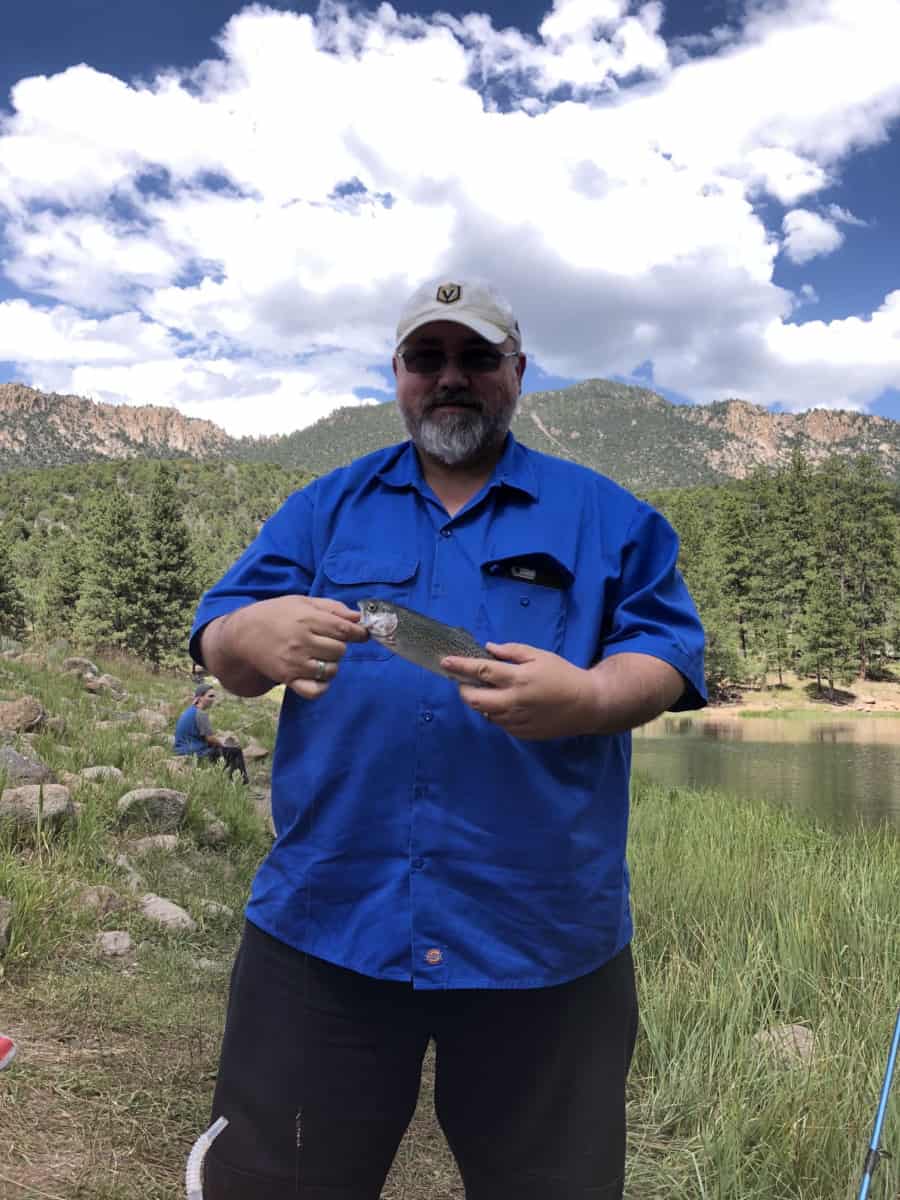
  • Fishing Essentials – Top 20 Things Every Angler Needs

    Fishing Essentials – Top 20 Things Every Angler Needs

    Fishing is a sport that is loved by many people due to its competitive nature that somehow manages to build companionship. Some of the greatest memories are those we get from fishing weekends, where we get to hang out with friends and family. It’s human nature to strive for the best even when having a good time, making Our desire to get a good catch of upmost importance. Well, here are 20 essential fishing tips to ensure that you get a bumper catch on your fishing trips while staying safe and enjoying yourself.

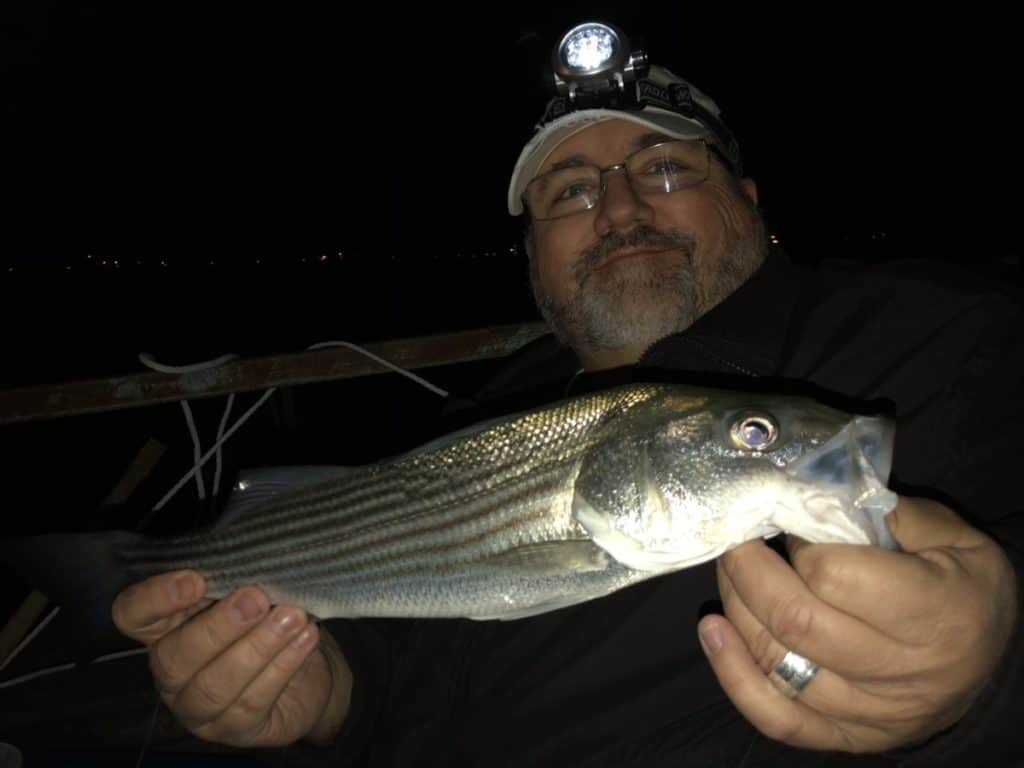
    Darren Enns Striped Bass

    1. Use an app

    Did you know that there are several apps for anglers that you could download on your phone? Technology has made tremendous strides over the years, and it’s time that you take advantage of that. Most of the apps will let you record all your catches, take their pictures, and track the GPS location. All this data is analyzed to let you know where and when you got the best catches. These apps are worth a try mainly because they keep a record of all your fishing trips. It may take you a while before you figure out how the apps work, but they are worth it. There are several options, and you can always choose the best that suits your needs.

    Fishing Spots by Fish Angler is my favorite because it’s free. If you download it be sure and follow me. I’ll follow back. @ Darren Enns FishinMoney.com

    2. Fishfinders

    Fishfinders are relatively new in the fishing industry, and anglers seem to love them. These Fishfinders are a sort of marine GPS that lets you locate the best spots for throwing your line. This device works using sonar and sound waves to track fish and transmit back an image through the included display or your Smartphone. Many competitive anglers have had tremendous success using these Fishfinders. The good news is that they are not complicated, and it will take you a short time to figure out how to use them effectively. Most of the models can be connected to your Smartphone, giving you much more functionality. 
    Mine is an inexpensive Humminbird PihranaMAX.

    3. Equip your tackle box with the right gear

    You need to ensure that you have an assortment of various fishing tackle in your tackle box every time you head out fishing. Every angler needs a well-equipped tackle box to ensure that they get a good catch by the end of the trip. Have you ever found yourself in a situation where your line snaps? This often happens, especially when fishing around vegetation and rocks. Your tackle box needs to be equipped with lures, hooks, floats, and sinkers to ensure that you can always continue fishing after an incident. You should also consider adding a pocket line, extra fishing line, and a basic first aid kit. Here’s the tackle box I’ve used for many years.

    4. A good fishing rod

    Understand that there are different rods designed for different types of fishing. Start by asking yourself what kind of fishing you enjoy, whether it is fly fishing, reef fishing, deep-sea fishing, or several other types. There are so many anglers who enjoy several different types of fishing, depending on their mood or season. Fishing rods differ in size and length depending on the size to make them practical for a specific kind of fishing. Although most anglers use a basic fishing rod and the common warm, serious anglers need specific rods depending on the size and type of fish they want to catch. Are you a serious angler or a casual angler? Here’s a sweet deal on a Great Brand.

    5. A quality reel

    The type of reel that you plan to use is an essential consideration once you pick out a fishing rod. The commonly used reel is the spincast reel, and almost everyone has experience using them. However, the more you fish, the more you feel the need to integrate into an off-shore reel, surf reel, or fly fishing reel. Reeling in a catch is an essential part of fishing, and you need to ensure that you get a quality reel that works for you. An excellent way to figure this out is by using the different types of reel until you get one that fits your style.

    6. Try different bait types

    Any seasoned angler will tell you that fish are scavengers that just want something to eat. Some fish will go for anything you put on the hook while others prefer live bait, such as insects and worms. The catfish, for example, will go for a hot dog so fast. This gives you the option of trying out the different types of bait that you come across. It is vital that you experiment with new bait every time you get the chance. Fishing is about creating memories, and you shouldn’t be afraid of trying out new things. Get My Lure and Bait choices here.

    7. Use some light

    If you enjoy the occasional night fishing, then make sure that you take a light source on your trip. Several water-resistant fishing gloves have built-in lights that you could choose from. You could also get the water-resistant hats with lights. Some fish get attracted to the light, and you could get the biggest catch of your life while fishing. The light will also help you see around and track fish easily. Fishing in the dark is not easy, especially when you can’t see your equipment correctly. Consider getting yourself a small light source such as a torch in case of any emergencies. This one is super because it has a red light also which cuts down on attracting mosquitoes.

    8. Study the terrain

    Whenever you are going fishing, you must study not only the water but the entire surrounding terrain. There are several types of fish that love hiding under vegetation and rocks. When bait fishing, for example, you will have to search under vegetation where they like to conceal themselves, especially during spring. Other fish tend to stay close to the shores, and when you are keen enough, you will spot a school of fish such as a minnow. Knowing your terrain will ensure that you cast your line at the most appropriate location. Yes, you may be having a great time, but it is crucial that you get a good day catch in the end.

    9. Stick to the rules

    You have probably noticed that many popular fishing areas have certain guidelines on the number of fish that you can catch and keep. This will hugely depend on the type of fish, its availability, and the time of the year. The guidelines specify the sizes and weights that you are allowed to keep, and you need to stick by this. Your portable cooler or tackler box will include an etched ruler that was designed for the specific purpose of fish measurement. Remember, we talked about having a well-equipped tackle box? You, therefore, need to have a weighing scale to help you determine the weight of the fish. If you are a catch-and-release angler, then you are always good to go.

    10. Good fishing footwear

    When you want to get a good catch, you may need to go through rough terrain and long treks. So many fishing locations have ‘secret spots’ that will require you to trek through several miles of tough terrain, and you need comfortable and quality footwear. You must invest in high-quality boots that can withstand all weather and terrains. It is also important that you get footwear that will provide you with stability when you love fishing off rocks and high I places. [piers and boats can be rather slippery, and a good grip will come in handy. He’res a great example of waterproof fishing boots.

    11. Invest in waterproof gear

    You are bound to experience harsh weather when fishing, and you need waterproof gear. Bucket hats booted pants, and jackets will help you stay dry when fishing during rainy conditions. You need to ensure that your health is properly taken care of, and being cold does not help. Hypothermia is a common occurrence in fishers who neglect to get waterproof equipment. This can lead to serious complications and even death in extreme conditions. Ensure you have a protective waterproof layer beneath your warm clothes for more protection. The good news is that the waterproof gear is affordable, and you can get it from different sources. Here’s a link for great neoprene water-proof booted pants.

    12. Pack necessities

    Fishing is usually an all-day or weekend experience, and this means that you need to pack a lot of things. Yes, you will need the fishing gear, but you also have to pack enough water and food for the entire trip. You need to have several necessities, including a change of clothes, and a survival backpack. What do you include in your survival backpack? You will need a knife, firestarter, and a first aid kit. The important thing is packing everything in one bag so that you leave nothing behind. When you use separate bags, chances are you will forget some fishing equipment, which is not good when the whole point of the trip is fishing.

    13. Look at the horizon

    Catching big fish requires the use of so many techniques, including the use of binoculars. When you take a closer look at the horizon, you will probably see fish jumping out of the water And diving birds. Such spots are great for dropping your fishing line for a topwater cast. However, don’t be discouraged when you see small fish because it essentially means that the big fish are close. Marine binoculars are great for fishing, and you could always get a pair from local or online stores. However, if you are on a budget, consider getting a pair of polarized fishing sunglasses. These sunglasses will give you a better view by protecting you from the glare of the sun.

    14. Join a fishing club

    Getting to know the opinion of other anglers is important to everyone, including seasoned anglers. Joining a fishing club will ensure that you get to share your experiences and grow your knowledge. Understand that there are several components of fishing, and you can’t be an expert in all of them. Such clubs will also help you discover new fishing grounds that you might have missed. These fishing clubs also organize competitions and fishing trips that can be fun and rewarding. Ensure that it is a local fishing club so that you get the most from the group. Who knows, you might find a knowledgeable fishing buddy.

    15. Watch tide reports

    Understand that ocean fishing will require you to watch tide reports consistently. This is because the fish tend to be active when the tide changes. When the tide is at its highest or lowest, the water is almost stagnant, and the fish tend to remain dormant. However, when the tide is changing, the fish will be active, and you can take advantage of this time to make a great catch. Get yourself a fishing watch and set alerts for when the tide is changing so that you can drop your line. Watching the tide is a great way of ensuring you get home at the end of the day with a good catch.


    16. Keep your fishing equipment clean

    To increase the life of your fishing equipment, you need to keep it clean. You also get an enjoyable fishing experience when you have clean equipment. What most anglers fail to do is clean their equipment after every use. Saltwater can be very corrosive, and you need to protect your equipment by regular cleaning. Even freshwater rigs can get sand and dust in the crevices that detract from the next trip if not properly cleaned. The good news Is that all your equipment has the recommended manufacturer’s instructions that you can follow when cleaning. The reel has to be lubricated as instructed, and all the equipment needs to be let dry. Do not forget to clean your tackle box; remember that it is part of your equipment and your next trip is always made better when all your gear is organized and usable.

    17. Always have a multi-tool

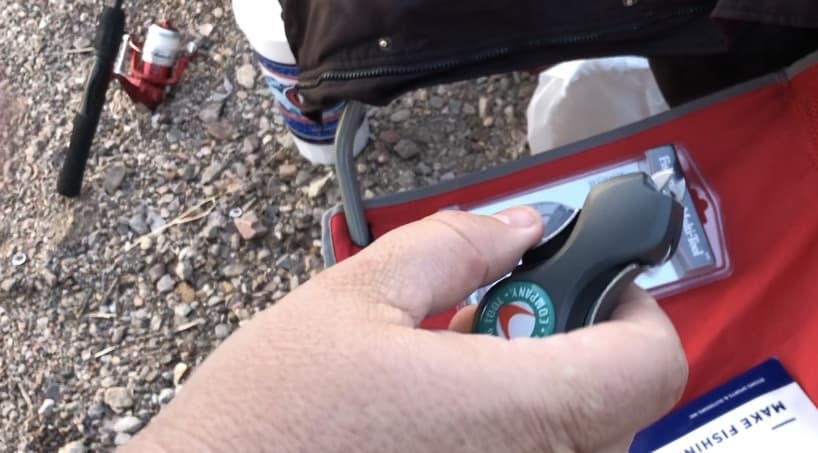
    Every kid wanted to have a Swiss army knife at one point in their life; if you didn’t get one, then now is a perfect time. A multi-tool is essential on all your fishing trips because it will always come in handy. For example, you will have to cut the line when it gets tangled. Your hook may get stuck inside a fish’s mouth, and the multi-tool will help in the removal. Need to crimp on a quick split shot weight? The multi-tool is always at your side. You can’t have a successful camping and fishing trip without a multi-tool. The Leatherman always gets the job done!

    18. Learn proper equipment storage

    From my experience, fishing equipment is rather expensive, and you cannot afford regular replacement. Some fishing rigs cost a fortune or have sentimental value. This means that you have to learn how to store your fishing equipment appropriately. Most anglers throw away their fishing equipment at a corner in their garage, which is wrong. Ensure that you get a rack and a stand that are dedicated to your fishing equipment. Your garage or garden shade has several tools that get used daily, and you risk destroying your fishing gear. If you are a DIY enthusiast, you can always build your free-standing rack for your rods by the wall. You need to get creative and to ensure that your fishing equipment is properly stored. It’s also worthy of bragging rights when the buddies come over and see it.

    19. Learn proper line casting

    Casting a line seems so simple when you see a regular angler do it. You need to make sure that you learn how to cast your line properly so that you can make the best out of your fishing experience. There is a lot of technique that you need to master, and you will need assistance to get everything right. A good place to start will be the local fishing group that you joined. You could also consider enrolling in a fishing class to help you with line casting. Several affordable fishing classes are fun, and you could use it as an opportunity to bond with your family and meet new friends. If that won’t work for you there’s always YouTube.

    20. Take your time

    Fishing is not something that you get to learn within a short period, and you have to accept this. Most beginners get discouraged when they don’t make great catches when starting. Just like anything in life, fishing requires patience to master. Fishing is a fun activity that you can use to connect with family and friends, and you shouldn’t get worked up when you don’t catch anything. Fishing can also be used as a great way to meditate and soul search.

    You also need to take your time when choosing a location, attaching your lures, casting your line, and so much more. Fishing is an art that requires a lot of patience and resilience if you want to land some keepers. With fishing, it’s not always just about the catch; take your time to enjoy the scenery and tranquility of the still waters and the solitude.

    Conclusion

    These are just a few tips to help you on your journey to becoming a great angler. However, you need to remember that getting a good catch is not as simple as it seems, and there are a lot of factors that you have to consider. Ensure you carry out extensive research to figure out the best fishing locations around you. You must also invest in quality equipment, although it might cost you a little bit of money. You don’t need to buy everything all at once, and you can acquire the equipment one at a time.

  • Fishing With Anchovies

    Fishing With Anchovies

    Are anchovies good bait?

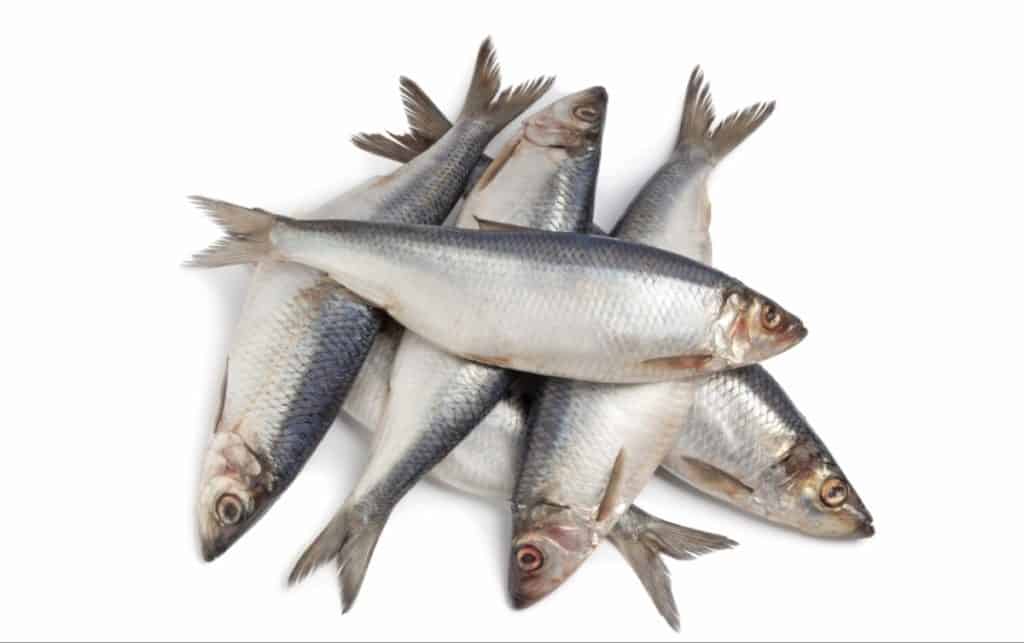
    Around Las Vegas and in other places, anchovies are very good bait especially in winter when it is more difficult to find and net the shad that are indigenous to the waters nearby. Most anglers prefer to use live or dead shad because it is the natural feed of the stripers here and also the catfish.  The Shad are much easier to keep on the hook as they don’t tear through as easily. However, in the wintertime there are die-offs because of the cold and also the algae that is their staple food dies in the cold waters of winter. About December it is very difficult to find shad to catch so anglers typically switch to using anchovies so they can keep fishing. 

    bag of frozen anchovies

    Usually the stripers are found much deeper during the winter monthes and they roll a lot slower. The best catch times are sun up and sun down. If you are going to use anchovies your best bet is to leave the package on ice all the time. As long as they stay frozen you can use them and they will stay on the hook while casting but as soon as you let them thaw out they begin to come off. It makes for a bummer time when you can’t keep the bait on. At this point you can try to use stretchy string to wind around your anchovies as it is in your hook. Personally I have never done this but I have seen it done and it works ok . 

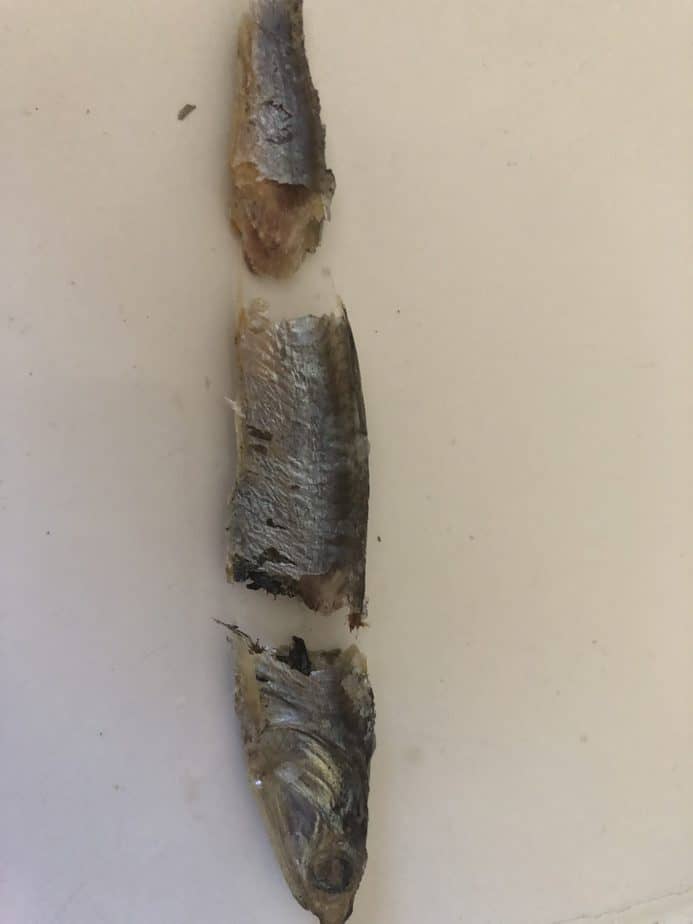
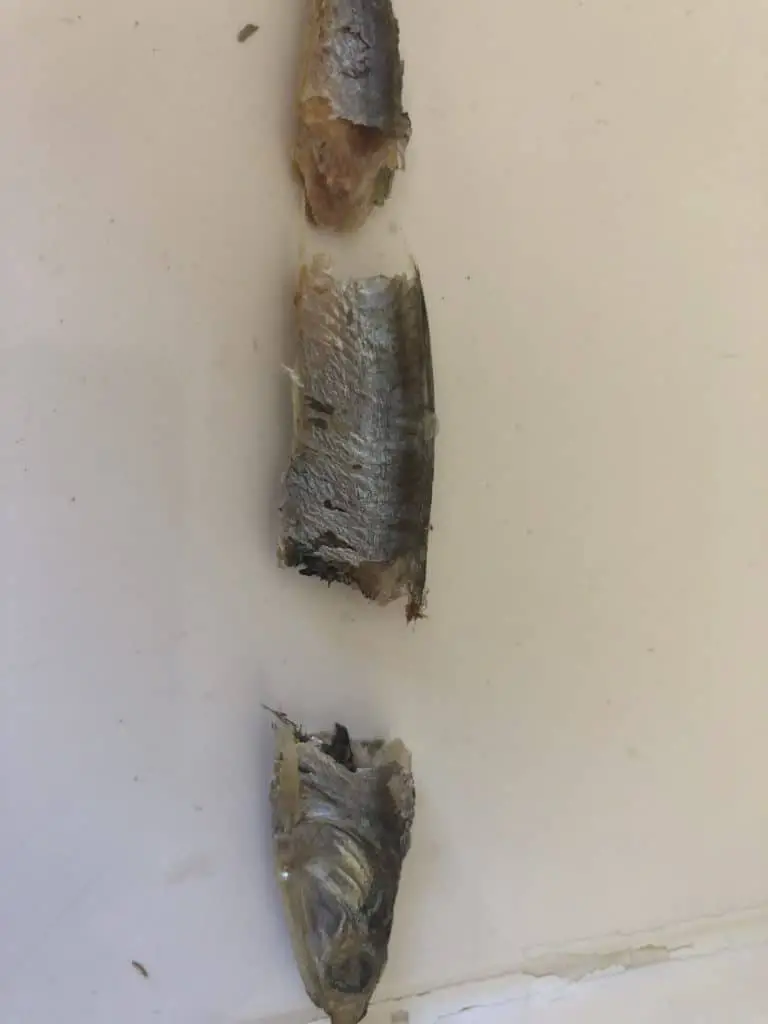
    If you use anchovies, I usually cut them in three pieces, the head, the body and the tail. For me the head seems to stay on the best but some people use the body and chum with the head and tail portions.

    How to attach them to the hook. 

    If you cut them in three pieces and you are going to try to use them on your hook. I like to hook them twice. 

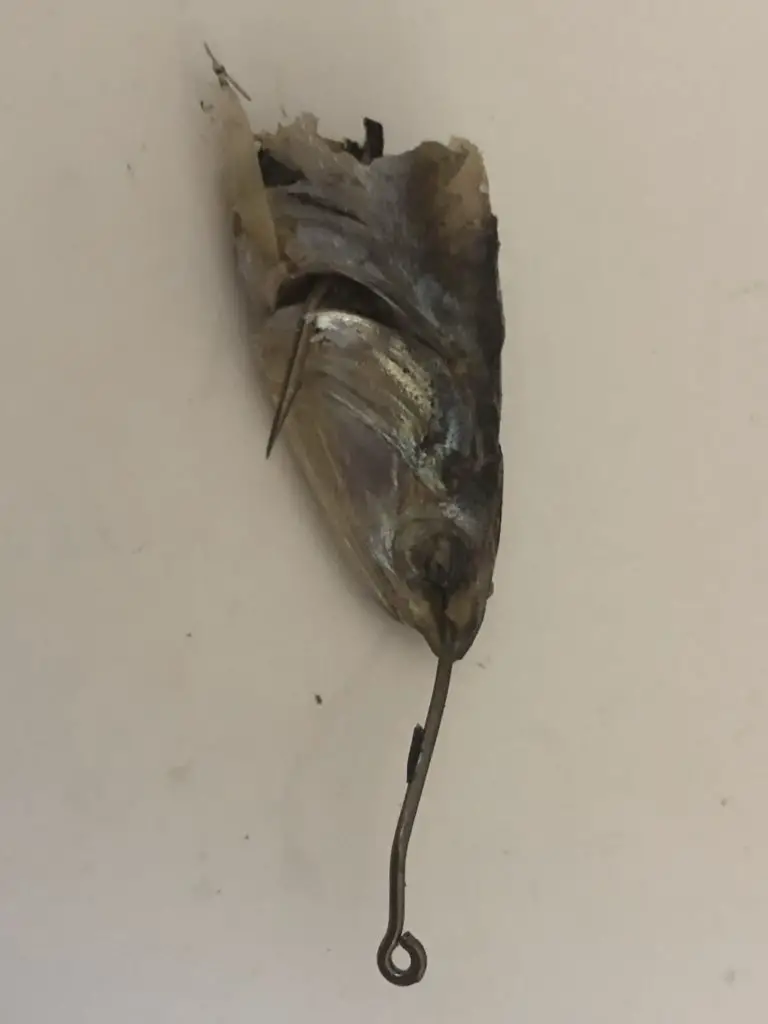
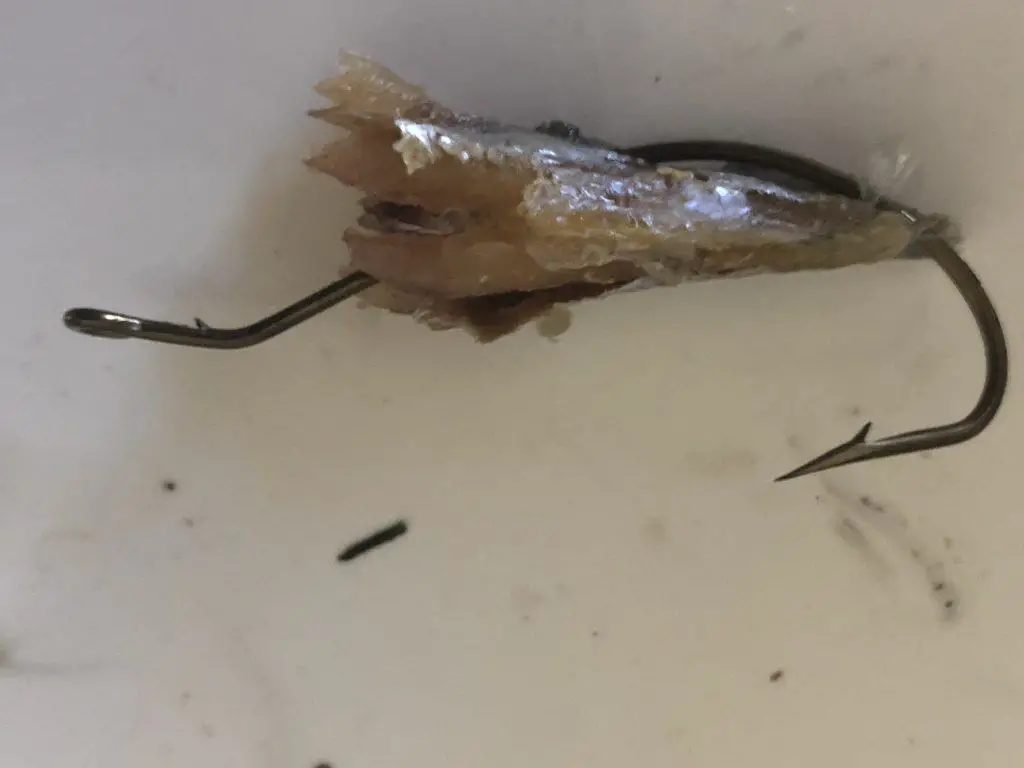
    Example: using the head as bait, hook the lip all the way through from bottom through the top and then twist the hook and go through the gill as well. Make sure you get the bait pushe all the way onto the shank of the hook or you cold lose the fish when it bites. You want the pointy part of your hook well exposed. 

    If you hook the body you need to hold the Anthony with the back bone facing up, then hook right under the backbone of the anchovy. If that seems secure you can go with it but I like to push the anchovies all the way onto the shank and stick it again right through the center. Again, you need to make sure you get that piece pushed up onto the shank and that the hook and point are well exposed or you won’t hook your fish when it bites. 

    For the tail I usually do the same as with the body section making sure the bait is all the way up on the shank of the hook.

    I use a 2/0 worm hook or circle hook. If you can it is best to use a bait hook with barbs on the shank. This will help hold your bait on better. 12 lb test mono line is a good choice. The majority of your striped bass and catfish will be around the 2-3 lb range but it is possible to come across stripers much much larger so be ready. 

    What can you catch with anchovies?

    Usually around here you can use anchovy to catch Striped Bass and Channel catfish but I have caught carp, bluegill, and large shad on them as well. I’m sure in other places there are many other species you can catch on anchovies such as salmon and all types of sunfish.

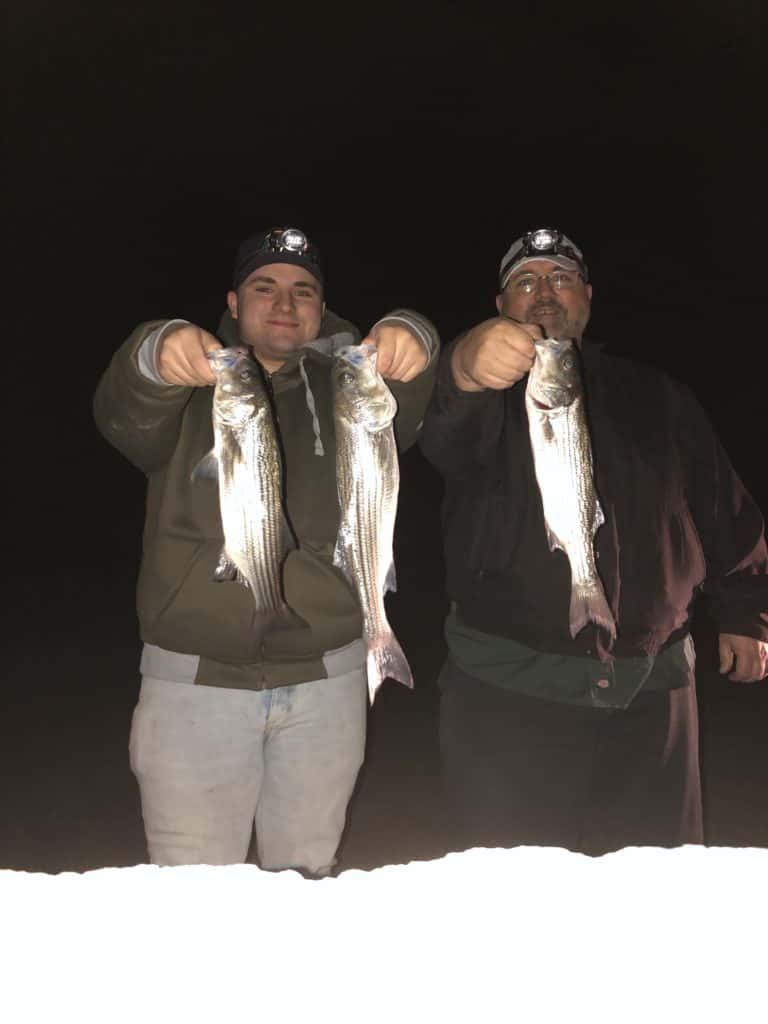
    Sheldon Enns and Darren Enns striped Bass caught with frozen anchovies

    How much do they cost?

    Usually you can get about one pound of wild caught frozen anchovies for under four dollars on average. I usually pick up 2 bags at a time and they last me all day. The key is you have to keep them frozen frozen! Don’t forget to get the ice too.

    Frozen Anchovies

    Where can you buy them? 

    Usually most WalMart stores carry them in the sporting goods section but some grocery stores have them in frozen foods isle and I’ve even seen them in the convenience stores near the lake and river here. Of course your bait and tackle shops probably carry them too. 

    Whatever you do though, just don’t put them on my pizza ok? 
    P.S. I’d Love Your Support On YouTube

  • Best Fishing Face Masks – And Their Benefits

    Best Fishing Face Masks – And Their Benefits

    If you are just beginning in the sport of fishing, then there are probably quite a few items that you don’t realize are must-haves in your repertoire. One of these would be a fishing mask. Part of the reason why this is such a valuable part of any fisherman’s gear would be because it does a solid job of helping the avid outdoorsman keep flies, bugs, and other annoying flying creatures away from your face. Additionally, a fishing face mask will help give you protection from the heat coming from an overbearing sun.

    While there is no question that fishing leads to tremendous enjoyment, ask any outdoorsman and they will tell you that every rose has its thorn. Fishing might be enjoyable, but the harsh waves, bright sun, and getting sunburns on your face and neck are not so much fun. However, there are many excellent face masks on the market today. Before we get into the products, consider some of the following tips below:

    Thaddeus Lewis Tells Fishing Stories

    Look for good UV protection. 

    First and foremost you want a mask that will help you block the harmful ultraviolet rays that come from the sun and can bounce off of the water and into your fishing boat. Look for a mask that will deliver at least a UPF of 40+. This ensures that you will receive protection from 97-98% of the sun’s UV rays. 

    Get a fishing face mask that will give you protection from the wind. 

    This feature is important because it will help you to avoid having a lot of dust and cold entering your mouth. This is especially important if you are going to be fishing in a place that is very stormy. 

    Make sure your face mask is durable. 

    Ideally, you want a face mask that can withstand a lot of friction. Fishing face masks such as a neck gaiter face scarf will usually be made of tough materials such as cotton or stretchable microfibers. They will offer good absorption qualities and won’t wash out after being put in the laundry. 

    You will need a face mask that has a breathable cover. 

    When it comes to the great outdoors, a breathable fishing mask is worth its weight in gold. These masks usually consist of natural and soft feelings and it will have materials that ensure it will keep you warm during winter and cool during summer. 

    The face mask should be well-designed. 

    One of the things that makes an excellent fishing fask mask stand out from just an average one would be the design. When shopping for a face mask, you should look for one that possesses a functional design. However, it goes beyond that, as you also should choose a mask with a design that is appealing to your own personal tastes as well. 

    Now that you understand what you should look for in a solid fishing mask, here are some of the best fishing mask products on the market today. These examples are sure to help you spend many hours of enjoyment at your favorite fishing spot. Here are the trendiest examples: 

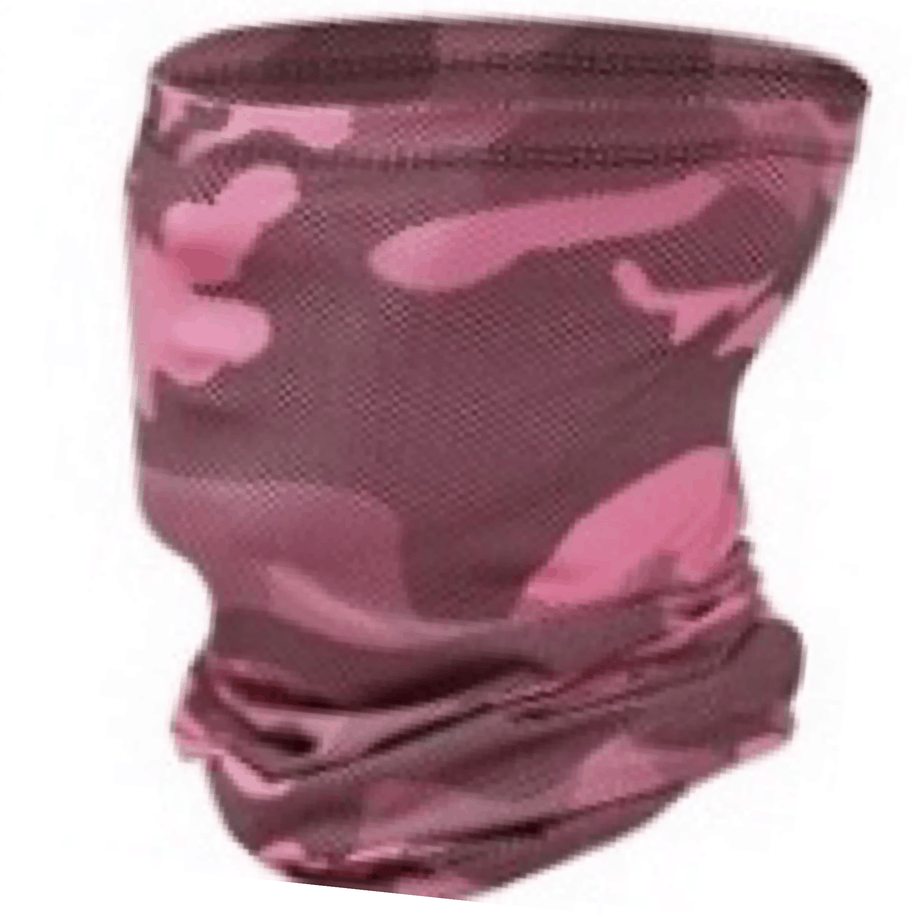
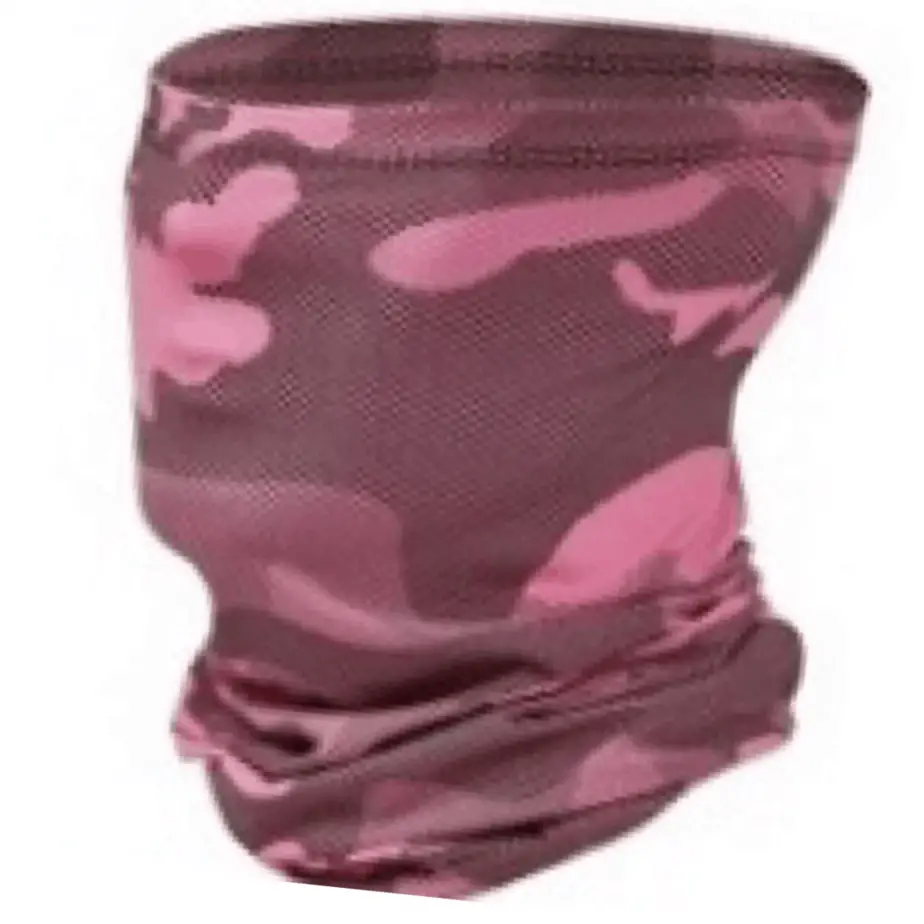
    GOT Headbands Multifunctional Breathable Fishing Masks Camo

    This example is great because it contains a microfiber fast drying material that will hold up well in the afternoon heat as well as the evening cold. You will have no problem washing this product in the washing machine when you are done! The GOT also has completely breathable materials that does an effective job of wicking away sweat and other moisture from your face. You will also find that you can use this product for a myriad of different uses. It is great for not only using as a face mask, but also as a neck gaiter, headband, bandana, and a helmet liner as well. 

    This GOT product also functions well as a protection against the dust storms you may encounter while out on the shoreline. This example is very lightweight and will fit practically anyone, so it is great for spouses or younger children too!

    Nextour Fishing Mask 

    Versatility is the name of the game for the Nextour Fishing Mask. It has unique characteristics such as polyester microfiber, which is very effective at wicking away moisture. The Nextour will do an excellent job keeping you dry and protected from the elements. Add in the fact that these face masks are breathable and stretchy, and you definitely have yourself a product that is top-notch in all regards. 

    This Nextour will fit well for men, women, and even children. It is a solid investment that is sure to keep you healthy on all of your outdoor adventures. 

    SA Company Face Shield MicroFiber Fishing Mask

    The SA Company Fishing Mask is very lightweight and comfortable, and they can be worn in multiple ways. The SA Company mask is comprised of 100% soft polyester microfibers, making it a great option for those who want to maintain their hydration and in turn keep their energy up for more of their fishing hobby. This SA Company product also has an UPF rating of each least 40 on each and every headband that they market. Customers also love this fishing face mask because it is stain resistant and provides a multipurpose fishing experience. This SA Company mask will definitely become one of the go-to tools in your fishing arsenal.

    The fact that this product has an UPF rating of 40 is very advantageous for consumers. It means that you can stay out on the water long without being concerned that you will get sunburned. 

    Fishmasks Single Layer Neck Gaiter 

    Fishmasks is another brand that will go the extra mile to put out a product that will give you as much protection as possible from the harmful UV rays of the sun. Their masks have fabric with a SPF rating of 50+! This means that it will offer up to 99% protection from the rays of the sun. Moreover, this product has many breathable soft features and will felt wonderful against your skin.

    Please note that this neck gaiter does not respond well with bleach. Other than that, it is very easy to clean! Just a little soap and water will do, and then you are ready to take out on the lake once again.

    KINGREE 9PCS Headbands, Outdoor Multifunctional Headwear

    Kingree is one of the most well-respected brands within the industry. Their face masks are a high-performance microfiber that will wick up the moisture better than almost any other brand. They are also solid on their pricing as well, offering at least ten examples at reasonable rates. There are so many multiple colors that you are sure to find something that will match your unique style. The only drawback to the Kingree brand is that it doesn’t list a specific UPF rating. However, you can rest assured that this brand is made of materials that have a reputation for solid UV ray protection.

    JIUSY Lightweight Thin Neck Gaiter

    The JIUSY Lightweight Thin Neck Gaiter is comprised of a lightweight Lyrca material that is soft, elastic, and dust resistant. This Lycra is a solid option for protecting you from sun, dust, and wind. These neck gaiters stretch out well and are definitely a solid unisex option as well. They are thin so it won’t make your face too hot. However, at the same time it will also protect from harsh winds during the winter months. The only issue you might have would be that this fishing face mask does not protect you from any type of snow.

    Meilaier UV Fishing Mask Moisture Wicking Headband

    The Meilaier UV Fishing Mask is also an excellent choice because it does a solid job of keeping out harmful bacteria. The Meilaier is made of microfiber polyester, which is an effective material for not allowing moisture to fester within your mask. You will also come to appreciate the Meilaier’s UPF 50+ designation, which will ensure that 95% of the sun’s UV rays won’t be beating down on your skin. Additionally, you would also like this brand because the manufacturers have taken particular pains to ensure that all of the stitches are done correctly. They did this in order to prevent skin chafing and irritation. After trying out this brand, you simply won’t want anything else.

    Salt Armour Protective MicroFiber Face Mask Shield

    The Salt Armour Protective Face Mask Shield is a solid, underrated product. Some of the benefits of this face mask would include such characteristics as being consistently more durable than their competitors; possessing the safety to be able to protect you from sun, wind, and insects; and it has that same crucial ability to quickly wick away moisture. Additionally, the icing on the cake would have to be the skull image on the mask, which is definitely something that would make you stand out from the rest of your fishing buddies. 

    DUWOEXT Balaclava Breathable Lightweight Fishing Face Mask

    When it comes to the Duewoext Fishing Mask, one thing is for certain: you will never investing in this brand of this fishing gear. The breathable Balaclavas material not only protects your face, neck, and head, but it also has an odorless, eco-friendly design. It will always be a versatile brand that you can wear in both winter and summer. Additionally, it will always have a fully adjustable opening to fully fit any pair of sunglasses you might own.

    JOEYOUNG 3D Face Sun Mask Headband for Fishing

    Traditional fishing sun masks will come in patterns that are, in no uncertain terms, pretty bland. On the other hand, a Joe Young 3D Face Sun Mask will often come in patterns that are in a 3-D color or something with very crazy patterns all across it! You will definitely find these designs impressive, however there is no verifiable proof of how much UPF protection this mask will afford you. The makers of this mask do claim that it will block at least 95% of the sun’s UV rays. They have solid wicking features, and they will fit both teenagers and adults with ease.

    Why Every Fisherman Needs Their Fishing Face Mask 

    You might think that a fishing face mask is a great luxury within your fishing gear, but if you are going to take your fishing hobby seriously, then it is definitely a must-have for your fishing supplies. Indeed, there are many reasons why a fishing face mask is important. Consider just a few of these advantages: 

    They will help you to prevent cancer. 

    One of the main reasons why you should wear a fishing face mask is because it will help you to prevent cancer. It will cover your face and help keep your skin protected from the sun’s UV rays beating down on you. Moreover, there is one common misconception among outdoors people. Many individuals think that as long as the sun isn’t out, they are okay. Science has proven this isn’t true, so you should even wear a fishing face mask on overcast days if you are going to be outdoors for hours on end. 

    It will clear up your vision.

    Simply put, a fishing face mask will help you see more fish. No, a fishing face mask doesn’t come with magic powers or some kind of fancy, technological radar system, but it will always contain fabric with solid moisture wicking capabilities. This means that your glasses are less likely to fog up and your skin will remain dry, producing less glare. More visibility on the water always means having a better chance to catch more fish. 

    It offers you the ultimate protection. 

    if you’ve ever arrived home after a long day on the lake, you know the sense of accomplishment you feel if you have a load of fish to cook. However, every rose has its thorn, so you also probably know the feeling of sheer exhaustion from being beat about by the wind. It hurts, and there is no other way to put it. However, a fishing face mask will act as a barrier between your face and the wind. It will help you to still have plenty of energy left when you get home. 

    If you have ever questioned your need to get a fishing face mask, then by all accounts you had better rethink your opinion and go ahead and get one at your local fishing supply store. They are definitely a valuable asset when you are out at your favorite fishing spot!

    P.S. I’d Love Your Support On YouTube

  • What are spinning rods good for?

    What are spinning rods good for?

    My focus today, as you can see, is spinning rods.

    I’m going to cover every possible angle of spinning rods, from the definition to the best spinning rods to purchase, and what type of fish you can catch with the spinning rod. So, hold onto your hats and prepare for brain overload as we delve into the mounds of information on spinning rods and their uses.

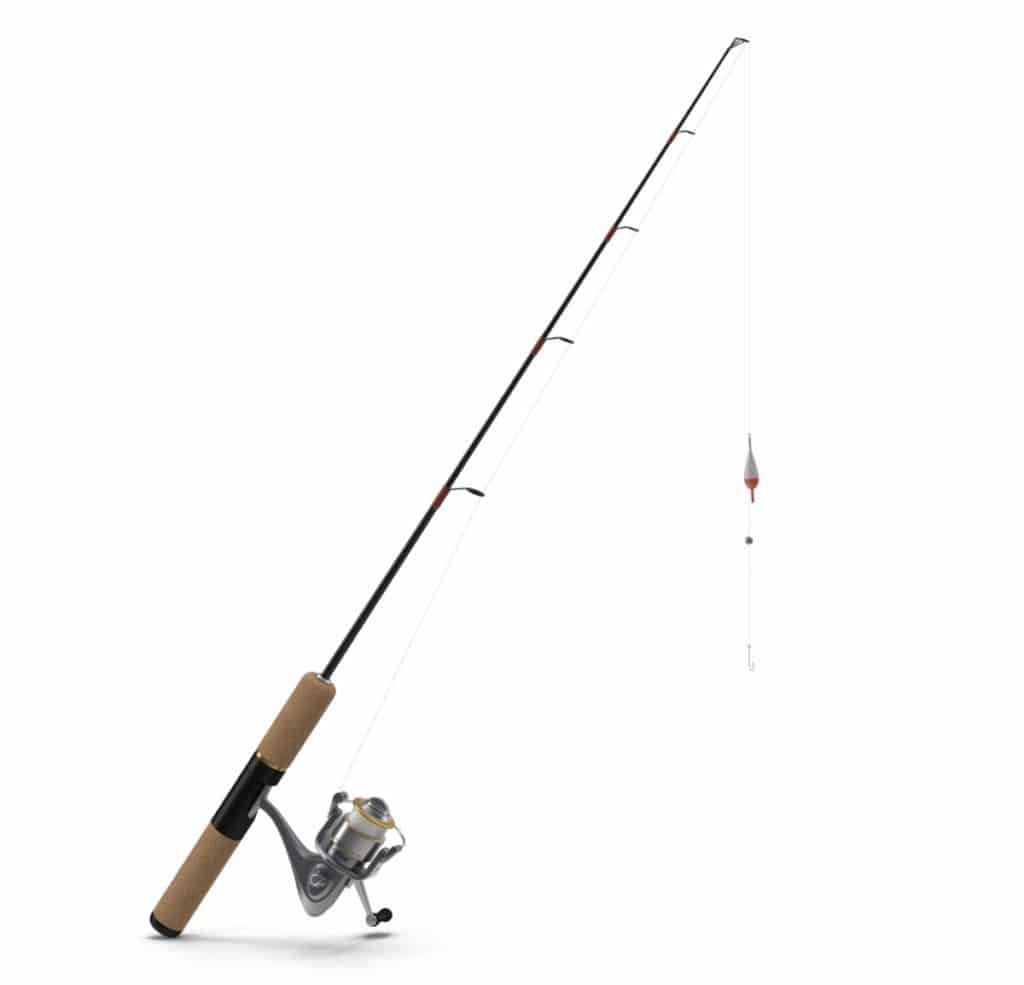
    A spinning rod is normally made from graphite or fiberglass with a PVC foam or cork handle. They can range anywhere from 5 feet to 8.5 feet long. A typical spinning rod will have 5-8 guides that are arranged along the underside that helps to control the line. The eyes, as the guides are sometimes called, will decrease in size from the handle to the tip of the rod. The eye closest to the handle is large to decrease the friction as the coiled line comes off of the reel.

    Your spinning reel will hang under the rod instead of sitting on top, like a baitcasting reel, and will be held in place by a sliding or locking reel seat.

    Spinning rods are typically used for catching popular sport fish such as pike, trout, walleye, and bass to name a few. Spinning rods have high sensitivity and are great for smaller baits and lighter line use. These rods really shine under high finesse applications.

    How and Why to Fish With a Spinning Rod

    Who should use a spinning rod?

    Spinning rods are mostly preferred for beginners. Easily replaced spools, less backlash, and the ease of casting make spinning rods popular with many anglers. These work best with small lures and live baits. Depending on the species of fish you are looking to catch will determine the spinning rod and reel combo that you will want to purchase. The features of a fishing rod will determine the performance.

    The spinning rods with cork handles are more high quality while handles made from PVC foam are resistant to stains. A quality reel seat is extremely important. This will help with stress fight when pressure is applied. It is very important to make sure your rod and reel are a great match/fit. The length and flexibility of the rod will determine how many eyes/guides. The more flexible the rod the more eyes it will have. 

    The rod action defines how the rod is going to perform while casting and reeling in your fish. Slow, moderate, and fast are the configurations of rod actions. The rod action will also be determined by the weight and size of your bait. 


    Types of spinning rods

    There are four categories of fishing rod power; ultralight, light, medium-heavy, and heavy. We will cover these more in-depth a little later on in this article. Shorter spinning rods are used for shallow ponds and rivers, where the longer spinning rods are used in lakes and other larger bodies of water. If you are going to fish on rivers with strong currents, consider a long spinning rod. The longer spinning rods are heavier and have the capability to lift heavier fish from deeper water. 

    We are quickly going to go over the essentials that you should have when going on your fishing trips.

    • Rod
    • Reel
    • Line
    • Tackle
    • Sunblock
    • Insect repellents
    • Fishing waders
    • A rain suit
    • Pliers

    Of course, you want to have plenty of hooks, lures/baits, and fishing licenses. You can purchase most live bait at local tackle and bait shops

    How to choose which rod to use

    So, let’s go over a quick way to figure out which fishing rod is best for your trip, and then we will go into a little more depth on the power of the rods and what types of fish each one will catch.

    1. Decide whether you need a light or heavy rod
    2. Check flexibility – how much the rod will bend
    3. Check the rod length – the longer the rod the more stable the cast
    4. Check the bait system – crankbaits for spinnerbaits. Choose one according to where you will be fishing
    5. You also have to get a rod that fits your hand perfectly. Make sure the line guides are durable. 

    Now lets review the best spinning rods in each power category.

    Ultralight spinning rods:

    These are the best rods for bass, crappie, perch, and trout. Those are easy to control and sue in all weather conditions. These spinning rods are ideal for on the go fishermen and are incredibly popular.

    The best ultralight spinning rod is the Cadence Spinning Rod, CR5-30 Ton Carbon Casting, and Ultralight Fishing Rod. This rod features a Fuji reel, durable stainless steel heat dissipation ring lines with SIC inserts. The highlights of this reel are:

    • Ultra High quality 30-ton carbon fiber blank
    • Made of premium materials
    • Super smooth power
    • Portable setting
    • Affordable


    Lightweight spinning rods:

    This rod gives you impeccable toughness against those big trophy catches and still did an outstanding job for the smaller fish. Designed with a combination of graphite and fiberglass that gives you a sensitive yet powerful fishing rod that is comfortable in your hands. One of the best selling lightweight spinning rods is the Ugly Stik Tiger Elite. These are designed for versatile fishing from coast to coast. They are virtually indestructible blank construction with added graphite, and conventional reel seats with stainless steel cushioned hoods.  Some of the best features of the lightweight spinning rods:

    • Durable and tough
    • Clear tip design for added responsiveness
    • Lightweight EVA grip
    • 1 piece stainless steel Ugly Tuff guides

    Moderate/Medium-Heavy Weight Spinning Rod:

    Best for catching black bass, walleye, and channel catfish. 4-12 pound test line is recommended, depending on the type of fish you are trying to catch. The recommended lure weight is ⅛ to ⅜ ounces, again, depending on what you are fishing for it can be adjusted easily and still be proficient. Best spinning rod with medium/moderate power; Dobyns Rods Fury Series FR 703SF. This spinning rod is light, strong, and balanced. Some of the essential features in this series:

    • High graphite blank – choose your specific reel
    • Fuji reel seat
    • Kevlar wrapping
    • Double A grade cork grip
    • 8-17 pound line is most recommended
    • 3/16 to ⅝ ounce lure weight


    Heavy weight/power spinning rods:

    These rods will generally have elongated grip handles for two-handed casting. These are essential for saltwater fish, steelhead, and salmon. One of the most popular heavyweight spinning rods is the KingKast Crixus Fishing Rod. This rod features an IM6 graphite spinning rod with Zirconium Oxide Ring, stainless steel guides, and super polymer handle. It is a 7-foot rod that guarantees performance that you can count on. KastKing uses only the best materials when manufacturing their rods. The KastKing Crixus series actually has 20 different rods for any and all of your fishing needs and they are affordably priced. 

    There is still an abundance of information that we could have covered, but we wanted to take it easy on you and just give you the basics of what a spinning rod is, what brands are more popular, and the fish that each power category is meant to catch. Now that you are up to date on the spinning rod; sit back, relax, and have a nice cold soda (pop). Happy Fishing!

    P.S. I’d Love Your Support On YouTube


  • Does Fishing Bait Expire?

    Does Fishing Bait Expire?

    If you are an avid fisherman, then chances are you have a number of favorites comprised of, tried-and-true pieces of bait that you pretty much swear by. Simply put, you know that this is a bait that you can turn to that will help your passion for angling be continually rewarded with more fish being caught. However, as with everything else in life, you know there are wrinkles to it. For example, can you actually stock up on your favorite bait? Or will it expire after a set length of time? That is definitely the elephant in the room. Insofar as this issue goes, here are some things to keep in mind: 

    You should understand the shelf life of Power Bait. 

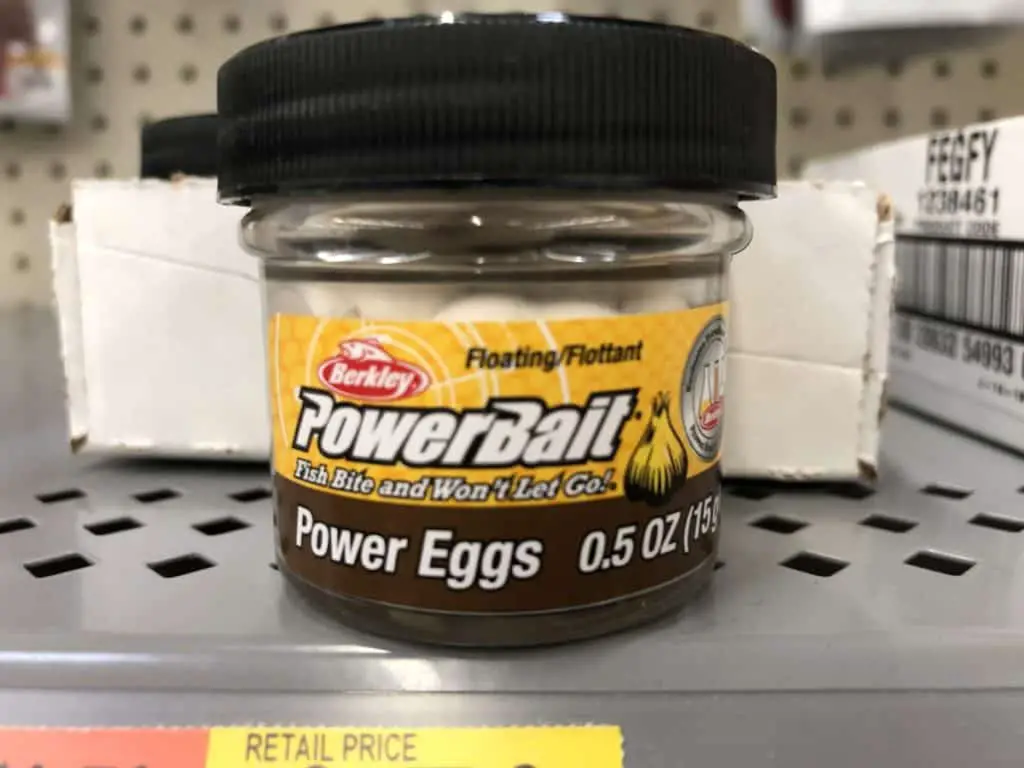
    Power Bait is just one of those brands that has a tendency to be passed down from generation to generation. Chances are that  you not only remember this brand being in your father’s tackle box but probably in your grandfather’s box as well. Since it works so well, you probably want to know the power life of this brand. Generally, the average shelf life of opened Power Bait is three years. However, from an anecdotal standpoint, there are many individuals who have Power Bait that is currently sitting at five years of age or older. Moreover, there are some people who insist they know a fishing buddy who has Power Bait that they are sure is so old that it would be “rude to ask.” 

    Berkley Powerbait Trout Fishing

    Of course, this begs another question as well. Should your Power Bait be kept warm or cold? The answer to this question is rather surprising. In actuality, it doesn’t really matter. Most bait aficionados will tell you that the best thing to do is to simply keep the lid screwed on as tightly as possible. 

    Naturally, another analogy that many individuals will use is that Power Bait is akin to a twinkie. While most of the experts will say that the shelf life of a twinkie is also only three years, there have been twinkies that have lasted for twenty years or more that are still edible. Such is the same for Power Bait. Some swear by the durability of this product! However, when it comes to Power Bait, there are still other unanswered questions that we need to ponder: 


    How long does Power Bait last in an unopened state? 

    In an unopened state, many Power Bait users have claimed that it will last for up to two or even three years. The Power Bait will last a very long time as long as you pay attention to several different variables. First of all, you should store your Power Bait in a cool and dry place away from extreme heat. Naturally, a lot of sportsmen have a tendency to store this bait in their garage, and unfortunately, this isn’t always the best place to put it.  Garages are never insulated, so it can get either very hot or very cold, which can definitely have deleterious effects on your bait. It would probably be better to store it in your basement. Finally, you should ensure that your Power Bait is stored with the lid closed up as tight as possible. 

    Feel free to visit Berkley Fishings website HERE

    Of course, this doesn’t account for the other brands of bait you have to account for. Take a look at some of these examples: 

    Zeke’s Sierra Gold Bait shelf life

    There are many individuals who have reported that Zeke’s Sierra Gold Bait has a particularly long shelf life, at times even lasting for as long as four or five years. Fishermen are always looking for good deals, and they will usually stock up on these and other bands when there is a big sale. There is a lot of anecdotal evidence of sportsmen buying a large amount of this brand and being able to use all of it effectively to catch fish even years down the road. Part of the reason for this is because the Zeke’s brand is extremely durable. They have a soft, elastic texture that will not only give it the ability to easily mold to your hook, but it will also help it hold together that much longer in storage. Additionally, this brand is comprised of unique scents and amino acids that will keep the materials as tough as possible. Even after many years in storage, this brand will still be able to stay on the hook and assist you in catching fish. 


    Berkley Gulp Trout Nuggets last an extremely long time

    Of course, another popular brand of fishing bait would have to be the Berkley Gulp Trout Nuggets. They have long been renowned for being a solid bait that can help anglers catch a multitude of fish simply because of one of Berkely’s main claims: unlike other fishing baits that are made of polyvinyl chloride (PVC), Gulp is made out of a biodegradable, water-based resin that does a solid job of attracting a wide variety of fish. Additionally, the fact that Berkley Gulp is made out of a water-based resin also assists it on another front: this crucial component actually helps this fishing lure have the ability to “breathe” in the water, which tricks the fish into thinking that it is a living being. When you couple that with the fact that this lure will introduce attractive scents within the water, you can see why the Gulp products have developed such a loyal following. This is all well and good, but what of their shelf life? 

    When you are considering the shelf life of Gulp, the one variable you have to be aware of would be making sure they stay as moist as possible. According to the company, your Gulp fish bait will keep for at least two to three fishing seasons as long as you store them in the liquid they come with from the original purchase. The main thing you must do is to avoid them drying out. However, if you do that, you will be able to enjoy them for a much longer period of time. 


    Conclusion 

    When it comes to the shelf life of your favorite bait, the name of the game is folloiwng instructions. Naturally, you should go ahead and listen to the bait company’s recommendations for making your bait last as long as possible, but do realize there is a certain caveat: they have a vested interest in your buying more of their bait! Thus, another good strategy is to talk to other anglers and see what techniques they have used as well!
    P.S. I’d Love Your Support On YouTube

  • How Long Will Minnows Live in a Bag? And Other Pressing Minnow-Related Questions

    How Long Will Minnows Live in a Bag? And Other Pressing Minnow-Related Questions

    Ask any ice fishing enthusiast, and they will tell you that it’s all about the bait. And given that minnows are a popular choice for catching the walleyes, bass, sturgeon, and other fish breeds that swim under the ice, they will also tell you that taking care of your minnows is every bit as important. For many fishing hobbyists, their first introduction to the hobby was going to the local bait shop, buying these minnows as bait, and transporting them from the shop in a bag. Of course, there are many daunting questions regarding minnows, and one of the main ones is this: how long will these minnows live in this bag? That’s a good question, and it depends on a number of different factors. Consider the following: 

    It all depends on the temperature. 

    Your minnows will have the potential to live much longer in a bag if you keep the water below 60 F. Periodically add ice cubes to the bag. Secondly, have the fish dealer add real oxygen to the bag and you will get up to 5 or 6 days survival time from your shiners or flatheads. Read on for more tips.

    Of course, you should also be careful about how you obtain the ice cubes. Generally, they should be from non-chlorinated water because that additive is fatal to these minnows. Additionally, make sure that your store your minnow in a cool, dry place. Naturally, the sun beating down on your minnow bag will heat up the water and potentially kill off your bait. 

    Be careful with how many minnows you have placed in this bag. 

    It is very important to consider how many minnows you have in your bag. Generally, for each quart of water that your bag holds, you should have no more than nine minnows. An overpopulation of minnows will cause them to use too much oxygen, and like many other organisms, they need that to survive. Additionally, the lack of oxygen in the bag will also cause it to overheat, so this is a double whammy that you definitely want to avoid. Either way, you definitely don’t want to lose your investment. 

    Of course, there are other questions you might have concerning minnows. Indeed, yet another of the most popular questions regarding minnows would be, “just how do you go about catching them yourself?” Well, there’s no need to make this harder than it actually is. It’s a fairly straightforward and simple process, as long as you follow the steps: 

    Design your trap. 

    Once you have purchased your minnow cage, you will notice that it will usually come in a torpedo shape. You should modify one end of it with pliers so the minnows will only have one opening and will get stuck in it. 

    Place your bait

    After closing one end up, all you have to do is open one of the latches in order to place the bait. The good news is that you can use literally anything for the minnows, including leftover bread, crackers, or even pet food. 

    Include a glow stick in your trap. 

    You will have the potential to catch more minnows because they are attracted to bright lights. You can use plastic ties or some string to suspend the stick. Alternately, there are some minnow traps that come in silver color, and this also will readily attract them. 

    Attach some string to the trap. 

    Tie several feet of string to the trap, all the while making sure that the device is in as inconspicuous an area as possible. After all, you wouldn’t want someone to come upon your trap and steal your catch! Of course, you should attach the string to a fixed point on the shore, such as a large rock, a tree, or the docks. You also should place some rocks inside the trap so that it is weighed down further.

    Orient and organize the minnow trap correctly. 

    When placing your minnow trap in the water, you should ensure that you place it near some debris and have it facing in the direction of the current. Moreover, you should have the trap fairly close to the shore. 

    Spread your bait. 

    For this step, you will learn immediately why it is important to have your trap facing the current. You see, it doesn’t matter whether you place the bait inside your trap or even along the outsides because the current will carry the smell of the bait and it won’t be long before the minnows will start swimming toward your trap. 

    Don’t be tempted to take up your trap right away. 

    In most cases, you will see minnows coming to your trap almost immediately. However, you should resist the temptation to grab the minnow trap right away. If you wait a few hours, you will many more minnows to use as bait. Additionally, if you use a secured bait such as tuna in the can, it will often increase your chances of getting higher-quality minnows. 

     Put the minnows in a bag or a bucket. 

    Ideally, you should place your minnows in a bucket with an aerator device if you place on storing them for a long period of time. However, if you don’t have a bucket, you can still place them in a bag. Empty a drog of hydrogen peroxide to help the oxygen levels high for a longer time period. 

    What do you do if your minnows still die? 

    If you have dealt with minnows for any length of time, you probably quickly realized that they can be very fragile creatures. What do you do if your minnows die while you are storing them? And what of the fact that there are some states that won’t allow you to transport live bait to a certain destination? It can get a bit tricky for sure, but the good news is that yes, you can use dead minnows for your bait as long as you take the appropriate steps. Take the following into consideration: 

    Research which types of fish will still respond to dead minnow as bait. 

    While there is no question you would get a better quality catch if you use live bait, there are still plenty of fish that will respond to your bait consisting of deceased minnows. For example, there are some fishermen that swear by using dead minnows to catch walleye. Yes, you read that right. Walleye. While it is true that they have a strong preference for live prey, you have to remember that at their very nature Walleyes are predators. So yes, they will indeed go after a dead minnow as bait if you are persistent enough. 

    Another fish that will respond to a bait consisting of deceased minnows would be Nothern Pike. This breed of fish has literally become known as the “water wolf” because of its intense predator activities in their habitat. Not only do they enjoy the “thrill of the chase” but like any other hunter, they also at times desire to take the “path of least resistance.” Even though a dead minnow wouldn’t be nearly as challenging as live prey, the Northern Pike will still go after your deceased bait simply because they can burning too many calories for this easy meal. Of course, the joke is on them in the end. 

    Finally, catfish have an affinity for dead minnows as well.  

    Believe it or not, but bait shops will often go as far as giving away their dead minnows for free. The reason? It’s because when they decompose they have a tendency to cause an offensive odor in the dumpster or trash can. An expert catfishing enthusiast also realizes that decomposition can cause other problems as well. One of these would be the fact their heads will fall off. Thus, many catfish hunter will go ahead and remove the dead minnows head just before they cast it out into the water. Additionally, most catfishermen are very meticulous about their fishing boat, and they will keep these catfish on ice throughout the entire fishing trip in order to avoid that same smell. 

    Needless to say, if you’re into catching catfish and ONLY catfish (there are quite a few out there, believe it or not) then you need to understand their behaviors. Thus, you should know that catfish actually respond better to dead minnows than live ones. Moreover, it helps if they have recently been killed as well, otherwise you might end up catching a lot of bass along with the catfish. 

    Preserving Your Dead Minnows For Later 

    Finally, when it comes to dead minnows, the other elephant in the room is this: what if you want to save them for later? There are many valid reasons why you would. For example, even though we all love fishing, we all have a life and responsibilities beyond the water. Spouses, jobs, kids, bills, and the list goes on and on. However, you certainly don’t want to waste your good minnow bait. If only there were some solid methods for preserving them for later….well, there is! 

    First of all, you could consider “pickling” these dead minnows, otherwise known as placing them in a preservative fluid. The first step is to get yourself some mineral oil, isopropyl oil (also known as rubbing alcohol) in a 70% solution, and Ethyl alcohol in 70 proof or higher. 

    The first step is to put the dead fish in a sealed container such as a plastic bag, plastic jar, or a glass with a lid. You also can add scents such as garlic salt, anise oil, or a commercial fish attractant. Cover the fish completely with this mixture, and then seal the jar up. One of the main advantages of this method is that you can store it without refrigerating it. Finally, you should keep this mixture sealed up for at least 14 days so that the VHS virus does not propagate among the dead minnows. 

    You also could preserve these minnows using a solution of salt or borax. You would start this process by obtaining a couple pounds of non-iodized salt and a half cup of borax. Then you should find some type of container where you can put two drainage holes in the bottom. Put this mixture of salt and borax into the container and be sure to cover the bottom of it with the mix. Lay down the first row of minnows, and cover them with the mixture. Add another row of minnows and do the exact same thing you did with the first row. 

    You should keep them in this container for at least two weeks because it will ensure that the VHS virus isn’t allowed to run rampant within the mixture. Additionally, the reason you want the two drainage holes at the bottom is that these deceased minnows have a tendency to produce a slimy substance that will ward off any fish you are trying to catch. The drainage holes will help to prevent that. Moreover, part of the reason why you want to include borax in this container is that it will keep the minnows as tough as possible; they will not totally disintegrate once you are able to cast them out into the water. This method will also produce a slight odor under the best of circumstances, so it’s probably best to do this process in a garage or a ventilated area. You can separate some of these minnows out once they are dried out and put them in your tackle box along with a bit of the salt/borax solution. 

    you may be able to buy live monnows and have them shipped from here.

    Of course, besides these methods, there are other tricks people have tried for freezing minnows (although that’s generally not recommended). Some freeze their minnows in sawdust, and some in cheap vodka. Either way, you can ask a fellow fisherman what methods they use.  

    Of course, an important first step to any preservation technique for your minnows is to make sure the VHS virus is completely inactivated. One way to accomplish this would be through heating your minnows to a temperature of at least 140 degrees fo a period of fifteen minutes. You could put them in your oven or some other heating machine, and this would incapacitate the virus and all you to dry your minnows for when you are out on the ice or water!

    P.S. I’d Love Your Support On YouTube

  • What Is Backwater Fishing

    What Is Backwater Fishing

    Backwater Fishing

    There are many types of saltwater fishing. You can go deep-sea, or offshore fishing. There is saltwater bay fishing, pier & surf fishing, and backwater (flats) fishing. Today, we are going to tell you the basics about backwater fishing. We will cover the normal; rods/reels, lures, baits, fishing line, and best techniques. So get ready for another adventure in saltwater fishing. 

    Backwater fishing, also referred to as flats fishing, is simply saltwater fishing from a flat boat or a skiff in shallow inshore saltwater. A skiff is a very basic boat, as it is a flat bottom boat. They are open with outboard power, a hull, a power plant, and a couple of seats.

    As stated above, we are going to cover gear, weather, what to look for and where to backwater fish. Techniques that can be used and other information that you will need to know. This article is basically for the beginner backwater (flats) fisherman, but even the more experienced may learn something new by reading the information we found while researching.

    Tackle for Backwater Fishing

    Let’s start off with the essential items that you are going to need to fish the backwater saltwater. There is the misconception, or idea, that you have to fish the deep sea to catch the trophy-sized saltwater fish. But this is not true. As long as you do your research, have the correct gear, and utilize some of the tips we give you; you can be successful in inshore saltwater fishing, flats fishing, and other styles of saltwater fishing. 

    As with any other fishing techniques there are different types of rods, reels, and tackle that can be used for backwater fishing. We are going to provide you with a few recommendations to get you started. 

    1. 6-7 foot medium action rod, you can then choose a baitcaster or spinning reel. 
    2. Light line, such as 15 pound braided test line
    3. You will also need 2-3 feet of 20-30 pound leader line. Fluorocarbon or monofilament.
    4. Your hook size is going to depend on the bait you are using and the fish you are trying to catch, so it is recommended that you keep a variety of 1/0 to 3/0 circle hooks in your tackle box. 
    5. Have a large variety of lures, from plastic jigs to metal spoons available.

    Of course there is other tackle and gear that can be used, will be needed or suggested and we will cover some of that later in the article. 

    Most Popular Spots on the Water

    You are going to want to research and find the backwater spots where the fish are going to be. You already know that most saltwater (inshore) fishing requires a boat to get there. Your backwater fishing is no different. You will need a flat bottom boat, or a skiff, as we discussed in the beginning. 

    Here are the 6 most popular backwater spots/places to find fish:

    • Saltwater inlet: these are usually marked by shallow sandbars and they are a great place to find fish. You will, however, need to locate deeper water to find the fish.

    Two tactics that are most effective when fishing a saltwater inlet are 

    1. Drifting – this is drifting your boat through deeper water or alongside the shoals bouncing your jig
    2. Anchoring – anchor your boat and then cast your soft plastic lures, live bait, or metal spoon up the current. You then allow your bait to drift down from the current past the fish.
    • Marsh Edges: this is another great place to target fish when fishing backwater (flats). The saltwater fish will usually scour the borders of the marsh grass in search of prey. You want to look for rushing water either in or out of a creek or estuary.

    Make sure you position your boat within casting distance of the mangrove or marsh edges. Try working a jig along the bottom. You can also try to “walk-the-dog” technique or topwater fishing using a live shrimp rigged with a popping cork. 

    • Oyster bars or Grass Beds: these are backwater reefs that can be a challenge to fish because you have to try not to get your line tangled on the rough bottom or snagged in the grass. The best fishing technique for this area involves suspending your bait over the bottom. To do this, use a popping cork, a jig, or a topwater lure. 

    Fish will comb the outside edges of the grass beds or bars looking for any prey that happens to wander too far away from the reef. So very carefully work your boat over the reef and fish the edges. Boats that have trolling motors will have an advantage when moving over structures, to avoid scaring the fish. Boats with a push pole have the same advantage. 

    • Channels: along with creeks and rivers, channels also have the deepest water and more often than not, the best backwater fishing. Predatory game fish along with bottom dwellers will school up in the deeper holes. This makes the channels ideal for catching a variety of fish. The larger fish will look for prey that wander out of the deep water. Working a jig along the edge of the drop off will often entice fish to bite.

    Saltwater panfish, such as croakers or grunts, will also congregate in the deeper sections of the channels. They can usually be targeted by bouncing bait along the bottom. Use a Carolina rig to accomplish this. There are also channel entrances, tidal flats, and potholes that have great backwater fishing.

    Best Backwater Bait and Tackle

    We are now going to give you the recommended and/or suggested bait and tackle to use to make your backwater fishing experience the best that it can be. Some anglers really enjoy selecting, organizing, and using their tackle almost as much as they like to catch the fish. 

    The best saltwater fishing gear will all be corrosion resistant. Saltwater is very rough on your equipment, especially your reel seats and guides. You want to start by figuring out what technique you will use. Jigging, catching sea trout on the grassy flats, or topwater. One technique may require a heavy action fiberglass pole, while another will call for a medium light action rod. 

    Saltwater reels will either be a spinning reel or a baitcasting reel. They are classified as either low-speed or high-speed. The high-speed gear ratio will be set at 6:1 and the low-speed is 4:1. Some of your spinning reels will offer you a button which will allow you to switch between low and high speed. 

    You also need to consider line capacity when purchasing your reel. This is normally marked on the body of the reel in feet or yards. The best saltwater fishing reels will match the line weights that are marked on the rod. Any sporting goods store will have and be very knowledgeable in this area, and can make shopping for saltwater gear, easy.

    When deciding on what lures/baits to use, you need to consider how the fish feed and what they prefer to feed on. Fish will detect a meal in 1 of 3 ways; scent, sound, or movement. There is a lateral line that runs down each side of the fish that is filled with tiny hairs. These hairs detect movement in the water. They can pick up the moving object such as a lure or bait. Fish can see colors and shapes, but can not see 15 feet in front of them. Their sense of taste will tell them if the bait they sense or see is edible.

    Examples of saltwater bait, whether fishing inshore or backwater; anchovies, scad, or halfbeaks. Crabs cut-bait, clams, shrimp, squid, or scented baits are also some great examples of what you can use as backwater (flats) fishing.

    There are many lures for each species of saltwater fish. You can choose from a lead-head jig, which is the most popular artificial lure for backwater saltwater fishing. These consist of a hook with a lead head and a trailer. There are also metal jigs that are used to bounce across the bottom or that are cast out and slowly retrieved back. You also have your poppers. These lures are made to splash across the surface, drawing a reaction bite. They work best at dawn and dusk.

    Some other popular saltwater fishing lures that work well for backwater fishing; plug fishing lures, spoons, spinner bait, and soft plastic lures. Some of these lures will work better than others, depending on what species of saltwater fish you are wanting to catch. 

    Besides your rod/reel, line, lure, bait and hooks you are going to have to learn how to read a flat if you are going to backwater fish. If you are a beginner, flats can be a very complex thing to figure out. For experienced backwater anglers the flats are a mixture of patterns and elements that require quick thinking and change. 

    Find a casting platform. These will raise you up and give you a better vantage point. What some beginners do not know is that backwater fishing is a very visual sport. You need to look for signs of movement. These can be tails or fins, rolls, wakes, or flashes. Something to let you know that there are fish in the area. Watch very closely as there will also be subtle hints that will give away a fish’s location. 

    Other information

    It is suggested that before you pick up a rod, you scout the area for fish. Visually scan the area for signs of life. Once the fish have made their presence known, you can then bait your hook and begin to fish. There are a couple of specific things to look for when you are scouting the water:

    • Contrast: an area of the water that looks different than the rest. Maybe a thicker patch of grass, clearer (or muddier) water, deeper or more shallow areas, or barre patches. These are often indicators of feeding stations. 
    • Edges, channels, and contours: when you come across a channel you need to pay close attention. Look for shadows or anything in the water that looks unusual. Take notice of any contours in order to find structures which may serve as feeding grounds.
    • Tide, wind, and other conditions: structures in the shallows are going to shift, depending on certain conditions.  Check the tide reports before you go out and also check the wind speeds throughout the day.

    Final Thoughts

    The variables are going to change while you are on the water. You are going to have to learn how to spot and respond to those variables a short amount of time. It is going to take time, practice, and patience to get used to the variables and how to navigate them when it is needed. Once you have accomplished this, you will have great luck in locating and catching the backwater fish that you crave

    We have, once again, provided you with quite a lot of information on backwater (flats) fishing. Of course, there is much more out there that we don’t know and that we could share with you and we could definitely tell you more than what we are telling you about all we have shared today and things. 

    We hope we have given you enough of the proper information to get you started on your journal through backwater fishing. Please make sure, as always, you check back often. You never know what information we are going to come up with next. 

    Please do not forget to check the rules/regulations about the area you are wanting to fish. You should also make sure you have the proper license and get a map for the area so that you can figure out the best places to try your luck.  Talk to the locals and the professionals when you arrive and see what kind of information that you can get from them. The final thing that you need to do is to get everything packed up and ready to go. As always Happy Fishing to you All!

    P.S. I’d Love Your Support On YouTube

  • What Is Inshore Fishing? – A How To

    What Is Inshore Fishing? – A How To

    Inshore Fishing Explained

    In this article, I am going in a completely different direction. (I may be all turned around. That’s not uncommon for me.) We normally have articles that cover many different freshwater topics. Today, we are going to dive into saltwater fishing. We will tell you what it is, what the best equipment is, optimal bait, and give you some tips for beginners. So brace yourself, everyone, we are going on a totally new adventure today. 

    Inshore fishing refers to fishing near land. You will be fishing in water from 2 feet to 20 feet deep and you will have no choice but to be on a boat, in a canoe, or a kayak to reach these areas. Bays, estuaries, shorelines, and saltwater rivers that are normally within a mile from shore. Producing the biggest fish you will probably ever see.   

    Inshore fishing

    Since the waters are calmer you can use a small basic boat to inshore fish. Inshore fishing also requires less as far as your equipment goes; poles, holders, storage, and attire. Small nets and light rods can easily be used. You need to realize with less intense waters, gear, and the boat you are not going to catch big “trophy-sized” fish.

    Once you hit 30+ meters, you are in the offshore fishing territory, where your fishing gear will not do you much good. Inshore and offshore fishing are very different and require completely different equipment.

    Inshore Saltwater Fishing Gear

    To successfully start fishing in the back-country you do not need a lot of gear. But, you will need some specifics for inshore saltwater fishing. These recommendations are for beginners, but experienced fishermen can also benefit from and use the same equipment.

    This gear is used to target redfish, flounder, spotted seatrout, and pompano just to name a few. Depending on the state you choose to fish and the area, there are going to be other fish that you are going to be able to hunt for. 

    Fishing Rod: the most versatile inshore saltwater fishing rod is going to be a medium weight rod which is between 6.5 and 7 feet long. It should have an even balance between strength and sensitivity.

    You want a rod that is strong enough to pull a redfish away from the rocks, but it also has to be light enough to feel the lighter bites. The rod length is going to allow you to cast and land your bait right in the middle of the “strike zone”. This is where the target fish are going to be hanging out, munching on baitfish. 

    Fishing Reel: make sure when purchasing all of your saltwater gear, that it is 100% corrosion resistant. The saltwater will corrode your rods and reels fairly quickly. You also want your reel to be durable. A 2500 to 3500 series is going to be the prime choice. If you are going to be using a 10-15 lb. braided line, then you want to find a reel that has the proper line capacity (150-200 yards). 

    Fishing Line and Leader: inshore saltwater fishing sets will generally include a 10-15 pound braided fishing line and two feet of 20-25 pound fluorocarbon leader material. Use heavier lines when fishing around rocks, dock pilings, or oyster bars as well as when hunting toothy species (bluefin or mackerel).

    Difference between inshore saltwater fishing & freshwater fishing

    Circle Hooks and Corks: to finish off your rod and reel, don’t forget the 2/0 and 3/0 circle hooks. Anglers recommend if you are fishing for redfish, to rig a shrimp 18-36 inches below a popping cork.

    This is said to be extremely effective. Circle hooks are easier to remove from the fish. The corks are a preference, try them and see if you like them. They are not mandatory or essential. 

    Freshwater fishing is done on lakes, streams, rivers, banks, dams, and ponds. The salinity level in freshwater is less than 1.05%. With freshwater fishing it is easier to learn, there are multiple techniques/types of fishing, and a large variety of fish that you can choose from. 

    You can fish from shore, a boat, the docks, or bridges. Here are the top 5 things you need to know to begin freshwater fishing.

    1. Learn the depth. Various species of fish will prefer different depths/temperatures of water. To learn what the depth is of the fish you are targeting. 
    2. Pay attention to time and weather. Rain, sun, sunrise, sunset, cloudy, windy, or calm; all of this determines what fish are going to be out feeding. If you know the optimum time and weather conditions for the fish you are going after, you may have an easier time catching them.
    3. Bait. Depending on what fish you are in search of, will determine which bait is going to produce the most results. Some fish love live bait (worms, crickets, etc….) and some fish prefer the artificial lures (rare, but does happen). 
    4. Make sure your fishing gear and tackle also match or work the best for the species you are trying to catch. Freshwater is fairly simple unless you are a guide on a boat.
    5. Make sure to keep your hands washed. Fish are very very sensitive to smell.


    Some of the fish that you can catch when you are freshwater fishing is; bass, trout, crappie, catfish, and salmon just to name a few. There is also the panfish, such as the bluegill, the rock bass, the white perch, and others. 

    Inshore saltwater fishing involves fishing in the ocean and fishing for species that are much larger than you find in freshwater; eel, Spanish mackerel, cod, redfish, snook, and tuna. Inshore saltwater fishing is done from the edges of beaches, fishing piers, and other places that are easily reached by boat or canoe.

    Your tackle/equipment needs to be more sturdy than what you need for freshwater fishing because the fish you are going to be catching is so much bigger than what you catch in the local lake. 

    The air and saltwater are a lot harsher on your equipment. So you need gear to specifically be made for saltwater fishing. You also need to make sure after every trip you are cleaning your gear/wiping it down, per the recommendations that came with the equipment. 

    As long as you know when the tide is coming and going and where the certain fish are at certain times of the year, then you are ahead of the game on inshore fishing. Air and water temperature are also factors for both freshwater and saltwater fishing. 

    Saltwater Fishing Tackle

    The best places to go for inshore saltwater fishing are Texas, Florida, Louisiana, and South Carolina. You will have a better chance at success if you have the proper tackle in your boat. If your tackle is too heavy you will not be able to cast far enough out to hit the strike zone. If your tackle is too light then you have a huge chance of losing any fish that grabs your bait. 

    Light inshore tackle:

    This is best used for trout, flounder, Spanish mackerel, smaller redfish, and pompano. The rods are generally 6.5-7 feet long and use a 6-12 pound test line. Perfect for long whip casts using small lures and bait. 

    You will need a good spinning reel that will hold 140-200 yards of line and built with corrosion-resistant components. The most popular gear ratio is 6:1. This allows for quick retrieval in shallow water. 

    Most anglers opt to use a 10-15 pound test line (braided) and 20 feet of fluorocarbon or monofilament leader that is 6-10 pounds. 

    **inshore saltwater fishing requires long casts which have to be precise if you want to catch your target.**

    Heavy Inshore Tackle

    This is, of course, suited for the larger saltwater fish. Tarpan, tripletail, shark, large redfish, and cobia just to name a few. Rods for catching these larger fish are normally 7-7.5 feet long, medium to medium-heavy power, and line size 12-20 pounds. 

    Lures will most likely range from ½ to 1 ½ ounce. Therefore you will need a rod that can handle the lure weight and still be able to perform correctly. Have the precise casting ability, and the rod strength to reel in anything that bites. 

    The reel also needs to be bigger than the one for the light reel, but it still needs to be made with the same corrosion-resistant material. The line capacity should be 200-300 yards. Anglers strongly recommend a 15-20 pound braided line, 20 feet of fluorocarbon for a leader, and 20-25 pounds line size.

    **of course the rod power needs to be heavier for the monstrous fish you may catch next.**

    Inshore Techniques

     A lot of anglers prefer to use soft plastics, small jig heads, or topwater plugs to fish inshore. We are going to give you the 3 most popular for inshore saltwater fishing. 

    Inshore topwater plugs are suggested and best used in conjunction with:

    • Rod: spinning, 7-7.5 feet
    • Reel: spinning, 3000-4000 or 300-400 in size
    • 15 to 20-pound braided line and 20-30 pound lead

    **fish in the ultra-clear water, this way you can see when they are coming in for the attack on baitfish, but you have to be quick and precise.**

    Inshore Light Jig-Heads

    For this type of artificial bait, this is the best rod/reel for the job;

    • Rod: Spinning 6-6.5 feet with a medium-heavy action
    • Reel: spinning 3000-4000 or 30-40 size
    • Line: braided, 8-10 pounds with 20-pound test leader
    • Lure: light jig-head ⅛ to ¼ ounces in red

    **Great way to get the kids started and to build memories with them. The jig-heads will catch fish even while they are lying on the bottom.**

    Inshore Live Bait

    There are always anglers out there that have their own opinion about using live bait. Especially in an Inshore situation. Here is what you need to use with your live bait:

    • Rod: spinning 7 foot long with medium to heavy action
    • Reel: spinning 3000-4000 or 30-40 size
    • Line: 15-pound braided test with a 20-pound leader
    • Lure: 2/0 circle hook split shot, and styrofoam bobber

    **check specific live bait choices, for a particular species.**


    You can make money by writing about fishing. Here’s how I do it.

    Final Thoughts

    I, personally, think that inshore saltwater fishing sounds like a blast. I would love to be able to afford to go down to Florida or South Carolina for a week and catch a monstrous fish. It isn’t a sport that has to be expensive.

    Some anglers make it expensive, by buying the best of the best of all the equipment out there, but you just need your basic equipment that is specifically designed for the type of fishing that you are going to be doing. 

    The lures/live bait, the weather, and other factors will determine what fish are active at which times. It is more than just the rod/reel combo, the braided line, and hooks.

    It is about nature. What the fish like, when they are close to the surface, when they are feeding, and what is the best option of bait to attract them. You will also need to know where they like to hide from predatory fish. This will also help you in catching certain species at night. 

    We have provided a ton of information here for you in this article and there is so much more that I could have touched on (but we will save that for future articles).

    So I am ending this segment with safety:  be very prepared, and be careful. Especially if you have never been inshore saltwater fishing. This fish can be HUGE, and give you the fight of your life. So have a great time, make amazing memories, but be very safe while doing so. 

    Here are the essentials that you should have:

    • Nets and gaffs
    • Pliers and scissors
    • Knives
    • Hook remover
    • Rain jacket
    • Saltwater wader boots
    • Sunscreen
    • Polarized sunglasses
    • Cold weather gear (just as a precaution)

    Once you have all of that purchased and packed up, the only thing left to do is to find out the rules and regulations for where you are going to inshore saltwater fish, get your license, book your hotel room, gas up the truck/boat and hit the road!! As always my friends, Happy Fishing!!!

    P.S. I’d Love Your Support On YouTube (Fishin Money)

  • All About Fishing Rod Covers

    All About Fishing Rod Covers

    There are literally millions of individuals the world over who enjoy the pastime of fishing. Indeed, there is truly nothing better than getting out into the water, casting out the perfect line, and watching the fish biting with the sun shimmering off the water.

    Naturally, there are many different products associated with this sport that can help improve your chances of landing that perfect fish. Such things as fishing lures, baits, and even clothing accessories have all become part and parcel of the fishing pastime.

    One of the things you should probably add to that list would be products that will help protect your fishing lines, such as fishing rod covers. Indeed, there are many different examples available, and here is some extra information to consider: 

    Fishing rod covers are very important. 

    You shouldn’t diminish the importance of fishing rod covers. They provide your fishing rod with the protection to keep it lasting as long as possible. First of all, they protect the rods from blemishes that can occur from being stored in rod storage lockers.

    Along these same lines, they help protect the fishing rod from getting hung up with other rods while they are in storage. Finally, these rod covers can also help keep lures from getting hung up in your rod as well. Considering how expensive fishing rods can be nowadays, these rod covers are definitely worth the investment. 

    You can purchase fishing rod covers on Amazon. 

    If you are reading this and nodding your head in agreement, then you aren’t the only one. Indeed, Amazon has so many products that it can even get a bit overwhelming, even with fishing rod covers. How do you differentiate between the good and bad when it comes to fishing rod covers on Amazon? Here are some tips: 

    Comparison shop for fishing rod covers

    That’s right. Don’t look at just one listing. You should not only look at the pricing, but you should also examine all of the fine details in order to determine if this is the right rod cover for your equipment. 

    Read Rod Cover reviews

    Y

    Once you have zeroed in on a particular product, then you should read the reviews of the seller in question. One good personal rule-of-thumb that I abide by would be to only go with sellers that have a rating of at least 4.5 stars or above.

    Additionally, I will also read the negative reviews anyway just to get the full picture. Additionally, you should take into account whether some of the positive reviews have poor English. Although not always, this could mean that the reviews are fake. 

    Don’t hesitate to look at the “Question and Answer” section for rod covers.

    This is pretty self-explanatory. You should read the “Question and Answer” section in order to fully determine if the fishing rod cover will meet your specific fishing needs. 

    You can actually get customized rod covers as well. 

    The next point to consider when it comes to protecting your fishing rod equipment would be to realize that it by no means has to be boring. Indeed, if you look in the right places, you can even find rod socks that are fully customized just the way you like it!

    All you have to do is make a Google search with a search term consisting of something to the effect of, “customized fishing rod socks”. A cursory glance of the results of this search term shows at least a half dozen fishing rod companies that offer this service, and that is just on the first page.

    Additionally, there are also several tutorials available showing you how to make a customized fishing rod sock on your own. Consider some of these ideas: 

    Consider making fishing rod covers yourself.

    Tip: Try cutting a pool noodle longways and popping your rod in as a DIY rod cover.

    All you have to do is gather all of the needed materials (braided sleeving, pliers, sharpies, lighters, scrapwood, braided fishing twine, elastic, rubber mallets, hammers, a hot knife, and scissors) and then follow the steps to put all of the materials together. 

    If you aren’t comfortable making it yourself, consider asking around. 

    If making things yourself isn’t your thing, you can definitely ask around at your local bait shop or sporting goods store. Alternatively, you could ask around on social media to see if anyone could make you a customized fishing rod sleeve. 

    You should think about getting the Rod Glove. 

    One of the best products out there for protecting your fishing equipment would be the Rod Glove.

    This is because it consists of neoprene, which is known for having durable materials that are flame resistant, resistant to oxygen degrading materials, able to resist ozone difficulties, and able to withstand oil pollutants as well.

    The Rod Glove is also made with high tensile materials, making it the best investment for a rod locker storage and for helping your rebound after a rod disorganization incident.

    Additionally, the Rod Glove company has examples that will fit almost any size fishing rod, up to 8″ in length. They pride themselves in having one of the best rod sleeves on the market today. 

    You may want to consider cloth fishing rod sleeves. 

    Finally, there are many reasons why you might want to give cloth fishing rod sleeves a try. First of all, they are great if you are on a limited budget. Under normal circumstances, a fishing rod sleeve will generally set you back about seven or eight dollars.

    However, the beauty of a cloth fishing rod sleeve is that they are usually only four dollars or less. Additionally, a cloth fishing rod sleeve will usually be considerably more lightweight than other examples. They are also surprisingly durable and will function every bit as well in a rod locker as other brands.

    Of course, they have their limits. Many of these cloth fishing rod sleeves will only go as high as a 7-foot fishing rod. However, this option will definitely be a good buy if you are in a pinch and want to have something to protect your rod until you can get a better brand. 

    Whatever option you decide to go with, you owe it to yourself to find a good rod sleeve. Your fishing rod will last for many more years just by the simple act of placing it in a rod sleeve. Happy fishing! 

    P.S. I’d Love Your Support On YouTube