Author: Darren Enns

  • Catching Sunfish at Night

    Catching Sunfish at Night

    Because fish can change their habits at night, it takes a little more skill to fish after dark. After the sun goes down fish rely on their solar senses. This means they count on their nerve endings to pick up on vibrations in the water. These vibrations can be moving bait and the wiggling of artificial lures. 
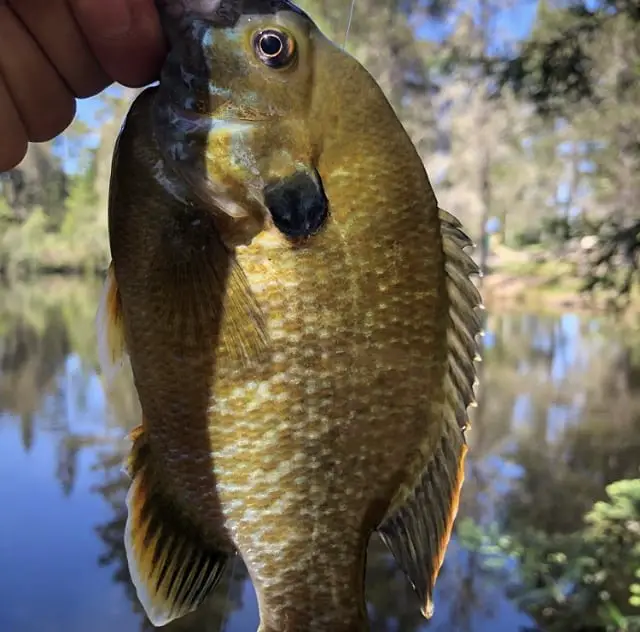
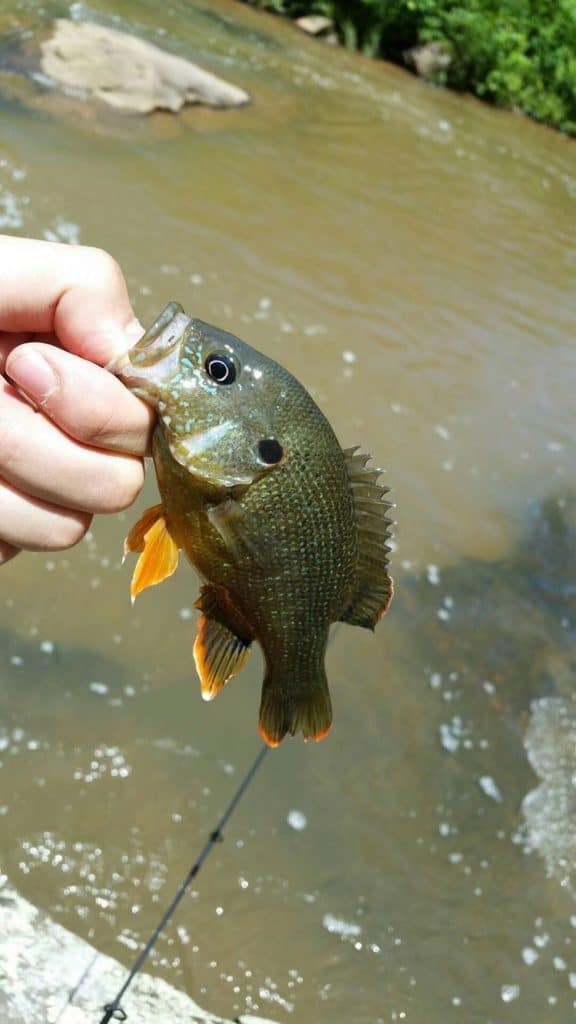
    Photo by bh_fishin on insta


    So yes, you can fish for and catch sunfish (panfish) at night. This includes bluegill, redear sunfish, rock bass, yellow perch, small bass, and small catfish. Predator fish can not see as well in the dark, and some are not active at night, so the above panfish (sunfish) will bite if presented with an enticing bait.

    If you can find a dock with fixed lighting, that would be optimal. If there is not one close then grab yourself a floating light. These are specifically designed for nighttime crappie fishing. Work your jig from just outside of the light range towards the inside of the glow. The light will attract small bugs and baitfish, which will bring out the sunfish. You may even catch larger ones than you would during the daytime. 


    For the rest of the article we are going to focus more on the bluegill, but everything we talk about will work on any type of sunfish. Bluegill are the most popular sunfish, also referred to as panfish. They are the most talked about and fished for. Bluegill respond best to small slow-moving bait. Worms, shrimp, minnows, and tadpoles. Believe it or not you can also use corn, bread balls, cheese, or cornmeal.

    It is debatable whether bluegill bite at night. Some anglers say they do not because they are so active during the day. Despite many variables that have to take place, other fisherman say that they do bite at night. Since bluegill are a popular food source for predatory fish, they prefer to and try to stay hidden at night. But if they feel safe, the bait is appealing enough, and it is close enough to them they will feed. They will not come out into the open.


    Minnows, active insects, and freshwater shrimp is the preferred diet for bluegill, and other species of sunfish, at night. Midges, moths, and mosquitoes are over populated after dark and will attract bluegill. Minnows and shiners will school up, to avoid being eaten. They are attracted to the insects on the surface of the water. 
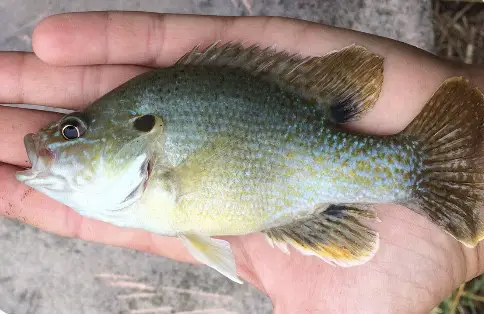
    Photo by Outdoorswithdixson on insta

    Walleye and catfish come alive at night and bluegill are one of their prey. So, you can understand why they prefer to hide at night. Bluegill are normally hunkered down in a group near dams and tree limbs. Sometimes they hang out around lily pads, waiting for the sun to rise. 

    Anglers have suggested that bluegill are more prone to feed at night, in the summer season. When the days get to their hottest temperatures, more of them will try to feed at night because they are trying to avoid the hot sun during the day. 

    Top 10 Tips

    There is no sure-fire way to catch any species of fish at night. It is trial and error, and sometimes just pure luck. Here are 10 tips that may help you in catching sunfish/bluegill at night.

    Live bait: with bluegill it is the preferred option. Because of the predatory fish, as stated above, they will not venture out to chase a lure. You have to place the live bait as close as you can to the safe haven. *Berkley PowerBait (paste) is almost as effective as live bait.*

    Fish tight to cover: docks, logs, vegetation, and dams are where you will most likely find bluegill at night. You are going to hav to find a way to get as close as you can to that cover if you want to have any chance of catching sunfish at night. 

    Be patient: even during the day, patience is a good tip, but more-so at night. Sometimes it can take a few hours and some luck, just to catch 1 or 2 bluegill. If the bait is exceptional and close, it may make it a little easier. 

    Artificial light: as mentioned earlier, light will attract the insects and other bugs that fish feed on, which inturn attracts the sunfish (or other fish) that you are fishing for. Again, floating crappie lights, dock lights, or even boat lights will lure in baitfish. For bluegill, cast our line right outside of the range of light. That is where they will hang out. 

    Don’t fish after 10 p.m.: Bluegill seem to be more active after sunset for a few short hours. But after about 10 at night, you will need to pack it in or fish for a completely different species of fish. 

    PIck the hottest day: bluegill will be more active after sunset, until dark, on the hottest days. They will be more likely to wait until it cools off a bit to come out and feed. But will not feed for more than a couple hours, because then some predatory fish become very active. 

    Burley or attractant: toss cornmeal in at night to attract bait fish and lure out the sunfish. You can also create a burley. This is where you chop up some bait (chum) and randomly throw it overboard to attract the bait fish. But be mindful, without a constant stream fish will lose the trail and then it is not effective. 

    Seek water without predators: if this is even possible; try to find areas with only bass and pike. These predators are inactive at night, making it easier to lure bluegill a little further out of hiding. Less danger is more attractive to the bluegill.

    Don’t skip deep water: yes, bluegill are deeper during the hottest part of the day but they can also hide in deeper water at night. Behind boulders or other structures.

    Calm nights: no wind, and calm waters are more likely to produce bluegill/sunfish after dark. 

    Best Time of Day/Night 

    During sunset and a couple hours before is the optimum time for bluegill. The bluegill are beginning to cool down, the insects are becoming more active, and the direct rays of the sun are diminishing. The bluegill do not like the bright sun so they will stay hidden in the shade (under docks) or deeper in the water. *Sunrise is the best time to catch them as well. Before it gets too warm out, they will be feeding. IF you can find a nice shady spot, then you will have great catching at anytime during the day*

    Other information 

    As we know, bluegill are part of the sunfish family and they are also referred to as panfish. A lot of anglers believe that bluegill are present for their value & as forage fish for bass and pike. Some even believe that without bluegill a lake can not produce trophy sized largemouth bass, as bluegill/sunfish are their main prey.

    Bluegill are a vital food source for many predatory fish. An average adult bluegill is about 6-8 inches long and can get up to as big as 2 pounds. If you are looking to catch large bluegill, your best option is minnows. Even though bluegill are not very big, they can be fairly aggressive towards other fish. 

    Final Thoughts

    With a little extra luck, and changing up the bait and presentation, you can catch many species of fish at night. Some later than others. Sunfish are best tried a couple of hours before sunset, and an hour or so after and then they are going to go into hiding. There are many species of sunfish (panfish) that this article applies to, but we chose to focus on the most popular bluegill.

    Some last minute reminders:

    If you find shade on sunny days, you will have a better chance of catching bluegill, during the day and especially at night you will need to fish close to the cover that bluegills choose. Docks can be a goldmine, as bluegill can hang out underneath in the shade during the day and use it for cover after sunset. Make sure you go light. You do not need a lot of equipment to fish for bluegill. A lightweight spinning or spincast rod/reel combo is perfect. 

    You are never too old to use a bobber. Sunfish (panfish) have small mouths and usually bite at the bait lightly, a bobber is extremely handy to detect these bites no matter what age you are. Also because of their small mouths, it is recommended that you use small hooks when fishing for sunfish/bluegill. This will also, almost always, guarantee that you will not tear the fish up when removing the hook. Most importantly, use live bait!! 1-2 inch minnows, mealworm, wax worms, night crawlers, red worms, grasshoppers, and crickets are just a few of the live bait choices. Sweet corn and small bread balls will work well too. 

    Adding a small split shot to your hook will get you to 2-3 feet off of the bottom, which is the prime spot for sunfish/bluegill. This also keeps smaller fish from snagging your bait before a sunfish can see it. So, with the fishing season fastly approaching it is time to get all of our equipment rounded up and ready to go. Bluegill are a great sport fish for any age, so make sure you take the kids out and form some great outdoor memories. They will have a blast catching bluegill after bluegill and you can get some great video and pictures of the pure joy and excitement on their faces. Until next time, Happy Fishing!

    P.S. I’d Love Your Support On YouTube
  • What Do Sunfish Eat In Ponds?

    What Do Sunfish Eat In Ponds?

    Sunfish have many different species, the most popular being the bluegill. They live in streams, lakes, and ponds. Some sunfish are better suited for ponds (and small lakes) than others. Please see our previous article on sunfish living in ponds. It explains which sunfish thrive in ponds, and which sunfish (and other fish) should not be put into a pond. Sunfish eat basically the same foods whether you have them in a pond or they are living in a lake. 


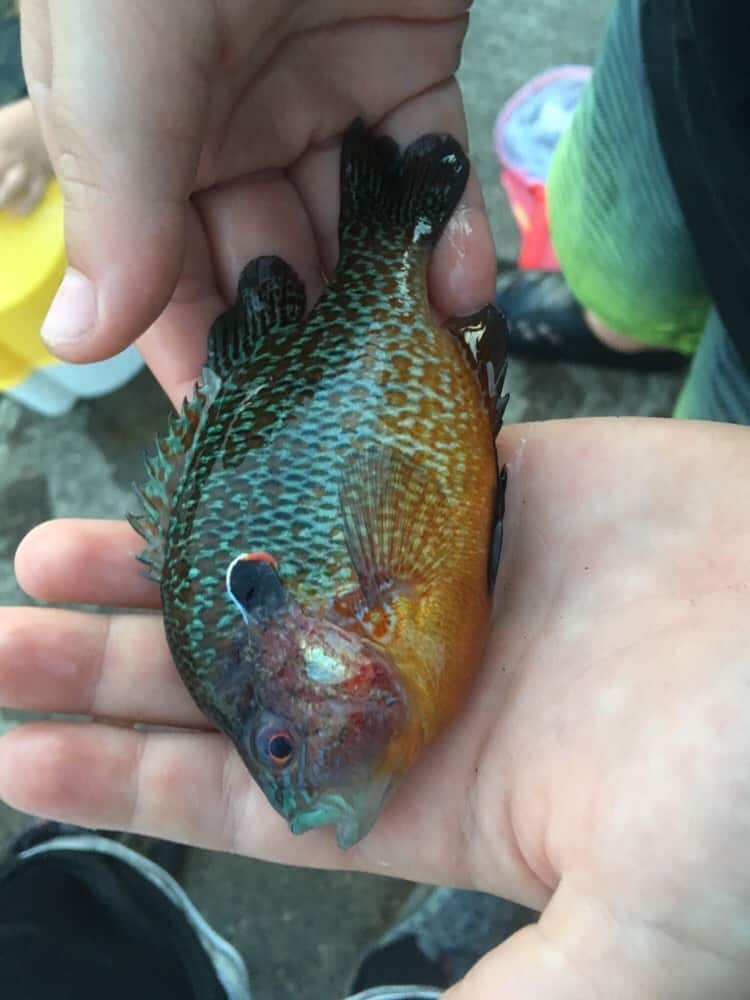
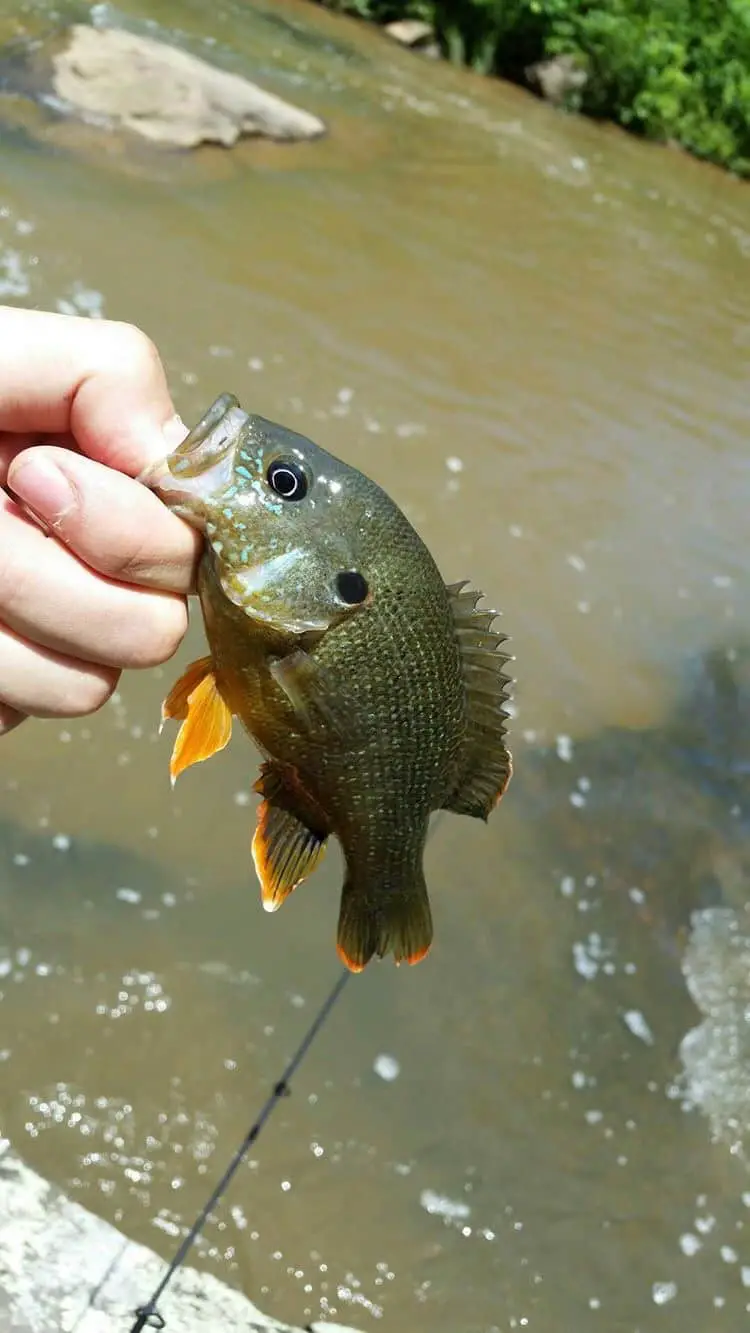
    Photo by Jon @jonnysal169 Insta.

    Sunfish eat: Insects, mosquito larvae, crustaceans, and crickets are favored by the sunfish with smaller mouths; like the pumpkinseed sunfish and the bluegill. The members of the sunfish family with the larger mouths prefer frogs, crayfish, minnows, and snails. 

    Sunfish, also called bream, are considered panfish. As mentioned above they are found in clear water, streams, ponds, small and large lakes. They can range in size from just a couple of inches up to a foot in length. Despite some of them having a smaller mouth, they do have a full set of sharp teeth. 

    Like a lot of fish, the sunfish will slow down considerably, in the winter months. But, they will eat when the food is available and presented enticingly. Their diets may change with the seasons and it may stay the same. Part of that will be determined by their environment. As the temperatures begin to rise they will feed more heavily. By May, the bluegills are spawning, which they do frequently.

    As with many other species of fish, they eat the most in the early morning and later in the afternoon/early evening. They are not very active during the heat of the day. The spring rain or an early winter snow fall will provide an outstanding food source. It washes insects and other food into the water. In the summertime the thunder will fluch insects from trees and other vegetation.

    Forage, other young fish, and minnows are the main source of food for sunfish in farm ponds and small lakes. The sunfish that are along the edges of farm ponds or creeks will feast on crickets and grasshoppers, especially in grassy areas. Many crayfish are too large for sunfish, with smaller mouths, to eat. Their young are the perfect size for the sunfish with the smaller mouths. Sunfish will also feed on molting crayfish. 

    It is not recommended that you do it very often, but if you have a pond with bluegill you can feed them human food scraps; such as small balls of bread, corn, and crackers. But remember, they prefer worms, insects, and zooplankton. Also keep in mind that some sunfish are also used as bait to catch the much bigger fish; such as walleye, catfish, and trout. 

    With the many species of sunfish, did you know that the largemouth bass and crappie are part of the sunfish species? Along with green sunish, small mouth bass, rock bass, and black bass. I didn’t know that either. As far as how many species o sunish, it depends on your location. In North America living in freshwater are 28 species. 

    How do you know if you have a sunfish

    There are 7 ways to determine whether you have caught a sunfish or something else. Most adults learned to catch sunfish as children, especially bluegill. But, sunish are often identified incorrectly.

    Here are 7 external parts of the anatomy that will help you determine and confirm that you have a sunfish.

    1. Mouth size compared to body size
    2. Upper jaw length compared to eye
    3. Opercular flap length
    4. Opercular flap color and margin colors
    5. Opercular flap flexibility
    6. Pectoral fin length
    7. Body coloration

    You can get a more detailed list online, that gives you specifics for 9 species of sunfish, particularly the colors to look for.

    If that all sounds like too much to try to figure out on your own, you can get the sunfish for your pond (or small lake) from a fish hatchery. But make sure you have researched and have decided on what type of sunfish you want to keep in your pond. Because with certain spawning habits you may need to add a largemouth bass or other predatory fish.

    This will keep the number of malnourished pond fish down. 

    Here are the top 6 most popular and largely found sunfish:

    • Green sunfish – 2 to 8 inches long and up to 2 pounds. They like warm still water such as backwaters of sluggish streams, small shallow lakes, and ponds. Favorite food: dragonfly, midges, beetles, and freshwater shrimp.
    • Longear sunfish – up to 9 ½  inches long and 1 pound. You can find this species in rocky and sand pools of creeks, rivers, lakes, bays, and ponds. These sufish primarily eat aquatic insects, crayfish, worms, and fish eggs. 
    • Mud sunfish – not actually a member of the sunfish family, but uses their name. They are a maximum 6 ½ inches long. The mud sunfish prefer sluggish weedy water that is 50 to 72 degrees. There is a recorded mud sunfish that was 8.3 inches long. 
    • Pumpkinseed sunfish – these are normally 4-6 inches in length but can reach up to 12 inches, and weigh up to 1 pound. They prefer vegetated and quiet small rivers, ponds, and pools of creeks. Their diet consists of crustaceans, ants, small salamanders, small fish, and water beetles. 
    • Redbreast sunfish – most abundant in the Atlantic Coastal Plain streams. These are 6-8 inches average length, but 10-12 inches is possible . They can weigh close to 2 pounds. These sunfish prefer deeper stream sections and vegetated lake margins. They eat aquatic insects, snails, crayfish, and small fish. 
    • Redear sunfish – these have white flakey meat and they fry up very nicely. The average size of a redear is 9 ½ inches and ½ a pound. But they can reach a whopping 4 ½ pounds. They love lakes, swamps, vegetated pools of small to medium rivers, and ponds. Their food choices are aquatic snails, amphipods, dragonflies, clams, fish eggs, and crayfish.

    There you have the 6 most popular sunfish (besides the bluegill) and their information to help you determine if any of them are what you are interested in stocking your pond or small lake with. Depending on the species, you have quite a few options on what you are going to be able to feed them.

    Best Areas for Ponds/Small Lakes

    If you are going to have a pond (or a small lake) the optimum temperature in the fall is going to be 68 to 74 degrees. The pond water will lose the ability to contain dissolved oxygen if the temperature reaches 85 degrees or above. The higher temperatures will also cause your fish to be more active which in turn uses up more oxygen. Be extremely careful if you live somewhere that gets extremely cold in the winter, as the pond can freeze and kill your pond fish. 

    You also need to know that many times plants will grow all the way across a shallow pond, which a lot of pond fish will enjoy. There, of course, will be little wave action and the bottom of ponds are usually covered with mud. During the colder months, the fish will usually hibernate down in the mud, coming up to feed occasionally.

    If you are looking for something besides a few sunfish, and a predatory fish to have in your pond you can check into Koi fish. Most of the sunfish can be in the pond with the Koi fish with no issues at all. This will give your friends, and family a variety of fish to admire when they come over to check out your pond. 

    When you decide to build your pond, there is one essential factor that we have not discussed, in any of our articles. Ponds can be freshwater, saltwater, or brackish. The type of water is going to determine what types of fish you can have in your pond. Most sun fish are freshwater fish, so if you choose to have a saltwater pond, you are going to have to do some extra research on the types of fish for that particular water choice. 

    Y

    Final Thoughts

    Whether you choose freshwater, or saltwater make sure to do the research and talk to the local hatchery to determine which sunfish is going to be the best fit for you and for your pond. But no matter what type of sunfish you choose, we have given you plenty of options as far as what their diets could consist of. 

    If you decide to construct a pond on your land, or you already have a pond with some sunfish, Koi fish, or other fish please send us a picture. We would love to see what you have done and how you have it set up. 

    Until next time, we hope you are keeping safe in this crazy world of chaos, and as always, since fishing season is upon us (time to get that gear and that boat ready to go) Happy Fishing.

    Here are some Human Foods that fish eat.

    P.S. I’d Love Your Support On YouTube
  • All About Fishing Rod Covers

    All About Fishing Rod Covers

    There are literally millions of individuals the world over who enjoy the pastime of fishing. Indeed, there is truly nothing better than getting out into the water, casting out the perfect line, and watching the fish biting with the sun shimmering off the water.

    Naturally, there are many different products associated with this sport that can help improve your chances of landing that perfect fish. Such things as fishing lures, baits, and even clothing accessories have all become part and parcel of the fishing pastime.

    One of the things you should probably add to that list would be products that will help protect your fishing lines, such as fishing rod covers. Indeed, there are many different examples available, and here is some extra information to consider: 

    Fishing rod covers are very important. 

    You shouldn’t diminish the importance of fishing rod covers. They provide your fishing rod with the protection to keep it lasting as long as possible. First of all, they protect the rods from blemishes that can occur from being stored in rod storage lockers.

    Along these same lines, they help protect the fishing rod from getting hung up with other rods while they are in storage. Finally, these rod covers can also help keep lures from getting hung up in your rod as well. Considering how expensive fishing rods can be nowadays, these rod covers are definitely worth the investment. 

    You can purchase fishing rod covers on Amazon. 

    If you are reading this and nodding your head in agreement, then you aren’t the only one. Indeed, Amazon has so many products that it can even get a bit overwhelming, even with fishing rod covers. How do you differentiate between the good and bad when it comes to fishing rod covers on Amazon? Here are some tips: 

    Comparison shop for fishing rod covers

    That’s right. Don’t look at just one listing. You should not only look at the pricing, but you should also examine all of the fine details in order to determine if this is the right rod cover for your equipment. 

    Read Rod Cover reviews

    Y

    Once you have zeroed in on a particular product, then you should read the reviews of the seller in question. One good personal rule-of-thumb that I abide by would be to only go with sellers that have a rating of at least 4.5 stars or above.

    Additionally, I will also read the negative reviews anyway just to get the full picture. Additionally, you should take into account whether some of the positive reviews have poor English. Although not always, this could mean that the reviews are fake. 

    Don’t hesitate to look at the “Question and Answer” section for rod covers.

    This is pretty self-explanatory. You should read the “Question and Answer” section in order to fully determine if the fishing rod cover will meet your specific fishing needs. 

    You can actually get customized rod covers as well. 

    The next point to consider when it comes to protecting your fishing rod equipment would be to realize that it by no means has to be boring. Indeed, if you look in the right places, you can even find rod socks that are fully customized just the way you like it!

    All you have to do is make a Google search with a search term consisting of something to the effect of, “customized fishing rod socks”. A cursory glance of the results of this search term shows at least a half dozen fishing rod companies that offer this service, and that is just on the first page.

    Additionally, there are also several tutorials available showing you how to make a customized fishing rod sock on your own. Consider some of these ideas: 

    Consider making fishing rod covers yourself.

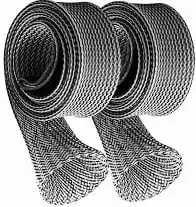
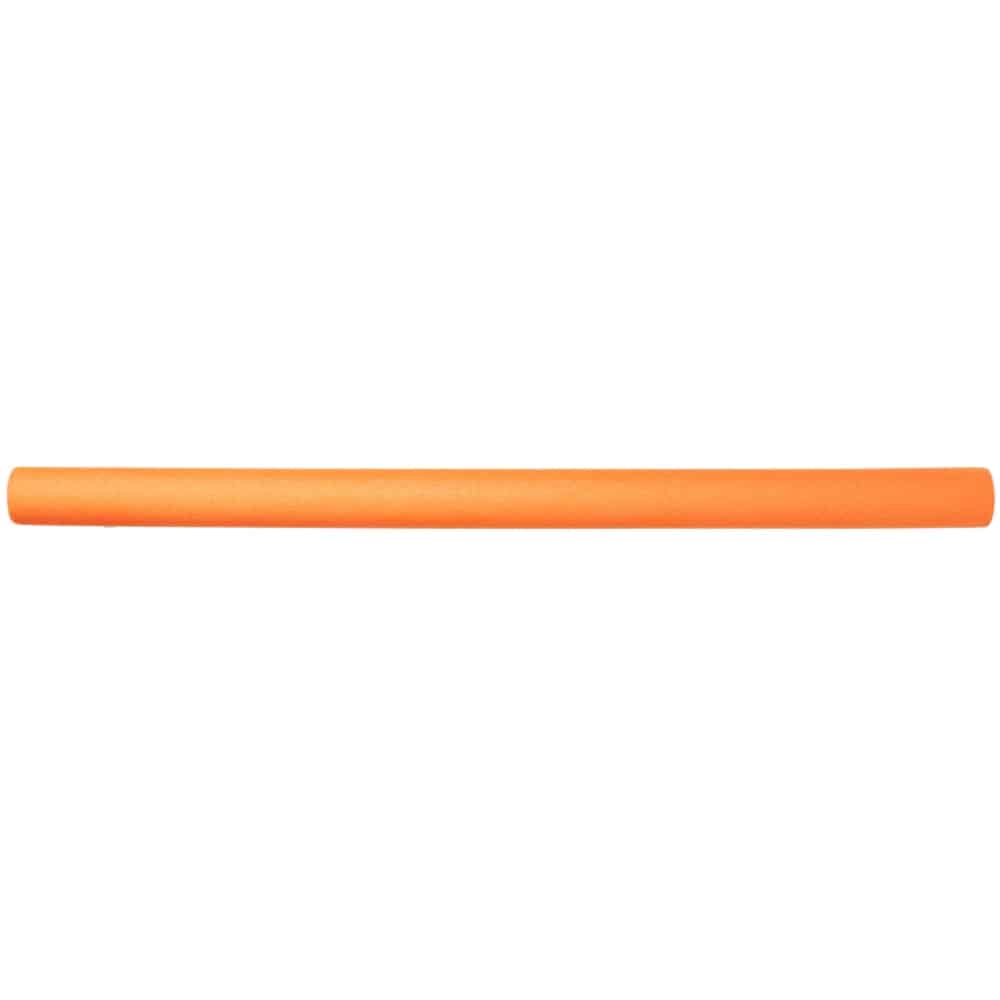
    Tip: Try cutting a pool noodle longways and popping your rod in as a DIY rod cover.

    All you have to do is gather all of the needed materials (braided sleeving, pliers, sharpies, lighters, scrapwood, braided fishing twine, elastic, rubber mallets, hammers, a hot knife, and scissors) and then follow the steps to put all of the materials together. 

    If you aren’t comfortable making it yourself, consider asking around. 

    If making things yourself isn’t your thing, you can definitely ask around at your local bait shop or sporting goods store. Alternatively, you could ask around on social media to see if anyone could make you a customized fishing rod sleeve. 

    You should think about getting the Rod Glove. 

    One of the best products out there for protecting your fishing equipment would be the Rod Glove.

    This is because it consists of neoprene, which is known for having durable materials that are flame resistant, resistant to oxygen degrading materials, able to resist ozone difficulties, and able to withstand oil pollutants as well.

    The Rod Glove is also made with high tensile materials, making it the best investment for a rod locker storage and for helping your rebound after a rod disorganization incident.

    Additionally, the Rod Glove company has examples that will fit almost any size fishing rod, up to 8″ in length. They pride themselves in having one of the best rod sleeves on the market today. 

    You may want to consider cloth fishing rod sleeves. 

    Finally, there are many reasons why you might want to give cloth fishing rod sleeves a try. First of all, they are great if you are on a limited budget. Under normal circumstances, a fishing rod sleeve will generally set you back about seven or eight dollars.

    However, the beauty of a cloth fishing rod sleeve is that they are usually only four dollars or less. Additionally, a cloth fishing rod sleeve will usually be considerably more lightweight than other examples. They are also surprisingly durable and will function every bit as well in a rod locker as other brands.

    Of course, they have their limits. Many of these cloth fishing rod sleeves will only go as high as a 7-foot fishing rod. However, this option will definitely be a good buy if you are in a pinch and want to have something to protect your rod until you can get a better brand. 

    Whatever option you decide to go with, you owe it to yourself to find a good rod sleeve. Your fishing rod will last for many more years just by the simple act of placing it in a rod sleeve. Happy fishing! 

    P.S. I’d Love Your Support On YouTube
  • What Size Hooks To Use For Sunfish? (The Quick Answer)

    What Size Hooks To Use For Sunfish? (The Quick Answer)

    Here are some size 8 hooks that should be just right for sunfish.

    When buying fishing hooks you need to remember that they are referred to by number. The smallest fish hook size is a 32 and the largest is a 19/0. Hook sizes range from 32 to 1, the larger the number the smaller the hook. For hook sizes 1/0 (called a one aught) to 19/0, the larger the number the larger the hook. 

    What size fish hook do you use to catch sunfish? Depending on the species of sunfish will determine the size of hook that you are going to need. Rock bass, redear sunfish, green sunfish, and others have a larger mouth than bluegill; therefore you can choose a bigger hook. For bluegill (and pumpkinseed) you will want a size 8-12. 

    To keep the little kids interested you have to help them reach almost instant results. To do this you need to keep it simple; bobber and bait. The perfect fish for them to catch is the bluegill. THey are usually hanging around the end or edges of the dock. The biggest issue is unhooking and releasing the little fish. 

    Image By @bh_fishin on Instagram

    Some of them may swallow the hook. Instead of using pliers and wrenching the hook out of its stomach, try using a circle hook. More specific; an Eagle Claw “Circle Bait” size 12. These circle hooks will hook the jaw of the sunfish/bluegill. Making them easy to remove from the fish. Pair this with a live worm and a slip-bobber rig and the ids will be occupied for hours. FYI: make sure the circle hooks are non-offset. The hooks with off-set points will gut hook a fish every time. 

    Bluegills seem to get more attention than any other sunfish. But there are redear, green sunfish, blue sunfish, longear sunfish, and many many others. In most of the lakes you can find a variety of sunfish species. In the South there are redear (shellcracker), bluegill, green sunfish, and redbreast sunfish. All but the bluegill will take a larger fishing hook. Usually a size 6 to a size 8 is the best for the larger mouthed sunfish. 

    Look for sunfish in rock cover, weeds, and brush in shallow water. In the winter they will suspend in warmer deeper water. Bluegill spawn many times between June and October. Most other sunfish only breed/spawn once a year. They usually make their spawning beds in shallow water. The spawning beds can be easily seen in clear environments. The beds are normally on hard bottoms like sand or gravel and in the back of protected pockets or coves. 

    Best Baits to Use for sunfish / Bluegill

    Depending on the bait you are using there are a variety of baits that you can use to catch sunfish/bluegill. Earthworm and nightcrawlers are the traditional bait and most popular with anglers. Sunfish/bluegill are not picky, they will nibble on just about anything. Grubs, crickets, and even small balls of bread can catch them. Yes, I said balls of bread! There are a few artificial lures that will work on sunfish too. Dry flies, and small spinners, spinner-bait and jig-spinner combinations. The larger the sunfish species, you can use lures that are meant for bass. Although it will be hit and miss on catching the bigger sunfish species. 

    Important Tackle for Sunfish

    Ultralight spinning, fly casting, cane poles, and certain long fiberglass poles are all tackle that will work for catching most any sunfish species. You can keep it simple. There is no need to get extravagant equipment. 4-pound test line on a 12-13 foot pole with a split-shot, hook, and bait is all you need. IF preferred, you can also add a bobber, especially for the kids. 

    Places to find Sunfish Species

    Look to the border of California and Arizona for approximately 40 miles of perfect redear sunfish that top out at 3-5 pounds. Lake Havasu is home to many fish, including; striped bass, largemouth bass, smallmouth bass, and world record redear sunfish (shellcracker).

    In 2011 there was a mammoth 5 pound 8.8 ounce shellcracker snagged. In 2014 it was knocked off the top by a 5 pound 12.4 ounce shellcracker, holding the current record. Many anglers believe there are redears in Lake Havasu that are over 6 pounds. 

    What about giant bluegill? Is it possible to find them? To catch them? It can be done, with a different approach/technique than what you use to catch the smaller version. Here are some tips to help you find and catch the trophy-sized bluegill.

    The first thing you need to do is look deep. The trophy sized bluegill remain deep, except to spawn. When they stay deep they are safe. You will need to focus on outside weed edges and areas that provide transitions in bottom composition. It is recommended you use slender, heavier spoons to reach the bottom quickly.

    The second best thing you can do is go off of the beaten path. Explore where boats with outboard motors can not go. A good tip is to use Google Earth and locate the waterways that no other anglers are fishing. Use a kayak or a canoe to get to these areas. The fish will be less cautious about approaching your bait, as they don’t get many visitors in these areas. 

    The third and final tip is to keep it fresh. No matter what type of live bait you are using, keep it fresh. If your nightcrawlers, leeches, and minnows are healthy and active they will attract the bigger bluegill. During the summer months you need to keep your bait cool. Use aerators or insulated coolers to maintain a healthy oxygen level. 

    Where to fish for Sunfish

    Keep in mind the time of year. Early to late spring and early summer sunfish will be getting ready to spawn. When the temperature reaches the mid-60s the sunfish will build their nests. When it hits 70 degrees, spawning will begin.

    During spawning large fish are easy to find. Search for the spawning beds, easier to find in clear water. In the south, some of the sunfish will spawn all summer, but it will still peak in the late spring/early summer. Finding small sunfish is pretty easy. Most underwater structures near the shore are where they will be hiding. 

    Fishing Giveaway 2020

    Larger fish are typically 8-12 feet deep. They will feed in the shallows 1-2 hours before sunset and after sunrise. Sunfish prefer to feed in areas such as; underwater grass beds, fallen logs or branches, and weeds. 

    In order to maximize your chances of catching sunfish try to hit the lake in the early morning or late afternoon. Use cricket when the fish are feeding in the shallows. Be mindful of the fact that redear do not come to the hallows as often as other sunfish. They tend to stick around in deeper water. These types of sunfish prefer underwater snails and mollusks. That is how they got the nickname ‘shellcracker.’

    You can also try fishing under dock lights at night. This may result in some of the best and biggest bluegills. Please be sure to make sure that fishing with dock lights is not prohibited in the area. Also check for the daily limit on bluegill (or any other species you will be fishing for). 

    Final Thoughts

    Always remember that the biggest hooks have the smallest numbers. If you use dull hooks or do not match the hook size to the species that you are fishing for, it can cost you countless catches. Use smaller, circle hooks for fish that have smaller mouths. This will prevent the hook from getting wedged in the fish’s gut. Use the bigger hooks for the bigger mouthed fish (catfish, small and largemouth bass, swordfish, etc..). 

    Always have a pair of pliers in your tackle box, because there is a chance that a fish can swallow a hook, whether it matches the catch or not. Never forget to check all rules and regulations for the area you are going to be fishing. Make sure you also check the daily limit for catch and keep. 

    The smaller sunfish, especially the bluegill, are the most fun to catch especially for children. Keep it simple, there is no need to have complicated and expensive equipment. 

    Let’s go buy some hooks, in different sizes, and head to our favorite fishing spot in search of some sunfish big or small. Remember, 10 to 20 sunfish of 7.5 to 9 inches makes for a perfect fish fry or meal for 4. Happy fishing everyone!

    P.S. I’d Love Your Support On YouTube

  • Are Sunfish Good For Ponds?

    Are Sunfish Good For Ponds?

    Sunfish; they are a family of freshwater fish. Sunfish are not an actual species of fish, but an entire group of fish that are found all over the continent. There are many many sunfish species and hybrids that are spread all over North America. Sunfish are extremely popular and are one of the most loved species by anglers. 

    The big question that we are going to answer for you today; are sunfish good for a pond? Essentially sunfish are perfect in ponds and small lakes. But if you are going to put sunfish in your pond there are 2 things that you need to do: 1. You will have to have 1 predatory fish, like a largemouth bass, in the pond. 2. Make sure you are stocking the species of sunfish that you desire.

    Photo by @kyle_t_Sanson on Instagram

    Having a predatory fish in your pond, alongside your sunfish, ensures that you will not end up with an overpopulation of malnourished fish. When there are no predatory fish around, the sunfish will reproduce quickly. Having the predatory fish will guarantee that you have good quality healthy fish. 

    Picking the Species for your Pond

    We are going to provide you with an overview of some of the species of sunfish. But remember, there are many species and hybrids. These are 4 of the top species. If you do not want what we have researched, or if you want something a little more rare, then you can look up species of sunfish and find all the information you need on most species. 

    1. Bluegill: the most popular and best suited species for a pond. Adult bluegill will be between 3.5 and 10 inches long. Bluegill prefer to spawn where the bottom of the pond (or lake) has gravel, sand, or muck. Bluegill thrive on vegetation. They will spawn several times over the course of the summer months, hence the need for a predatory fish. You do not want your pond filled with malnourished bluegill.
    1. Redear Sunfish: also known as shellcrackers, are similar in size and shape. They are also related to the bluegill. The redear is also an excellent choice to have in your pond. These fish are most recognizable by the red spot on the back side of the gill cover, on the male. The female has an orange spot. The adult redear will be between 3.5 and 9 inches long. 

    Here are a few differences (and similarities) between the bluegill and the shellcracker.

    • Shellcrackers are structure oriented and bluegill will frequent open waters
    • They both will consume small aquatic insects and other similar bait
    • Shellcracker prefer snails or mollusks
    • Shellcracker only reproduce once per season, less likely to have overpopulation in a pond, with a predatory fish
    • Both fish like to reproduce among sand and gravel beach areas
    • They can both be stock in the same pond, together and can even reproduce to create a hybrid. 
    1. Pumpkinseed Sunfish: these can be found in Central and Northwestern USA, but are also suitable for small lakes and ponds. They will grow to approximately 8 inches long. Pumpkinseeds are typically found in warm, calm ponds and lakes with plenty of vegetation. They will feed at all water levels, with the heaviest feeding happening in the mid-afternoon. Pumpkinseeds prefer insects, mosquito larvae, small mollusks, and crustaceans. 
    1. Longear Sunfish: adults can reach 9.5 inches long and 1.2 pounds. Their habitat consists of densely vegetated shallow waters in lakes, ponds, and streams. They feed on small fish, insects, and aquatic invertebrates.  Although you can keep them in a pnd, most longear sunfish are found in streams as they prefer and are better at catching their food in moving waters. Females can produce up to 4,000 eggs at a time, in which the males will then tend to the eggs until they hatch. 

    For New (and existing) Ponds

    It is suggested to avoid stocking diseased fish or fish not suitable for a pond. The best way to avoid these situations is to buy your fish from a reputable hatchery. Some sunfish, such as the green sunfish, do not belong or do well in ponds or small lakes. 

    When buying fish for your pond, your largemouth bass should be 2-3 years old and about 12 inches long. Bluegills will spawn several times between May and October, which will be the main food source for the largemouth bass. Within 3 years your bluegill should be approximately 5 inches long. 

    Redear sunfish grow faster than bluegill, usually reaching 6-7 inches in 3 years time. Redear, as stated before, do not spawn as often as bluegill. So if you are only going to house redear sunfish it is not necessary to have a predatory fish. You will be less likely to have overpopulation with redear sunfish. If you do decide to get the predatory fish, you will need to keep extra food on hand for it. 

    It is recommended that you stock sunfish in late summer to early fall. This allows the fish to grow enough to spawn in the spring of the following year. You can harvest the sunfish after 1 year, but it is suggested that you wait 2 years to harvest the bass (or other predatory fish).

    Fish that are NOT good for a Pond

    Some fish that you definitely NOT stock in your pond or small lake; crappie, green sunfish, bullheads, and yellow perch. This is because they usually become overpopulated and stunted. Plus, they don’t do well if you have kids/grandkids that like to play in the water. The green sunfish have a tendency to bite. 

    Other fish that you want to avoid putting in your pond or small lake;

    • Carp and suckers, they stir up the bottom of the pond keeping it mucky
    • Flathead and blue catfish because they will consume your sunfish population
    • Threadfin shad and gizzard are also not recommended for a pond because they become severely overpopulated.

    Final Thoughts

    One final suggestion: after you purchase the fish for your pond you will need to gradually introduce them to the pond water. This is because the pond water and the hatchery water are different. If you just dump the fish from the hatchery storage container into the pond, they are likely to die.  Just like when you buy fish from the pet store, and you take it home, you have to put the bag that the fish came in down into the fish tank water to get it the same temperature. That way the fish are less likely to die. 

    So, when you bring home the shipping container with your pond fish, put a little bit of the pond water into the shipping container. Do this a couple of times over the next half an hour. This will get your sunfish adapted to the pond water, slowly. Then you can lower the shipping container down into the pond and allow the fish to swim out into the pond on their own. 

    There you have it! The information that you need, if you are wanting to add sunfish/bluegill to your pond or small private lake. Again, if the sunfish we mentioned isn’t quite what you are looking for, you can do some extra research on your own or even contact a local hatchery to see what they have and what they recommend. 

    Y

    One thing that I did forget to mention is that you CAN put sunfish in with your Koi fish. So if you have a gorgeous Koi pond and you are wanting to add a little something to it, why not a couple little sunfish/bluegill or even a shellcracker? I didn’t look, so you may want to. Can you have a predatory fish in with your Koi fish? That may be another topic for another day! 

    What are you waiting for? Go out and pick out some fish for your new pond or your private lake. Something that you and the family can enjoy and something that you can show off to your fishing buddies (because they aren’t allowed to fish for them).  Wouldn’t it be awesome, and kind of comical, to be the envy of your fishing buddies? The kids’ friends would want to come over to the house all of the time to look at (and try to play with) your sunfish. 

    Happy pond building everyone. We will be back soon with some more amazing articles on sunfish, so keep your eyes open!  

  • Can You Fish At Lake Las Vegas? (The Secret Way)

    Can You Fish At Lake Las Vegas? (The Secret Way)

    Las Vegas is located in the southern tip of the state of Nevada. It is a city known for its gambling, neon lights, and vacationing tourists visiting hotels and trade shows. 

    Get live Striper and bass bait HERE – worms too.

    All of the fun in the sun in Las Vegas can be quite exciting, quite exhilarating, but what if you are the type of person that just wants to get away from it all and relax? Las Vegas is located in the desert right? That’s right it is located in the desert. Don’t let that stop you from getting away though. I have lived in Las Vegas all my life and I have no problem staying away from the glitz of the downtown casinos or the lights up and down the Las Vegas strip. Some of us just like the solitude and the fun of getting away and experiencing nature. 

    I have heard people ask the question, is there anywhere to go fishing in and around Las Vegas? I suppose that’s a good question if you don’t know anything about the area especially considering that the idea of that much water being anywhere around in the desert seems quite unlikely. The answer, however, is yes. 

    There are plenty of places around Las Vegas to go fishing. This article is going to cover only one of those places although I have other articles and videos that I have made that answer the more broad question.

    Can you fish on lake Las Vegas Nevada?

    The place we are going to focus on today is lake Las Vegas Nevada. Believe it or not, as long as Lake Las Vegas has been around, it still remains a mystery to most people even those who live in Las Vegas whether or not you can fish At Lake Las Vegas. 

    The answer to that question is yes you can if you live there, or if you are staying at one of the hotels on the lake, or if you know someone who lives there who will fish with you or allow you to fish there.

    Lake Las Vegas is a private lake surrounded by private homes and casinos as well as commercial buildings.

    [ninja_tables id=”80473″]

    It is a 320 acre lake privately built and finished in 1991. Las Vegas wash runs underneath it and if you want a nice place to visit there are many casinos and amenities around the lake including golf, boat rentals, a 4 mile walking trail, concerts by the lake, and other activities. You are not allowed to put a personal boat in the lake but you can rent one of the boats on the lake and fish from that if you’re staying at one of the hotels or if you know somebody.

    You will find that the lake is mostly filled with Carp and Bass. Most people who have fished there say that they have the best luck fishing with black, purple, and watermelon colored worms and jigs. Heres a little fishing kit to get you started.

    As with all places in Nevada, you must have a fishing license to fish there. And the lake is a catch and release lake only.  https://nevada.licensing.kalkomey.com/

    Hilton lake Las Vegas https://www3.hilton.com/en/hotels/nevada/hilton-lake-las-vegas-resort-and-spa-LASLKHF/index.html?SEO_id=GMB-HI-LASLKHF

    Westin lake Las Vegas https://www.marriott.com/hotels/travel/laswi-the-westin-lake-las-vegas-resort-and-spa/?scid=bb1a189a-fec3-4d19-a255-54ba596febe2

    And The Village at Lake Las Vegas  https://thevillagelakelasvegas.com/(by the way I worked on that as a Plasterer back in the 90s) 

    Y

    Are the casinos you will find near the lake. I will leave a link so that you can contact them if you would like to schedule a reservation so that you can fish on the lake.

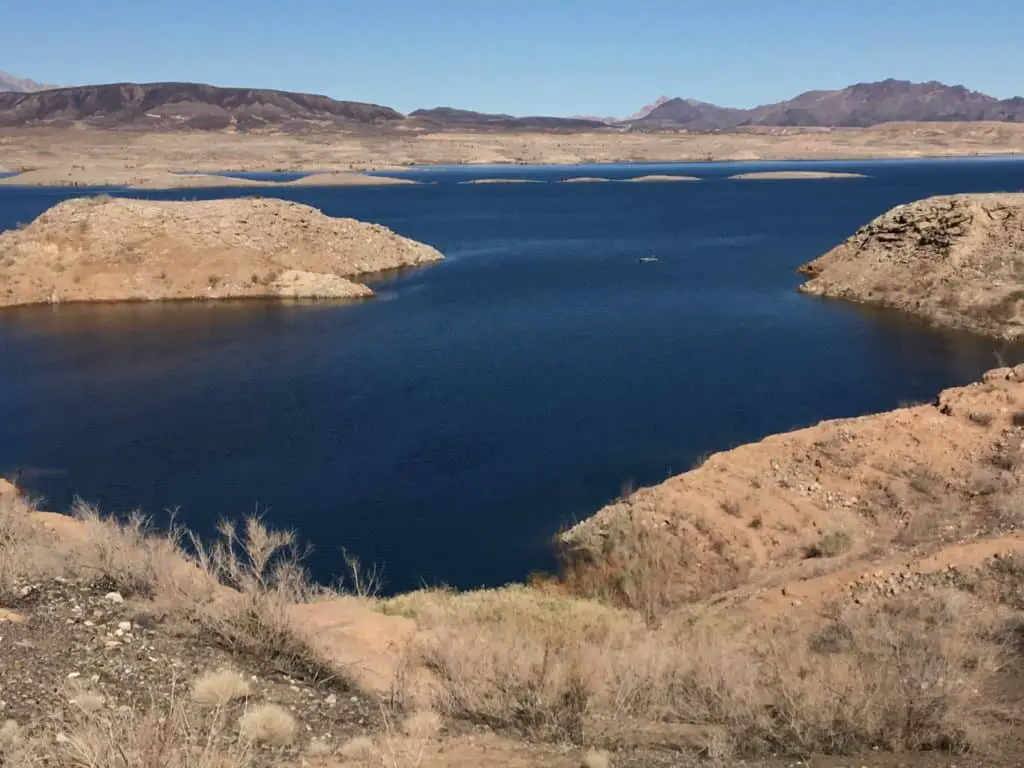
    If you don’t know anybody that lives at Lake Las Vegas or if you do not want to stay at the casinos, just keep in mind that Lake Mead is only 10 minutes away and you can fish there even if you don’t know anybody. Lol. 

    P.S. I’d Love Your Support On YouTube

  • Best Fishing Spots In Oklahoma 

    Best Fishing Spots In Oklahoma 

    Oklahoma Fishing

    Located in the South Central region of the United States, Oklahoma is bordered by Texas, Missouri, Arkansas, and Kansas. There are over 1200 square miles of water that offers some of the best fishing opportunities. Oklahoma boasts over 200 dam created lakes and has the nation’s highest number of artificial reservoirs. Oklahoma is the 28th most popular state. So get your fishing rod and lets explore.

    Oklahoma is a warm water fishing state. Among the lakes, ponds, streams, and rivers you can fish for a large variety of species. This list includes; largemouth bass, smallmouth bass, walleye, stripers, crappie, catfish, saugeye, and more. Lake Tenkiller, Lake Eufaula, and Vinita State Park are a few hotspots that we will cover more in depth where fishing reports are awesome.

    I want to start by telling you what some of the lakes are known for and then we will delve deeper and reveal the 5 best spots and what species you are able to catch. I will also cover fishing permits, cost, safety precautions in some areas, fishing gear, and more. 

    These six lakes are among the best fishing lakes in Oklahoma.

    1. Lake Tenkiller is considered the prettiest lake in Oklahoma
    2. Lake Murray State Park in Ardmore, OK is considered the clearest lake
    3. Broken Bow Lake is the deepest lake in Oklahoma at 185 feet
    4. Talawanda Lake is the oldest lake in Oklahoma (1902)
    5. Lake Texoma (bordering Texas and Oklahoma) is the biggest lake, with a water volume of over 2 million acre-feet.
    6. Lake Eufaula second largest lake in Oklahoma with water volume of 2,099,000 acre-feet

    Two major rivers in Oklahoma: Red River and Arkansas River. Both of these rivers flow into Oklahoma from all six of the neighboring states. 

    Oklahoma major bodies of water in surface area are: Lake Eufaula at 105,000 acres and Lake Texoma at 88,000 acres. 

    Flood control, water supply, recreation, fishing, and wildlife are just a few of the reasons for all of the lakes around the Oklahoma area. 

    Oklahoma Fishing License and Cost

    Of course any place that you go fishing requires you to have a fishing license as long as you are over the age of 16. If you are a resident of Oklahoma an annual fishing license will cost you $25. If you are a non-resident then you are going to pay $55 for an annual fishing license. A 2-day license for residents is $15 and a 6-day license for non-residents is $35. If you are under the age of 16 years old, you will not need to purchase a fishing license. There are 2 days a year, within the first week of June, that are FREE. For 2020 the date is June 6th and 7th. As always, please make sure you grab a fishing regulations booklet. It will provide you with all the rules, regulations, expressions, statewide daily size and limits. 

    More Of The Best Fishing Spots In Oklahoma

    Hunting, Harley’s, and Fishing are a way of life in Oklahoma. There are so many beautiful lakes to choose from, one will have a hard time deciding where to visit/vacation. Unless you have friends or family that live in the area, the internet will become your best friend as you plan your fishing trip to Oklahoma. That is the best way to find out all of the information that you can like where to catch your PB Rainbow Trout.

    Click to tweet


    Some anglers in the state consider the following places the best 5 in Oklahoma. 

    1. Vinita Lake Park in Vinita, Oklahoma.

    This was formerly known as Bull Lake. Vinita Lake is 45 acres in size and offers anglers the challenge of catching bass, crappie, and catfish. The lake has a maximum depth of 8 feet. Because of this, and for the safety of all fishermen, gas powered motors are prohibited. Though you are more than welcome to use kayaks, canoes, and 10-foot bass boats with electric trolling motors. Vinita Lake Park is located 3.3 miles Northeast of downtown Vinita. The daily limit for black bass is 6 with only 1 being over 16” long. There is also a limit of 6 for the channel catfish. Vinita Lake Park is a premier fishery of largemouth bass. There are boat ramps, fire rings, and picnic tables. But unfortunately there is no camping on site. Here is a link for more info about Vinita Lake Park.

    1. Medicine Creek, Medicine Park Oklahoma.

    Even when the trout are not biting, you can enjoy the scenic and peaceful sitting/view. This creek runs through the middle of Medicine Park, a “cobblestone resort community”.

    Besides fishing you can enjoy swimming, beautiful views, and a scenic walking trail. At gorgeous Medicine Creek there is a designated trout area. It is located downstream from Gondola Lake Dam. This creek is regularly stocked throughout the winter, so you should have a blast when fishing the area. Granite rocks line the banks of the cree, making it easily accessed by all. Trout season at Medicine Creek is from November to March 15th. With trout being able to survive in cold water, Medicine Creek is stocked every 2 weeks. There is a 6 fish daily limit of any size. In Medicine Creek the trout like to hang out around waterfalls. 
    Here is a link for more info.

    1. Lake Eufaula State Park, Checotah, Oklahoma

    This lake is listed as one of the hottest fishing spots, along with a premier vacation spot. At Lake Eufaula you will have the chance to catch crappie, sunfish, bass, walleye, and catfish. There is even a kids fish pond for the youngsters who are not quite ready for the big lakes and bigger fish. Lake Eufaula boasts a tackle shop and marina. When it is chilly outside, there is an enclosed fishing dock that is free to use. It is 2,853 acres located Southwest of Checotah. There is approximately 4,458 square miles to find all the fish that you desire. There are also campsites that can be reserved, tent camping, 18-hole golf course with pro shop and putting green, indoor and outdoor fishing dock just to name a few amenities. You can try your luck with blue catfish, channel catfish, white bass, crappie, sunfish, and largemouth bass. The lake is 102,400 acres of very promising fishing. 

    1. Bernice Area at Grand Lake State Park

    Grand Lake is probably one of the best known lakes in Oklahoma. It is one of the top bass fishing lakes in the country. In 2016 they hosted the Bassmaster Classic. There are 1,300 plus miles of shoreline. Small and bass, crappie, multiple varieties of catfish, and hybrid striper are available for a good challenge. Located in Delaware County, Bernice State Park is 88 acres in size. Located close to Bernice, Oklahoma in the Northwest corner of the Grand Lake O’ the Cherokee. Grand Lake boasts the biggest population of spoonbill/paddlefish in the United States. There are 10+ professional fishing guides ready to show you the beauty of the Grand Lake, the hotspots around the lake, and how to catch the most fish possible in a day. Not only can you enjoy tremendous fishing but you can also take advantage of camping, cooking out with friends/family, and just enjoying the beauty of the water and its surroundings. Bernice State Park also has a playground area, boat ramps, shelters, trails, and a nature center. Bernice State Park is also called the “crappie capital of the world”. 

    1. Lake Tenkiller

    Imagine 13,000 acres of water and over 130 miles of shoreline. Not to mention 70 miles of floating and 8 miles of trout fishing. At Lake Tenkiller not only can you fish for large and smallmouth bass, channel catfish, white bass, and spotted bass, you can also enjoy the following;

    • Scuba diving
    • Camp
    • Hiking
    • Golf
    • Water sports
    • Hunting
    • Scenic nature

    Lake Tenkiller has 3 floating restaurants, 24 boat ramps, and many islands to see. Anglers say that this is a water paradise with fishing all year round. In the river below the dam you have a shot at catching striped bass, bream, walleye, and trout. If you prefer to fish in colder winter months, there are 3 heated fishing docks. Lake Tenkiller also offers man local resources to guide you in finding the best areas to fish. The current state record was set by a gentlemen back in 1996. He was from Gore, OK.

    Other Lakes in Oklahoma

    There are many many other lakes all over Oklahoma that also have excellent fishing and amenities. You will have a hard time deciding on where to go. 

    There is the ever popular Lake Texoma. On the border of Texas and Oklahoma. You will need to make sure that you have the proper state fishing license. If you are fishing on the Texas side, then you will need a Texas license. If you are fishing on the Oklahoma side, then make sure you have an Oklahoma license. To be on the safe side, you could purchase both. You have ample opportunity to catch trophy sized blue catfish, smallmouth bass, largemouth bass, crappie, gar, and paddlefish.

    Also available in the Sooner state:

    • Flint Creek
    • Quanah Parker Lake
    • Deep Fork River
    • Glover River
    • Broken Bow Lake
    • Upper Mountain Fork River

    Facts about Oklahoma Fishing

    In 1974, the state of Oklahoma declared the white bass the state fish. This was to aid in representing the importance of lakes and sport fishing within the state. You can find the white bass in lakes and rivers all over the state of Oklahoma.

    There are 20 different species of fish located in the Oklahoma lakes and rivers. Among them are the small and largemouth bass, striped bass, spotted bass, and hybrid bass. There are also 3 different species of catfish; channel, blue, and fathead. Not to mention white and black crappie among many others. 

    Oklahoma has over 1 million surface acres of water, with more man-made lakes than any other state. 

    Final Thoughts

    Y

    There you have it folks! The abundance of lakes and amazing fishing in the beautiful state of Oklahoma. You can hunt and catch a large variety of fish. The bad news,  we didn’t mention even ¼ of the fishing spots in Oklahoma. So, you may have an easy decision on vacationing in Oklahoma but not where you are going to stay or fish while you are there. We have given you the top 5 lakes that anglers from the state recommend. We also provided you with a list of some of the other lakes around the state. Now it is your job to do just a little more research, and pick one ( or maybe 3).

    Oklahoma is an exquisite state all year round. The weather begins to warm and the leaves begin to change in mid- March. So you can beat the fishing rush, by vacationing a little sooner in the year. 

    There are many attractions to see and places to visit. You may just have to stay for the whole summer and then you still won’t  see even half of what Oklahoma has to offer. So, let’s pick a destination in Oklahoma to take that next vacation and then get to researching the many lakes that are close and the fish that you are able to catch, in each spot. Happy Fishing!!

    You can make extra income writing about fishing.

    P.S. I’d Love Your Support On YouTube
  • Can Trout Bite…Me? 

    Can Trout Bite…Me? 

    Click to listen to the audio version

    It’s the old saying that fishermen and women have passed on from generation to generation, the old sage question that many men have asked over thousands of years of being residents on this planet: are the fish biting? We as anglers, when mastering our craft, have taken to always finding what the fish are biting on today, but when does the biting stop? Is it possible for one of those slippery little buggers to slip free and leave a visible battle scar to show off to your buddies? How dangerous can a little trout be?

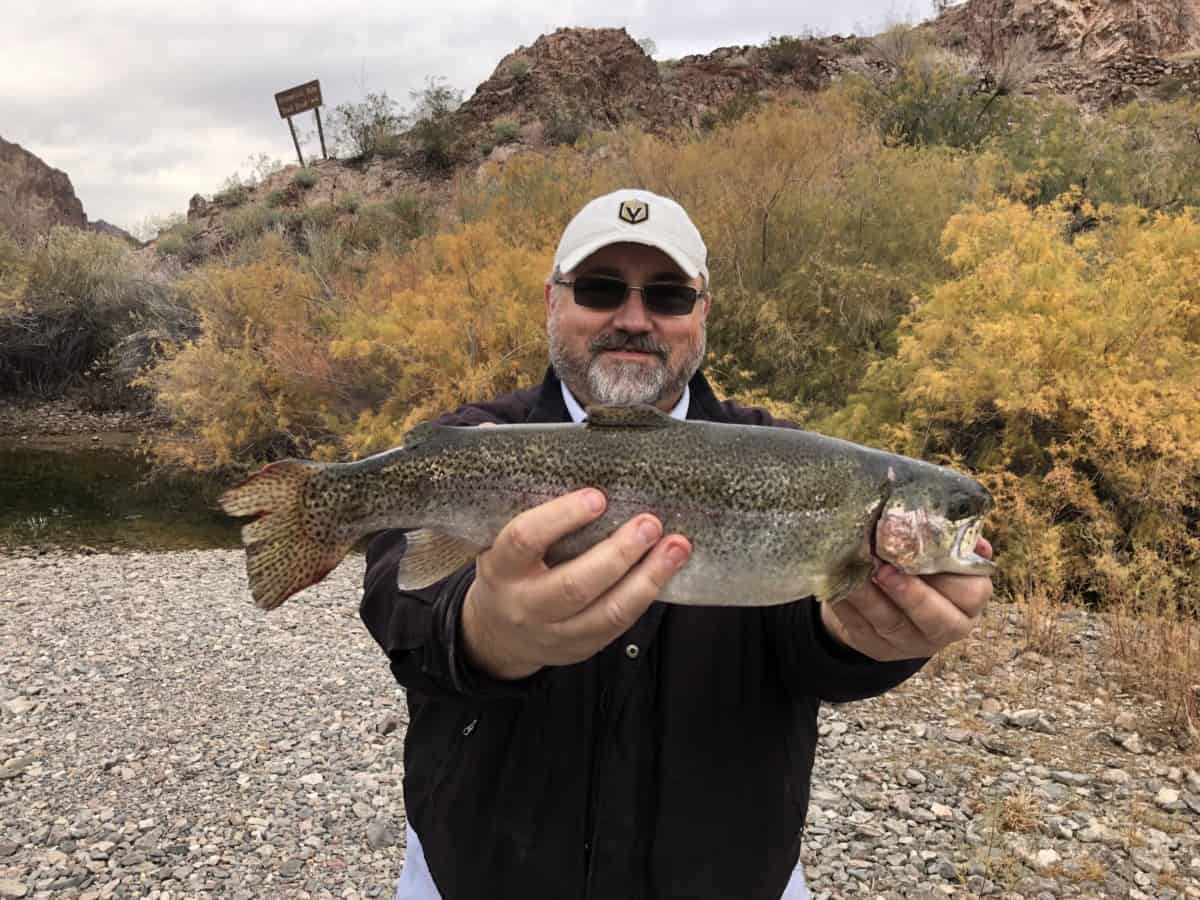
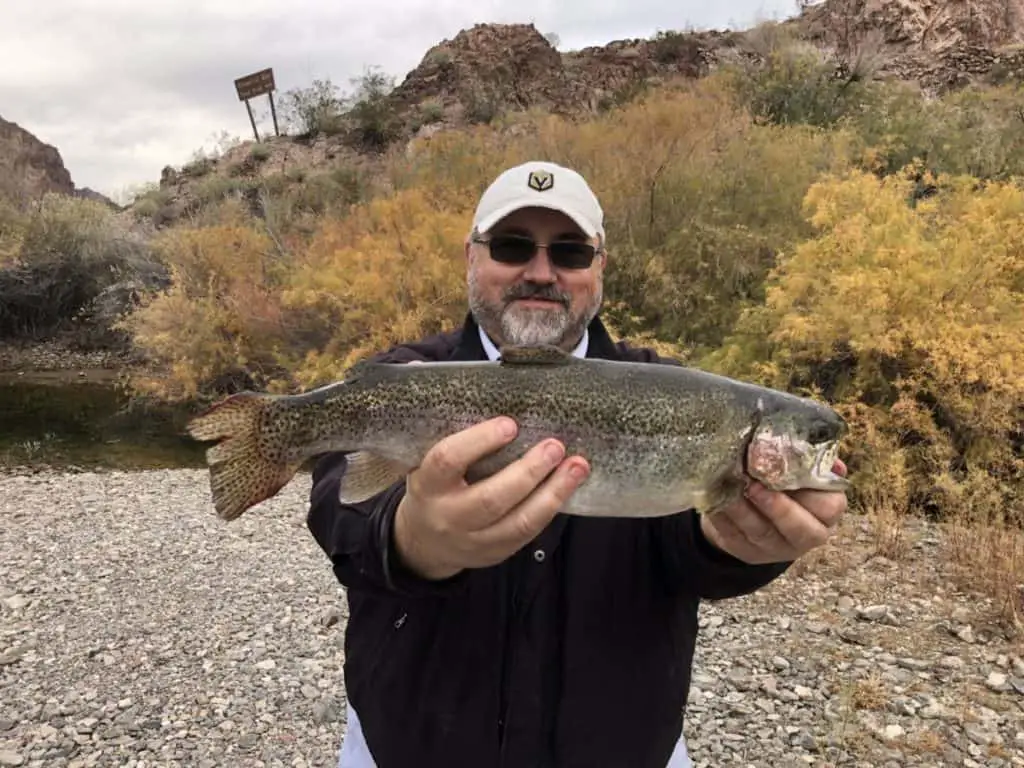
    Large Rainbow Trout
    The Author Darren Enns

         Let me clear the air of any future misconceptions right here and now: Trout have teeth, and they know how to use them. Yes They can bite or at least flop around trying to get away and slice a cut in your fingers.

    A nice day down on the riverside, tossing in a line, sipping a cold drink and relaxing as the sun sets over the water sounds like the perfect way to spend a great day outdoors, that is, until it’s time to pack it in. You reach into the shallow water to find your silvery stringer wriggling as each fish strung to it fights to be freed. Just as you pull each trout off of the stringer, one decides it has a little bit of fight left, slipping just out of grasp and sinking sharp, finely pointed teeth into your hand, a perfect day bloodied at the jaws of a rainbow trout.

    This whole scenario I just played out happens more often than you’d think, and not a lot of people know to watch out for these kinds of dangers when fishing. Fish are wild animals, and any wild animal, when caught, will naturally fight tooth and nail to escape and be turned loose, with no thought of the physical repercussions it can have on the fisherman trying to collect their catch. Levels of aggression range among varying species of the trout family.

    For example, according to a study conducted by the United States Geological Survey, “To evaluate the potential for negative interactions among these species, we tested aggression in laboratory aquaria using three-species and pairwise combinations at three densities.

    Treatments were replicated before and after feeding. During the three-species trials Rainbow Trout initiated 24.8 times more aggressive interactions than Cutthroat Trout and 10.2 times more aggressive interactions than tiger trout, and tiger trout exhibited slightly (1.9 times) more aggressive initiations than Cutthroat Trout,” (pubs.er.usgs.gov) 

         When trout fishing, it’s important to note that trout can be extremely aggressive at times, and anglers must be prepared for that. The fight between the fish and the fisherman doesn’t stop when the fish leaves the water, because if there’s one thing for sure, that trout’s not going easily. As stated before, trout have two very finely-sharp rows of teeth known as “vomerine” teeth down the top of their mouth.

    The purpose of these teeth is to allow the trout to grip its prey firmly between its strong jaws, then help to move the prey down the throat all in one big gulp. Smaller trout in the 16-inches-and-under range are typically pretty safe to grab by hand, assuming you’ve already wet your hands, but as they grow stronger and heavier, prominent teeth start to take shape on either jaw, and protective gloves are usually recommended when handling large trout by the mouth. Despite their soft constitutions and delicate nature, trout tend to fight as hard as they can for as long as they can.

    Trout are a stubborn species to fish, an evolutionary trait that has made them very strong fish in a very strong gene pool. Their sharp teeth are viewed as a defence mechanism of sorts, as well as handy tools for chomping down bugs and worms, but what do you do when one decides to take a bite out of you instead?

         For starters, you should always carry a first aid kit with you during any outdoor outing, regardless of the activity. If you’ve been bitten by a trout, the first thing to do is to make sure that it can’t happen again. If the fish has the ability to bite again, chances are good it will do so. After handling the situation safely and after placing the fish either on the stringer, in the cooler, or back in the water, always make sure the fish is secure in any instance. Next, you’ll need to evaluate the damage done. If the affected area is still bleeding, apply pressure to help stop the blood flow.

    After checking the severity of the bite, rinse the cut thoroughly, making sure that any blood, dirt, or other debris is being washed off of the cut to prevent infection. It’s very important to remember to disinfect any bite wound, especially from a fish, with a strong disinfectant solution because of the threat of contracting sicknesses and diseases through direct contact with the fish. One such example is Methicillin-resistant Staphylococcus aureus, otherwise known as MRSA or, in the fishing world, “fish finger.” MRSA is a superbug, a bacterium which has proven to be resistant to and resilient against antibiotics.

    MRSA has been known to exist on the skin of trout and even in the water in certain areas, and should not be taken lightly. These health risks make it incredibly important to know what to do in case an incident occurs. After any hypothetical injury has been cleaned and thoroughly disinfected, the next step is to dry the wound with a clean towel and then carefully cover it with a sterile bandage or gauze, depending on the severity and the location on the body where the bite occurred.

    Y

         Most of you might be reading this right now saying, “Seriously? I’ve never been bitten before, why should I worry about it now?” Well, friend, the Boy Scouts have said it better than anybody for the last 100 years: Be Prepared. Fishing with your close friends and family can be a great experience you won’t soon forget, but with the snap of a finger and the bloody bite of a big old rainbow trout, your day of fun in the sun can turn really sour really fast.

    Although it may be hard to imagine something like this happening to you, that’s exactly why you should be ready just in case things take a turn for the worse. So always remember to be careful when handling those aggressive trout with sharp chompers, the fish might not be the only thing you catch.             

    You can make extra income writing about fishing.

    P.S. I’d Love Your Support On YouTube

  • Unique NFL Football Fishing Lures

    Unique NFL Football Fishing Lures

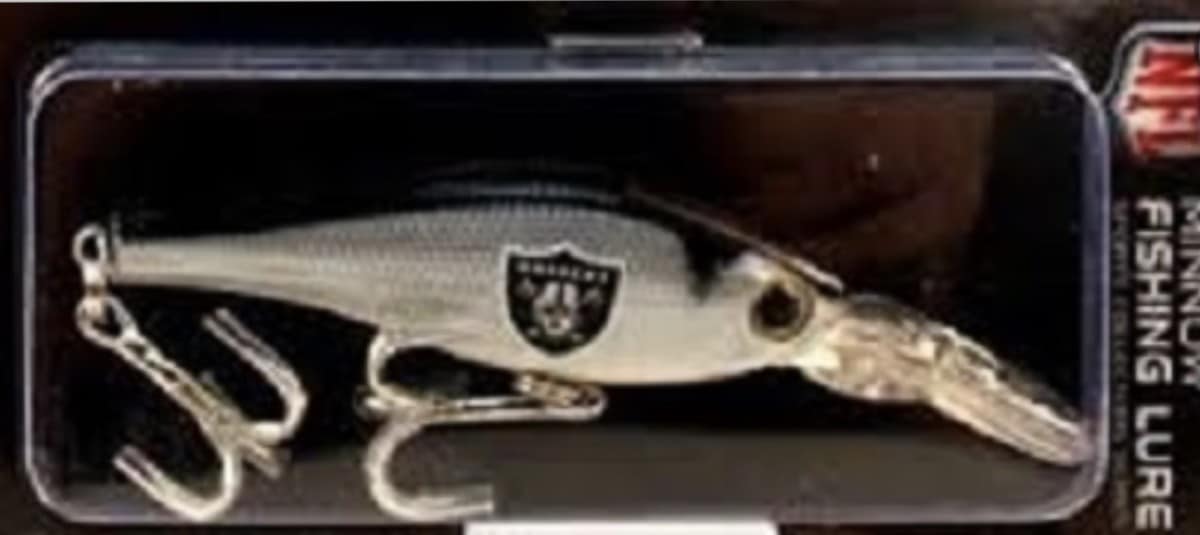
    There are literally millions of people throughout the United States and even the rest of the world who enjoy the National Football League. At the same time, there is also an immense amount of people who enjoy the sport of fishing. What if you have someone who enjoys both? In that case, the perfect gift would be some of these fishing lures that act as both a lure and they also are decorated with the fishing hobbyist’s favorite team! Here are some of the most notable advantages for those who enjoy both fishing and the National Football League:

    They offer the best of both worlds, Fishing and Football

    If you are the fan of a team that has a particularly rabid fan base, this would be a great gift for you. For example, if you are a Dallas Cowboy fan, then chances are you would have many different opportunities with your fellow fishermen that also share your love of that team. Naturally, let us not forget that legendary Cowboys coach Jimmy Johnson is an avid fisherman as well. Johnson actually owns part of a luxury resort within the Florida Keys called Fisherman’s Cove. Either way you look at it, you will definitely be in good company!

    They could become part of a nice pre-game superstition for you and your preferred NFL team.

    Let’s say you are a fan of the Washington Redskins. If that is the case, then you should be aware that there are many different fishing lures available with your team’s unique logo on that. Additionally, if you are a resident of the Washington, D.C. area, then you are probably well aware of the multitude of different fishing spots available in this location. If you want the most famous spot, you would probably have to go with the Potomac. However, don’t forget about the possibilities of fishing in Rock Creek, the Chesapeake River, Sligo Creek, and many others! One example of a great tradition that you could start would be that every time your Redskins play a home game, you could fish in one of these rivers with your lure! It would not only be a great “good luck charm, but it would be a great term of endearment for you and your sports and fishing buddies.

    They could become a valuable part of a sports display.

    Ironically, you don’t even have to use these as fishing lures at all if you don’t want to. This is because these uniquely-designed NFL fishing lures can become part of a unique sports trophy case or display that highlights just how you feel about your NFL team. Every sports display case will have its own charm and unique theme. For example, if you are a Pittsburgh Steelers fan, you might have several different pictures of some of the greatest Pittsburgh Steelers to ever play the game, such as Terry Bradshaw, Ben Roethlisberger, “Mean” Joe Greene, and Franco Harris, among many others. However, don’t forget to have some artifacts that pay homage to just how unique the logo of the Pittsburgh Steelers truly is. Having an NFL Steelers fishing lure in your case is a great way to showcase that logo!

    Having your own NFL fishing lure is great for bragging rights.

    As a fan of NFL football, there is nothing you love more than to brag about your favorite team. You love telling people about all of the best players your team has had, the greatest games they have played, or even telling them about some of the lesser-known facts about the team. When it comes to your NFL team, you truly know everything there is to know. You even enjoy talking with others about some of the unique logos your team has had over the years. What better way to do this than to show off this unique Amazon fishing lure that features your team’s current logo? This fishing lure would also serve as a great segway into a conversation comparing each of the logos your team has had in the past, which ones were the best and which ones you didn’t care for, and so on.

    You can make extra income writing about fishing.

    Your NFL fishing lure can lead to some great family bonding.

    When it comes to following your favorite NFL team, you probably remember all of the excitement from an early age. You probably remember the uniforms, the players, and yes, even the cheerleaders! Who was it who introduced you to all of these exciting moments that you still have such fond memories of? Chances are it was your father or some other significant male figure in your life. You want to keep that tradition going in your family, and one of the best ways to do that would be through passing down your treasured NFL fishing lure. It will not only become a family heirloom, but it will also become a symbol of the many remarkable memories that you and your progeny have created while rooting for your team.

    This NFL fishing lure will be a great item for you to take with you to the stadium.

    When you go to the stadium to cheer on your favorite NFL team, you often want to show off. No, maybe you don’t get quite as extreme as your fellow fans that like to put on the war paint, but you still want to show your support. Bringing this NFL fishing lure to the stadium is a great way not only to show your support, but it is also a good way to do so in an unassuming manner. Who knows? Maybe you will even make a few new friends with one of these NFL fishing lures!

    Y

    Finally, you can brag about the NFL fishing lure itself.

    Naturally, there is nothing wrong with bragging about your team, and there is nothing wrong with you bragging about this unique NFL lure. However, you also can brad a about the lure itself. For example, you could say that the NFL team logo on your lure gives it the “magic touch” that helps it attract and catch more fish than just a standard fishing lure.
    P.S. I’d Love Your Support On YouTube

    All of these are good reasons why you should definitely consider getting one of these NFL lures. It will be a great addition to your NFL collection!

  • How Do Fish Sleep

    How Do Fish Sleep

    If you take a gander at your aquarium, there is no doubt that you will be introduced to a world of wonder, a universe where the more you study it, the more questions you will come across.

    Of course, the most common questions that will come up are, “how big will the fish get?”, “What will a certain breed of fish eat?”, “Are these fish going to be territorial?” and so on.

    However, the questions soon get even more bizarre, but every bit as intriguing. Try this one on for size: “How do fish sleep?” That, my friends, is a good question. Take a look at some of these interesting facts:

    Yes, fish do sleep, and they do it for a considerable amount of time.

    First of all, let’s get this out of the way right now: yes, fish do sleep. And yes, they will do it for a long amount of time. Generally, a fish will require up to nine or ten hours of sleep per day.

    Of course, here is another question: why do we not notice them sleeping? Well, it’s simple, actually.

    The reason is that they do not have eyelids. Unless you are Anne Ramsey from “Throw Momma From the Train”, (I know, I know, I’m showing my age, but I digress…) then you realize that most human beings will close their eyes when they sleep.

    How do fish sleep

    This isn’t true when it comes to our aquatic friends. Naturally, this is why this is such an intriguing question in the first place, simply because it appears that fish are always awake because their eyes are always open!

    Moreover, it often varies with the breed. For example, many goldfish will actually sleep for up to 12 hours per day.

    On the other hand, many cave-dwelling or deep-sea fish will sleep little if any at all simply because they have limited eyesight and have no need to do it. All right, with that in mind, let’s take a look at certain notable breeds:

    What about trout? Do they sleep?

    The short answer to this question is yes, they do indeed sleep. However, the answer to this question is going to get just a bit more convoluted when you consider all of the specific situations that might involve trout as a breed of fish.

    First of all, there is a sharp difference between trout that are being kept in a fish tank and trout that are out in the wild. Wild trout will usually have to get more creative than their aquarium-dwelling counterparts.

    For example, trout in streams will usually have to find a place where the current is not quite as quick. This often means going behind a boulder or looking for a bend in the riverbed. Additionally, when a trout needs to rest, they might find a place that is fairly deep simply because that is where the current will be slower.

    Likewise, trout that are in aquariums will usually descend down to the bottom of the tank when they need to rest.

    Well, how about beta fish? Do they require sleep?

    Of course, not everyone is into trout as their mainstay. If you are more of a beta fish enthusiast, you are probably wondering how they go about getting their rest.

    Well, with a beta fish, sleep is a nighttime occurrence much like it is for human beings. Because bettas are mainly active during the day, they will the great majority of their sleeping at night. No, these fish will not lose consciousness like their human masters. Instead, they will simply find a place to take a time-out like that of other fish species.

    Of course, it might appear to the untrained eye that they are merely just relaxing in the water. Interestingly enough, betta fish also have a tendency to take short naps during the day. If you notice your betta fish simply laying down at the bottom of their fish tank, chances are they are taking a quick nap!

    Finally, do goldfish sleep?

    Naturally, one of the most well-known and popular aquatic pets in the world today would be the goldfish, so this all begs the question: do they sleep? Yes indeed, as mentioned previously, they sure do. Goldfish will behave much like other fish do. They won’t lie down or engage in REM sleep as humans do, but they will become less active even though they are still moving around.

    So yes, it doesn’t matter what fish it is, nine times out of ten, they will indeed catch some z’s just like their human owners.

    What does fish tank behavior look like when they are sleeping?

    When a fish decides to go to sleep, it has already been noted that they will look differently than humans would. First of all, fish will still appear to be awake. They will not lay down like humans will, but one of the ways you will be able to tell that your fish is sleeping is because their activity will start to slow down.


    You can make money by writing about fishing. Here’s how I do it.

    Insofar as tank behavior goes, they will usually settle at the bottom of the tank and move about very slowly.

    Moreover, they will often crave some sort of privacy. They wil find an area of your tank where they will be free of prying eyes, such as wedging themselves into the sand or behind some rocks.

    Additionally, even though a goldfish might appear to be fully awake, they will seem to be in “suspended animation.” You will still see their fins flapping and their gills breathing because they need to move around and breathe.

    However, that is about the scope of their behavior while they are resting. Simply put, if they are moving slower, then chances are it means they are asleep.

    Do fish remain still when they are asleep?

    Of course, this will beg the question for some: do fish remain still when they sleep? For most breeds of fish, the answer to this question is, of course, yes and no.

    As noted previously in this article, a fish will often still move around slightly, but the big difference between their sleeping period and their awake hours is that the fish will appear to be “day-dreaming.” This is because their metabolism will dramatically slow down during their sleeping periods.

    Finally, interestingly enough, there are breeds such as the Parrot Fish that will surround themselves with a cloud of mucus while they are resting.

    As you can see, fish are fascinating creatures, and while it is not readily apparent that they sleep, they definitely do. It might take some observation, but you will be able to realize when your favorite fish is sleeping soon after.

    what about you? Do you have any thoughts about seeing your fish sleep that you would like to mention? Let me know in the comments below.

    P.S. I’d Love Your Support On YouTube
    You can make extra income writing about fishing.