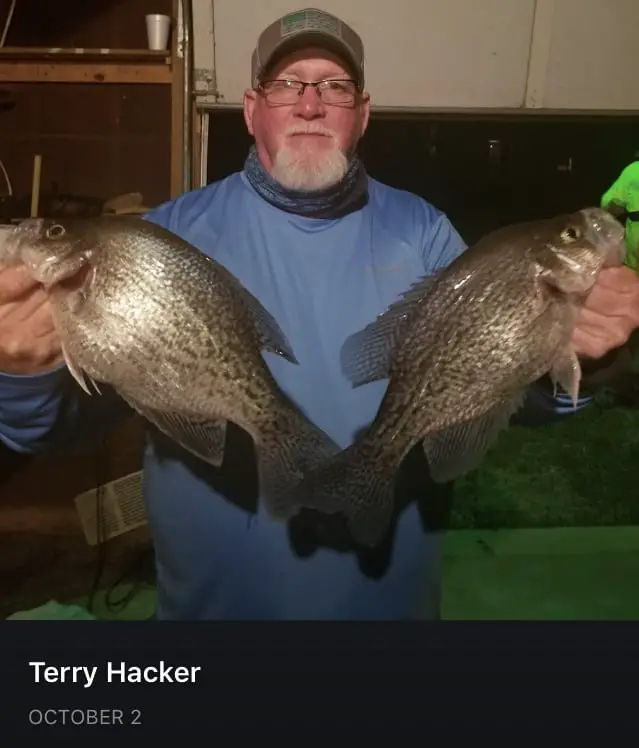
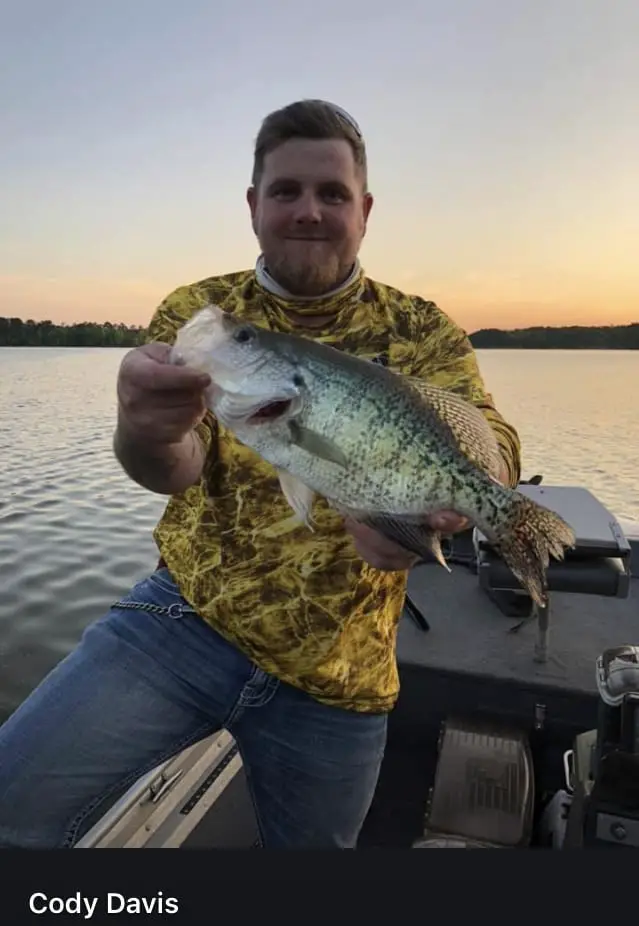
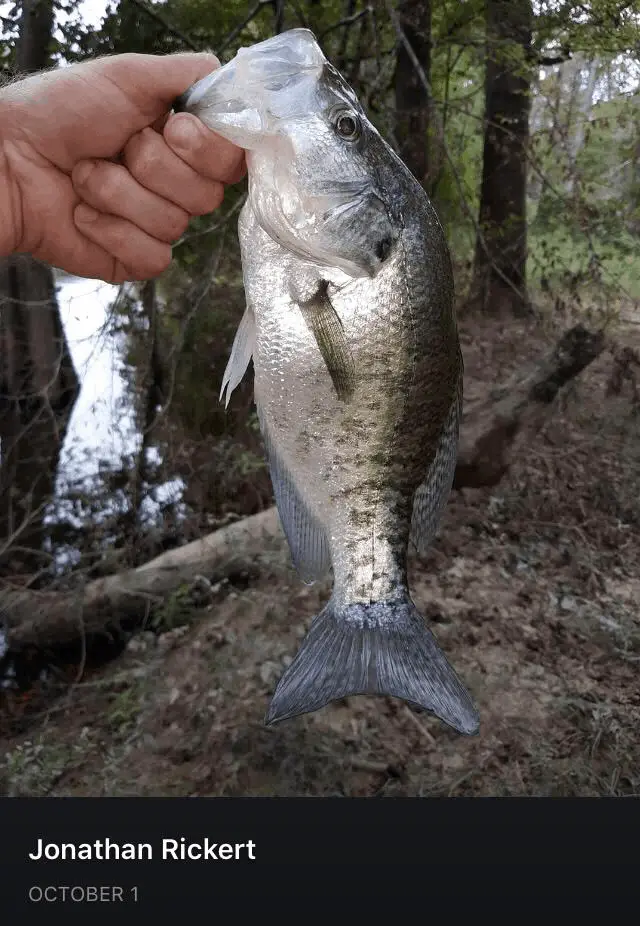
There is no debating the fact that crappie is a fun species to try to catch every time you are out on the water. First of all, they put up a good fight, and so if you love a decent challenge, this is definitely the fish for you. Additionally, this isn’t a large fish at all, so it won’t put a strain on your equipment much at all. Finally, if you have decided that you are going to eat what you catch, this fish is truly one of the best.
Many anglers feel that this species tastes totally fantastic. Of course, if you are now sold on trying to catch crappie, you will need to understand a little bit about their anatomy. There are a lot of dominant questions that beginning crappie fishermen might have, and one of the most major ones would be this: do crappie have teeth?
Are you seriously looking turn your hobby into a business? I recommend joining Income School. I’ve been an Income School member for a little over a year and joining was the best decision I’ve made in working toward my business goal of making money online.
The answer to that question is yes, but it’s a bit more complicated than what you might think. Yes, crappie have teeth, but unlike other fish, they have a difficult time using them to chomp down on their prey. Thus, their method for eating their prey is a bit different than other species of fish. They will usually take advantage of their powerful suction muscles and suck the food inside their mouths instead.
Their jaws, teeth, or mouth membranes just aren’t strong enough for them to do it any other way. But anyway, let’s dive a little deeper into it. Here are some extra facts regarding the crappie’s teeth:
In order to understand the teeth of the crappie, you first have to understand the position of their mouth.
First of all, the crappie come in two different subspecies, the white crappie and the black crappie. Both of these types have what is called a terminal mouth position that is composed of teeth that are very small and conical. They are also positioned in a couple rows along the mouth. Generally, most experienced anglers will not even refer to what the crappie has as teeth. They often will call them cardiform, because in all honesty they resemble a tool for wool carding more than just regular teeth.
Of course, wool carding is the process of disentangling various items such as removing various impurities from a fiber. That’s about the best analogy that one can use for crappie teeth. Are they good for disentangling things? Sure. Would a crappie’s set of teeth be good for being a serious predator like bass or trout? Not so much.
You will need to fully understand the shape of the crappie’s teeth as well.
As mentioned previously, a crappie’s set of teeth comes in two rows, and they are small and conical. Naturally, you need to understand what this means for you when you are fishing for them. First of all, because the teeth of the crappie are somewhat limited, it means that you have much more leeway with them than you would with other species.
For example, this even impacts how you can handle the crappie. You can start by inserting your thumb into the mouth of the crappie and clamping down on the lower jaw of this species. This not only works because of the limited teeth design of the crappie, but also because they have a larger mouth than other species.
This also impacts what the crappie feeds on.
Because of their smaller teeth, it definitely impacts what the crappie can feed on. However, you shouldn’t think for a minute that this doesn’t mean they don’t have a fairly diverse diet. Crappie will often feed on many different smaller species of fish, and they will even take a crack at the young of their predators, such as Walleye or Northern Pike. Perhaps not surprisingly, the crappie will also feed on zooplankton, insects, and crustaceans.
Finally, the crappie’s teeth definitely impacts how you should fish for them.
Like other fish, it is often best to fish for crappie during the spawning season simply because there are usually a lot more of them during this season and you could possibly get a bigger haul. However, the similarities take a bit of a detour after that. If you take into account the crappie’s teeth structure, then you should include the following strategies in your crappie-catching endeavors:
Because of their small teeth structure, there is no question that live minnows are very popular with crappie. You can often get a live minnow and include it underneath a cork and then simply cast it out and wait for a bite. Of course, live minnows are often the best choice for bait, but it does depend on your individual circumstances. There are some who have had some luck going with artificial minnows as well.
Consider using jigs.
There is no question that live minnows will continue to be the best bait to use. However, besides artificial minnows many anglers have found plenty of luck with jigs. The beauty of using a jig is that they are often easier to handle than live bait. Moreover, you might want to consider jigs when you are fishing in a brushy area with a large crappie population.
Try changing up the color of your jigs.
If there is any advantage to using jigs, it would have to be that they are available in a variety of different colors. They give you the option to use several different colors to allow for the different depths of the water. On the other hand, live minnows might be great, but they do only come in one color. Either way, if you are considering adding jigs to your arsenal, you should make sure you have a variety to increase your chances of landing more crappie.
You might want to think about changing up your fishing pole.
Another reason for taking into account the incredibly small teeth of the crappie would have to be because it impacts the type of fishing pole you should use. Of course, cane poles are usually the go-to option for crappie fishing, but you have to realize that crappie will bite very lightly simply because of those teeth. This is why you should consider spending a little extra to get a more sensitive pole made out of graphite or carbon-fibre.
However you slice it, if there is anything we can learn from the crappie, it would have to be that fish anatomy DOES INDEED affect how we can fish for them. Keep that in mind every time you are casting out for them!
If you are a fishing sportsman, then chances are you just love getting out there on the lake or river and fishing for your favorite species of fish. Naturally, if there is anything that is at least the second-best to this, it would have to be the practice of eating what you catch. There is no question that most sportsmen will eat what they catch from time to time, and this includes almost all species of fish. Of course, if you are going to eat your catch, you also need to be aware of just how many bones that particular species of fish might have.
Of course, this begs the question, what if you are trying to catch crappie? Yes, they are known as a panfish, meaning they will grow past the size of your cooking pan, but do they have a lot of bones? The best way to determine that is just to simply compare them to other types of fish. Read on to learn just how they stack up against other fish:
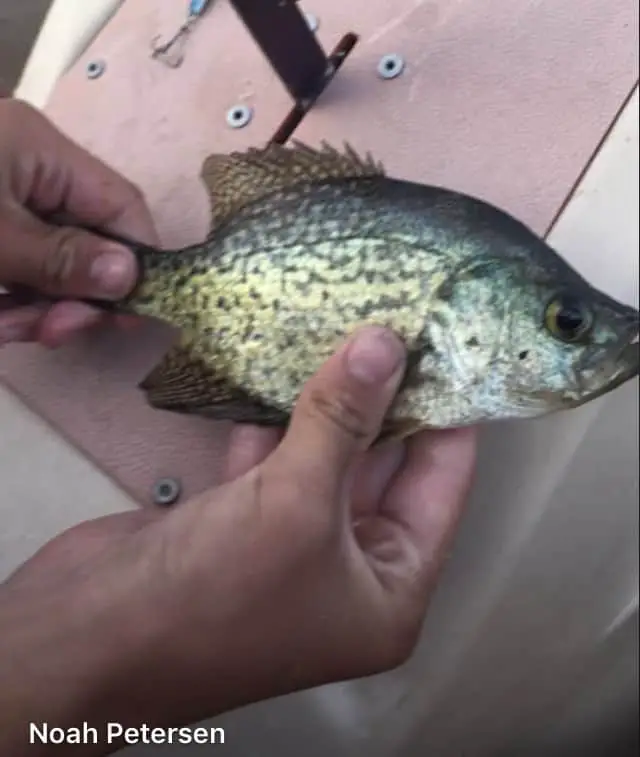
Black Crappie Noah Petersen
Are you seriously looking turn your hobby into a business? I recommend joining Income School. I’ve been an Income School member for a little over a year and joining was the best decision I’ve made in working toward my business goal of making money online.
Crappie vs. Bass
In my experience, crappie and bass are very similar. First of all, when you look at filleting bass, the first thing you are going to notice is that there are a lot of small rib bones to deal with. However, all you have to do is simply cut out the ribs outright in order to properly fillet the bass.
Interestingly enough, the crappie is much like the bass, except that it is a bit smaller, thus making the bones a little bit more concentrated. Of course, when you are talking about the larger crappies, it really isn’t that difficult to cut out all of the bones. However, the smaller ones will have rib bones that are quite sharp, so if you are planning on eating smaller crappie, you will need to know what you are doing.
When you are comparing crappie and trout, walleye, or pike, one of the things that you immediately notice is that these other three species are actually MUCH worse when it comes to their rib bones. The trout, pike, and walleye actually have an IMMENSE amount of rib bones. Are they a tasty species? Absolutely. But you are going to be tearing your hair trying to get rid of all of the rib bones in these three. Thus, there is no question that the bones of the crappie are much easier to deal with.
In most cases, a crappie will have a much easier bone structure than a bluegill. Really, unless you are very experienced at dealing with bones, it is better if you throw a bluegill back than try to fillet. Part of the reason for that is because the bluegill has some very sharp rib bones. Yes, the bluegill is every bit as delicious as the crappie, but it will definitely be a chore cutting out those rib bones. Considering that Crappie is similar to the Bluegill, you should just go with them instead. However, there is one small caveat here, however. Yet again, if you do not catch a large enough crappie, there are some individuals who claim that their rib structure is just as complicated as a bluegill and every bit as sharp.
So…Do Crappie Have a Lot of Bones? Yes or No?
Of course, all of this comparison brings us to the crux of the matter, and hopefully an answer to the question in the title. Do crappie have a lot of bones? The answer seems to be that they are kind of in the middle. No, they usually don’t have as many bones as a bluegill, trout, walleye, or pike, but there are a few fish that are easier to deal with. For example, although they weren’t mentioned, one of the best fish to deal with for beginners in terms of bone structure would have to be catfish. But anyway, for the most part, we can probably safely say that no, crappie don’t have that many bones. However, it’s not so much the AMOUNT of bones that a particular fish species has so much as it is the way the bones are DESIGNED.
Of course, now that you have a general idea of how many bones that a crappie’s body might have, you are probably wondering about some basic steps you can take in order to properly cook a crappie meal. Here are some of the steps that you need to keep in mind:
Gather up all of your needed tools.
In order to properly fillet a crappie, there are actually quite a few tools that you will need. First of all, you will need a good cutting board along with a plastic or glass surface so that you can properly dispose of the bacteria. You will also need a trash bag and some good household bleach in order to clean everything up appropriately.
Start the first cut.
Lay the fish on a cutting board or other such type of hard surface. Then, you should take the fillet knife to the side (pectoral) fine of the crappie. The best way to do this is by grasping the fish’s mouth. You also should slice downward against the backbone, and be sure to keep the rear of the knife blade up as well. Be especially careful that you don’t cut into the backbone of the fish.
Aim the knife blade in the direction of the tail.
Do your best to continue cutting, and make sure that you stay on top of the back and the belly fins as well. Don’t panic if you feel some resistance when you cut through the rib cage. However, at the same time you shouldn’t cut into the backbone. Cutting too shallow is always a better idea than cutting too deep. Keep cutting toward the tail until you have nearly cut off the scaly fillet portion off.
The next step would be to flip the fillet away from the fish. Position it so that it is on the narrow portion of the fillet, and slice between the meat and the skin so that you have removed the fillet. If you want the maximum meat, you should make your cuts as close to the skin as possible. Once you have removed the fillet, place the fillet and the rib cage on a sheet of wax paper. Now it’s time to flip over the fish and fillet the other side as well.
Finally, all you have to do is rinse the fillets, and then you can either cook them or store them.
So you see, while the crappie does indeed have their share of bones, as long as you know what you are doing, you can still use this species as a nutritious meal for you and your family.
When it comes to the best way to cook crappie, there is an immense debate over the best way to do it. There are many individuals who are in the “fillet” camp, simply because they not only believe that’s the best way to do it but also because they don’t feel like messing with any of the bones of the crappie.
However, there are definitely some who bristle at the idea of filleting their crappie catch, simply because of the fact that filleting a fish can be a difficult process and the last thing they want to do is “waste” any of that great meat that the crappie might have. At the same time, there are some people in yet another camp, and these individuals feel that cooking a crappie whole with the skin on is by far the best way to go. If you are a bit skeptical of this route, then you should, first of all, realize there are many advantages to this method:
Cooking crappie with the skin on has a tendency to give it a nice, unique, rich and nutty flavor.
Those who swear by cooking crappie whole usually do so because they love the unique flavor that comes from the skin of the crappie. This wonderful nutty flavor is not something that people who fillet it will get. Moreover, keeping the skin on your crappie is a great way to match it up with the white meat underneath.
There are a lot of great coatings you can use.
The best thing about cookie crappie with the skin on is that there are a lot of great coatings you can use in order to enhance the flavor. For example, you can use such things as beer and paprika for a nice dish. There are also several buttermilk, Bisquick, and cornmeal coatings you can use for your crappie.
Why should you keep the skin on in the first place?
Of course, this is all well and good, but what about the motivations for doing it in the first place? Naturally, proponents of filleting the crappie will always say that they enjoy that method simply because it isn’t as messy. However, if you ask someone who is into baking the crappie whole, they will tell you that it is definitely worth the extra effort.
One of the main reasons for that is because some people simply just get hooked on the crappie skin in the first place. There is no question that once you have tried this crispy and salty skin combined with the excellent white meat, there is no way that you are going to go back. If you are sold on this now and are going to go ahead and cook crappie with the skin on, here are some tips you should keep in mind:
Are you seriously looking turn your hobby into a business? I recommend joining Income School. I’ve been an Income School member for a little over a year and joining was the best decision I’ve made in working toward my business goal of making money online.
Go with a “neutral” coating or one that complements the taste.
Ideally, whatever coating you select, you want to go with something that will not detract from the taste. Don’t fret, however, because there are many good options to consider. One of the best ones would go back to the cornmeal option because it will help you retain the original nutty flavor of the crappie skin. Of course, if corn meal isn’t quite your thing, don’t panic because there are still plenty of other options available.
For example, many individuals like to bread their crappie by actually placing a set of original Keebler Club Crackers on the fish. What most anglers will normally do is put these crackers in a zip lock bag and then thoroughly roll them into crumbs. Then, the angler will crack open a couple of eggs and add a little water, and beat them together.
Most proponents of this recipe recommend not using milk with the eggs simply because it might burn upon you. Combine this mixture with some all-purpose flour and then rinse your crappies and shake in the flour. After dipping the cracker in the egg wash, coat them with the cracker crumbs.
Finally, you should fry the crappie in canola oil for a few minutes. Many anglers swear by this recipe for cooking crappie with the skin still intact simply because they think it will complement the taste of the crappie very nicely.
Other anglers like to use a mixture of Italian Bread Crumbs and Fryin’ Magic mixed in a 50/50 solution. They will usually dip the fish in Evaporated Milk and then they will mix in the Italian Bread Crumbs and Fryin’ Magic combination. After that, you can fry them in canola oil like normal. Of course, if you use this method, you should be sure that the oil is hot.
You can test it by dropping a pinch of the mixture in the pan and seeing if it either spatters or rises. If that happens, then you know that the oil is ready. Of course, if you go with this mixture, you should make sure that the fish isn’t overcooked or burnt. Watch it closely, because if you don’t the oil will take on that taste and ruin the batch.
Alternately, there are quite a few people that will do a variation of the cornmeal breading. For example, there are some individual chefs who will take this white cornmeal and add such things as Lawry’s Season Salt and lemon pepper. Moreover, there are some people who will fine-tune that combination as well, going with cornmeal, Lawry’s Season Salt, and red pepper.
As you can see, the methods of preparing your crappie with the skin on are literally endless. The sky is truly the limit in this case. You can find a lot of variation using cornmeal, but you also can find other variations as well. There are a lot of anglers who like to use the Zatarain’s brand of fish breading for their crappie. In reality, the only way that you are going to figure out more recipes for preparing your crappie with the skin intact is to ask around. Ask all of the other crappie enthusiasts how they make it. You never know, you might just find a way to prepare it that is simply your heart’s delight.
If you have been fishing for a long time, one of the things you start to realize is that there is a broad cross-section of people that really enjoy catching crappie. Now, part of the reason for that is because they put up a tremendous fight, and thus some anglers enjoy the sport of it. However, yet another reason some anglers love catching crappie is because they are great to eat.
You see, there is definitely a reason why these fish and bluegills are classified as panfish; it’s because it’s a very tasty treat! Of course, you’re probably wondering about the best way to catch and eat these crappies.
First of all, you would start by trolling your selected waters, which would usually be several feet or more. Then, you would try jigs and minnows at various depths to try to catch them. Of course, after you have landed crappie, your next question is this: how do you go about cooking them? That’s a good question. While there are many individuals who like to fry their crappie, more and more are starting to enjoy baking them whole as well, so here is JUST ONE method for baking your crappie (but believe me, there are quite a few to consider):
Of course, before you can begin baking your crappie in the first place, you will need to get it ready for the process.
You would start by scaling and cleaning it. For this step, the best item to use would have to be a serrated steak knife, simply it will make quick work of taking the scales off your prize. Naturally, it doesn’t matter how you prepare your crappie, no one wants to taste their scales. Finally, you will also want to clean that slab before you bake it.
Some cleaning methods would require you to take the head off, split him open, and then take out the innards. However, for the big ones you often only have to cut one inch down to the backbone, especially if you are planning on leaving your crappie whole.
Additionally, you will have to keep in mind what type of blade you should use when you are baking crappie as well. Generally, most individuals will either go with a 9″ blade or a 7″ blade. Now, a 9″ blade is fairly large for working with crappie, but it can be done if nothing else is available.
I recommend using a 7″ American-made blade since crappies are kind of a smaller breed of fish. Now that we’ve gotten that out of the way, here is that one method for baking crappie that a lot of anglers will recommend:
That’s right. I recommend that you should take a bowl full of mixed veggies and place the crappie right on top of them and simply bake it that way. Many individuals like to go with veggies such as sweet onions, celery, carrots, and pre-boiled red potatoes.
Of course, you can also go with regular pre-boiled potatoes if you so desire. You should mix this combination with some olive oil, season it with leeks, and then possibly consider adding in some sea salt. Also, you should be aware that this method requires using a dutch oven to bake your crappie. Of course, if you use a dutch oven, you should make sure that you pre-heat it, otherwise, the dutch oven will take too much time heating the vegetables and your crappie dish will lose a lot of its flavor in the process.
Naturally, most anglers like to try to use lump charcoal when they are cooking their crappie. Moreover, they will often use various strategies to season the fish, such as the following:
Don’t be afraid to bend the fish a little bit.
Remember when you cleaned these crappies a little bit? Well, you most likely cut some X’s into them, so when you are getting ready to season your fish this is definitely a prime time to bend the fish a little bit just so those seasoning flakes will get a bit further down into the fish, nice and deep. It’s absolutely a good way to enhance the flavor of these crappies as well.
Use sriracha butter.
Ask any angler who cooks their own fish, and they will tell you that sriracha butter can definitely be top-notch not just for crappie, but for almost any other fish as well.
Anglers will use this option on crappie, bass, tilapia, cod, and even oysters. All things being equal, it just goes well with any type of fish, and going back to those cuts, it tastes even better when it gets under the crappie’s skin a bit as well!
Consider adding either lime juice or lemon juice.
There is no question that adding lime or lemon juice to your final dish will definitely make it out to be a versatile choice. First of all, the acid in either one of these juices is great for marinating not just this type of fish but also chicken and pork as well. For centuries, this has been used to enhance the flavors of all kinds of dishes, including that of fish such as crappie.
Conclusion
Like I wrote earlier, it’s important to note that there is literally a multitude of recipes and methods out there that can be used to cook crappie whole. There is absolutely nothing wrong with experimenting and trying out different methods. This is just one method. Of course, you also should consider your side dishes as well. Besides cooking the crappie ON vegetables, you certainly could also just have the vegetables on their own little plate as well.
Why is crappie such a popular dish?
There are many naysayers out there that vastly prefer their bluegill cousins over crappie. However, in parting please remember that there are several reasons why you should eat crappie. First of all, crappie is bigger, so it is much easier to get more meat out of them. Additionally, some people really enjoy the soft meat. Just remember that you are in for a serious treat when you cook your crappie and there is absolutely nothing wrong with eating it whole and baked!
Are you seriously looking turn your hobby into a business? I recommend joining Income School. I’ve been an Income School member for a little over a year and joining was the best decision I’ve made in working toward my business goal of making money online.
Once you decide to take up the fishing hobby, there is no question that there is a tremendous amount of species of fish for you to choose from. Indeed, some anglers just decide to fish for whatever bites their line willy-nilly.
However, the great majority of anglers decide to specialize in a particular species. Such is the way with the crappie species. There are individuals all over the United States and even the rest of the world who have become fascinated with this particular species and are now very disciplined at catching them as a result.
If crappie seems like an appealing species to you, there are certain things you need to know in order to get started. To begin with, many experienced anglers will tell you the following:
The best way to start crappie fishing is to choose an appropriate rod and reel combo as well as the lures and baits that you desire to try out and give it a try in the spring time because crappie are bedding up shallow in the water so you are more likely to vet a strike. Later as you learn, you can add to your tackle and to your experience. I’ll give you many tips to up your chances as you continue reading.
You actually can catch crappie on a year-round basis.
The first thing the novice crappie fisherman probably doesn’t realize is that yes, you can indeed catch this species on a year-round basis. Of course, there are many tales of individuals who went crappie fishing with their fathers, uncles, grandfathers, or other such relatives within a three-week window in the fall and then grew up thinking that was the only time you could get a good string of catfish.
However, those of us who have left our own neck of the woods and went to out-of-state fishing tournaments quickly learned from other anglers that you can use several different techniques for catching crappie year-round.
Patience and presentation is key.
When you are first looking to catch crappie, you need to realize that they are a fish species that has a tendency to respond to certain stimuli. They also tend to be a very finicky breed, so it could be hours on end before you land one. However, that will definitely make it that much more rewarding when you are able to hold up the crappie and have your picture taken for that first couple of times!
Crappie will react to all of the senses.
A good way to expand on this previous thought is to drive this point home: crappie is a species that will always respond to sight, smell, and even sound. If you are going to attract crappie effectively, it isn’t good enough just to bait a hook. Sure, you’ll catch plenty of catfish, but you’re in the big leagues now. You will have to do a whole lot more to attract crappie. When it comes to this species, you get out what you put in.
Invest in some good fish finders.
If you decide to equip your boat with fish finders, it will not only help you navigate around the lake because of its GPS capabilities, but it also has the potential to help you find the crappie that much faster because they have side imaging and down imaging components.
Additionally, a good fish finder can help guide you because it will mark your waypoints and prevent you from becoming disoriented in the water. Ideally, you should consider keeping one in the console of your boat and one in the front of it. Interestingly enough, there are some fish finders with sonar that will combine the down scan and the side scan.
If you are really interested in becoming a heavy-duty crappie angler, you might want to consider investing in one of those. Of course, there are some people who go with a portable fish finder as well. However, you definitely shouldn’t go with a portable fish finder for cost reasons alone. However, a portable fish finder is a great option if you are an angler that rents boats, does ice or fly fishing, or tends to fish from the shore.
Keep a fishing journal.
No one can underestimate the importance of keeping a fishing logbook. If you have ever wondered how the professional fishermen are able to catch any type of fish on any lake, then chances are it was because they kept a logbook. However, even though we are amateurs and we don’t have the time to devote 300 days a year out on the lake, a logbook can still be beneficial to us. Part of the reason why you should keep a fishing journal is that if it is used right, you can properly analyze it to help increase your odds of landing more crappies.
Of course, you might be asking yourself, “why to bother keeping a logbook when I could just spend that much more time out on the water?” Well again, when it comes to fishing for crappie, you get out what you put in. It might take you three months before you can get back out on the water again, and even the best memories fade.
Yes, three months ago, you had a great day on the water. However, do you remember exactly what the conditions at the time were? For instance, do you remember what the weather was like? How about the humidity or barometric pressure? By putting these copious notes in a fishing logbook, you will be able to maximize when is the best time for your fishing excursions. Check out ANGLR Fishing App
Try to plan your crappie fishing excursions right around their spawning times.
Ideally, you want to organize your trips around all of the times that the crappie is spawning. This means that you should look at making a trip not only during the time they are spawning, but you should also consider some trips immediately before and immediately after they have spawned as well.
For example, when you are trolling for these fish just before they spawn, you should always shoot for them when the water is at a temperature that is between 39 and 54 degrees. Don’t be surprised if you see some large schools of shad while you’re at it. Simply troll over them, and under those shad, you will normally find a larger amount of crappie in the feeding section.
Of course, if you are fishing for crappie while they are spawning, that will be a different kettle of fish entirely (no pun intended!). In order to do it while they are spawning, you will definitely need the right type of equipment. Like everything else in life, if you want to have a chance at catching crappie during their spawning season, then an ounce of prevention is worth a pound of cure.
Make sure that you not only have the right techniques but the right baits and lures as well. Finally, there is the post-spawn period where the water will reach temperatures from between 78 degrees to 85 degrees. It is during this time that you should slowly troll for crappie off the front of your boat. Again, during each and every part of these spawning seasons, be aware that precision is paramount. As I said, when it comes to crappie, you’re in the big leagues.
Make sure you have the right rod and reel for crappie fishing.
The good news is that almost any rod and reel combination will work for catching crappie. However, there are some rods and reels that will work better for different situations. For example, if you encounter crappie in deep or sparse cover, you really should go with either an ultralight spinning rod or a reel spincast rod which is spooled with a line that has a weight of a least four to ten pounds.
Another reason that the pole approach is so effective is that it allows you to fish in water that is either very shallow or totally snag-infested. You can even fish in such places as treetops, brush piles, and other places with extremely dense cover. Indeed, the cane pole is also inexpensive and cost-effective as well. You usually can get them in graphite and fiberglass as well.
Moreover, you might consider a rod that has a telescopic design, simply because that usually makes them easier to transport. By all means, find a crappie rod that allows for your own personal convenience and comfort.
Don’t neglect your tackle box.
As I’ve stated previously, crappie fishing requires you to be as detailed as possible. That is why you should never overlook your tackle box either.
Of course, there are many different types of tackle boxes on the market today, and so you have to thoroughly examine your specific style and situation before you get a new one. It definitely depends on just how much crappie fishing you do and how you go about doing it. For example, if you normally use minnows to catch your crappies, then about all you would need is a smaller tackle box.
However, if you not only fish with minnows but also have a variety of baits and lures, you are going to need a tackle box that is a little bit more diversified. If you are a very detailed crappie fisherman, a good rule of thumb is to look for a tackle box that has as many compartments as possible. You will want room for a variety of baits and lures for starters.
Keep your baits and lures handy.
When it comes to baits and lures, the first thing you have to realize is that there is a rather heated debate over which one is the most effective for catching crappie. On one hand, you have the lures, commonly called jigs, and crappie generally prize this type for their immense versatility. No, they aren’t live bait, but there are literally hundreds that you can choose from. Jigs can come in sizes from 1/80th to 1/8th ounce, and you can occasionally even find them as large as 1/4th ounce.
Most crappie fishermen will want to go with four different sizes, including the 1/64, 1/32, 1/16, and 1/8 option. In most situations, the jig size that is most productive for crappie fishing will be 1/32. However, we are just scratching the surface here. We still have different colors to account for as well, and they are just about too many to count. The best jig for catfish? The one that works best for you. So, feel free to experiment.
Of course, there would still be minnows to choose from as well. Moreover, one of the things that you should definitely keep in mind is that there are going to be times where the crappie just aren’t biting any of your lures.
While it’s true that most of the time they will go for it, for whatever reason there are times they just don’t want that lure at all. In that case, there is nothing wrong with switching to live bait such as minnows.
One advantage with minnows is that you often can use them to entice to come out from their brush pile hiding spot. Some of the fishing pros will often pick up on sonar just where the crappie might be, and then they will dangle the minnows right in front of their face simply to annoy the crappie into biting it. However, even if you don’t have sonar, there is nothing wrong with varying up your means of catching them from time to time. If the crappie is not responding to any of your lures, then by all means try out your minnows.
Don’t forget about those bobbers!
One thing that an experienced crappie fisherman realizes is that this species simply doesn’t respond well to you simply just dropping a line, whether it be a lure or a jig or anything. This is where bobbers come in. These simple devices will almost immediately become a tremendous asset to your crappie fishing pastime. First of all, these little bobbers can add much-needed weight to your small lures.
They can help your bait move around that much easier to the places where the crappie might be. The bobbers are also much better at helping guide your bait or lure along a specific path, letting you know that much quicker whether the crappie might be biting or not. And because they are adjustable, you can entice crappie much easier because you hold it at their level.
Conclusion
As you can see, fishing for crappie can definitely get very specific, but that is definitely how you start fishing for them. You really do have to educate yourself about crappie fishing as much as possible. However, your diligence will definitely pay off if you are able to catch your limit in crappie for the season!
There is nothing more frustrating to an angler that reaching for their fishing rod only to find the lines tangled. A proper fishing rod is essential, and you need to find a way even when you are short on space. Today, we will be looking at some practical DIY fishing rod holders to help you with the organization of your fishing equipment.
Experienced fishermen have more than one fishing rod to ensure that they can partake in the different types of fishing. Proper storage may become an issue, and we are here to provide you with the answers. The following are simple DIY projects that will help store your equipment carefully and correctly
DIY Fishing rod holders for garage
1. Using a PVC pipe
If you are thinking of making a rod holder in your garage, then you probably have several fishing rods. Our DIY fishing rod holder for your garage will store 21 rods, which is pretty great if you ask me. It is a great budget-friendly project that will take you a short period to create. Well, let us get started.
DIY Fishing Rod Holders
Requirements
Four 10-foot PVC pipe pieces with diameters of 1 1/2 –inch
Twenty-three one ½-inch T connectors
Four 1 ½-inch 90-degrees elbows
Tape measure
Marker
PVC hand saw
Before we get started on our little project, you must get ready for some labor-intensive work. You will need to use your handsaw to cut several PVC pieces, and it isn’t easy work. By the end of this project, you might have a sore arm, which is worth it if you ask me. This is also a great and fun project that you could work on with friends or family.
Step 1: Cutting the PVC pieces
To store all 21 rods, you will need 28 PVC pieces that are 4-inches long and 21 PVC pieces that are 24-inches long. I prefer using the hand saw, but you could always use different methods and tools to cut the PVC pipes. Whatever method you decide is good with us as long as it gets the job done effectively.
Step 2: assembling the rack
You don’t need PVC glue to assemble the rack since the pieces just fit together perfectly. The pieces that you cut will dry fit without needing any extra equipment. The advantage of not gluing your rack is that you can always add extra storage if you buy any more rods/ the individual rod holders are formed by placing the 14-inch section into the t-connector top and the 4-inch section on the ends.
This means that the other end of the 4-inch PVC section is connected to the next rod holder using the T-connector. It’s a simple assembly that takes a few minutes when you get the pattern. It’s a matter of connecting your sections to the corresponding T-connectors.
Step 3: Creating the ends
The end is constructed using a 90-degree connector and a T-connector. All you need to do is fit the T-connector firmly on the middle row, and the 90-degree connector on the last section of the 4-inch pieces. Finally, the 4-inch sections will join the entire thing together.
Step 4: store your fishing rods
Once you are done with step 3, you can start using your fishing rod holder. What I love about this rod holder for the garage is that you can customize it to fit any number of rods that you have. You can reduce the sections and hold as few rods as you want or increase it to hold more. Your fishing rod holder can also fit in a small area, leaving you enough space.
2. using screw-in bicycle hooks
Let’s say you don’t have enough floor space in your garage, what do you do? You could always construct a fishing rod rafter rack on the ceiling using screw-in bicycle hooks. In this section, I will take you through the steps to get this done. Now, my design will accommodate 12 fishing rods, and you can always change this to suit your needs.
Requirements
Twenty-four screw-in bicycle hooks
One 12-foot 2 x 4 piece of wood
Pencil
Tape measure
Circular saw
Power drill
Deck screws
Step 1: Cut the wood piece
The first step in our project is using the circular saw to cut the 12-foot 2×4 into two 6-foot pieces. You can then proceed to mark 12 marks across each section, ensuring that the marks are 5-inches apart. Start from one end of each section.
Step 2: Drill the holes
Use your power drill to make smaller holes on the 5-inch marks on the two pieces of wood. Ensure that you use a drill bit that is smaller than the bicycle hook. Do not use a large drill bit because the hooks won’t fit in tightly; it is more advantageous to use a slightly smaller hook.
Step 3: Screw your hooks in
Ensure that you screw your bicycle hooks tightly in the holes that you just made. Once you are done with this process, you can start mounting your rod holder on the rafters.
Step 4: Finishing touches
When mounting the rod holder on the rafters, ensure that you make the two pieces parallel, and the eye hooks should line up.
DIY fishing rod holders for home
Making a fishing rod holder in your home can be a challenging task, especially when you don’t have enough room. However, in this section, we will go through some DIY fishing holders that are perfect for your home because they don’t occupy too much space.
1. using PVC pipe and wood pieces
Requirements
Two pieces of wood 35 mm x 70 mm x 2.4 mm
Two shorter wood pieces about 280 mm
Drill and 45 mm hole saw
45 mm PVC pipes
Four bugle batten screws
Four L-brackets
Ensure that you use high-quality material during the construction of this fish rod holder. You want an elegant holder that looks neat on your wall. Do not compromise on quality to save money when constructing a DIY fish rod holder for your home.
Step 1: clamping our rack
Once you are done making the holes using the hole saw, we need to clamp our two pieces so that the holes made align correctly. The top and bottom of our rack have to align so that you can store your fishing rods correctly.
Step 2: drilling the holes
You need to drill holes on the rack that run from the top to the bottom. Ensure that they are well spaced so that your reel handles have sufficient room. A spacing of about five inches will be sufficient. Start with the top piece of timber and work down to the second so that all the holes line up.
Step 3: Make a rectangular frame
Using our screw sides and pre-drilled holes, we need to put together a rectangular frame. Use the bugle batten screws for more durable construction.
Step 4: fitting in the PVC pipes
The PVC pipes should be longer than our rack to ensure that our precious fishing rods don’t rub on timber. Use a mallet to force the pipes through the holes on the rack. You may put a nut and bolt through the base if you plan on storing game rods, to act as a gimbal pin. However, it is not mandatory, and your fish rod holder will work just fine.
Step 5: Mount to the wall.
The final step is mounting your fish rod holder to the wall. If you used a thinner piece of wood, then flash mounting will look neater; however, the reel clamps may not be sturdy since they hit your wall before it is fully secured.
The safe option is to always use the Dynabolts or plugs depending on what kind of wall you have. Once you securely mount the holder to the wall, you can start storing your fishing rod.
2. Wire shelving rack
Using a wire shelving rack, you could create a simple fish rod holder for your home. However, not that it
doesn’t look so good, and is better done in the store or pantry. The wire shelving rack won’t look good in your living room.
Requirements
Screws
Wire shelving
Constructing this fish rod holder is rather simple, and it will take you just a few minutes. All you need to do is screw two short sections of wire shelving to the ceiling. Ensure that the sections are wide apart to create a balance for your fishing rods.
Once you have the sections screwed, you can use it as a fish rod holder for as many fishing rods as you like. The advantage of using the wire shelving is that you could fit a lot of fishing rods in one small section.
DIY fishing rod holders for trucks
Sometimes you might need to store your fishing rods in your truck. This is usually when you go out fishing a lot, or you don’t have space in your home. Thankfully, you can always construct a fishing rod holder for your truck. Making a fishing rod holder for your track can be rather tasking, and you may need some help to ensure that the project turns out great.
Requirements
Two cross fittings
Seven T-fittings
7 caps
12-feet of PVC pipe
Start with the cross fit
You need to start by placing the cross piece right against your wheel well. You must measure the size of your bed to determine what size pipe is needed to go into the crosspiece. This requires a little bit of calculation. The cross fit needs to fit perfectly so that the fishing rod holder doesn’t move about a lot when traveling. The two cross pieces that you use have to fit against the truck for more stable construction.
Connect the PVC pipes
You need to start by attaching PVC pipes that fit from end to end to the crosspiece. This will ensure that the two cross pieces are well supported. The two PVC pieces you use have to cover the entire length of your truck bed.
Place the T-fittings
Align the T-fittings across the width of your truck bed. Dry fit them using the leftover PVC pipes so that they stand at an angle. The fishing rods have to stand at an angle, which means that you need to put your T-fittings at an angle.
Go fishing
Once this process is complete, you can proceed to go fishing without having to worry about where to store your fishing rods.
Creating a fishing rod holder for your truck is rather difficult, and you have to make a lot of calculations. The most important thing, however, is ensuring that your holder is stable. To check out how it works, I would recommend watching a few YouTube videos of how it is done.
PVC fishing rod holders
The most common fish rod holders are constructed from PVC since they are easier to work with. Now you can create different kinds of fish rod holders depending on your preference. However, I will show you one simple PVC fishing rod holder that you can make within a few minutes and can hold up to 6 fishing rods.
Requirements
1 ½-inch diameter PVC pipe about 5 feet
Some screws
Piece of wood
Hacksaw
Hand drill
Circular saw
Let’s get started so that you can learn the basics when constructing fishing rod holders using PVC pipes.
Step 1: cut the piece of wood
The first step is cutting the piece of wood to the desired length. Include two end pieces that will support your main piece.
Step 2: Drill holes
Drill a few holes into the main piece and the supports. Use your hand drill to screw in the supports to the main wood piece. This is a rather simple procedure, and it should take you just a few moments.
Step 3: Saw
Cut your PVC pipe into lengths that can support your fishing rod. You can cut as many pieces that will fit onto your main wood piece. This will depend on the number of fishing rods that you want to store.
Step 4: Drill pilots
Now, you have to drill two pilots into the PVC pieces and the main piece as well. The hand drill will accomplish this task quickly, and we can move to the next. You can then proceed to screw the PVC pieces to the main piece of wood.
Step 5: store your fishing rods
Once you are done, you can store your fishing rods. Remember that you can use a longer main piece and more PVC pipes to store more fishing rods.
This is a simple project that you can do at home to create a fishing rod holder. It doesn’t require a lot of material, and you can save a lot of space. All DIY fishing rod holders are constructed similarly with just a few changes. Using your imagination, you can create sophisticated fishing rod holders for as many items as you have.
Advantages of using a fishing rod holder
Now that you can construct your fishing rod holder, it is essential to look at some of the advantages that you will get. Most people don’t have a fishing rod holder because they don’t understand all the benefits that they tend to gain. At this point, you have probably realized that fishing rod holders are inexpensive and you can quickly design your own,
1. Organization
A fishing rod holder will keep you organized both at home or when going fishing. In most homes, throwing your fishing rod behind the staircase of the attic seems to work. However, when it is time to go fishing, you will find your lines completely tangled.
It is also essential to keep your fishing rods organized when at home because this ensures that they are out of the way. There have been several accidents at home that are caused by a poorly stored fishing rod. Fishing rods are long, and they could always end up getting tangled and causing serious injury.
2. Increase durability
Have you ever broken a new fishing rod when trying to fit it in the back of your truck? Well, this happened to me a while back, and it can be so frustrating. I had my new fishing rod, and I wanted to take it out for a spin. The good news is that it broke when I was just about to leave, so I just picked up the next one.
What happens when you travel for miles to the fishing spot only to have your rod break? This can be so frustrating, mainly when you hadn’t carried an extra fishing rod. To avoid such tragedies and, therefore, increase the durability of your fishing rod, you have to consider proper storage.
Conclusion
Fishing rod holders are essential because they help keep our precious fishing rods well stored and secured. Some fishing rods cost a fortune, and you have to ensure that you safely store them whenever you are not using them. As you have learned by now, you can construct a fishing rod holder with just a few materials that you already have lying around.
Military Grade Flashlite Now Available to the Public
Are you seriously looking turn your hobby into a business? I recommend joining Income School. I’ve been an Income School member for a little over a year and joining was the best decision I’ve made in working toward my business goal.
Many Americans can not wait for spring/summer to roll around, because that means lake time. Lake time means fishing! No matter what your fishing experience is, all fishermen just want to catch as many fish as possible. Some fishermen believe that all you need to catch more fish, is practice. Fish every chance you get and you will get better. Yes, that is true; but there is also one very important aspect (or maybe a few) that most fishermen do not consider, unless they are professionals. If your job is fishing, and you are in every tournament available then you know what we are going to discuss first. After the main concept we will throw in a few other tips and tricks.
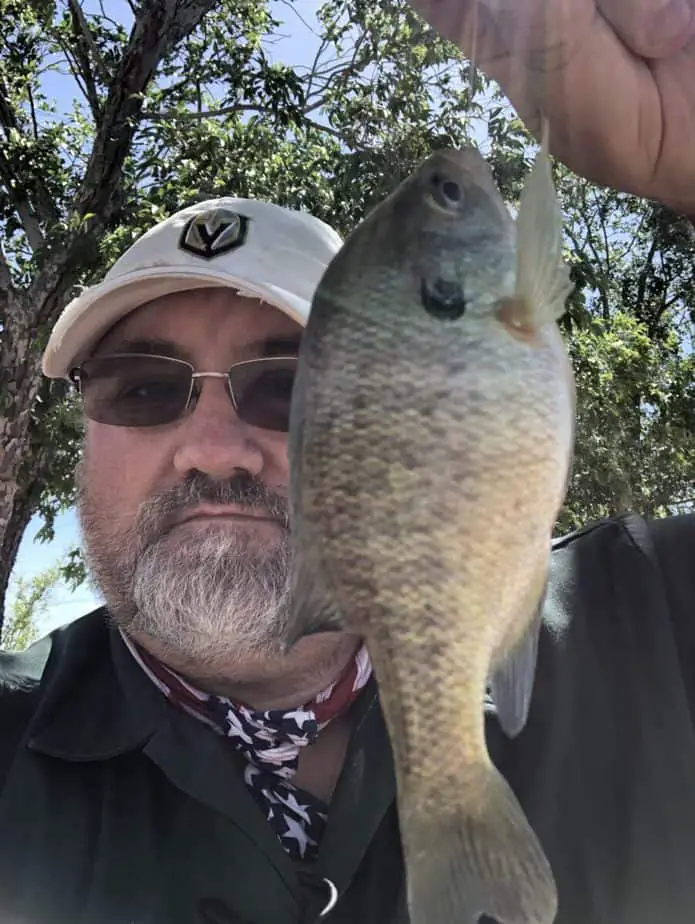
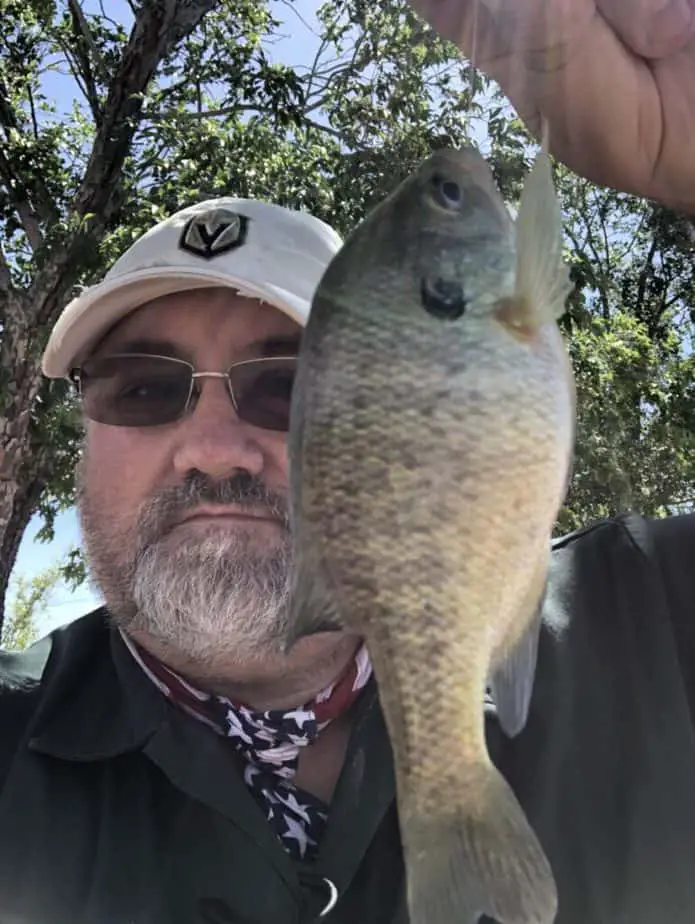
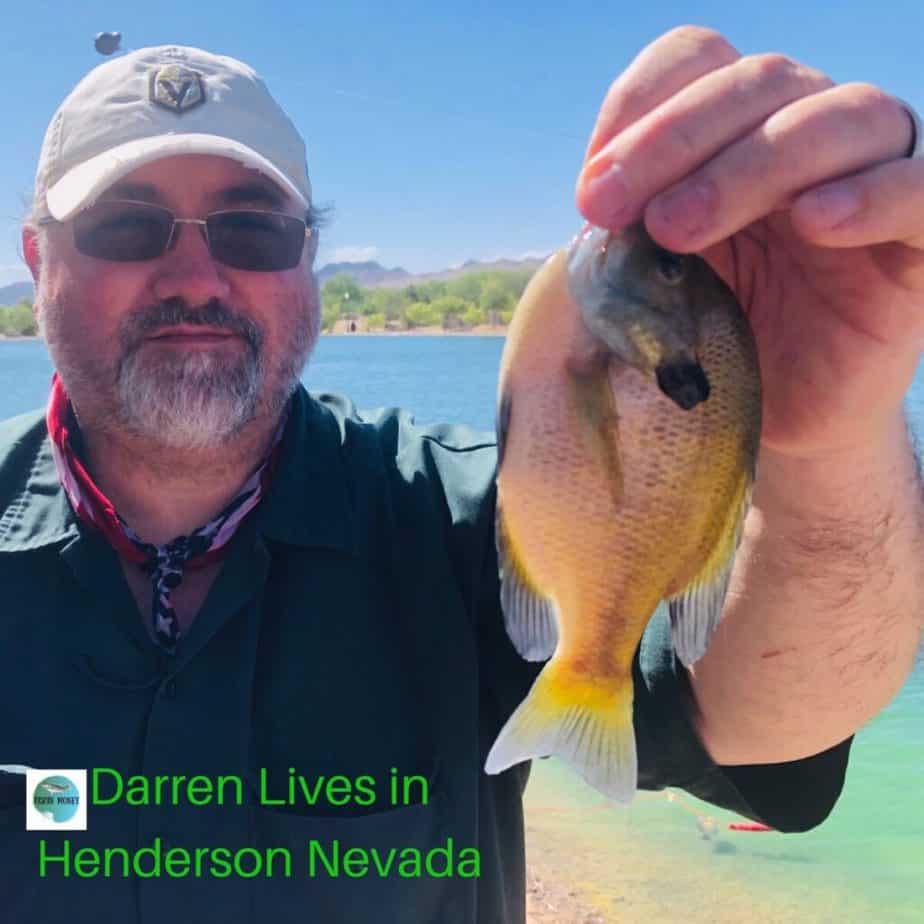
author Darren Enns (me) with my bluegill catch
There is one particular thing that seperates a good fisherman from a great fisherman, knowledge. Yes, you can watch “how-to” videos on youtube, but most of those famous youtubers have the knowledge that we are going to talk about.
Learning this knowledge means getting out and learning it, not watching or hearing someone explain it on a PC or smartphone video. They are informational, yes. But ‘hands on’ is even better. Knowing the area, the surroundings, the water, and the specifics about the species you are trying to catch is going to be more productive than anything. We are briefly going to touch on some of the best things to observe and learn to improve your fishing.
Decide what species fish you are targeting
First and foremost you need to observe and learn about the species you are fishing for. Focus on their underwater movements, what stimulates them, and be aware of the prime locations where they hang out. Find out when and where they hang out, what the best time of day is to fish (whether it is in the morning, evening or in the dark), when they spawn, and when they feed.
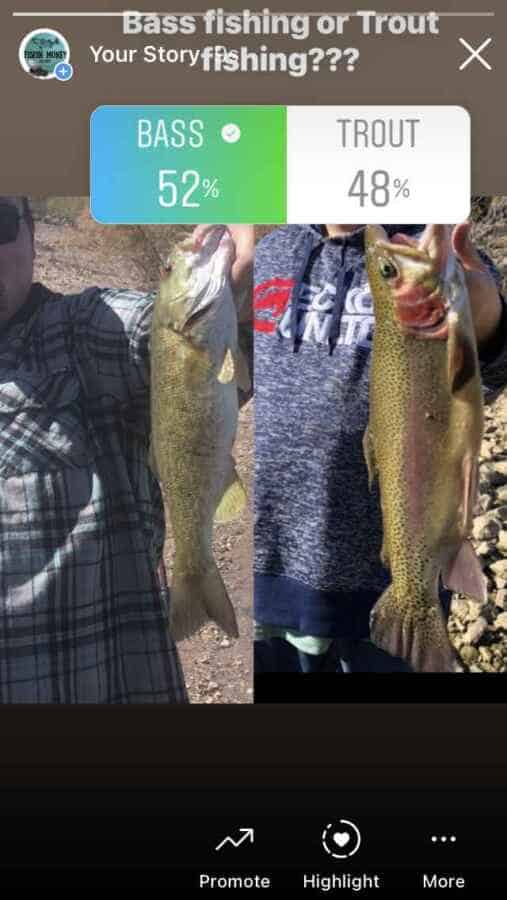
I did a 100-person survey on my Facebook page and asked if people like trout fishing more or Bass Fishing more. Here are the results
Learn water characteristics of your chosen species.
Water characteristics are very important as well. Learn the temperatures of water that the fish prefer, the clarity of the water, and be very aware of the tides and currents.
What is nature serving you?
A lot of anglers rely on modern technology, like fishfinders. But do not ignore nature. Nature is an important aspect of catching an abundance of fish. The wind, birds (or lack of), the presence of baitfish, and the calmness of the water are only a few tell-tale signs of a good or bad fishing day.
What are the best lures for your chosen fish?
You also want to obtain extensive knowledge on the best lure(s) to attract your specific target. This goes hand in hand with learning all you can about the fish you want to catch. Weather, time of day, and season are things that will determine what lure is best, as well as what kind of live bait they like. Some lures are made to replicate live bait and work extremely well. If you figure out the lures, then you know what to take with you and you are not wasting fishing time by changing lures. An extension of knowing the lures; learn which hooks and fishing line are essential for the lures you are using.
How To Improve Your Fishing -With FishinMoney
Learn what forage and vegetation your species fish prefer.
Another aspect that will help you improve your fishing; learn the forage and vegetation that the fish prefer. Certain fish like to hang close to or hide under specific forage or underwater structures. Along with this, find out what other places or objects they like to hang around or under; such as docks, bridges, and coves.
You have to be willing to be a student of nature, to learn and observe everything you can that is affiliated to fishing and improving your fishing skills. Some young men (and women) had a grandpa or father that was very knowledgeable about fishing and the area. Others went out fishing with dad just to bond or have fun. A relaxing day after a long week of work, school, and chores. Not worried, at all, about catching anything or improving their fishing.
You can check out a fish habitat conservation lesson here
Darren Enns Sunfish (BlueGill)
Other considerations
Then you have the professionals who know the in’s and outs of a particular species and their 24/7 habitat and routines. They are on a mission, everytime they are on the water, to improve their fishing. They study the fishing reports, the tide schedule, and always have their television on the weather channel. You can also find a seasoned angler in the area, who grew up there and they could teach you everything that you need to know. They can share their tips and tricks with you.
If you are going to go fishing in a new state or body of water, you can also hire a fishing guide. Fishing guides know the area like the back of their hand. The majority of fishing guides grew up in the area that they guide in, started fishing as a toddler, and have made fishing their life. They will take you out on their boat, and teach you the essentials on catching fish. From the weather, to lures, rods and reels, and techniques. Some can be affordable and some a little more expensive, but well worth the money.
If you want some easy tips and tricks to improve your fishing, we are going to give you those now.
Practice casting
One way to improve your fishing is to practice casting. You can do this on or off of the water. All you need to do is find an object or target and cast until you can hit that target. This will help you to be able to cast your line right on top of where the fish are.
Learn a couple of knots
Practice your knots. Knots are on of the most important parts to fishing, but are also one of the most overlooked things. Following fishing blogs, like ours, to get tips and tricks on how to improve fishing. You can also gain knowledge on the best lures, live baits, rods, reels and anything else you want to know or learn.
Keep your hooks sharp
When your hooks start to get dull change them! You want the best hook-ups possible and you can
only achieve that with sharp hooks. Make sure your rods and reels are clean. This is vital to your fishing success. If everything is clean, it will work properly when you hit the water.
There ya go folks! How to improve your fishing. I hope you enjoyed the article and get some great results from our suggestions. Stop by again soon to what else we will have in store for you.
If you are having trouble getting fish to take the bait but you can see them chase your lure, you can check out this article that may help you pinpoint why.
Are you seriously looking turn your hobby into a business? I recommend joining Income School. I’ve been an Income School member for a little over a year and joining was the best decision I’ve made in working toward my business goal.
In conjunction with and continuing with previous article; ‘when fish are jumping but not biting’, what do you do when you notice the fish are following your lure right up to the boat/shore and then they turn and swim away? A lot of the same principles apply here as with the earlier article. The same principles apply as far as trying to determine whether it is going to be a good or bad fishing day, the moment you arrive at your destination. Here we are going to cover some other possibilities of why this happens and what you can do to remedy the situation.
Mix up your retrieval speed
Before you go out on the water or find a cozy quiet place on the shoreline, evaluate the weather and what nature is telling you. Come up with a plan on how you want to approach fishing for the day. Stick to the plan, have fun, and be patient. As the day progresses, nature will continue to give you hints about the fish and whether it is a good day to catch them. Make sure that you have all the most popular lures for the type of fish you are seeking out. Color, size, trailers, and any extras that you can think of.
If you can physically see the fish following your lure, you get excited. You think this is the one, it is going to strike, and then BOOM; it turns and swims away. Your heart sinks, and you cast again. Some anglers believe that the fish are telling you something. They are suggesting that something is not quite right. You are on the right path, doing the right things, but something is just a little bit ‘off’ and it is causing them to swim away instead of bite.
When this happens, you will then need to begin the process of elimination and experimentation. They obviously like something about the lure you are using but dislike another aspect of it. The easiest thing that you can try is your retrieval speed. But if they are following your lure now, is that really the issue? Some would say that it is not, but others would say that you should still mix it up and find out for sure.
Try mixing up the color.
Your next possibility is going to be changing the color of the lure. Not the style/type, just the color. Maybe they like the lure you are using and the size you are enticing them with, but the color is not quite what they are looking for. So, you go through your tackle box and retrieve your various colors. Make sure to give each new change time to work (or not work). As you are changing the lure colors, experiment with the speed of retrieval or the way you are jigging the lure.
Change lure size but go back to original color.
If changing colors doesn’t seem to be working, then some anglers suggest that you go back to your original color but change the size of the lure. Go down a size and see if something smaller is what they are craving. See if your jigging method with a smaller lure entices the attack. It may get a little boring but try to be patient. They are following but not biting the lure for a reason. It is just going to take a little time to figure out what they want. You can also try moving to a shadier spot and trying out some topwater lures. But don’t get discouraged if you don’t figure it out. It just may not be the day to catch any fish. But only to be able to observe them.
Try adding a trailer
One other way that anglers have suggested, who have had this exact same issue with picky fish; if you are using a jig or a spinner bait, try adding a trailer. If none of these options are working for you it possibly may just not be your lucky day. The fish are just there to tease you and make your mouth water, thinking of the amazing ways that you can cook them up.
Do you need to attack from a boat or on shore?
As with our earlier article, read nature. What is the atmosphere telling you? Is it calm, quiet, cool, cloudy, and are there birds present? If there are birds present, then you will need to decide if you want to launch your boat into the water or if you may have more luck from the shore. There are so many variables and speculations on why you are or are not having any luck catching fish. Especially when you can clearly see other anglers catching them right and left.
Maybe just relax…
If you are on vacation and fishing in a completely new area, take a break. Have lunch at a local café or go hang out at the local bait shop and see what the locals are saying. They will know the area extremely well and can tell you different things to try, the ‘lucky’ spots for certain species, the perfect time of day, bait/lure to use, and anything else that may help you out.
If a certain species of fish is ‘teasing’ you by following your lure, and then shunning it maybe you need to try fishing for a different species all together. Completely change your lure/bait and see if you can entice a different fish to strike. It may just be that a species isn’t interested or hungry at that point and instead of stressing yourself out, by trying to figure out what they want, aim for something else. Many bodies of water that hold fish, have many different species swimming around together. You may have to change location completely or you may just have to worry about casting further out. Completely change to top water and go find a nice quiet cove. Troll out deeper or closer to ledges or forage and see what you can entice. There are so many different reasons why fish do what they do and not even an expert has all the answers as to why you are not catching fish.
When most fishermen go out, it is to relax and unwind from a busy week at work. So, try to focus on that. Enjoy your unwinding time (or your vacation) and not focus so much on why they are not biting. Enjoy the water and the company, if someone comes along, and enjoy nature. Catching fish for a meal or 2 is just a bonus.
Bluegill Haul by Ethan Enns
Are you seriously looking turn your hobby into a business? I recommend joining Income School. I’ve been an Income School member for a little over a year and joining was the best decision I’ve made in working toward my business goal.
There is no question that fishing is something that has brought together literally millions, perhaps even billions, of people over the centuries. Many fond memories have been made between father and son, nephew and uncle, aunt and niece, and between childhood friends as well.
Indeed, in the 90’s country music video “Feed Jake” by Pirates of the Mississippi, there is a scene where two young boys are headed out to a lake with fishing poles in hand! However, much like this ancient pastime, the art of debating things seems to be a pastime that is old as society itself.
Of course, you might be asking, just what is there to debate when it comes to fishing? Well, as it turns out, actually plenty of things. One of the most pressing would be this question: is fishing considered a sport or simply just a hobby? Either way, it seems that everyone has an opinion on that age-old question.
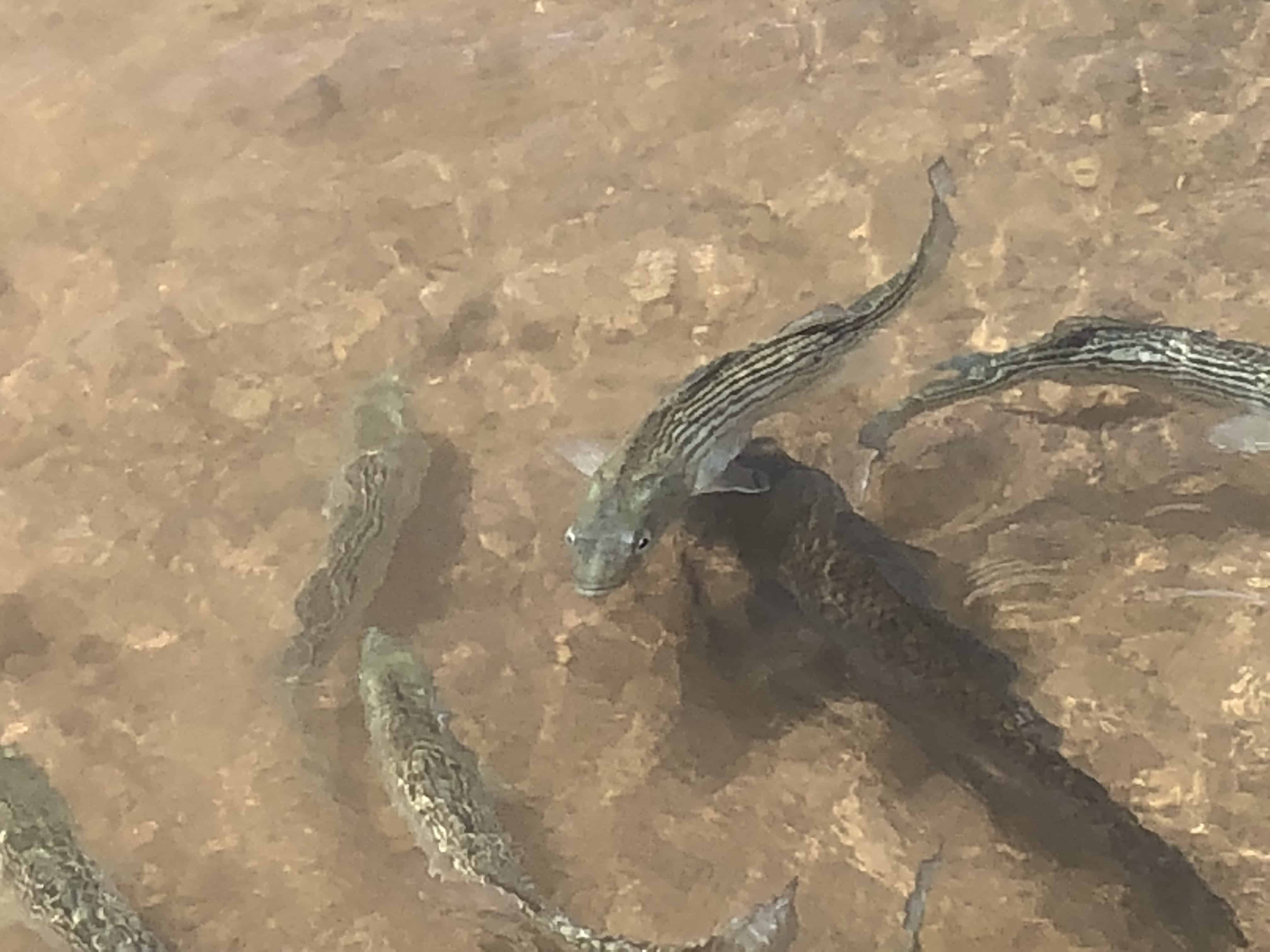
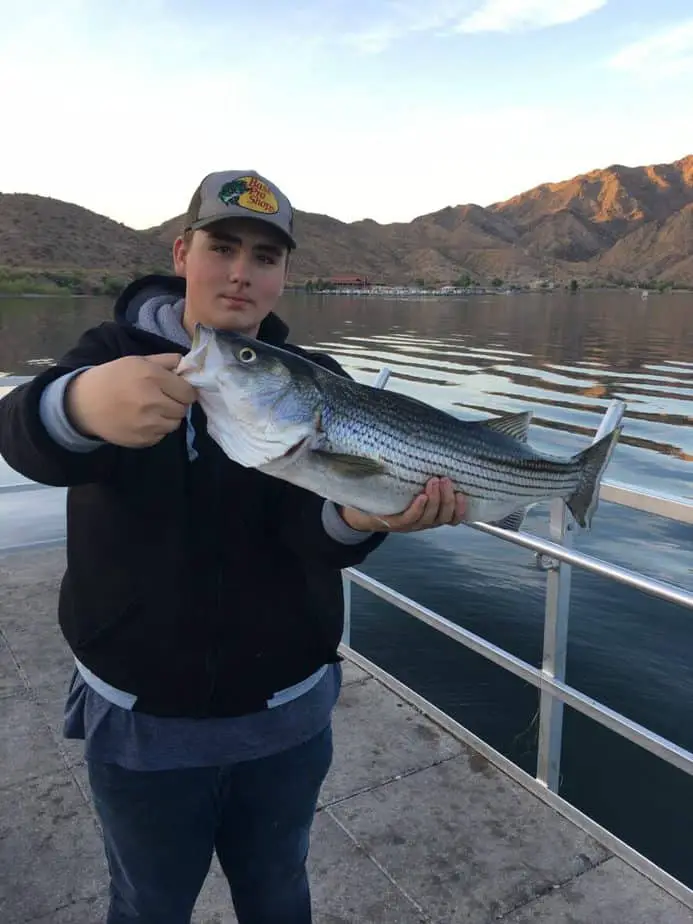
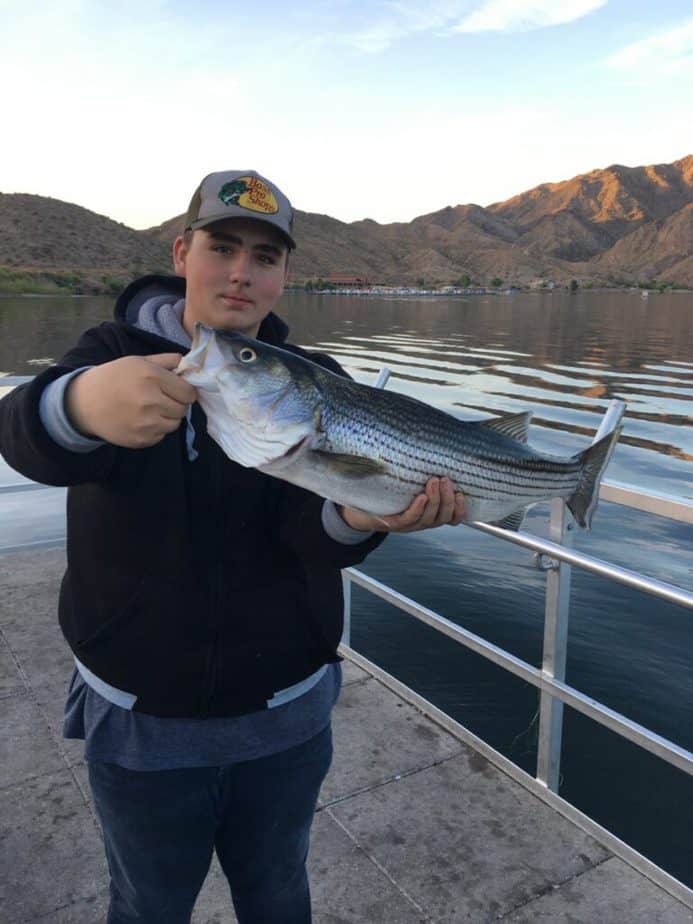
Ethan Enns with a Striped Bass at Willow Beach Pier
Since a sport should include physical exertion and skill in order to compete against others or yourself, we can definitely say that “yes” Fishing is a sport.
When it comes to fully gauging whether fishing is a sport or not, there seems to be several camps. In one arena, we have what I call the “PETA camp”, and frankly, they are pretty adamant that no, it’s not a sport, because fishing is simply just a leisure activity that all individuals can do and requires no skill whatsoever, so how could it ever be a sport? (Hey, don’t flame me, I’m just telling you how they view it) In other words, they believe that fishing isn’t a sport simply because anybody can do it.
Another camp agrees that yes, anybody can do fishing, but it still can be regarded as a competitive sport simply because it does require some degree of skill and, at the same time, it can be enjoyed by people from all walks of life regardless of age, sex, size, strength, or even disability. Either way, all it takes is a couple of hours worth of research before you realize that there is a litany of forums where some are adamant that it is a sport while other forums are just as adamant that it absolutely is not a sport whatsoever.
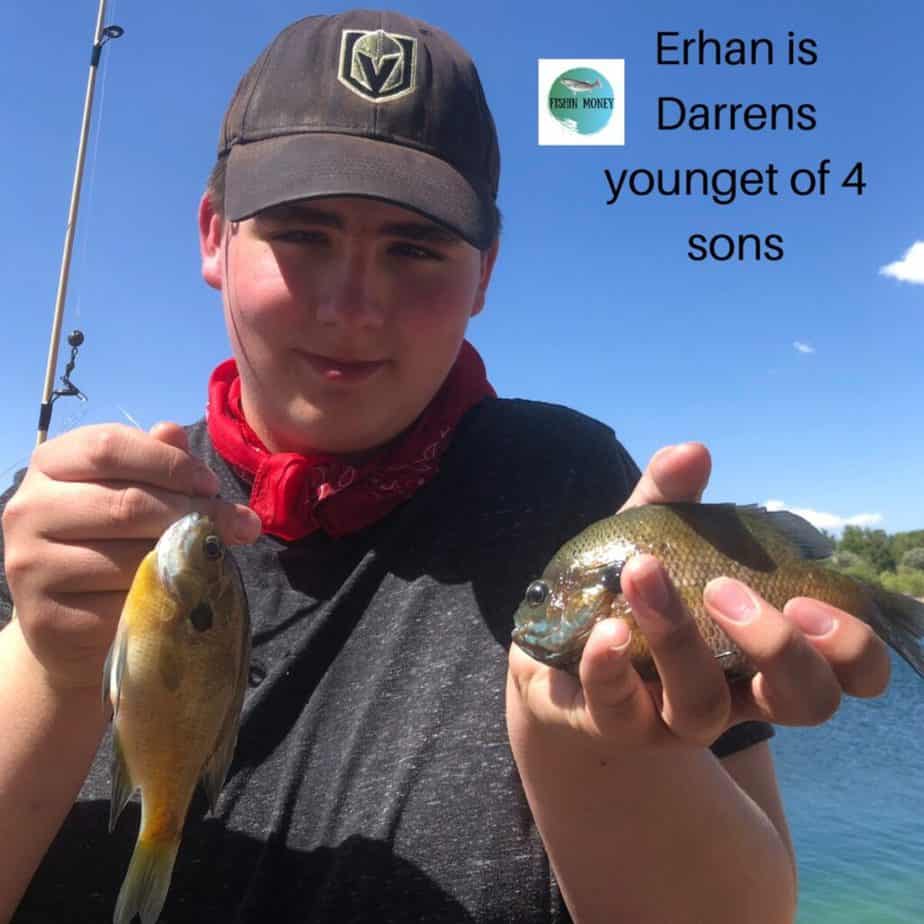
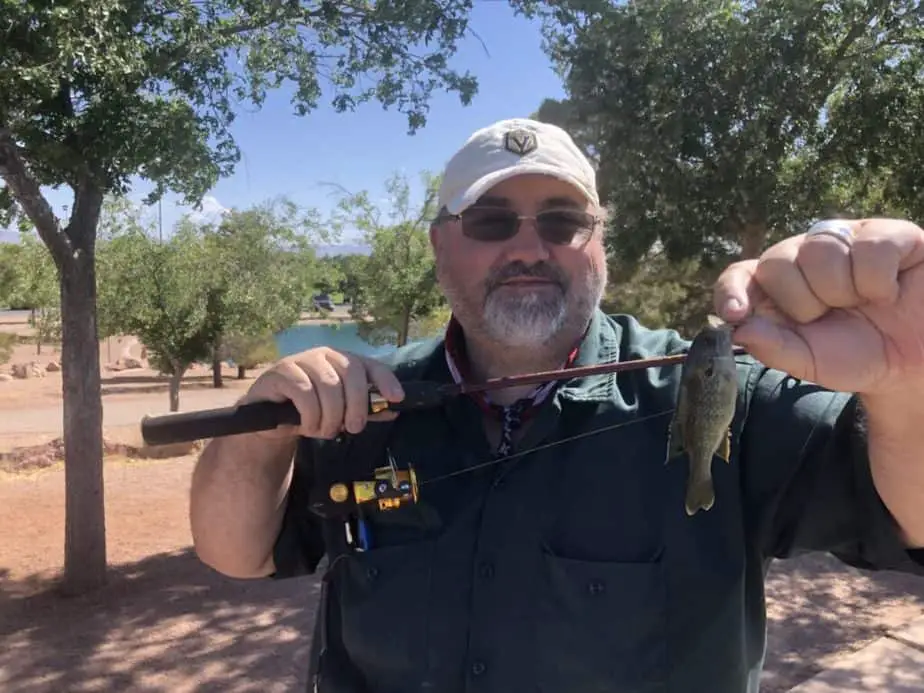
Author Darren Enns with a Bluegill at Veterans Memorial Park in Boulder City Nevada
Of course, things definitely get interesting when a venerable internet sports institution such as Bleacher Report weighs in on this topic. Interestingly enough, they seemed to take a rather wishy-washy approach to whether fishing can be considered a sport or not. One of the first things they did was ask themselves several questions regarding the status of whether fishing could be considered a sport:
Question: Does fishing require any sort of intense exercise or any special abilities?
Answer: At times, it sure does.
Question: Do you need some physical skills to do fishing in an effective manner?
Answer: Sometimes.
Question: Is fishing considered a competition?
Answer: In many instances, yes.
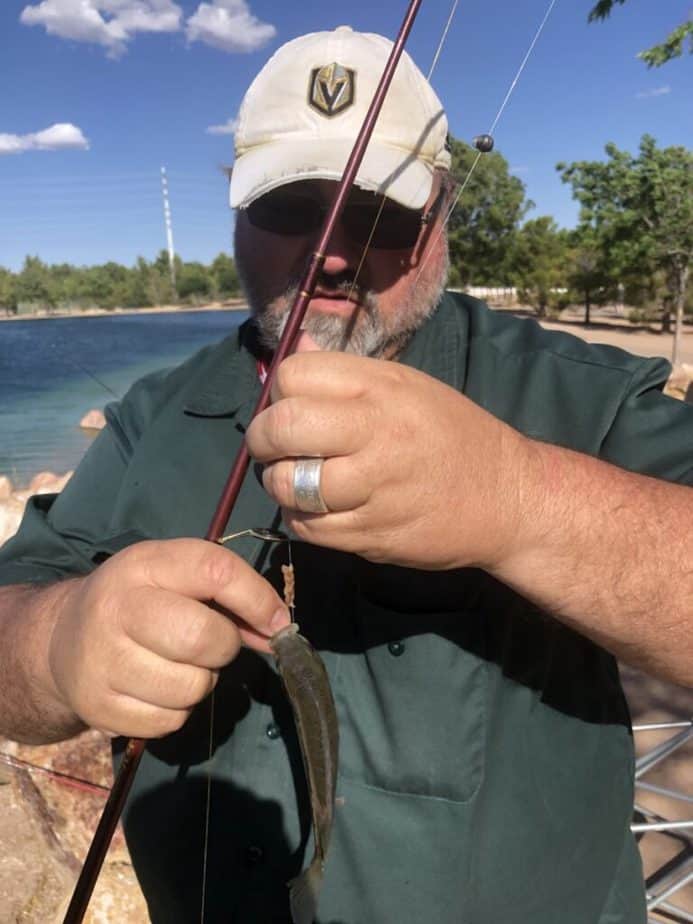
Darren Enns with a Spinnig Rod and Bluegill
Still, there are some people in yet another camp, and these individuals say that yes, fishing is indeed a sport, but only in the proper context. These individuals say that simply driving out on a frozen lake, drilling a hole, plugging in your generator, dropping your line, and enjoying some brewskis is not a sport, even if you occasionally get a tug on your line. The same goes for simply riding around on your motorboat and dragging a line here and there; in their eyes, it’s not a sport, even if the fisherman occasionally flexes his muscles to get a small catfish here and there. However, even in this case, there are some who would disagree.
Of course, there are some cases where you can definitely argue that fishing is a sport. In the case of hauling in a 50-pound bass in a bass fishing tournament, then yes, it is a sport. However, despite the fact that Bleacher Report seems to only feel it is a sport sometimes, many would argue that fishing is always a sport, and here are a few reasons why:
Both Anglers and Athletes Can Find a Lot of Common Ground
When most people think of athletics, they only think of those who can dribble a basketball, hit a baseball, throw a football, or bowl a 300 game. However, ask even the most junior fishing angler, and they will tell you that it takes an incredible amount of skill to be able to reel in even a catfish. All breeds of fish have a tendency to fight the line, and do you have the energy, stamina, and strength in order to properly haul it in? Fishing isn’t as easy as it seems, no, not at all. I mean, how
much literature has been written regarding how difficult it is to reel in a fish? Literally a whole library! The book “The Old Man and the Sea” is just the beginning. “Wicked Tuna” is one of many shows dedicated to the ancient discipline of fishing.
All of the above experiences are just in reference to your everyday, ordinary fisherman. What of the big-game fisherman? Trust me, those that go after that huge, giant fish are completely wiped out after fighting a fish that is on par with Andre the Giant in aquatic form. They may not show it when they pose with that catch for that picture, but that smile simply means that they are “tired, but happy.” These championship fishermen are every bit as tired as someone who has gone toe-to-toe with a heavyweight boxer or a rock-solid UFC fighter. Seriously, if you don’t think that it’s a workout to land a 50-pound tuna, then think again.
Like other athletes, anglers follow many strict personal regimens.
Fisherman Darren Enns go Knights Go
Additionally, you should be aware that if you talk to any angler out there, they will consider themselves to be an athlete even if no one else does. They will take their fishing discipline seriously, and they will have certain pillars in their lives that they will swear by for top-notch performance. Like other athletes, they will have certain training, diet, sleep, and studying regimens that they will follow religiously. They will always want to make sure that they get enough sleep, simply because they realize that they would have slower reflexes while on the boat the next day. Heaven forbid they miss some serious fish movement in the water below the boat simply because of sleep deprivation!
The experienced angler also realizes that they must have a balanced diet in order to function properly. Most anglers will have an arsenal of food choices to make sure they have all of the minerals they need for a day out on the water. Snacks such as eggs, bacon, coffee, and energy drinks have become a staple for many fishermen. Alternately, some anglers will go with granola bars or other healthy snacks. Still, other anglers will often swear by sunflower seeds, nuts, or beef jerky.
Either way, whatever habits an individual angler might have, they all have one common denominator: all of them have a drive to succeed, and they all realize that the only way to do this is through understanding the science of their fishing passion.
Fishing can improve your physical health.
If you approach it right, fishing can definitely improve your physical health, much like any other sport. Fishing will take a worn-out couch potato and give them something to do with their time that actually takes physical activity to pull off effectively. For one thing, you often will have to make your way through some rocky natural terrain to get to your fishing spot. Additionally, you will often have to find a location for building your fishing line, providing valuable muscular exercise. Casting and reeling on a repeated basis will help you work on your eye-hand coordination. Finally, the activity of fishing has been recognized as a low-stress way to work on your hands, forearms, wrists, biceps, shoulders, and triceps. Perhaps not surprisingly, there are many psychologists and counselors who recommend fishing activities for injured veterans as well!
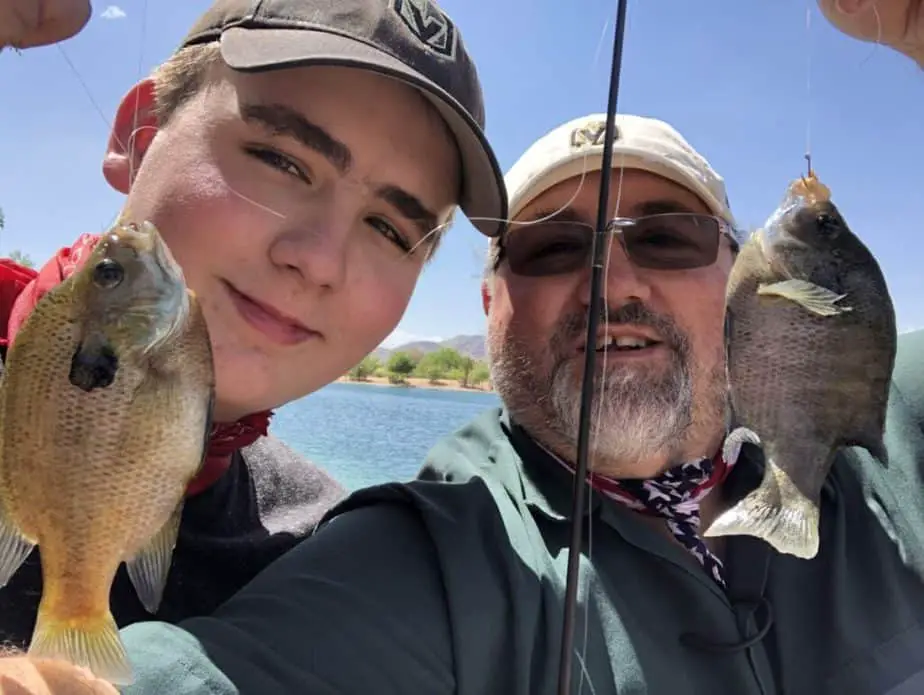
Ethan Enns and Author Darren Enns Team FishinMoney
Like many other sports, fishing promotes your well-being in a variety of different areas.
It is actually a proven fact that angling is a very therapeutic thing for someone to do. Of course, there are many other sports that you can go with, and that’s your prerogative. However, many of these other sports are very tedious, and they can cause extreme stress, broken bones, or could even be life threatening. Continue to try these sports if that strikes your fancy, but all the while fishing is sitting on the sidelines, promising you a refuge from all of the stress of your hustling city life, and it’s even a sport that won’t pressure you, unlike bull riding or car racing, for example.
The best way to sum it up is that fishing will be a serene way for you to pass your time. You cast your line out on that lake and you get a well-deserved break from all of the stressors in your life. Of course, if you prefer running sprints in football, having a hockey puck flying at you in hockey, or diving for a line-drive in baseball that is up to you.
Considering all of the stressors regarding these other options, fishing would seem to be quite a bit more appealing to many other hobbyists.
Like other sports, you will learn discipline, perseverance, and leadership.
There is no question that sports teach us a lot about ourselves. We learn many essential leadership lessons from many of the most popular sports such as football, basketball, hockey, and track and field. However, you definitely shouldn’t leave fishing out of that loop. First of all, fishing still has a team element to it simply because you usually do it with other people. This is especially true in a fishing tournament as the amount of fish you catch is directly contingent to how well your fishing team does.
Of course, it’s a no-brainer that fishing teaches perseverance, simply because it takes a lot of practice and skill to land some of the largest fish on your targeted lake! Of course, it’s also a no-brainer that getting your children involved in fishing is more than letting them just play XBOX or Playstation all day long. However, even for adults, the sport of fishing will help you develop strength, flexibility, stamina, hand-eye coordination, and focus. These are not only skills that will help you in sports but also on the job and in society as well.
Moreover, these are skills that we learn just by being out on the water by ourselves. When we enter into a fishing competition, we actually have to step out of our comfort zone and that is when we experience all kinds of thrills, challenges, and we gain more understanding of our chosen sport. This is where team dynamics and sportsmanship come in for sure.
You will get a serious sense of accomplishment when you fish.
Finally, like any other normal sport, fishing will give you a sense of accomplishment. You definitely fish for different reasons, whether it be for combating stress, solitude, sanctuary, or even doing it competitively. However, whatever your main purpose might be, there is nothing like the feeling of satisfaction you receive when you feel that first tug on your fishing line. Your happiness and contentment is truly unparalleled.
Are you seriously looking turn your hobby into a business? I recommend joining Income School. I’ve been an Income School member for a little over a year and joining was the best decision I’ve made in working toward my business goal.
One of the best things about fishing is that it truly gives you a sense of belonging within the world. Fishing is one of those pastimes where you can get out in nature and experience much more than just the water and your rod and reel. You also see how the birds interact with the water and how the wind blows across the lake. You are at peace with the world.
Part of the reason for this would have to be because fishing is not just a sport, but it is also a way to stay in tune with our ancient, primeval ancestors. You see, fishing is actually one of the oldest sports in the world because it hearkens back to when we were just a hunter-gatherer type of society. Considering that fishing teaches you so much about your world and society at large, don’t let anyone tell you that it isn’t a sport. It truly is, because even if you aren’t entering into tournaments, you are still competing with the fish and within your own records as well. It’s time to enjoy the oldest sport in the world!
Bluegill Story
Story: I took my son to Veterans Memorial Park in Boulder city Nevada where we fished for bluegill. In the morning up until about 11 AM we had no luck but we were using tiny worms and we were not fishing in a very good location at the pond. We left the pond to go get some lunch and while we were out we picked up some fat juicy nightcrawlers. When we return to the pond there was a spot open that looked like a better place. My son and I took that spot and we were using about 1/3 to 1/4 of a worm on a tiny hook. In the next two or three hours we each carton bluegill and as a bonus I caught one turtle of course sweetheart everything go as we like to practice catch and release if we can. We had a great time and we knocked em dead on the bluegill.
As a fisherman, if you have spent enough time in the hobby, then it wasn’t long before you realized that there are many more variations to fishing than what the beginner might notice. Indeed, there are many different ways to fish, including the utilization of many different baits.
Of course, most people simply just use live bait, but with all due respect, others realize there is a whole world of fishing that these individuals are missing out on. Indeed, there are fishing hobbyists who have worked for years perfecting different techniques to get finicky fish to come out of their shell and bite their bait.
This is especially true for bass, who is known for being one of the smarter varieties of fish. Of course, this is a good option for those who want a challenge. Moreover, one of the best ways to land this elusive bass would be through the discipline of finesse fishing.
Finesse Fishing Explained
What is finesse fishing, you ask? Well, it’s simply yet another method in the fisherman’s arsenal for coaxing out finicky fish. Of course, it takes some practice to get it right; it’s not something where you can go out immediately on the lake and do it absolutely right. Finesse fishing is all about attention to detail. It’s all about finding the correct placement for your bait and the correct location for your rod and reel. It is basically about finding a certain specific way to present your bait to the fish. Naturally, this method of fishing is very detail-oriented, and proponents of this fishing method are very careful about every item within their fishing equipment.
Of course, this all begs the question: which rod is best for this type of fishing? Well, that is definitely open to a lot of debate among finesse fishermen, so here is some extra information regarding the discipline of finesse fishing:
Finesse Fishing: A Brief Introduction
We’re getting down to the nitty-gritty here, but first things first: you have to understand what the word finesse means and what “finesse” means in relation to fishing in the first place. The word “finesse” is defined as “intricate and refined.” Thus, when it comes to fishing, this simply means that no detail is overlooked. Take a look at some of these extra considerations.
Finesse Fishing is More of a Small-Handed Fishing Version Rather Than a Heavy-Handed One.
What do we mean by that? Well, the best explanation is that finesse fishing for such species as bass will entail utilizing such equipment as a spinner with smaller action, a soft plastic that is much thinner than normal, and a spinning action with a subdued action that will still feature a good spinning gear.
This is in direct contract with the normal heavy bass fishing methods, which usually feature such things as a huge, bulky lure, a fast-moving production, and a bait casting operation with a lot of heavy action. This is all well and good, and it does catch a lot of bass throughout the year. However, these methods do not allow
for such things as the clear water, cold fronts, or the fishing pressure scaring the bass away. If you want to fish for bass all-year-round under most circumstances, you will need to have more than one fishing method in your arsenal. This is where finesse fishing methods come in.
Now that you’ve realized that finesse fishing DOES have a purpose, let’s have a look at some of the best rods for the practice:
So Just What Makes a Good Finesse Bass Fishing Rod Anyway?
Now that we’ve laid the groundwork for those who are beginners in finesse bass fishing, it’s time to discuss the importance of using the right rod for this type of fishing. Either way you slice it, selecting the best rod for finesse fishing is a topic all to itself, and there is naturally a lot of debate regarding which one is best.
The job of this blog entry is not to promote one rod over the other, but whichever brand you select, there are some must-have characteristics and attitudes you need in order for you to have the best finesse fishing experience:
When it comes to the bass fishing old-timers, take their views of finesse fishing rods with a grain of salt,
Chances are, anyone who has been bass fishing out on the lake for any length of time has either considered or went ahead and tried finesse bass fishing. This discipline is like everything else; some have tried it and liked it, but some have tried it and not cared for it.
Those who don’t care for finesse bass fishing will usually immediately criticize the rods that are used for the finesse strategy. Their complaints will usually go something like, “Well, these finesse bass fishing rods are good for nothing whippy spinning rods that only work part of the time. Seriously, you need to have a tight line paired with a tiny bait, or it’s nothing more than a piece of junk!”
Yes, they will get THAT adamant about it. However, this description isn’t necessarily true, and you owe it to yourself to decide on your own what you think about finesse spinning rods. Of course, this leads us to our next point.
Finesse bass fishing rods are actually quite versatile and durable.
Naturally, when it comes to finesse bass fishing rods, not all of them are created equal. When selecting the best finesse fishing rod, it will often boil down to four words: shock absorption and backbone.
That’s right: if you are looking for the best way to catch these stubborn basses out of season or in less-than-perfect weather, you need a rod that can withstand just how tough these little creatures can be!
The shock absorption on your finesse rod will allow you to withstand an incredible fight from even the most stubborn bass. Moreover, the shock absorption on a fishing line will also help you be able to land this bass without the hook being torn straight through the little one’s mouth entirely.
Naturally, it can be difficult to find a finesse fishing rod with the right shock absorption or backbone, but like everything else in life, it pays to read the fine print. Much like you read the small details on all your grocery store items in order to prevent an allergic reaction, you should do the same with your fishing rods to make sure they can handle a stubborn bass.
Finesse rods need to have the right configuration for your needs.
Along these same lines, you should go with a rod that is precisely calibrated for this bass fishing strategy. Many anglers have found success with a rod that has a 70/30 calibration.
That is, the rod will have a 70 percent backbone, which means that the rod will remain stiff and continue to hold up even under the immense pressure of even the strongest and most determined bass. Simply put, even though bass might appear to be small, there are some of these creatures that are so ripped that they have been known to break many different fishing rods.
This is why you want a rod that is 70 percent stiff, if just for the purpose of having the strength to control that fish in his watery domain. Moreover, you have to realize that you are trying to fish for these basses in the same place that you would normally cast a regular spinner or a jig.
Hence, yet another reason why you need a rod with at least a 70 percent stiffness. However, do be aware that even if you keep in mind getting a rod with this degree of stiffness, we still aren’t done yet.
That’s right: we also need a rod that has the 30 percent calibration as well. Having a rod with a 30 percent tip means that you are able to withstand a lot of shock to the bottom part of the rod that usually comes with casting all of these light lures. This also means that your rod will have the flexibility to keep the line strong even when you do encounter a stubborn fish.
Of course, there is no question that this rod is very versatile. However, there is definitely one small problem: if you aren’t an experienced angler, how can you tell if you are handling (or planning to buy) an appropriate 70/30 rod? Usually, a good rule of thumb is to simply just know how to properly handle the rod.
For starters, you should simply just test the model yourself. You would do this by holding the rod with your left hand, and then run your fingers along the handle by the reel seat. At the same time, you should also pull down on the rod tip with your right hand.
Watch carefully, seeing just where the tip begins to stop flexing. If you have an authentic 70/30 fishing rod, you will immediately notice that it stops flexing just about a third of the way down the shaft of the rod. The beauty of this method is that you can employ this practice with just about any rod you are considering buying in order to fully determine the true action of the piece.
While 70/30 is a good calibration to keep in mind for those just starting out in finesse fishing, this calibration is by no means the only model that you can use.
After you have gotten some practice with finesse fishing under your belt, you also could consider a 60/40 model, simply because many finesse fishermen do not like to stick with just one calibration. Additionally, some finesse guys like a 60/40 rod because it will usually hold up better for a litany of light wire fishing activities.
Many finesse fishermen also like this model because it is great for either split shotting, drop shotting, or any other occasion where you might be fishing with a smaller hook.
The length of your rod is important too.
Of course, you also should pay attention to the length of your finesse rod as well. Interestingly enough, there really isn’t any one length that will work best; it kind of depends on what goals you have in mind. For example, you might want a rod that is 6 1/2 feet if you are fishing in a tightly covered area or if you
are putting your bait out in an area that has a lot of debris, such as boulders, rocks, branches, or dock beams. Alternately, you might want to go with the slightly longer seven-foot finesse rod model if you intend to make longer casts out into the water.
A seven-footer is also good for finding the bigger fish that stay further out and might normally be more easily spooked.
Find your own “lingo” for what kind of finesse rod you are looking for.
When you are shopping for a finesse rod for the first couple of times, one of the things you immediately realize is that there is no such thing as a “one-size-fits-all” description among rod and reel companies.
Simply put, it varies. Some companies will say their rod is “medium”, and that’s all well and good, but you could take that exact same rod to another company and they might classify it as “medium/heavy” or even “medium/light” with another company!
This is why it is so useful for you to simply go with the 70/30, 60/40, or 80/20 method. Yes, it might sound like you are talking about motor oil calibrations, but it’s a lot less confusing and much easier to get the rod you want that way.
Don’t be afraid to experiment!
Finally, there is no getting around the fact that you might need to go through some trial-and-error before you find the best rod for this type of fishing. This means being patient and trying out different rods until you find the one that is best for your own unique finesse fishing situation. Simply put, the best rod for finesse fishing is the one that fully meets your unique finesse angling expectations. There is no “one-size-fits-all” variety. Just try everything out until you find the right one for you.