Category: Crappie Fishing

  • What Do You Use To Catch Crappie

    What Do You Use To Catch Crappie

    What do I need to catch crappie?

    So, you are thinking about going fishing, or taking a week long vacation to a popular lake somewhere to try to catch the sneaky and elusive crappie. You want to be as prepared as you can and you want to get the best bait (and other equipment) to have a successful trip. Today, I am going to answer that all important question for you: What do you need to catch crappie?
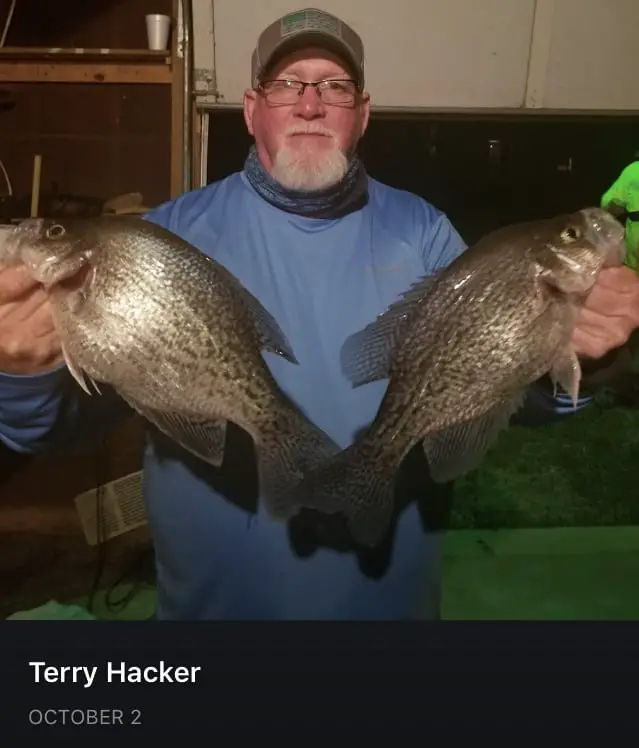
    Terry Hacker Super Slabs

    The information that I am going to provide you with has been thoroughly researched and obtained from multiple sources all over the internet, coupled with my own experiences. The mission is to give you the most comprehensive information that I can on the equipment that you will need to catch crappie. So sit back, relax and lets get started. 

    If you would like to find a way to make some money by fishing and writing about it or making videos about it like I am doing here, check out the guys that can teach you how to do it here.

    Select a Rod

    First thing I think we are going to go over is the type of fishing rod that is best for catching crappie.

    To maximize your crappie fishing experience it is best to use an ultralight or light rod and reel, spinning combo. Pair this with a light line and you will have a rig with finesse and versatility. There are four main things to look at when you are purchasing a rod:

    • Rod Length
    • Action
    • Power
    • Material

    Rod Length: a longer rod usually means that you will be able cast farther out into the open water. 

    Action: this is the speed that the tip of the rod returns back straight after a flex. With a fast action rod the flex point is towards the tip of the rod. With a slow action, the flex point is going to be closer to the handle of the rod. 

    Power: this is more or less how stiff the rod is. There are multiple rod powers to choose from when buying a rod; ultralight, light, medium, medium-heavy, and heavy. 

    Material: there are 3 options that rods are normally made from. Fiberglass, graphite (also known as carbon fiber), and a hybrid of both together. Fiberglass is heavier and less sensitive than graphite. It is also more durable and easier on the pocket book. 
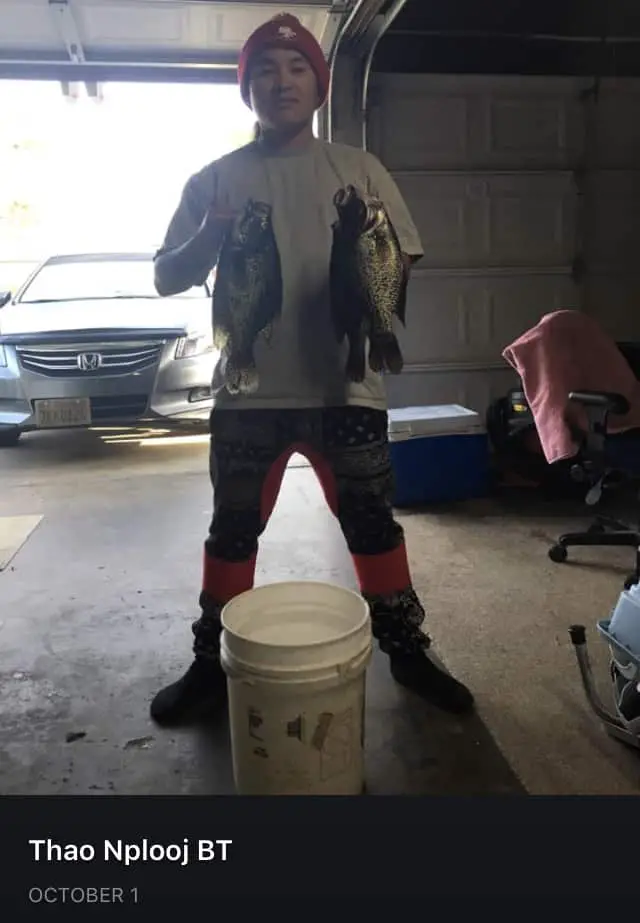
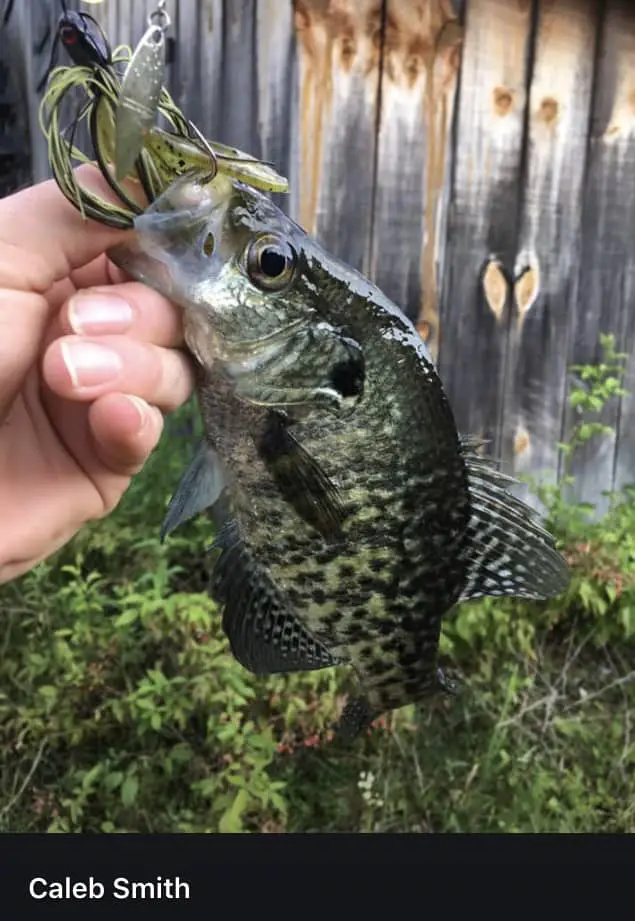
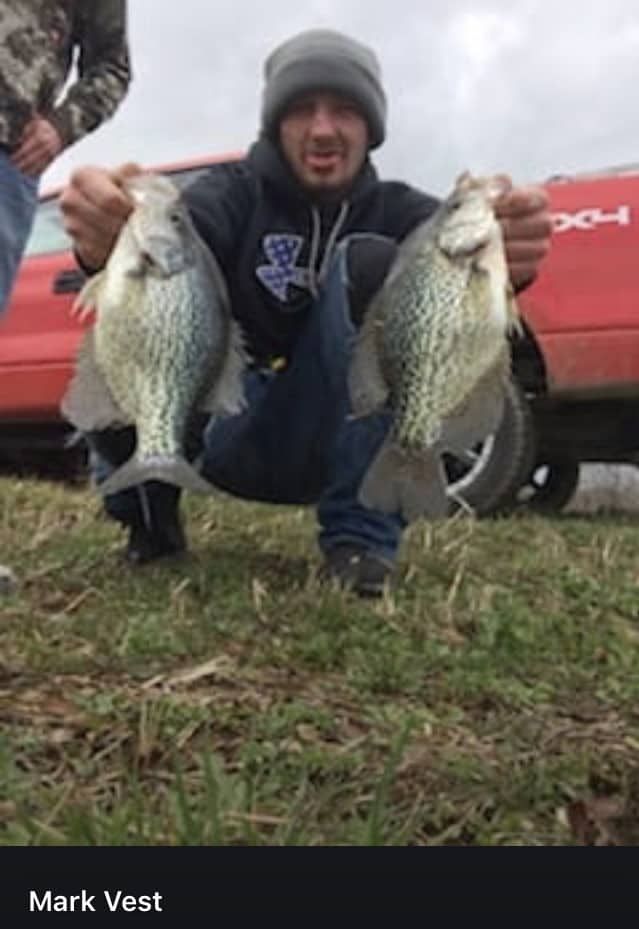
    Thao Nplooj BT some NICE black Crappie

    Rod Selection Continued

    When you decide to purchase your rod for crappie fishing, you are going to find thousands to choose from. Here we are going to give you the 2 best options.

    One is perfect for beginners, and the other is a little more advanced, but they will both produce lots of crappies in the bucket. 

    Cane Poles: these are the most simplistic rod that there is on the market. There is no reel, just a rod and a line holder. Perfect for beginners of all ages.

    One big advantage to using a cane pole to catch crappie is that they allow for precise and vertical jigging. Yes, you are missing some advantages of a rod and reel combo but a cane pole will put your jig or minnow exactly where you want it to go which is a bonus if you are fishing in vegetation or heavy cover.

    You will not have to worry about your bait getting tangled, because you are not reeling it in. It is just a quick lift up, and your bait/lure is out of the water and you are ready to cast again. Cane poles can range from 7-23 feet in length with the power of the rod being between a ultralight and a medium. 

    Spinning Rods: when choosing a spinning rod and reel, you want something in the 5-7 foot range with a medium to slow action and an ultralight to light graphite rod.

    Five to seven feet is a good balance between portability, casting distance, and weight. You want to purchase a slow or medium action because of the crappies mouth. They are so paper thin, and a heavy pole will make it more likely to tear the hook right through their mouth.

    Crappie is one of the smaller species of fish and that is why an ultralight or light rod is recommended. Graphite or fiberglass in this case because they are more sensitive and lighter weight. This will work in detecting the soft finicky strikes of the crappie. 

    Presentation

    Now that you have a general idea on the rod that is best for catching crappie, lets move onto the presentation. We are going to take a look at jigs, lures, and live bait. I will cover what they are, how they work and our top pick in each section/category. 

    Lures: a fishing lure is a type of artificial bait which is designed to attract a fish’s attention. Here are a few of the top types of lures that have been proven to catch crappie. 

    – Tubes: one of the favorites used by crappie fishermen, the tube. Tubes are very durable with an angler being able to catch 20-30 fish on 1 single tube. These are also popular because you do not need to worry about getting them snagged and breaking your line. Which in turn, saves you a little bit of money. Our top pick is Johnson Crappie Buster Shad Tube.

    – Spinners: spinners are basically a small jig head with a small spinner blade dangling below. This gives the bait a slightly different action in the water and adds a little ‘flash’ to help get their attention.

    Spinners should be used near the bottom of the lake/river with a slow retrieve. Try using slow and steady retrieve or a lift and fall retrieve, if neither work then combine the two and hook that crappie.

    The smaller spinner for fishing a crappie, the better. Spinner blades are made of gold or silver and be dimpled or smooth. The top pick here is Mepp’s Aglia Spinner Treble Hook. 

    – Crank baits: these are used to try to entice a reaction from the lazy, summertime crappie. You want to cast and retrieve at a decent speed. Some anglers use these behind their boats, where legal.

    Crank baits snag easily and therefore are not recommended for the beginner fishermen. Crank baits are best served by using them around the edges of cover; brush piles, stumps, and weed beds. The top crank bait is the Strike King Bitsy Minnow Bait. 

    Lets now move onto the jigs that are used to catch crappie. Jigs are a type of lure that has a lead sinker with a hook molded into it and they are covered by a soft colored body.
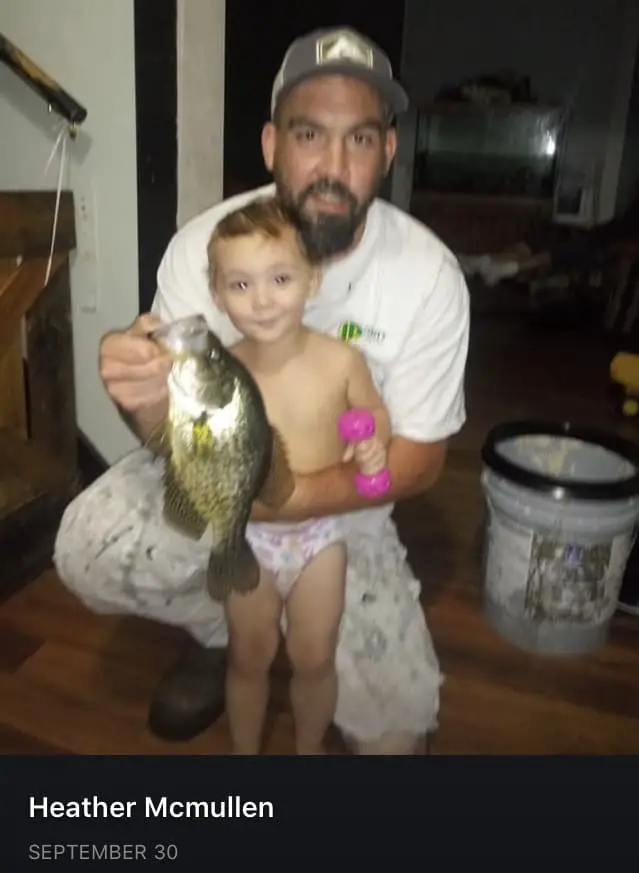
    Photo by Heather Mcmullen- a fine black Crappie

    Jigs

    A jig is intended to create a vertical jerking motion which attracts the crappie. Jigs come in a wide variety of colors, shapes, and sizes/weights.

    A jig-head can be tipped with a plastic grub, wax worm, or minnow to add to the enticement. Some jigs are made with a furry body and tails made of feathers, such as our top jig pick the Eagle Claw Marabou Jig. 

    Live Bait

    We have saved the best, and easiest for last. Live bait. What fish doesn’t like live bait? It is what they naturally eat everyday. No matter what technique a fisherman is using, most swear by live bait to catch crappie.

    The diet of a crappie is quite varied because they are not a picky eater. If it is alive, they are going to try to get it from you. Crappie like to eat minnows, worms, night-crawlers, insect larvae, and even crayfish.

    One of the top picks by anglers is the Giant mealworms and second on the list is fat and juicy grubs. 

    Well, that is it for you today. I hope that I have provided you with all of the information that you need as you begin your journey to catch a crappie. Remember safety first and Happy Fishing!

    Grab more tips and be informed about new posts in my monthly letter. Enter email below.
    [wpforms id=”408″ title=”false” description=”false”]
  • What Is The Best Line For Crappie Fishing

    What Is The Best Line For Crappie Fishing

    Crappie Fishing Line

    When crappie are not biting, sometimes you need to change things up. Whether you need to change the lure, or the fishing line is the question.

    Yes, believe it or not, your line choice could be the only thing keeping you from getting a bite! So today, I am going to cover the 4 types of fishing line that you can use and the test (strength) needed for each type.

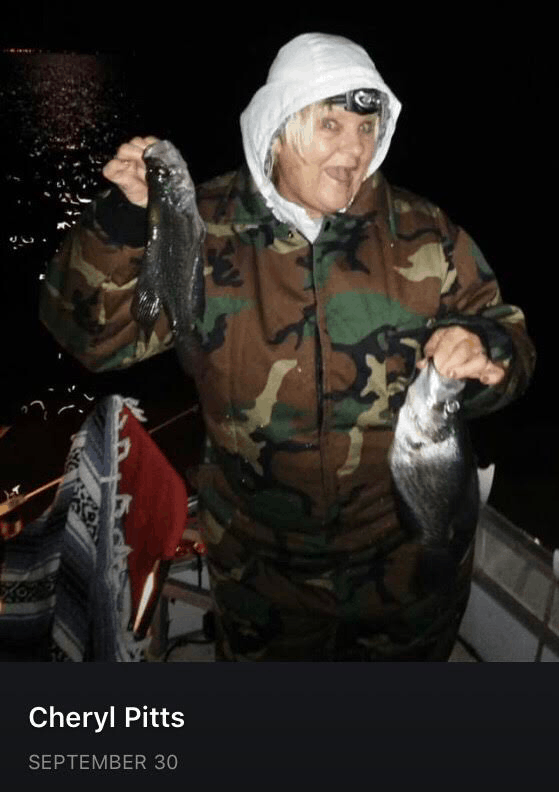
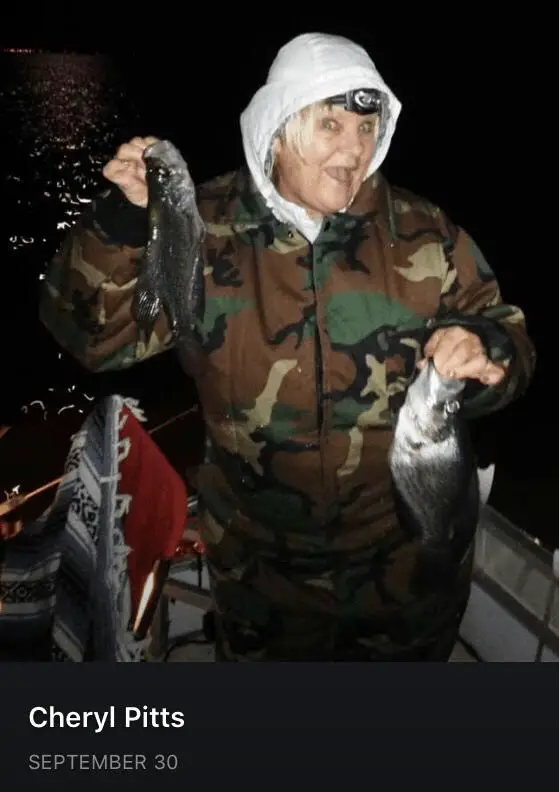
    Cheryl Pitts Happy with Crappie

    The four types of fishing line that you can specifically use for crappie fishing are:

    Monofilament
    
    
    Fluorocarbon
    
    
    Braided
    
    
    Uni-filament

    Now I’ll give you some specifics on each one. The advantages and disadvantages of each type and conclude with the best test weight for crappie fishing.

    MONOFILAMENT:

    Translucent
    
    
    Hold well to reel
    
    
    Very affordable 

    If you want your setup to be sensitive, this will not be the best. Mono line is stretchy and will absorb some of the energy when you hook your crappie.

    Mono line is kind of a double edged sword, because a little stretch can be beneficial due to them having paper-thin mouths.

    If you would like to find a way to make some money by fishing and writing about it or making videos about it like I am doing here, check out the guys that can teach you how to do it here.

    If you compare all four types of fishing line, monofilament is weaker for its size. Mono line is bigger in diameter, which could hinder catching a crappie at certain times because it the crappie will ‘see’ the line.

    One important thing to remember about monofilament line; NEVER leave it in the sun! Sun will weaken the line, causing it to break. This will more than likely happen at an extremely bad time, because that is just the way things happen.

    FLUOROCARBON LINE:

    One thing to remember when choosing your line, crappie have very good eyesight. Sometimes, when crappie are not biting, it is because they can see your line.

    Fluorocarbon line is virtually invisible. This type of line can be fairly expensive but; you don’t need as much for your rod & it won’t weaken near as easy as the mono line (making it last longer).

    Some other benefits of the fluorocarbon are:

    Less stretchy 
    
    
    Less memory, will not curl coming off of the reel
    
    
    Sinks quickly & holds up to abrasions

    The only issue with the fluorocarbon line is that the stiffness can sometimes be an issue. If you are using a heavy test line, more comes off the reel when casting with a spinning reel.

    Fluorocarbon is highly recommended when ice fishing for crappie, due to it being able to withstand abrasions.

    BRAIDED LINE:

    This fishing line is actually one of the oldest types ever used, out of the four that we are discussing today. Braided fishing line is more commonly used for deep water fishing.

    We all know, depending on the season and the area, crappie go down pretty deep. Which is why this is one of the fishing lines on our list.

    One of the outstanding benefits to braided line is the fact that it has more sensitivity than the others. This makes it easier to recognize the bite of a crappie.

    Remember, when fishing for crappie to set your drag appropriately. You do not want to set the hook too hard & risk ripping their paper-thin mouth.

    After the introduction of nylon fishing line (monofilament), the braided line fell into the background, but has begun to make a come-back. Here are a couple of advantages to using the braided line to catch crappie:

    High strength, you can put more of this line on your reel
    
    
    No stretch, means you will feel every thing that bites or bumps your lure
    
    
    No memory means no curling off the reel

    One disadvantage is that you may ripen the fish lips because there is no stretch and hooking hard can occur easier. Braided line is considered to shine best when fishing in saltwater.

    UNI-FILAMENT LINE:

    This fishing line is the newest, out of the four that we are reviewing today. This line is stated to be the thinnest but the strongest out there.

    It is also stated in the product description for this uni-filament that it handles like a smooth filament, but the strength of a braided line. The uni-filament, made by Berkley, is said to consist of “hundreds of Dyneema gel-spun polyethylene nanofilament fibers”.

    This gives it the super strength, zero stretch and very small diameter. The uni-filament line is recommended for spinning reels but not recommended for bait-casting reels.

    Some anglers describe it as being like “masking tape”. It lays flat in the water, not spiraled. It seems the only down-side to the uni-filament is the diameter. It makes it hard to tie knots.

    The top 5 highest rated fishing line:

    KastKing SuperPower Braided fishing line
    
    
    PowerPro Spectra Fiber Braided fishing line
    
    
    Berkley Spider-Wire Stealth Superline
    
    
    Stren HIgh Impact Monofilament
    
    
    Berkley Trilene Big Game Monofilament

    As for your fishing line weight, 4 lbs to 12 lbs is sufficient. Four pounds to 6 pounds is the most used by anglers. But this depends on the season, area, rod, and reel.

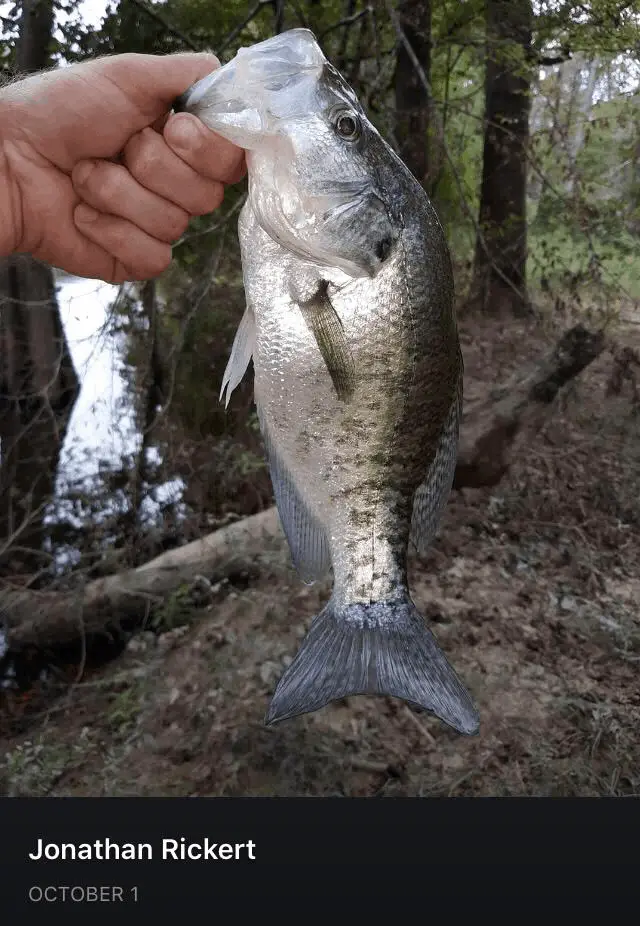
    Photo by Jonathan Rickert – Nice Slab

    Monofilament, Fluorocarbon, Braided, and Uni-Filament are the main types of fishing line that can be used when you are fishing for crappie. Remember, if you are not getting any bites, it could be your fishing line.

    Crappie have excellent eye-sight and so sometimes you need a line that is virtually invisible. In other seasons and situations, you may need a fishing line that has a little more ‘oomf’. But remember, crappie have paper-thin mouths, and a soft bit.

    Therefore you need to find and use a line that allows you to feel those soft bites, but that will not rip their mouth when you set the hook.

    Fishing Giveaway 2020

    There are many brands of these four types of fishing line. They come in a variety of weight sizes, diameters, and sometimes even colors.

    So make sure that you have a good idea of the habitat and nature of the crappie, wherever you are going to be fishing and then plan what to put in your tackle box around it. If you know all you can about the area and how the crappie respond and live in that area, then you can pack the most essential and popular items to catch them, ensuring you will bring home a meal at the end of the day.

    Grab more tips and be informed about new posts in my monthly letter. Enter email below.
    [wpforms id=”408″ title=”false” description=”false”]
  • Summer Fishing For Crappie, How to locate them

    Summer Fishing For Crappie, How to locate them

    It is finally fishing season! Maybe it has been for awhile, and you are just getting the chance to get everything ready. You are getting your boat cleaned, serviced, and ready for the water. You are checking your rods and reels, your lures, and making note of things you need to replenish or replace.

    Are you going to plan a local, weekend trip? Do you want to fish on a new lake, taking a week’s vacation? We are going to get you as ready as we can for summer crappie fishing. We will give you the best lures, hot spots, tips, tricks, and more. So who is ready to go and find some crappie??

    Should I fish deeper water in the summer?

    One of the first things you need to know in locating crappie in the summertime, deeper water doesn’t always mean bigger or better fish. Deeper water usually means less oxygen.

    The fish, whether it is crappie or another species will go deep during the heat of the summer, but only long enough to replenish themselves with cooler water. If you can get a good idea of where that fine line is, between oxygenated water and cooler water, then you will find the crappie.

    Summer Crappie fishing tips

    A couple of tips to locating crappie during those hot summer months, after spawning season; troll crank baits, probe channel cover, and drag offshore humps. Around June, just when the temps are reaching 70 degrees, crappie will find the closest drop-off that is adjacent to their bedding area where they spawn.

    The typical depth is going to be between 12 and 18 feet. Instead of holding tight to the bottom, the crappie will now be suspending themselves. Covering a lot of water by slow-trolling is a great way to catch crappie in the beginning of the summer.

    If you would like to find a way to make some money by fishing and writing about it or making videos about it like I am doing here, check out the guys that can teach you how to do it here.

    The easiest way to locate the crappie is going to be with a sonar or fish finder. But for those of us who can not afford something like that or that prefer to fish the old fashioned way, then small crank baits are one of the best options to use.

    In July, as the temperatures begin to climb into the 80’s, one of the most efficient ways to locate crappie is to probe the cannel cover. With the warming temperatures crappies can usually be found around river channels and deep creeks.

    They will be holding tight around stumps, brush piles, and standing timber that was flooded in the spring. Look between 20 and 30 feet in depth. Some anglers will use buoys in the channel drops.

    Fishermen often lower a sinker straight down into cover on the bottom and then SLOWLY reel it up. Keep doing this as you slowly troll the channel.

    For the month of August; it is recommended to drag offshore humps to find crappie. Temperatures will now be well into the 90 degree area, so you can now find and catch crappie on submerged islands.

    It is suggested that you go no lower than 15 feet, due to the lack of oxygen the deeper you go. When the current is being generated by a dam that is upstream, crappie tend to gravitate towards the peak of a hump. Here they are able to feed on the bait fish from the upstream dam.

    Fishing Crappie when it’s hot and muggy

    As far as other summer weather conditions; if it is muggy outside then use tube baits. Minnows do not last very long in muggy conditions and crappie do not bite on dead bait.

    If it is windy, the crappie will emerge from a channel to prey on bait that is going to be feeding on the windblown plankton. Use a Kentucky rig if there is a high pressure system moving in.

    The crappie will hide in heavy brush near channel drops to get away from the UV light. If there is a low pressure system moving in, crappies will gather in large schools and “bird-dog” bait fish. Slowly trolling crank baits on drift jigs over the channels will improve your odds of catching crappie.

    Here are a couple more tricks to locating crappie in the summer. Crappies are a color sensitive fish. If you find a school of crappie and they are not interested in what is on your hook, change it.

    You may have to change it a couple of times, but be patient, eventually you will like a color that presents well to them. If it is cloudy outside, it will be a little easier to catch them. As stated above, they hide from the bright UV light. But on cloudy days, they tend to come out a little bit more to feed, which will make catching them not as challenging.

    A jig that is tipped with a minnow is usually the perfect bait for catching crappie in the spring, but in the summer you will need a little bit wider variety.

    You can try Lindy Rigs, tube baits, and small crank baits. If you quickly change the speed of the bait or even the direction, it will often entice a hit from a crappie.

    Fish slower the hotter it gets

    During hot weather, crappie are known for swimming slower, so make sure you are working your bait slowly. Too fast and they are not going to be interested because they are not going to want to try to ‘chase’ it.

    If you are ready and willing to put in a little bit extra effort in the soaring heat, you can catch crappie. Most fishermen fade off after the spring spawning, but you can actually catch crappie all summer long.

    You just have to do your research, be patient, and be willing to put in the effort in finding where they may be taking cover from the heat. Some of this is going to depend on what lake or river you are fishing on. But for the most part, crappie will hide near wood, docks, dead trees, and submerged brush.

    They are also found in drop-offs. To find them, use your fish finder to pin point where the schools are holding. In the end, your patience and efford will pay off and you will have a bucket of crappie for dinner. Happy fishing!!

    Grab more tips and be informed about new posts in my monthly letter. Enter Below.
    [wpforms id=”408″ title=”false” description=”false”]
  • What Are Crappie Called In Louisiana?

    What Are Crappie Called In Louisiana?

    Another Name For Crappie

    There are many different names for crappie depending on the area you live in.

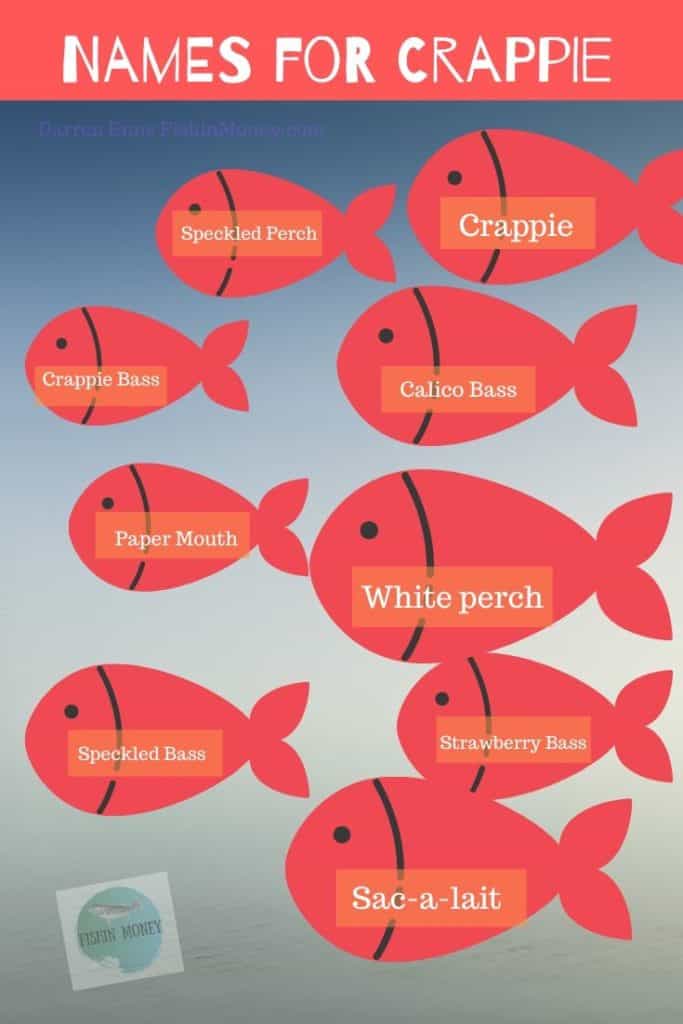
    In Michigan, they are mainly called specks. The mid-Atlantic states and New England refer to them as speckled perch, white perch, crappie bass, and calico bass. Some other names you may have heard; paper-mouth, strawberry bass, and speckled bass.

    Did you know I own a fishing memes Facebook page?

    Different names for crappie

    • Speckled Perch
    • White Perch
    • Crappie Bass
    • Calico Bass
    • Paper Mouth
    • Strawberry Bass
    • Speckled Bass
    • Crappie
    • Sack-A-Lait

    What do Cajuns call crappie

    If however, you are visiting Louisiana then crappie is referred to as sac-a-lait. If you are like me, you looked at and wondered “what in the world is that?

    If you would like to find a way to make some money by fishing and writing about it or making videos about it like I am doing here, check out the guys that can teach you how to do it here.

    What do they call crappie in Louisiana? Sack-a-lait means “milk-bag”. This also makes your eyebrow and go, “what?” is the Cajun French name for crappie, and in South Louisiana, they LOVE their Cajun food. In North Louisiana, the crappie is referred to as a white perch.

    Cajun name for crappie

    Sac-a-lait: Cajun French, Origin is Choctaw (sakli “trout”) ), via Cajun

    French interpretation: sac (sack) a (of) lait (milk) = mild sweet flesh

    In 1993 the ‘white perch’ was named the state fish by the Louisiana Legislature. There are white and black crappie, both of which are found in Louisiana. Large muddy rivers are the preference of the white sac-a-lait and black-water or tea colored swamps hold more black sac-a-lait. The white crappie prefers to be in the flowing waters, while the black crappie will hold in still-water areas.

    The legal definition of a crappie: North American freshwater fish of the sunfish family, the male of which builds a nest and guards the eggs and young. The body of a crappie is compressed into lateral slabs, existing in two variations; black or white. The upper jaw is long and extends past the middle of the eye.

    Did you know, there are actually 7 kinds of crappie? Some of these you may not know about, but you have probably caught, if you are an avid crappie fishermen. Besides black and white crappie; black nosed crappie, natural hybrid crappie, stock hybrid crappie, triploid/magnolia crappie, and golden crappie. I will do a separate segment covering the 7 types of crappie and give you some more detailed information.

    The difference between the black and white sac-a-lait is their markings. The white crappie have vertical bars that run along the length of their bodies. The black crappie have no pattern, and are just speckled. Hence the name speckles and speckled perch/bass. If you are unable to tell by the markings which type of crappie it is, take a look at their dorsal fin. The black crappie will have 7-8 spikes and the white crappie will have 5-6.

    Another name for crappie

    Crappie are also called panfish, specifically because they are small (18 inches or less in length) and thin. This makes them harder to catch because the membrane is very thin around their mouth, making it challenging to set your hook without ripping out the side of the mouth. This is why some people refer to crappie as a ‘paper mouth’.

    Black crappie are, of course, darker in color with speckles (as mentioned earlier). Besides the dorsal fins, another way to tell the black and white crappie apart; the white crappie, from the length of the top of the nose to the base of the dorsal fin is longer than the entire base of the dorsal fin alone. Confused? I sure am. For the back crappie, the lengths are the same.

    We are going to end this article with a couple of sac-a-lait recipes for you to enjoy the next time you go out and catch some crappie, whether it be in Louisiana or somewhere else.

    Sac-a-lait Recipies

    Southern Fried Sac-a-lait

    6-12 sac-a-lait fillets

    4 cups of yellow corn meal

    1 tbsp salt

    2 tbsp garlic (granulated)

    1/2 – 1 tbsp cayenne pepper

    4 cups of peanut oil

    Rinse the fillets and pat them dry. Season with salt, pepper, and granulated garlic to taste. Make sure your fillets are completely coated and set them aside

    In a separate bowl (or sandwich bag) we are going to make the “fish fry” coating. Mix your cornmeal, salt, pepper, garlic and cayenne pepper.

    Preheat your peanut oil to 350-375 degrees. Put 3 to 4 fillets into the bowl (bag) and coat well. Fry your fillets until they are floating, usually about 4-6 minutes. Take them out of the oil and lay them on a paper towel. If you choose to do so, you can sprinkle with a little bit of seasoned salt such as Lawry’s or your preferred brand.

    Baked Sac-a-lait

    7 crappie fillets (fresh caught or frozen)

    1/2 cup of your preferred, bottled, ranch dressing

    2 tbsp garlic salt

    Sour cream and cheddar cheese potato chips

    Spray a 9×12 baking dish and layer your fillets, coat each fillet with ranch dressing and sprinkle with garlic salt. Crush as many potato chips as needed to completely cover the fillets.

    Bake at 325 degrees for 15 minutes. If you choose to do so, the last 2-4 minutes of baking you can sprinkle with cheddar cheese.

    I hope that you enjoy the two recipes that I have included for the Sac-a-Lait that you catch on your fishing trip to Louisiana. Remember that no matter where you go to fish in the United States, crappie has many different names. If you are in Northern Louisiana the crappie is called the white perch.

    Remember, we will be doing other segments on the crappie, best places to catch them, more on their habitats, best lures, poles, and ways to catch them. We want to be your crappie information headquarters.

    Keep a specific eye out on articles that explain the best ways/techniques to catch a crappie and the segment on the 7 different kinds of crappie.

    No matter whether you all them crappie, speckled bass, paper-mouth, sac-a-lait, or something else; they are in the United States in abundance and they make a great, tasting meal or side dish.

    There are numerous ways to fix crappie; fry, bake, broil, or grill. There are hundreds of recipes online; choose one, two or even ten and feel free to change up some of the spices and other ingredients to tickle your taste buds. Happy eating (and fishing)!

    Grab more tips and be informed about new posts in my monthly letter. Enter Below.
    [wpforms id=”408″ title=”false” description=”false”]

  • Best Water Temperature For Crappie Fishing

    Best Water Temperature For Crappie Fishing

    Water temperature triggers seasonal movements in most fish, including the crappie. Fishermen who are knowledgeable about the relationship between location and temperature are usually in the right place at the right time to catch crappie.

    As a general rule, a water temperature of 68 degrees is the best water temperature for crappie fishing. this is because springtime brings the crappie in the shallows to spawn, making them more accessible and more concentrated for anglers to access.

    Let’s take a look at the temperatures and locations relationship in the southern region. During the winter months in several southern reservoirs, the temperature generally hovers around 40 degrees.

    During the cold-water periods, crappies will hold near secondary river channels. Crappies will gravitate to creeks that fed/feed the main river.

    The secondary channels that are closest to the main river are around 30 feet deep and the channels that are located farther back may only be 10 feet deep. Some groups of crappies will hold in the 10 feet deep area while others stay closer to the main river secondary channels.

    Once you locate the school of crappie it is suggested that you use multiple poles with spider-rigging. Set your jigs at different depths and use a windsock to drift along. It is recommended to use a variety of different color jigs.

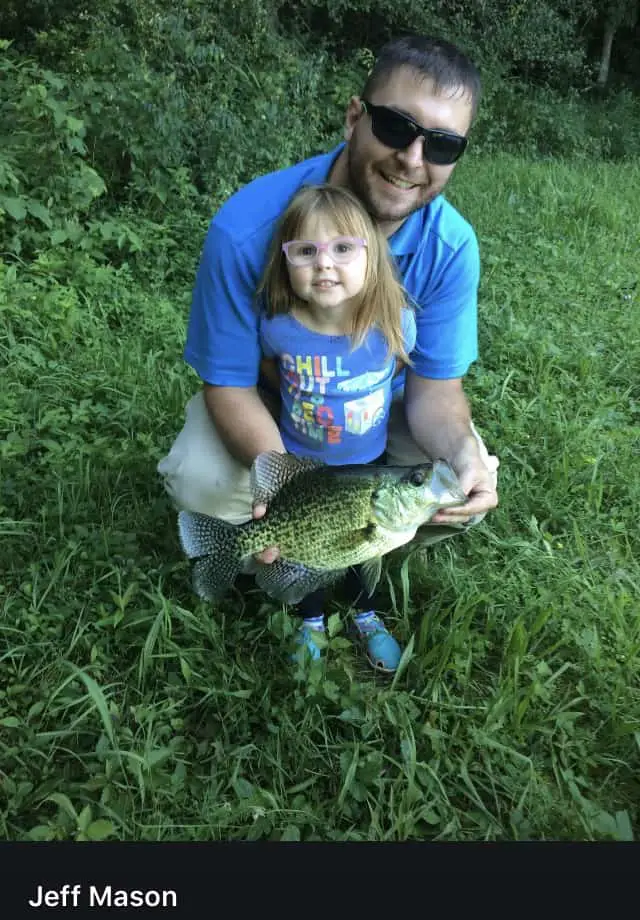
    Jeff Mason Black Crappie

    50-56 Degree Water Temps

    By March the water temperature will climb to around 50 degrees. Once the water reaches between 50 and 56 degrees you will find crappie staging on flats between 6-15 feet deep.

    This signals the pre-spawn feeding frenzy. Keep your eyes open for flats with baitfish. At 57 degrees the crappie will begin spawning. At this point you will find crappie in shallow-water habitat ranging in depth from 18 inches to 3 feet.

    If you would like to find a way to make some money by fishing and writing about it or making videos about it like I am doing here, check out the guys that can teach you how to do it here.

    Look for four distinct cover types; willow trees, cypress trees, water willow, and button ball brush. When exploring covered banks, minnow and jigs are going to be hard to beat.

    In open water try small safety-pin-style spinnerbaits to locate the crappie.

    30-39 Degree Water Temps

    Now we are going to move to the northern part of the country. Because of the much colder winter temperatures, crappie spend the majority of their time in deeper water. In lakes that freeze over, temperatures below the ice is a chilly 30 degrees.

    Twenty to thirty feet down the water may be a little warmer at a whopping 39 degrees. The crappie do not seem to be structure oriented and will normally wait out the winter months in open water.

    When the temperatures begin to warm they will begin moving to shallower water.

    57-75 Degree Water Temps

    It has been suggested that the length of the day my influence when the northern crappie begin to spawn. Generally this begins around mid-May and peaks in early June in states such as North Dakota, Michigan, and Minnesota.

    With the spring weather up north being so unpredictable, there is not a trigger point for water temperature. Crappie can usually be found spawning in temperatures ranging from 57 to 75 degrees.

    Crappie will normally build their nests from 2-19 feet deep. This will depend largely on the species and the clarity of the water. On one of the Minnesota lakes the black crappie will spawn in 4-5 feet deep water and the white crappie will spawn in less than 2 feet of water. If the water is clearer then black crappie will nest even deeper.

    How To Measure Water Temperature

    Some anglers will use some kind of temperature gauge or pool thermometer to get to the fish quicker. Many depth finders on the market today are also equipped with the ability to read water surface temperature. Water below the surface will be a few degrees cooler.

    There is one other factor that some people do not consider when they are fishing for crappie. Fishing can greatly change even with a slight temperature change.

    For instance, you have perfect fishing for a couple of days at 67 degrees. Overnight a cold front moves in and it drops the temperatures to 64 the following day. The weather conditions and temperature are still in the ‘ideal’ range, but the fishing if off kilter.

    Crappie are extremely sensitive to temperature variations, especially in the springtime. A temperature drop when the weather is in the 50s is more dramatic than when the temperatures are in the sixties and they drop.

    We are going to give a temperature guide that you can follow. This guide holds true in most areas of the United States when you are wanting to snag a crappie.

    32-40 degrees: crappie, as mentioned earlier, will hold tight to creek and river channel ledges. The one thing to remember in these temperatures is to fish slow. One angler attaches a thermometer to his fishing pole, so as he casts his line he gets a temperature reading in the water. This helps to locate the ideal water temperature and the crappie.

    40-50 Degree Water Temps

    40-50 degrees: at this temperature the crappie will be deep or at mid-depth. If there is a slight warming trend, the fish will move up and suspend at 3-4 feet under the surface.

    If you are in a boat using a fish finder, you will be able to see the baitfish, but not the crappie because the boat motor scares the fish. At this point the crappie will start making their way into creeks and coves.

    Prime Crappie Fishing Temperature

    50-60 degrees: prime crappie fishing temperature! Bays and shallow coves can warm quickly, so check the water temperature often. This will make it easier to find the crappie ‘hotspot’.

    Once the water reaches about 59 degrees the crappie can sometimes become unpredictable and their pattern can change fairly quickly.

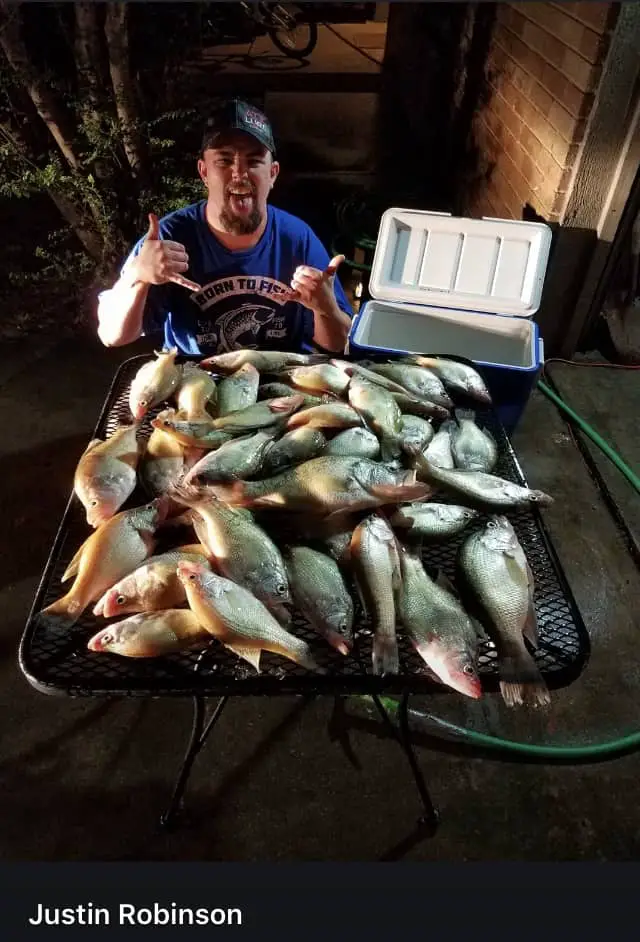
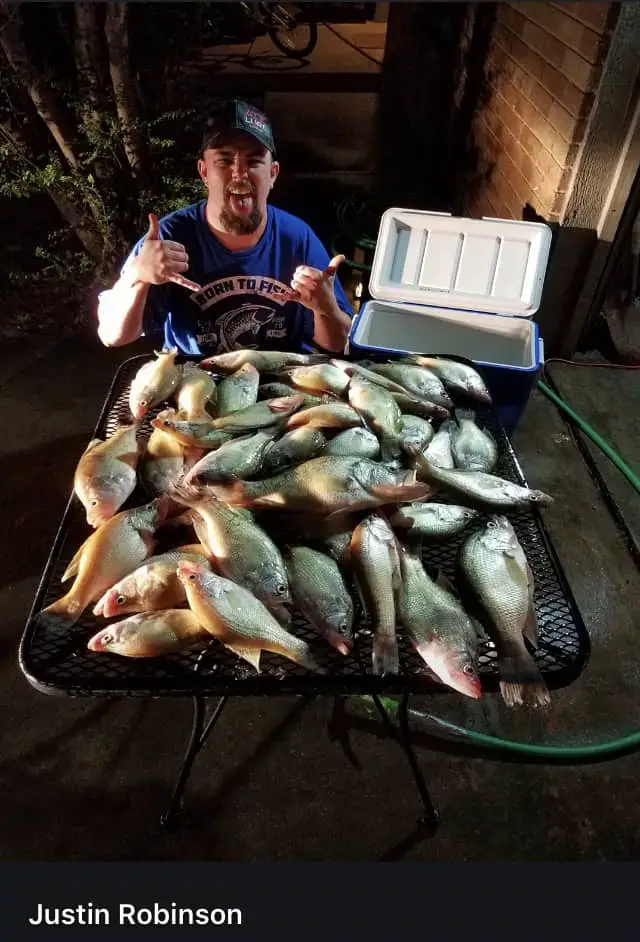
    Justin Robinson -Huge Mess Of Slabs

    60-70 Degree Water Temps

    60-70 degrees: not all crappie will spawn at the same time. White crappie tend to spawn in a little bit warmer water/weather and the black crappie like the lower temperatures. Some crappie will be out in deeper water and some will be closer to the banks during spawning. Spawn normally peaks at 67 degrees and can last anywhere from 1-10 weeks.

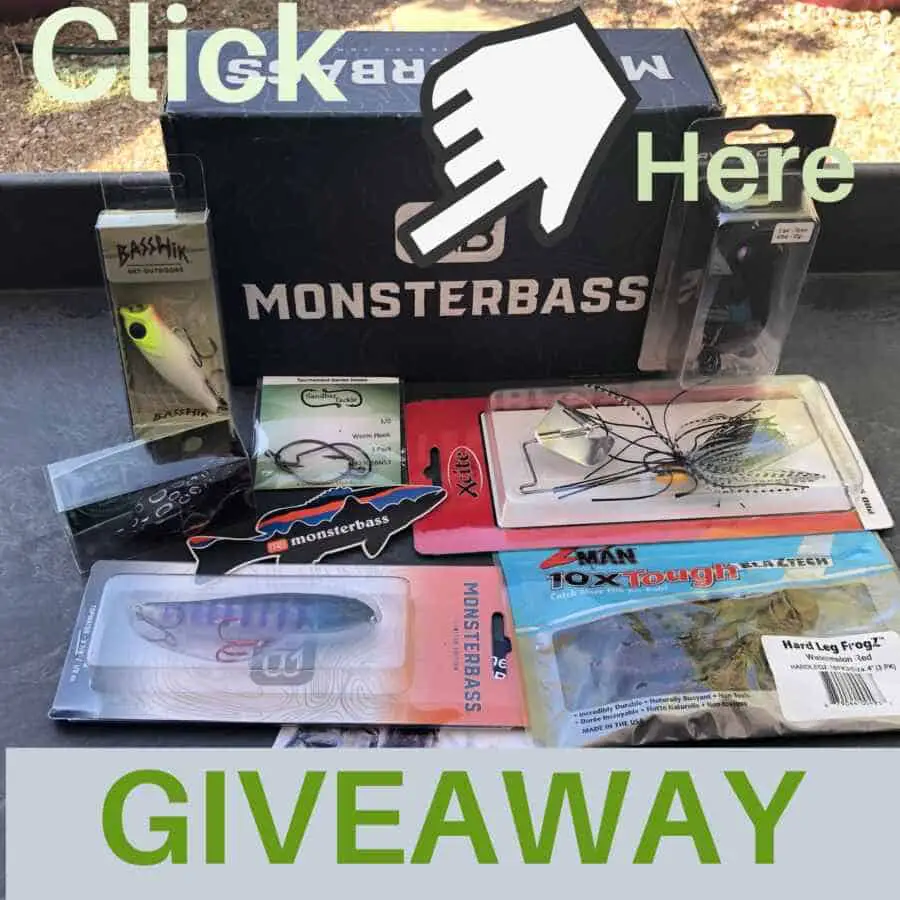
    Fishing Giveaway 2020
    Join my e-mail list and be entered to win a MonsterBass box.

    70-80 Degree Water Temps

    70-80 degrees: spawn has ended! Post-spawn is a tough time to catch the elusive crappie. They will scatter and suspend as they recover from the spawn. This is the best time to fast troll.

    80+ degree: crappie may be located suspended or on a drop-off. Heavy vegetation, open water, and docks hold good potential for crappie. If fishing from a dock it is suggested that you use lightweight jigs.

    For other spots use large minnow or a jig/minnow combination. Crankbaits are perfect for suspended crappie in the open water.

    Now that we have covered all temperature ranges, that are almost universal across North America for catching crappie, you are set to go and bring home a bushel of fish. Take all the normal and necessary precautions and as always, Happy Fishing!

    Grab more tips and be informed about new posts in my monthly letter. Enter Below.
    [wpforms id=”408″ title=”false” description=”false”]
  • The Difference Between Crappie and Perch

    The Difference Between Crappie and Perch

    Crappie Vs. Perch

    Both crappie and perch are popular panfish that produce flaky white meat. They will both go after the same baits and lures but there are notable differences.

    Crappie are part of the sunfish family. Perch are part of the walleye family. The crappie will have a slight green color to their upper bodies, but only in certain parts of the country. In other parts of their bodies are white with a silver tone and either black stripes or black flecks/spots. The perch, however, have backs that are green and change to yellow or orange depending on the species.

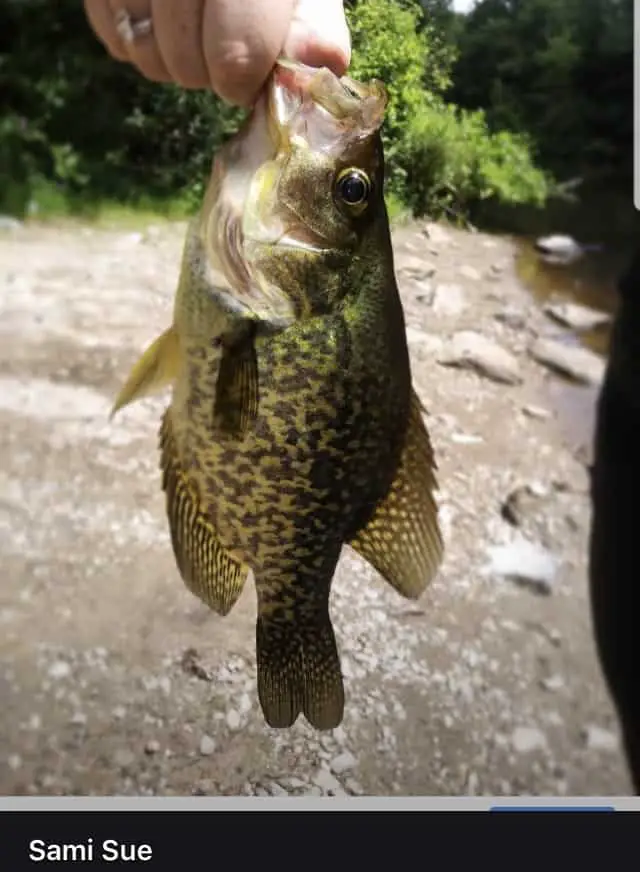
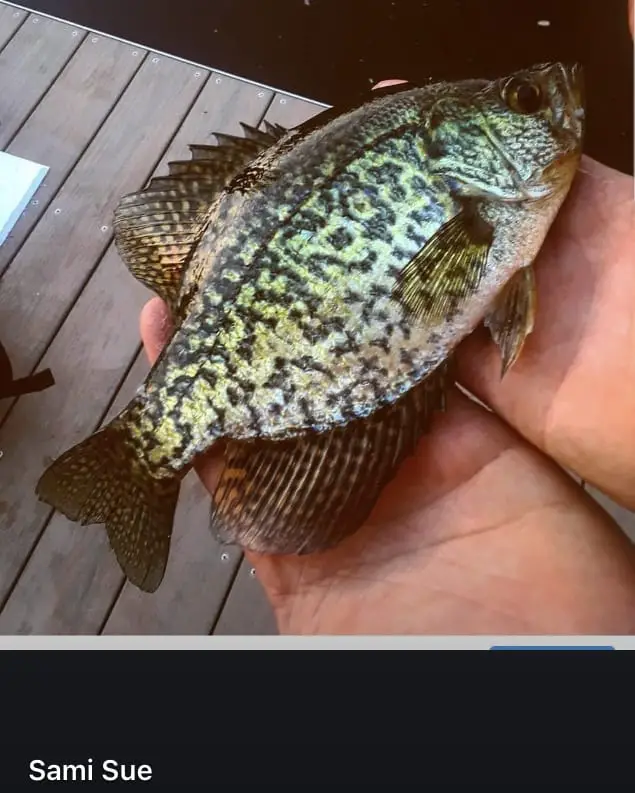
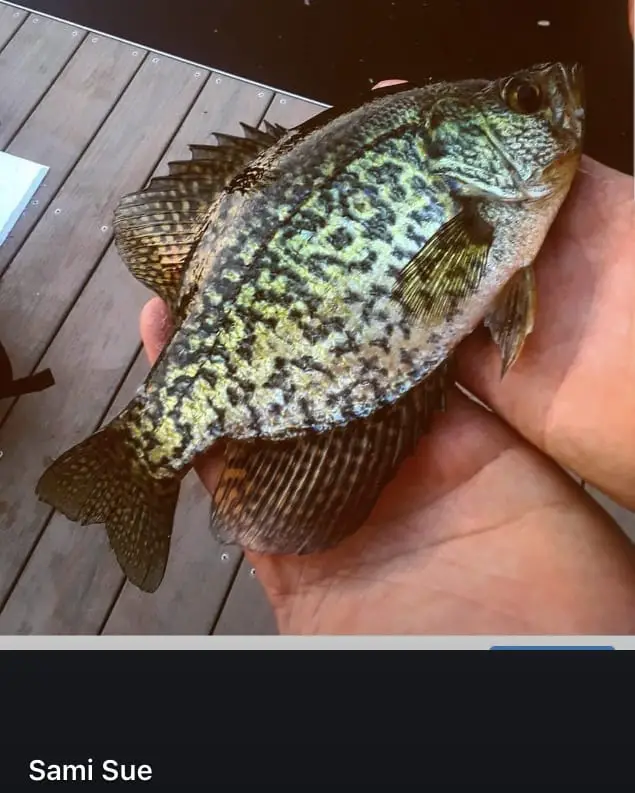
    Sami Sue -Cute Black Crappie

    Perch are found in North America and can reach up to 15 inches and 2.2 pounds. These fish are carnivorous and are found in streams, rivers, lakes, and small ponds. Their preferred bait is shellfish, insect larvae, and smaller fish. Perch usually spawn during the spring.

    If you would like to find a way to make some money by fishing and writing about it or making videos about it like I am doing here, check out the guys that can teach you how to do it here.

    They are found in abundance in the Great Lakes, especially Lake Erie. Perch will put up a fight and are popular sport fish by a lot of anglers. There are a variety of ways to catch a perch; lure fishing, float fishing, and legering.

    We are going to explore some tips on how kids can easily catch perch. It is something that dads enjoy doing with their children when they reach a certain age. The normal perch is about 7-9 inches long which will provide a lot of excitement for kids when they catch their first one. Anything over 10 inches is called a ‘jumbo’.

    The first thing you have to do is make sure you have the proper equipment or your youngster. With perch being smaller fish you do not need expensive rods & reels. An affordable, yet simple, rod & reel will be sufficient for the beginner. Your test line only needs to be six to eight pounds.

    My next tip for you is the right bait to entice the perch. Live minnows, or insect larvae are suggested. If you are unable to get live bait then you can use spinners, jigs, or plugs. Since perch are smaller fish, they move quickly so make sure you use a lure that is easy for you and your children to keep track of.

    Time of day is your next obstacle. Like most other fish, perch are more active during feeding time. A general consensus is early morning or late afternoon, but varies depending on the season.

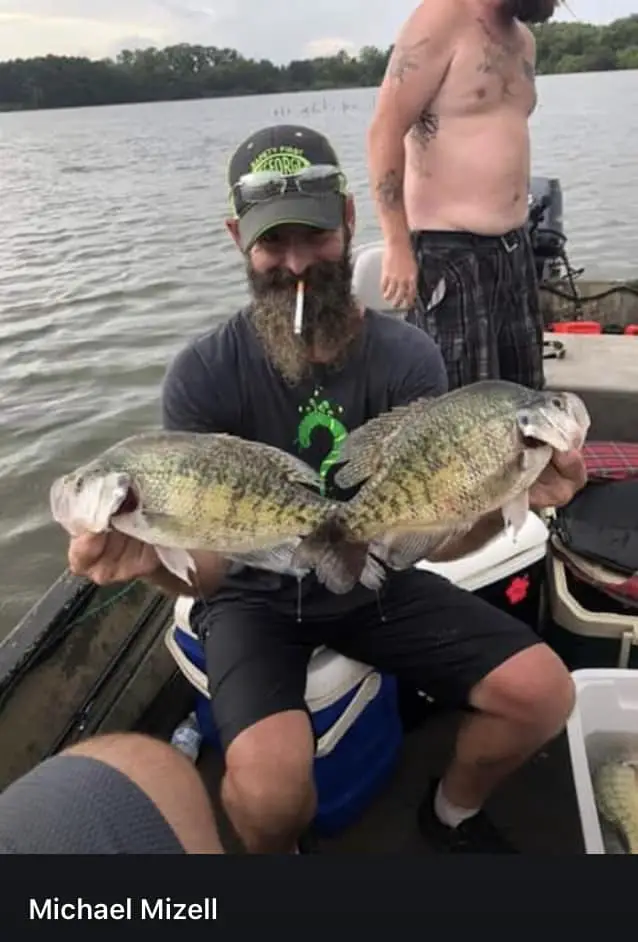
    Michael Mizell caught some slabs there. white crappie.

    Perch are drawn to deep water and objects that block sunlight and that give them places to hide. Perch fishing from the dock or shore will give your child a great chance of catching their first fish. Fish near overhanging trees and look for a spot that has a steep drop-off into deep water.

    If you live in Canada or happen to be going there on vacation, then you should plan a trip for the end of August. This is when the annual kids perch day is held, in Ontario. This event is located on the dock of Portsmouth Olympic Harbour.

    All children up to age 15 are welcome to join this event. The fun begins at 10 a.m. and ends around 2 p.m.. The participants can look forward to rods & reels, bicycles, and other prizes at the conclusion of the perch derby.

    Some interesting facts about the perch:

    • They are poor swimmers
    • The adult is golden, while the younger (juveniles) are more white
    • Sometimes the schools are separated into male and female groups
    • Other species in the perch family are walleye, sauger, and darters.

    Kids love learning about everything! So you can give them some fun facts about the perch before you take them out on their first fishing trip. Then you have something to talk about on the way, and things to point out after they reel in that first perch.

    Besides Lake Erie, perch can be found in the drainages of the Arctic and Atlantic Oceans. They are normally found around vegetation in clear water, and during the springtime you can find them in large schools close to the shore. This will give the kiddos the chance to see them swimming around, before they cast out their line.

    One final thing about perch; there are white perch and yellow perch. But did you know that white perch are not really perch at all? They are actually a type of Temperate Bass and are very closely related to the striped bass. Yellow perch are actual ‘true perch’. They are genetically similar to the walleye.

    Some other distinctive features between crappie and perch:

    White Perch

    • Silvery white with no stripes
    • 8-10 inches and up to 1 pound
    • Their pelvic fin is longer, narrowly attached, and perpendicularly oriented
    • Distribution from South Carolina to the Saint Lawrence River (Canada) and prominent in the Chesapeake Bay area

    Yellow Perch

    • Brownish-yellow, with vertical triangular bars
    • 4-10 inches and 4 oz to 12 oz
    • Their pelvic fins are shorter, attached across its width, and longitudinally oriented
    • South Carolina to Nova Scotia & around the Rocky Mountains and Great Lakes

    So we have given you the differences between the crappie and perch, some fun facts about perch, and fishing tips for the first time you take your kiddos out to catch a perch.

    Sami Sue what a nice shot. Black Crappie

    We also provided you with the prominent distinctions between the white perch and yellow perch. You should now have a good idea and be up to speed on almost anything perch.

    So pick a spot on the map, and pick one of the spots that we listed as having a good supply of perch and set your vacation. Take your family and maybe your friends and go have some fun on a boat, or maybe hang out with the kids on shore and watch the excitement on their eyes.

    Make sure you capture their smiles and record their laughs. It will be one of the best vacations that you have ever taken. As always, make sure to check fishing rules, regulations and make sure anyone over 16 has a fishing license and have a great time fishing!

    Grab more tips and be informed about new posts in my monthly letter. Enter Below.
    [wpforms id=”408″ title=”false” description=”false”]
  • Difference Between Crappie And Sunfish

    Difference Between Crappie And Sunfish

    Telling the difference between Crappie and Sunfish may be a little difficult as they are part of the same family. They are both popular game fish that are found in lakes, streams, and rivers.

    There are two types of crappie; the white crappie and the black crappie. They are both part of the North American sunfish family. Both have silvery-white bodies with distinctive black markings.

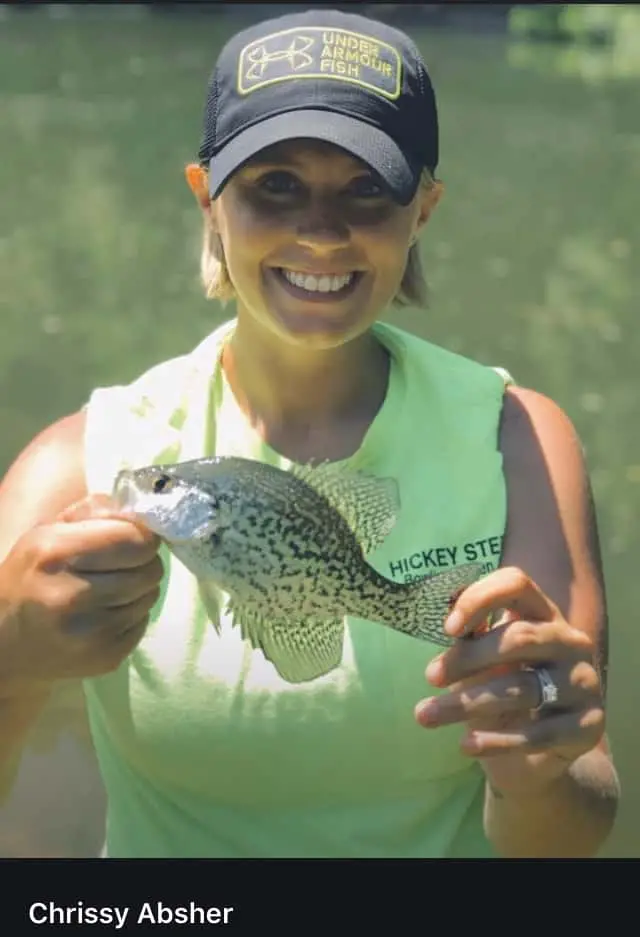
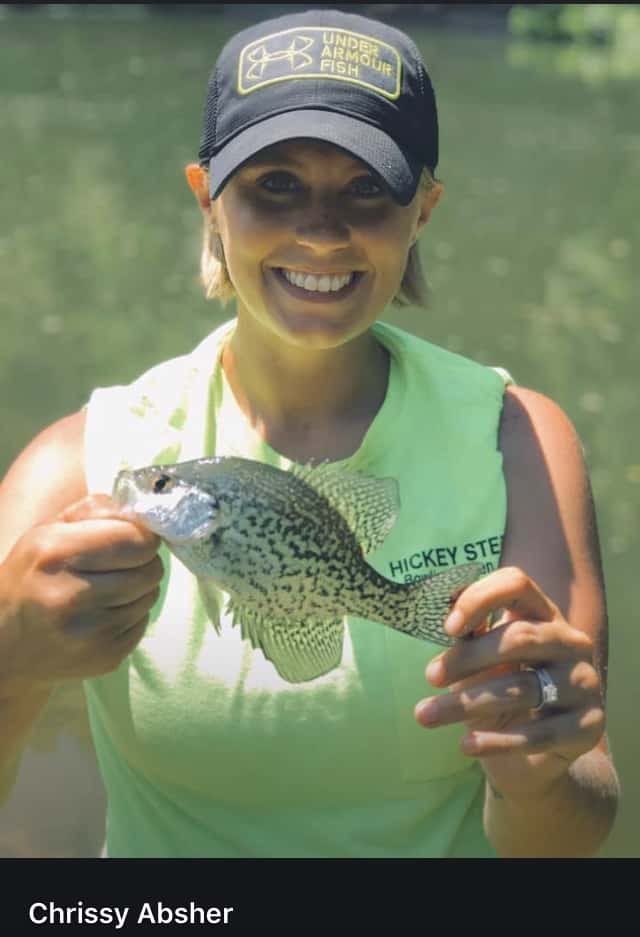
    Chrissy Absher with a black crappie and a big smile

    Sunfish are a species where crappie are included, but so are bluegill. The bluegill are the smaller fish in the white range of the sunfish family. The most prominent difference between the crappie and other sunfish is the size and the coloring. In terms of mating, males creating the nests, and feeding crappie and sunfish are very similar.

    If you would like to find a way to make some money by fishing and writing about it or making videos about it like I am doing here, check out the guys that can teach you how to do it here.

    Some of the most common fish that are classified in the sunfish family; bluegill, pumpkin seeds, ocean sunfish, redear sunfish, warmouth, green sunfish, and banded sunfish. Fish that are categorized in the crappie species/family; white crappie, black crappie, white perch, and redear sunfish.

    We are going to provide you with some suggestions on catching the sunfish and crappie. The best action is said to be during the spawning season around the full moon cycle in April, May, and June. Scouth the shoreline for their plate-sized beds. But beware, sunfish are going to fiercely defend their nests against any intruders including your bait. If you are bait-fishing, it is suggested that you use small worms or crickets that are weighted with a small slip shot. Soft plastic baits will also work to catch sunfish. You will want to cast out past the nest and crawl the bait through it, slowly.

    Experienced anglers and beginner fishermen will find enjoyment in fishing for the sunfish. Sunfish are typically the first type of fish that kids will catch when taken out for their first trip. Sunfish are small and fun to catch and they are found in most fresh bodies of water throughout the United States. Here are 3 tips on catching the sunfish.

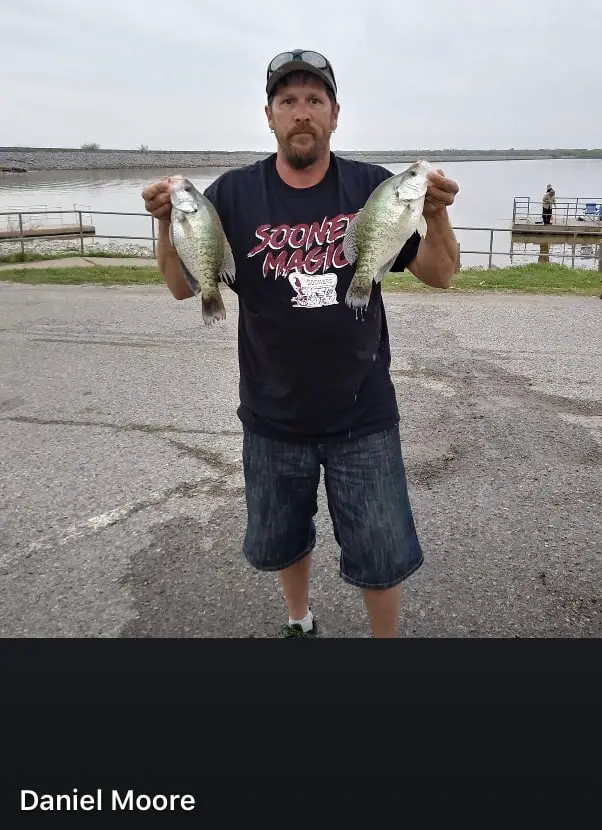
    Daniel Moore with a couple of white crappie slabs

    Cane poles, fiberglass poles, ultralight spinning tackle, and fly casting tackle is all you need. There is no reason to purchase expensive equipment. 4-6 pound test line and a small hook top off the items that will give you the best results. For kids, you can/may need to add a small sinker and a bobber.

    As stated above, use a small hook. Sunfish are a smaller species, so you don’t need to use the same hook that you would use for a larger fish like smallmouth bass. Recommended hook sizes are 6-10, as sunfish can close their mouth around them easily.

    Live bait is the preferred option. Sunfish are not a picky fish and will latch on to just about anything that you present them with. Grubs, earthworms, crickets, and red wigglers are most used to entice the sunfish. If you choose to use worms, remember that you do not need to use the whole worm. If you do so, the sunfish will just nibble at the worm until the hook is empty. Use a small portion of the worm, and the sunfish will take it, hook and all in one bite. The preferred artificial bait/lure for sunfish is small jigs, spinners, or spinner-bait.

    When it comes to location, you can fish in the lakes or rivers. Both can yield good sunfish catches. Try fishing different bodies of water in and around your area until you find the spot with the best population of sunfish.

    Going from sunfish to crappie, which are similar species and in very similar genus and families, we will provide you with a few tips on catching the crappie. A lot of the same techniques/tips from above will also work when fishing for crappie but there are a few differences.

    Crappies prefer to be in habitat that is moderately acidic and highly vegetated. The crappie is considered a schooling fish and can sometimes be found in schools with other ‘panfish’. For the most part crappie tend to stay in deeper water during the day. They prefer underwater structures, like fallen trees, for hiding out. Crappie will emerge around dusk and dawn, close to shore for feeding.

    Crappies are popular to fish in the winter, ice fishing, as they do not go into any type of semi-hibernation. So, you can fish for crappies year round if you choose to do so. Below are a few tips to help you bring home a dinners worth of crappie on your next fishing trip.

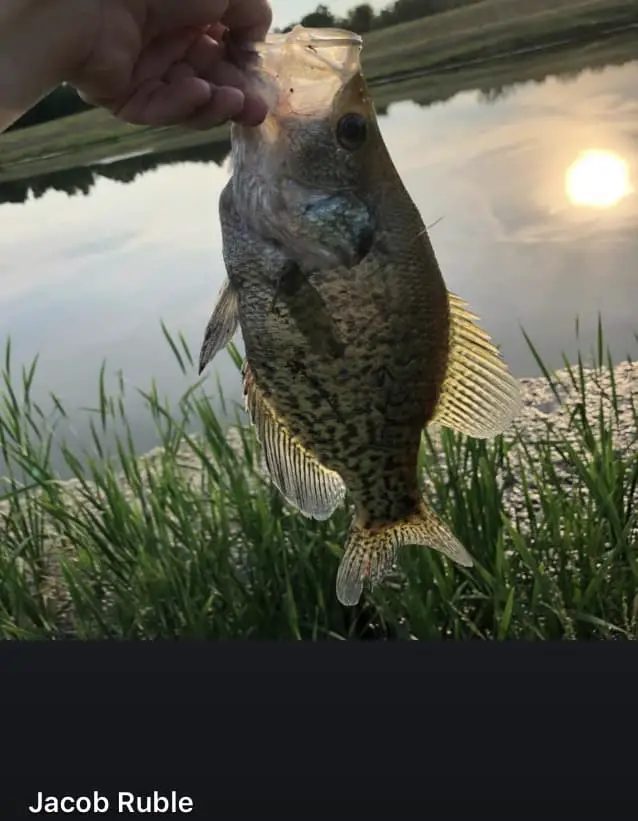
    Jacob Ruble caught a nice Black Crappie

    Artificial bait: ⅛ ounce jigs seem to be the most consistently used. The spinnerbait and minnow bait are both highly recommended.

    Live bait rig: #6 hook, split shot, slip bobber, and a live minnow. Nothing expensive or extravagant, just plain and simple.

    Finding the right depth: they are normally found between three and six feet deep. During the hotter times of the day they will go a bit deeper to stay cool, but will be at the surface at dusk and dawn to feed, close to the shoreline.

    Slow-down: crappie will provide more action if you stay slow and steady with your minnow and/or jig. If you know that there are crappie in the area, try slowing down your retrieve. 8 times out of 10 that will work nicely.

    There you have it! We have tried our best to explain the differences (and similarities) between the crappie and sunfish. We have provided you with some of the most popular tips and tricks in catching both of these popular gaming fish. Now the only thing that you have to do is make sure that you have the proper equipment, baits/lures, a perfect spot to go and relax and you will be set to catch some crappie or some sunfish. Always remember to check rules and regulations where you will be fishing, and to take a long lunch or snack if you plan on being out all day, especially in the warmer weather. Safety always comes first when out in the hotter weather. Happy Fishing!

    Grab more tips and be informed about new posts in my monthly letter. Enter Below.
    [wpforms id=”408″ title=”false” description=”false”]
  • 6 Differences Between Crappie And Brim Fish

    6 Differences Between Crappie And Brim Fish

    So did you catch a fish and you want to identify what it is? Here are a few ways to tell the difference between crappie and brim.

    • Both are in the sunfish family
    • brim/bluegill have a blue/black dot by the gill and crappie don’t
    • white crappie have verticle bars pattern on their sides
    • a sunfishes dorsal fin rides further forward than a crappie (almost all the way even with the gills)
    • Crappie have a larger mouth and can grow larger
    • Bluegill are more rounded in shape
    This is a Black Crappie Scroll to see a Brim/Bluegill

    Both fish are part of the sunfish family and they are freshwater fish. The sunfish family has many interchangeable terms for species all over the country. Each member that is in the sunfish family has their own subspecies. A good example is the crappie. There is the black crappie and the white crappie along with a few other species of crappie. Sunfish have many unique names depending on the part of the United States that you are fishing in.

    If you would like to find a way to make some money by fishing and writing about it or making videos about it like I am doing here, check out the guys that can teach you how to do it here.

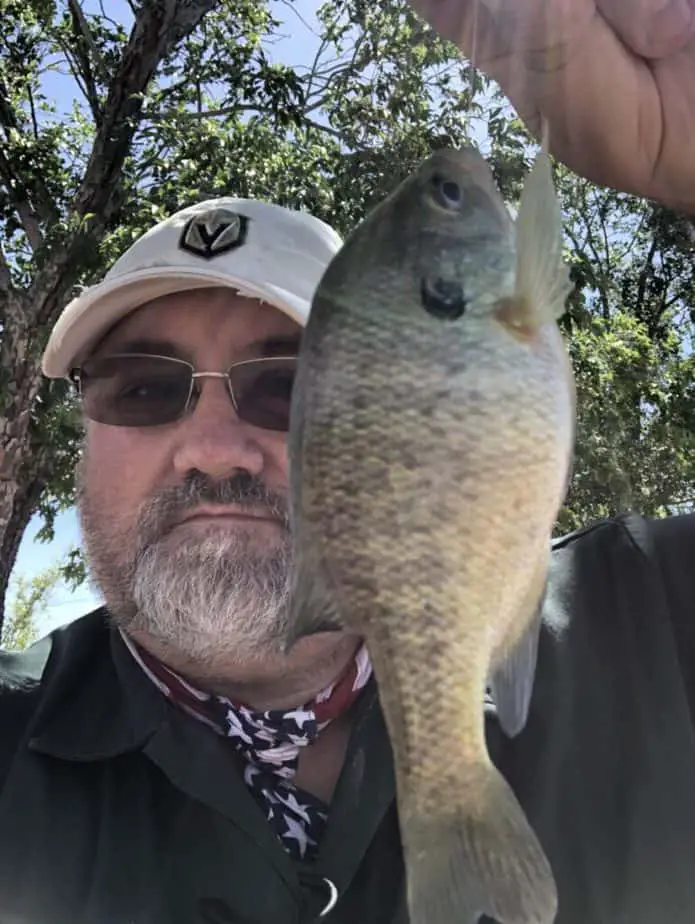
    This is me with a Brim/ Bream / Bluegill

    Brim fish are sometimes referred to as american bream, sunny, bluegill, or copper nose and are native to North America. Commonly found east of the Rockies in lakes, rivers, ponds, and streams. They normally hide inside and around old tree stumps and other structures. Brim are usually caught with crickets, grasshoppers, small frogs, worms, and many other baits and lures. They love vibrantly colored lures, mostly at dusk and dawn. Bluegill (brim) are occasionally used as bait for larger game fish, such as largemouth bass.

    Here’s some of the best brim fish and sunfish baits known to man!

    Today we are going to go in a different direction as far as catching the bluegill. I want to focus on kids fishing for brim. It is always exciting and memorable to take your son or daughter out fishing for the first time. The surprise and excitement on their face when they catch their first bluegill is priceless! So, we are going to provide you with some simple tips and tricks on making fishing fun and easy for your youngster.

    Photo By Mark Simpkins-Crappies

    The most important tip keeps it simple for the kids. Keep the line light, weight, hooks and floats should also be small. Try using a cane pole, as there is no reel and it is much easier to teach first timers with. Spin-casting gear is an easy and simple rod & reel for kids, as well. Use 4-8-pound test line, it is perfect for catching brim. Another tip for kids; bobbers. Bobbers suspend your bait and alert you when you have a bite. “Slip” bobbers work the best for children. These bobbers help the kids cast easier. Sinkers will help to get the line down to the fish. You want the bobber to barely float on the water. So, add one bb-sized shot sinker and see where the bobber is. If you need to add another one, you can.

    https://youtu.be/gnkJSWSv77I

    Tip #5 for beginners catching bluegill; small hooks. It is recommended to use a size 6-10 hook. Size 6 is bigger than size 10. The smaller hook allows the fish to swallow the bait. If you use a bigger hook, the fish are going to just nibble at the bait until it is gone, and the kids will not realize that they have a fish. You do not need to use a whole worm. Keep the bait about the same size as your hook. Crickets, wax worms, or red worms are recommended for catching brim.

    The final tip for beginners is to fish local. Go to a local river, lake, or pond. Some place that doesn’t take long to get to, but that also has a good stock of bluegill. You also want to make sure you go early in the morning or later in the afternoon. If you go during the middle of the day, find a very shady spot. They like the cooler water, so the docks are a perfect spot if there are trees around. If the fishing is poor you could always go hunting too!

    Black Crappie Slabs

    Brim fishing is not just for the younger kids. If you have never been fishing before, as a teenager or an adult, bluegill fishing will still be fun and exciting. They have more fight to them than people give them credit for. The only difference is basically the pole that is used. Otherwise, you will follow or use some (or all) of the tips above. As a teenager or adult, you can use a pole with a reel on it. With younger kids, it is too hard to teach them to cast with a reel, that is why they recommend a can pole.

    If you are in east Texas or western Louisiana, then your youngsters can participate in the largest “children’s only” fishing event. This is a free event for children aged three to fifteen years old and has been going on for four-decades. They award trophies for 3 age groups and all participants will receive a rod & a reel. There are usually 500+ kids each year. Not only does each child receive the rod & reel, there is also free grab-bags, hot dogs, and cold drinks. Children must pre-register and fishing starts at 6 in the morning on May 11th.

    I have taken my two boys bluegill fishing and they have a blast. We go to a dock on the lake, that has trees on one side, so that there is shade during the day. There are also small mouth bass in the area and my 8-year-old has hooked a couple of those. My boys have poles with reels on them and they do a good job of casting on their own. With the bluegill, we use a small hook and half of a worm. They go over to the spot where they want to drop their hook and they just push the button and let the line fall. Sometimes they get tricked, and the brim will nibble at their worm until it is gone. Once they lower their bait down to the bottom, we reel it up just one turn, and then they just jig it slowly. No matter how many times they catch a bluegill their eyes light up with excitement and it is the best feeling to see them happy and having fun.

    It doesn’t matter what age your kids are, when they catch a brim/bluegill for the first time, there is going to be excitement in their eyes and huge smiles on their faces. The fish give just enough of a fight to create that excitement and the kids can not wait to do it again. So, grab your cane pole, your adult fishing pole, some worms, lunch, and your camera. Take your kiddos and go make some long-lasting memories with your family.

    Grab more tips and be informed about new posts in my monthly letter. Enter Below.
    [wpforms id=”408″ title=”false” description=”false”]
  • Crappie Fishing Lake Of The Ozarks

    Crappie Fishing Lake Of The Ozarks

    The Lake of the Ozarks is a reservoir created by impounding the Osage River. There is 54,000 surface acres and 1,150 miles of shoreline. The Lake of the Ozarks has more shoreline than the state of California. The lake also has a serpentine shaped that has been nick-named “The Magic Dragon”.

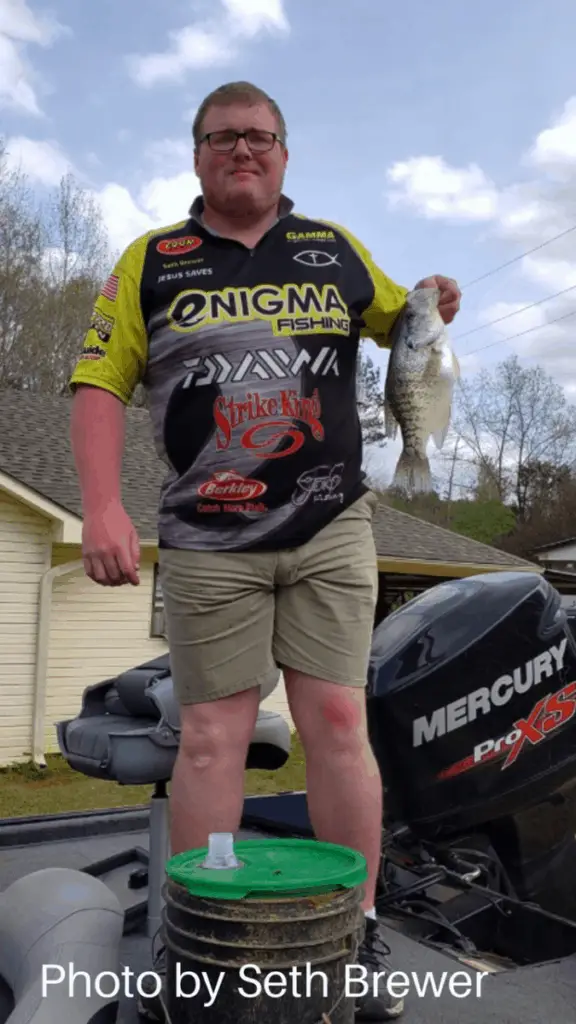
    White Crappie by Seth Brewer

    Lake Of The Ozarks Facts

    The maximum length of the lake is 93 miles and has a max depth of 130 feet. You have plenty of prime fishing spots for crappie.

    Lake of the Ozarks is the second oldest lake in Missouri and the crappie fishing is outstanding. Sometimes it can be difficult to find a fishing spot because you can fish year round.

    When and Where To Fish Crappie Lake Of The Ozarks

    When you decide to head to the Lake of the Ozarks to fish for crappie, spring is best due to spawning. The best places to fish are the coves or off of the docks.

    Or, you can opt to search for the brush piles to try and snag the crappie in their hide-away.

    If this is your first time crappie fishing the Lake of the Ozarks then you should consider enlisting the help of a fishing guide. Fishing guides can make your trip pleasant and productive.

    If you would like to find a way to make some money by fishing and writing about it or making videos about it like I am doing here, check out the guys that can teach you how to do it here.

    They will take you out to the best areas for catching crappie. Fishing guides offer 1/2 day trips or full day trips and they will teach you everything you need to know in order to go home with a bucket full of tasty crappie. The fishing guides are willing to take out the whole family on a day trip and they are also happy to take out just a few serious anglers who want to catch as many crappie as they possibly can.

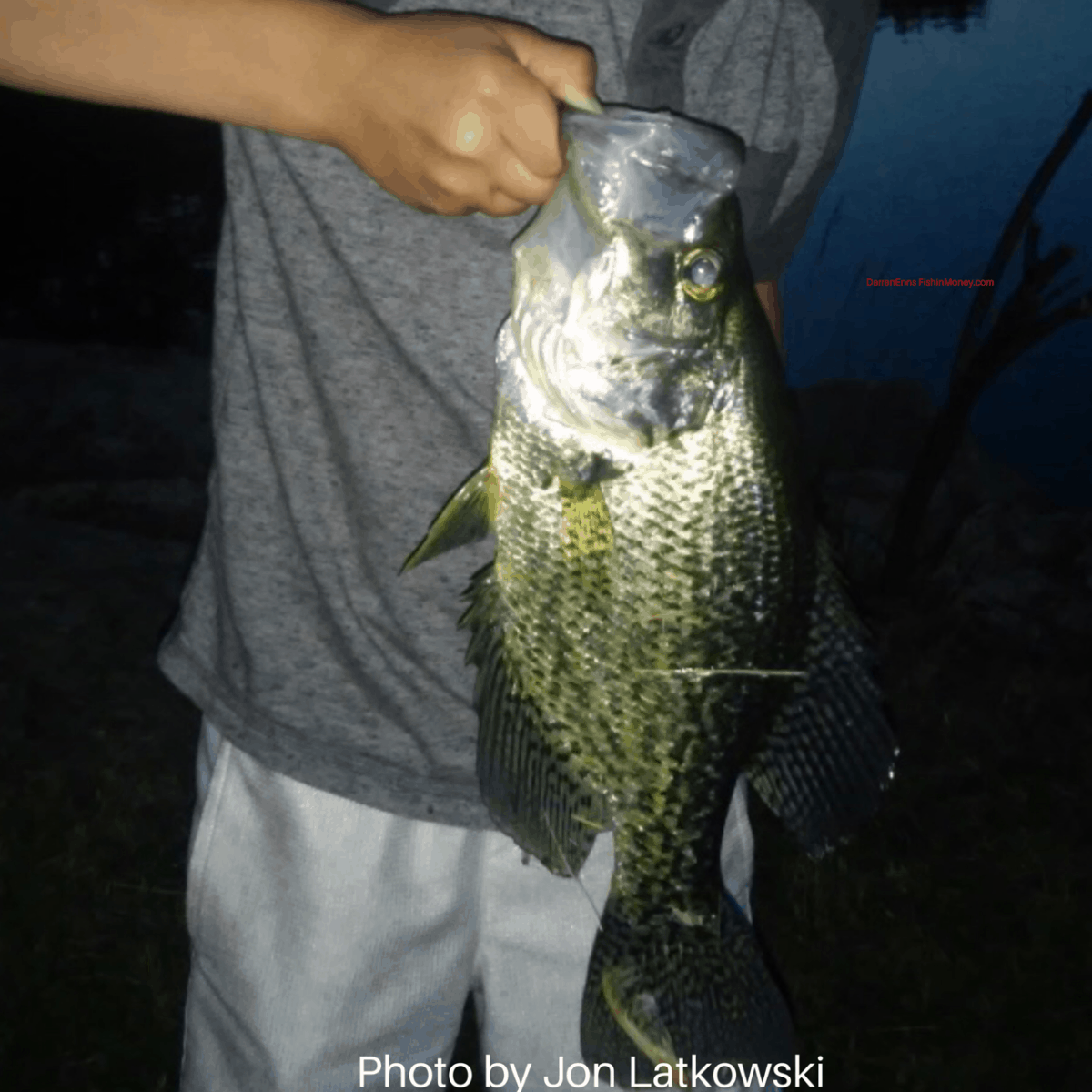
    Nice Slab Crappie by Jon Latkowski

    What To Bring Crappie Fishing

    We are going to give you a few suggestions on what to bring with you when you choose to fish on the Lake of the Ozarks. For the best crappie experience, you need to have small flathead minnows, and 1/32 ounce jig.

    As the water begins to warm up, top water lures will give you some great results. For cooler water, jig n frog lures and crank-bait work the best. The middle to the end of April is when the dog wood trees begin to bloom and when the crappie spawn.

    As for your rod; make sure you have a rod that can hold the weight of the bigger crappie, but it also has to provide the sensitivity for you to feel the bite.

    Catching crappie will take some time and practice because they have such a soft bite. So sometimes you may not even know that you have a fish on the line.

    How To Fish For Crappie on Lake of the Ozarks

    Trolling for crappie in the Lake of the Ozarks is very popular. Make sure you check all rules and regulations to ensure you stay within the guidelines. If you want to just sit back and relax while you fish, you could try drifting.

    If you are an old fashion method type of person, still-fishing and cast fishing work just as well as trolling and drifting.

    From March through May you can consistently catch crappie if you follow them through their spawning cycle. There are 2 cycles to the spawning of crappie. Pre-spawn happens when the surface temperature reaches 50-52 degrees.

    At this point crappie will move to depths of 8-10 feet. Depending on how fast the water temperature warms up, will determine how long the crappie stay. Usually pre-spawn will last until the temperature of the water is at 62 degrees.

    One fishing guide says the first 2 weeks of May is prime crappie fishing time on the Ozarks.

    Ideal spawning spots in the Ozarks is the cover near pea gravel banks. Crappie will follow the tributary stream or creek channels in search of brush piles.

    Finding a good fishing spot for crappie is more of a personal preference. One angler states that it is key to be close to the spawning bank. Other anglers may say that docks, or piers are better.

    Best Time To Catch Crappie

    The best time of day during pre-spawn to snag a crappie is from 3 in the afternoon until dark. The penetration of light in the water will dictate the best time to fish. When the light penetrations starts to diminish, the crappie will come to shallower water.

    As long as the sun is high and bright, the crappie are going to stay in deeper water to keep away from the brightness.

    During full spawn, the clarity of the water will give you an idea of how deep the crappie will build their nests. The clearer the water, the deeper they will spawn. Crappies will seek out some type of shallow gravel bank, with a deep water structure close by.

    If spawning happens in shallows, the crappie will hang around whatever cover they can find. On sunny days, especially between the hours of 11a and 2p, you want to try to avoid fishing for crappie. On cloudy days you can fish for crappie all day long on the Lake of the Ozarks.

    Spawning will normally end when the water temperature peaks at 72 degrees. The latest that some of the fishing guides, on the Lake of the Ozarks, has caught crappie during spawning season was the beginning of the third week of May.

    So remember, if you want to have an excellent chance at an abundance of crappie, go during the pre-spawn and full spawning season.

    Before you take your trip to Lake of the Ozarks be sure that you purchase your Missouri fishing license and have a copy of the crappie daily limit and other regulations.

    Remember to also consider a fishing guide, if this is your first time going crappie fishing on the Ozarks.

    You will have the best crappie fishing experience and you are sure to go home with your limit on that particular day as they are very knowledgeable about the area and about the habits of the crappie.

    They can take you to the best spots in minutes, giving you a ton more time to fish than if you were trying to find hot spots on your own. Enjoy your trip to the Lake of the Ozarks and happy fishing!

    Grab more tips and be informed about new posts in my monthly letter. Enter Below.
    [wpforms id=”408″ title=”false” description=”false”]
  • What Is A Reaction Bait?

    What Is A Reaction Bait?

    Reaction baits are sometimes called search baits. They are best used when fish are aggressively biting or easily provoked.

    Photo by. @willbacon_07

    Some of the best times to use reaction baits is in the late winter and early spring. Another good season is fall, because a lot of species are trying to get fat for winter, therefore they are active. Night fishing during the summer can also be productive with reaction baits. 

    More than likely you already have a tackle box full of reaction baits. We are going to explore some of the more popular reaction baits shortly. Some anglers and professionals state that reaction baits work even when fish do not want to play. Therefore you can annoy them into biting or you can surprise them into action. 

    What Is a reaction bait?

    A reaction bait is just about any lure that you purchase. Depending on how you use the lure, you will get one of many ‘reactions’ from the fish. Fish attack lures for many reasons; self defense, curiosity, aggression, or by mistake. Being hungry may be the last thing on their minds. Reaction baits catch several species of fish, but the most popular are bass, walleye, and trout. 

    Here are some examples of reaction baits

    Let’s take a look at some of the most popular reaction baits, in detail. Most of which I guarantee that you already have in your tackle box, because almost any bait/lure can be a ”reaction bait”. Some anglers explain a reaction bite as; creating a reaction bite is different than getting a normal bite. With a reaction bite you are shocking or surprising them into a bite. One of the top picks for a reaction bait by a lot of anglers is Sebile Flat Shad. During pre-spawn and spring time this is one of the best lipless crank baits around. If you pull this reaction bait in front of the fish, they will hit it!

    The second reaction bait on the list; All Terrain Tackle Grass Jig. This reaction bait is primarily used if you are flipping thick grass and is great for summertime. This reaction bait will fall in front of the fish, quickly, causing a strike. The third one on the list is best if you are going to go fishing up north. Sebile Koolie Minnow 90, will get the fish to strike out of reflex rather than hunger. This reaction bait is great around grass flats and some rock piles. 

    One professional angler uses the Yamamoto Swim Senko mainly when he fishes in Florida, on lakes and rivers that have a lot of submerged grass. His recommendation is to fish it fast and pause it around grass pockets or holes. Sometimes he will put a 3/16 or 1/4 ounce weight on the front of the reaction bait. 

    Have you tried this reaction bait?

    The Sebile Fast Cast Spoon is the final one on the list. With this reaction bait you can jig it or cast it vertically. It is a versatile lure. If you jig it in colder water where fish are lurking around schooling shad. Droop it down, right in front of them and they will strike as it falls.

    Most reaction baits are associated with crank baits, spooning blades, and spinner baits among others. But as stated earlier, depending on the way you cast/reel/move the lure, almost anything can be a reaction bait. Flipping a jig becomes a ‘reaction bait’. Some say that the best reaction bait is the spinner bait. 

    Photo by @alexlong254

    The definition of spinner bait is the following, according to Wikipedia;

    “”any of a family of fishing lures that get their name from one or more metal blades shaped so as to spin like a propellor when the lure is in motion, creating varying degrees of flash and vibration that mimic small fish or other prey”. 

    Hard body swim baits, crank baits and others are considered reaction baits because the real life movements produce a ‘reaction strike’ from most species of fish. 

    Here are the top 4 reaction baits that every angler must have, if they are going to be fishing around submerged grass or grass at least a foot tall. 

    Seriously every angler should have these reaction baits

    #1. Lipless crank bait: these are offered by many companies and in a large variety of colors/pattern. These are best defined as flat-sided lures that wobble when retrieved. They move through underwater grass and forage better than regular crank bait. Some of the most popular are:

    Rat – L – Trap

    – Strike Kind Red Eyed Shad

    – Ima Rock N Vibe

    – XCalibur Xr

    2. Bladed Swim Jig: also referred to as the Chatterbait. Some anglers like to use it on a swift moving boat, where there is a lot of grass. The biggest question when using this reaction bait; what trailer to use? Most any plastic will work as a trailer because these reaction baits automatically mimic most forage species. 

    3. Swim Jig: anglers love to use these from the back of the boat. One professional uses a 5/16 Gambler Southern Swim jig with a craw-type as his trailer when fishing in submerged grass. Some of the most popular colors are as follows:

    – green pumpkin with green chartreuse trailer

    – black and blue with green pumpkin trailer

    – black and blue with matching trailer (on dark days or in dark water)

    4. Swimbait: a superb bait in submerged grass that is around a foot tall. These can be worked super slow or as fast as you can reel. You can purchase swimbaits in an array of colors but it is suggested that you match the forage/vegetation color as closely as possible. One popular color is Sexy Shad from the Strike King 5.5″ Shadalicious series. 

    Some of the other popular reaction baits; 

    – shallow diving – smaller lip on the front

    – deep diving – bigger lip on the front

    – jerk-baits – long skinny lures

    – surface baits – any lure that floats on the surface

    As you can see and as we have mentioned, almost any type of bait that you may have in your tackle box can be a reaction bait. Most fisherman have an assortment of some of these in their tackle box. There is not special lure that you need to run out and buy. You just need to learn to use, what you already have, to cause a ‘reaction’ and get the fish to strike. 

    Grab more tips and be informed about new posts in my monthly letter. Enter Below.
    [wpforms id=”408″ title=”false” description=”false”]