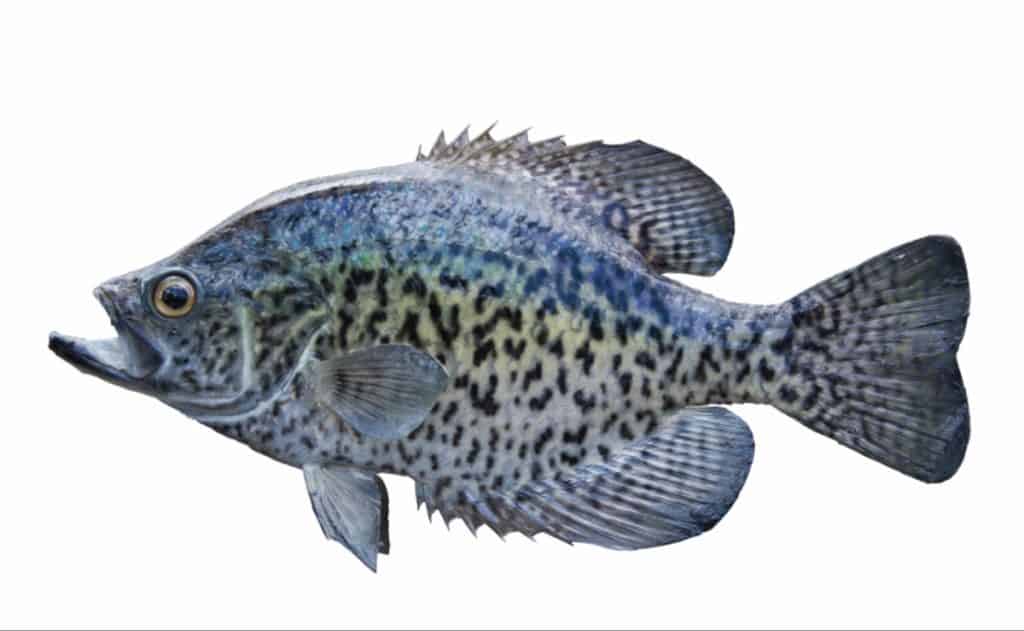
Category: Crappie Fishing

  • Can Crappie Be Used as Bait?

    Can Crappie Be Used as Bait?

    Can You actually use crappie as bait?

    Yes – But there’s a couple of catches. I’ve caught and handled plenty of crappie over the years, and while I’d rather put one on the dinner table or just release it, crappie can make effective cutbait prl larger fisg like catfish and others. Before you do it though, check your states regulations because using gamefish for bait isn’t legal everywhere.

    Ask anyone who has been out on the fishing shores and lakes for any length of time, and they will tell you that there are certain topics, even among anglers, that are just controversial. For example, some believe that you should never kill what you catch; you should always throw it back, or vice-versa.

    There are some who believe that it is better to use artificial baits, while there are still others who think that live baits are better. That brings us to our topic, which is whether crappie can be used as bait. I thought you were only supposed to either eat the crappie or simply throw it back! Well, no, there’s actually a growing consensus of fishermen that are starting to use the CRAPPIE THEMSELVES as bait.

    Can Crappie be used as bait? Any fish including crappie can be used as cut-bait for fishing. Usually the oilier the cut bait is, makes it more preferred as fish bait and there are definitely much oilier fish than crappie. Also, many anglers choose to eat the crappie instead of using them as bait because they are one of the tastiest. Keep in mind that some state laws prohibit using sportfish as bait.
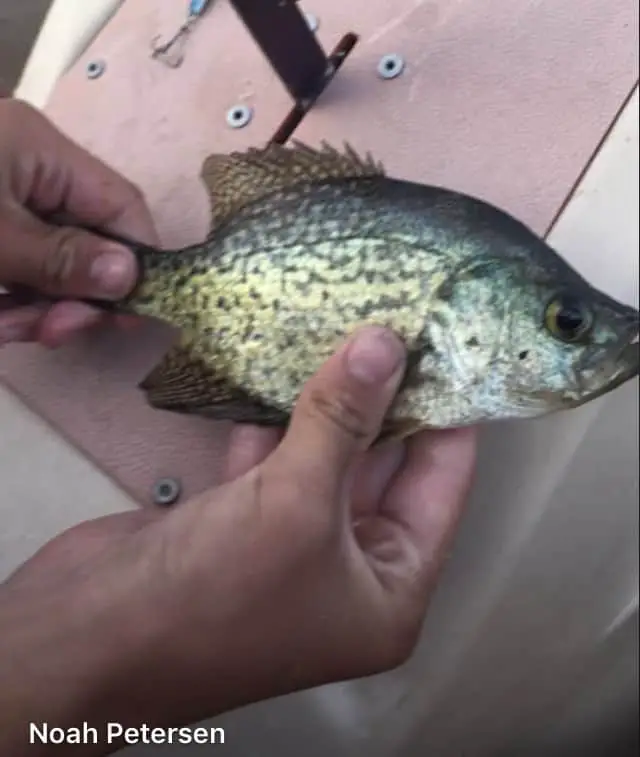
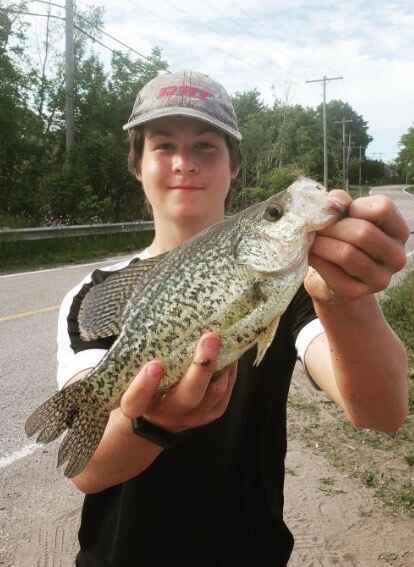
    Noah Petersen With his Black Crappie

    Should Crappie Be Used as Bait?

    Of course, when you start talking to anglers about using crappie as bait, you are liable to get ten different opinions on the subject. However, one of the things you will quickly realize after you “bite the bullet” and decide to try using crappie for bait instead of eating it is that this breed of fish can be incredibly nifty for catching the predator fish that feed on crappie.

    Of course, do get ready for some rough comments. Some will say that you are simply wasting good crappie if you just use it for bait. Just ignore the naysayers, though, because crappie will make an excellent baitfish when needed, that is for sure!

    Here are some good hooks for crappie fishing. size 8-12 are great!

    The finnish J. Martin Filet Knife has been s favorite for anglers for many years. I have used one nearly my whole life. you can find this must have filet knife HERE on Amazon.

    Naturally, if you are going to go with crappie simply as baitfish, you have to make sure that you know what you are doing. The best way to do this would be to manufacture the crappie into cut bait. The name for this kind of bait is pretty self-explanatory; it simply means that you are going to cut up a given fish and use it for bait for another fish.

    If you want to catch a larger predatory fish, this is really the ticket, no ifs, and, or buts. In fact, a larger catfish species such as a blue catfish will usually jump at the chance for you to use any type of cut bait, including that of crappie bait.

    Need CHUM ? Here’s an article you might like about chum for crappie.

    Of course, there is a broad cross-section of anglers that will still scoff over crappie being used as cut bait, but simply ignore them. At the same time, there is actually a growing number of people who are starting to realize that it is useful for bait as well.

    Of course, the next time someone makes fun of you for thinking about using crappie as cut bait, just use this wrinkle on them: if we, as humans, find the taste of crappie, how much more do you think that other larger fish might find them delicious as well!

    Hey FISHMONGER – make sure to check out my FISHING RESOURCES page.

    Be Mindful of the Local Laws

    Of course, an added benefit to your decision of using crappie as bait is that you also get the added enjoyment of catching the bait as well as catching more fish! However, you definitely will need to be mindful of the local laws regarding your crappie bait.

    First of all, just because you are only going to use your crappie as bait is not going to sway the opinion of any local game warden. That is, whatever you might use your crappie for, you will still have daily catch limits of crappie in many jurisdictions.

    Moreover, are you going out of state to catch your crappie? If so, make sure that you do a little bit of research. Some states are stricter than your own state when it comes to crappie and what you can use them for. Check these laws just to be sure.

    Which Fish Should You Go After?

    Of course, the dominant elephant in the room would have to be just what types of fish you can catch with crappie bait. Either way, you will soon find out that crappie is a fish breed that isn’t just popular among humans, but also larger fish! Indeed, there are quite a few predatory species that love to dine on crappie. Some of these would include a broad cross-section of freshwater fish, including the following:

    • Largemouth Bass
    • Channel Catfish
    • Striped Bass
    • Blue Catfish
    • Flathead Catfish
    • Crappie
    • Sunfish
    • Smallmouth bass

    How Do I Go About Preparing Crappie as Cut Bait?

    The size of this chunk of bait will not only depend on the size of the crappie you have landed, but also on the size of the type of fish that you are targeting. For example, if you are targeting a larger species of fish, you will naturally want to cut up larger portions of your crappie.

    Of course, if you are targeting blue catfish, you probably could get away with using a smaller chunk of crappie just because this type of catfish isn’t that much larger than the crappie, anyway.

    Generally, a good rule of thumb is that if you are trying to land a fish that is in the trophy class, you might want to strongly consider a larger chunk of crappie bait. However, this isn’t a hard-and-fast rule. Indeed, don’t think for a minute that a larger fish wouldn’t go after a smaller piece of crappie bait. They definitely will, but at the end of the day using larger baits is often just a matter of personal preference.

    More about keeping worms alive after your fishing trip – what do fishing worms eat?

    Follow The Steps

    Once you got that basic knowledge out of the way, you should be aware of some of the steps to preparing crappie for bait right. The first step is to remove the scales.

    Now, there are two different approaches to doing this. For the larger examples of crappie, you probably should remove them by simply starting at the tail and removing them simply by just vigorously running your thumb over the scales until they fall off. Alternately, if this is smaller crappie, you could simply just use a fillet knife to knock those scales off.

    Next, you should make sure you remove the scales and cut off the fins. Finally, after you have retrieved the chunk you have used for bait, there is one cardinal rule: always leave it EXACTLY the way you got it from the fish. Leaving it unwashed makes it extremely more likely to catch a fish because there is more oil, blood, and other amino acids that will attract a predator fish.

    Keeping this in mind will make your crappie bait experience a very enriching one indeed!


    Darren Enns Author is a father of four boys. Trout, Striper, Catfish, and bluegill are their favorite fish to catch. I would rather eat Crappie than use it as bait.
  • What Does A Crappie Look Like?

    What Does A Crappie Look Like?

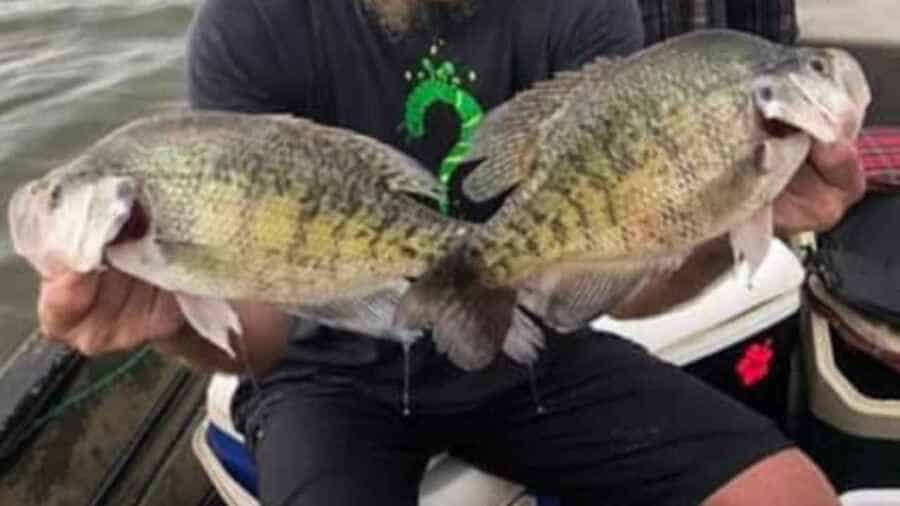
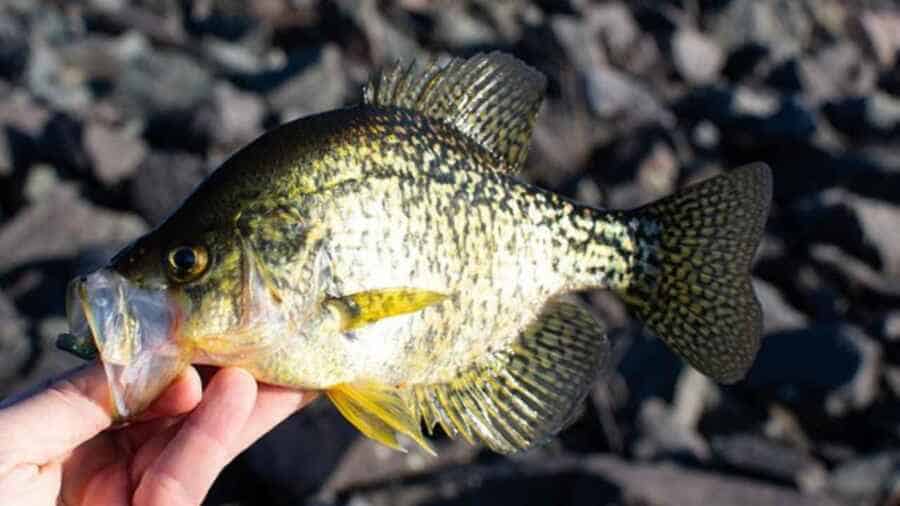
    Out of the many fish out there in the world, the crappie is one of the most fun game fish to catch. It dwells in waters of all 48 contiguous States and in Canada to this day. But despite its popularity, many beginner fishers have no clue what it looks like.

    So, what does a crappie look like? Well the term crappie can refer to either the white or black crappie which have slightly different features but have similar shape, sizes and habitats. If you are interested in crappie gear check out my recommended gear page.

    They live in freshwater and dwell in areas with underwater brush, rocks and weeds. There’s also a ton of neat ways to be catching them, and interesting facts to these little guys.

    Here are some good hooks for crappie fishing. size 8-12 are great!

    • White crappies will have vertical bars on their body.
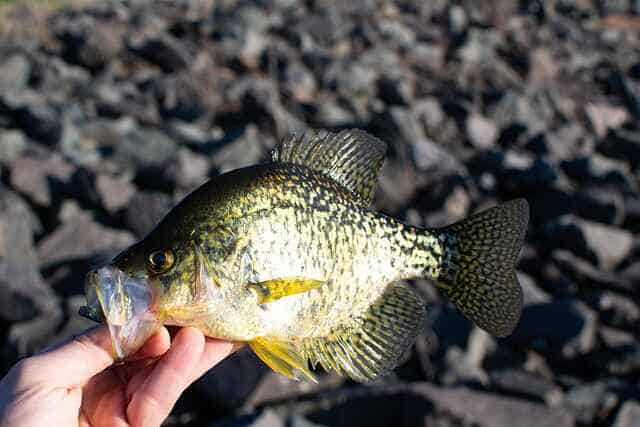
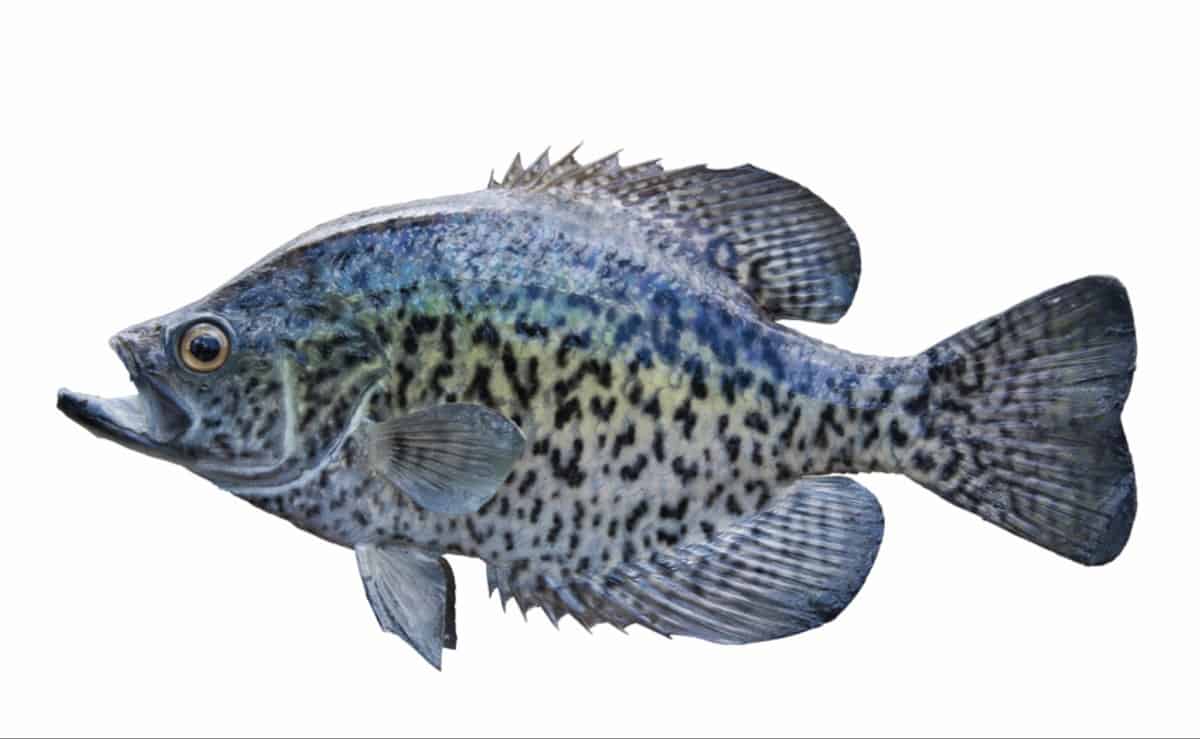
    • Black crappies will have spots all over.
    • Black crappies dorsal fins will also have needle-like fins compared to white which have a smooth arch.
    • Black crappies are shorter and “stubbier” than the white crappie.
    Black Crappie
    White Crappie by Michael Mizell

    So, I’d encourage you to read on and learn more about crappies and their way of life.

    The Difference Between White and Black Crappie

    The average crappie weighs in between ½ and 1 pound and measures between 5 to 12 inches. Considering this is the average, the crappie can grow to much larger or smaller sizes. Regardless of the type of crappie, they are very social and can form schools in the areas they live in.

    But with all that said, I did mention that there were two different kinds of crappie out there: white and black. Even though the crappie live in all kinds of different parts in the US and in Canada, there are some differences that are worth discussing.

    After all, even though you and I call them white and black crappie, the features of their skin aren’t always key indicators of which kind of crappie you caught. Both the white and black crappie can be completely light or dark.

    Instead, you want to be looking at more distinct features of the fish to tell the difference.

    Color aside, the first big indicator is the markings on their body.

    If you can’t tell the difference between their markings, don’t worry. There are other factors as well. For example, you can check the dorsal spines of the fish too. Black crappies will have seven or eight dorsal fins. Dorsal means the top fin. White have fewer of these fins – either five or six.

    The other thing to note is that black crappies dorsal fins will also have needle-like fins compared to white which have a smooth arch.

    The final distinction is the body itself. Black crappies are shorter and “stubbier” than the white crappie.

    Need CHUM ? Here’s an article you might like about chum for crappie.

    Where Do Crappie Live?

    As I mentioned before, crappies live in freshwater where there is plenty of underwater brush, rocks and weeds for them. That said, now that you know there are white and black ones, they have different dwellings and swimming patterns. Generally speaking, though, crappie will be found in deeper water during the summer and shallow water during the spring.

    Getting into more specifics where each type live isn’t too different. They both have the same kind of diet which makes sense since they look pretty much the same. The only big difference really comes down to the water they prefer swimming in.

    First off, black crappies prefer the clear water and will avoid any kind of turbid or muddy spots. White crappie couldn’t care less and will leave in either clear or murkier areas. This could be the reason for some white crappies being darker in color.

    On top of the water clarity, black crappies also love to be around plenty of vegetation that they can hide in. Again, weeds, brush and the like are things they love a lot. White crappies don’t mind being out in the open. In fact, if you’re looking for white crappie, you might have better luck checking out open water areas in the river.

    But despite all of what I said, they’re not just found in rivers and streams as you’d think. Because the crappies don’t have a particular preference for waters in general, they can show up in lakes, ponds, backwaters pools as well. When you’re at larger lakes and reservoirs, they’ll likely be hanging around in the shallow side usually in under 12 feet of water.

    What Do Crappie Eat?

    Now that you know that crappies can be flexible in habitat to a degree, it shouldn’t be a surprise that their diet is rather diverse. As you might expect, they do eat smaller fish. However, what’s interesting is that they’ll even go after the young of fish that would normally eat them such as the walleye or northern pike. Talk about a bold fish.

    Beyond that, crappie will also be eating insects, crustaceans, as well as zooplankton.

    What Are Some Crappie Fishing Tips?

    If this is your first time going out to catch crappie you are in for a treat. The name of these fish are clearly an injustice as again they are very fun to catch and they are delicious to eat as well. But you can use all of this information above to your advantage to make catching these fish easier and enjoy your reward.

    Since you know their diet by this point, you can tackle it from that angle. This will come in the form of your lure. Suitable lure for them are small jigs. Actually, those would be the best bait to be using.

    That said, I wouldn’t blame you if you are using live bait. The only thing to note is to ensure the hook is the proper size. If it’s too small, the crappie will get off of it with no problem. If it’s too big, the crappie can’t latch onto it at all.

    If you’re thinking of live bait, I would recommend using minnows. All you have to do is hook the minnow right below its dorsal fin and cast it out. Since crappies love small fish in general, they’re going to love munching on these.

    Another angle you can approach is their habitat. Regardless of the type of crappie you’re going after, these fish will prefer deeper water in the summer and shallow water in the spring. Use that to your advantage when picking a spot. Even do this during fishing as well. Don’t be afraid to cast into deeper water at times.

    Something else worth noting is that crappies also are active during the wintertime making them great for ice fishing.

    Crappies also have a spawning phase between May and June, so you’ll have better odds of catching more fish during those times. Trust me, you’ll have a much easier time during that time since a female crappie will lay between 5,000 and 60,000 eggs. The eggs will then hatch between two to five days. As you can guess, they’re fertile breeders and they can over-populate small bodies of water easily if the population isn’t controlled.

    Whenever you do catch a crappie, don’t be so quick to move to other spots. Even outside of spawning season, you can find many crappies in a particular spot. Furthermore, when holding a crappie, you want to put its bottom lip between your thumb and bent pointer finger. You want to maintain a tight grip.

    Also, before you go out and catch them, it pays to look at state/province fishing regulations. Ensure your permit is up to date and look at additional rules. Some states will have a length and daily limits so take note of those. They may also have a certain amount of fish you can keep in a single day too.

    Get Out and Catch Some Crappie

    If you can follow the rules and regulations and take note of these tips, you can have a lot of fun catching crappie. Fishing around the month of May and June can ensure you keep reeling in a large amount of fish so long as you have the proper kind of bait. Regardless of it the fish is black or white these fish are a treat all the same.

  • How to Catch Crappie in the Summer

    How to Catch Crappie in the Summer

    It is summertime and it means now that it is time for me to go out to the lake, hop on my boat, and do one of my favorite things in the whole world, fishing!

    Noah West knows something about catching crappie in the summertime.

    That being said, my aim is to catch as many crappies as possible because I want to enjoy a good fish fry this summer. For that to happen I must get ready to hit the lake with the best strategy possible because when it comes down to catching crappie, there’s a bit of a trick to get them to bite the hook every time the line goes in the water.

    Here are some good hooks for crappie fishing. size 8-12 are great!

    In order to be ready to load my cooler with tons of crappies, I decided to do some research and find out the most effective ways to catch crappies in the summer because it turns out there’s more than just simply throwing your line out into the water and wait for one of them to bite because there are other factors also come into play when trying to catch this type of fish.

    Take our survey…then share it

    So how do you catch crappies in the summer?

    Using a fast action ultralight fishing rod for a quick hook up when the fish bites, make sure you give the crappie what they want which is minnows for bait and fish over brush piles or any cover like logs or under docks in the summertime. Read on and I will explain why.

    First we must understand that crappies are a type of fish that lives in the North American fresh waters. They feed primarily on smaller fish species, and these can include the young of the predators which are the muskellunge, the walleye, and the northern pike. They also are capable of feeding on zooplankton, insects, and crustaceans for sustenance during dawn or dusk times by moving into the open waters or approaching the shores.

    Following that tangent, crappies tend to be far less active during the day, and have a strong tendency to seek shelter around weed beds, submerged objects such as hollow logs and debris, and even boulders.

    They are a fish species that derives from the Canadian French crapet, which refers to the different species of the sunfish family. As a result, crappies are known under many different names such as the strawberry bass, speckled perch, the white perch, the calico bass, and the Oswego bass. There are also certain items that are essential in successfully catching

    Having a better understanding of what the crappie fishes are, the type of habitat they inhabit, and even the different ways in which they are known as, is going to give us a huge advantage when going out to catch them. There’s no better way to get the most fish out of the water than preparation, and the more we know, the better.

    Need CHUM ? Here’s an article you might like about chum for crappie.

    Getting Ready To Catch Crappie Fish

    In order to be able to fish we must once again be aware of the fact that just throwing the line in the water is not going to be enough to catch many crappies in the summer. There’s more to understand when you’re out catching crappies in one of the most fun seasons of the year. This includes having knowledge on some items that will help you catch them more efficiently when you’re out on the waters.

    Here are some of the things to keep in mind when you’re catching crappie fish in the summertime:

    • Having an understanding of the type of baits that are more likely to lure them.
    • Knowing when are the best times in the day or the evening to go out and effectively catch them.
    • The types of environments in which they are likely to gather in large numbers.
    • Using artificial bait effectively when natural bait is not available.
    • The region’s in which they have the largest populations, so they become easier to catch.
    • Angling methods that work effectively in catching them.
    • The different types of life bait that are bound to lure them.
    • The importance of the weather.
    • The importance of depth in the lake.
    • How to use a rod and a line effectively.

    Having awareness on the factors that make crappie fishing the most effective in the summer, is going to help you make the most out of your fishing experience when you’re out on the waters looking to get a good catch for the day. This is also important because you simply don’t want to be wasting valuable time and energy looking to catch crappies during hours of the day where they are unlikely to appear in larger numbers.

    There is also an extra hidden benefit to fishing crappie in the summer, and that is the ability to go out and explore new places, which is one the most natural and instinctive drives every person has, the need to travel and explore. Fishing provides the perfect avenue to do just, and if you need some inspiration to get out on your fishing boat, then here are few words of motivation by the professional golfer Jack Nicklaus:

    “There are always new places to go fishing. For any fisherman, there’s always a new place, always a new horizon”

    Know Your Target

    There’s no way we’re going to get on a boat to go on the water and fish for crappies without familiarizing ourselves with them in the first place. That’s like saying that you know the Starbucks secret menu and end up ordering a regular caramel frappuccino. You gotta know what you’re after, and in this case we’re after the crappie fish.

    As pointed out earlier before the crappie fish is located mostly in the Northern American regions, and to be more exact, these are the North American regions where you can find them:

    • Alabama
    • Arkansas
    • Florida
    • Illinois
    • Louisiana
    • Mississippi
    • Missouri
    • Oklahoma
    • South Carolina
    • Tennessee

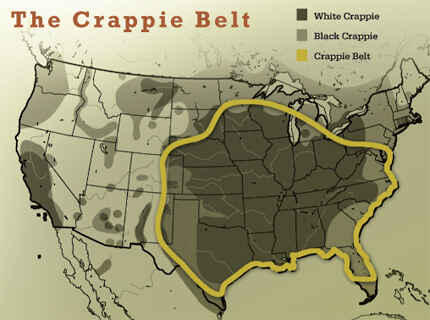
    To get a better idea, here’s a map you can check out:

    Source: https://www.in-fisherman.com/editorial/crappie-nation-the-most-popular-panfish-of-this-or-any-other-time/155017

    These locations are going to help you capitalize on your catches, and will eliminate the hassle of guessing where to go and find the best fishing spots. Not only that, but if there’s a region you haven’t visited on this list, and you’re curious about it, now is the perfect chance to plan a trip and explore a new area. After all, fishing is all about exploring new horizons and this is a great perk you can take advantage of from the fishing world.

    The Sun and Depth Go Hand In Hand

    This is to be expected when the research shows that the best times to go fishing for crappies are on the dusk or dawn hours. This means that when there’s less sun out on the sky, there are more crappie fish out on top water levels. However, this also means that when the sun is out, these types of fish are going to stay from these water levels because the heat from the sun makes it very uncomfortable for them to breathe. Especially in the summertime.

    So what does this mean for you?

    It means that go into the waters to find the crappie fish schools that are trying to stay away from the sun.

    Luckily, you don’t have to go to the deepest parts of the lake to find them!

    Crappie fish like to stay close to their feeding grounds, and they also tend to stay in water levels that are rich in oxygen. They don’t go into the deeper waters because they won’t find what they need l to sustain themselves at those levels; giving you the benefit of avoiding throwing too much of your line to try and catch them.

    Also keep in mind these types of fish have a preference for hiding from the sun in weed spaces and boulders, finding these spots shall give you more options to keep your fishing game even after the sun is out and you didn’t listen to your alarm go off early in the morning. It happens to the best of us.

    The Bait That Works Best

    Thanks to the fact that the crappie fish has a varied diet, finding a bait for it to catch isn’t difficult. The real challenge is to figure out which one is the most effective out of all of the different types of critters the crappie fish feed on. Also, there’s the question as to whether or not artificial baits work with a similar rate of effectiveness as the natural live bait.

    Well, it has been found that out of all the live baits available for luring crappies, the minnows are the favorite choice used by most fishermen due to its clear coloring and ideal small size to attract their attention. This choice is even more popular than the commonly used choices that are worms and insects.

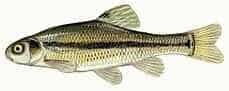
    Here is a picture of what a minnow looks like, so you identify right away next time you find yourself in the fishing store:

    Souce:https://en.m.wikipedia.org/wiki/Minnow

    When it comes to artificial baits, the colors matter more than the texture or shape of the bait. Especially when it comes to the time of day and the clarity of the water. For instance, using artificial grubs with bright colors are perfect for bright sunny days and clear waters. On darker waters it is best to use bait that reflect as much color as possible. On cloudy skies, it’s best to go for darker artificial grubs with a flash to them to attract attention.

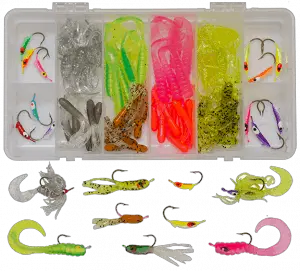
    As far as shapes go, the three most popular choices are the jigs, grubs, and spinners.

    Here’s an image of what they look like:

    Source:https://www.ebait.com/baitrigs/product/SS-80.html

    THE FISHING ROD MATTERS

    This is something that may be probably unexpected because most of us think of bringing a fishing rod with some weight added to it that can help us get an edge catching fish. That’s not the case when it comes to crappie fishing. In fact, using heavy rods only ends up working against you because of the fact that crappie fish have very soft mouths and the hook might not catch them properly.

    It’s best to use a light or an ultra-light fishing rod with fast action for the purpose of setting your hook faster, and use that extra time more effectively catching fish.

    Related Questions

    Are there other seasons in which crappie fish can be caught?

    Yes, as the matter of fact the winter is an ideal season for catching crappie fish. There’s even a method known as ice fishing in which fishermen take crappies out from frozen lakes and ponds.

    Is it necessary to use minnows as live bait?

    Although they are the preferred choice, the minnows are not necessary for the purpose of using live bait. Worms and other grubs can also be used for live bait. There are also artificial baits available in case live isn’t an option, or they ran out of them at the fishing stores.

  • How To Fish For Crappie With Minnows

    How To Fish For Crappie With Minnows

    Crappie is some of the most popular eating fish in North America. However, to catch them, you’ll need to make sure that you are using the right baits. Minnows are one of the best ways to get a crappie to bite.

    So, how to fish for crappie with minnows? The technique you use when fishing with a minnow will often depend on the condition they are in. If they are alive, it’s best to hook them through the tail, or the top of their back. If they are dead, you might want to hook them through the snout and mouth. You can get the best results by jigging or trawling. The best type of hook to use can be found on my Resources Page Here.

    How To Fish For Crappie With Minnows

    There are a few things that you’ll need to know to give yourself the best chance of catching. Let’s look at some of these.

    Here are some good hooks for crappie fishing. size 8-12 are great!

    How To Hook Minnows When Fishing For Crappie?

    There are several hooking methods that you might want to explore. The most effective one will depend on whether the minnow is alive or dead. Hooking them through the tail or back is good if they are alive. However, if they are dead, you might want to hook them through the mouth.

    One of the biggest factors that will determine whether you land a crappie will be the way that you hook the minnow. This will impact the way that the bait will move through the water. It will also change the type of fishing techniques that you use.

    It’s generally best to use live bait. This will produce the most realistic movement. However, they will also require a special hooking method, to ensure that they live for a long time. It’s best to hook them through the tail and back. This will make sure that you are missing any vital organs, so they’ll be able to stay alive and swimming. Even if you do this, you might need to rebait occasionally.

    When fishing with live bait, you’ll need to wait a few seconds before you pull on the line, to set the hook.

    If you pull it too early, you risk pulling the bait out its mouth, losing the fish. Often, this technique can take a lot of practice to master.

    If you are using dead minnows, you’ll need to set the hook in the mouth or snout. This will give you more control, allowing you to create the impression that the fish is swimming.

    Need CHUM ? Here’s an article you might like about chum for crappie.

    Also, when using this technique, the hook is in the front of the minnow. When the crappie takes a bite, you’ll be able to set the hook immediately, giving you a better chance of hooking up.

    In many cases, you’ll need to experiment with a few types of hook positions, to find the one that works best for you. It can help to keep a fishing journal, so you’ll be able to keep track of the results you were able to generate with each hook position.

    What Method To Use When Fishing For Crappie?

    Once you’ve got the hook set, you’ll need to decide what method you’re going to use. In some cases, you might want to park your bait over the crappie, dropping the bait on top of them.

    At other times, it might be best to jig past them. The right approach will often depend on what the conditions are.

    There are several techniques that you might want to use. First, you might want to drop your minnow over the area where you suspect the crappie will be.

    In most cases, they tend to stick around brush piles of timber, as this gives them plenty of cover. If you do this, they will come out of their shelter to feed, latching onto your bait.

    In other cases, you might want to take a more active approach. In this case, you’ll need to jig the minnow past the place where the crappie is hiding. The movement in the water will make it easier to spot, so the crappie more likely to eat them.

    If you want to take the jig approach, you might want to consider attaching a float. This will prevent the hook from getting tangled on any underwater obstacles. It can often help to use a pencil float.

    This ensures that, when the fish bites, you’ll notice the lure ducking under the water, signaling that it’s time to start reeling it in.

    When deciding which approach to use, it can help to know a little about . During the spring, they tend to be the hungriest, eating a lot of bait.

    This makes them relatively easy to catch. During the summer, you might need a little more effort, trolling around weeds.

    As the fall sets in, the crappie becomes the hardest to catch. It’s best to look around weeds and underwater obstacles. In the winter months, the crappie tends to slow down. But, if you bob the minnow up and down, they should find it and take a bite.

    If you aren’t sure about the right technique to use, try a few. Vary the depths and tactics, to see which one produces the best results.

    The good thing is that crappies don’t tend to be too fussy, so if you present an attractive minnow as bait, you’ll usually be able to land one.

    How To Get Minnow?

    If you plan to use minnow as bait, you’ll need to know where to obtain them. There are two ways to get minnow. You can either catch them yourself, using a trap, or purchase them from the shop.

    Once you have minnow, you might want to start breeding them, so you’ll always have a continuous supply.

    The easiest way to get crappies is by purchasing them from the store. These are a fairly popular bait, so you shouldn’t have any problems tracking down a fishing shop that sells them.

    If you can, try to get live minnows. As we mentioned, earlier, they can make a more attractive bait.

    In other cases, though, you might want to catch the minnows yourself. If this is the case, you won’t be able to use a hook, because they are so small. Instead, you’ll need to use a trap.

    You can buy these at most fishing stores. Or, if you want to save a little money, you can.

    Once you have the minnows, you might want to breed them. You can do this by placing them into a tank and feeding them.

    As long as you have a good mix of males and females, they should start to mate. This will ensure that you have a steady supply for future fishing trips.

    Related Questions

    Can I keep the crappies that I catch? This depends on the laws in your state. You’ll often need to meet minimum size laws. In some cases, you’ll need to apply for a fishing license. Check the local regulations before your trip.

    Can you eat crappie? It is safe to eat crappie, as long as it’s been prepared properly. It’s best to clean it thoroughly before you start cooking.

    You might also want to add a little more salt and seasoning, as it tends to have a more subtle taste than other species.

    Final Thoughts

    To get the best results when fishing for crappies with a minnow, you’ll need to make sure that the hook is the right place. Then, you’ll need to pick the right technique, to attract the attention of the fish. If you can do this, you’ll be able to land crappie.


  • Best Ice Fishing Lures For Crappie

    Best Ice Fishing Lures For Crappie

    Just because ice has started to form on the lake and rivers doesn’t mean that you won’t be able to catch crappie. If you use the right lure, you’ll be able to get plenty of action during the winter months.

    So, what are the best ice fishing lures for crappie? It’s best to try to use lures that use that glow in the dark. You might also be able to get great results by using smaller baits, which resemble the foods that they tend to eat. You might also want to think about using a soft material, so it wiggles as it moves through the water, resembling a real fish. See My favorite choices for Crappie Lures Here on my resources page.

    Ice fishing for crappie can be a very rewarding experience. However, there are a few things that you can do to give yourself a better chance of catching one. Let’s look at some of the things you need to know about the best ice fishing lures for crappie.

    catching crappie with minnows

    What Lures Should You Use When Ice Fishing For Crappie?

    Do you need an Ice Fishing Flasher? Heres some good choices!

    It’s best to try to stick to smaller lures, that resemble the types of foods that crappie usually eats. It can be a good idea to get one that glows in the dark. Also, try to get a lure that has a natural movement as it jigs through the water.

    The type of lure that you use will have a big impact on whether you will be able to catch crappie.

    This is especially important during the winter months when they tend to be more lethargic and reluctant to eat. There is a range of things to look for when selecting your lure.

    First, think about the type of lure that you are using. You’ll often want something small.

    Crappies tend to focus on prey like larvae and insects. If you can imitate these food sources, they will be more likely to bite. Also, it limits the size of the hole that you need to drill in the ice.

    Here are some good hooks for crappie fishing. size 8-12 are great!

    If the crappie is deep under the ice, you might want to upgrade to a larger lure. By presenting a juicier lure, you’ll give them more reason to bite.

    This is especially important during winter when the crappie is trying to conserve energy.

    Another important tip is to try to stick to lures that can glow in the dark. During the winter, crappies tend to move to lower depths. As a result, there is less light to see what food is available.

    Because of this, it can be hard for them to spot what they should be eating. Choosing a glow in the dark lure is like putting a spotlight on your offering. As the crappies move closer to the surface, move to natural colors.

    Another good way to make sure that your lure is standing out underwater is by picking one that has a rattle.

    The next thing to consider is the way that the bait moves through the water. The vibrations will make it easier for the crappie to spot the food, giving you a better chance of getting a bite.

    In the summer you might want to use live bait, like the minnow. However, during winter, they might die from the cold temperature.

    Instead, you’ll need to create a lure that artificially creates movement.

    To tell you how the lure will move through the water, there are a few things to look for. First, you should try to look for a soft plastic.

    The soft parts will wiggle as it is dragged along, attracting the attention of the crappie. You might also want to at the front of the lure.

    It’s best to choose something with a small spoon. This changes the way that the lure ‘swims’, making it imitate prey in distress.

    Need CHUM ? Here’s an article you might like about chum for crappie.

    It’s usually best to have a wide selection of lures that you can choose from. If one isn’t working, don’t be afraid to swap it out for something that will deliver better results.

    You might need to try three or four lures to get to the one that works best in that location. Keep a fishing journal to help you keep track of these changes, so you can better plan future trips.

    Where To Fish For Crappies In Winter?

    Once you’ve found the right lure, you’ll need to focus your energy on the places where crappies are most active.

    In a fertile environment, they tend to stick to the deeper water in the middle of the lake. In most cases, they will stick close to things like weeds, logs, or rocks which can provide cover.

    There is a range of places that you might want to look for crappies. In most cases, you’ll want to try fishing close to healthy vegetation, like underwater weeds.

    This provides the crappies with shelter and nutrients. However, if there aren’t weeds available, try other underwater obstacles, like rocks or logs.

    The depth that crappies occupy during the winter can vary. In most cases, they will stick to the deeper waters, in the middle of the lake.

    However, if they are feeding, they might rise to higher levels, sometimes just a few feet below the ice. You might be able to find a better location if you use a sonar device, which lets you see what is going on under the water.

    To find the best location, you’ll need to be prepared to experiment. It might take multiple holes before you find one that delivers results.

    In some cases, it can help to work with other fishermen. This makes it easier to find a lucrative spot.

    Lure NameDescription
    Jigging RapalaA classic lure that can be jigged or vertically jigged through the ice. It mimics a small minnow or baitfish, making it attractive to crappie.
    Tungsten JigTungsten jigs are heavy and compact, making them great for getting deep into the water column quickly. They also mimic small baitfish and insects, making them attractive to crappie.
    Marabou JigMarabou jigs have a soft, feathery tail that creates a lifelike swimming action when jigged through the water. They are great for slow-moving presentations and can be tipped with a minnow or waxworm.
    Micro SpoonMicro spoons are small lures that mimic the flash and movement of small baitfish. They are great for catching crappie in clear water and can be jigged or trolled.
    Jigging MinnowJigging minnows are soft plastic lures that mimic the movement of a live minnow. They can be tipped with a waxworm or other small bait to increase their appeal to crappie.

    How To Rig A Lure To Catch Crappies In The Winter?

    It’s also important to check the way that you’ve set up your rig. During winter, you’ll need to choose a more sensitive line, so you know when you are getting bites. It can also help to use a clear line, so the fish won’t be able to spot it.

    There are several techniques that you can use when rigging your line. First, you’ll need to think about the kind of equipment you’re getting. It can often help to make sure that you are using a sensitive rod.

    This will let you know when you are receiving bites. You must pull on the hook, setting it in the mouth of the fish. You should be able to feel your bait as it moves through the water.

    You might also use a lighter line. In the clear waters, the fish will be able to spot the fishing line. This

    makes them wary of biting. If you’re using a lighter line, make sure to get a good knot. This will make sure that the lure doesn’t slide off after it gets bitten.

    Related Questions

    What’s the best time of day to ice fish for crappie? It’s usually best to try to fish during the middle of the day. This is when the temperature will be warmer and the fish will be the most active. You might also find some good activity at nightfall.

    Where is the ice thickest? Ice will always be thickest towards the center of the lake. If you’re fishing in this area, be prepared to use an auger to help you drill a hole.

    Final Thoughts

    Crappie can be a great species to target during the winter months. While they might be a little more lethargic, you’ll still be able to get them to bite. The key to doing this is using the right lures.

    It’s best to stick to soft plastics, that glow in the dark. If you can get the right lure, in the right spot, you should be able to enjoy a delicious crappie dinner.

    Check out these Recommended Ice Fishing Boots from Amazon.


  • Do Crappie Jump Out of the Water?

    Do Crappie Jump Out of the Water?

    When a fisherman has decided to start specializing in a particular breed of fish, whether they are six or sixty it doesn’t take long for them to realize that they need to start understanding fish behavior better. Of course, once you get hooked on crappie, the same principle applies: you want to know everything you can about this particular species.

    Jumping Crappie
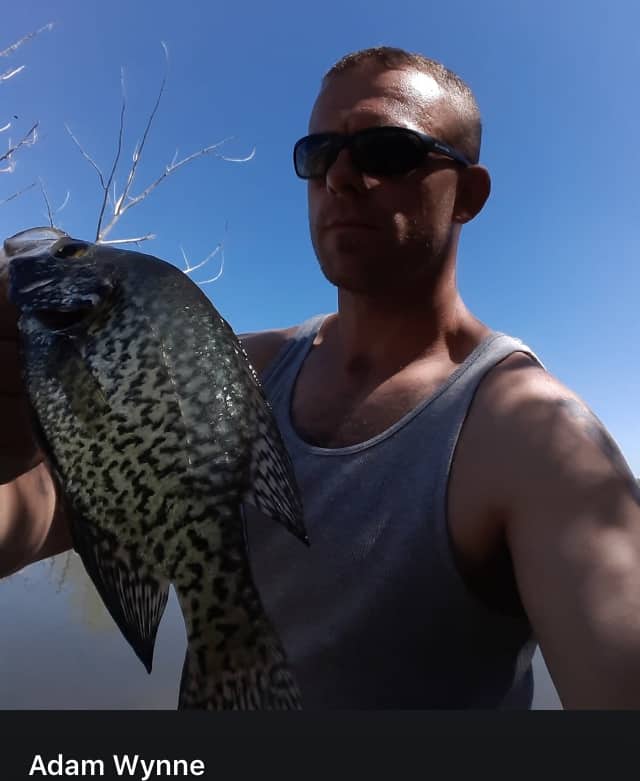
    Adam Wynne Crappie

    Thus, you will definitely have a lot of questions about crappie. You would probably want to know such things as when do they breed? Where do they eat? What do they eat? You want to know as much as you can about these crappies, because it will help you to catch them better.

    One surprisingly dominant (and underrated) question that many people might have would be concerning whether crappie have a tendency to jump out of the water or not. Now, of course, when people think of fish jumping out the water, they naturally think of bass or trout. But what about crappie? Let’s examine that for a while.

    Take our survey …then share it with friends…

    Understanding All Fish Behavior

    The key to determining whether the crappie will jump out of the water is to simply begin by understanding the behavior of all fish. For starters, there is a common joke among anglers that goes a little something like this: “Q: Why do fish jump out of the water? A: Because they don’t have any fingers.” All joking aside, there is definitely some creedence to that joke. Of course, the next thing you should understand is just why fish jump out of the water in the first place.

    Indeed, if you are wondering why any particular fish would jump out of the water, it can be summarized in just two words: chasing. bait. That’s right. Almost all fish will jump out of the water simply in order to chase bait. Naturally, this is most common among the larger fish species such as bass, trout, or salmon, but rest assured, that it does occasionally happen among crappie as well. It may not happen as much, but it does indeed happen.

    Of course, another part of the reason why all fish, including crappie, will definitely jump out of the water is simply because they can. Although it’s hard to tell what is going through the fish’s mind, the sense of exhilaration, adventure, and the rush of endorphins is probably the reason why they might go ahead and jump out of their watery home.

    Are crappie attracted to light? HERE is an article that sheds light on that question.

    The Debate Over Jumping Crappie

    Within fishing circles, there is definitely a debate over whether crappie jump or not. Although we did just state that crappie do indeed jump some, the evidence appears to be sparse for it. Generally we will see two different camps regarding whether the crappie will jump out of the water. Thus, we should absolutely examine these two points of view:

    Camp #1: They Don’t Do It/I’ve Never Seen Them Do It


    The first camp is those who have extreme difficulty believing that crappie will jump out of the water. There are many anglers who claim that they have been fishing for fifty years and that they have never personally seen the crappie jump out of the water like they have bass or trout. They say that if the crappie were to start jumping, it would be because the water tended to be at a very low point. Either way, these gentlemen are convinced that the crappie are not a species that will readily jump, and many of them actually will encourage people to be diligent with their bait and get ready to be persistent about catching their crappie.

    Need CHUM ? Here’s an article you might like about chum for crappie.

    Camp #2: They Do It; It May Not Be As Much As Other Fish, But Yes, They Do It

    On the other hand, there are some people who claim that they have seen crappie feeding and jumping out of the water. Again, most of the time the people who notice these crappie jumping out of the water will say that they are doing so because they are chasing bait. Indeed, one anecdotal report claims that these crappie will chase anything, including lures. Some of the anglers claimed that the jigs and the bobbers would draw the crappie and cause them to leap out of the water. Thus, even though the crappie don’t have a reputation as being jumpers, they will leap out of the water if they are hungry enough.

    Well…Do Crappie Jump Out of the Water or Not?

    It’s hard to say either way whether crappie will jump out of the water or not. Of course, some individuals swear that they have seen the crappie do it. I don’t know…maybe it has something to do with the region or the time of year? And, like we’ve mentioned previously, there are many career crappie anglers who say that no, they haven’t seen them jump out of the water, and they are adamant that it just isn’t something that they do.

    There’s no general consensus, and to my knowledge there is no poll that has been done regarding this topic. However, whatever your personal experiences with jumping crappie might be, let this be a lesson to you: once you specialize in a particular species of fish, you definitely need to learn all you can about their particular behavior.


    Crappie Behavior

    The first thing you need to know is that crappie behavior is that they have at least four distinct cases. There is Pre-Spawn, Spawn, Post-Spawn, and Winter. One of the hardest times to fish for crappie (and the time where it would be least likely to find them jumping out of the water, if at all) would be during the post spawn period.

    This is because both the male and female crappie have just gone through the spawning period, and that is very draining time for them. Thus, they will usually retreat to deeper waters in order to recover. During the day, they will often be as deep as 30 feet. Of course, if you are going to have any chance at all at catching them it would during the night. They will usually rise to about five feet during the evening hours.

    Thus, even though there is no conclusive way to prove that crappie do jump out of the water, it still illustrates to us just how important it is for us to fully understand their behavior.

    Hey FISHMONGER – make sure to check out my FISHING RESOURCES page.

    Here are some good hooks for crappie fishing. size 8-12 are great!

  • Will Crappie Eat Crickets?

    Will Crappie Eat Crickets?

    If you’re just barely getting started with crappie fishing, then it probably didn’t take you long to realize that there are all kinds of baits that you can use for this type of fish. Depending on the time of year, they will bite at just about anything. This includes worms, minnows, lures, jigs, you name it, they will bite on it. Of course, there are quite a few of us anglers that swear by using live bait for fishing for crappie, and for good reason: the crappie love it.

    But of course, there are those days where the crappie just don’t seem to want to bite, and it’s at those times that you probably should consider varying up your arsenal. Since crappie seem to do so well with live bait, have you ever considered using crickets? It’s not as crazy of an idea as you might think. Here are some points to consider:

    Here are some good hooks for crappie fishing. size 8-12 are great!

    Do Crappie Eat Crickets At All?

    Of course, some people wonder if crappie will even eat crickets at all. The answer to this is yes, as long as you present it right. Most of the time, the best thing you can use to fish for crappie would simply be a small fisher species, but fascinatingly crappie do, indeed, eat a variety of small insects and larvae. They aren’t picky at all, and they will generally eat what’s available. Of course, it still seems that crickets are overlooked as fishing bait.

    It would appear that this is because they are not as readily available as grasshoppers simply they don’t seem to be as durable. However, you can even do ice fishing if the only thing you have is crickets.

    Are crappie attracted tolight? HERE is an article that sheds light on that question.

    The Best Time of Year to Use Crickets

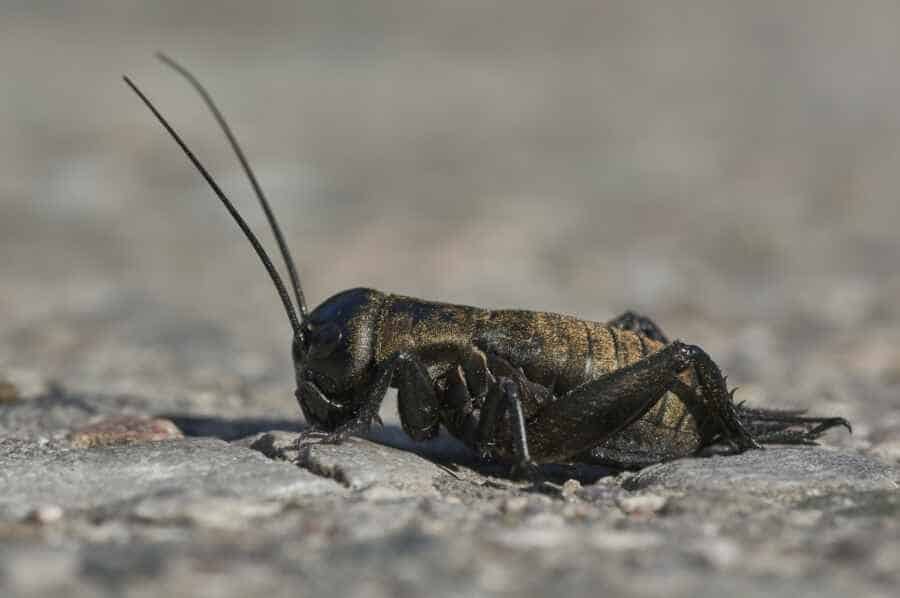
    Photo by Wolfgang Hasselmann

    The best time to use crickets for crappie bait would have to be in either spring or summer. Some anglers will even try using them in the fall months, but the crickets are usually not around as much at this time. Hands down, the best time to use crickets would have to be during the spawning season of the crappie, simply because this would be a time when crickets would even be considered a delicacy to your crappie.

    Generally, if you try to fish for crappie by the shore with your cricket during this time, you really can’t go wrong. Crappie just before and during their spawn period will just about lunge at anything.

    Hey FISHMONGER – make sure to check out my FISHING RESOURCES page.

    How to Properly Bait Crickets

    Of course, the first thing you need to do is learn how to properly bait the crickets. It can be a bit tricky, but first of all you should pierce the crickets, but you should be careful where you pierce them at.

    You should hook your cricket through its thorax, which is just behind their head. Don’t panic if they die fairly quickly after piercing them; most of the time that crappie will still go after them anyway. Of course, fish are surprisingly able-bodied little creatures.

    There are some times where they can actually detect if you are using a dead bait. This is probably why using crickets as bait for crappie and other breeds has encountered some stigma. However, if you want to be picky about this, there are some other alternatives that will keep the crickets alive longer. First, you could use a special bait thread that will only wrap the cricket in place and you won’t have to hook it. You also could take some bait thread and simply just loop it around that way as well.

    Need CHUM ? Here’s an article you might like about chum for crappie.

    How Do You Get Crickets?

    Now that we’ve fully determined that yes, crappie do indeed eat crickets, you are probably wondering how to get them. You have two options: you can either acquire the crickets at a bait shop, or you could just get them yourselves.

    Although it’s definitely easier to get the crickets at the bait shop, (or pet shop) some individuals get a lot of thrill out of hunting for their bait as well. If this seems strange to you, just consider how some people are always looking for techniques to find minnows just as much as they are trying to land that perfect fish.

    Thus, one of the ways to get crickets is to set traps for them. People often do this by either trying to catch them by hand or by crafting a small bait net trap for them. If you elect to make a trap for your bait crickets, one way to do it would be by making a bait composed of granulated sugar and some unflavored bread fragments.

    Of course, it helps if you know ahead of time where the crickets usually congregate, but then you could simply sprinkle this mixture in that area. Cover it up with a large, single piece of newspaper, and make sure that you do so at dusk. The next thing you should do is have a jar ready in order to sweep your crickets into. Poke a small hole in the jar and you can continue feeding them this concoction of breadcrumbs and sugar until you are ready to use them for bait.

    Take our survey…then share it with friends

    Using Crickets: Fishing For Crappie the Right Way

    Of course, when it comes to fishing for crappie, there is no “magic bullet” bait that will work every time. They are just like any other fish; sometimes you will be able to catch and sometimes you won’t. However, when using crickets, there are definitely strategies that you can use to increase your odds of catching them.

    Besides only using crickets during the spawning season, you will definitely want to fish right off the shoreline because that’s usually where the crappie will be found. However, there is more to it than that. You will also want to be very specific regarding your bait, and get it down to the exact water depth. You can usually do this by going with a hook size that is a bit larger, between a size 1 to size 3. Finally, since you are specifically fishing for crappie, you might also want to consider using a single-split shot, simply because that will help to avoid having other types of fish trying to steal your bait.

    Like I said, fishing with crickets can be a bit of a challenge, but if you really want to sink your teeth into something bait-wise, this would be one way to go. Either way, there is absolutely nothing wrong with diversifying your fishing bait choices so that you can catch more of these crappie.

  • Do Crappie Eat Crawfish?

    Do Crappie Eat Crawfish?

    Generally, most anglers will fall into at least two different camps: there are those who just want to fish for any species of fish whatsoever, and there are also those who want to specialize and try to catch just one specific fish. (I like them all.)

    Indeed, there are literally millions of individuals who will attempt to catch such breeds as salmon, trout, catfish, perch, bluegills, and many others. Moreover, among the ones who specialize, there is also a large group of individuals that not only love the sport of fishing, but they will also debate until the cows come home about the best techniques to catch said species.

    Here are some good hooks for crappie fishing. size 8-12 are great!

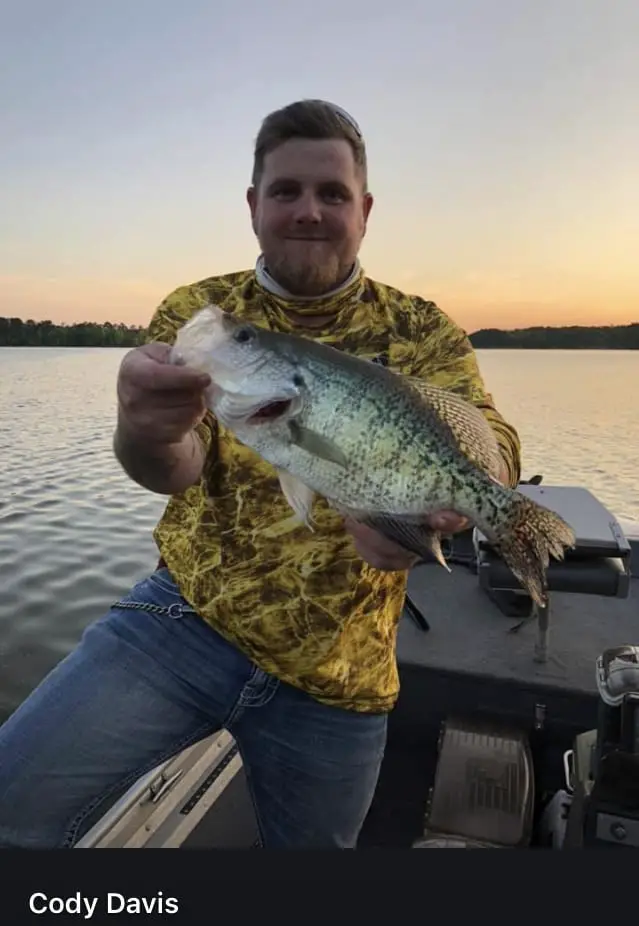
    Cody Davis Crappie

    One example of this would have to be those who try to catch crappies. Indeed, one of the biggest debates among crappie fishermen would have to be over just what this breed of fish will eat. The short answer is all kinds of stuff, but this leads us to our next pressing question…

    Will Crappie Eat Crawfish?

    Yes crappie do eat crawfish if they have the opportunity but keep in mind that crappie prefer to eat upward and crawfish are usually found on the bottom. Find a way to present a crawdad to a crappie though and they will eat it.

    If you need some excellent crappie fishing lures including crawfish, I have given my favorites in my resources page HERE.

    Actually, that’s a bit of a loaded question. Before we get to an appropriate answer for that, we need to fully understand some other questions first:

    What Do Crappie Normally Eat, Anyway?

    First of all, you should fully understand the normal diet of crappie, and then you just might understand why there is such an intense debate over whether they eat crawfish or not. Generally, crappie will eat such things as zooplankton, grass shrimp, minnows, and immature species of fish such as walleye, bluegill, pike, and even crappie themselves. They will even eat frogs. You might notice that no, I didn’t mention crawfish in that list, but trust me, the jury is still out on this question. Let’s look at the next wrinkle…

    What Do Crappie Eat When Food is Scarce?

    Of course, we’ve already established that crappie will eat just about anything that they can wrap their mouths around, but what about when food is scarce? Although some anglers still insist that the crappie will still NEVER eat a crawfish EVER, would the crappie do it then? The answer, according to most anecdotal accounts, would be an emphatic yes, they most definitely would.

    Take our survey …then share it with friends

    You see, crappies are largely known as an opportunistic species. Simply put, they are not picky eaters at all. Their typical food choices such as minnows or small fish won’t be available in the winter or the early spring, and so that means that these crappie will have no choice but to go with crustaceans such as crawfish or insects such as crickets or larvae instead of their preferred diet. Of course, you as an angler can use that to your advantage and lengthen the time you have to try to fish for crappie throughout the year.

    Need CHUM ? Here’s an article you might like about chum for crappie.

    There’s Plenty of Anecdotal Evidence

    Of course, even though there are always going to be a significant number of people who insist that crappie will never eat crawfish, there are also plenty of anglers throughout the United States and beyond that have anecdotal evidence that crappie will indeed go after crawfish. For instance, there was a gentleman who was fishing on a well-known river in Ohio, and to begin with he was using the typical minnow bait to catch his crappie.

    However, he decided that he wanted to try for some other fish for a little while, so he switched his bait to crawfish. It didn’t take too long before something blasted his line, and although he thought that it was going to be a large bass, it turned out to be a fairly good-sized crappie!

    Moreover, there was yet another instance where an individual was fishing on an Illinois river when he was a small boy, and he and his uncle were initially going after the bluegills, but he landed a crappie instead! Although he was just six years old, he was hooked for life! There is yet another individual in Louisiana who said he has cleaned out more crappies than he could count that had the remains of a crawfish in their stomach. Indeed, there are stories like this all over the United States, so you can certainly rest assured that crappie will absolutely go after crawfish if the need arises.

    What About Their “Feeding Down” Habit?

    Of course, part of the reason why some people are so adamant that you cannot use crawfish as bait for crappie is because this type of fish would have to “feed down” in order to eat them. However, they fail to realize that these crappies will go to some tremendous lengths to get food if they need to. Yes, they will normally “feed up” to obtain food, but if the only way for them to get their food is to “feed down”, then they are not against doing that. All I’m saying is, yes, the crappies will definitely change their behavior if it means that they are in for a free meal.

    Hey FISHMONGER – make sure to check out my FISHING RESOURCES page.

    Obtaining Your Crawfish

    Now that you know that yes, you can definitely catch crappie using crawfish as bait, you’re probably wondering just how you would go about getting the crawfish. Well, there are plenty of ways to do it, but one method would be to go out at night with a flashlight and a dip net and look for them along the streams. This is a good way to find them if you are the adventurous type of course. Another method that some have found to be easier would be to simply look for them during the day. Some people enjoy turning over rocks in order to try to find them. Of course, you’ve got to be quick! You’ll soon find out that these crawfish are very quick! Persistence is key. Of course, once you catch them, you will have another concern.

    How Do You Keep Them Fresh?

    That’s another good question. One of the best ways to do that would be through using styrofoam coolers. You can fill them with layers of wet newspapers, because you have to make sure that the crawfish are kept cool. However, some don’t like this method because it takes up too much space on their boat. Another way to do it would be through placing them in a flow-through minnow bait bucket. Taking the inner bucket of the exterior bucket will allow the crawfish to continue to have air.

    How Do I Hook a Live Crawfish?

    One of the best ways to hook a live crawfish would be on an “upwards” trajectory through the tail of the crawfish from the bottom just shy of a half-inch from the end. This method still allows the crawfish to have some natural movement when you cast it out. Another method would be to hook the crawfish through the bony horn of their head. This is a method many crawfish bait enthusiasts prefer because it prevents the crawfish from crawling under a rock and hanging up your line.

    Whatever method you choose for hooking your crawfish, you can rest assured that the crappie will indeed go after them. They are hungry fish! Go ahead and try this method for crappie fishing during the off-season, and you just might be in luck.

    Darren Enns Author has been married to the same lucky woman for 30 years.


  • Can Crappie See At Night?

    Can Crappie See At Night?

    As a newly-minted crappie enthusiast, chances are you have quite a few questions about how to go about catching as many crappie as you can. ( I STILL do…LOL) You probably want to know about their spawning habits, what lures they are attracted to, what type of bait they will go after, and so on.

    Of course, another thing that many crappie anglers want to know would be whether the crappie can see at night. Well, if you’ve been on the lake at night for any length of time, then you will know that the answer to that question is definitely an enthusiastic “yes!” As a matter of fact, many crappie actually prefer the night time hours to congregate because the water is calmer; thus, many anglers realize that they should take advantage of this in order to catch more of them! If you are looking to appeal to more crappie at night and appeal to their night vision, here are some things you should know:

    Here are some good hooks for crappie fishing. size 8-12 are great!

    Use Lights

    Much like us human beings need light to see at night, so do the crappie. Thus, remember that on your next night fishing excursion when you are lighting up your lantern. If you are going to catch more crappie, give them some light too!

    However, do realize this: lighting up the water and the depths of your fishing not only appeals to the crappie by helping them see, but it also engages the crappie in a specific process. Using either floating or submersible lights will attract crappie to your fishing spot because it engages them in all of the steps.

    You not only will help them see better, but this extra light will increase the plankton in your fishing area. In turn, this will increase the bait fish around your area. Finally, when there is more bait fish in your area, there will also be more crappie in your general vicinity as well.

    Understanding this process is crucial for your crappie-catching success at night. Moreover, a full understanding of this process is a great way to have a solid back-up plan, simply because even if the crappie cannot see the glare of your lights, you can be certain that they can definitely see the baitfish and plankton that your light is attracting as well!

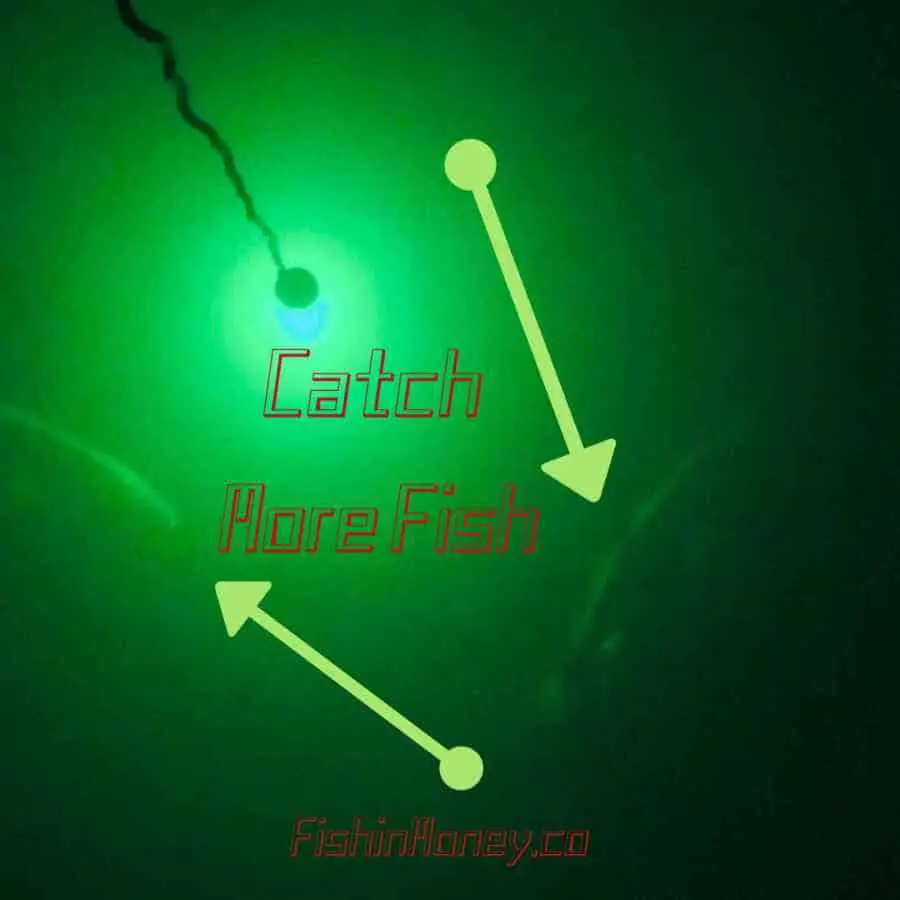
    The one I have came from Amazon and it is the Firewatermarine 12V MAXX LED GREEN UNDERWATER SUBMERSIBLE NIGHT FISHING LIGHT I highly recommend getting one. I have videos onmy youtube channel that show the fish coming in and eating the plankton that are gathering around the light.

    Use Brightly-Colored Lures

    Whether it is day or night, you should always leverage the fact that crappie are sight feeders. Naturally, just like people, the crappie will be attracted to brightly-colored items. This is why you should use brightly-colored lures. Moreover, you should be aware that the vision in a crappie is so adept that they will be easily able to spot a brightly-colored lure even if the water is a bit murky.

    Of course, you should be aware that using bright lures at night might work best when you have encountered a school of crappie. This isn’t always easy to do, but one way to increase your chances of finding a school would be to fish further down the river or in the middle of the lake, especially on nights where it is very cold. Naturally, crappies will always have an appetite, and it is an instinct of them to move around in these large schools.

    You can bet your bottom dollar that when they encounter a lure in this darkness that stands out because of how bright and shiny it is, they will be compelled to investigate it.

    Need CHUM ? Here’s an article you might like about chum for crappie.

    Crappies Will Not Only See Light at Night, But They are Very Comfortable With Them as Well

    Light not only will attract some of the crappies’ favorite snacks, but there is no need for you to worry about whether the light will spook them or not. Newsflash: it won’t, because crappie are very comfortable with them.

    This is another area that you can use to your advantage. First of all, one way that you can use light to appeal to crappie is by using sealed-beam lights. These types of lights have a styrofoam flotation device, making them an added attraction to the crappie.

    Moreover, the best part about this type of light would have to be that you can sidestep that earlier three-step process and just go right to attracting crappie. Another great advantage to using a styrofoam flotation light is that it won’t attract those highly distracting bugs simply because you are placing it in the water instead of in the air. Be sure to position these lights so that you can fish right beside the beams.

    Crappie and Their Night Vision: Using it to Their Advantage

    Another reason why you should fully understand just how well crappie can see at night is because they will definitely use this skill to their advantage. When you go out night fishing for crappie, one of the first things you will notice is that they have a tendency to have quite a few hiding spots. What I mean by this is that they will often go down to the deeper depths of the water or they will find some large brush, reeds, or other underwater plants to hide behind.

    Thus, the good crappie night fisherman will keep this in mind and use it to THEIR advantage as well. For instance, you have to be as organized as possible in this regard. When you have decided on a bait, you should strongly consider suspending it at various levels from your bite.

    You should allow for a bait to be placed at five feet; one at ten feet, and possibly even one at twenty feet or more. This will make it more likely that you will appeal to the crappie at every level and it will definitely increase your chances of success.

    Experienced Anglers Often are Very Organized When They Want to Take Advantage of a Crappie’s Night Vision

    One of the main differences between experienced crappie anglers and beginners is that the seasoned ones will usually develop a certain organized plan for their crappie night fishing endeavors. For example, one such angler likes to freeze a spotlight on a crappie, put a jig by his nose, and then reel the fish in after they start aggressively eating. Of course, most experienced anglers also realize that this runs the risk of spooking the fish.

    However, either way you look at it, the same principle applies. When you are angling for a certain fish species such as crappie, you have to take everything about that breed into account. In the case of nighttime fishing, if you closely study their behaviors, you will not only fully understand how well they can see at night, but you will also have plenty of crappie in your boat as well!

    More about keeping worms alive after your fishing trip – what do fishing worms eat?

    Hey FISHMONGER – make sure to check out my FISHING RESOURCES page.


    Darren Enns Author is a father of four boys that LOVE fishing.

  • Can Crappie Smell?

    Can Crappie Smell?

    As an angler, there is likely to come a certain time in your life where you will want to try for a specific breed of fish. When that happens, obviously your first step is to learn everything you can about that type of fish. Of course, many anglers go with crappies, and for several good reasons: they can be a challenge to land because they put up quite a big fight, and once you finally reel them in they taste delicious. Does crappie seem appealing to you? If so, then you need to start with the basics first.

    Take a Look at Their Senses

    Some of the most basic information you should know about crappie is that they are primarily sight feeders. This means that if you have a bait, jig, or lure that is colorful, you have a much better chance of landing one of these elusive crappies.

    However, if you are one of those anglers that just eats, drinks, and breathes being out on the water, then there are definitely some times where you will be fishing with low visibility. What should you do then? Well, in that case, you should take a long, hard look at some of the other senses that the crappie has. For example, what about their sense of hearing? While crappie do indeed have a functional sense of hearing, sound travels about five times faster in water than it does in regular air. This means that a crappie is surrounded by sound, and so the sound of a jig, lure or bait splashing the water would sound all the same to them. No, in the case of murky water, what you really want to focus on would be their sense of smell.

    Need CHUM ? Here’s an article you might like about chum for crappie.

    Hey FISHMONGER – make sure to check out my FISHING RESOURCES page.

    Things To Know About a Crappie’s Sense of Smell

    When it comes to a crappie’s sense of smell, it can be just a bit of a hit-and-miss proposition. Indeed, there are some species of fish that have much better olfactory glands than others. For example, there have been recent studies that have indicated that pike will be attracted to a local smell and even join in on a feeding area for that targeted smell. Moreover, fish such as salmon, minnows, and trout are fairly adept at detecting smell. Of course, minnows will usually only take advantage of their olfactory glands just as a way to sense danger. A crappie is somewhere in the middle of these groups. While they don’t necessarily follow a scent trail, they do sense certain items when they are close to them. If you are trying to catch crappie in murky water, here are some ways to use smell to enhance your bait presentation.

    By The Way have you ever used a worm pump? It’s my secret sauce and you can pick one up cheap at Amazon Here.

    Don’t count out using minnows or maggots.

    Sometimes, when you are fishing in murky water, the best thing you can do is use natural baits. Even though the crappie cannot necessarily see in this murky water, they can still make use of the natural juices from maggots or minnows. Of course, you are going to have to be fairly persistent; the crappie cannot utilize their sense of smell for too long of a distance. However, once they get close to the minnow or the maggot, they just might consider biting just because that smell from this bait is completely irresistible to the crappie.

    Yes, you can still use plastic baits, lures, or other such jigs.

    You might think that artificial bait doesn’t put out much of a smell, and in that regard you would definitely be right. However, there are many artificial scents that you can add to these plastic baits in low-visibility water in order to still be able to entice a good crappie. For example, you can add in such brands as Berkley Gulp! (Amazon) TriggerX, Alive, or Spike-It Garlic Spray to help increase your chances of attracting more crappie. This is because it will leave a much longer trail in the water than normal, and when it comes to trying to catch crappie, there is nothing wrong with being as thorough as possible. Additionally, one of the best ways that you can still use your lures, plastic baits, and jigs would be to simply use the “Sit and Soak” method. You simply just drop your best plastic lures in a Ziploc bag or resealable container and then add your favorite concoction or formulated liquid and let it sit overnight before your fishing junket begins. You also can add products such as Crappie Nibbles to the point of your jig just as an extra way to entice them.

    Of course, there are a few things you should consider. First of all, your scents will not remain as long if you are casting out your lure at a higher speed. Thus, you would do well to be regularly applying these scents in order to maintain the maximum effect. Keep warmer water in mind as well.

    Recognize the best times of the years to use scents as a bait source.

    When it comes to using scents to catch crappie, there are certain times of the year where it makes more sense to use scents! (no pun intended) During the prespawn period, all of the tournament pros realize that these crappie will literally bite at just about anything. However, during the post spawn period it’s going to be a different story. The fish are going to be a lot more tired because of their spawning activities and they are going to be scattered as well. They are not liable to bite during this time period, no matter how hard you try. However, if you play on their olfactory senses, you would have a vastly better chance during this time period to get them to bite on your line.

    More about keeping worms alive after your fishing trip – what do fishing worms eat?

    Use scents that mimic live baits.

    Obviously, if you’re going to use artificial lures or jigs, you could be missing out on the crappie’s natural predation tendencies. However, there are several ways to get around this. One of the ways to get around this would be to simply purchase scents that will mimic these natural scents. For example, there are many scents that you can get at your local bait shop that will smell like minnows or scents that will smell like wax worms.

    In short, you are definitely missing out if you don’t take advantage of the crappie’s natural sense of smell. You will definitely catch more crappie if you keep this sense in mind!

    Here are some good hooks for crappie fishing. size 8-12 is great!
    Darren Enns Author is a father of four boys that LOVE fishing.