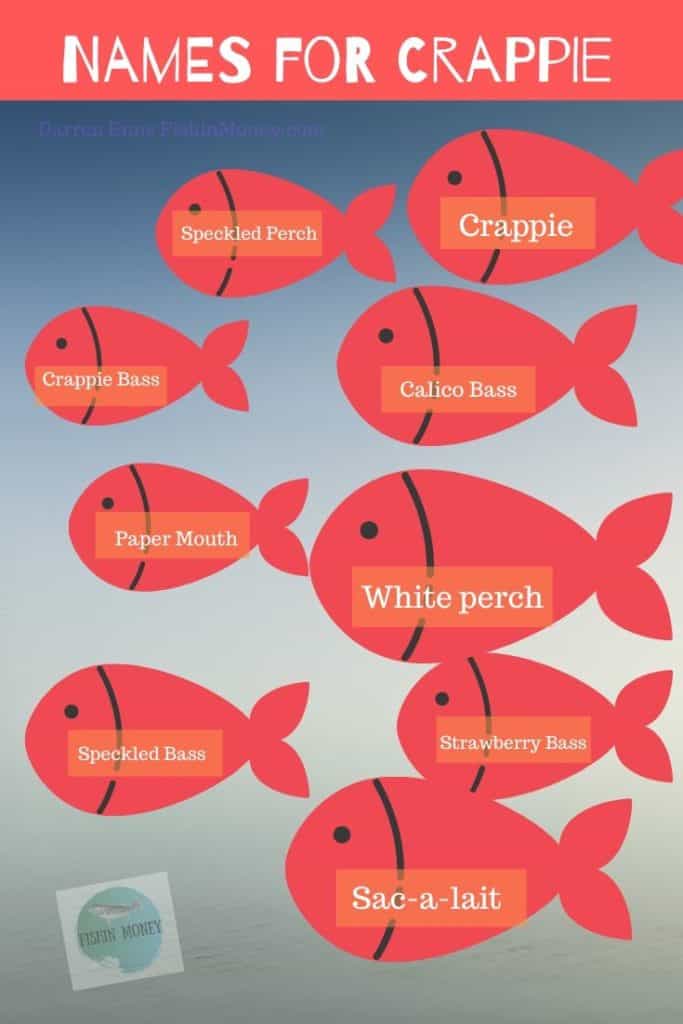
Author: Darren Enns

  • Stringer vs. Keepnet – What Is better?

    Stringer vs. Keepnet – What Is better?

    If you are going to go fishing and you are looking for the best way to keep your fish alive until you are done for the day, you can use a stringer or you can use a keepnet. (Unless you’re like me and you don’t catch any…) We are going to decipher which one is best and most efficient. So follow along with me, and I will tell you all about each one and give you some top selling stringers. If you know an avid or professional fishermen, talk to them and get their ideas and opinions on the two. The more information that you have, the better, when deciding which one to use. 

    “Calling fishing a hobby is like calling brain surgery a job,” Paul Schullery
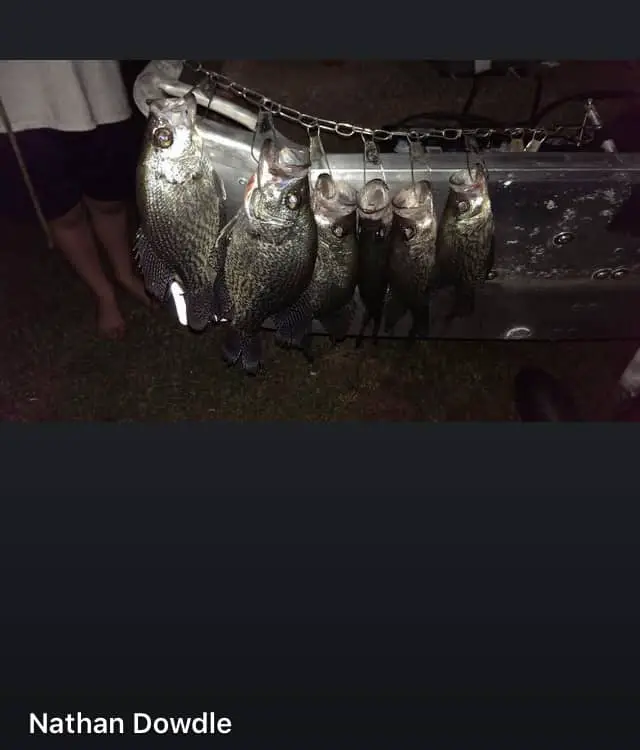
    Fish on a stringer Nathan Dowdle Stringer Of Fish

    According to thefreedictionary.com a keepnet is a cylindrical net strung on wire hoops and sealed at one end, suspended in the water by an angler to keep the fish alive that he has caught.

    In review of the DIY article on stringers. A stringer is a line of rope or chain along which fishermen can string fish so they can be immersed and kept alive in the water. Able to still swim freely.

    Stringer vs Keepnet, it is a personal preference. A lot of people have opinions on each one and unfortunately many of the lakes, rivers, and ponds that you fish do not allow the keepnet any longer. So, if you are going to go and fish somewhere that doesn’t allow the keepnet, then you will have to use a stringer if you want to keep your fish alive and you don’t have a boat with a keep tank. Stringers are great for docks, shores, wadding, and fishing from a bridge or pier. 

    Most anglers feel if you are going to release the fish you catch, at the end of the day, then the keepnet is the better option. It will securely hold the fish, without hurting them. If you are using a stringer, as long as you hook them correctly, there will be no harm to the fish either. If they happen to get hooked wrong, the hook/clasp could tear the mouth of the fish and then you are unable to let them go. Keepnets feature a soft mesh, high quality thread that is durable and built to last. 

    Learn How to make your own fishing stringer Here.

    “The fishing was good; it was the catching that was bad,” A.K. Best

    We are going to give you the top 5 tips on using a keepnet.

    1. Make sure to spread it out properly. This will keep the fish in good condition. Weigh down the net to ensure it stays under water. 
    2. Keep the fish out of the sun. Whatever you do, put the keepnet as much in the shade as much as possible.
    3. Don’t mix big fish with little fish. The big fish can bruise the little fish as they are swimming and flailing around. 
    4. When you are done fishing for the day, gently put the fish back in the water, not on the ground or into a bucket. 
    5. Rinse your net in freshwater after each fishing trip and make sure it is completely dry before storing. 
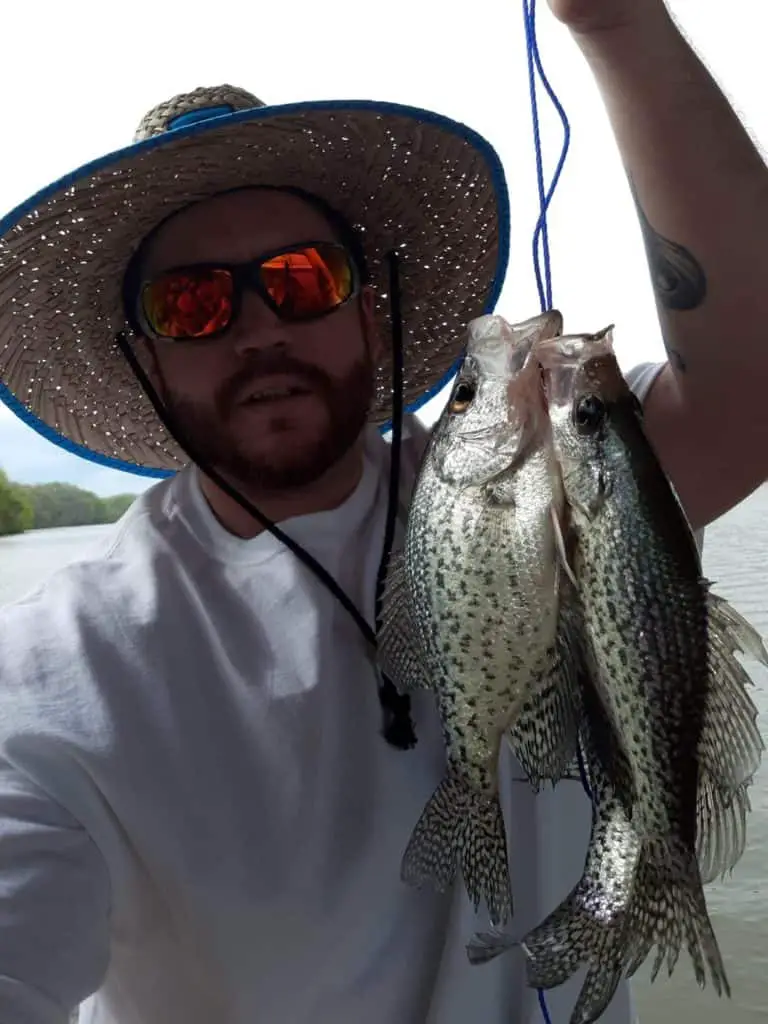
    Stringer Of Fish – Photo by Jonathan Carr II

    Some may ask why an angler would keep fish in a net all day, just to let them go. Why not let them go as soon as you catch and unhook them? Some fishermen actually want to take a closer look at the fish that they catch, and then maybe keep some. On the other hand, most anglers are getting away from using the nets and just let them go, immediately. There are also some anglers that feel the fish in the nets send out distress signals to the other fish, warning them that something isn’t right. Making it more difficult to catch fish, the more you have in the keepnet. 

    “Most of the world is covered by water. A fisherman’s job is simple: Pick out the best parts,” Charles Waterman

    You do need to check the rules and regulations where you will be fishing, a lot of places do not allow keepnets any longer. A lot of fishermen feel the keepnet is a waste of money and makes transferring disease much easier. Catch, take a picture and release the fish. There is no rhyme or reason to keeping them and piling them on top of one another throughout the day. 

    Fish stringers are extremely handy if you are fishing from shore, a dock, wading, or in a boat with no hold tank, as stated earlier. Strings can be made out of metal, nylon rope, or paracord material. 

    Many fishermen prefer the metal/chain stringers because they allow the fish the freedom to still move and swim around. There are 3 main types of stringers that you can purchase.

    • Rope/Poly
    • Lockable snap stringer
    • Paracord stringer
    • DIY stringer
     “Creeps and idiots cannot conceal themselves for long on a fishing trip,” John Gierach

    I included the DIY stringer, because it is extremely easy to make your own and it is affordable.

    The 2 basic fish stringers are the chain, which has safety-pin like snaps along the length of the chain. Usually 6-8, but you can get stringers with 5 snaps and more than 8. The fish will stay immersed in the water until you are done for the day. 

    The easiest fish stringer is the rope/poly, very easy to use and maintain, but durable. It is made from rope or wire with a stringing needle made of metal or hardwood at one end. You use the needle to thread the stringer through the gills of the fish and out of the mouth. 

    There are many styles of fish stringers on the market. Most are simple and affordable, while the heavier duty ones are going to be a little bit more expensive. We are going to know take a look at some of the top selling fish stringers in each ‘category’ above.

    “Be patient and calm – for no one can catch fish in anger,” Herbert Hoover

    Rope/Poly:

    Eagle Claw 12-foot poly Fish Stringer: this is perfect for anglers of any level and ideal for freshwater or saltwater. The poly rope is bright green and easy to spot. This is very convenient and easy to use. There is a needle on one end, that you fish through the gills and out of the mouth of the fish. 

    South Bend Poly Stringer: is made of heavily braided polyethylene cord with a tapered needle for easy stringing. All metal hardware ensures that this will last a long time. Available in 6 foot or 9 foot length. It will keep your fish close, and submerged in the water. 

    “Do not tell fish stories where the people know you. Particularly, don’t tell them where they know the fish,” Mark Twain

    Lockable/Metal:
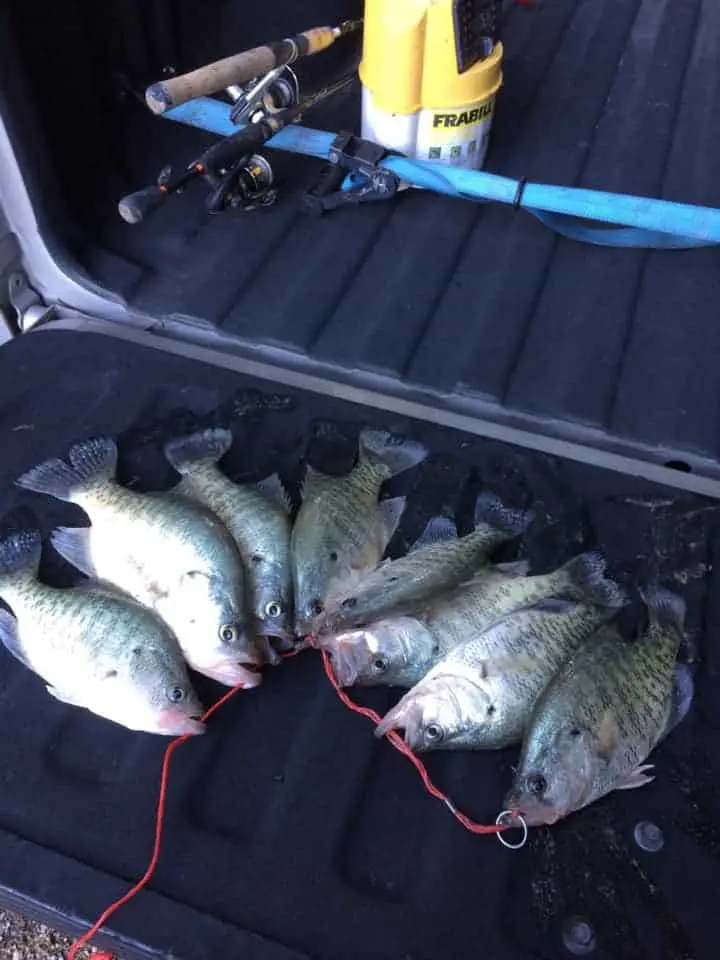
    Stringer Of Fish Photo by Shane Dobbs.

    Eagle Claw 70-inch Heavy Duty Cable Stringer: this bad boy is excellent for large fish, includes 10 snaps and the cable is heavy duty. The clasps on the stringer are 2 ¼ x 1 ⅛  and can easily hold a 4 pound fish. 

    Berkley 15-feet Deluxe Cord Stringer with SSS: this is a braided polypropylene construction which gives it durability. The stainless steel hooks are super easy to release, but will hold your fish securely. There is a tapered needle for easy stringing, tangle free swivels to reduce twisting and heavy duty to ensure your fish will not get away. 

    Paracord Stringer:

    10 Foot 550 lb paracord fishing stringer has a 1 inch split ring and a metal threading needle. The spike needle measures 3 ½ inches and makes stringing the fish easy. Metal O-Ring is 1 inch in diameter and allows for easy attachment. This is ideal for all game fish and great for keeping the fish strung together. This is available in multiple colors and has a removable inner 7 strand core of 550 lb tensile strength paracord. 

    “The best time to go fishing is when you can get away,” Robert Traver

    Hurricane Stringer with 10 stainless steel snaps is designed for the rugged and stiff saltwater fishing. This amazing stringer is under $8 and is very easy to use, with a tapered needle for easier threading of the fish.  It is a top choice on Amazon in the category of ‘paracord fish stringer’. 
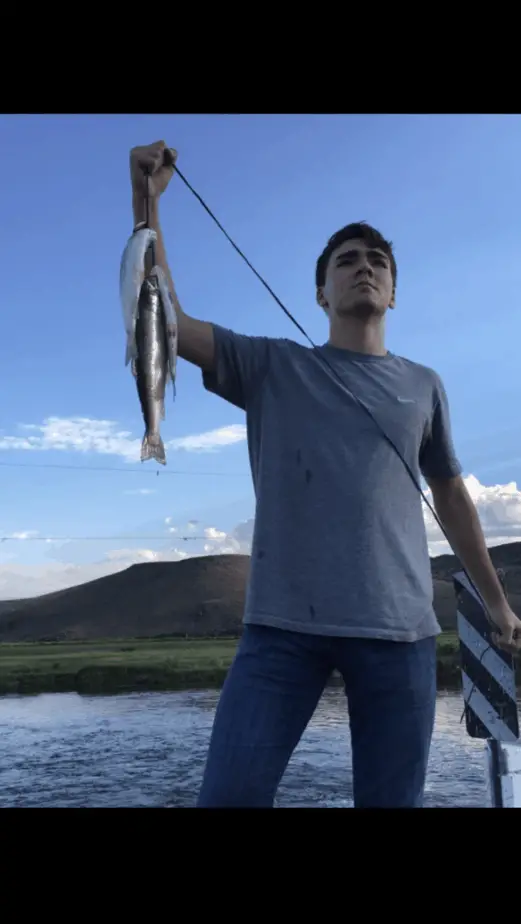
    Lorin Enns Stringer Of Fish

    Keepnet vs Stringer, we have given you a lot of information to ponder. Though you can still do a little bit of your own research, especially on bodies of water that still allow the keepnet. Most people that use the keepnet are the fishermen that do tournaments or contests, and they have to weigh all of the fish together at the end of the event. So again, make sure that you check with the local fish and wildlife before you hit the area and get the okay to use the keepnet. Otherwise, you can go online and check out the stringers that we suggested. See which one would fit your needs the best. The only thing we have to say about the metal stringers, if you are on a boat, they may rattle against the boat and scare away the other fish. So if fishing from a boat it is suggested to use the rope or paracord fish stringer. 
  • RC Fishing Boat Model

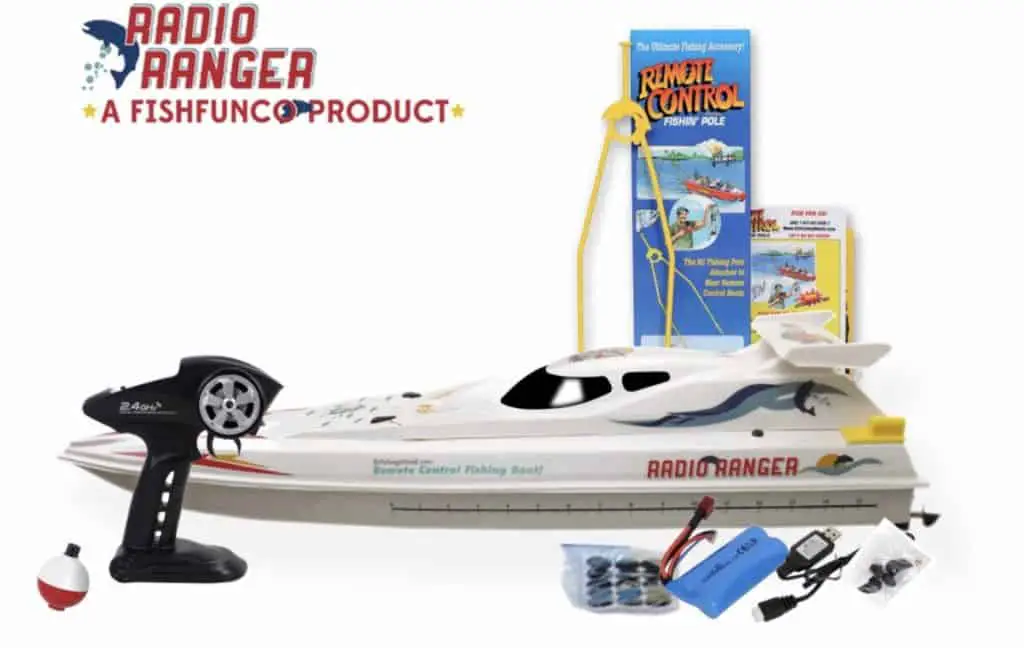
    RC Fishing Boat Model

    I don’t know about you but when I was a kid, back in the 80s, I dreamt of the day when I could take a radio controlled boat out onto the lake and attach a fishing line and some bait to it and go out and catch a fish. That’s all that really became of it was just a dream.

    It’s hard to believe that after so many years they actually make radio control boats now specifically for that purpose. Imagine the fun you can have by just sitting back on the shore and driving a radio control boat around until you catch a fish.

    It’s also good for those times when the fishing is so poor that you just can’t catch a fish anyway. This way you have something to do and go out and have fun with it even if there are no fish to catch.

    Not only that but your kids will have a lot of fun with it too. That’s the perfect birthday gift for a youngster who likes electronics cars boats and fishing.
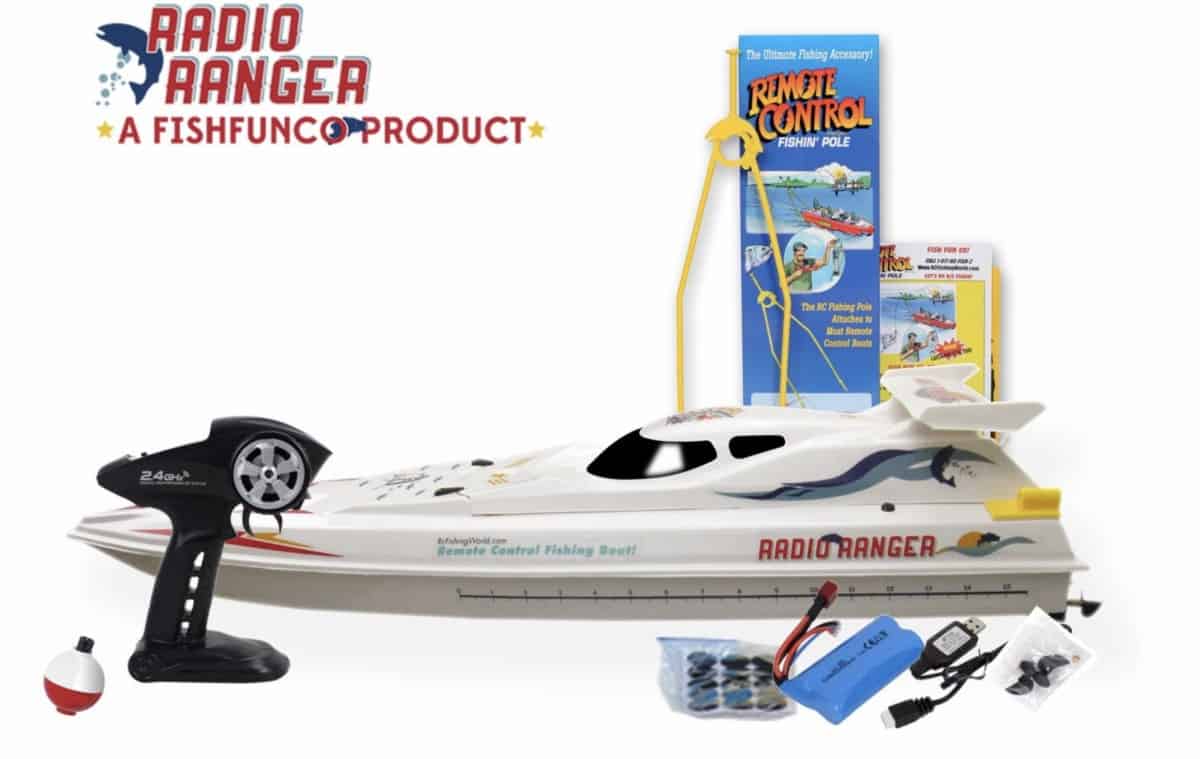
    It’s an all purpose bundle of fun. It’s 35 inches long and it has variable speed for making it able to catch different sizes of fish.

    You won’t believe that this package has everything that you need to go fishing all the way from the batteries, the fishing pole, the string, and even the fishing hook. The only thing that you will need is some bait and you are on the water.

    It comes with a charger for recharging as well so you can re-charge this thing after you have had tons of fun with it. There are even extra battery packs available if you want to spend extra so you have back ups when your power runs out.

    It has a 300 to 400 foot range and it comes with extra props as well. This thing will be tons of fun for you and your family for years to come. Check it out here it’s a perfect gift for the holidays as well.

  • Plastic Crappie Jig Molds

    Plastic Crappie Jig Molds

    One of the more popular lures for catching crappie is the jig. Jigs come in a multitude of shapes, sizes, and colors. (just like people…LOL) We will take a look at some of the best jigs to catch crappie and we are also going to review some of the top selling plastic jig molds so you can make your own.

    Be sure to visit my resources page for recommended gear

    Making your own lures will give you a sense of freedom to choose your colors. You can also choose the shape of the plastic jig. These molds will give you personalized, unique plastic jigs that no one else has. You will have one of a kind tackle in your tackle box.

    “Everyone should believe in something. I believe I’ll go fishing,” Henry David Thoreau

    Select Your Jig Color

    When choosing your plastic jigs you want to choose the colors that are most visible to the crappie. Crappie search and track down their food with sight, not smell. A Lot of anglers have a theory; bright water = bright lure and dark water = dark lures. Jigs that are brightly colored will reflect the light on a sunny day, make them easily seen by the crappie.

    If you would like to find a way to make some money by fishing and writing about it or making videos about it like I am doing here, check out the guys that can teach you how to do it here.

    As for dark water, use you own judgement or experience. If the water is cloudy and the sun is shining the deeper water will be darker. It can also be bright enough on a cloudy day to justify the brighter colored jigs. Some anglers believe the opposite and swear by dark jigs on bright days and bright jigs on dark days. It all comes down to personal preference, spot, time of day, weather, and other factors. 

    “If all politicians fished, instead of spoke publicly, we would be at peace with the world,” Will Rogers

    Plastic Jigs are the most popular lure for crappie

    Jigs seem to be the most popular lure among crappie fishermen, old and new. Plastics being more so because of the different shapes and color variations. A great combo for catching crappie is to use a plastic jig paired with a minnow. The crappie will bite those like they are going out of style or being discontinued. 

    Some anglers swear by plastic jigs that resemble shad. Shad is a baitfish that crappie prey on. If you have a large variety of colors you are bound to have success. The plastic shad are versatile and can be fished from shore, boats, docks, and into coves. They won’t get tangled in the brush or heavy forage and depending on your retrieve, they can wiggle fast, slow, or not at all. The jig is intended to create a vertical jerking motion that mimics other baitfish. 

    The bait size does matter. You want them to be so close to the size of the live bait that the crappie are preying on. This makes it more of a temptation for the crappie. If the plastic jig is too small or too large in comparison, the crappie will ignore it. They are smarter fish than most people give them credit for. 

    “I spent most of my money on fishing. The rest I wasted,” Author Unknown

    A couple of the most popular, premade plastic jigs;

    • Slim SwimZ – these are approximately 2.5 inches in size. They have a curved paddle tail that has a lot of movement in the water. This particular bait is effective whether you retrieve it straight or on the vertical jig.
    • Jerk Minnow Swimbait- (Viewable on my resources page) these lures offer a larger presentation to the crappie. This is a 3 inch bait with a split tail It fishes well vertically and on the swimming retrieve. You will want to pair this larger jig with a ⅙ ounce jig head for maximum fishing success. Available in a large array of colors for saltwater and freshwater fishing. 

    Let’s now take a look at some of the most popular plastic crappie jig molds. You can find these, in multiple places, on the internet. Conduct further research after completion of this article and choose which molds and colors fit your needs the best. 

    “There is no limit to how many times you can go fishing,” Author Unknown

    With a 5 star rating, the first jig mold on our list is the Z-ManFinesse TRD 2.75 inch. This is an injectable mold and is the standard ⅝ inch size. This particular mold is made of engineered stone, with smart air-vents to ensure that the soft plastic fills the entire mold so that you don’t have any type of air gaps in your plastic jigs. This particular mold is cheaper than the aluminum molds that are sold today. 

    Also with a 5 star rating, Unique Store 4 U Bait Mold. This is a 5 inch mold that allows you to create different colors, shapes and firmness. Made of premium stone, this jig mold is durable and comes with a satisfaction guarantee. Finished lure size is 6.5 inches long and gives you the options to make these 100% unique just by the colors and scents that you choose to use. 

    The Reaction Innovation Beaver 4.2 inch is another top of the line plastic crappie mold kit. It has 2 parts to the stone injection mold. The mold material is artificial stone that is durable and long lasting with an injection size of ⅝ inch. The use of a lubricant will make the extraction from the mold move quickly and easily.

    “Life is like a game, but fishing is serious,” Author Unknown

    FatFish Bait Mold V25 is the final one on our list today. This one is designed by the Do-it Corporation and can be made using plastisol or recycled soft plastic lures. lures can be made in different sizes, shapes, colors, scents, and flavors. The finished lure is 3.8 inches and are suitable for freshwater, saltwater & ice fishing.

    Conclusion

    There ya have it folks; crappie plastic jig molds. Whether you buy them premade or you are looking for a way to have something unique, that no one can find anywhere else. Then look no further! We have given you 3 of the top used premade jigs ad we have also given you the top 4 best selling crappie plastic jig. We hope you have success in finding the mold kit that works best for you and your budget and we can not wait to see pictures of crappie jigs that you have made yourself with one of the molds listed above. This can quickly turn into a hobby, a supplemental income, or a way to spend quality time with your son or grandson, making memories (and maybe even a little bit of money.

  • What Do Fishing Captains Make?

    What Do Fishing Captains Make?

    What do fishing captains make?
    According to Indeed the average fishing captain makes $59,000 per year. Some fishing captains make more up into a high $89,000.

    If you are considering becoming a fishing charter captain you should know a few things about how to promote your business.
    There are several ways you can make more money other than just strictly from hiring out to take people fishing. Here are some examples.

    If you would like to find a way to make some money by fishing and writing about it or making videos about it like I am doing here, check out the guys that can teach you how to do it here.

    OK I want to be upfront and let you know that I got all of this information that I am going to share with you from Brant on the fishing channel anglerup with Brant on YouTube.


    To be quite honest I have watched a lot of fishing videos in my time. I am not a charter captain nor do I intend to become one but I’m always on the lookout on how to promote my site and help other people along the way. I can’t tell you how excited I was when I watched this video from Brant. He comes up with ideas on how to increase your income if you are a charter Captain and you can use these ideas even if you are a longshore fishing Captain.

    Many of these ideas will still work for you to make side income. If you do either of these jobs you guys have a lot of Experience Fishing. A lot more than 99% of other people out there and you should take advantage of the fact that you do this daily. You may not think you have a lot of knowledge but in your specific industry you probably have more knowledge than almost anybody else in the world and you need to give yourself credit for that and take advantage of that.

    By doing so it could help you set up your career to be more lucrative and also give you a little side hustle for your later years when you want to slow down a little bit.

    https://youtu.be/4isy3VNBac0

    So in this article I am going to mention some of the things that Brant talks about. And I may expound a little bit on it depending on what industry you’re in. I’m telling you you should watch this guys video because I have not heard Anyone else out there talk like he does. And he’s talking from experience not what if fairytale stuff.
    The first point he makes and I totally agree is that you should never bet your future on only one source of income.

    Yes you can be a fishing captain or a charter captain or even a flyfishing guide etc. but even though you might be able to make enough money to raise a family on that what if something happens? You should always be planning for the future and also planning for changes in the market that may diminish your income. Have a few irons in the fire getting hot just in case your main hustle dries up.

    How to become a fishing guide

    “Reading about baseball is a lot more interesting than reading about chess, 
    but you have to wonder: Don’t any of these guys ever go fishing?” Author Unknown.
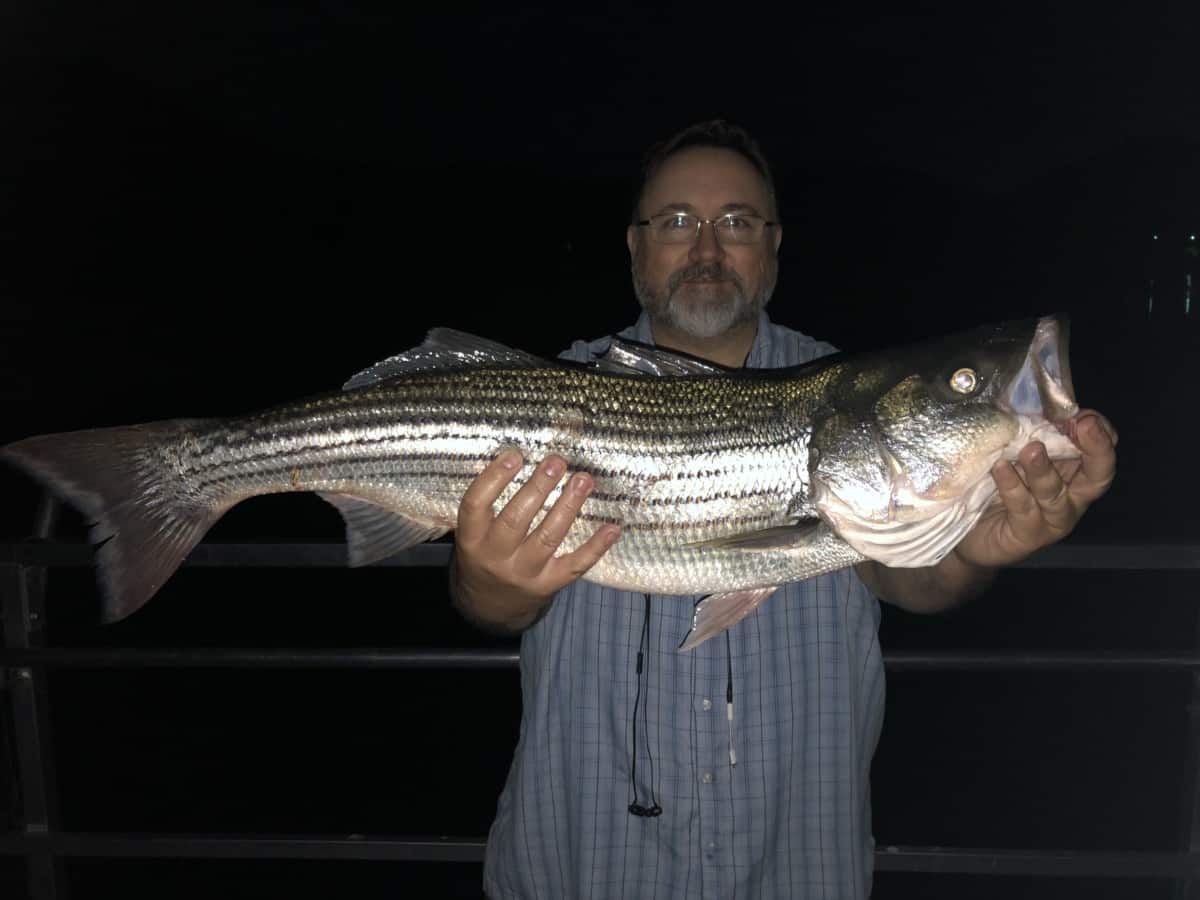
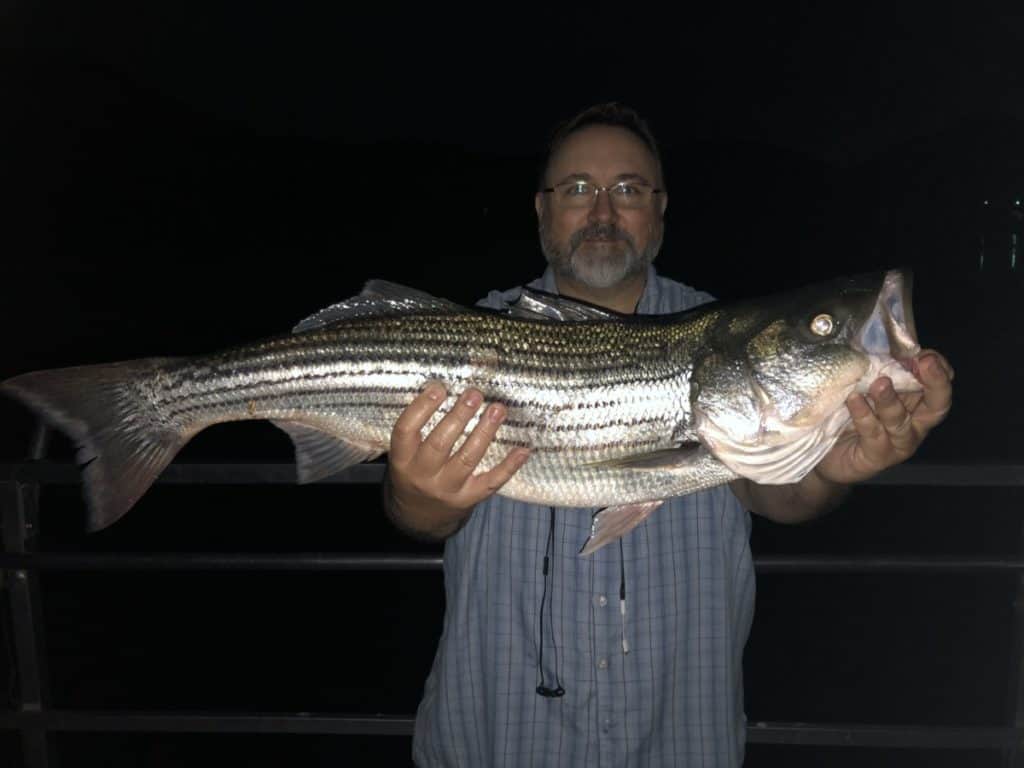
    Darren Enns Striped Bass


    I have lived my life this way and I am not a young man. I’ve always had a Plan B in the back of my head and most of the time while I am working on a plan a and I am also quietly working on Plan B just in case. It would be wise for you to keep this in mind no matter what occupation you have.


    I can’t tell you how many times I thought I was in the job of my life and it would last forever and little did I know three or four years later I was looking at doing something else. Plan for the future always.

    After having said that you might be thinking well, does that mean you think I should do two jobs at the same time? Well yeah sort of. It shouldn’t be that hard though. I will give you some examples of things you can be doing.

    These are things I have been doing in the background for a few years and now it seems like they are all coming together into what could be either a future career or a retirement plan.
    Brant goes on to explain how he filmed his fishing adventures and put them on YouTube

    “The two best times to fish is when it’s rainin’ and when it ain’t,” Author Unknown

    He also took pictures and put them on Instagram. I would add that you can put them on Pinterest, Facebook, etc. If you do this, you will be building up large followings on these platforms and you can monetize this in the future.

    Brant then went on to develop and build the Pensacola Media Group because other fishermen were asking him how he was doing what he was doing. Can you imagine them asking how do you keep your charters full all the time? Because of his social media posts, many people were able to see what he has to offer and after inquiring some of them scheduled charters with him. You can imagine how this would make the other fisherman jealous so when they came asking how he did it, he told them he could show them how and his media group was born.

    But wait that’s not all, LOL. Brant also went on to develop relationships with vendors in the fishing industry. Once they saw his social media following’s and those followings of his customers from his media group, he slowly became wanted by these vendors to promote their products. You can see where he could monetize that as well not only by reviewing and testing their products and promoting their products on social media but being paid to do so. All of this piggybacked on his original job as a charter captain.


    After that he became a voice in the fishing industry and at that point, fishing manufacturers approached him asking him to be a representative for those companies at tradeshows and giving speeches etc.


    Lastly, because Brant has built up such a huge social network and so many friends and colleagues not only on the fishing charters but on the social media and the trade show circuit, he was able to network with people and get involved with real estate joint ventures. He now owns rental properties etc. where he makes positive income as well.

    “No life is so happy and so pleasant as the life of the well-govern’d angler,” Izaak Walton

    I think this young man has his head on straight and he has a lot of good advice for young fishermen who have a dream to take people out on charters. I also think he is willing to freely give his advice on his YouTube channel on how you can do this for yourself not only in fishing but in whatever trade or occupation you have.

    He gives the example of if you like hunting then go hunting every day and do it for a living but find a way to monetize it and find a way to expand it so that you are never stuck with only one income.

    Build several streams of income in case one of them dries up on you one day. You never know what could happen in the future that could change your business and your income so plan around that now.

    Do so in a way that does not take a ton of extra time but maybe only small little steps like taking pictures and posting them on social media channels or like showing up on a Saturday to help out at a trade show booth or by showing off somebody’s handmade lures that you are using to catch all the fish.

    By doing this you will not only help them to promote their businesses but you will gain friends along the way and you will grow your business and your multiple streams of income along the way as well. If you have read this far and you have not gone to see Brants video please do so.

    “The fish is not so much your quarry as your partner,” Arnold Gingrich

    I will leave a link here for you to do that. Some of these ideas I have had and been doing for years but Brant puts them together in a way that draws a pretty picture and in a way that you can understand how this can work to your benefit no matter what job you have. Also by doing this you can raise your yearly income way above the upper $89,000 of the average fishing captain.

    I want to make sure he gets he’s due credit for his video that he put out because it inspired me and I hope it will inspire you too. Keep on fishin!
    Darren.

  • What is a Big Crappie

    What is a Big Crappie

    At the smaller sizes, crappie are considered a panfish. They are fun to catch and taste amazing when fried. Once the crappie reach approximately 13 + inches long, they are considered a ‘slab’ by serious anglers.

    Slabs have a little bit different habits and feed on different forage. The average crappie is ½ – 1 pound and 5-12 inches long. But they are capable of growing much larger. That my friends is what we are exploring today, the BIG crappie!

    We will look at a couple of the top lakes have an abundance of slab, we will find out what the largest crappie on record is, and what you need to pursue and catch the big one. 

    Be sure to visit my resources page for recommended gear.

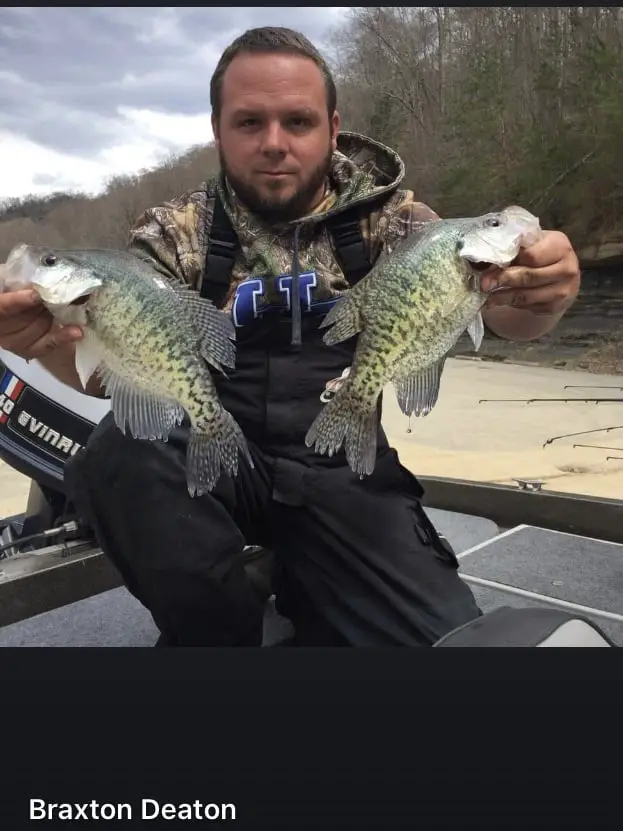
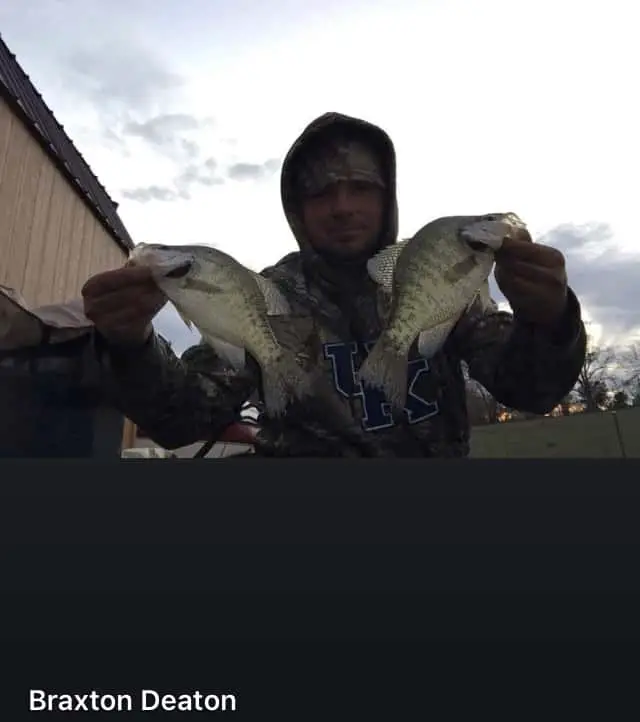
    Braxton Deaton Crappie assassin

    The Biggest Crappie

    The biggest crappie on record as of May 2018, was snagged in Tennessee and weighed 5.46 pounds. It as a black crappie caught in a pond on Point Rock, East Tennessee. In March of 2017, the record crappie for the state of Illinois was caught.

    The hybrid crappie weighed in at 4 pounds 8.8 ounces. In Oklahoma in 2016 1 man caught the 2 biggest on record for that state. One weighed in at 4.22 lbs and was just under 12 inches and the second one was 3.08 pounds.

    If you would like to find a way to make some money by fishing and writing about it or making videos about it like I am doing here, check out the guys that can teach you how to do it here.

    “I don’t want to sit at the head table anymore. 
    I want to go fishing,” George Bush

    What Is A Slab Crappie?

    Let’s now explore and explain the ‘slab’ crappie a little better for those of you that have never heard the term before. Crappies are considered a slab if they are 14 to 16 inches or larger and weight 4+ pounds. There are not really any special techniques or tricks used to catch the slab.

    Just as with regular sized crappie, you can fish from the shore, a boat, on a dock, or in a cove. There is no special pole, line, or lure that needs to be purchased for the catching of the oversized crappie.

    You can use live bait, lures, jigs, and everything in between. Some anglers have their own tips to provide, that helped them catch their big slab. They successfully used hair jigs, swimbaits, and finesse plastics. If you are fishing from a river bank, their tips are:

    “You know when they have a fishing show on TV? 
    They catch the fish and then let it go.
    They don’t want to eat the fish, t
    hey just want to make it late for something,” Mitch Hedberg
    • 6 foot light weight spinning line
    • 4 pound test line
    • Jig
    • Bobber

    You can be extremely productive with this very simple set-up, as long as the river is mostly clear and allows you to view the crappie as they swim by.

    Richard Gene The Fishin Machine

    Recommended jigs for slab crappie is a chartreuse color, high quality soft rubber, and a weighted head. This makes the jig swim ‘naturally’ under water, as the crappies live prey would.

    Make sure you plan your crappie fishing trip during the summer months because the slabs love the warmer water and they will be close to the shore, for ease of access if you don’t have a boat. If you fish in deep water, you will have an even better chance of catching a slab crappie. 

    States with Big Crappies

    Besides the record crappie we mentioned earlier, some states where the biggest crappie have been caught; Texas, Illinois, Florida, and Oklahoma. 

    We are going to take a peak at a few of the Giant Crappie Lakes. In order to catch a giant crappie, the area has to have the perfect habitat; fertility, tons of forage, and plenty of cover and fishermen who are willing to allow the forage to grow.

    “It is to be observed that ‘angling’ is the name
    given to fishing by people who can’t fish,” Stephen Leacock
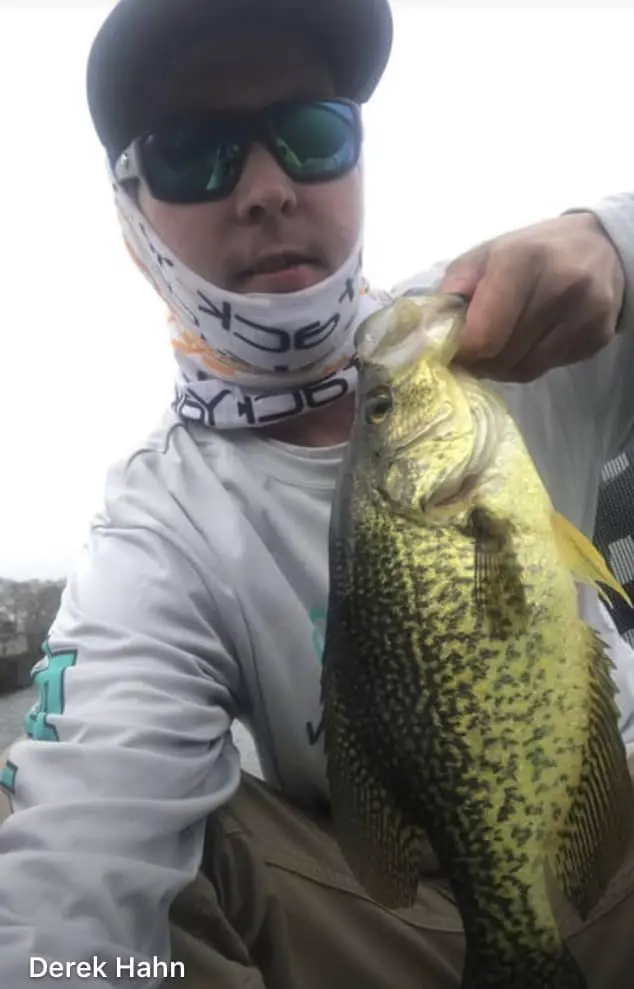
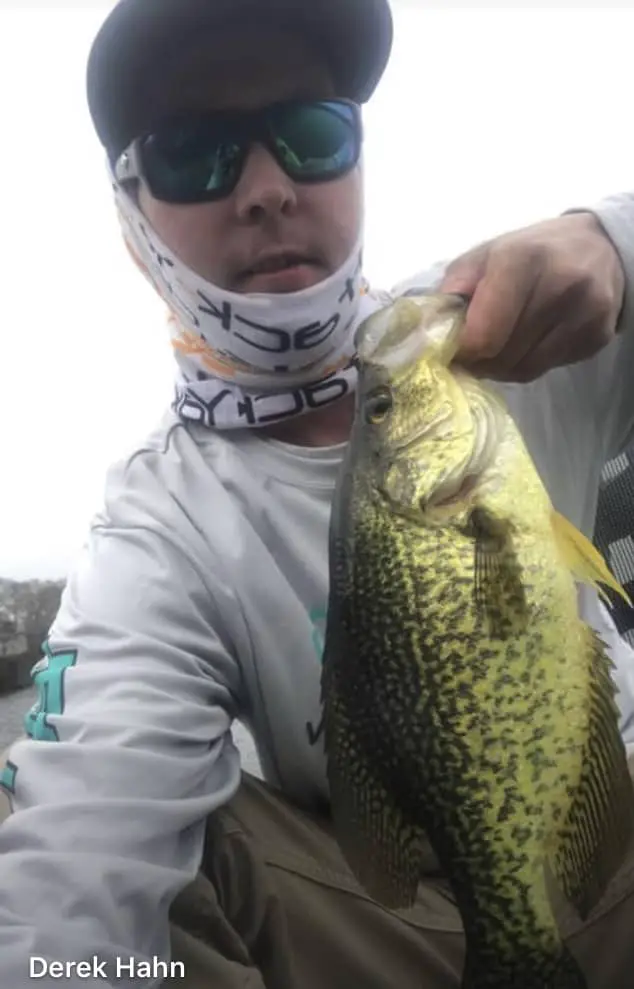
    Derek Hahn Big Crappie Angler

    Big Crappies are Slab Crappies

    The first lake on your list is:

    Grenada Lake, Mississippi: 97,427 acre of which 35,000 acres are in water during fishing season. Grenada has about 48 miles of shoreline. This lake is known for 3+ pound crappie.

    To maximize your chances on Grenada you should use brightly colored lures, fish shallow, and make sure your lures produce some kind of noise or vibration.

    A couple of other tips for Grenada Lake;

    • Crappie will suspend 2-3 feet down over 4-5 foot deep water
    • Crappie will move from pre-spawn areas to shallower water between mid-March and mid-April
    • Marinate your jigs and baits in a scent for a few hours to ensure it lasts for more than 1 or two casts. 

    Reelfoot Lake, Tennessee: this lake was formed in 1811 and 1812. The average depth is only 5 feet with the maximum being 12 feet. All 15,000 acres is full of vegetation, timber and stumps.

    This gives the crappie tons of forage and cover. There are approximately 52 species of fish in Reelfoot including bream, large-mouth bass, catfish and crappie. The daily limit for crappie is 30, so you can have a feast!

    The crappie will be hiding around the submerged logs and stumps. Because this lake isn’t as deep as most, you have to be careful if you are in a boat. Go slow to avoid hitting the underwater stumps. 

    “I only make movies to finance my fishing,” Lee Marvin

    Lake of the Woods, Ontario: This is stated as being one of the hottest spots to find slab crappie (big crappies). The lake system borders Minnesota and Ontario. Boasting 65,000 miles of shoreline with 14,500 islands gives you one of the best crappie fishing places in the world.

    Lake of the Woods is also a prime spot to ice fish for slab crappie. The maximum depth is 210 feet with the area being 1,679 miles long. Some of the islands are the area are:

    • Oak Island
    • Penasse Island
    • Copeland Island 
    • Brush Island

    So there we have it folks. What the crappie is called, by most anglers, if it is over a certain length and weight, where you can catch a ‘slab’, how to catch a ‘slab’ and 4 of the biggest ones on record over the last 3 years.

    As long as you have the drive, determination, and patience you could add your next crappie/slab to the list of record breaking fish that were caught. 

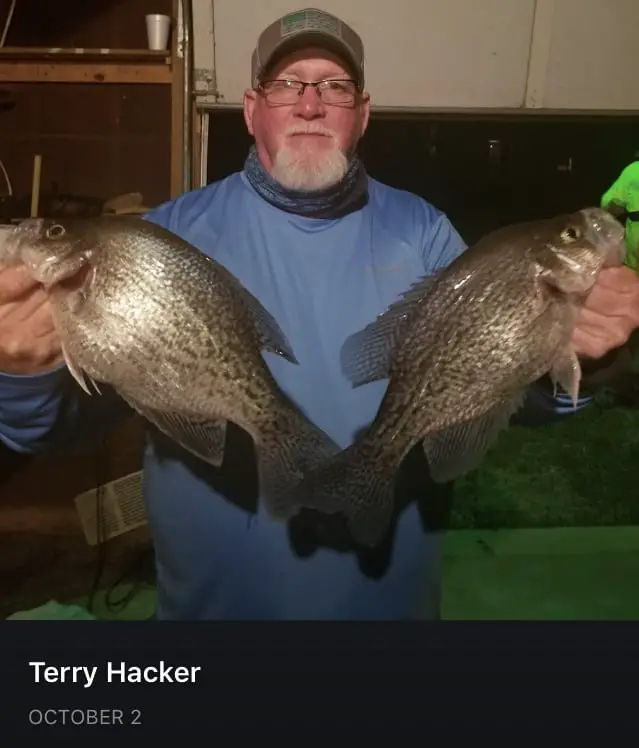
    Terry Hacker …Why are crappie slabs? These are slab crappie

    Remember to try to plan your trip in the summer months, as the bigger crappie like warm water. Whether or not you have a boat is not a deciding factor as to whether or not you will catch a slab. They are found near the shore and they are found in the deeper water.

    “The best fisherman I know try not to
    make the same mistakes over and over again;
    instead they strive to make new and interesting mistakes
    and to remember what they learned
    from them,” John Gierach

    Practice and see what lures, live bait, jig, or swimbait works for the area you are fishing in. Make sure you check the rules, regulations and fishing reports for the area that you will be fishing. This will give you prime weather forecast and time of day to catch them, in that area. 

    Fishing Safely

    Also, always remember all of your safety equipment if you are taking your own boat. You want everyone to be safe. Keep in the back of your mind, that anywhere you choose to fish, you can always hire a fishing guide.

    This will produce the prime ‘slab’ fish and the maximum amount that you can catch because the fishing guides in the area know all the hot spots, best lures, best time of day, optimum water and weather conditions. So if you can spare some extra expense, go for it!! 

    Here is a Crappie Fishing Resources Checklist

  • Crappie Jig Molds

    Crappie Jig Molds

    Made of lead, tungsten, or tin, jigs and jig heads are weights which are molded onto special hooks. These hooks have long shanks to hold natural bait, soft bait, and materials that imitate bait that crappie are hungry for. Jigs and jig heads come in multitude of colors, styles, and sizes that are geared towards types of fish and specific fishing tactics.

    When choosing or making your own jigs, keep in mind water currents, vegetation, clarity and depth of water, and the time of year. These are all conditions, combined with your lure choice, that determines whether you will have a good or bad day of fishing.

    Here is a Crappie Fishing Resources Checklist

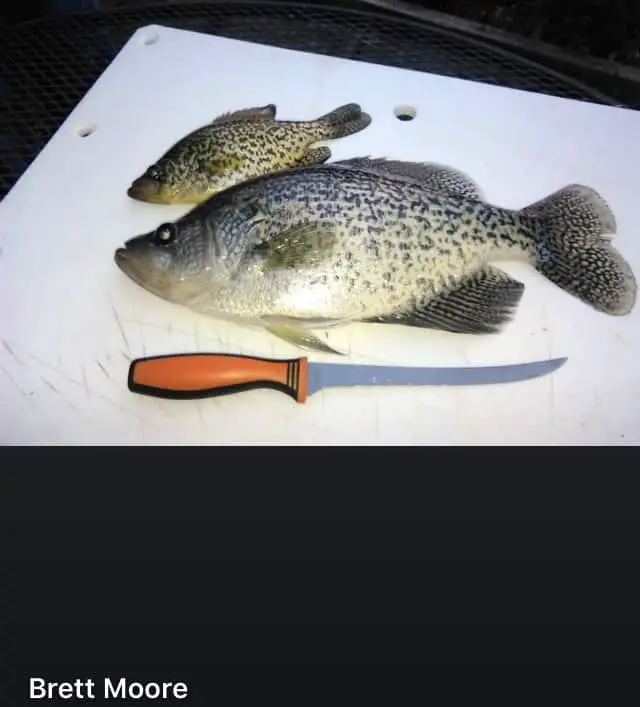
    Photo by Brett Moore Crappie Fillets

    Jigs are intended to create a vertical body jerking motion, especially when fishing from a boat or when ice fishing. Other jigs and jig heads are made for float fishing or casting distance. So, when doing your crappie jig molds, you can decide which tactic you are going to be using and design the jig that best fits that need.

    You can purchase crappie jigs and jig heads from most retail stores or bait and tackle shops. Or you can purchase crappie jig molds and make custom jigs. Most of the crappie jig molds are blank so you can take them to a tool and die shop and have them customized, before you pour the lead and create the lure. There are also starter kits available online that provide you with everything you will need to make your own crappie jig molds.

    If you would like to find a way to make some money by fishing and writing about it or making videos about it like I am doing here, check out the guys that can teach you how to do it here.

    There is one company that is prominent in the world of jig and jig head molds along with thousands of other items to keep your tackle box complete.

    Do-it Corporation is a 55-year-old company that built its reputation by offering the highest quality molds; jigs, lures, and sinkers. They are one of the companies who offer a starter kit for those who want to make their own crappie jig molds. Their kit allows you to pour 7 different sizes of crappie jig molds and includes RHB-7-A, tapered barb collar and round jig head mold. Also included is 10 hooks, a 5-pound melting pot, 5 oz pouring ladle, and a DVD with step by step instructions.

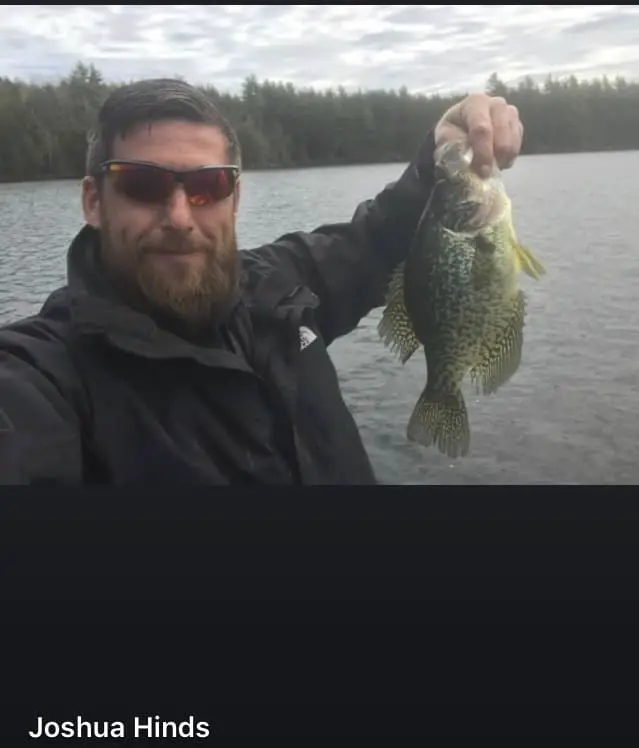
    Photo by Joshua Hinds Crappie slab

    The Do-it Corporation has over 700 jig, sinker, and lure molds along with a variety of blank molds. They also have a large selection of soft plastic lure molds. All the products are hand poured and tested to ensure they meet the company’s strict standards. Do-it works with other companies in the fishing industry to bring you quality finishing products such as wire inserts, buck tail, paint, and silicone skirts. Some of the other items that they offer; melting pots, ladles, lead ingots, and all the accessories that you need to personalize your crappie jig mold.

    Some of the most popular Do-it crappie molds are listed below. They have all been given a 4.5 to 5-star review. Everyone who has purchased this brand highly recommends them to anyone looking to make their own crappie jig molds.

    The most popular size of jig head for crappie is the 1/8 and 1/16 oz Do-it makes a mold for these here

    For larger fish the Do-it Mold 3384 is a minnow head jig mold that uses hook size 32786BLN. There are four different sized cavities in this mold; ½, ¾, 1, and 1 ½ inches. You can use 4 hook sizes with this mold; 1/0 to 4/0. To top off the jig use 5/32” stick on eyes.
    Do-it Bullet nose Jig Mold: 3 mold sizes; 2 ½, 3, and 4 oun<ces with a recommended hook size of 8/0.
    Do-it Flutter Lure Mold has 2 cavities; 2 and 3 ounces. These are Saltwater compatible. Use stick on eye(s) and F2 or F3 wire forms. To finish/customize you can use reflective tape or paint.
    Do-it CC-4-A Casting Spoon Lure Mold: 4 cavity sizes; ¼, ½, ¾, and 1 inch.
    Do-it Round Jig with Tapered Barb Collar and 8 cavities. 4 are 1/8 ounce and 4 are ¼ ounce. These will produce the highest quality jig head with exceptional detail. For the 1/8 ounce use a 1/0 hook #2 or #1. For the ¼ ounce use a 1/0 hook #1.

    Not only can you purchase the blank crappie jig molds there are also already made crappie jig molds that you can finish customizing. Such as the Do-it SHR-3-L Ultra Minnow Jig Mold and the Do-it JYS-4-A Banana Jig Mold.

    One of the main components of making your own crappie jig mold is lead ingots. Each ingot weighs approximately 1 pound and is usually under $5. Make sure that when you are ready to pour your molds, you are wearing a mask and gloves to reduce the inhalation and lead contact. Once you are finished remembering to wash hands thoroughly before touching anything at all and clean up the area well.

    Once you have your crappie jig or jig head molds completed, there are many ways that you can finish off and customize these besides just painting or using tape. You can tip them with a plastic grub, wax worm, minnow, or tube. You can also add on furry bodies and/or tails that are made with feathers.

    Before we conclude this article, here are the basic tools needed and instructions to making your own crappie jig or jig head with a blank mold. First, I want to let you know that you must be extremely careful when doing this project. The lead is going to be 612 degrees, so make sure you are in a very well-ventilated area, as lead is hazardous to your health, and you don’t want to breath in any of it. Make sure you are wearing safety goggles and gloves as well. Some people who make their own jigs even opt to wear a mask, to make sure they do not breath in any of the lead.

    Here is a list of the supplies that you will need:

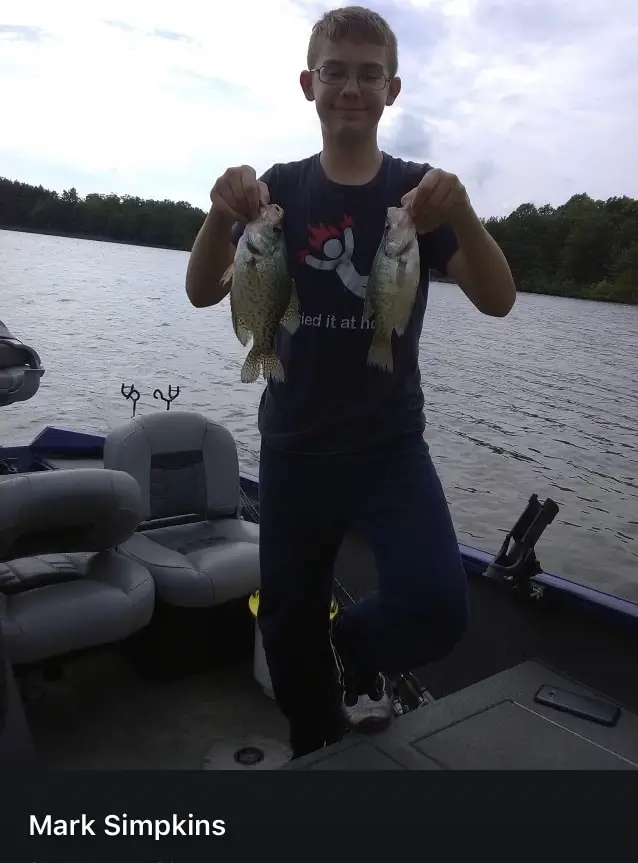
    Mark Simpkins catching Crappie

    The 9 basic steps are as follows:

    Lead, Melting pot, Ladle, Jig mold, Jig hooks, Paint, Heat gun, Pliers

    Make sure you are using a flat surface for the melting pot. Go ahead and plug it in.
    Once the lead begins to melt, you can put the hook into the mold you are using
    Place the mold under the melting pot and dispense the lead into the mold
    Once cooled, slightly, open the mold and remove the jig
    Use the pliers to remove any excess lead
    Use the heat gun to slightly warm the jig or jig head so that the powdered paint
    Dip the jig into the powder paint and shake off the excess. It will dry quickly
    Apply weed guard and pick out the desired skirt or other accessory you want to use
    Add the skirt to your crappie jig or jig head and voila, you are ready to fish

    I hope you have been given all you desire on crappie jig molds. We are here to give you the most accurate information that we can provide through thorough research. Enjoy making your personalized crappie jigs and happy fishing.

  • Are Crappie an Invasive Fish

    Are Crappie an Invasive Fish

    Yes, crappie have been classified as an invasive fish. This is because crappie multiply quickly and can migrate to far regions. Crappie are known to eat smaller fish, worms, minnows, water insects, and crustaceans. Any invasive species are said to cause an imbalance in the fish population.

    Photo by Braxton Deaton

    Crappies continue to be in high demand, even though they have invasive tendencies. They are found in many lakes and rivers across the United States and Canada. Game and fish departments are not concerned with the crappie population because of the high demand for them. In fact, anglers catch thousands of them each fishing season.

    Be sure to visit my resources page for recommended gear- Click Here

    Adrian lives in vegas like me! Go VGK

    With the invasive nature of the crappie, it is not recommended to grow them or have them in your pond or fishing hole. They multiply very quickly and will feed on aquatic organisms. This is only 1 of the reasons that crappie should not be in your pond.

    “Just as in cooking there’s no such thing as a little garlic, 
    in fishing there’s no such thing as a little drag,” H.G. Tapply.

    There are 4 other reasons why crappie are not good for ponds or fishing holes.

    1.      There is a danger of malnutrition

    2.      Reproductive capacity

    3.      Crappie feed on other fish

    4.      Heavy Rainfall

    The danger of malnutrition is because crappie is a very competitive fish when it comes to their food. If they are stocked in a small pond, they are unable to look for food when needed. This will cause illness and possible disease in the crappie. If you have smaller fish in your pond, the crappie will prey on them to survive.

    Crappie reproduce extremely fast. For instance, you can stock your pond with white crappie with all intentions of keeping the population low.

    But it will not take long for your pond to be overrun with crappie because of the quick reproduction rate! Crappies thrive in larger bodies of water where there is plenty of space and food.

    If you would like to find a way to make some money by fishing and writing about it or making videos about it like I am doing here, check out the guys that can teach you how to do it here.

    “I have fished through fishless days that I remember 
    happily without regret,” Roderick Haig Brown

    As stated above, crappie will feed on smaller fish in your pond. That would limit you to only stocking crappie. A normal practice is to stock minnow, bass and crappie in ponds, but there is not always a desirable outcome.

    Having a pond stocked with crappie is a bad idea if you live anywhere that has heavy rainfall in the spring or autumn months. The heavy rains will overflow your pond and your crappie will be lost. If you insist on stocking a pond with crappie then make sure you have appropriate land space.

    If you are stocking and raising crappie for slabs, to sell for money, you will need to add a couple average sized bass. The bass will feed on the smaller crappie and allow the larger ones to grow and survive.

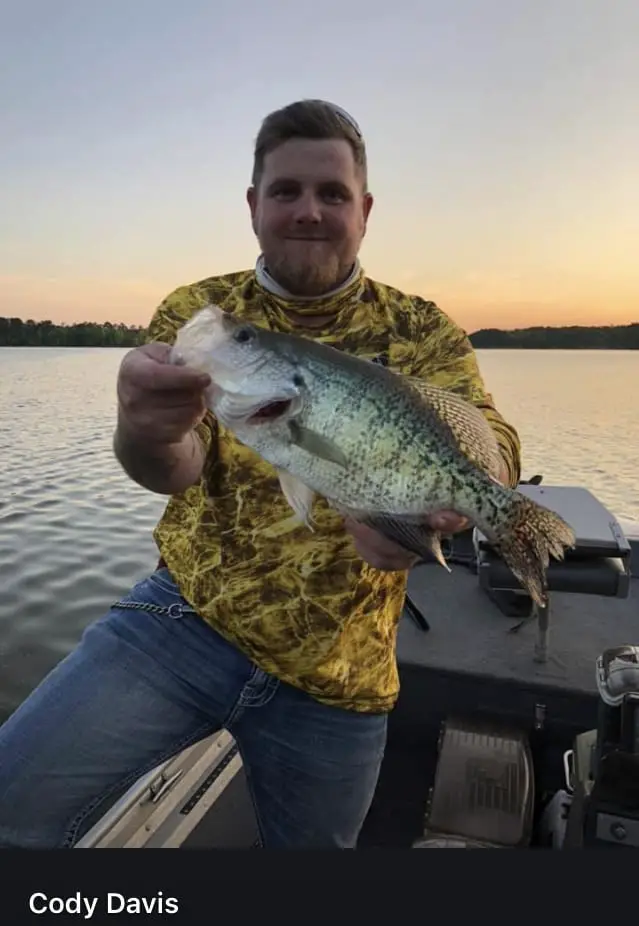
    Photo by Cody Davis

    If you are still considering adding the invasive crappie to your pond or building a pond on your land to raise crappie, here are a few more pros, cons, and tips. First off, it is suggested that you need about 15 acres to have a thriving crappie pond.

    But opinions vary, so make sure you talk to a fish expert and or a construction/landscaping company. Second, crappie will need additional nourishment because of pond conditions. You must feed them the proper food for your manmade pond to succeed.

    “There he stands, draped in more equipment than a 
    telephone lineman, trying to outwit an organism
    with a brain no bigger than a breadcrumb,
    and getting licked in the process,” Paul O’Neil.

    Make sure the water in the pond is clear enough for the crappie to see their food. If it is murky or muddy, they cannot see their prey. Visibility should be at least 24 feet deep. You will also need to beware of any extra algae growing in your pond. This will hinder the ability for the crappie to see their food. Another thing that is critical for crappie survival is plants. Crappie like to hide between and behind roots and plants, so keep a variety along the shoreline of your pond.

    According to the Oklahoma Department of Wildlife Conservation, you must keep bass stocked with the crappie. This reduces the number of young crappies and prevents overpopulation. You want to have, according to other anglers and studies, 50 10-12-inch bass per acre. If you insist on having a good pond with crappie then it is recommended to use hybrid crappie or a mixture of both white and black crappie.

    “Most fishermen swiftly learn that it’s 
    a pretty good rule never to show a favorite
    spot to any fisherman you wouldn’t trust with
    your wife,” John Voelker

    While researching a company who builds ponds, we came across their professional opinion on putting crappie in your pond.

    Successful crappie ponds are over 5 acres with abundant brush piles and numerous largemouth bass that weigh under 1 pound. Black crappie produces less eggs when white crappie, so you can stock your fishing pond with them, but they are recommended for a small pond.
    Here is the link to Aquatic Biologists INC.

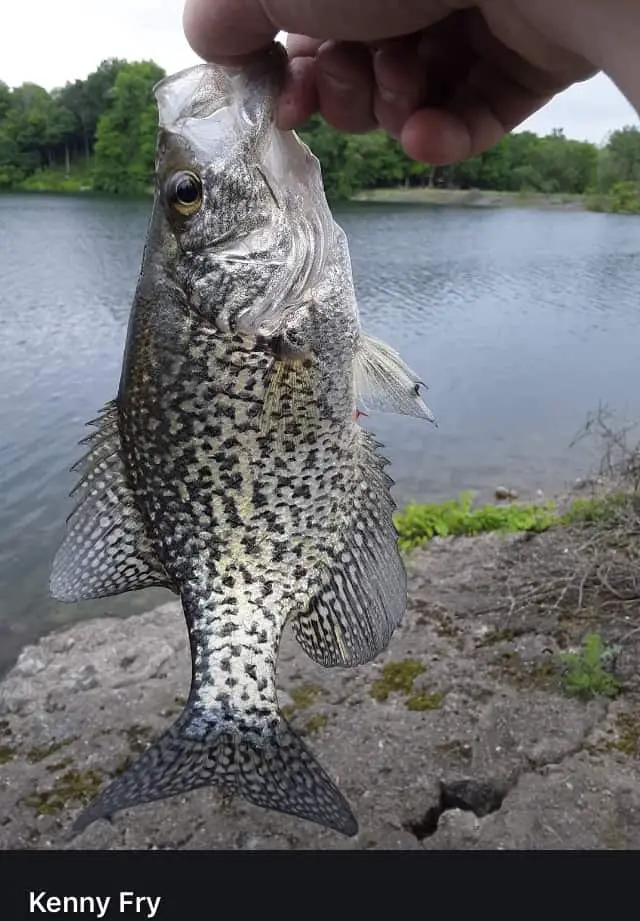
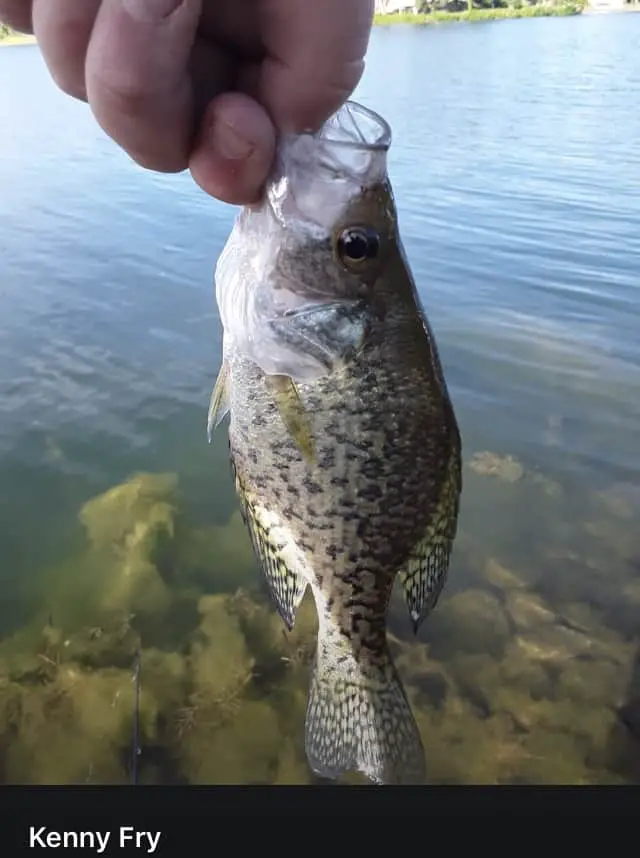
    Kenny Fry Black Crappie

    Hybrid crappie are a better alternative for your pond. They will require periodic restocking but are more manageable than black crappie. The ideal mix of hybrid crappie is 63 per ¼ acre compared to only 38 black crappies per ¼ acre.

    You are going to want to mix in 25 largemouth bass per ¼ acre. This gives you the perfect balance for crappie to survive.

    You will also need to make sure that you have fertile soil for your crappie pond. If you do not have fertile soil, then you should consider a hybrid bream pond or a catfish pond because the crappie pond will not be productive.

    So, we have established that crappie is an invasive fish and that they travel to faraway regions. We also learned that crappie is invasive because they reproduce so quickly.

    Having crappie in your fishing hole or your pond is not really a good idea, but it is doable if you follow the suggestions that we have given you throughout the article.

    “I am firmly convinced that the ideal combination 
    leading to a happy life is to have the time to both
    fish and read,” Brian Murphy

    Making sure they have plenty of clearwater to find their prey, stocking with largemouth bass to keep the full-size crappie healthy and growing and keeping an eye on the algae so that the pond doesn’t get over murky.

    Fishing for crappie is fun whether you do it in a lake, a river, or your personal pond. Just be careful with how you build your crappie pond so that they have a great chance of survival and less malnutrition and disease, which will affect any other fish that you have in the pond with the crappie. 

  • Are Crappie Line Shy?

    Are Crappie Line Shy?

    Are crappie line shy? They are a very smart species of fish. If they can see the fishing line, they avoid your presentation because they know the end result of latching onto that lure. That is why, when you are fishing for crappie, you need a strong yet almost transparent fishing line. If you do this and reset a lure that is similar to the baitfish they are feeding on then you are sure to catch a bucket full of crappie.

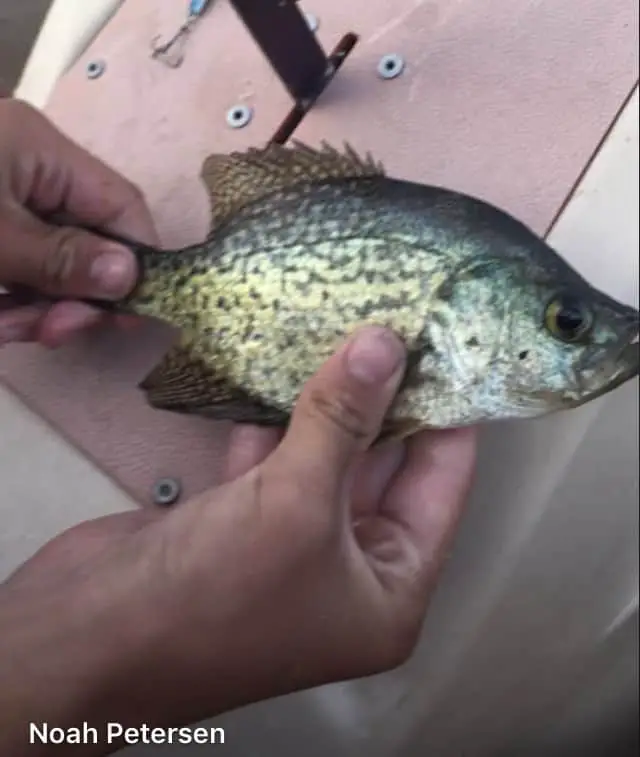
    Black Crappie by Noah Petersen

    Let’s explore some theories and opinions on this question. We will also discuss some of the best fishing line for use when fishing for crappie. So buckle up and let us venture into the vast world of fishing line. 

    You have to remember one important thing; what fishing line you choose will depend on the time of day, water conditions, where you are fishing, and in what season. As discussed in previous articles, (Like This One) there are 3 main types of fishing line.

    “The angling fever is a very real disease and 
    can only be cured by the application of cold water
    and fresh, untainted air,” Theodore Gordon

    Fluorocarbon is said to be one of the most invisible lines on the market today. This line works great no matter what the water clarity is, but works outstanding in ultra-clear water. There are some companies that manufacture pin fluorocarbon line, which is also virtually invisible. It is said to lose its color,In the water the deeper that it goes. Anglers and crappie will both have problems spotting this line when it is underwater. 

    Monofilament is the most popular and most used by anglers of all walks of life and experience. Monofilament is available in a wide variety of colors making it easier to see on top of the water.

    Compared to fluorocarbon it is more visible to the fish down below but easier to see the bites on your bait. Monofilament is better in murky/muddy water. The yellow line has the benefit of being able to detect bites but has its own time and place for use in catching crappie.

    Red monofilament is similar to pink fluorocarbon as far as becoming invisible in deeper water. But some anglers and divers say that it turns black underwater, making it easier for crappie to see. Green monofilament is an optimum color for blending in to the water.

    “That’s about as big as a fish that big gets,” Author Unknown

    The green line somewhat blends into its surroundings like a chameleon, but will be more visible in clear water. Where the clear fluorocarbon works great underwater, the clear monofilament is outstanding in all situations. 

    Be sure to visit my resources page for recommended gear – Click Here

    Braided lines will be detected by the crappie no matter what, but has other benefits. It allows for further casting distance, excellent strength, and will not stretch out. This line is most popular around heavy cover and dirty or muddy water. To get the optimum use out of braided line; use it in conjunction with a leader of fluorocarbon. 

    “So long, and thanks for all the fish,” Douglas Adams

    If you would like to find a way to make some money by fishing and writing about it or making videos about it like I am doing here, check out the guys that can teach you how to do it here.

    Do not try to pursue crappie (or bluegill) in heavy cover with a light-weight mono line, it will not end well at all. Again, the lake/river you are fishing, the time of year, weather conditions, and time of day will play a factor in which line you choose.

    Some sceneries call for the tougher braided line even though you can see it and other situations are prime for the mono line or fluorocarbon.

    Delving into each type of line a little deeper now. Here are the benefits of using the fluorocarbon line:

    • Low visibility – doesn’t distort light that is passing through the water   
    • Abrasion resistance – works great in the thicker cover/forage
    • Sensitivity – better to help you detect the bites on your line
    • Toughness – virtually no detrimental effects from the UV rays
    • Waterproof – meaning it doesn’t absorb water as it hangs out in, on or under the lake
    • Diameter – you can upsize your diameter and it will still be undetectable by the fish. 
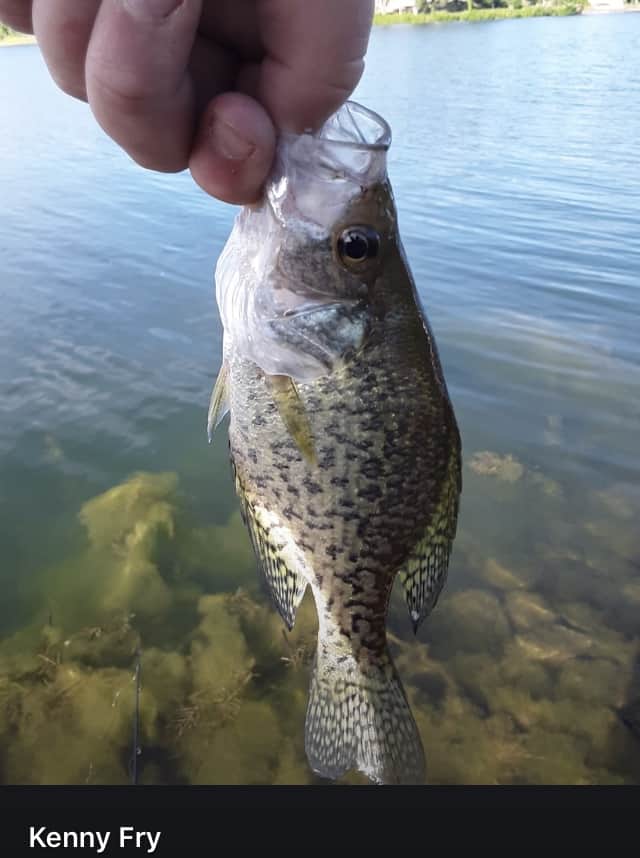
    Crappie Photo by Kenny Fry

    The best qualities or pluses to the mono line:

    • Good knot strength, smooth and easy casting
    • Good retention of color
    • Abrasion resistance is good
    • The line floats on top of the water
    • Affordable
    • Stretches up to 25% more than others if you drag a stick or set through your hook a little too hard. 
     “Which fish dresses the best? A: 
    A swordfish because it always looks sharp!”
    Johnny B. Laughing

    Braided line best qualities are as follows:

    • Little to no stretch – ideal for deep water fishing
    • High abrasion resistance
    • Good strength to size ratio
    • Floats – best for topwater baits
    • Breaking strength doesn’t weaken when wet
    • Ideal for fishing in heavy vegetation

    We have covered that the crappie are not line shy and they are not afraid of the fishing line. We also discussed the 3 types of fishing line and their benefits. So in conclusion, lets give you the top 10 best selling brands of fishing line.

    1. Berkley Fireline Fused
    2. Spiderwire Braided Stealth
    3. Berkley Trilene Monofilament
    4. KastKing Mega 8
    5. Power Pro Braided
    6. KastKing FluoroKote
    7. Stren High Impact
    8. Stren Catfish monofilament
    9. Spectra 100% pre-braided
    10. South Bend Monofilament
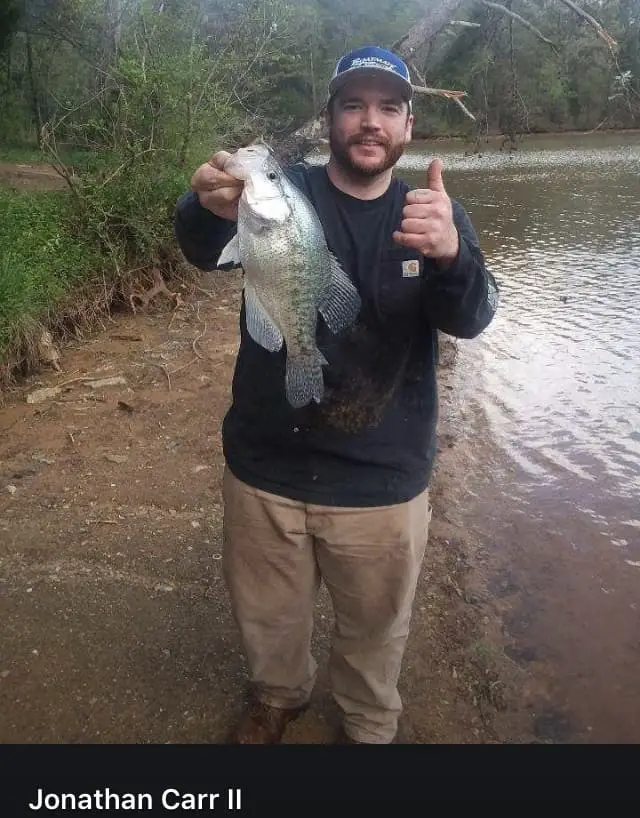
    White Crappie slab by jonathan Carr II

    Crappie are an invasive, smart, and predatory fish. They are cautious of fishing line and they do not shy away from it. They just know what is on the other end of that line and that they want no part of it.

    Just like, if they can see your shadow standing close to the shore, they will swim away. They are opportunistic and sneaky, so you have to be quick on your feet and beat them at their own game.

    You need to remember to use an almost invisible fishing line in order to have a successful crappie fishing trip, but make sure the line is strong enough too, just in case you catch that HUGE monster trophy fish. Fishing line is just as important as the rod, reel, and lure. So, if you get the optium crappie fishing gear, you will have a great and memorable fishing experience. 

  • Do Crappie Bite in the Rain

    Do Crappie Bite in the Rain

    So, you have all of your fishing gear loaded up in the truck and you are headed to the lake, hoping to catch some crappie. It is a little overcast, so you make sure you have lures for the cloudy day ahead. You arrive at the lake, you find your favorite spot along the shoreline, and you begin to rig your pole. Once you have your pole rigged and you cast out for the first time and then BAM the rain hits. Some say that the perfect time to fish is in the rain, but is it really true? Today we are going to explore if crappie will bite while it is raining and the effects on crappie and your fishing, after a good rain.

     “Fish stories told here…. some true!” Author Unknown

    It’s Raining and you want to know if you should still fish for crappies…The short answer is yes, however it may be a little more difficult. Continue reading for some tips on fishing for slabs in the rain.

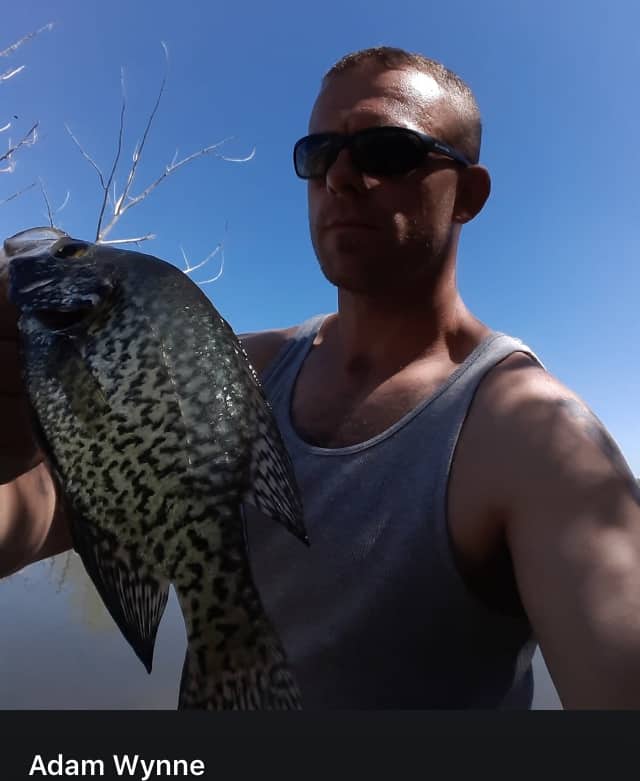
    Photo By Adam Wynne

    For some, fishing is like a mini vacation, a relaxing time with friends and family. Making memories and improving relationships. If you are crappie fishing, making those memories and de-stressing for a weekend; what happens when it rains? Are the crappie going to go into hiding? Are they going to continue to bite at your lure? Is there a safe place to fish for crappie when it is raining? I am going to give you 4 things to remember during and after a rainfall while fishing for crappie.These are only a few of the things we found when researching ad from my ow experiece. There are other things out there that  you could try. 

    What a Gentleman!
    1. Try to fish before the rain hits -This is of course the prime opportunity to catch crappie, before the storms. It is believed that right before there is rain or a thunderstorm, the crappie are feeding like crazy. So keep a close eye on the weather and fishing reports. If you are adamant about fishing, then go about an hour before the storms actually arrive. 
    2. Under shelter – all species of fish will stop feeding while it is raining. If you still want to try to catch crappie in the rain, then scout for spots that provide them shelter. For example, a bridge over a lake or even a dock on the lake. Something that they can hide under, but you can still get your line and lure close enough to. 
    3. Stay away from rivers – currents will get heavier and stronger when it is storming outside. This will make crappie fishing almost impossible and it could be dangerous for you as well. You can try finding the backwater of the river, these places are usually not affected by the current.
    4. Fishing in a lake – is a safer way to fish than on a river, but depending on the type of lake it could dictate your success. To snag a lot of crappie, go to the shallow part of the lake. Whenever it rains, the water is usually rises up, making it easier for you to see those slabs.
    “Fisherman’s prayer: Lord, help me to catch 
    fish so large, that even I, in the telling of it,
    never need to lie,” Author Unknown.

    If you would like to find a way to make some money by fishing and writing about it or making videos about it like I am doing here, check out the guys that can teach you how to do it here.

    So there is our first set of tips for slab fishing in the rain. We are going to now move forward and talk a little bit more about crappie biting in the rain. As stated above, all fish slow feeding when it rains, but why? We are going to answer that question as best as we can.

    Remember, falling rain can cause the water to get murky because it is stirring things up. Crappie do not like murky water so they will go deeper to find clearer water. The rain will also force larvae and smaller fish to make an appearance. Using the murky water for cover as they swim around and feed. 

    When it is raining, crappie tend to hide in deeper water in small schools as the rain drops hitting the water makes them skiddish and they move away from the shallow water. Some anglers swear by fishing for crappie while it is raining and others say that it is pointless. This would indicate that it is a trial and error situation. You will have to go fishing on a day when the sun is out, and there is no talk of rain. Record your catches, and then the next time it rains, go out to approximately the same spot and see if crappies bite in the rain. 

    “Fishing is fun…catching is better,” Author Unknown

    Remember, falling rain can cause the water to get murky because it stirs things up. Crappie do not care for murky water, so they will go down a little deeper to find the clearer water. The rain will also force larvae and smaller fish to make an appearance. Using the murky water for cover, the crappie will feed. 

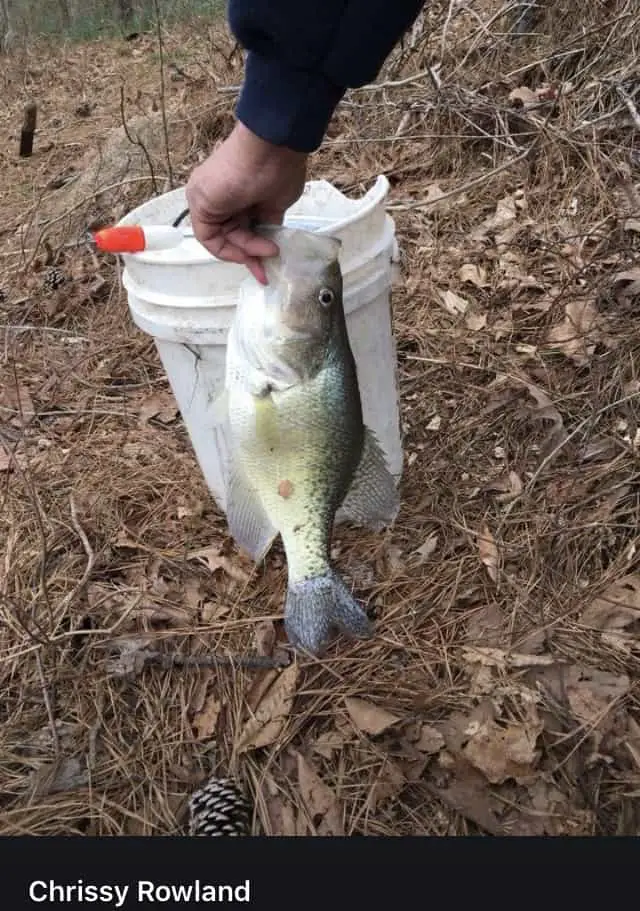
    Slab Crappie By Chrissy Rowland

    There are a few tricks that you can try that may enhance your chances of getting a crappie to bite in the rain. 

    • Use longer rods – this will help you cover a wider area to allow you more opportunity to catch crappie in the rain
    • Slow trolling – this will encourage the crappie to bite during the rain, as the bait is slowly moving through the water, enticing them
    • Stay focused – while it is raining it will be harder to feel the light bites from crappie, so focus and concentrate on the end of your line. 
    • Use fishfinders – you will be able to locate the crappie and get your lure to the correct depth, so that the crappie can see them and attack
    • Use heavier spinners – you want to use silver spoons or brightly colored jigs with spinners. Even when it is raining, this will help to attract the crappie
    Beautiful Slabs by Braxton Deaton

    Before you head out to see if the crappie will bite when it is raining, make sure you have the gear to help keep you warm and dry. You will want to take a rain jacket, goggles, and maybe even rain boots or some type of waterproof shoe. It is advised that you steer clear of water during a thunderstorm but if you get caught up in it, make sure you are using a rod that is made of graphite. This will lessen your chances, greatly, of getting struck by lightning.

    Fishing Lake Morena For Crappie? Discover what bait to use.

    “I got a fishing rod for my wife – good trade,” Author Unknown

    There we have it ladies and gentlemen. Tips and tricks on how to get crappie to bite while it is raining.  We have given you all of the information that we could find, as to whether or not crappie bite while it is raining. Take the precautions to keep yourself safe, if you are going to be out in the rain. Make sure you have all of the lures and baits that are best for catching slab crappie. Sit back, relax, make the memories and bond with your friends and family over a great day of fishing. Trial and error and patience will be your friend if it is raining. 

  • Are Crappie Attracted to Light

    Are Crappie Attracted to Light

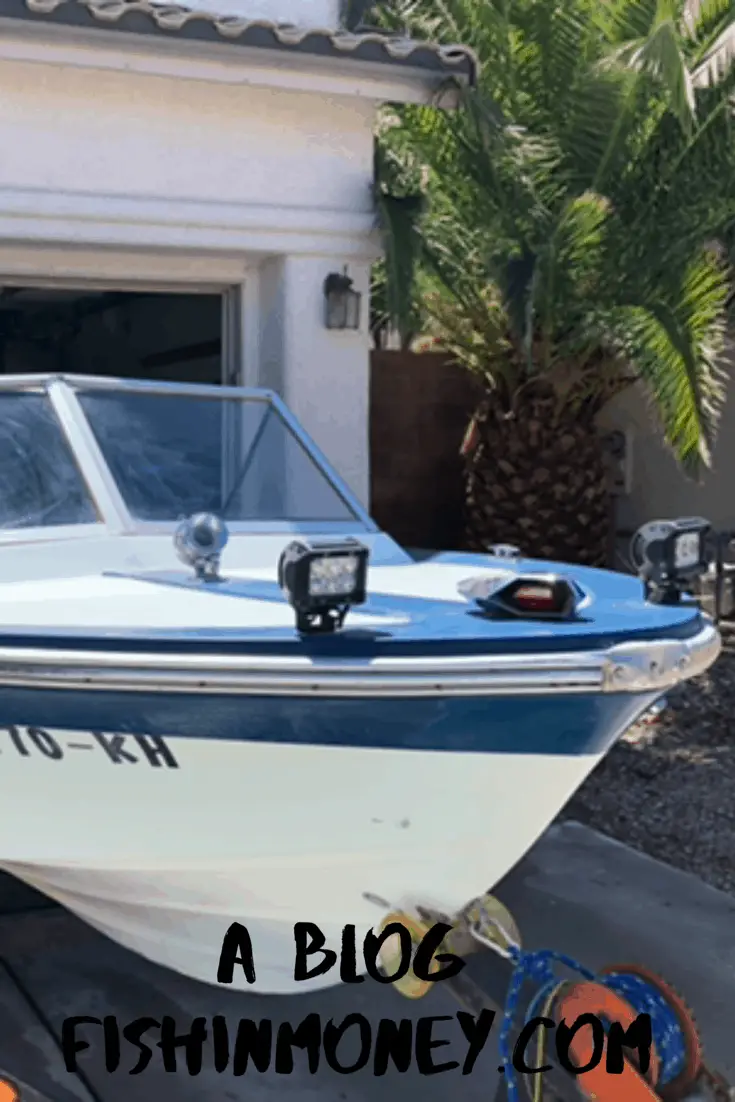
    One of the best and most productive ways to catch crappie is at night. Crappie are not attracted to the light but they are attracted to the baitfish that surround the light. Add LED lights When fishing and your chances to land a crappie just doubled.

    It’s easy; put out light and the light attracts microscopic bugs, In turn the bugs will attract bait fish, such as minnows and BOOM, crappie come for the minnows. Anglers say that the best night fishing happens on lakes that exceed 500 acres, have fairly clear water, and that are deep.

    They should also support bait fish and have good structure or cover. When night fishing, make sure that all lights on the boat are in working order, that you carry a flashlight (or spot-light) with you, and make sure that you have all safety equipment on the boat. 

    If you would like to find a way to make some money by fishing and writing about it or making videos about it like I am doing here, check out the guys that can teach you how to do it here.

    Nathan Dowdle Mess of Slabs

    We are going to review some of the most popular LED lights that are used to catch crappie. Towards the end of this segment I will provide you with more information on fishing for crappie at night, how the lights work, and give you some tips and tricks. Quickly though; LED stands for light-emitting diode. According to Wikipedia; these are a semiconductor light source that will emit light when a current flows through it. LED lights are extremely bright and crappies are definitely attracted to the light.

    What color LED light is best for attracting crappie? This is one of the most asked questions from those that are going to try night fishing for the first time. Though some companies have a selection of colors, most only produce white or green LED lights for fishing at night. Seasoned anglers will tell a newbie to GO GREEN! The wavelengths of light are more attractive to plankton. Plankton (and bugs, as stated earlier) attract bait fish. The bait fish will swarm the lights and before you know it, you are catching crappie like there is no tomorrow. White light is absorbed very quickly into the water, where as green is not. Green LED lights are also suspected for aiding in the reproduction of the plankton. 

    One of the most popular LED lights available: Yidazn Underwater Fishing Light. This particular light has 96 SMD super bright LED lights that shine a 360 degree view for your fishing pleasure. The Yidazn is durable and waterproof, fully submersible, ad creates an enormous underwater green glow. It has been upgraded to a heavy duty 20.8 foot power cord with battery clips. This LED light is made with PC housing and the tube is filled with glue, making it more durable with anti-corrosion and anti-shock properties. You can use this LED light source in freshwater, saltwater, lakes, and ice fishing. 


    Another great selling LED light that will attract crappie is the Green Blob Outdoor Fishing Light. This is a green 15000 lumen with a timer, 30 foot cord, and a 3-prong plug. This LED light is designed for use in the lakes, rivers, ponds, fresh and saltwater. The light is energy efficient, versatile, durable, and fully submersible. The Green Blob is energy efficient with a 110v adaptor and can be used 24/7 with no risk of overheating. It also comes equipped with a 24 hour timer and dusk to dawn sensor. No matter what fish you are hoping to catch, the Green Blob LED light will make sure that you get the task accomplished. 

    The last one up for review on our list of LED lights to use when crappie fishing is the SAMDO IP68 12v LED Underwater Fishing Light. It has 1080 lumens and 10.8 watt light. Usable in rivers, lakes, night fishing, and wild fishing. You can use it in a sea fishing cage, small fish net, or a light cover net. Some of the other features of the SAMDO are 12v, 100,000 continuous hours of use, 5-sided for 360 degree water coverage, 180 SMD super bright LED lights, and heavy duty 51CM power cord. 

    All of the above LED fishing lights are affordable and will attract the bait fish that will in turn bring you more crappie than you can catch. So, in short, the perfect LED fishing light will have the following:

    • High strength
    • Emit light in a color that is similar to fish space (green or blue)
    • Powered by portable power supply
    • Stability and easy repositioning in deep water
    • Use of Fluorescent and Polarized Optical materials

    We are now going to explore the idea of night fishing and night fishing with LED lights further. I will offer you tips, tricks, and suggestions from other anglers on what works for them and things that you can try to do to be successful. 

    Crappies will move in towards the surface at night in an attempt to regulate their body temperature. Crappie will feed off of plankton, minnows, and other small bait fish that are attracted to the light. Floating and submersible lighting will shine down into the water. When you night fish with LED lights you can do so from a boat, off of a dock, and even from shore. Anglers say that the best night fishing coincides with the moon and what phase it is in. 

    Fish are like some humans, they can not see at night. Therefore the electric signals, smell, and vibration help them to locate their food in the dark. LED lights help them even more by illuminating the bait fish. When setting up your lights make sure you are in a place where crappie tend to feed at night. You will also need to make sure there is enough cover for them to hide; reefs, logs, and other foliage. If you want to be successful with using LED lights then you have to follow the proper depth suggestions. The more the merrier. 1 light works great, 2 lights are even better! Make sure that if using multiple lights you place them 3-4 feet apart to achieve the perfect light radius. It is also a good idea to use more than one rig/pole. Position one close to the light, and space out the other poles a little further away each time to see where the best areas to catch the crappie are. 

    Before underwater LED lights were a thing, fishermen would hang lanterns off the side of their boats. This not only helped them to see when baiting their hooks but it also attracted bugs and bait fish. If you are going to use LED lights from a boat, make sure that the boat is completely anchored, shut off, and all is quiet. Otherwise, it won’t matter that you have LED lights, the noise will scare the fish away.

    Derek Hahn Nice Black Crappie

    It’s all going to be trial and error, depending on the different environments in fresh and salt water. The important thing to know, that will help you catch crappie, make sure you drop the lights close to where they feed after dark. If you drop them anywhere else, it will be a lot more challenging to catch the crappie because they will be feeding and not paying attention. 

    The LED lights must be powered by 12v, either from a small car or boat battery. Make sure that you drop the green LED lights down at least 3 feet. This will allow them to stay close to the surface so that you can see the bait fish and crappie, but not too far down that you can not see anything at all. You want a little bit of illumination close to the service. Also, make sure that the lights are positioned so that they are easy to move if needed to accommodate the high or low tide.  

    Some other useful tips to catching crappie with LED lights:

    1. Have patience – the bugs and bait fish are going to show up quickly, after you place your light. But it is going to take the crappie a little while to make their appearance. Don’t give up!
    2. Fish the Outer Edges – the shadows from the light will produce more bites. If you get too close to the light while fishing you may spook the crappie. Stay just outside of casting distance to ensure that you do not give away your position.
    3. Match your lure and bait size – to produce more bites from the crappie you want to match the size and color of your bait/lure to that of the bait fish that are swimming around. This gives you a better chance of the fish striking at your lure, because it looks like their natural food source. 
    4. Keep the light clean – environmental conditions will determine how often you need to clean the light. If you give it a fresh water rinse after each use it will help greatly. You also want to keep all waterproof connectors free of dust and debris.

    Are crappie attracted to light? Yes, crappie are attracted to light. We have covered the 3 top selling green LED lights that will enhance your chances of catching crappie at night. We included tips and tricks to help you improve your odds and we have provided you with general night fishing tips. All you have to do now is take all of the information from above and use it to the best of your ability and you will have a fully stocked freezer in no time. So make sure your tackle box is stocked, your boat is ready (and is stocked with all safety gear), go out there and fish until you can’t fish anymore. Good luck and happy fishing.