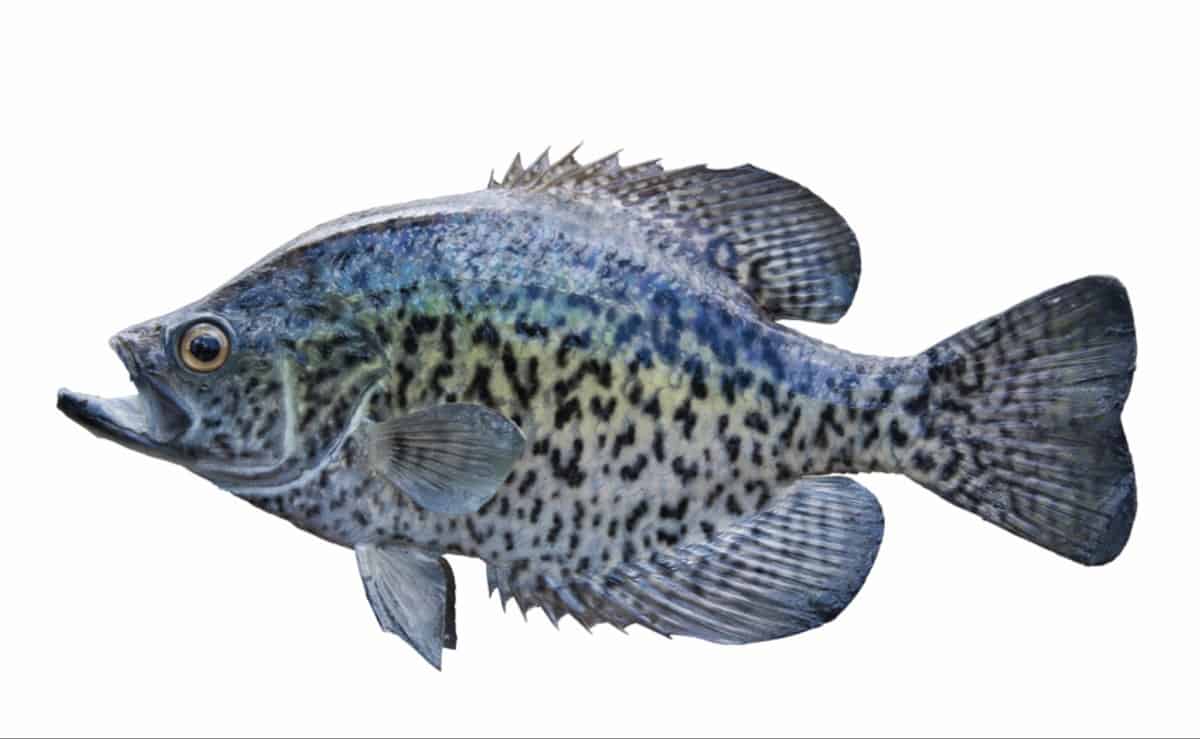
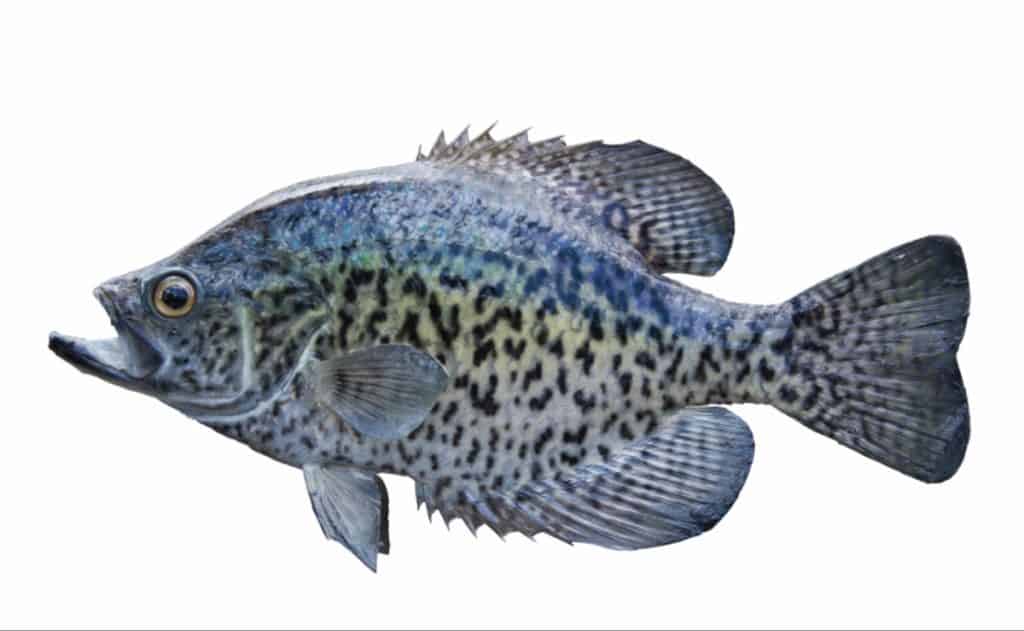
If you’re just barely getting started with crappie fishing, then it probably didn’t take you long to realize that there are all kinds of baits that you can use for this type of fish. Depending on the time of year, they will bite at just about anything. This includes worms, minnows, lures, jigs, you name it, they will bite on it. Of course, there are quite a few of us anglers that swear by using live bait for fishing for crappie, and for good reason: the crappie love it.
But of course, there are those days where the crappie just don’t seem to want to bite, and it’s at those times that you probably should consider varying up your arsenal. Since crappie seem to do so well with live bait, have you ever considered using crickets? It’s not as crazy of an idea as you might think. Here are some points to consider:
Of course, some people wonder if crappie will even eat crickets at all. The answer to this is yes, as long as you present it right. Most of the time, the best thing you can use to fish for crappie would simply be a small fisher species, but fascinatingly crappie do, indeed, eat a variety of small insects and larvae. They aren’t picky at all, and they will generally eat what’s available. Of course, it still seems that crickets are overlooked as fishing bait.
It would appear that this is because they are not as readily available as grasshoppers simply they don’t seem to be as durable. However, you can even do ice fishing if the only thing you have is crickets.
The best time to use crickets for crappie bait would have to be in either spring or summer. Some anglers will even try using them in the fall months, but the crickets are usually not around as much at this time. Hands down, the best time to use crickets would have to be during the spawning season of the crappie, simply because this would be a time when crickets would even be considered a delicacy to your crappie.
Generally, if you try to fish for crappie by the shore with your cricket during this time, you really can’t go wrong. Crappie just before and during their spawn period will just about lunge at anything.
Of course, the first thing you need to do is learn how to properly bait the crickets. It can be a bit tricky, but first of all you should pierce the crickets, but you should be careful where you pierce them at.
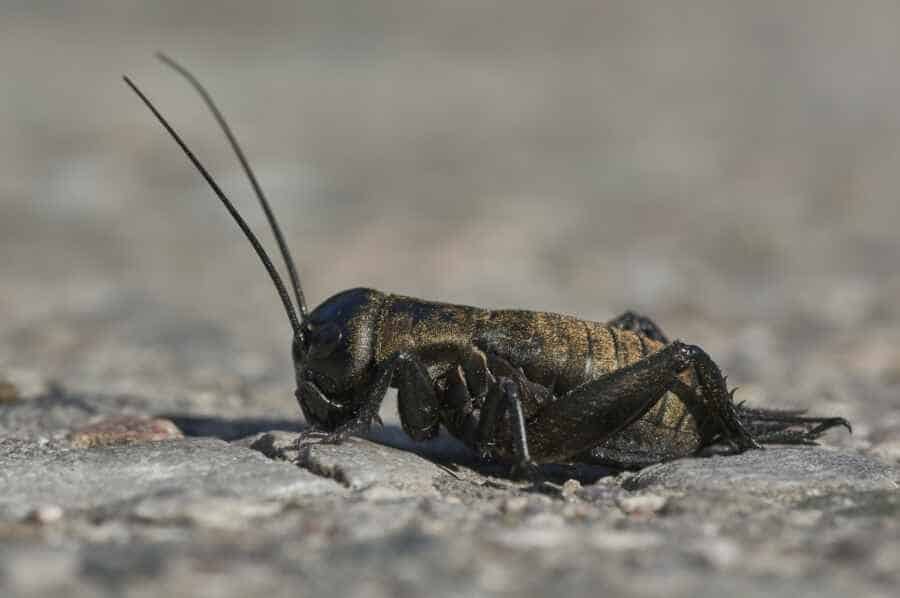
You should hook your cricket through its thorax, which is just behind their head. Don’t panic if they die fairly quickly after piercing them; most of the time that crappie will still go after them anyway. Of course, fish are surprisingly able-bodied little creatures.
There are some times where they can actually detect if you are using a dead bait. This is probably why using crickets as bait for crappie and other breeds has encountered some stigma. However, if you want to be picky about this, there are some other alternatives that will keep the crickets alive longer. First, you could use a special bait thread that will only wrap the cricket in place and you won’t have to hook it. You also could take some bait thread and simply just loop it around that way as well.
Now that we’ve fully determined that yes, crappie do indeed eat crickets, you are probably wondering how to get them. You have two options: you can either acquire the crickets at a bait shop, or you could just get them yourselves.
Although it’s definitely easier to get the crickets at the bait shop, (or pet shop) some individuals get a lot of thrill out of hunting for their bait as well. If this seems strange to you, just consider how some people are always looking for techniques to find minnows just as much as they are trying to land that perfect fish.
Thus, one of the ways to get crickets is to set traps for them. People often do this by either trying to catch them by hand or by crafting a small bait net trap for them. If you elect to make a trap for your bait crickets, one way to do it would be by making a bait composed of granulated sugar and some unflavored bread fragments.
Of course, it helps if you know ahead of time where the crickets usually congregate, but then you could simply sprinkle this mixture in that area. Cover it up with a large, single piece of newspaper, and make sure that you do so at dusk. The next thing you should do is have a jar ready in order to sweep your crickets into. Poke a small hole in the jar and you can continue feeding them this concoction of breadcrumbs and sugar until you are ready to use them for bait.
Take our survey…then share it with friends
Using Crickets: Fishing For Crappie the Right Way
Of course, when it comes to fishing for crappie, there is no “magic bullet” bait that will work every time. They are just like any other fish; sometimes you will be able to catch and sometimes you won’t. However, when using crickets, there are definitely strategies that you can use to increase your odds of catching them.
Besides only using crickets during the spawning season, you will definitely want to fish right off the shoreline because that’s usually where the crappie will be found. However, there is more to it than that. You will also want to be very specific regarding your bait, and get it down to the exact water depth. You can usually do this by going with a hook size that is a bit larger, between a size 1 to size 3. Finally, since you are specifically fishing for crappie, you might also want to consider using a single-split shot, simply because that will help to avoid having other types of fish trying to steal your bait.
Like I said, fishing with crickets can be a bit of a challenge, but if you really want to sink your teeth into something bait-wise, this would be one way to go. Either way, there is absolutely nothing wrong with diversifying your fishing bait choices so that you can catch more of these crappie.
Generally, most anglers will fall into at least two different camps: there are those who just want to fish for any species of fish whatsoever, and there are also those who want to specialize and try to catch just one specific fish. (I like them all.)
Indeed, there are literally millions of individuals who will attempt to catch such breeds as salmon, trout, catfish, perch, bluegills, and many others. Moreover, among the ones who specialize, there is also a large group of individuals that not only love the sport of fishing, but they will also debate until the cows come home about the best techniques to catch said species.
One example of this would have to be those who try to catch crappies. Indeed, one of the biggest debates among crappie fishermen would have to be over just what this breed of fish will eat. The short answer is all kinds of stuff, but this leads us to our next pressing question…
Will Crappie Eat Crawfish?
Yes crappie do eat crawfish if they have the opportunity but keep in mind that crappie prefer to eat upward and crawfish are usually found on the bottom. Find a way to present a crawdad to a crappie though and they will eat it.
If you need some excellent crappie fishing lures including crawfish, I have given my favorites in my resources page HERE.
Actually, that’s a bit of a loaded question. Before we get to an appropriate answer for that, we need to fully understand some other questions first:
What Do Crappie Normally Eat, Anyway?
First of all, you should fully understand the normal diet of crappie, and then you just might understand why there is such an intense debate over whether they eat crawfish or not. Generally, crappie will eat such things as zooplankton, grass shrimp, minnows, and immature species of fish such as walleye, bluegill, pike, and even crappie themselves. They will even eat frogs. You might notice that no, I didn’t mention crawfish in that list, but trust me, the jury is still out on this question. Let’s look at the next wrinkle…
What Do Crappie Eat When Food is Scarce?
Of course, we’ve already established that crappie will eat just about anything that they can wrap their mouths around, but what about when food is scarce? Although some anglers still insist that the crappie will still NEVER eat a crawfish EVER, would the crappie do it then? The answer, according to most anecdotal accounts, would be an emphatic yes, they most definitely would.
Take our survey …then share it with friends
You see, crappies are largely known as an opportunistic species. Simply put, they are not picky eaters at all. Their typical food choices such as minnows or small fish won’t be available in the winter or the early spring, and so that means that these crappie will have no choice but to go with crustaceans such as crawfish or insects such as crickets or larvae instead of their preferred diet. Of course, you as an angler can use that to your advantage and lengthen the time you have to try to fish for crappie throughout the year.
Of course, even though there are always going to be a significant number of people who insist that crappie will never eat crawfish, there are also plenty of anglers throughout the United States and beyond that have anecdotal evidence that crappie will indeed go after crawfish. For instance, there was a gentleman who was fishing on a well-known river in Ohio, and to begin with he was using the typical minnow bait to catch his crappie.
However, he decided that he wanted to try for some other fish for a little while, so he switched his bait to crawfish. It didn’t take too long before something blasted his line, and although he thought that it was going to be a large bass, it turned out to be a fairly good-sized crappie!
Moreover, there was yet another instance where an individual was fishing on an Illinois river when he was a small boy, and he and his uncle were initially going after the bluegills, but he landed a crappie instead! Although he was just six years old, he was hooked for life! There is yet another individual in Louisiana who said he has cleaned out more crappies than he could count that had the remains of a crawfish in their stomach. Indeed, there are stories like this all over the United States, so you can certainly rest assured that crappie will absolutely go after crawfish if the need arises.
What About Their “Feeding Down” Habit?
Of course, part of the reason why some people are so adamant that you cannot use crawfish as bait for crappie is because this type of fish would have to “feed down” in order to eat them. However, they fail to realize that these crappies will go to some tremendous lengths to get food if they need to. Yes, they will normally “feed up” to obtain food, but if the only way for them to get their food is to “feed down”, then they are not against doing that. All I’m saying is, yes, the crappies will definitely change their behavior if it means that they are in for a free meal.
Now that you know that yes, you can definitely catch crappie using crawfish as bait, you’re probably wondering just how you would go about getting the crawfish. Well, there are plenty of ways to do it, but one method would be to go out at night with a flashlight and a dip net and look for them along the streams. This is a good way to find them if you are the adventurous type of course. Another method that some have found to be easier would be to simply look for them during the day. Some people enjoy turning over rocks in order to try to find them. Of course, you’ve got to be quick! You’ll soon find out that these crawfish are very quick! Persistence is key. Of course, once you catch them, you will have another concern.
How Do You Keep Them Fresh?
That’s another good question. One of the best ways to do that would be through using styrofoam coolers. You can fill them with layers of wet newspapers, because you have to make sure that the crawfish are kept cool. However, some don’t like this method because it takes up too much space on their boat. Another way to do it would be through placing them in a flow-through minnow bait bucket. Taking the inner bucket of the exterior bucket will allow the crawfish to continue to have air.
How Do I Hook a Live Crawfish?
One of the best ways to hook a live crawfish would be on an “upwards” trajectory through the tail of the crawfish from the bottom just shy of a half-inch from the end. This method still allows the crawfish to have some natural movement when you cast it out. Another method would be to hook the crawfish through the bony horn of their head. This is a method many crawfish bait enthusiasts prefer because it prevents the crawfish from crawling under a rock and hanging up your line.
Whatever method you choose for hooking your crawfish, you can rest assured that the crappie will indeed go after them. They are hungry fish! Go ahead and try this method for crappie fishing during the off-season, and you just might be in luck.
Darren Enns Author has been married to the same lucky woman for 30 years.
In the year 2020 there is no question that we are definitely in the information age. You can learn about practically anything that you want, and there are countless platforms to do so. One of the most well-known ones would have to be YouTube.
There is an immense amount of videos available to help people learn about a given craft or skill. Take fishing, for example. There are fishing channels devoted to every type of fishing imaginable, from fishing for crappie to fishing for catfish and everything in between.
Malechi Brooks
Indeed, there are so many that it can be difficult to figure out which ones are good and which ones are not so good. However, when it comes to fishing for trout, there are quite a few examples out there.
Are you looking for some really good YouTube trout fishing channels? Of course, before we get started, you probably should realize that most of the suggested channels are not devoted to just trout fishing, but many of the techniques are easily adapted to fishing for this particular breed. Here are some that you should strongly consider:
Versatility is the name of the game for the Salt Strong YouTube Channel. They have videos devoted to almost every species of fish, including bass, catfish, and even such obscure options as snook and grouper. However, one of the reasons why they were included in the trout fishing category would have to be because they have plenty of good (and recent) trout-related fishing videos available.
They have posted at least 15 different trout or trout-related videos. Moreover, one of the things that makes this group unique would be that they aren’t just a collection of videos, but they also market themselves as an online community where other fishermen can bounce other ideas off each other and where they can even take different courses about how to fish for different breeds!
Yet another notable video they offer would be entitled, “3 Tips For Fishing Points” where it discusses some of the things you can do to catch more snook, redfish, and trout. A couple of these would include going with the flow and to avoid doubting the drop-offs. Of course, it is important to mention that when we say “points”, we are talking about a designation in place and not simply an element of conversation.
Moreover, one of the best things about this video would have to be that they are excellent at providing strategies for helping you to improve your fishing game. Ask any angler, and they will tell you that they enjoy the experience much better if they are catching fish. There’s just something about getting results from your hobby that makes it that much more enjoyable, and that’s probably why this channel regularly gets views in the tens of thousands for many of their recent videos and views in the millions for their oldest videos.
Again, versatility is the name of the game for this fishing channel. One of the best things about Addicted Fishing would be that they provide a number of in-depth “How To” tutorials regarding how to catch all of your favorite fish. For example, they posted a video where they discussed fishing with “plastic pink worms” as a way to catch more trout.
That video was posted about seven months ago, and it already has over 258,000 views. And don’t think for a minute that that video is the only one that has had that many views. Addicted to Fishing also has a video detailing the “TOP 3 Methods For SUCCESS!” when fishing for trout that has had about 236,000 views as well.
Moreover, Addicted Fishing has a lot of unique listings for you to ponder. They have videos with titles such as “How to Catch Trout With Jet Puff Marshmallows” (197,000 views), “Using Trout Magnets For a Stocked Lake”(148,000 views), and “The Best Methods For Catching Trout in Rivers, Streams, and Creeks.” When it comes to YouTube channels that offer good trout-fishing videos, my point is this: Addicted Fishing is definitely a keeper.
Fishin Money might be a bit of a new kid on the block, but some of the insights they provide are every bit as useful to the trout fisherman as some of these larger channels. Moreover, you definitely should consider the fact that even though they have only been posting videos since last January, they are already up to 102 subscribers.
Perhaps one of the most compelling videos they have in their offerings would have to be the one posted in early July regarding fishing weights. Perhaps it’s due to COVID-19, but many fishermen are starting to notice that fishing weights are getting to be in short supply in such places as Bass Pro Shops and other fishing retailers. However, ask any experienced retailer, and they will tell you that weights is almost a necessity if you are going to start targeting a specific breed of fish.
Another good thing that this channel is that it often will combine elements of sports, psychology (RE: the overcoming negative fishing thoughts video), and even an analysis of different fishing locations. This is truly a fishing channel that has a lot of potential and should have a bright future, so you definitely should tune in regularly in order to get some solid angling tips.
All three of these videos illustrate the fact that fishing is so much more than just a sport. Fishing can definitely be a way of life, and it absolutely can bring families together. Lifelong friendships are made out on the water, along with many new ways of strategizing for the fish. There is no question that fishing is a great way to deal with life, and an excellent way to learn new things about yourself.
As a newly-minted crappie enthusiast, chances are you have quite a few questions about how to go about catching as many crappie as you can. ( I STILL do…LOL) You probably want to know about their spawning habits, what lures they are attracted to, what type of bait they will go after, and so on.
Of course, another thing that many crappie anglers want to know would be whether the crappie can see at night. Well, if you’ve been on the lake at night for any length of time, then you will know that the answer to that question is definitely an enthusiastic “yes!” As a matter of fact, many crappie actually prefer the night time hours to congregate because the water is calmer; thus, many anglers realize that they should take advantage of this in order to catch more of them! If you are looking to appeal to more crappie at night and appeal to their night vision, here are some things you should know:
Much like us human beings need light to see at night, so do the crappie. Thus, remember that on your next night fishing excursion when you are lighting up your lantern. If you are going to catch more crappie, give them some light too!
However, do realize this: lighting up the water and the depths of your fishing not only appeals to the crappie by helping them see, but it also engages the crappie in a specific process. Using either floating or submersible lights will attract crappie to your fishing spot because it engages them in all of the steps.
You not only will help them see better, but this extra light will increase the plankton in your fishing area. In turn, this will increase the bait fish around your area. Finally, when there is more bait fish in your area, there will also be more crappie in your general vicinity as well.
Understanding this process is crucial for your crappie-catching success at night. Moreover, a full understanding of this process is a great way to have a solid back-up plan, simply because even if the crappie cannot see the glare of your lights, you can be certain that they can definitely see the baitfish and plankton that your light is attracting as well!
Whether it is day or night, you should always leverage the fact that crappie are sight feeders. Naturally, just like people, the crappie will be attracted to brightly-colored items. This is why you should use brightly-colored lures. Moreover, you should be aware that the vision in a crappie is so adept that they will be easily able to spot a brightly-colored lure even if the water is a bit murky.
Of course, you should be aware that using bright lures at night might work best when you have encountered a school of crappie. This isn’t always easy to do, but one way to increase your chances of finding a school would be to fish further down the river or in the middle of the lake, especially on nights where it is very cold. Naturally, crappies will always have an appetite, and it is an instinct of them to move around in these large schools.
You can bet your bottom dollar that when they encounter a lure in this darkness that stands out because of how bright and shiny it is, they will be compelled to investigate it.
Crappies Will Not Only See Light at Night, But They are Very Comfortable With Them as Well
Light not only will attract some of the crappies’ favorite snacks, but there is no need for you to worry about whether the light will spook them or not. Newsflash: it won’t, because crappie are very comfortable with them.
This is another area that you can use to your advantage. First of all, one way that you can use light to appeal to crappie is by using sealed-beam lights. These types of lights have a styrofoam flotation device, making them an added attraction to the crappie.
Moreover, the best part about this type of light would have to be that you can sidestep that earlier three-step process and just go right to attracting crappie. Another great advantage to using a styrofoam flotation light is that it won’t attract those highly distracting bugs simply because you are placing it in the water instead of in the air. Be sure to position these lights so that you can fish right beside the beams.
Crappie and Their Night Vision: Using it to Their Advantage
Another reason why you should fully understand just how well crappie can see at night is because they will definitely use this skill to their advantage. When you go out night fishing for crappie, one of the first things you will notice is that they have a tendency to have quite a few hiding spots. What I mean by this is that they will often go down to the deeper depths of the water or they will find some large brush, reeds, or other underwater plants to hide behind.
Thus, the good crappie night fisherman will keep this in mind and use it to THEIR advantage as well. For instance, you have to be as organized as possible in this regard. When you have decided on a bait, you should strongly consider suspending it at various levels from your bite.
You should allow for a bait to be placed at five feet; one at ten feet, and possibly even one at twenty feet or more. This will make it more likely that you will appeal to the crappie at every level and it will definitely increase your chances of success.
Experienced Anglers Often are Very Organized When They Want to Take Advantage of a Crappie’s Night Vision
One of the main differences between experienced crappie anglers and beginners is that the seasoned ones will usually develop a certain organized plan for their crappie night fishing endeavors. For example, one such angler likes to freeze a spotlight on a crappie, put a jig by his nose, and then reel the fish in after they start aggressively eating. Of course, most experienced anglers also realize that this runs the risk of spooking the fish.
However, either way you look at it, the same principle applies. When you are angling for a certain fish species such as crappie, you have to take everything about that breed into account. In the case of nighttime fishing, if you closely study their behaviors, you will not only fully understand how well they can see at night, but you will also have plenty of crappie in your boat as well!
As an angler, there is likely to come a certain time in your life where you will want to try for a specific breed of fish. When that happens, obviously your first step is to learn everything you can about that type of fish. Of course, many anglers go with crappies, and for several good reasons: they can be a challenge to land because they put up quite a big fight, and once you finally reel them in they taste delicious. Does crappie seem appealing to you? If so, then you need to start with the basics first.
Take a Look at Their Senses
Some of the most basic information you should know about crappie is that they are primarily sight feeders. This means that if you have a bait, jig, or lure that is colorful, you have a much better chance of landing one of these elusive crappies.
However, if you are one of those anglers that just eats, drinks, and breathes being out on the water, then there are definitely some times where you will be fishing with low visibility. What should you do then? Well, in that case, you should take a long, hard look at some of the other senses that the crappie has. For example, what about their sense of hearing? While crappie do indeed have a functional sense of hearing, sound travels about five times faster in water than it does in regular air. This means that a crappie is surrounded by sound, and so the sound of a jig, lure or bait splashing the water would sound all the same to them. No, in the case of murky water, what you really want to focus on would be their sense of smell.
When it comes to a crappie’s sense of smell, it can be just a bit of a hit-and-miss proposition. Indeed, there are some species of fish that have much better olfactory glands than others. For example, there have been recent studies that have indicated that pike will be attracted to a local smell and even join in on a feeding area for that targeted smell. Moreover, fish such as salmon, minnows, and trout are fairly adept at detecting smell. Of course, minnows will usually only take advantage of their olfactory glands just as a way to sense danger. A crappie is somewhere in the middle of these groups. While they don’t necessarily follow a scent trail, they do sense certain items when they are close to them. If you are trying to catch crappie in murky water, here are some ways to use smell to enhance your bait presentation.
Sometimes, when you are fishing in murky water, the best thing you can do is use natural baits. Even though the crappie cannot necessarily see in this murky water, they can still make use of the natural juices from maggots or minnows. Of course, you are going to have to be fairly persistent; the crappie cannot utilize their sense of smell for too long of a distance. However, once they get close to the minnow or the maggot, they just might consider biting just because that smell from this bait is completely irresistible to the crappie.
Yes, you can still use plastic baits, lures, or other such jigs.
You might think that artificial bait doesn’t put out much of a smell, and in that regard you would definitely be right. However, there are many artificial scents that you can add to these plastic baits in low-visibility water in order to still be able to entice a good crappie. For example, you can add in such brands as Berkley Gulp! (Amazon) TriggerX, Alive, or Spike-It Garlic Spray to help increase your chances of attracting more crappie. This is because it will leave a much longer trail in the water than normal, and when it comes to trying to catch crappie, there is nothing wrong with being as thorough as possible. Additionally, one of the best ways that you can still use your lures, plastic baits, and jigs would be to simply use the “Sit and Soak” method. You simply just drop your best plastic lures in a Ziploc bag or resealable container and then add your favorite concoction or formulated liquid and let it sit overnight before your fishing junket begins. You also can add products such as Crappie Nibbles to the point of your jig just as an extra way to entice them.
Of course, there are a few things you should consider. First of all, your scents will not remain as long if you are casting out your lure at a higher speed. Thus, you would do well to be regularly applying these scents in order to maintain the maximum effect. Keep warmer water in mind as well.
Recognize the best times of the years to use scents as a bait source.
When it comes to using scents to catch crappie, there are certain times of the year where it makes more sense to use scents! (no pun intended) During the prespawn period, all of the tournament pros realize that these crappie will literally bite at just about anything. However, during the post spawn period it’s going to be a different story. The fish are going to be a lot more tired because of their spawning activities and they are going to be scattered as well. They are not liable to bite during this time period, no matter how hard you try. However, if you play on their olfactory senses, you would have a vastly better chance during this time period to get them to bite on your line.
Obviously, if you’re going to use artificial lures or jigs, you could be missing out on the crappie’s natural predation tendencies. However, there are several ways to get around this. One of the ways to get around this would be to simply purchase scents that will mimic these natural scents. For example, there are many scents that you can get at your local bait shop that will smell like minnows or scents that will smell like wax worms.
In short, you are definitely missing out if you don’t take advantage of the crappie’s natural sense of smell. You will definitely catch more crappie if you keep this sense in mind!
Have you ever had a hard time finding the right sized sinker for the type of fishing you are going to do?
I have! When that happens to me It makes me think I could just make my own sinkers and then I wouldn’t have that problem. I’m kind of a do it yourself kind of guy anyway. Are you?
Fun Fact: Darren Enns Author is from Nevada and has been Married to the same beautiful woman for 30 years.
I get a lot of pleasure out of taking raw materials and making something useful out of them. that’s probably why I became a plaster by trade and why I worked in the plastering field for so many years.
Make your own fishing weights
Anyway back to fishing. When you find that you were having a hard time finding the right fishing weights, the natural thing to do is wonder if you can make them yourself which is exactly what happened to me.
This review is written for those of us who like to do things ourselves. I’m kind of a prepper at heart. I’m not sure if everyone reading this will know what that is so I need to explain that a prepper is someone who tries to be prepared ahead of time for things that might happen.
In this case what might happen is that I might not be able to find the right sinkers for my fishing trip and that could really be a bummer. So how do I prep for that I take it into my own hands and I have the right materials on stock and the mold to make them and then I make my own.
So going back to who is this for, if you don’t like to get your hands dirty and if you don’t like to take the time that it takes to make your own products then you might not enjoy this article very much.
However, if you do like to get your hands dirty and you do like that feeling that you feel when you are done building something and if you do you like the opportunity to tell your buddies, then what I did in this article is definitely for you.
My advice on the Do-It EG-9-A sliding sinker mold
I’m going to review the do it mold that I bought and let you know the pluses and minuses upfront so that if you decide to do it yourself you can learn from me and my experiences.
The mold that I bought is called do it mold number 50622. It’s from the do it company out of Denver Iowa USA.
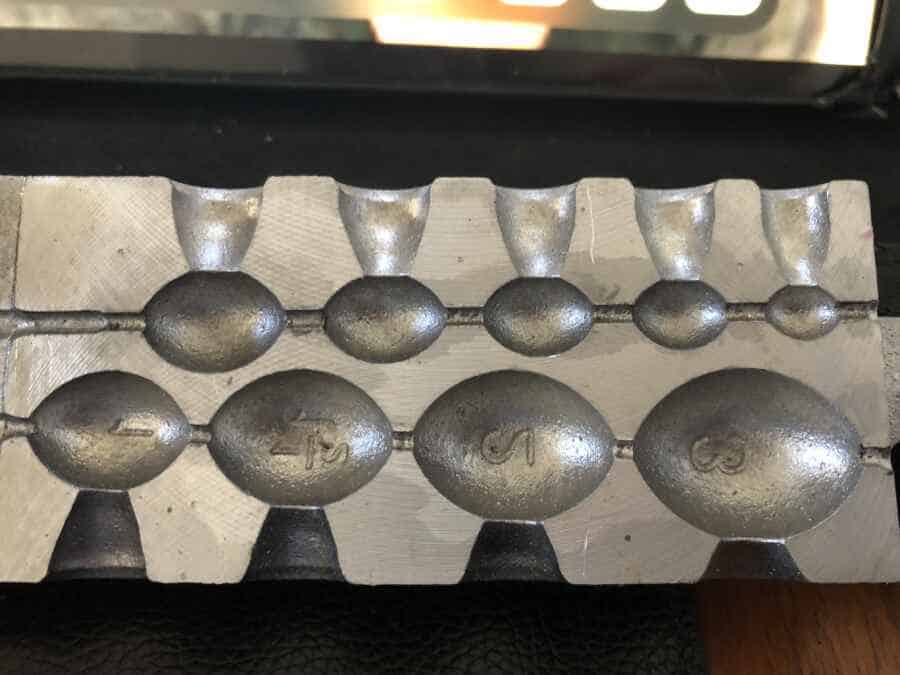
It’s an aluminum mold with plastic handles and it makes egg sinkers from 1/16 ounces all the way up to 3 ounces.
It comes with a wire and handle that goes through the mold in order to make A hole for your string to go through. I will include some pictures and some of my finished weights that I made but let’s get down to talking about the pluses and minuses of using these molds.
How I learned to do it
For starters, I really had no idea what I was doing but it did not take me very long to figure it out. I watched a few YouTube videos to see how others were doing it and the first thing that I realized is that I did not have all of the cool tools that everyone had.
What am I referring to? I’m referring to the electric heating pots that people use and the little hammers and handtools that people used in the videos.
In fact I didn’t really even consider how I was going to heat up the lead and so I had to improvise. So I would suggest if you are going to order a do it mold that you also consider ordering a small cast-iron crucible that you can melt the lead into and the tool to pick up the hot crucible for pouring the lead.
Instead what I did was use a stainless steel measuring cup out of my wife’s kitchen. I had to hide it at first but luckily for me she had several and when she found out that I used it she was not too angry.
I guess if you’re on a budget the other idea would be to check out the thrift stores and buy something that you can melt lead into. OK another thing that I noticed was that as I was melting my lead, there is a dross or slag as some people call it that forms on top and that that needs to be cleaned out occasionally before you pour your lead. So that’s another thing that you’re going to have to have is a Spoon or some thing to clean the dross off of the top.
Tools I used to pour my own weights
Because I did not really have a great way to melt the lead I used a small propane torch Like This One Here on Amazon, and believe it or not it melts pretty quickly but if you had the right kind of container you probably could do it very well on a propane flame burner and that would probably work better than the way that I did it because as soon as you set your crucible down on the flame it will keep the lead molten.
When I used the torch it worked fine for pouring the mold one time but as soon as I cleaned out the mold and I was ready to pour again I had to heat up the lead once more because it had started to harden.
If you don’t get the lead in a thin enough pourable state then what will happen is it will mess up your weights that you poured by having air bubbles inside.
One of the cool things about these molds is that even if you mess up it’s not that big of a deal because you can always reheat the lead and pour it again. By the way I did that many times LOL
Another tip I can give you is to wear gloves. The plastic handles on the mold are OK but if you reach inside the handles with your bare hands you could burn yourself on the aluminum that goes into the handles.
Safety First while making weights
Also it’s probably a good idea to wear gloves that will keep the splatter off of your hands if there is a splash of some sort. While I was writing that I thought of two more things. Never pour lead on water it will explode. Believe me you don’t want that so make sure your mold is good and dry. Also never breathe the fumes of the molten lead because they are toxic.
OK another thing you should know is that you don’t have to pour all of the different sizes. As I said in the beginning this mold goes all the way up to 3 ounce weights and I don’t usually use anything over 1 ounce so when I’m pouring I don’t have to pour lead into the two holes that make those sizes.
Also you will find that when you pour your weights out after they have cooled you are going to need some wire cutters to cut the little nipples off of your creations and I also needed to use some sandpaper to sand them smooth after cleaning them up.
After doing all of these things though I was real proud to have weights that I made myself and now I have the mold forever so as long as I can make my own I should never have to buy fishing weights again.
So some of the positives are that you can hand a sinker to your buddy and tell him hey I made that. That will start a fun conversation for sure.
Also, if you are looking for a fun little side job to make a few bucks you can make some and sell them to your friends and people who need them. At the beginning of this article I mentioned that I had a hard time finding weights. In fact, there were zero weights in the store that I always go to because of circumstances in the United States at the time. The stores were not able to place orders and so they ran out pretty quickly. When I started making weights I posted it on Facebook and some people actually wanted to buy them from me so if you had the desire you could sell weights as well.
Where I bought my Do-It mold
I’m going to leave a link to where I bought my mold so you can pick one up if you like. My link is an affiliate link but it does not cost you anything to use my link and I very much appreciate if you do especially if you got some benefit from this article.
If you have any other fishing questions that you would like to ask you can contact me through my contact page and who knows if it’s a good question that other people should know about I might write an article about it.
I recommend joining Income School. I’ve been an Income School member for a little over a year and joining was the best decision I’ve made in working toward my business goal of making money online.
There is no question that Rainbow Trout are a fascinating and beautiful fish to try to catch.
Naturally, ask any angler, and chances are they will have a litany of strategies to use in order to try to catch this elusive example.
Such options as using baits and lures, trying out a variety of strategies on a given day to see what they respond to, and allowing for their eyesight are all good steps to catching as many Rainbows as possible.
However, some individuals also like to take advantage of catching the Rainbow trout when they are spawning. Moreover, even if you aren’t intentionally going after the Rainbow Trout when they are spawning, you should still be aware of their habits while they are spawning simply to adjust for catching them. Here are some things to consider:
Feel free to share this wherever you would like. If you share it to your own website Please give me a link…Thank You
Be aware that ethics are involved in catching Rainbow Trout while they are spawning.
If you are new to the game, you will quickly learn that there is a heavy debate over whether you should even attempt to catch fish at all when they are spawning. This goes for Rainbow Trout enthusiasts as well. Some say absolutely not, while others say absolutely, and still others will say yes, but with some conditions attached. For those who go with the third option when it comes to catching Rainbows during their spawning times, here are some of the strategies they use to have a clean conscience:
Have a plan made up ahead of time for any picture fish you might encounter.
If you land the Rainbow Trout of a lifetime and you have to throw it back without being able to take a picture of it, that would be a shame. However, if you have to choose between throwing the fish back right away or scrambling to get your camera ready to take a picture, you should definitely throw the fish back without a picture. This is because catching a trout is a very traumatic experience for them, and seconds count.
This is why if you think you are going to catch a picture fish, you and your buddies should have a plan in place ahead of time so that you can still take a picture of your fish and still be able to throw them back as quickly as possible.
Do your best not to mishandle the fish. Trout are delicate.
Along these same lines, whether the fish you catch is a picture fish or not, you should do your best to avoid mishandling them at all. This means you should remove any of your Rainbows from the water as quickly as possible and keep them out only for a few seconds, you should only hold the fish over water, and you should cradle the trout gently without squeezing it. Of course, the proper catch-and-release techniques would be a whole article in of itself, but these are definitely the basic considerations.
Do your best to engage in a no-kill policy.
Of course, this leads us to our third point: when fishing for Rainbows, you should always keep a no-kill policy at the forefront of all of your sporting endeavors. This is not only because it is humane to the fish, but also because it will keep the population of Rainbow Trout solid for everyone else who wants to fish them. Moreover, it will encourage more spawning to occur, and yet again provide for a solid population of Rainbow Trout both on a spawn and pre-spawn basis. This is a great way for you to be courteous for all of the other anglers out there.
Be careful in the spawning beds. Watch Your Step.
The next thing you will need to do when fishing for Rainbows is to be careful that you don’t step in their spawning beds. Rainbow Trout can lay hundreds, sometimes thousands, of eggs, and the simple act of you not watching where you are going and stepping in the wrong spot in the river bed can lead to a whole generation of Rainbow Trout being killed off.
The first thing you want to do is is to educate yourself on the best way to identify a spawning bed. It can be difficult at first, but once you know what to look for it should be easy.
A Rainbow Trout spawning bed, also called a Redd, is an oval-shaped patch of gravel that will usually be three feet wide and they will be located in water of at least one to three feet. They are often characterized by the gravel, which is usually a lighter color than the surrounding riverbed. If you notice mounds and depressions in the redd sites, that means that the Redd has nests. Needless to say, if you are wearing waders, be very careful not to step in these areas.
Finally, once you have identified a redd, make sure that you avoid walking upstream of it because it will muddy up the water and if there is one thing these eggs in that spawning bed need, it’s clean water.
Keep your catch a bit limited.
In some cases, you should limit your catch of Rainbow Trout, especially if you are in an area where the catch for the spawning trout is going pretty fast and furious. While there are many reasons you should do this, one of the main ones would have to be because there is a greater likelihood of accidental mortality. Of course, this will occasionally happen no matter how careful we are, but as outdoorsmen we all owe it to nature to be as careful as possible.
Go with relatively small hook sizes.
It really is a good idea to go with small hook sizes. This is true not just with all fishing endeavors, but it is especially true for spawning fish as well. Part of the reason for this is because the larger hook sizes are more likely to damage the vital organs of the fish. When you consider that the spawning Rainbows are already in a bit of a delicate situation, you can definitely see why you should be picky when selecting your hook size.
Be aware of the exact time when the Rainbow Trout are spawning.
This might seem simple, but although Rainbow Trout will normally spawn between March and May as a general rule of thumb, another important concept to note is that it depends on the different strain of Rainbow Trout as well. Depending on the subspecies, there are even certain Rainbow Trout strains that will spawn all year long. Thus, you should be prepared to ask questions. If you are fully knowledgeable of the location you are fishing at, then chances are you already know just when the Rainbow Trout are spawning. However, if you are visiting an area, be prepared to ask some of the local anglers what they know about the Rainbow Trout spawning times. For example, many of the local fisherman will be able to tell you the strains that will even spawn in the fall months instead of the spring!
Darren Enns Author is a father of four boys that LOVE fishing.
Adjust your bait accordingly. Eggs
You definitely shouldn’t neglect your bait during spawning season either! During the spawning season, this Rainbow Trout are going to prefer different types of bait than what they would normally prefer. Hands down one of the most productive techniques you can utilize during Rainbow Trout spawn fishing season would have to be fishing with trout or salmon eggs. Part of the reason for this is because trout and salmon eggs do an excellent job of mimicking the natural grouping of fish eggs. This will definitely entice the trout during the spawning season simply because that is what they are focused on anyway.
These fish eggs, which are normally called egg sacks, are one of those things that will literally entice the trout so much that they will almost ignore all other baits completely during the spawning season. Rainbow Trout will be so attracted to these fish eggs primarily because they are usually composed of either salmon or cured trout.
When you bundle this concoction together in netting and in groups of 10 or 15, you have a combination that is almost irresistible to the spawning Rainbow Trout. Additionally, you also could consider doing some fly fishing during the spawning period as well. The spawning Rainbow Trout always seem to respond well to the artificial lure that is used during fly fishing simply because it resembles a fly insect or a similar type of prey, hence the name fly fishing. Spawning trout are especially on the lookout for nourishment during the spawning season, so there is no question they will go for what they think is a tasty insect meal.
Keep some solid Rainbow Trout fishing techniques in your arsenal.
Since most of the time these Rainbow Trout will spawn in the Spring months, there are some tricks that you should have up your sleeve in order to have a better chance at catching them. Indeed, there are many techniques to use, and almost all of them pertain to the normal time when the Rainbow Trout are cruising along the shore looking for a mate. As long as you keep some specific pointers in mind, the Rainbow Trout spawning time is a great time of year for you to catch just about as many trout as you want, and right from the shore, too! Think about the following:
Jigs and lures are fine, but be prepared to divvy up your approach from time to time.
Remember when we said that trout prefer salmon or trout eggs? While that is definitely true, these items can definitely be a difficult thing to acquire at times. Thus, as long as you use them right, you also can go with jigs and lures. Of course, you have to realize that the Rainbow Trout can be very finicky, and what might work one day would be a total wash the next day. Take the example of one gentleman who was fishing for trout on Quartz Lake in Alaska one day. He noticed that the trout were very lazy that day, and he also noticed that his jig was kind of heavy and dragging on the bottom of the lake. Since the fish were not going down to the bottom, he decided to retrieve his jig and start over. What to do? He thought.
Well, he solved his problem by simply adding a small bobber to the line so that he could control the depth of his jig. This led to an immense amount of spawning Rainbow Trout being attracted to his line. Indeed, it seemed like he literally couldn’t keep them off his line! Of course, this leads us to our next point as well.
You need the right amount of tools.
Of course, there are a lot of fishing hobbyists that simply enjoy getting out on the lake and just catching whatever type of fish that comes along. If you’re like that, then all the more power to you. However, if you ever decide that you want to specialize on the type of fish you want to catch, you are going to have to get the right tools.
For spawning Rainbow Trout, at the very least you will need to have a solid pair of waders, a fishing vest, a solid and durable rod and reel, a nice landing net, a camera (for taking pictures of your catch), and a nice trout tackle box. Along with these items, you will vary up your bait. You should really stock up on the eggs if you are going to have success with spawning trout, and you should also have plenty of jigs, bobbers, and lures as a backup as well.
Finally, it doesn’t matter whether the trout are spawning or not, you need to make sure that you shop around when it comes to the fishing line that you use. A good rule of thumb is to fish with the lightest line that you can possibly get away with. This is because Rainbow Trout (and all other trout) have good eyesight, and they could get scared off by a line that is too visible. That is why you often want to go with a two-pound test line in most of your trout fishing situations.
If you keep these tips and ideas in mind, you should have no problem being able to catch as many spawning Rainbow Trout as you want. Tight Lines My Friends.
I recommend joining Income School. I’ve been an Income School member for a little over a year and joining was the best decision I’ve made in working toward my business goal of making money online.
Are you thinking about taking up the sport of trout fishing? If so, you’ve probably quickly realized that there are many different techniques regarding fishing for them. Ask five different trout fishermen, and you are liable to get five different techniques for trout fishing that they just swear by! How do you tell the difference?
Well, you have to just try different techniques out until you find the one that works out right for you. When it comes to trout fishing, there just isn’t a “one size fits all” technique. Of course, one of the most popular strategy would be to night fish for trout.
Of course, when it comes to night fishing for trout, it can be a whole different kettle of fish (no pun intended) entirely. Here is a brief overview of some of the basic tips regarding trout night fishing:
Don’t be afraid to make a splash (literally).
If you want to get some trout activity, the best thing you should do is make a pointed effort to get your bait out in the water with a noisy splash. Those ripples across the water will get the trout’s attention in a hurry. This could turn a trout who is simply watching into a biter quite rapidly.
Try to figure out your trout’s personal preferences.
Trout will have their preferences, and it might vary within the different types. Does the trout you are after like areas that are somewhat lit up at night? Or are they perfectly happy striking completely in the dark? Do your homework on this and you are sure to be rewarded.
Cast out parallel to the bank.
The trout will generally follow the contour of the lake, and so you should definitely fish parallel to the bank.
What About The Bait?
Of course, the elephant in the room regarding night fishing for trout would be the bait. In reality, you can definitely make a serious case for using live bait such as worms, and that will be the scope of the rest of this article. Consider some of the following advantages in your trout night fishing endeavors with using worms:
Worms will give you more motion.
Remember how we just discussed the importance of making a splash in the water? Well, what better way to do this than with live bait such as worms? Naturally, they will not want to be on that hook, so trhe worms will be struggling throughout the whole entire casting process. This is definitely a good way to attract a fish coming to investigate just what all of the commotion is about.
Worms will take advantage of a trout’s natural habits.
If you are going to night fish for trout using worms, you should be aware that one of the main advantages would definitely be that it is appealing to the fish. Along with walleye, trout is one of those species that will have a tendency to feed constantly through the night. In this case, lures just won’t cut it. You need live bait, pure and simple.
One added advantage to fishing for trout at night is that they will often not be as skittish as they are during the day. For some reason, they are more bold, and they often will leave their hiding places and go after more prey at night. This can often work out very well for you.
Realize that there are several different strategies for using worms for trout night fishing.
Considering that worms are a trout’s favorite natural prey anyhow, there are all kinds of strategies that you can employ on the next night you are out fishing for them. This is because using worms for fishing for trout is just about the most productive way to catch them, bar none. Consider some of the following options:
Pairing Worms With a Sinking Rig
This is one of the trout night fishing strategies because it capitalizes on the fact that the trout are already out and about at night anyway and in the shallows looking for their next meal. If you are going to attach your worm along with a sinking rig, it usually is best if you utilize a small hook. Indeed, most anglers will recommend using a size 4 baitholder if you are going to employ this method and then possibly breaking the worm in half. Several anglers have been known to recommend this because the trout are more likely to get the hook in their mouth instead of just getting the tail of the worm in there and missing the hook. You definitely wouldn’t want to get a bite and then come up empty!
Again, don’t forget that trout are a very line skittish fish species, so make sure you use a line that is as light as possible. Many anglers recommend using light fluorocarbon lines, simply because they don’t show up in the water but at the same time they go well with the sinkers you should use.
Anglers will often recommend using either an egg sinker that is 1/8th inch or 1/4th inch. This is because they want to make sure the line will slide freely through the sinker, allowing you to feel the fish to bite but also ensuring that the fish isn’t warded off by the weight of the sinker and decides to spit out your worm bait. Tip: if you use a small barrel swivel underneath the hook and tie it to your leader with a two-foot leader, this will still allow your worm bait to float around and make it much more likely to entice a trout.
Yet another suggestion would be to inject the worm with air using a worm blower. This will often blow the worm up bigger and make it float easier, thus making it easier for the trout to see the worm.
Moreover, this can be a good practice to get into if the lake or stream you are fishing has a lot of debris on the bed. That extra vegetation could make it hard for the trout to find the worm, and that’s the last thing you want on your trout night fishing excursion.
Of course, it does take a bit of practice to blow up a worm appropriately, and there is a lot of debate regarding how to do it. Usually, the most effective method would be to insert the furthest point of the bower just under the skin and then give the blower a quick squeeze. However, you don’t want to release the blower while the point is in the worm or the bait will simply just deflate. Instead, you should hold the pressure WHILE YOU REMOVE the blower instead of the normal releasing behavior.
If you are planning on night fishing for trout in a lake, this is an excellent method. Ideally, you should be able to find an inlet or a point sticking out into the lake, and then you should float a worm right around these locations. Inlets usually have the water flow to carry bait and other natural food for the trout to eat, so they have a tendency to hang out in these areas. Generally, if you are fishing with a bobber, you should consider using a smaller-sized 4 level baitholder hook when floating around a worm with your bobber.
This is because you want the hook to be small enough to fit in the fish’s mouth, yet still large enough that you can get the worm in it effectively. Most people will still usually just use a worm that has been cut in half, unless of course they only have very small worms.
If you are dealing with lake water that is shallow, you should go with a regular bobber with a three-foot leader underneath. However, with this configuration, you definitely should use the smallest size of bobber that you have. You don’t want a large bobber to get too close to your bait, otherwise it might scare off your trout.
Of course, you should yet again change your bobber and line configuration if you are fishing in a lake that has a severe drop off. In this case, using a slip bobber along with 8 to 12 feet of leader is something you could try. However, admittedly this strategy seems to work better during the day rather than at night.
Trout Fishing Using a Worm Drifting Strategy
If you are thinking about doing some night fishing at a nearby river or stream, then one of the best strategies for you to use would be that of worm drifting. Moreover, this strategy isn’t really that difficult to do either. All you do is simply cast your line out up the stream and then just let your worm drift back down toward you.
You should make sure to keep any slack out of your line because you will definitely want to be aware of any fight on the line that you might encounter. Of course, you also want to make sure that you avoid reeling in too much line too fast. Doing this will negatively affect the speed of the worm floating in the water, and it will look unnatural to the trout. These fish are much smarter than they seem.
If you are going to do this type of night fishing, you will need to invest in the right fishing rod. In order to find the right one, you should start off by fully analyzing the type of trout that have been caught by other night fishers. If the trout are only a pound in weight, then that probably means that you will only need a very light fishing rod with a fluorocarbon line that only weighs four pounds.
However, if the trout in your night fishing spot are significantly larger than a pound, you probably should go with a rod that has a line of at least six pounds or more.
Well, that’s it. That’s pretty much all you need to know regarding night fishing for trout with worms. So, feel free to go and try it out. Except….there’s just one little thing that we are forgetting here. You see, actually, that isn’t it. It might be a good start, but six months to a couple of years down the road, you just might find that your night trout fishing endeavors are becoming kind of routine, and dare I say, boring. However, there is one thing you can do. Have you ever considered changing up the bait? Take a gander at this upcoming suggestion:
Night Fishing For Trout With Worms and Marshmallows
Yes, you read that right. It’s not a misprint. Experienced trout anglers have been using marshmallows as part of their bait repertoire for many years now. Here’s how they do it:
Pick the Marshmallow.
First of all, you will need to pick the marshmallow that will be working in tandem with your worm. Interestingly enough, there are many different ways to do this. One of the best methods for using marshmallow bait would be to get one that has been dyed orange, chartreuse, or red in order to mimic trout eggs. Not only is using a marshmallow a good method for night fishing, but it also will do excellent for drift fishing as well. This is due in part to the fact that these marshmallows will naturally float, making them a great option for those trout that never bite at the bottom anyway.
Consider using a fish attractant.
Perhaps one overlooked area in this already-overlooked bait strategy would have to be using a marshmallow that is scented. Consider adding a natural fish attractant to your marshmallow such as garlic, and there is no question that it will vastly increase your chances of landing that prized trout on your next night fishing adventure.
Make sure you utilize the right hook.
Feel free to experiment, but many anglers have found success using a hook that measures 6” in length. Ideally, you don’t want one that’s too small. However, you don’t want a hook that’s too large either simply it will look “off” to the fish.
If you keep all of these factors in mind, you should have no trouble making night fishing for trout one of your favorite times to go out on the water and enjoy your fishing sport!
Are you seriously looking turn your hobby into a business? I recommend joining Income School. I’ve been an Income School member for a little over a year and joining was the best decision I’ve made in working toward my business goal of making money online.
If you are into trout fishing, and who isn’t, then chances are you know that there are all kinds of baits and lures that you can use. If you’re like me you have your favorites, Of course, there are many different types of live baits to use, and they practically run the gamut. (I know, Powerbait... Were getting there…) Options such as worms will always be an odds-on favorite simply because they are not only extremely popular with the fish, but they are also popular with the fishermen as well.
Simply put, worms are not that difficult to obtain. You literally can dig them up in your backyard if you need to! However, besides worms, many trout fishermen also love to go with waxworms, which are the larvae of bee moths. Trout will go for this simply because it is a nice change from the ordinary worm treat they are accustomed to. Of course, you also can go with crickets and grasshoppers, too.
Of course, if natural baits aren’t your thing when you are out on the lake fishing for that trout, there are also plenty of made-up lures that you can go for as well. Of course, there are a couple good rules of thumb you should follow when it comes to lures. First of all, the best lures will imitate live bait. Second, the best lures are usually the ones with a flashy design and have plenty of action as well. However, the lures that are truly in a league all to themselves would be those that have the ability to remain still in the water.
Feel free to repost this
What If There Was Another Way?
Of course, talking about all of the different baits and lures that are available on the market today for trout still doesn’t address the elephant in the room for the novice trout fisherman: surely there is another way to fish for trout than just these two options, right? Well, the good news is that yes, there is another way, and in some respects it can be compared to the best of both worlds. Let me introduce you to Powerbait, and let me just say that this little concoction is about one of the best ways to catch trout that is on the market today. (I bet four out of five trout Ive caught at night was on Powerbait)
What is Powerbait?
Powerbait is a unique bait that consists of a multi-colored concoction that also has a strong smell and can easily float in the water. Although it appears to be a playdough-like substance and it seems to be a very odd concoction indeed, it is surprisingly effective at catching fish.
Thus, it is very popular for catching trout. One of the main advantages of Powerbait is that it is made with a combination of PVC and an oil-based resin. Are you still turned off by the strong smell that Powerbait puts off? Well, you shouldn’t be, because while the smell might be off-putting to you, it is pure heaven to a trout and that is part of the reason why there are so many anglers who swear by this Powerbait.
The strong odors can often come in a variety of options, such as cod liver oil, tinned fish, fish eggs, worms, fish guts, insects, fish attractants, and many other smells as well. Moreover, you actually WANT the Powerbait to be smelly, because it will have a better chance of attracting the trout. To borrow an oft-used phrase: The smellier the better.
The Other Question You Might Have…
Interestingly enough, there is yet another, twin elephant in this room as well, and it can be best summed up in these questions: Can you use Powerbait at night? If so, how would you go about doing it? What would you have to keep in mind? Finding answers to these questions isn’t as difficult as you might think.
Powerbait: A Great Night Time Bait!
As you can tell from the title above, the great majority of this blog entry is going to be devoted to the benefits of using Powerbait at night. First of all, one of the main reasons why Powerbait is a good thing to use when fishing for trout at night is because it has a lot of bright colors and some have glitter.
Moreover, even though Powerbati is best for fishing for stocked Rainbows, it will often even be appealing to wild trout on regular streams or rivers. Part of the reason for Powerbait being so successful even at night would have to be because it appeals to all of the characteristics of the trout. Here are some things to keep in mind:
Color is important.
When you are night fishing for trout, it is important that you have the right color scheme. In most cases, the Powerbait you can buy will come in a variety of different colors to help you in this endeavor.
For example, the manufacturer of Powerbait is known as Berkley, and they have a wide array of colors that you can choose from. First of all, they have the main colors of black and blue, which are solid darker colors that will often mesh well with the night fishing environment. However, interestingly enough they also have many different colors that you may have not even heard of.
Colors such as Blue Pumpkin, California, Green Pumpkin (in varieties such as blue and red green), June Bug, Okochobee Craw, Pearl White Silver Fleck, Perfection and many, many others are available for you to try out. Of course, many trout night fishermen will tell you to go with the tried-and-true colors, and there is some credence to this.
However, there are some nights where the trout just aren’t biting, and there is nothing wrong with trying out a new color. You just never know what the trout might be seeing, and you just never know how the night shadows might play on the Powerbait color that you are trying out. You never know; it just might be the perfect ticket for landing that elusive trout on your next night time junket!
Are you seriously looking turn your hobby into a business? I recommend joining Income School. I’ve been an Income School member for a little over a year and joining was the best decision I’ve made in working toward my business goal of making money online.
The Science Behind Powerbait Color (Or, Just What Is It That a Fish Sees, Anyway?)
Of course, the other wrinkle to all of this is this rhetorical question: just why is Powerbait color important anyway? Again, part of the reason why we want a variety of colors is because we want to mimic what the trout will see in their natural environment anyway. If we exploit their natural prey, we will usually be in good shape.
However, there is also no way to avoid a science lesson here, either. We have to understand, at least in part, what it is that a fish might see in order to pick the best color. I don’t know if you noticed in the Berkley paragraph, but a lot of the examples that were listed were darker colors. Well, there’s a method to this madness.
You see, when you cast your Powerbait out into the water on your next night fishing junket, one of the reason why darker colors are preferred has a lot to do with the depth of the water and the fact that the further down you go, the less natural light will be present. Although it doesn’t seem to make much sense to use darker colors for your Powerbait, part of the reason for this is because your trout make a tremendous use of the silhouette that your bait will put off in the darkness.
Considering that this is the time that many trout species come out to feed anyway, it definitely makes sense to make your Powerbait as appealing as possible to them.
Of course, you have to remember that the color of your Powerbait is almost always going to look different in the depths of the water than it will be when you cast it out on the air.
You have to take into account the characteristics of the already-limited light in the water. You also have to take into account that we as human beings can usually only see such colors as what are already present within the visible spectrum. However, fish can often see colors that we humans cannot.
Whenever you are looking at a prospective Powerbait to add to your bait collection, you always need to think about what it might look like to a fish. Moreover, in that same vein, there are many Powerbait colors that are highly preferred among anglers. Consider the following:
Chartreuse is one of the most preferred colors for trout anglers doing their sport at night.
Chartreuse is a good color scheme to use simply because it will work well almost under any light combination. It also happens to bemy favorite and don’t forget to get it with glitter. Moreover, some night anglers swear by it because chartreuse will work well in deep waters where it will naturally gets very dark.
Of course, all we have to do here is just put two and two together, and we quickly realize that chartreuse would also work well for all of your night fishing endeavors as well. Of course, if this is your first time even hearing about the color scheme we all know and love called “Chartreuse”, don’t feel bad. The best way to describe this color is that it is yellowish green, and kind of resembles a lemon-like color. Or you could describe it as Neon Green lol.
Besides night time fishing, many anglers swear by this Powerbait color when the water they’re fishing in is either muddy or stained.
Rainbow Powerbait was also a favorite among trout night anglers.
There are a lot of anglers who like the Rainbow option of Powerbait. Part of the reason for this is because this color does well when you are night fishing for trout in a stocked situation. However, the Rainbow color does have its disadvantages.
For one thing, many anglers have reported that Rainbow Powerbait doesn’t seem to do as well in a more natural, non-stocked environment. Moreover, if you are looking to catch adult trout, you might want to consider going with a different Powerbait; the younger trout seem to respond better to the Rainbow option over the adults.
Pink Powerbait was yet another favorite.
Finally, many night anglers also preferred pink for their Powerbait choice. Apparently, this is through word-of-mouth, simply because a lot of night trout anglers have tried the pink version just through the trial-and-error process and been able to catch a lot of trout.
Powerbait: Like Everything Else in Life, There Is No “Magic Bullet”
When it comes to trying to catch some trout at night with your Powerbait, there is no question that there are all kinds of colors that you could try. Although some anglers report success with black because of that “silhouette” effect, still some other anglers love that chartreuse or rainbow color.
The problem with night fishing with Powerbait is that you are liable to get ten different opinions if you ask ten different anglers. However, if there is one thing they can agree on, it would be the fact that if anything at all will attract the fish to the Powerbait, it would be that strong smell that the stuff puts out!
Thus, there is no question that trout will be attracted to this stuff, and it doesn’t matter whether it’s night or day either. So, if you are night fishing for trout and just aren’t having any luck, besides blaming the Powerbait, here are some other things you can try:
Add some artificial stuff to it.
If you are night fishing, then you are definitely dealing with low light conditions. Thus, one of the things you need to do would be to consider adding some artificial items to your Powerbait.
This isn’t just to entertain that inner decorative touch of yours, but it is actually to reflect more polarized light and potentially give you better luck at attracting those night time trout. See if adding some tinsel or glitter to your Powerbait doesn’t help you out.
Is it possible that you aren’t being patient?
Yeah, yeah, I know, this is going to step on some toes, but fishing with Powerbait can be a bit of a longer process. You not only have to keep a lower profile, but you also have to cast out the Powerbait and let it sit for a decent amount of time.
This is because the strong fish-attracting smell needs time to permeate throughout the water. Of course, the same regular fishing rules apply as well. Make sure you don’t do anything that might spook the trout.
Don’t be afraid to try other areas of the lake.
The other possibility is that you just aren’t in the right part of the lake or waterway. There is nothing wrong with trying another part of it and see if you have more luck.
Either way, there is a strong possibility that you will catch night time trout by using Powerbait. As always, you get out what you put in. Don’t be afraid to research new techniques, and don’t be afraid to learn from others.
Trout are a coldwater species and they remain active under the ice because the water is cold. You need to look for shallow flats of 4-8 feet deep, with soft bottoms. Trout will flock to the largest flats that are available during the winter months. They normally hang in approximately 10 feet of water, but as stated above, can be in shallow water as well. During the winter, the flats are well populated with minnows, crayfish, aquatic worms, and other small prey. These fish are some of my favorite to catch and I’ve spent a lifetime fishing for them.
Because trout are coldwater fish and they are active under the ice, they will bite. It may take longer at night, but you will feel strikes. The trout are not as aggressive at night at some of the other species of fish, but they are there and can be caught. As long as you can handle the frigid temperatures, in some areas, you will have a good chance of catching a trout. Check out my highest recommended Ice Fishing gear Here.
I‘m going to provide you with some tips and tricks to help you be more successful at catching trout at night under the ice. I will also include 3 great places that have a good supply of trout in the winter time. I will give you a brief run down of rod/reel combos, line, bait, and lures. I’ll go more in depth in articles that are coming very soon, so watch for those.
If you want to go ice fishing, no matter what type of fish you are wanting to catch, your best bet is to go up north. The colder states, and Canada have amazing ice fishing. But, what about for trout? Let’s take a peek and see where you will need to travel.
Lake of the Woods: situated on the border of the United States (Minnesota) and Canada {Manitoba and Ontario). It is the 2nd largest freshwater lake, next to the Great Lakes. Besides lake trout, you can also catch walleye, perch, northern pike, and whitefish. During the frozen ice months, you will see hundreds of fish houses (also called ice houses) scattered around the Lake of the Woods. Some will be moveable ones, so that they can be relocated to where the fish seem to be each day.
Lake Diefenbaker, Saskatchewan: This lake spans 145 miles and is extremely popular amongst Canada (and other) anglers. It has a few prime spots along the 145 mile stretch, to catch walleye, pike, rainbow trout, and lake trout. The trout that you catch here are known to be over 10 pounds. You will want to schedule your vacation in January or February, because that is peak season for trout. Make sure you have plenty of layers of clothing because it will be extremely cold at night.
Antero Reservoir: Located 100 miles from Denver, Colorado this reservoir has a diverse trout population. This includes rainbow trout (which are said to get quite large). Look into staying at the Mountain RIver Lodge for your accommodations. It is close to the water, and has all of the amenities that you could possibly ask for. Be very prepared to possibly catch a trophy sized rainbow trout, along with kokanee salmon, splake, and greenback cutthroat.
Most Important Items for Your Tackle Box for Ice fishing at night
Now I’m going to briefly touch on items for your tackle box and fishing or trout at night, under ice. You can find my recommended gear HERE. The anglers that prefer ice fishing, whether at night or during the day, count down the days until Jan 1st. This is the beginning, the opening day of lake trout winter fishing.
I stated earlier that the best time was January and February to catch trout under the ice.
Tackle & Bait for night ice fishing
You want to choose high visibility baits that are going to imitate the prey and forage that trout enjoy the most. If you are fishing in clear water, the trout can actually see your bait from quite a distance away. Stick to a white or color that imitates minnows. They are natural looking and highly visible. But do remember that trout are line shy. We will cover the line next.
Fishing line you should consider for ice fishing
When ice fishing, it is suggested that you choose braided line. It has less stretch, thinner diameter, and more strength than the traditional monofilament. With the almost no-stretch, you will be able to get a good hook-set in deeper water. Some less active trout, will hold at 20-30 feet deep, but will still strike your line if presented with the correct bait/lure.
Rods & Reels for fishing at night on the ice
For ice fishing, you want to use a longer than normal ice rod. These are going to help you when there are bigger fish on the ice. You will get more hook-setting power and more shock absorption when you are fighting the big trout. You want to make sure it is medium to medium-heavy action. The spinning reels will be more efficient for moving your bait around in the water. If you are going to be using heavier baits or baits with heavier hooks, then you will want a bait-casting rod/reel combo.
When you are fishing for trout at night, under the ice, some anglers prefer to use electronics. This makes it easier to spot the fish that are suspended throughout the water column. You can also choose whether or not to use leaders. This will be a personal preference.
Conclusion
Trout will bite at night, under the ice, when they are provided with the correct bait/lure. Do some extra research for the area that you are going to be fishing at. Also remember to check the rules and regulations and purchase your fishing license. Take plenty of warm clothes and other supplies so that there is no chance for hypothermia or frostbite.
Check back often, as we will be discussing more in depth, the items that you are going to want to have in your tackle box for catching trout. Whether it be day or night, ice or warm weather. We will do our best to provide you with all of the information that you need. Until then, Happy Fishing!