Category: Fishing

  • What To Expect When Fishing Under A Full Moon

    What To Expect When Fishing Under A Full Moon

    Fishermen are constantly looking for ways to land more fish. This has led some people to believe that the time of the monththat you fish can have a big impact on the number of fish that you will catch. In some cases, they might time all their trips around the moon phase. 
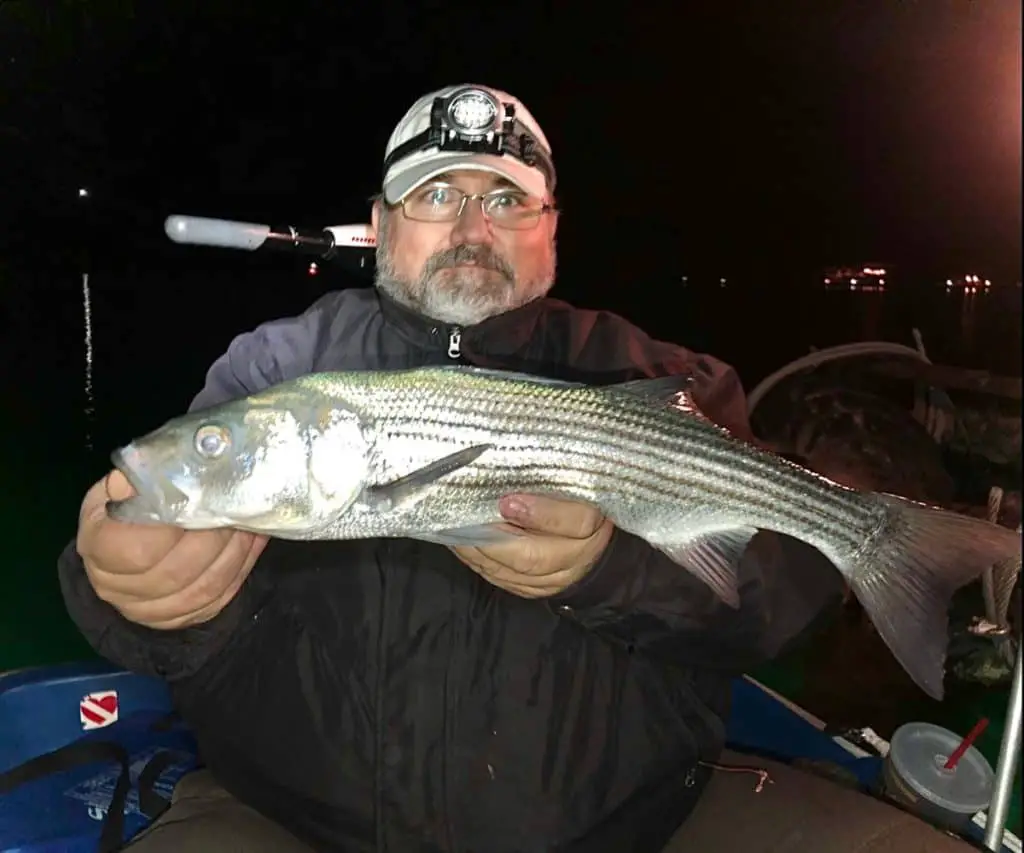
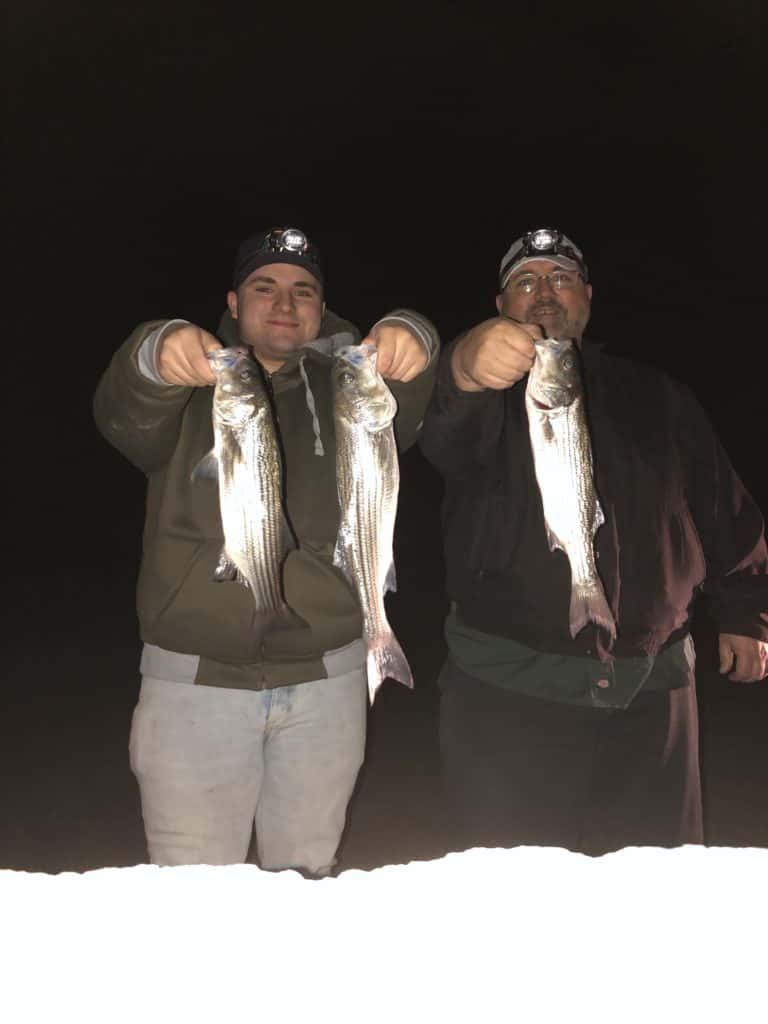
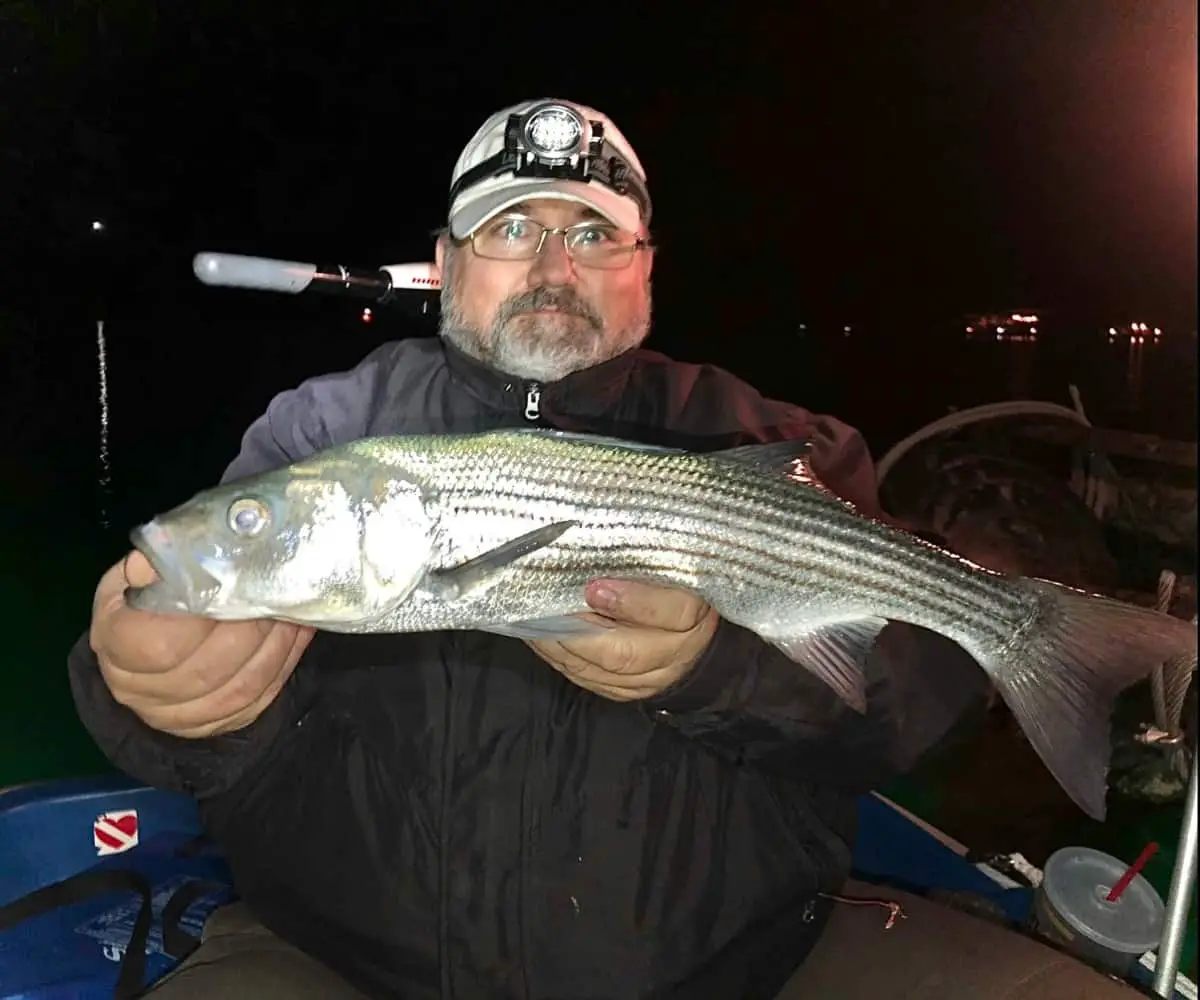
    Striped bass caught at night on a full Moon

    So, is fishing during a full moon good? The cycle of the moon can have a big impact on natural forces, like the tide. This can also impact on the way that fish are reacting to the bait. Because of this, in theory, fishing during a full moon should give you the best chance of landing a fish. There are some species where these impacts will be noticeable. These include; salmon, marlin, trout, and Atlantic swordfish. 

    The way the fish react to the moon phase can also depend on your area. For example, some fish might head to deeper waters, because of the moon’s more powerful glow. You might also want to think about the time that the moon will be rising and setting, as these times tend to cause an increase in fish activity.  While these can be useful tools, there are other factors, like the barometric pressure and temperature, which can impact on whether you are able to land a fish.

    There’s more to landing a fish than just knowing what type of moon phase cycle you’re currently in. Let’s take a closer look at how the moon phase impacts fishing. 

    How Does a Full Moon Affect the Fish? 

    Fishing during a full moon will often make the fish more active. Because of the full moon, the tidal influences will be higher. This can increase the water level at high tide, and make the fish more active.

    The moon can exert a huge influence on the natural waterways. You can observe these effects even in smaller bodies of water. Because of this, many fishermen take note of the phase of the moon and try to learn how it will impact on their local waterways. 

    There are a few key factors that the phase of the moon will be able to influence. First, the full moon is associated with stronger tides. This can mean that the high tide will cause the water level to rise dramatically. This occurs because the moon is having a stronger gravitational influence on the Earth. 

    The tides will tend to change by 50 minutes each day. This is because it takes the moon 24 hours and 50 minutes to rotate around the planet. For example, if high tide wat at 5 o’clock today, it will be at 5:50 tomorrow. This can be useful to help you plan your fishing trips. 

    Because of the stronger tides, the fish will be more active. During this period, they will be looking for food. Because of this, you’ll have a better chance of getting a bite and landing a fish. 

    Another important impact of fishing on a full moon is that the moon will be brighterWhat impact this will have on the fish will vary. For example, if you’re targeting a fish that sleeps during the day, the bright moon might make them less active. On the other hand, if the fish is active during the day, the full moon might extend the bite. 

    The moon phase will also have an impact on the way that the baitfish will react. This is because the stronger currents will change the way that the nutrients along the bottom of the ocean. When the current is stronger, these fish will be more active, this encourages bigger fish to increase their activity. 

    What Fish Are Most Active Around The Full Moon? 

    Each species will be impacted differently by the full moon. For some of the bigger predators, they tend to be more active around the full moon. This is most common amongst species like marlin, salmon, and Atlantic swordfish. 

    There are some species of fish that will be more influenced by the power of the full moon than others. There are a few common reasons why they might become more active during these periods. 

    First, some fish might use the moon cycles to determine when it’s time to breed. This is the case for the salmon and trout. During the period of the full moon, they spawn. Because of this, they tend to be extremely active during these times, giving you a great chance of being able to land one. 

    Another common way for the tides to affect the fish populations is by changing the way that baitfish react. The stronger tidal flows can change the way that they behave. Because of this, some bigger fish might take the opportunity to hunt them more aggressively. This can be the case with the marlin and Atlantic swordfish. 


    For some fish, the brighter moon can also be a big benefit. This can make it easier for them to spot their prey. This might also change behavior, making them more likely to eat during the full moon period. 

    It should be noted that the way that each fish species will react slightly differently to the full moon. For example, there are some species who will have a stronger catch rate in the days before and after the full moon, while you will struggle to catch a bite on the day of the full moon. For others, you might only see the impacts on the day of the full moon. 

    Because of this, it’s recommended that you experiment to see how the fish in your area will react to the full moon. This will give you the best chance of success. 
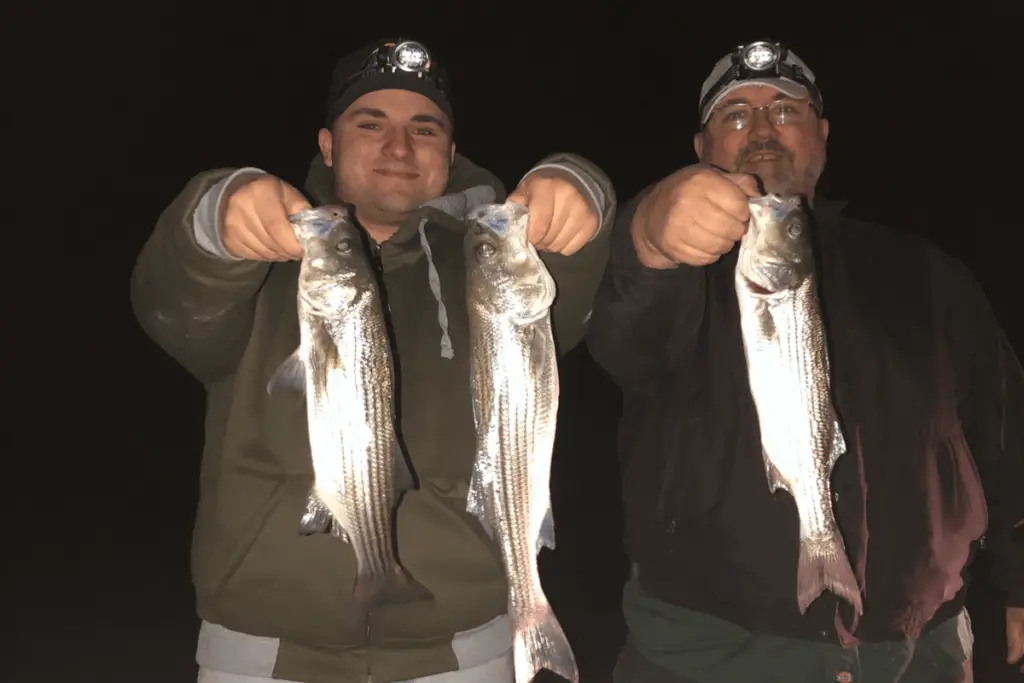
    The author Darren Enns and his son Sheldon with some stripers caught at night

    What Other Moon Phases Affect Fishing? 

    While the full moon is the most well-known phase, there are a few other moon phases that might affect your ability to catch. The new moon might also impact on tides, making them more powerful. It’s also one of the darkest periods. The period of the moon might also impact on how bright it will be. 

    When fishing, there are two moon phases that you will have the biggest impact on the way that the fish act. These are the full moon and the new moon. These will both have an impact on the tides and will bring changes in the lighting conditions. 

    While the full moon is responsible for the highest tides, the new moon is responsible for low tides. This phase can also have a powerful impact on fish behavior. In some cases, the new moon might increase fish activity, giving you a better chance of getting one to bite. 

    The new moon is associated with very dark nights. For some fish, this can be the perfect time to hunt. For example, fish like the tuna tend to be most active when fishing during the day after a new moon and they will be more sedentary at night. 

    During the new moon, it’s possible that they might be more active during the day, as they are finding it harder to find prey at night. If you do intend to fish at night during a new moon, make sure that you are using live bait or a vibrating lure. The movement in the water will help attract the fish. 

    There is a range of moon phases that occur between the full moon and the new moon. This waxing and the waning cycle will often impact on the amount of light when fishing at night. However, apart from this, there tends to be a limited impact on fish behavior. 

    This helpful chart can make it easier to identify the different moon phases. 

    How Can a Fishing Journal Help You Catch More Fish?

    A fishing journal is a place for you to record your insights into fish behavior in your local area. When used properly, this tool can let you predict when the fish will be more likely to bite. As a result, you’ll become a more successful fisherman. 

    One of the best ways for you to improve your fishing is by starting a fishing journal. This is a place for you to record the conditions on the day of your trip and the type of fishing action that you encountered. 

    There are a few distinct benefits to doing this. First, it will help you understand the type of fish that are in your local area and the types of things that they react to. This can make it easier for you to tailor your approach. For example, it can help inform the type of bait that you want to use. 

    Your fishing journal can also give you a better understanding of what type of conditions will deliver the best fish. For example, the fish in your local area might be most active in the days leading up to a full moon. 

    Finally, writing a journal after each trip will give you a chance to reflect on the trip. This will give you some ideas about how you might be able to improve in the future. 

    How Important is the Full Moon When Fishing?

    While the moon phase can be a useful way to predict fish activity, it isn’t the only factor that determines how likely you will be to catch. At most times of the day, you’ll be able to catch a fish. 

    How you should use the moon phase will depend on personal preferences. For example, some fishermen will swear that this is the most important factor that determines whether they’ll catch, basing their whole strategy around the moon phase. Others will tell you to ignore it entirely. 

    In reality, neither of these approaches is a good idea. It’s recommended that you research the moon phase before your trip. This might inform which type of tactics you want to use. For example, if it’s a full moon, you might want to try to use a clear line, as the fish will be able to see more easilyunder the water. It might also help you find which species you want to target. 

    It’s important to remember that, despite the moon phase, you’ll be able to catch a fish at any time

    How to Fish During a Full Moon? 

    When fishing during a full moon, it’s best to consider the species that you want to target and how they might be affected by the full moon. This can inform the type of bait you use and the depth at which you set it. 

    There are many ways that you will be able to capitalize on the full moon to catch a fish. The techniques you use will need to depend on the type of fish that you are trying to land. 

    In some cases, the fish might not like the brightness of the moon. As a result, they might head into the deeper waters. When this happens, you’ll need to make sure that you’ve set your bait lower, to compensate. 

    In most cases, the fish will still be attracted to the type of bait that they usually eat. However, you might want to experiment with a few different options, to find the ones that work best in your local area.

    Remember during a full mood, the fish will be able to see more clearly under the water. For this reason, a vibrating lure or live fish might be more effective. This is more lifelike and will have a better chance of delivering a bite. You might also want to consider using a lighter line, as this won’t be as noticeable. 

    Is Fishing During a Full Moon Safe?

    During a full moon, they’ll be a more pronounced impact on tidal activity. As a result, this can make it more dangerous to fish in rocky areas, as the water might rise more rapidly. If on a boat, be prepared for stronger tides. 

    Because the full moon can have a big impact on the power and speed of the tide, you’ll need to make sure that you stay safe. There are a few ways that you will be able to do this. 

    If you’re fishing from the shore you want to try to avoid rocky areas or places that don’t have a nearby exit point. During a full moon, the tide will come in more rapidly. In some cases, this can leave you trapped. If this happens, you might be in a lot of danger. 

    If you’re on a boat, you’ll need to make sure that you are taking into account the stronger currents. Because of this, you should spend a little extra time making sure that you’ve anchored properly. You don’t want to accidentally cause the boat to drift into dangerous territory. 

    You might also want to think about the type of weather conditions that you will be facing during the trip. As an example, there might be times when it’s expected to have rough waves or driving rain. If it’s too dangerous, it’s best to stay at home and wait for the weather to clear up. 

    Is it Best to Fish During the Day or at Night During a Full Moon?

    Whether you’ll have better results fishing during the day or at night will depend on the type of fish that you are targeting, as both approaches have pros and cons. In general, though, the fish tend to be more active at night. 

    When deciding what times to fish, you might want to think about the type of specie that you want to target. This will tell you the times of day and water conditions that they tend to be most active in. Your fishing journal can often help you find this information. 

    The different times of the day will each bring their own set of pros and cons. For example, sunrise and sunset tend to be the best times for fish activity. This tends to be the time where the fish are changing between different ocean depths. 

    In warmer weather, most fish will stick to the deeper areas, where it’s cooler. As it starts to warm up, they might head closer to the surface. As a result, you can use the temperature to help you decide where to set your bait.

    There are a few reasons to fish during the day. For example, this tends to be one of the most convenient times to fish. It might also be the preferred time for some species to hunt, giving you a good chance of hooking them. You will also be able to see what you’re doing, as the sun will be shining overhead. 

    However, many species of fish might be more dormant during the day, only coming to life at night. Because of this, you might have a better chance of one during the nocturnal hours. Fishing at night can also bring a few other benefits. For example, there won’t be as many other people about, so you won’t have as much competition to contend with. 

    If you’re planning on fishing at night, you’ll need to make sure that you take a few extra safety precautions. For example, you’ll need to make sure that your boat has been well lit. 

    What Other Weather Conditions Impact Fish Activity? 

    The moon phase isn’t the only factor that can influence how likely the fish are to bite. You should also consider whether there’s going to be high or low pressure. It can also help to think about the heat and the water conditions. 

    The moon phase can be an interesting factor that affects how much fish activity you’ll be able to achieve. However, it’s not the only thing that will impact whether you’re able to land a fish. In this area, you might want to consider a few other weather conditions. 

    First, you can think about whether you can expect a high or low system. These barometric pressures might impact on the way that the fish are behaving. It’s common to find that a lowpressure system will give you a better chance of landing a fish. If it starts to rain, you might have an even higher chance of landing a fish.  

    As we mentioned earlier, the heat can also impact on the type of fish that you’ll be able to land. On hotter days, they tend to drop down deeper. However, as the weather starts to grow colder, they tend to come closer to the surface. 

    Finally, if you’re heading out on a boat, you might want to check the sea conditions. In this case, the swell might stir up nutrients on the ocean floor, making the fish more active. However, more importantly, the size of the waves can determine whether it will be safe for you to continue fishing. For most boats, anything over two meters is considered dangerous

    How Does Moonrise and Moonset Impact Fishing

    The times that the moon rises and sets might cause the fish to become more active. When combined with a full moon or new moon, these times will give you the best chance of landing a fish. 

    It’s been well known that the time the sun rises and sets has a big impact on how active the fish will be. This is often the most active period of the day, where you’ll have the best chance of landing a fish. 

    However, the times that the moon rises and sets might also have an impact on the way that the fish are behaving. These are the times where the gravitational effects of the moon will be at their strongest. As a result, these times signal when the low tide will be occurring.   

    There are many different ways that you’ll use this information. For example, some fishermen can use this to plan the best times to leave on their trip. At low tide, it will often be hardest to launch your boat or return to the shore. As a result, you might want to make sure that you’ve left by moonrise and moonset. 

    When used in conjunction with the sunset and sunrise information, this can give you the best times for fishing. As a general rule, 45 minutes before and after each of these points will bring the most activity, and tends to be the best times to have your line in the water. This effect will be particularly powerful when combined with a new moon or full moon. 

    How Do I Know What Time Moonrise or Moonset is? 

    There are many online apps that will tell you what time the moon is expected to rise or set. However, you should be aware that there are a few factors that will impact these times, like your altitude, position, and moon phase. 

    Because of how important the moonrise and moonset are, it’s important that you understand how to calculate these times. In most cases, you’ll need to use an online calculator, to get an exact time when these astrological events will occur. When you do this, you’ll need to provide the latitude and longitude, as this will impact on the time that the moon will be appearing over your location. 

    There are a few ways that you can get a rough estimate of when the moon will be expected to rise or fall. Most importantly, you’ll need to know what phase the moon is currently in. During the new moon period, the moon rises close to the time that the sun is rising. During a full moon, the moonrise occurs closer to the time that the sun is setting. 

    You can use the below table to get a general idea of when the moon will be rising. 

    Moon PhaseExpected Moonrise Time
    New MoonNear Sunset
    First Quarter MoonClose to Noon
    Full MoonNear Sunrise
    Last Quarter MoonNear Midnight
    FishinMoney

    Like the tides, the moonrise and moonset will occur 50 minutes later each day.  This will allow you to calculate when they will be occurring tomorrow. In some cases, fishermen might want to set an alert for these times. This will ensure that you’ll be able to capitalize on the increased fish activity. 

    Related Questions• Why do some fish not bite during the day in a full moon? Though there a few reasons why this might be occurring, it’s more likely because of the brightness of the moon. They will be more likely to feed during the night. As a result, they won’t be as hungry during the day. This can continue for a few days either side of the full moon.• Do fish bite better during high or low tide? For most species, they will be most active during the period where the tide is changing. This has the strongest currents. Generally, during the peak of high or low tide, the activity tends to drop off. You can use the moonrise and moonset times to determine when the peak of low tide will be reached.  

    Final Thoughts

    The moon phase can have a big impact on the tides. This, in turn, affects how active the fish will become. Generally, the full moon is associated with an increase in fish activity, giving you the best chance of landing one. However, the full moon isn’t the only thing that will impact on how likely you are to land a fish, you might want to consider the weather conditions and the time of day that you are having your trip. By doing all this, you’ll give yourself the best chance of catching.

    Are you seriously looking turn your hobby into a business? I recommend joining Income School. I’ve been an Income School member for a little over a year and joining was the best decision I’ve made in working toward my business goal of making money online.

    If you have social media or a blog or even a business in fishing like a fishing guide, you can make money by giving away $10 store credit to your friends and followers. Click Here to find out how
  • What Do Carp Eat For Food

    What Do Carp Eat For Food

    There is no question that the carp is a fascinating type of fish for you to try to catch. They are a very unique species in that they are not only prized throughout the world for their taste, but the koi version of carp has become well-respected as an ornamental fish.

    Certain species of carp also have the ability to survive for literally weeks in watery environments without oxygen, simply because they make use of glycogen, turning it into ethanol and carbon dioxide. So it’s definitely a unique fish, but how do you catch it?

    Well, one way is to study what the carp eats. Take a look at some interesting facts about the carp’s diet below: 

    here is a study about the feeding necessities of carp.

    The Natural Diet of the Carp 

    First, let’s examine the natural diet of the carp. For starters, this fish breed enjoys eating both plants and animals, and that means they are an omnivore. Interestingly enough, the carp actually has teeth inside their throat, and that can assist them with crushing hard objects such as the shell of a snail, clam nut, leech, crayfish, or mussel. Anglers have found other things that carp will eat as I have described below for your benefit.

    Carp will also have an immense preference for the larvae of water borne insects such as water beetles or true flies. You will also often find them eating worms or algae as well. Here are some examples of other specific items that the carp will just love to feast on: 

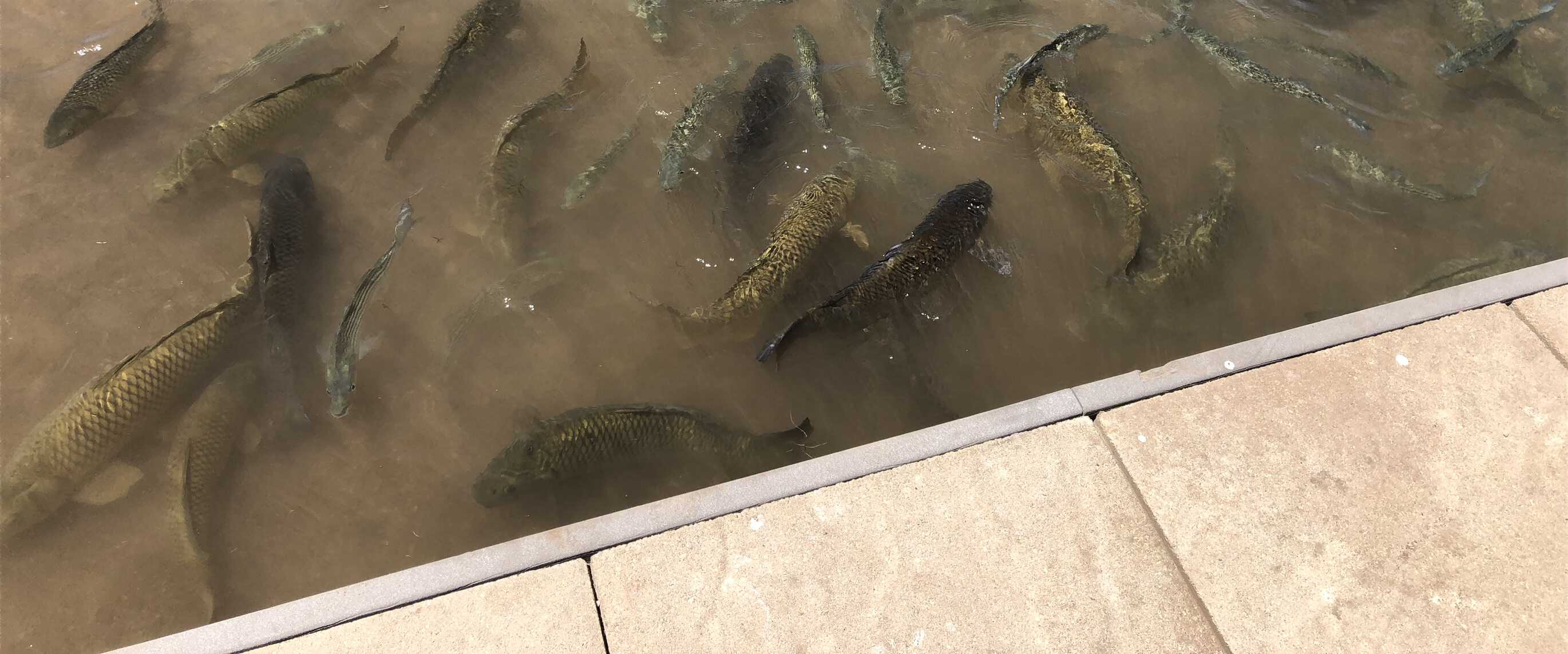
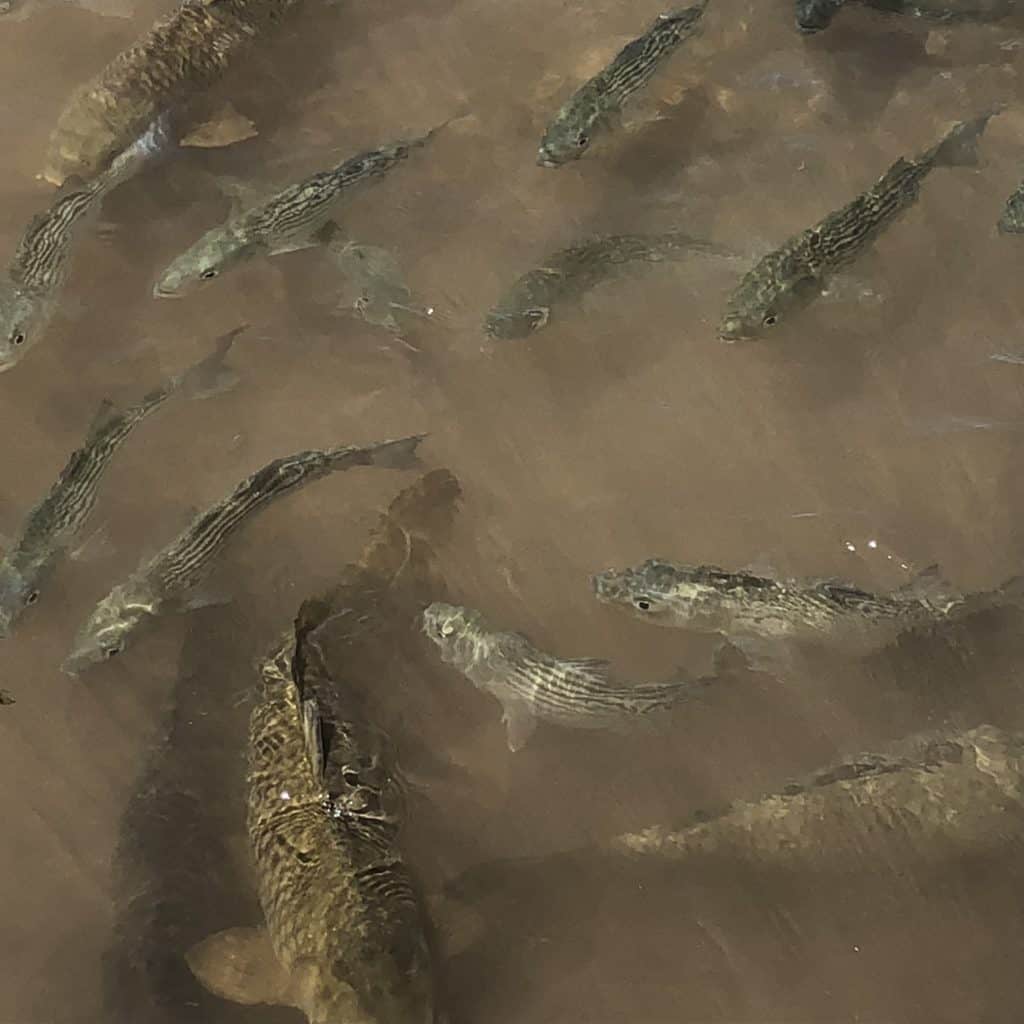
    carp and striped bass at Lake Mead Nevada

    Zebra Mussels 

    Much like other types of small crustaceans, the carp will often go after this prey simply because they have the ability to crush their shells with their powerful molars. The edible flesh inside the shell of the zebra mussel is almost considered a delicacy for many different breeds of carp. 

    Insects 

    Carp will not only feast on insect larvae, but they will often enjoy the insects as well themselves. One tell-tale sign that the carp are beginning to go after insects would have to be when you see them creeping to the surface.

    This often means that damselflies, horseflies, dragonflies, and many other insects that dwell near the surface of the pond will be no match for the carp, and you will soon hear a suction-like sound as they inhale another insect victim. 

    Food SourceCommon CarpMirror CarpKoi Carp
    PlanktonYesYesYes
    InsectsYesYesYes
    VegetationYesYesYes
    MollusksYesYesYes
    CrustaceansYesYesYes
    Fish EggsYesYesYes
    PelletsYesYesYes

    Note: This table shows that common carp, mirror carp, and koi carp all have similar diets, which include plankton, insects, vegetation, mollusks, crustaceans, fish eggs, and pellets. However, it’s worth noting that the diet of the carp can also vary depending on their environment and the availability of food.

    Invertebrates 

    Carp also love to scrape off invertebrate organisms off the watery floor as well. They will often get their fill of such things as corals, sea cucumbers, corals, flatworms, threadworms, earthworms, and leeches. They are bottom feeders, after all. 

    Nuts and Berries 

    Yes, carp will definitely eat nuts and berries. They will eat the berries because they enjoy the taste. Additionally, part of the reason they enjoy nuts is simply because they can.

    Once again, don’t forget that they have those nasty molars in the back of their mouth helping them munch on things like this. Take this to heart: if you are fishing for carp, then chances are you should try for them in an area that has an overhanging tree branch.

    Although it depends on the specific point in time, these carp love to congregate around these areas to have a tasty nut or berry snack. 

    Leeches 

    Indeed, there have been many accounts of fishermen using leeches as a bait and then unintentionally catching carp instead of their intended catch.

    This is because carp are always on the lookout for scurrying prey and leeches have a tendency to move around a lot even on the bait hook. However, you can definitely use this to your advantage and include leeches in your carp-catching arsenal. 

    Crayfish 

    Crayfish will occur naturally in most lakes and rivers throughout North America and Europe. Like carp, they too are a bottom-dwelling type of fish.

    They are a tasty delicacy to the carp, and there are some who say that the crayfish are much like candy to the carp.

    Moreover, part of the reason that carp love to eat these crayfish is because they are a great source of protein to the carp. Additionally, crayfish are fairly large, so it’s almost akin to a steak dinner for the carp. It’s definitely something that they will regularly want to forage for. 

    Crustaceans, Period

    Carp just simply have a thing for all kinds of crustaceans of any sort. They really go to town on them simply because of those tough molars they have.

    Besides the ones we’ve already mentioned, they also enjoy snails. While it’s not something that they will deliberately search for, if a carp comes upon one of these snails, they will treat them no different than clams or mussels.

    These snails might be able to use these protective shells against other predators, but the carp will be able to eat the snail at will. 

    What of the baits for carp? 

    Of course, now that you know all about the natural foods that a carp prefers, if you are still interested in fishing for them, you should be aware of the bait they are accustomed to as well. Since carp is a fish that enjoys to eat, you should take into consideration what type of bait to use. The good news is that there are plenty to consider. 

    Corn or Maize 


    Even though it might not have been your favorite vegetable growing up, the fact remains that carp cannot get enough of corn or maize. Additionally, it doesn’t really matter whether the corn is in solid form, canned, frozen, or even in creamed of peached form.

    Indeed, corn is actually considered to be a staple in the carp-catching industry. There have actually been numerous individuals who have not only caught their intended catch of carp while using corn, but they have also caught other species such as pike or muskie!

    Of course, it might seem very strange to you that corn would be such a wonderful option for catching carp. Granted, while it doesn’t naturally appear in aquatic ecosystems, it has been proven by many people even with video that carp will indeed catch corn.

    Part of the reason for corn being so popular with these carp is because it is rich in carbohydrates and the remaining parts of the corn is composed of various parts of fiber.

    Thus, part of the reason why the carp love it so much is because it gives them an instant pick-me-up and helps them continue to do what they do best – forage. 

    Bread 

    Yes – you read that right – bread. This type of bait might seem like an incredibly cheap option, but if you use it right it can be absolute dynamite.

    The best thing about using a slice of bread for catching carp is that it consists of at least 75 percent carbohydrates, which yet again is a good way to give the carp some quick energy.

    The fact that the bread has a load of protein, fibers and fats within the remaining 25 perfect means that it will not only be easy for the carp to digest, but it will help them about their day in a solid way. This is why it’s good for bait. Carp will seek this out anyway, so they will attack this every time it hits the water. 

    Indeed, there are many individuals that have had success with bread in the springtime when the carp are just barely beginning to wake up and want something that won’t roughen up their metabolism.

    Obviously, there are some difficulties with bread, such as the fact that they tend not to last long in the water and any surrounding water fowl might go after them too. However, as long as you barb your bread right on the hook this shouldn’t be a problem. 

    Boilies 

    Of course, these boilies are a bait that has been invented. However, the boilies are a great bait for the carp because of the added ingredients that they have.

    Simply put, a boilie is a wad of flours, eggs, and various attractive additives that have been rolled together into a ball. These ingredients are usually mixed into a paste and then after they are fully cooked they are rolled into a ball-like shape.

    They are hard-boiled, and after they leave the appliance they are air-dried for a 24-hour period so that they become fully hardened. This process is important because it allows the bait to last a longer time within the water. 

    Even though this is simply an invented bait, it has been found to be incredibly effective at catching carp.

    Indeed, there have even been fishermen in France that have been pleased to notice that the carp will even abandon their choice of natural food and simply go for one of these boilies! Of course, the goal of the boilie is for the carp to view this addition as a viable food source that is full of nutrition.

    Unfortunately, the best way to buy this fish would be in bulk, but that can get expensive. However, sometimes you get what you pay for. Simply put, these boilies will last far longer than bread or corn, and you won’t have to contend with nuisance fish either. 

    Conclusion: Carp: An Invasive Species 

    Although they had a promising beginning on the North American continent, the carp is unfortunately now viewed as a species that is problematic at best and invasive at the worst.

    It all began with immigrants to the United States in the mid-1800s. There were many of them who were surprised that the United States did not have any type of carp population. You see, this fish species had been prized in Asia as a human food choice for 4,000 years and it had also made its way to Europe where it had been held in the same regard for 2,000 years.

    Indeed, there were even Austrian princes who had as much as 20,000 acres of carp in their royal ponds. 

    So what went wrong? Well, part of the reason is because carp are a very hearty breed of fish. They not only can survive without oxygen, but they are heavily tolerant of polluted waters as well.

    They were imported to the United States by several different entrepreneurs, including one Julius Poppe, who began importing the carp from Germany in 1872.

    He started off with five, but he eventually ended up with a whole farm of them in California by 1876. As is common with the entrepreneurial spirit, Mr. Poppe truly thought he was on to something:

    “There should be at least one person in every U.S. county who will raise this fish and sell it to others so that they can fatten it for their own eating table,” he said. “The carp is cheap but sumptuous and also quite convenient.

    Indeed, they literally can be eaten throughout the year.” However, it would only take a few decades before the carp would fall out of favor. Indeed, they were such a hearty breed that they began to take over all parts of the nation’s waterways. 

    Another part of the problem is that carp literally breed like rabbits. One female can lay millions of eggs, and if even a small fraction of these survive into adulthood, you can definitely see how pervasive this species can become.

    They are also bottom feeders, which can cloud up a river or lake and make it difficult for native predatory species such as walleye or pike to see their prey.

    Carp can also disrupt the vegetation in these waterways, which in turn can impact other organisms and eventually can even negatively affect the health of the whole entire water system. 

    Why am I saying this? Well, it’s because the species is so pervasive that many government bodies will actually encourage you to fish for this species.

    By knowing what they eat, you will have a better chance of landing one of these carps. Plus, you usually will get to keep what you catch! Of course, you will have to properly season what you catch simply because there are some who claim that carp has a very bland taste to it, but still, it’s definitely a very rare occasion when you can keep the fruits of your fishing labor. 

    If you have social media or a blog or even a business in fishing like a fishing guide, you can make money by giving away $10 store credit to your friends and followers. Click Here to find out how
    Are you seriously looking turn your hobby into a business? I recommend joining Income School. I’ve been an Income School member for a little over a year and joining was the best decision I’ve made in working toward my business goal of making money online.

  • Is Fishing Harmful To Fish

    Is Fishing Harmful To Fish

    They say there is nothing in life that is without controversy, and this is certainly true when it comes to the pastimes that we all hold dear. Indeed, it doesn’t matter what recreational hobby you choose, there will be some debate within it over something. Although fishing seems like it would be devoid of such issues, unfortunately it has its fair share as well. As you are out on the lake, do you ever think about whether the fishing you are doing harms the fish? That is a good question, but it really isn’t one with an easy answer. 

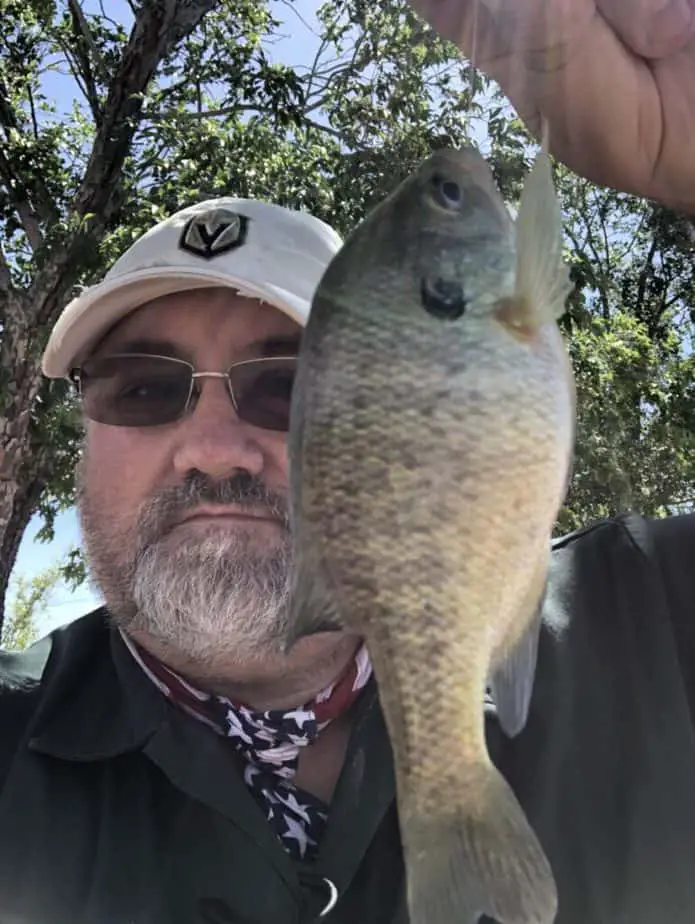
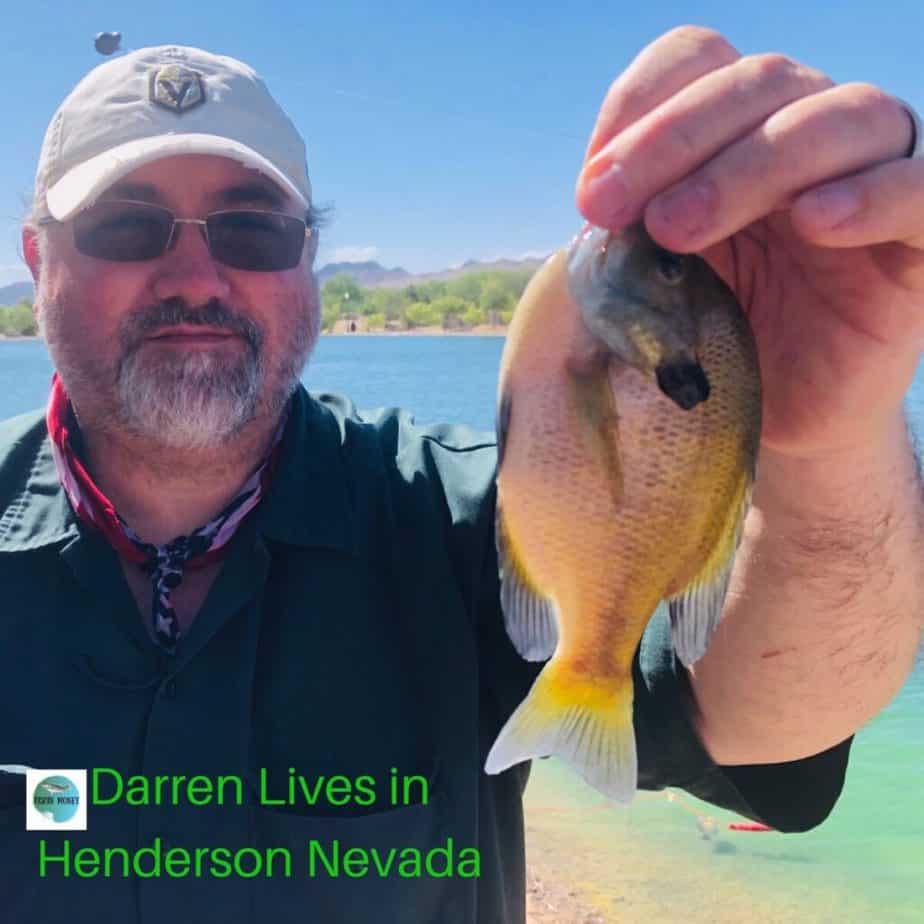
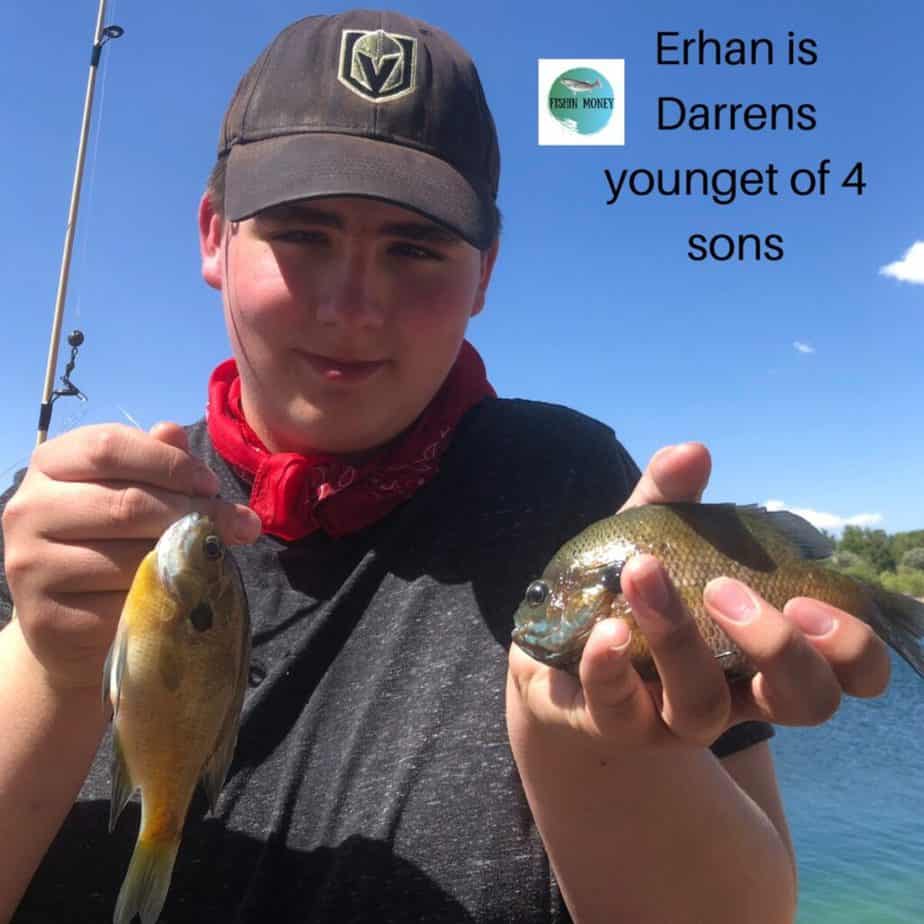
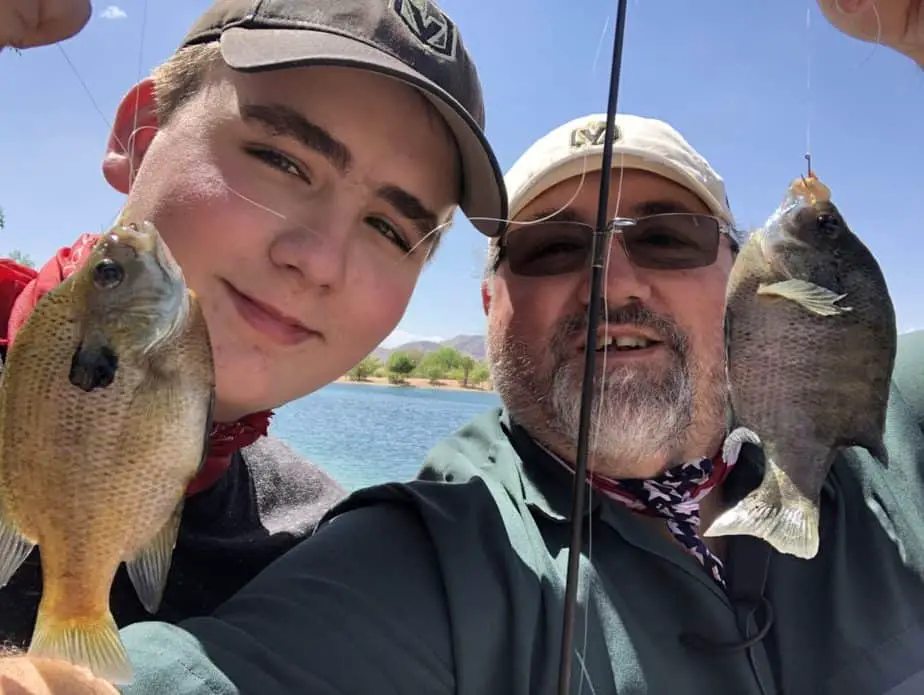
    The author and his son catching and releasing some bluegill

    Of course, if you talk to a PETA official, they will be very adamant in their answer: They will punctuate it with a big “YES!” and tell you to avoid your fishing hobby at all costs. However, this isn’t as cut-and-dried as these PETA individuals would have you believe.

    Naturally, if you’re like the millions of other anglers out there, you’ve been raised on the belief that catch-and-release is the best way to engage in your passion. However, there has been research in the last decade – albeit hotly-debated research – that now claims that catch-and-release actually gives the fish some type of psychological trauma.

    So, where’s the middle ground here? Do we all need to stop engaging in our hobby and start taking up chess, painting, or poetry? Or is it possible that we can continue this pursuit without any guilt, or without the fear of some PETA radical holding up a megaphone to our face every time we cast out a line? The answer to that question probably lies somewhere in the middle, but here are some angles that we could look at. 

    Does it really matter in the first place? 

    We’ll start off with a bit of a rhetorical question here. So what? So what if fishing is harmful to the fish? Isn’t catch-and-release so much better than just keeping the fish, killing the fish, and eating it? Moreover, isn’t it a little bit ridiculous to talk about how inhumane it is to do catch-and-release, anyway? Here is a play on words for you: when it comes to catch-and-release, yes, the fish is indeed DEDICATED.

    However, what about the other animals we encounter? When you consider the fact that most of us as human beings regularly consume hot dogs, which are frankly made from the remains of pigs after all of the other parts have been harvested and made into either ham, bacon, or sausage.

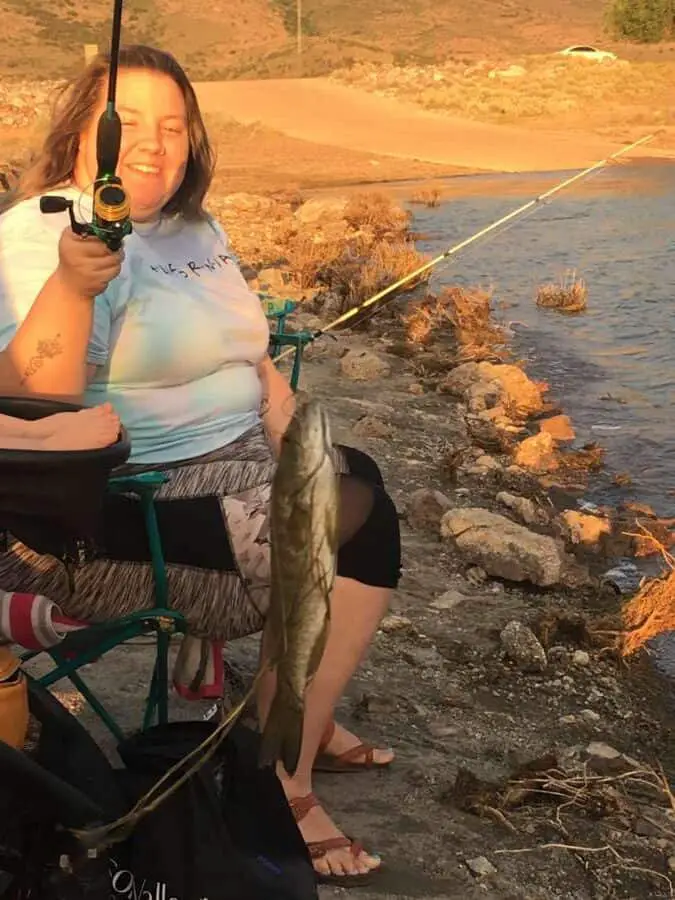
    Miranda catches her first fish. It’s a smallmouth bass

    Thus, essentially, any time that you eat ham, bacon, sausage patties, or hot dogs, you are being much worse than when you are engaging in your fishing hobby. Do you enjoy a nice juicy steak every now and then? Same difference. What about those pork chops you had the other day?

    Well, you are being cruel to the pig yet again by eating from its spine! Thus, performing catch-and-release is much more humane to the fish than some of the other animals that we regularly use for food. 

    What about us humans being at the top of the food chain? 

    Of course, many PETA activists will protest about us being at the top of the food chain, and doesn’t that mean that we have a responsibility to these lower forms of life? Well, insofar as us being at the top of the food chain, the answer to that question is yes and no.

    Yes, we might be at the top of the food chain because of our ability to reason and our ingenuity. However, if we are running from a grizzly bear, do you think we are at the top of the food chain then? Absolutely not, and trust me, the bears are not going to form an organization called BETH (Bears For The Ethical Treatment of Humans)!

    No, the bear doesn’t care if it kills us; they just look upon us as food and nothing more. Moreover, if you are swimming in a sea of great white sharks, you unfortunately will quickly figure out that at least in that situation, even as a human being you are not at the top of the food chain. These animals don’t care when they harm us, so why should we? 

    Do fish feel pain? 

    Of course, the other wrinkle to all of this is a question that someone with PETA is likely to throw at you: what about your fish feeling pain? What about when your fish is being caught and it is struggling against your hook? Isn’t your trout, salmon, bass, or catfish going to be in terrible pain over this?

    Well, again, there is much debate to this, and just tell your PETA friend that there has actually been numerous studies that claim that no, the fish DO NOT feel pain. Huh? Yes, you read that right…several very intelligent university researchers have come to the conclusion that fish don’t have the capacity for pain. How so? Here is their explanation: 

    The fish lack the brain power. 

    Simply put, these researchers came to the conclusion that the fish simply lack the brain function to feel pain. We as humans can very easily feel pain because we have a portion of our brain called the neocortex that is highly developed. Of course, in our case this is a good thing simply because if we didn’t feel pain we would be in danger of getting further hurt and damaging our bodies in a litany of ways.

    However, we digress here. Back to the fish. The best way to sum this up is that the fish simply don’t have a highly developed neocortex. Yes, it’s there, but it’s not even remotely as advanced as the humans trying to catch them have it. 

    What about the fact that fish have “nociceptors”? 

    Of course, the next thing that your garden variety anti-fishing zealot will claim is that fish do indeed have that thing called the “nociceptor”, which in humans is responsible for helping us to feel pain.

    However, that being so, there was still some research from universities as prestigious as the University of Wyoming that posited that while the fish do indeed have these components, they are so minute that the only they do for them is to trigger an instinctive, unconscious reaction. In layman’s terms, the fish aren’t feeling pain, it’s just another thing they do, akin to spawning in the spring. 

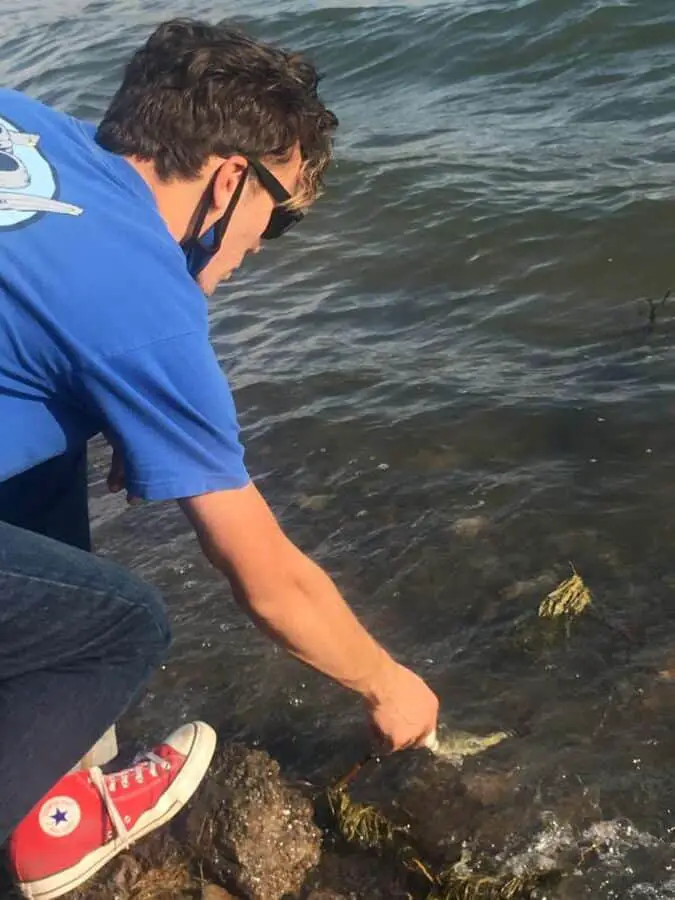
    Lorin Enns releasing a fish that he caught at Enterprise reservoir in Utah

    Fish react to pain much differently than humans do. 

    Because human beings have a cortex, they usually will react to pain through a system of stimulus-experience-consideration-reaction. For example, let’s say a human being accidentally touches a hot surface, such as a stove. First of all, they experience the stimulus of the hot surface, Then, they “consider” it.

    What does this feel like? Well, it definitely hurts. Then, they react. In this case, the reaction would most often be simply just pulling their hand away. Of course, ask any angler and they will tell you that it certainly appears that the fish are responding to the pain of being hooked.

    For instance, they might viciously swim or flop to avoid them. However, according to these researchers the fish are simply engaging in a “one-directional” mental process. They are simply just automatically responding to the stimulus. 

    Indeed, there was even one researcher who took it a step further: they actually did something to the fish that would have been very disturbing and very painful had it been done to humans. They literally drilled hole in a fish’s head and yet the behavior of the fish was not even significantly altered that much at all! The fish almost seemed oblivious to the fact that it was now a deformed fish with a hole in its head. 

    Furthermore, this researcher also argued that there is a long list of behaviors in fish that would appear to be due to conscious thought, but are actually just simply automatic learning and avoidance behaviors and nothing more. 

    If you want to read a research report about fish pain you can check out this PDF here.

    There is still a lot we don’t know about conscious thought in other organisms. 

    Even though there is a lot of debate on this topic, science hasn’t proven conclusively that fish are capable of conscious thought. Most of the time, the individuals that insist that fish cannot feel pain will simply point out to the detractors that they also know very little about the conscious thought of fish.

    Either way, no one will really know completely what goes on in the mind of a fish. Moreover, when it comes to studying conscious thought in marine and animal life, science still doesn’t have any completely accepted fundamental laws. 

    You would be hard-pressed to find anyone who cares more about the fishing stock than an experienced angler. 

    Although it’s been a long process, most anglers have now learned that simply doing catch-and-release activities is much more humane to the fish than the typical catch-and-kill methodology. First of all, these anglers realize that it will help the fishing spot continue to have a good size and number of fish. Secondly, they are realizing that they can continue to be engaged in their hobby much easier by simply throwing the fish back. There have been a number of studies from fisheries that show that at the minimum, 95 percent of released fish survive, and in most cases up to all (100%) of the fish live on when they are simply caught and released. 

    Still, even though there are plenty of people out there who believe that it is perfectly humane to do catch-and-release with their fishing pastime and who don’t feel that fishing is harmful to fish, there are still some anglers out there who might still be in doubt over it. To those who feel this way, I say that there is no reason for you to abandon the hobby altogether. All you have to do is just employ some safe catch-and-release practices. Think about doing some of the following: 

    Perform the catch-and-release quickly. 

    After you catch the fish, handle it as quickly as possible. This is especially true in warmer-weather, because cold-blooded species of northern pike or walleye will get stressed very quickly.

    You should release the fish as quickly as possible. Have your camera ready so that you can get a good photo and then don’t waste any time simply throwing the fish back. You also should avoid putting the fish in a live well, as that has a tendency to reduce the odds of survival. Fish in these circumstances will often have much higher mortality rates. Even individuals at tournaments have noticed this. 

    Avoid touching the gills of the fish. 

    Another thing that you never want to do is to touch the gills of the fish. If your fish begins bleeding from the gills, it is basically a foregone conclusion that they are going to have serious problems and probably won’t survive. 

    Avoid touching the fish with your bare hands. 

    Another mistake that some anglers make would be in attempting to touch the fish with their bare hands. Indeed, the last thing you want to do is have a fish’s skin dry out on you. The reason is simple: all fish scales are composed of protective mucus that help prevent them from having reactions to exposure and from drying out too fast. You should consider wearing gloves to help assist the fish that have been caught. 
    Use the right hooks.  
    Finally, when it comes to catch and release, one of the best things you can is to use a circle hook. This is because it will come out of the fish much easier than hooks with barbs on them. 

    Try to avoid exhausting the fish. 

    You also should try to bring the fish to the shore or to the boat as quickly as possible. If a fish is getting exhausted, it literally could be a death sentence for them. 

    Conclusion 

    Although it won’t ward off everything, if you simply follow some of these simple practices, it will help you immensely in avoiding harassment from those who think fishing is inhumane. Plus, it’s simply the right thing to do because it’s easier on the fish. Fishing is both an art and a science, and you should keep these two principles in mind when you decide to fish.  

    Are you seriously looking turn your hobby into a business? I recommend joining Income School. I’ve been an Income School member for a little over a year and joining was the best decision I’ve made in working toward my business goal of making money online.

    If you have social media or a blog or even a business in fishing like a fishing guide, you can make money by giving away $10 store credit to your friends and followers. Click Here to find out how
  • When Should You Go Fishing

    When Should You Go Fishing

    Fishing is a pastime that has been enjoyed by literally millions the world over. Indeed, individuals even get into debates over the best type of fish to catch, the best lines to use, and even whether live bait or lures are better to use for their fishing hobby.

    Naturally, there are even people who will talk about just when exactly the best time to go fishing in the first place would be. Of course, the debate won’t be settled with this article, but we can weigh our opinion here as well.

    Generally speaking, morning and evening are best for fishing times during the day. Most people would argue that spring time is the best time of year to go fishing as the fish are hungry and protective of their spawning beds which makes for fish that will attack your lure.

    When you answer the question, However, “When should I go fishing?” there are a lot of variables that you have to answer. It will be different for someone living in Minnesota or Canada than it will be someone living in the Deep South or in Texas. However, we will do our best in answering that question thurougly and I think you will pick up some tips that will increase your chances of getting a lunker.

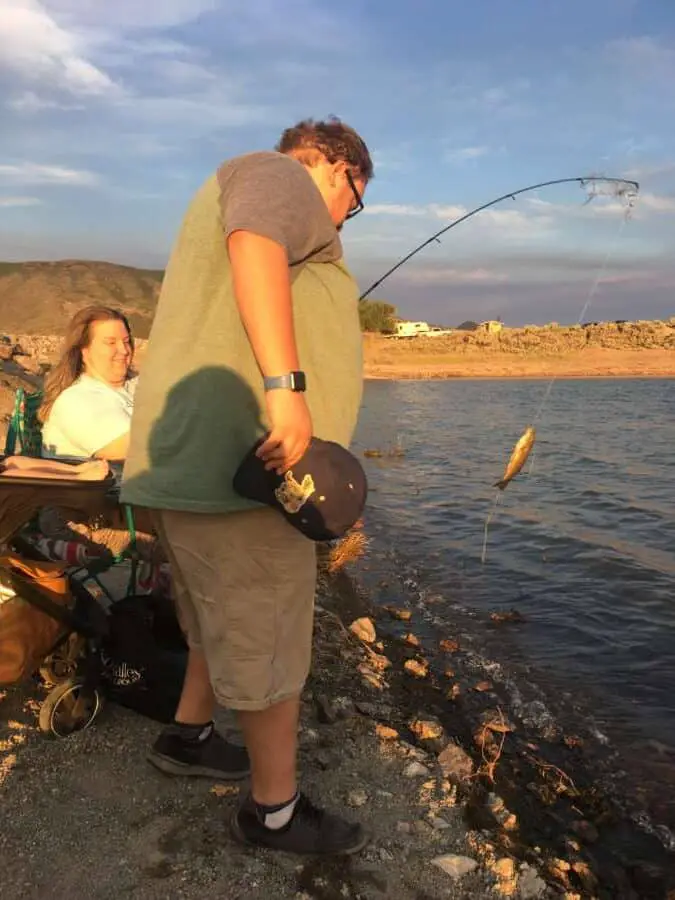
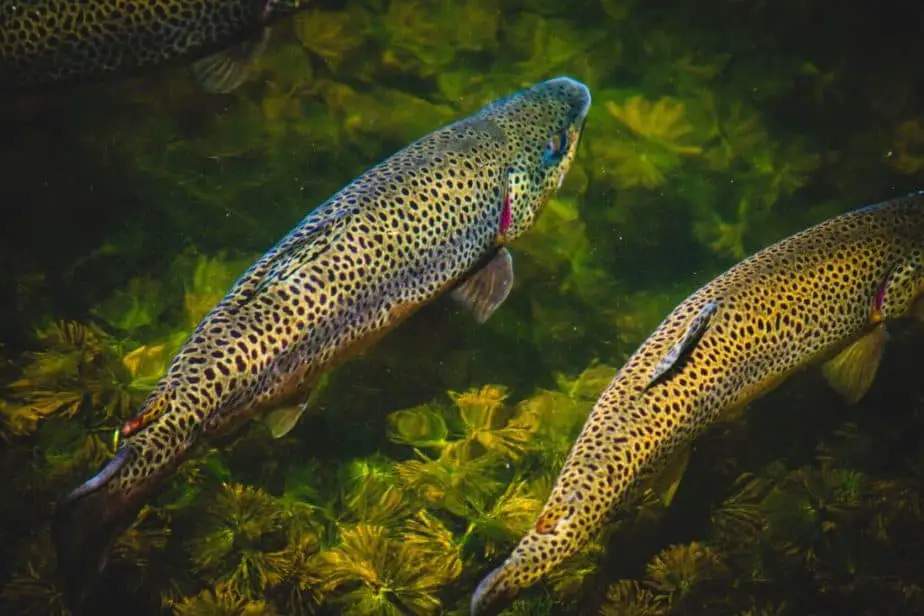
    Trout catch
    My daughter-in-law Miranda caught her first fish ever.

    Take a look at some of these variables: 

    For starters, keep the time of year in mind. 

    The fish behavior will always be dictated by the time of year. Much like human beings, the fish will all do certain things based on the seasons. If you really want to fish well, you will realize what most seasoned anglers already know: whether the fish biting only depends on the environment around them. Seasoned anglers will also plan their trips accordingly.

    They are motivated to get the “big one”, so of course they are going to strategize. The seasoned anglers will know what to do for each and every season. 

    Angling For Fish in the Summer 

    First of all, let’s take a look at fishing in the summer. In the summertime, there is plenty of abundant food for the fish to find. Additionally, there is also a multitude of underwater foliage for the fish to use to take cover.

    Thus, even though the climate is good for the would-be fisherman, summer fishing does have its share of challenges. First of all, you need to realize that as soon as late morning to early afternoon, the fish are going to go off to the cooler waters and possibly go away from your fishing spot.

    Obviously, this means less fish for you to catch. Thus, when you are fishing in the summer, you should focus on trying to catch them from about the dawn to the middle of the morning. That old saying, “the early bird gets the worm” is definitely a true statement in this case. 

    Of course, if you have work commitments during this time period, you could also try fishing during the afternoon or early evening. This is when the summer fish will get a bit cold in the deeper water, and so they will head back closer to shore in order to take advantage of that warmer water. Fishing is often better during this time of day, with better chances of a catch as a result. 

    Fishing in the Fall 

    The fish won’t bite much from the dawn to the early morning because the water will be too cold. They will yet again usually be in warmer waters. However, the fish will get more active from the latter parts of the morning to just after lunchtime.

    They will also start coming to the surface once the water starts warming up. Be aware that the fall is also the prime time for many fish species to try to put on some extra, so they will usually be looking to join schools of fish looking for food. Thus, you should adjust your bait accordingly. 

    Fishing for striped bass
    The author and his son with some striped bass from Lake Mead Nevada

    Watching Out For Fish in the Winter 

    Surprisingly, most people who try fishing in the winter seem to enjoy it because it actually can be a rewarding experience. First of all, there aren’t as many anglers out on the water because most will prefer the warmer weather.

    Moreover, you will often have the opportunity to try for different species of fish that are not as prevalent during the other parts of the year. During winter, one of the most important things to understand would simply be knowing the right time to go fishing.


    This usually is between 10 A.M to 4 P.M. During this time the fish are usually a bit warmer and more prone to bite on your bait or lure. 

    Of course, if you are going to try for winter fishing, you should make sure your equipment is in top shape. For example, watch out for the reel bearings that you use for fishing. If it was stiff or noisy in warmer weather, it was already at a disadvantage.

    Chances are it will break down completely in a winter environment. Moreover, the old grease and oil on a reel can thicken and make it difficult to use.

    You should keep them clean and lubricated so you won’t lose out on the perfect fish. Also, you should be aware that lines composed of fluorocarbon or monofilament will not work quite as well in the winter months. 

    If this seems daunting to you, there is good news: considering that it’s winter, there will be a significantly less amount of vegetation in the water, meaning that the fish will be less likely to get themselves (and your line) tangled up in it.

    You also can get by just fine with fishing lines that are smaller in diameter because they will be less likely to twist and get stiff. 

    Finally, you also need to make sure you choose the best bait for the winter months. The best choice is usually live bait because these creatures are often already present in nature and will react to the cold water by instinct. Live bait such as minnows, shiners, or live worms are all good options. 

    Some anglers still like to go with artificial bait during the winter months. However, this can be quite a bit more challenging, simply because you have to be able to properly mimic the speed of live bait in order to entice one of these fishes. In a word, you have to fish slowly.

    However, if you still want to try artificial bait, you should try going with items that have either feathers or hair. These components tend to move with the water currents and will often remain in the fish’s stroke zone. 

    Next, keep the weather in mind when you think about the best times to fish. 

    When you think about the best timing for all of your fishing adventures, don’t neglect thinking about the weather. This is a very important variable for determining whether the fish will bite or not. Although a whole article could be written about this topic alone, here are just some of the fishing circumstances that could occur due to the weather: 

    Frontal Systems 

    First of all, if you encounter a frontal system in the area where you are fishing, it is going to impact the barometric pressure. The fish can sense this through the lateral lines on their skin. If the pressure rises, it means that the fish will tend to feed more than if the barometric pressure is falling. 


    Warm and Sunny Weather 

    If you are going to fish at a time where the weather is warm and sunny, you should realize that the fish will often be more present in the deeper waters. This might be a time where you should strongly consider fishing off of a boat instead of off on the shore. Alternately, you could simply wait until the later morning hours when the sun is warming the area just off the shore. 

    Cloudy Days 

    Many anglers swear by the cloudy days because there is less sunlight bearing down on the water. Naturally, this makes the water much more comfortable for the fish, and they would have a tendency to feed more where you are fishing. 

    Very Cold Weather 

    Although we’ve already touched on this a bit during the winter section, you should be aware that a fish will not feed as much during colder weather. This is because it takes them about 300 times longer to digest the live bait you feed them than it would during warmer weather. 

    What About the Different Species of Fish? 

    Of course, you also have to take into account the many different species of fish out there. If you are one of those anglers that likes to specialize, then chances are you probably want to know how to properly strategize for catching your favorite species, whatever it might be. If you can fully understand the behaviors of your favorite type of fish, you will have a better chance of having a successful fishing excursion. It is much like an Art of War concept: you need to know the enemy (fish) and know yourself. You need to understand their habits. Thus, here are some breeds that you might be interested in knowing more about. 

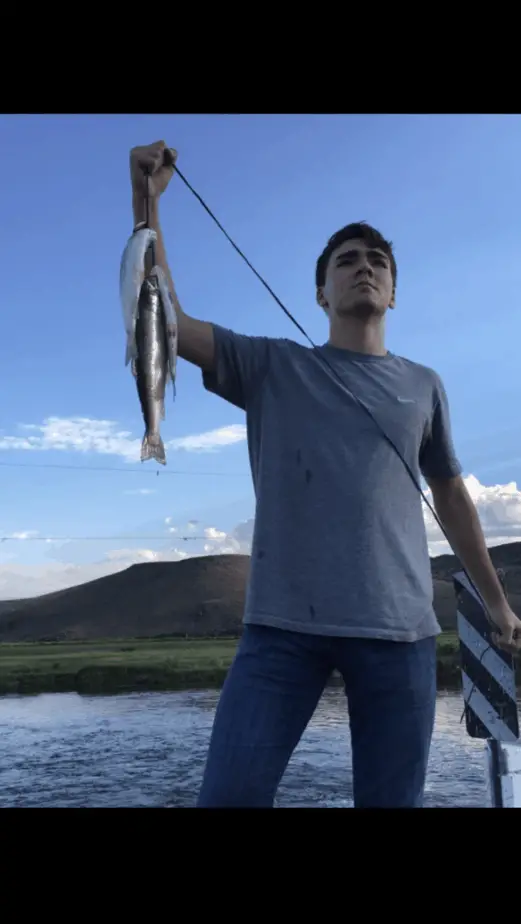
    The authors son Lorin with a mess of trout on a stringer .

    Trout 

    There is no question that trout is a popular fish to try to catch. Generally, conventional wisdom has always been that the best time of year to try to catch this species would be in the large spring. Many old-timers swear by this time of year because they have caught some very large examples.

    Of course, you should be aware of the factors of warm weather. First of all, you will have more competition from other anglers. Secondly, you will have more vegetation around the trout habitats.

    Although this is a tremendous debate, there are some anglers who believe that the trout “get smarter” regarding the bait and lures during the latter part of the fishing season. Finally, you also should be aware that this species is cold-blooded. Thus, if the air temperature bothers you, it probably bothers the fish as well. 

    What about catching trout on a day-to-day basis? Well, the most important thing to keep in mind is that trout will usually feed in water temperatures between 34 and 67 degrees Fahrenheit.

    You probably should check the water temperature often, because many experienced trout anglers insist that their feeding habits pick up when the water temperature is between 40 and 50 degrees.

    If you are in extreme sun, you should be aware that the trout will prefer the shady spots since they don’t have any eyelids. In the summertime, the temperature just might go higher, at least into the high 60s or mid-70s. In that case, you should try to go upstream to find the trout because that is where the water is cooler. 

    Bass 

    Bass is one of those fish species that a lot of people seem to get intimidated by. Although they might seem to be hard to catch, the truth is that they basically will go after any lure or bait you throw at them. All you have to do is understand their behavior. 

    Bass Spawning 

    The best time to try to catch bass is either during or immediately after their spawning season. They are much more active during this time.

    Within the southern regions of the United States, the bass will usually spawn during late winter. Alternately, in the northern regions, they will usually start their spawning activities in late spring.

    Of course, there are some states where the bass fishing season is closed during this time because the female bass are carrying eggs and game and wildlife officials don’t want them to be disturbed or overfished.

    However, if that is the case in your state, just remember that in some cases you can fish for them a few weeks after they spawn when the females get an appetite again. 

    Salmon 

    Salmon is also a fascinating breed to fish for. The peak season for salmon fishing in Alaska is usually between May and September, but the five major salmon species will be spread throughout the season. Additionally, you should take the “turnover” into account as well.

    This is the period of time in Alaska where the surface water and the bottom water at the bottom of the lakes and ponds begin the change. You need to understand what kind of fish like this in order to have a good Alaskan fishing experience. 

    Conclusion 

    The reason I brought up salmon and Alaska in this last portion is that it illustrates just how specific you have to be when it comes to finding the best time for fishing. You have to understand not only the fish behavior but how the weather and seasons affect them as well. The moon cycles and the tides will make a large difference, as well as the spawning seasons and many other factors. Keep these in mind, and you will have a much better fishing experience throughout the year!  

    If you have social media or a blog or even a business in fishing like a fishing guide, you can make money by giving away $10 store credit to your friends and followers. Click Here to find out how
    Are you seriously looking turn your hobby into a business? I recommend joining Income School. I’ve been an Income School member for a little over a year and joining was the best decision I’ve made in working toward my business goal of making money online.

  • How Do Fishing Rods Not Break

    How Do Fishing Rods Not Break

    The fisherman peered out into the early morning waters, watching as the lake swell rose and fell. Fishing for him was not just a pastime, but also a way of life.

    He relished coming out on these waters, and he relished outsmarting the fish. He and his friends always had a big crud-eating grin on his mug when he was posing for a photo with his latest catch, the last time being a hefty 25-pound trout.

    He was just a couple hundred yards off the rocky peninsula of this tremendous lake, and he watched as his friend guided the boat out to where the trout were swimming plentifully. The tumbling mass of brackish water was like an old friend to him, and it didn’t take long for him and his buddies to find what they thought was the sweet spot, not too far away, not too close, not too cold, not too hot.

    They would surely catch some trout here, the angler thought as he casted out his line, which consisted of an industry-standard popper. It was a lure recommended to him by the local bait shop, with employees whom he was on a first-name basis with. The lure plunged down on the watery wave, and from there, it didn’t take long. Not long at all. 

    Very soon, the angler noticed that familiar brown shape coming up to inspect his lure. Just a moment later, this shape inhaled his lure, and his line responded by becoming taut, his rod bending accordingly. He began struggling with the trout, and he definitely needed to. It was a big one, worthy of a trophy or another great smiling picture, at the very least.

    The fish seemed to be superhuman, ripping out what seemed to be hundreds of yards of his line. Yet still, the angler battled this trout monster for what seemed like an eternity, but then, there was this gawd-awful, ear-splitting crack that reverberated throughout the boat. His fellow buddies immediately looked up in a knee-jerk fashion, and the angler immediately went red in a split-second. He threw down his now-broken rod, said a few choice words cursing everyone from the line maker to the bait shop and even to the manufacturer and even his luck, and then he faced facts: he had broken his rod.

    Somewhere, in the depths of this watery lake abyss, there was a trout who was going to be sharing war stories about this very event: this angler had just thoroughly broken his rod. 

    Has this ever happened to you? You’re out on the water, anticipating that large catch and having your smiling mug holding that big fish, and you find a good candidate in those waters, but you just can’t get the job done because your line ends up breaking?

    New technology in making fishing rods has lead to much stronger poles using materials such as carbon and fiber. fishing rods are engineered in a way that they are not likely to break as long as they are being used correctly. Each rod is printed with the amount of weight that it is designed for handling and as long as an angler sticks within that range The fishing pole should be able to handle it unless there are any manufacturers defects.

    It’s frustrating, to say the least. As anglers, our knee-jerk reaction is to blame the manufacturer, blame the line, blame the rod for being defective, or sometimes even blame the fish itself. Indeed, while that fish is in their proverbial bar or other hangout hypothetically bragging to their friends about how they caused a fishing rod to break, we’re up here in a bar talking about that “nasty monster that caused me to break my rod last weekend” and probably saying a few choice words in the process.

    However, are these all excuses in the end? Have you ever thoroughly analyzed some of the factors for why rods might break in the first place? Read on, my friend. Here are some of the REAL reasons why your rod might break: 

    At some point, the fishing rod developed a stress point. 

    What is a stress point? Well, it is a weakness that is located somewhere on your rod, yet it is very difficult, if not impossible for you to notice. Indeed, even the most experienced anglers have a difficult time determining if a rod has developed a stress point.

    However, unfortunately, one of the main ways that it will be revealed that a rod has a stress point is simply through the hard way. It is only under the intense pressure of a behemoth fighting and struggling fish that these fishing rods will snap like the proverbial twig. Having that type of defect in your rod is bad enough, but there are other reasons why your fishing might break under pressure and prevent you from later on showing off that fishing picture to your work and community buddies. 
    High-Sticking 

    There are many different occasions where your rod will break because of a practice of high-sticking. Indeed, this is the bane of the existence of many different anglers. From the age of 10 to the age of 100, there has literally been an immense amount of anglers that have experienced this type of issue. High-sticking occurs when you are fighting your fish and you get caught up in the moment and you aim the rod at an angle that isn’t conducive to catching your desired fish (to the sky.)

    JC with Rad Reeling YouTube channel shows us how to not break your rod.

    Unfortunately, there is no easy way to put this except to be blunt about it: high-sticking just isn’t a good technique, and it’s led to many broken rods over the years. However, there is some good news: there are ways to avoid doing this in the future. Consider the following ways to avoid it: 

    Keep the pressure on the fish, and not on yourself. 

    One of the main keys to how to NOT have your rod break is to always focus on the fish and not on your rod. It really doesn’t matter how large the fish is, the key is to put as much on it as possible. The more pressure you put on the fish, the more likely the fish will get tired and give in. Of course, the one way that you tend to put pressure on yourself when you are fighting a fish is if you attempt to “lift” the fish out of the water. Always remember: your fishing rod is simply that: a rod. You should do your best not to treat it like a crane. Attempting to lift the fish into your boat almost never ends well for the angler. 

    Make sure you grip the rod correctly. 

    High-sticking also has a tendency to occur if you do not grip the rod correctly. If you have a tendency to grip the rod above the handle when you are fighting a fish, then you are at increased odds of suffering through a broken rod. This is because even though you are attempting to gain leverage over the fish, the opposite is actually occurring.

    This poor gripping technique will actually place extra tension on the weakest portion of the rod and might make the rod angle increase toward a 90 degree angle. This isn’t good, because the extra pressure you are exerting is actually declining because of the position of your rod. In this case, the fish is actually gaining the upper hand. Naturally, in this situation you will also see the rod bend a bit more, and that will indicate to you that you are applying as much pressure as possible. However, this is a situation where the rod is not working for you. This leads us to our next point. 

    Make sure that your angle is absolutely correct. 

    One of the cardinal rules of fishing is to avoid fishing at a ninety-degree angle. Of course, many fishermen have been taught this way, and they pass down this less-than-perfect technique down from generation to generation. However, ask the pros and they will tell you that a much-better technique is to angle the rod at a 45-degree position. In that manner, you are usually pointing your rod directly at the fish, and you are also engaging the butt of the rod. Basically, what you want to do is use the strongest part of the rod to be able to pull the fish. However, even after you have this part down pat, there is yet another technique that could prove beneficial to you. 

    Avoid lifting the rod straight up when you are fighting the fish.


    Of course, it can be easy to get caught up in the moment here, and it happens to the best of us. However, make sure you avoid this knee-jerk moment where there is a tendency to jerk the rod straight up when you are fighting the fish. The one thing you want to do in this situation is to control the head of the fish. You do this by levering your rod to the downstream area of your fishing spot.

    By using this technique, you will ensure that the fish has to both work harder not only against the pressure of your rod, but also against the forces of the current. On the other hand, if you do a lift that is strictly upward, you will tend to give the fish the upper hand. They will be more likely to have the ability to use the current to their advantage and push down on your rod and your line and go away from you. Is there a chance that you might still land the fish? Yes, there is. However, it is less likely this is going to occur. 

    Invest in a good reel to go with your rod. 

    Another way to avoid rod breakage is to give your equipment some solid backing components. For instance, even the best rod is valueless if you don’t have a good reel to go with it. When you are fishing for big game, you will need a rod that has a reel that can exert 12 to 14 pounds of pressure. Simply put, these trophy fish are tough! You not only have to worry about your rod breaking, but your line as well. Making sure your equipment is top-notch is one great way to avoid one of these fishes throwing you for a loop and off your game. 

    Treat your rod with kid gloves. 

    Simply put, you get out what you put in. There are all kinds of situations where a rod might develop a weakness somewhere in the design. This has a tendency to occur either in the transit or handling of the rod. Of course, you cannot control how the rod has been treated at the store or the warehouse. However, one thing you can do is to ensure that once you are in possession of the rod you do everything in your power to protect the design. Keep the rod away from damaging areas such as ceiling fans or immovable objects. Make sure you wrap the rod well so that it doesn’t bounce around in your vehicle while you are headed out to the fishing spot. If you have rambunctious kids, teach them early to be VERY careful with the rods! 

    Make sure that your rod matches up well with your tackle. 

    Even if you have a solid rod system, if it doesn’t match up with the tackle you’re using, it could still result in a broken rod. For example, you never should have to wonder when you are struggling with a fish, “If I pull too hard fighting this fish, will it break my rod?” This is why you need to make sure that everything is in alignment when it comes to your rod. Such things as the drag setting, rod ratings, and line weight must all match up for the species of fish you are trying to catch. For example, you shouldn’t try to fish for a large saltwater species if you are only using a 30-pound-test tackle. Make sure it all matches! If you are a novice to this, you definitely can ask your fishing professional at a bait shop any questions you might have. 

    Yes, there are times where it is the manufacturer’s fault. 

    Remember when I said earlier that anglers have a tendency to blame the manufacturer when their rod breaks. Well, I wasn’t trying to come off as judgmental by any means. Believe me, I want you to have a successful fishing experience, or I wouldn’t be writing these pieces. However, even though the majority of the time a rod breakage is simply due to poor technique, there are indeed times where the rod breaks because of the manufacturer’s defect. One tell-tale sign of this would be if you and your friends have a rod that is continually breaking in the same place over and over again. In that case, it might be time to try out a different brand. 

    Whatever the case might be, the last thing anyone wants is to break their rods out on the lake. Study your rods diligently, and chances are this won’t happen to you ever again! Have fun out on the lake! 

    If you have social media or a blog or even a business in fishing like a fishing guide, you can make money by giving away $10 store credit to your friends and followers. Click Here to find out how
  • What Fishing Line Floats? Here Is The Streight Truth

    What Fishing Line Floats? Here Is The Streight Truth


    There are actually two lines out of the three lines presented that can float to some degree. Can you guess which of the two it is? If you guessed the monofilament line and the braided line, you would be absolutely right
    but monofilament is considered more of a slow sinking as opposed to braid which floats.

    This video covers the three most popular types of fishing line but it explains that monofilament is slow sinking and braided line floats.

    As a fishing enthusiast, chances are you are probably aware of all of the products associated with fishing. You probably know everything there is to know about such things as fishing lines, rod and reels, and the different types of bait out there.

    Of course, you are probably aware of all of the different subtypes of fishing out there as well. You not only can fish with a fishing line, but you also can use such things as nets or traps. Angling with a rod or bottom trawling is also a popular activity. Indeed, the novice fisherman might quickly realize that the choices are just about endless.

    Of course, most fishing enthusiasts are also aware of a practice called top-water fishing. Unfortunately, this type of fishing doesn’t always get the respect that it deserves. However, it is a very rewarding version of fishing that you will enjoy immensely once you try it.

    However, you need to be able to do it right. One of the best ways to start out in top-water fishing is to select the right line. Ask any experienced top-water angler, and they will tell you that the only line that you should use with top-water fishing would be one that floats.

    Even though that may be the case, there are many lines out there, and the great majority of them do not float. Here is a run-down of the three most popular lines, and a verdict on whether they float or not: 

    Monofilament Fishing Lines 

    The monofilament line is pretty self-explanatory in that it possesses a single, small strand of material. It will often be made of a number of different materials, but the most common one of these would have to be nylon. Monofilament has many different versions you can buy, including those with variations on the strength, the stretch, or even the abrasion resistance. This and other important attributes will definitely make it a popular choice among anglers. Of course, you can rest assured that it has other benefits as well. Consider the following: 

    First of all, a mono is known for being very easy to handle.

    Monofilament has a very flexible nature, bathed in limpness. This means that monofilament can be more pliable and much easier to cast than other materials. Moreover, this fishing line will work well for a variety of different fishing situations. 

    Monofilament also has a great stretching ability.

    It can stretch out much more easier than superlines can thanks to the materials present in them. This stretching ability also gives this material a distinct advantage over fluorocarbon because it has a much larger forgiveness factor. Are you worried about your drag sticking you or your set working too hard? If so, don’t fret, because mono will compensate for this by stretching out to 25 percent more than normal. 

    The ability to stretch under pressure is an important characteristic for many fishermen simply because that ability makes it more likely that the fishing line will remain attached to the fish instead of just tearing a hole in its mouth and allowing it to get away.

    Do you want to make both the hookset and the fight of the fish easier on you? If that is the case, then there is every reason in the world why you should get a solid monofilament line. 

    A monofilament line also has good shock strength as well.

    It will absorb energy very well, meaning that it can withstand the sudden jolt from a sudden hookset or from a particularly strong fish. This is also good if the fish keeps running into the side of the boat. Of course, when this shock strength is coupled with a larger diameter that will ultimately make this line more abrasion resistant. 

    Finally, a monofilament line has a better color palette, an inexpensive design, and it has been heralded by anglers the world over for its ease of use. The excellent color palette options mean that you can easily find a color that will properly camouflage with your surroundings. The fact that it is cheap to use and easy to use also makes it a popular pick among first time anglers as well. Of course, all of these attributes are great, but does this line float? We’ll get to that as soon as we discuss the other two lines as well. 

    Braided Fishing Lines 

    A braided fishing line is an example that has been around for a very long period of time. This line is a bit of an unsung hero, especially considering that most young fishermen got their start using mono. However, those that have tried the braided example have been pleasantly surprised at just how much incredible strength that it has even though it has a small diameter and no stretch. There is no question that the braid line is about the most castable line you can get for the money. Of course, there are other advantages as well. Consider some of these: 

    They are hard to break. 

    One of the best things about these braided lines would have to be their durability. They can be used for years on end out on your favorite lake without breaking. This is probably due in part to the fact that they are made of several lines joined together. Moreover, even today many individuals view braided lines as a wise investment simply because they will straighten out the hooks, helping you to retrieve almost any of your very expensive fishing lures. It is great that these lines are durable, but it gets even better: many sportsmen have reported that even when the line gets snagged they are hard to break. 

    This is a good line to use if you think you might hook a fish in a difficult place. 

    If you are fishing in an area with a lot of vegetation or undergrowth, than this line is definitely for you. Besides the durability of having a braided line, this line also will help you draw out a stubborn fish if you catch it in one of these dense areas. That alone would definitely make it worth paying a little extra money for. 

    This line has a longer reel life. 

    Another benefit of the braided line would of course have to be the potentially longer reel life it offers to your favorite rod. This braided line has the ability to take the strain completely off of the rod, and so as long as you maintain the line, it should result in your reel lasting quite a bit longer. 

    They make casting easy. 

    Another great advantage of the braided line would have to be that casting is much easier. You literally can throw this line out to an extremely long distance with minimal effort, due in part to the thin diameters that the line design possesses. 

    Of course, if there is any danger to using this line, it would have to be that they tend to be highly visible in the water. Unless you are persistent, this might mean that you will spook your fish a bit more than normal. 


    Naturally, the $64,000 question is whether this is a line that will float on water. How about we examine the last line option though before we discuss whether this is the line that will float on water? Here we go with the last one… 

    Fluorocarbon Fishing Lines 

    Although fluorocarbon is one of the newest additions to fishing lines, in recent years it has become increasingly popular among anglers. This is because fluorocarbon has a lot of advancements in performance characteristics. Fluorocarbon is so versatile that many individuals will use them for all kinds of different applications. 

    Fluorocarbon is definitely the most recent fishing line. However, if the name seems familiar to you, it’s probably because fluorocarbon is a description that covers many different compounds. All products containing carbon, fluorine, and chlorine will often be comprised of fluorocarbon. Moreover, products containing Teflon to Freon will also often have fluorocarbon. Of course, let’s cut to the chase here: what are the advantages of fluorocarbon for a fishing line? Consider some of these benefits: 

    Fluorocarbon has a low visibility. 

    One of the best benefits of fluorocarbon would have to be the low visibility it has in the water. Because light will be completely refractive passing through this line, it is nearly invisible to fish looking at it in the water. This will make it much easier for you if you want to target some of the more skittish fish breeds. 

    Fluorocarbon has a high resistance to abrasion. 

    With the low visibility characteristics possessed by fluorocarbon, it will give anglers the ability to use stouter test lines and be able to fish in areas with heavier cover and still be able to target fish such as bass. Moreover, this high resistance to abrasion ensures that it will be much easier for you to drag your bait literally all over your fishing spot. 

    Fluorocarbon is very sensitive. 


    One of the best advantages of using fluorocarbon as a line would have to be that it is very sensitive. This line will always possess more energy than mono, and it will also have tighter molecules than it as well. This is extremely advantageous to the angler because it will do a better job of telegraphing information about the end of the line to the angler. 

    Fluorocarbon is waterproof. 

    Finally, fluorocarbon lines are waterproof. You wouldn’t think this would be important when you consider that all lines have to be waterproof to some degree. However, this simply means that it will react in the same matter when it is on the water as it will when it is dry. It will feel exactly the same on your first cast as it will when you first apply it to your line. 

    Of course, there is no question the fluorocarbon lines have a lot of benefits, but again, this isn’t answering the question: do they float on water? Well, that remains to be seen, but we will answer whether this line or any of the other lines float on water in the next paragraph. It is important for anglers to know which of these lines float on the water for a myriad of reasons, so read on to fully understand which of these lines will work best for your needs. 

    Which Of The Above Three Lines Will Float on Water? 

    Now we come to the major question: which one of these lines will actually float right on top of the water? Actually, this is a bit of a trick question, because there are actually two lines out of the three lines presented that can do the trick just fine. Can you guess which of the two it is? If you guessed the monofilament line and the braided line, you would be absolutely right. Both of these options will float on the water. However, now we have a new challenge to contend with: which one of these floating fishing lines is right for you? Take a look at the facts and make a decision for yourself. 

    Monofilament Fishing Lines 

    First of all, the monofilament line has definitely been around much longer. Thus, it will certainly be much more popular, simply because almost everyone got their start in fishing with this type of line. The reason for this is because the monofilament line is much more user-friendly than other lines, with not as many knots to master. Thus, it is much easier to teach kids about the monofilament line than other type. There truly has been many father-son quality spent on a lake where they were using monofilament lines. 

    Braided Fishing Lines 

    Of course, there’s something to be said about braided fishing lines as well. Yes, they can be a lot more difficult to use simply because it would take a lot more knots to master. However, many individuals swear by these braided fishing lines and insist that you can catch a lot more fish this way. Part of the reason for this is because they have a smaller diameter, giving you the advantage of being able to fit more line on your reel. Indeed, having a great casting range can definitely help you catch more fish. However, once you master the knots, don’t think for a minute that the extra casting range of these braided lines doesn’t come at a high price, for it absolutely does. 

    Which one should you pick? It depends on your own personal life situation. However, both of these lines will float on the water and help you catch more fish! 

    Are you seriously looking turn your hobby into a business? I recommend joining Income School. I’ve been an Income School member for a little over a year and joining was the best decision I’ve made in working toward my business goal.

  • Can You Fish For Sturgeon

    Can You Fish For Sturgeon


    There is no question that fishing is an enjoyable hobby and fishing for sturgeon is a challenging – yet fascinating – way to enjoy the fishing hobby.

    The term “sturgeon” doesn’t actually refer to one fish. It actually means that the fish is a member of one of the 26 different members of the acipenseridae fish family.

    They are commonly found in lakes, rivers, and the coast throughout the Eurasian part of the world and North American regions. Simply put, this is a very large species of fish.

    They can grow to a size of as high as 18 feet, and they also can often exceed 100 pounds. Moreover, this fish often has the lifespan of a human being, with many specimens living to the ripe old age of 100 years or more.

    Of course, as a fishing enthusiast and outdoorsman, this all begs the question: can you fish for sturgeon? The answer to this question is not only yes, but an enthusiastic yes at that. Indeed, whole industries have been built around sturgeon. They are often harvested not only for their meat, but also for the roe portion of their bodies as well.  This roe is often sold in specialty shops as caviar not only in shops in regions where sturgeon are often found but in retail establishments all over the world as well.

    I love watching Matt from catfish and carp channel on YouTube and he has a great video about sturgeon fishing.

    Considering that sturgeon are bottom feeders who love to feast on worms, waterbugs, snails, crayfish, and shrimp, here are some tips and strategies for properly catching this fascinating breed of fish: 

    Fishing boat

    Make sure you have the appropriate tackle equipment for your sturgeon fishing experience. 

    First things first. If you are going to take on the challenge of fishing for sturgeon, you need to have the right tackle. The rod and reel you use for catching a sturgeon must be very specific. For the rod, you must have a rod that will allow for the unique personality and habits of the sturgeon fish.

    First of all, you must realize that these sturgeon might be large, but their bites aren’t. In fact, they are probably some of the lightest biting fish that you will encounter. Thus, you first of all need a rod that will have a soft tip so that you can feel the bite of the sturgeon without overreacting and spooking to the point that they take off.

    Chuck and Cody give some good advice on what type of rod to use for sturgeon. Fishfighterproducts.com

    Of course, what of salmon rods?

    Additionally, you want to look for a rod that is constructed of just a single piece rather than an assembled design. Moreover, the ideal rod will usually be between 6 to 9 feet and will have an outfitted line that is durable enough for at least 80 pounds (sturgeon get very large indeed!) and line capability of at least 250 yards. 

    There are a lot of people who swear by using these kinds of rods for their sturgeon fishing, but the problem with those is that they will usually only hook up the medium-sized sturgeon. What about the larger ones? Don’t sell yourself short. Instead of just using a salmon rod, go with a rod that has the capability of at least a 6 to 16 ounce lead as well as 50 to 65# lines. Most of the time, just going with an 8-foot rod will help you land the great majority of sturgeon fish. 

    Make sure you get the right fishing reel.

    Along these same lines, you also need a good reel as well. One of the things that you quickly learn is that when it comes to fishing for sturgeon, not just any reel will do. Ideally, you need one that will hold up well with heavy leads and will be able to withstand some large fish! Although there are many reels that will fit this category, if you are going to fish for sturgeon for any length of time, you probably would do well to invest in a reel that has been specifically designed for sturgeon fishing. 

    Get the proper hook and hook size for the sturgeon you want to catch. 

    Of course, the next thing you would want to do is make sure that your hooks match up with the species of sturgeon you are trying to catch. Generally, most sturgeon fisherman will want to go with a hook that is from 5/0 to 9/0. A 5/0 hook is good for one of the smaller versions of these sturgeons, and obviously the higher you go in hook size the larger the sturgeon you will be able to catch.

    Of course, the right kind of hook is important as well. Generally, you will need the right color on your hook as a good starting point. Many sportsmen will often go with the red hooks simply because they tend to stay sharp as long as possible.

    However, repeatedly throwing these hooks in the water will often cause them to lose their red coloring and you will then be left with a gold-and-silver plating that won’t quite be as attractive to the fish. On the other hand, many sturgeon fishermen have found just as much luck with a black hook as they have with a red hook.

    They still stay sharp for a long period of time, and they are also great because they will usually retain their black coloring much longer than the red ones will. I suppose it depends on what you are looking for.

    If you want short-term effectiveness, it’s probably perfectly okay to go with a red hook. However, if you want a hook that will last longer and still catch a decent amount of sturgeon, then you should go with the black, especially if you are the “slow and steady wins the race” type. 

    Learn how to identify the different types of sturgeon bites you will get on your line. 

    As you gain more experience in fishing for sturgeon, you will quickly learn that not all sturgeon bites on your line are created equal. For example, during colder weather, you might notice that the sturgeon are going to have a bite that is kind of slow and repetitive.

    Of course, for the novice sturgeon fisherman, it can be somewhat difficult to tell whether it is a bite or simply just the tide moving your line about. However, you should focus very closely on the repetition on the line’s movement. If you are sensing a slight jerk over and over again, then chances are it is a sturgeon playing with your line. 

    Alternately, if you are fishing for sturgeon in warmer weather, the main difference you will notice is that the bite is going to be much more aggressive. Once sturgeon get closer to their spawning season, there is truly a greater sense of urgency. If your rod is either tipping or dipping, then it could mean that the summer sturgeon are going after your line. 

    Your actions after you feel the sturgeon bite will make all of the difference. 

    Once you feel this slight bite on your line, it is your actions with your fishing rod that will mean the difference between the fish getting away and the sturgeon being reeled in. A good rule of thumb is that you should pull up on the fishing rod in order to fully secure the catch.

    If you feel the slight sturgeon bite, make sure to properly yank the rod so that it will lodge squarely inside the sturgeon and give you a better chance of landing it. Moreover, you also should be sure to reel in the sturgeon as quickly as possible.

    These fish can definitely be quite large, and don’t be surprised if it takes a long time to reel them in. Patience is the key here. If your arm is getting tired or cramped, if you have a partner you should consider handing the rod off to him or her. 

    Here’s a great video on how to rig for sturgeon I Fishfighterproducts.com

    Some Solid Sturgeon Fishing Tips For You To Consider 

    Of course, all of this information about sturgeon and how to fish for them is valueless unless you have some fundamental understanding and strategies in mind to help you in the activity itself of fishing for them. Here are just a few of them for you to keep in mind: 

    Find the sturgeon, and fish for them there. 

    This seems like a very obvious statement, doesn’t it? Well, that might be true, but ask any experienced sturgeon angler and they will tell you that they have seen literally countless times where novice sturgeon fishermen will stubbornly fish in areas where it is obvious that the sturgeon are just not residing or simply don’t have them at that particular time.

    You see, one of the things you must understand is that sturgeon are a very mobile fish. That means they will not move to follow the tides, but they will also move to follow food and move just to simply stay comfortable. You would do well to remember that these fish will often be in an area where you would least expect them to be.

    Fish in water that has a great flow. 

    A good rule of thumb to fishing for sturgeon is that you should focus on areas that have a solid flow. In general, the biggest sturgeon will want bigger food, so the best place to go would be in an area of big and fast-moving water.

    Go to almost any of these areas, and you will soon discover that the big fish will always congregate in the fast water and the smaller fish are more likely to be found in slower-moving water such as the side of the river or in the eddies. Simply put, big sturgeon will want big food, and about the only place for them to find this big food is in a place with a fast-moving current. 

    Get the latest fishing technology. 

    Another good way to find out where the sturgeon are is to employ the latest fishing technology in order to find out where these sturgeon are. Indeed, one of the best tools to use would be something like the Lowrance HDS series, the digital Hummingbird, or a Furuno fish finder.

    Of course, it is valueless to have one of these units if you don’t know how to use it. Before trying to find out where the sturgeon are with it, you should definitely read the manual, take it with you to the water, and do plenty of pre-fishing practice with it. Of course, don’t just read the manual, but get to know that sucker by heart! Once you get to know how to use one of these units, they will definitely become indispensable to you in all of your sturgeon-catching pursuits. 

    Keep your bait as fresh as possible. 

    It doesn’t matter whether you’re fishing for bass, salmon, steelhead, or sturgeon, you must always keep the bait as fresh as possible. This means probably paying just a little bit extra simply because its easier to use worn-out bait. However, you need three components in order to have good sturgeon bait.

    First, you need to have the component of guts. If your bait doesn’t have any innards, it won’t be pleasing to the sturgeon. Second, you need to have plenty of blood to go with this concoction. Simply put, if your little bait fish doesn’t have any blood, it is no more than just a dead fish on a hook.

    In this state, it is highly unlikely that it will attract a sturgeon at all. Third, if you are using either anchovies or smelt, you need to ensure that the bait has a slime coat. This will protect the bait from infection or parasites, which could make it undesirable to a sturgeon.

    Finally, you need to make sure that all of your fish baits have a slime coat. This component is what tells other fish that they are dealing with another fish. This also tells predators such as sturgeon that they are in for a tasty meal. If the slime coat, your bait fish will be nothing more than a frozen and unappealing dead fish. 

    Move around as much as possible. 

    Finally, when it comes to fishing for sturgeon, it really pays off if you move around often. There is an adage among fishermen of other breeds such as salmon or bass that they “have to come here sooner or later.”

    However, that just isn’t the case with sturgeon. A good rule of thumb is that if the sturgeon don’t bite for at least 45 minutes, then it’s time to try another fishing spot. 

    So there you have it. Yes, you can fish for sturgeon just as long as follow some very specific strategies and know what you’re doing. We’ll see you out on the lake! 

    Are you seriously looking turn your hobby into a business? I recommend joining Income School. I’ve been an Income School member for a little over a year and joining was the best decision I’ve made in working toward my business goal.

  • What is Bottom Fishing?

    What is Bottom Fishing?

    Ask any fishing enthusiast, and they will tell you that there are all kinds of fishing methods out there. Techniques such as netting, angling, netting, spearfishing, and even hand-gathering are the most well-known methods. However, there is one method that also merits some extra study, and that would be bottom fishing. There are a lot of bottom fishing enthusiasts out there, but of course it all begs the question: just what is a good summary of bottom fishing?

    Bottom fishing can be defined as simply dragging your bait along the bottom of your given waterway or if anchored, just letting your bait lay on the bottom.

    Indeed, there are many species of fish that love to frolic at the bottom of the water. Species such as the Grouper, Halibut, and the Red Snapper all flock to the bottom of the sea because they enjoy hiding and playing among the reefs. Bottom fishing is one method of catching this elusive prey.

    My daughter-in-law caught her first fish.

    In freshwater you can find catfish and carp as well as other species that prefer the bottom and tend to stick around there

    Of course, if you are going to try bottom fishing, you need to know a little about the right methods of going about it. Just like anything else, the more diligent you are in studying this discipline, the better off you will be.

    There is a huge potential for success, but you should consider some tips for doing it right. Here are some questions to ask yourself:

    How do you do bottom fishing, anyway?

    As a beginner, that’s the first question you must ask yourself. A good and simple mental picture of bottom fishing would be fishing that is devoted to the bottom of the water. Simply put, there are many types of fish that are either quite hesitant to come up to the surface or hardly come up at all.

    This type of fishing helps the sportsmen be able to more readily catch these types of fish. Additionally, one of the most beautiful aspects of bottom fishing is that it can be done on both the land and from a boat.

    Although it’s only a cathartic benefit, you also get a tremendous sense of accomplishment and joy when you are smiling in front of the camera and holding up the catch from your first bottom fishing experience!

    What are some of the tools that I need for bottom fishing?

    Of course, you might be surprised just how popular bottom fishing is among anglers.

    However, either way, you must possess the correct tools in order to do it the right way. There are several essential pieces of gear and many other optional pieces of equipment that will make your bottom fishing venture a success each and every time. Consider some of the following:

    The Hook, Line, and Sinker

    The first thing you will need for a successful bottom fishing experience would a hook, line, and sinker. You have probably heard the phrase “hook, line, and sinker” used as a phrase. That basically means something is a sure bet. Well, in the case of bottom fishing, it is also a sure bet that you will catch some bottom-dwelling fish as long as you look after these basic elements. Let’s look at a few of them individually:

    Hooks

    The hook is the first part of this three-part combination, and all three of these make up a “rig.” Hooks are ideally supposed to be circular, especially if you are going after large game fish. You will want something that is very durable simply because of the fact that you are probably going to have a fight on your hands. Other options for seasoned bottom fishermen would include “J” hooks and treble hooks, but these require setting before they can be used. Circular hooks are good because they will help you to avoid “deep hooking” a fish’s throat or gut. However, you don’t want to pull too soon or you will end pulling the hook out completely and allowing the fish to escape.

    Lines

    When you start talking about lines, you are definitely delving into an age-old debate. Indeed, when it comes to bottom fishing, every angler has an opinion regarding lines. It is almost as old as the sport itself. One of the first things you need to realize about lines is that bottom fishing angler has their own opinion about what the best line truly is. Some anglers have a strong preference for a mono line, while others prefer the braided version. However, there are also quite a few out there who prefer a fluorocarbon line. Consider some of the differences between these three:

    Braided:

    One of the best things about a braided line is that it has developed a reputation for being a line that is truly one of the strongest ones out there. A braided line has the potential to handle some tremendously huge fish. However, one of the cons to this option is that braided lines can be difficult to handle and their efficiency can also be very pricey.

    Fluorocarbon:

    Fluorocarbon lines are good for doing fishing around lakes, streams, and rivers that have rocky bottoms. A fluorocarbon will be a line that will give good feedback, and it has a tendency to be better for fishing in clear water. However, this option too is a bit difficult to handle, and it can be challenge to tie knots with this option. Many anglers recommend that you get a combination of at least two of these, and some bottom fishers will even air on the side of caution and get all three just to be certain.

    Mono:

    Sinkers

    Of course, your next step to becoming a champion bottom fisher would be to invest in a good collection of sinkers. Ideally, you should have some examples that are good at maintaining a solid

    weight in order to fully drop to the bottom of the lakebed. You should also be aware that these sinkers will come in several different variations, such as the following:

    Egg-Shaped

    These sinkers are round in shape, and one of the key advantages to using one of these for bait is that the fish are not only inclined to take them, but they also can swim a short distance with them without encountering any resistance, making this a very deceptive bait indeed. These are my personal favorite because of the way it slides up and down on the line it gives you a better feeling when a fish bites. It seems to be more sensitive. However if you want to change weights or add weight or take some weight off for any reason it is more difficult because you have to cut your line and re-tie.

    Darren’s hand made fishing weights egg weights and split shot.

    Pyramid

    The pyramid sinker is an option that will be characterized by a sharp tip at the end. These sinkers are popular by anglers because they have a tendency to hold the bottom and anchor it within the sand well.

    Of course, all three of these sinkers are a good thing to have, simply because they all allow for different situations on different days. Don’t think for a minute that you can always use the same sinker on the same lake day after day. Why? One word: currents. At the very minimum, you will need a nice repertoire of sinkers because they possess different weights, responding to the current better.

    What about using rigs?

    Besides all of these other tools, one of the things that many bottom fishers love to use would be bottom fishing rigs. This is a very effective tool for bottom fishing, and some bottom fishers swear by it. Simply put, a bottom fishing rig is a specific tool that will increase the chances of landing a

    bottom-dwelling fish. Indeed, there are many different variations out there, and there are quite a few homemade versions as well. However, here are some of the most common examples:

    Darren Enns Rods use the Carolina rig mostly. Check out those hand made sinkers.

    The Carolina Rig

    Also called the sliding sinker rig, this device is made up of an egg sinker and it helps you properly land these fish without placing more weight on the lead and scaring away the fish. The main thing to remember about the Carolina Rig is that it is all about the egg sinker, and the other thing to remember is that this is a good rig for a beginners to use simply because it is so easy to build.

    The Spreader Rig

    Also known as the Chicken Rig, this type of rig is very versatile. This type of rig can cover a lot of ground with their two hooks, and many individuals use this type of rig with bank sinkers because they do an excellent job when you are fishing within rocky bottoms.

    The Drop Rig

    This is also called a 3-way rig, and it has developed a reputation of being a great way to fish within the surf. The 3-way rig is one of the best ways to connect the leader line, main line, and the shorter sinker line as well. The drop rig will also do an effective job of keeping your hook floating in a precise manner.

    The Knocker Rig

    This Knocker Rig is also called a “straight line” and it is also a very popular tool among bottom fishers simply because it allows them to feel a bit from a fish almost immediately. This is a simple barrel-shaped swivel connected to a simple leader. It will also have a bead, sinker, and leader at the end.

    Tip from Darren – I love bottom fishing. Usually I use a Carolina rig with an egg weight and cut anchovies when I fish for striped bass on my local freshwater lake. I just let my line drop until it hits bottom and then crank it up a couple of turns. Also when I have gone on day fishing trips off shore in Florida I have used the same method with success.

    What Kind Of Bait Should You Use?

    Of course, this all begs the question: just what kind of bait should I use? Well, it’s not as difficult as you might think. Of course, you will get all kinds of opinions from the bottom fishing hobbyists among you. However, many individuals have found some incredible luck with utilizing dead bait. Such items as menhaden, mullet, sardines, or cigar minnows all can be used effectively just as long as you let them sink to the bottom so that it will effectively fool the larger fish you are looking to catch.

    Live Bait

    Of course, the other option is always going to be live bait. Is this a bit more challenging? Sure. However, once you gain a foothold in the disciplines of the proper care and management of live bait, you will soon realize that the rewards can be immensely greater than simply using dead bait. For example, if you are after larger fish, using live bait is just about the only way to go. Moreover, using live bait is also good because at times you will have to catch it yourself. There are many times where the pure fisherman will get just as much enjoyment out of catching the bait as they do in using the live bait for catching the bigger fish.

    Lures and Jigs

    Finally, another effective measure for catching large bottom fish would be through the use of lures or jigs. These items come in many different sizes and shapes, and it does take a large element of skill. It will take some practice and some experience in order to do this right, but there is no question that your sense of accomplishment will be that much more immense when you are holding up your latest fishing conquest and getting your picture taken!

    Where Should I Bottom Fish?

    Of course, this all begs another question: where can you bottom fish in the first place? The first step you should take is to strongly consider your location. Bottom fishing is different from a pier, and it is different when you are doing from a surf. Additionally, it is an entire world differently if you decide to bottom fish from a boat. Let’s take a look at each of these bottom fishing challenges individually:

    Fishing From a Boat

    Let’s look at bottom fishing from the boat. This can be the most rewarding way in order to fish for this bottom game. Moreover, there are at least a few different ways from fishing from a boat:

    My 10 foot Tiny Boat

    Anchoring Your Boat

    One of the best ways to fish from a boat is to find a productive spot and then simply anchor your boat and fish from there. You can even use twin anchors to guard against the drawback of currents as well. Of course, one downside to anchoring your boat is that it can spook the fish and make them go elsewhere. However, you will know soon enough if that is the case.

    Drifting With Your Boat

    If you want something a bit more challenging, you can keep the boat moving. However, there are many advantages to keep a boat moving with the current. One great method is to go ahead and fish with live bait while the boat is in motion. Many have done this with great success.

    You can also fish from the shore, even though this can be a challenging method. Ask other fishing

    enthusiasts how they go about doing this. Fishing from the surf is also an option, but be aware of the fact that it is diametrically opposed to fishing from the pier even though they might appear similar.

    Whatever route you might take, you will be able to catch all kinds of fish as long as you are diligent with it. You will be having your photograph taken with your next catch in no time!

    Are you seriously looking turn your hobby into a business? I recommend joining Income School. I’ve been an Income School member for a little over a year and joining was the best decision I’ve made in working toward my business goal.

  • How To Improve Your Fishing

    How To Improve Your Fishing

    Many Americans can not wait for spring/summer to roll around, because that means lake time. Lake time means fishing! No matter what your fishing experience is, all fishermen just want to catch as many fish as possible. Some fishermen believe that all you need to catch more fish, is practice. Fish every chance you get and you will get better. Yes, that is true; but there is also one very important aspect (or maybe a few) that most fishermen do not consider, unless they are professionals. If your job is fishing, and you are in every tournament available then you know what we are going to discuss first. After the main concept we will throw in a few other tips and tricks.

    author Darren Enns (me) with my bluegill catch

    There is one particular thing that seperates a good fisherman from a great fisherman, knowledge. Yes, you can watch “how-to” videos on youtube, but most of those famous youtubers have the knowledge that we are going to talk about.

    Learning this knowledge means getting out and learning it, not watching or hearing someone explain it on a PC or smartphone video. They are informational, yes. But ‘hands on’ is even better. Knowing the area, the surroundings, the water, and the specifics about the species you are trying to catch is going to be more productive than anything. We are briefly going to touch on some of the best things to observe and learn to improve your fishing.

    Decide what species fish you are targeting

    First and foremost you need to observe and learn about the species you are fishing for. Focus on their underwater movements, what stimulates them, and be aware of the prime locations where they hang out. Find out when and where they hang out, what the best time of day is to fish (whether it is in the morning, evening or in the dark), when they spawn, and when they feed.

    I did a 100-person survey on my Facebook page and asked if people like trout fishing more or Bass Fishing more. Here are the results

    Learn water characteristics of your chosen species.

    Water characteristics are very important as well. Learn the temperatures of water that the fish prefer, the clarity of the water, and be very aware of the tides and currents.

    What is nature serving you?

    A lot of anglers rely on modern technology, like fishfinders. But do not ignore nature. Nature is an important aspect of catching an abundance of fish. The wind, birds (or lack of), the presence of baitfish, and the calmness of the water are only a few tell-tale signs of a good or bad fishing day.

    What are the best lures for your chosen fish?

    You also want to obtain extensive knowledge on the best lure(s) to attract your specific target. This goes hand in hand with learning all you can about the fish you want to catch. Weather, time of day, and season are things that will determine what lure is best, as well as what kind of live bait they like. Some lures are made to replicate live bait and work extremely well. If you figure out the lures, then you know what to take with you and you are not wasting fishing time by changing lures. An extension of knowing the lures; learn which hooks and fishing line are essential for the lures you are  using.

    How To Improve Your Fishing -With FishinMoney

    Learn what forage and vegetation your species fish prefer.

    Another aspect that will help you improve your fishing; learn the forage and vegetation that the fish prefer. Certain fish like to hang close to or hide under specific forage or underwater structures. Along with this, find out what other places or objects they like to hang around or under; such as docks, bridges, and coves.

    You have to be willing to be a student of nature, to learn and observe everything you can that is affiliated to fishing and improving your fishing skills. Some young men (and women) had a grandpa or father that was very knowledgeable about fishing and the area. Others went out fishing with dad just to bond or have fun. A relaxing day after a long week of work, school, and chores. Not worried, at all, about catching anything or improving their fishing.

    You can check out a fish habitat conservation lesson here

    Darren Enns Sunfish (BlueGill)

    Other considerations

    Then you have the professionals who know the in’s and outs of a particular species and their 24/7 habitat and routines. They are on a mission, everytime they are on the water, to improve their fishing. They study the fishing reports, the tide schedule, and always have their television on the weather channel. You can also find a seasoned angler in the area, who grew up there and they could teach you everything that you need to know. They can share their tips and tricks with you.

    If you are going to go fishing in a new state or body of water, you can also hire a fishing guide. Fishing guides know the area like the back of their hand. The majority of fishing guides grew up in the area that they guide in, started fishing as a toddler, and have made fishing their life. They will take you out on their boat, and teach you the essentials on catching fish. From the weather, to lures, rods and reels, and techniques. Some can be affordable and some a little more expensive, but well worth the money.

    If you want some easy tips and tricks to improve your fishing, we are going to give you those now.

    Practice casting

    One way to improve your fishing is to practice casting. You can do this on or off of the water. All you need to do is find an object or target and cast until you can hit that target. This will help you to be able to cast your line right on top of where the fish are.

    Learn a couple of knots

    Practice your knots. Knots are on of the most important parts to fishing, but are also one of the most overlooked things. Following fishing blogs, like ours, to get tips and tricks on how to improve fishing. You can also gain knowledge on the best lures, live baits, rods, reels and anything else you want to know or learn.

    Keep your hooks sharp

    When your hooks start to get dull change them! You want the best hook-ups possible and you can

    only achieve that with sharp hooks. Make sure your rods and reels are clean. This is vital to your fishing success. If everything is clean, it will work properly when you hit the water.

    There ya go folks! How to improve your fishing. I hope you enjoyed the article and get some great results from our suggestions. Stop by again soon to what else we will have in store for you.

    If you are having trouble getting fish to take the bait but you can see them chase your lure, you can check out this article that may help you pinpoint why.

    Are you seriously looking turn your hobby into a business? I recommend joining Income School. I’ve been an Income School member for a little over a year and joining was the best decision I’ve made in working toward my business goal.

  • Fish Stalking Your Lure But Not Biting

    Fish Stalking Your Lure But Not Biting

    In conjunction with and continuing with previous article; ‘when fish are jumping but not biting’, what do you do when you notice the fish are following your lure right up to the boat/shore and then they turn and swim away? A lot of the same principles apply here as with the earlier article. The same principles apply as far as trying to determine whether it is going to be a good or bad fishing day, the moment you arrive at your destination. Here we are going to cover some other possibilities of why this happens and what you can do to remedy the situation.

    Mix up your retrieval speed

    Before you go out on the water or find a cozy quiet place on the shoreline, evaluate the weather and what nature is telling you. Come up with a plan on how you want to approach fishing for the day. Stick to the plan, have fun, and be patient. As the day progresses, nature will continue to give you hints about the fish and whether it is a good day to catch them. Make sure that you have all the most popular lures for the type of fish you are seeking out. Color, size, trailers, and any extras that you can think of.

    If you can physically see the fish following your lure, you get excited. You think this is the one, it is going to strike, and then BOOM; it turns and swims away. Your heart sinks, and you cast again. Some anglers believe that the fish are telling you something. They are suggesting that something is not quite right. You are on the right path, doing the right things, but something is just a little bit ‘off’ and it is causing them to swim away instead of bite.

    When this happens, you will then need to begin the process of elimination and experimentation. They obviously like something about the lure you are using but dislike another aspect of it. The easiest thing that you can try is your retrieval speed. But if they are following your lure now, is that really the issue? Some would say that it is not, but others would say that you should still mix it up and find out for sure.

    Try mixing up the color.

    Your next possibility is going to be changing the color of the lure. Not the style/type, just the color. Maybe they like the lure you are using and the size you are enticing them with, but the color is not quite what they are looking for. So, you go through your tackle box and retrieve your various colors. Make sure to give each new change time to work (or not work). As you are changing the lure colors, experiment with the speed of retrieval or the way you are jigging the lure.

    Change lure size but go back to original color.

    If changing colors doesn’t seem to be working, then some anglers suggest that you go back to your original color but change the size of the lure. Go down a size and see if something smaller is what they are craving. See if your jigging method with a smaller lure entices the attack. It may get a little boring but try to be patient. They are following but not biting the lure for a reason. It is just going to take a little time to figure out what they want. You can also try moving to a shadier spot and trying out some topwater lures. But don’t get discouraged if you don’t figure it out. It just may not be the day to catch any fish. But only to be able to observe them.

    Try adding a trailer

    One other way that anglers have suggested, who have had this exact same issue with picky fish; if you are using a jig or a spinner bait, try adding a trailer. If none of these options are working for you it possibly may just not be your lucky day. The fish are just there to tease you and make your mouth water, thinking of the amazing ways that you can cook them up.

    Do you need to attack from a boat or on shore?

    As with our earlier article, read nature. What is the atmosphere telling you? Is it calm, quiet, cool, cloudy, and are there birds present? If there are birds present, then you will need to decide if you want to launch your boat into the water or if you may have more luck from the shore. There are so many variables and speculations on why you are or are not having any luck catching fish. Especially when you can clearly see other anglers catching them right and left.

    Maybe just relax…

    If you are on vacation and fishing in a completely new area, take a break. Have lunch at a local café or go hang out at the local bait shop and see what the locals are saying. They will know the area extremely well and can tell you different things to try, the ‘lucky’ spots for certain species, the perfect time of day, bait/lure to use, and anything else that may help you out.

    If a certain species of fish is ‘teasing’ you by following your lure, and then shunning it maybe you need to try fishing for a different species all together. Completely change your lure/bait and see if you can entice a different fish to strike. It may just be that a species isn’t interested or hungry at that point and instead of stressing yourself out, by trying to figure out what they want, aim for something else. Many bodies of water that hold fish, have many different species swimming around together. You may have to change location completely or you may just have to worry about casting further out. Completely change to top water and go find a nice quiet cove. Troll out deeper or closer to ledges or forage and see what you can entice. There are so many different reasons why fish do what they do and not even an expert has all the answers as to why you are not catching fish.

    When most fishermen go out, it is to relax and unwind from a busy week at work. So, try to focus on that. Enjoy your unwinding time (or your vacation) and not focus so much on why they are not biting. Enjoy the water and the company, if someone comes along, and enjoy nature. Catching fish for a meal or 2 is just a bonus.

    Bluegill Haul by Ethan Enns

    Are you seriously looking turn your hobby into a business? I recommend joining Income School. I’ve been an Income School member for a little over a year and joining was the best decision I’ve made in working toward my business goal.